Traceability, Transparency and Brand Authenticity | FENIX, MAXIM, COOP | PI Apparel
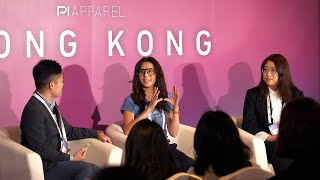
Three apparel industry leaders discuss how brands achieve supply chain transparency. Coop Denmark uses certifications like GOTS and BSCI but struggles coordinating data across teams. Phoenix Outdoor and Maxim Group highlight the challenge of tracking tier-2 suppliers and the cost of multiple audits, while pushing for unified platforms and stronger supplier relationships.
Chapters
So I'm Vincent, who is the CSR Manager of Coop Denmark. Our company is a Denmark-based supermarket which has around 2,500 stores within the country. The annual sale is around 4 billion Danish kroner, which is more or less the same as Hong Kong dollars. So what my job duties is to take care of all kinds of sustainability issues for our supply chain. Throughout from Asia and European too. So I have years experience of doing how, taking care of sustainability issue, no matter social compliance or environmental part, for both Asia supplier and European supplier, which is different. So yeah, so I'm coming to give the chance to let you two introduce yourself.
Yeah, thank you. I have a slide. Hang on. So then, my name is Annie Fang. Very nice to meet all of you in here. I'm working under Phoenix Outdoor Group. So here under this group, we have different brands and retails. So Fjällräven is the one that's like more famous, all the apparel and hardware. And we have Tiara's. And Tiara's is like— ah, no, hang on. I have this one. So, Thiara Lassen, so you know the bags. I think this is the most famous product that people know in Hong Kong, but we are also selling cool things like outdoors. Then we have Tiaras, and Tiaras is highly functional. It's also from Sweden. And we have Philips, and Philips have their own retail groups as well in Germany. Selling our own private labels in the shops, of course selling our own brands as well as the other brands, outdoor brands. So this picture is showing the shops in Munich, in Germany. Then Royal Robbins is a heritage brand, and this guy is Roy Robbins, selling our outdoor— not so outdoor, we say they classify themselves more like travel, leisure kinds of clothing, and there's also socks. And base layers. Then handbags, I say functional, so our shoes, hiking shoes. So these are the brands, and I'm handling all these brands, the global sourcing managers in the group. Of course, from vendor management, all the sourcing activities, and works very closely with the sustainability departments to appraise all the sustainability regulations with their suppliers as well. And I think I pass this to—
oops, sorry.
Like this?
Yeah.
Then it's Candice.
Yeah, thank you, Annie. I'm Candice Wang from Maxim Group. We are a label and packaging company and also an innovative leader in the industry to provide sustainable and global solutions for brands. We have over 50 years experience in the industry, and our focus is really sustainable and innovation. So here is a global configuration of our group. We have over 20 factories globally in the America, Europe, East Asia, Southeast Southeast Asia, and South Asia. So here are just some brief pictures of the product lines we provide. Starting with the packaging, we provide a lot of innovative and sustainable materials as long— as well as innovative structures to save the materials. Here are some accessories and trims that goes on the apparel. Heat transfer labels, both decorational heat transfer or functional heat transfer. RFID and NFC labels. So we are able to integrate RFID and NFC chips into different types of labels such as woven labels, care labels, hand tags, of course, stickers, and variable data printing, woven labels, and hand tags. So if you are interested in the solutions we provide, my colleague Celia is also here. Please welcome to contact her. Thank you.
Great. So yeah, so I think we have a very comprehensive introductions for each one. And actually, our panel is talking about traceability, transparency, and brand of electricity. So the first questions I would like to ask is, like, how do we create an industry standards as a base expectations? Maybe I could talk my part first, as I'm dealing with supply chain for almost 15 years. And yeah, of course, we have all kinds of certificates that we require from the factories in, in terms of social compliance and environmental standard. And of course, after years and the whole bunch of different kind of certificate we are dealing with, we also have our own internal standard to make sure everything's on the right track. And, and of course, we will compare all all kinds of different certificates to ensure that which is fit for our CSR policy as well as the market trend. So for us, it's a lot of big problem because we have a whole bunch of professionals from the sustainability initiative. We have like a close communication, so together every year to understand what they are going to do. Which can also fit for the members of this certificate. So I would say as long as we are being as one of the member of those sustainability initiative, they actually can tell us what we should do even though we have nothing know about it. So this is from the expert as a brand product. So maybe you two can share, Annie, you could share what you thought.
Yes, like starting with the questions to your answers, like do you think is there anything your company can go beyond the compliance? Because nowadays legislation force company to follow sort of basics requirement, but I guess it would be good if all the companies thinking a little bit more than just follow the basics requirements. So this has to be beyond the compliance. Mr. Deng, you think?
So how about Candice, as you are being as a supplier side?
Yeah, I totally agree with Annie. So we can go beyond the compliance. And also, you know that Europe is promoting DPP, Digital Product Passport, right? So we are creating a digital world. That presents the information, the traceability information, the transparency information of your product. So I think the key to form these standards is to define uniform data capture points for the products. For example, we can include the water consumption data, energy consumption data, carbon emissions so that when we compare the products together, we have like a same standard, so it's easier to compare and make decisions.
Great. So about the implementations, like what technologies that you can use to streamline the process you just mentioned for your company?
Oh, okay. So as long as far as the technologies, So as I showed previously, we have RFID and NFC, right? And also QR code is a very good tool to digitalize your product. I actually have a brief video to explain. Can you please show the presentation for Q2 and Q3? Yeah.
Supply chain management can get chaotic. You're tracking shipments, managing invoices, from inventory to everything in between. And without the right tools, things can get quickly out of control. Until now. Maxim has found a way to quiet the chaos, giving your products a voice with EcoTrack. EcoTrack delivers real-time visibility to your brand's supply chain right in the palm of your hand. Access your product's EcoTrack environment through an embedded smart link. Such as a QR code or an NFC, and feel confident in accessing the who, what, when, where, and why any critical event in your product's lifecycle. At every step of the process, Ecotrack allows access to important product information right from your phone or tablet. At the beginning of a product's lifecycle, a Maxim unique identifier is applied, ensuring each critical event of the supply chain is collected. From dyeing to weaving to everything in between, Ecotrack is present, giving your products visibility and transparency. Track supply chain inventory across your brand's locations, and with RFID technology, gain full control and access to important product information wherever your brand's reach may be. Give your customers visibility and transparency to product authenticity, material information, digital caring content, and more. So calm the chaos in supply chain and give your products a voice with Ecotrack.
So yeah, I hope the video is clear, and what technology you choose actually depends on the functionality you would like to realize. So if you would like to communicate and show the transparency information with your consumers, QR codes and NFC are great tools. But if you would like to track and manage your supply chain efficiently, RFID would be the best choice, I believe.
Rick?
I think being working in sourcing and sustainability area, we use a lot of platforms already, but then what I find is lacking is like a good one platform because actually help us to put all the loose ends together as a full picture. Because it's a nightmare when we worked, then we have a lot of different platform. They are all good platforms, I would say, but then this is no one platform is helping us to put all this loose end together at this moment. At least now I still using it very manually when I have to put things together.
Yes, I truly agree because, uh, As I'm being as a CSR department, and then we have logistics department, we have like sales department, merchandising department. They all have their own system. And somehow when we want to get track of the suppliers in regard of CSR, that we also need to retrieve the information from the other department. But when we are using the different program, then somehow that we have to retrieve the data in like a Word form or Excel files. From each of these programs. And then finally, we still need to rely heavily on Excel file, Word file. And then, yeah, and I'm interested to see if there's one align with all program can be used. But then, and I know that you have so many service providers having a speech and have the booth on upstairs talking about how they can help the company. And but one of the challenge will be for the brand is that we just cannot— like, I'm handling the CSR department, so it's hard for me to persuade other department to use the one program fit for all. Especially for some aspect, they think that it's not applicable for them. So you would say— We are open to use technology, but like how to implement that is the challenge. We have too many stakeholders, we have too many parties to deal with. Yeah, yeah.
We are dreams to have one platform that's helping us to put things together, like where are we sourcing, like how, what is the impacts of the materials is using in the products, or maybe even the workers conditions. This kind of thing is still very, really lacking. So we still have to do it manually by using different platforms to measure all those information.
Yes. So maybe we could ask something else, like, can we use the sustainability initiative to increase the profits? So maybe Annie, you are the global sourcing manager, so—
Yeah, I believe so. Yes. Yes, of course, I believe. So I think if we use, say for example, if the factory is using the renewable energies, that will of course save the operation cost, right?
Right.
And if we are using water-saving technologies, then of course we save a lot of water. That's money as well.
Yeah, right. And also a lot of people talked about digital product creation, right? Actually, sampling, physical sampling, takes about 15% of the overall production of a factory. So if we are using DPC to save the physical sampling, it also lowers your sample cost and brings up the profit. And also, consumers nowadays, they prefer to choose more sustainable sustainable products. So yeah, that gives you more profit.
Yeah, yeah. For my part, I would say, um, I want the profit means that like, um, the revenues minus the cost. And I always talk to my team or some others, uh, um, business partner that we have. What we are going to do is to not to increase the revenue, but how to cut the cost. Because when we talk about, when we talk about like auditings, we are talking about all kinds of certificates required from the supplier, the factories, and then it costs money. And then they always complain, why you have so many certificates you need to deal with, like Oeko-Tex, like GOTS for organic cotton, or like BSCI for social compliance. They all cost money and then they don't think the value be high because they already, they think that could each all come from the sales that depends on sales that given by the brand. And then what I would say like all the time is because this kind of celebrity is at least a market trend for not just us but also other brands that they deal with, no matter from European country or Asian countries or America customer. So just do once and apply to all is also kind of cut costs for them because they don't need to audit again and again for the same platform or similar platform but different kind of certificate. So at the same time, for, for us, we will have regular communications with other brands to see how to go with one apply to all in terms of certificate from social compliance or from environmental expert to ensure that if you like few certificate that the factory or the supplier need to apply can fit for all kinds of brand that will be beneficial for both part. But of course, this is a level the end communications. And but I can see that— The trend is going forward from like, from at the time when I just work in this position, I can see like 20 or 30 different kind of certificate case in one expert. But now I can see this is the number is getting smaller and smaller. So I can see that will be the things that we need to deal with. And this is also kind of like increase the for all of us, for both the factory side and the buyer side.
Yeah, but a one-for-all certificate doesn't exist yet.
No, no.
That would save us so much time if there is a one-for-all certificate to verify all the certificates that we received from the suppliers.
Exactly.
But then Candice is the supplier here, so maybe you can say something like, how do you feel like when the brand's asking you for all the certificates?
Well, uh, yeah, when the brand's asking for all the certificates, yeah, it It truly costs a lot of money for us to invest on it, for the institutions to audit our factories, right? Yeah, it's definitely a big expense. I agree with Annie, if in the future there is one certificate that verifies everything and one expense saves it all, so. Great.
So I think we— I have— I still have another question talking about how is the challenge and opportunities in implementing traceability and transparency across the entire supply chain, including tier 1. And I think another part of the, the things that the brand will be concerned is the tier 2 suppliers, because they are all everywhere and then you, you, you have really no clue what they are doing and where they are doing because we always focus on the tier 1. So yeah, so any thoughts?
Yeah, I'd agree. It's like tier 1s to me is no problem, especially for apparel suppliers. They are really good. But hardware is a nightmare because there are so many different hardware products and the factory setups and machineries, everything is are so different. So this part is a little bit challenge. But then tier 2 is the real challenge that we all talk about, like tier 2 suppliers. And most of the tier 2 suppliers, and there's no digital platforms that they are using to trace from farms to end users. And sometimes when we talk to the tier 2 suppliers, they don't understand, and I— why do they have to share this information to the brands? Why are we asking this kind of traceability information. So it's like you're cooking, like you cook, then if you have good cooking recipes, why would you share, right? You're a supplier too.
Yeah, I think, Kairis, you may have some thought too, because you're exactly the tier 2 supplier, you're the labeling company.
Yes, as a label and packaging company, we are tier 2 to the brands. So I think the— we can analyze this question into two aspects. So firstly, maybe as Annie mentioned, some of the tier 2 factories, they don't understand the importance of traceability, of the sustainability. So I think a very easy solution is to find a trustworthy global and qualified supplier, like Maxim, for example. So we provide all the traceability capability to you. And so we also, with our— can you please show my presentation for Q6? So we also have our targets for carbon neutral in 2050. And also we have our strategies, so actual action plans. For example, in production, we implement MES and EMS, energy management systems, to improve the efficiency and also calculate the energy consumption for the labels we produce so we can provide the report and their data to the brand, as labels and trims are part of the final product, the apparel footwear, right? And also green energy. Actually, starting January 2024, our factory in Zhejiang, China is already using 100% green electricity. Green electricity, yeah. And also, of course, digital transformation. We use 3D digital sampling as well. And also, we provide a lot of digital solutions to the brands as well. Then, and also, the last one is we have a plant a tree program. So we actually cooperate with forests all over the world to plant trees. To offset the carbon emissions. Yeah. So that's the first aspect. So choose a responsible, qualified supplier. A second aspect, I think the challenging part to trace, track the actions inside the tier 2 suppliers is that products are very, like, they are in different, there are different kinds of products, right? It's not very simple. Sometimes you cannot even count the materials in pieces. So we can count the apparels in pieces, right? But the materials, fabrics, papers, and the forms will change when you produce the product, right? You have a bunch of paper and then it becomes pieces of labels. So I think that's where you need to apply the right tool and system for you to enable you to trace the data and information from raw material to production and to finish the goods, and also from Tier 2 finish goes to Tier 1 factory raw material, connect those data points, and then to production, to finish goes to DC and to your retail store. So actually, EcoTrack provides this kind of solutions.
Great. I think, yeah, for my part, I think most of China, as you just mentioned, to how to map the Tier 2 supply, I think, to Tier 1 is not easy, but it's already a long-term topic for most of the brands. So I think that after years of experience, we have completely more stable relationship between the brand and the tier 1 suppliers. So it should not be a big problem. But for tier 2, because from the brand side, we are the indirect business relationship with them, so it's hard to like control or monitoring them because they are not really get the money from the brand but the tier 1 supplier. So if you don't have the stable relationship with the tier 1 supplier, there will be a big challenge for the brands to monitor them. And yeah, I can hear from Kenneth, you, that you may be one of the good solutions for the brand to work with, as long as somehow you can build up the relationship with the brand in long-term way that, uh, yeah, I also would be interested in working with you too.
Yeah, I have another challenge as well. Say, since under Phoenix Outdoor we have different brands, some brands is bigger quantities is much higher, and some are small brands like Yara's is so much smaller. There's only selling in Scandinavian market. So then when we work with smaller suppliers for the tier ones, sometimes, yeah, we also have problems and they don't understand as well. So I think maybe for us as a group, so we have to leverage the suppliers. Sometimes we do a lot of consolidations with the suppliers as well to make sure that we use the only good suppliers for the entire brands and all the group, entire, brands, I mean, under the groups, instead of using different factories for this brands and different factories for the other brands like that. So the consolidations for the global sourcing is very important to really make this easier, I would say.
Yeah, how do you have good communications with the suppliers in order to deal with the supply chain is, I think, is— I don't have the answer, but I I would say this is the topic that we always need to be focused on. And yeah, so I think what today we are doing is not try to give the answer to everyone, is to try to share that what the difficulties and how to improve the traceability, transparency that we can do for the supply chain. And I I know that, yeah, that's almost the end of the panel, but I know that some of you may have a question to either me or Annie or Candace. But unfortunately, the value of time is limited, but they are still here. So I think after, you can still ask the questions after the end of this event. Ask whatever you want. So thank you for today. Thank you for your time. And I guess this is the end of the panel. And so I think the next will be my closing remark. So thank you. Thank you, Andy. Thank you, Andy.
Thank you, everyone. Thank you for having me.
Thank you.
Thank you.
Thank you.










