Transforming Apparel Success with Innovation and Sustainability | First Insight | PI Apparel
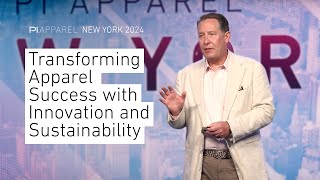
In this presentation, a First Insight executive outlines the rapidly evolving landscape of the apparel, footwear and accessories market, emphasizing four macro‑trends: a dynamic but over‑assorted market, accelerating technology (especially AI and data‑driven demand forecasting), expanding channel complexity (e‑commerce, omnichannel, social commerce) and mounting sustainability pressures. The speaker highlights that apparel now has a ~62% product‑failure rate, driven by fragmented consumer preferences and a lack of demand‑side insight. First Insight’s core proposition is a proprietary consumer‑data platform (operating since 2007) that captures millions of monthly data points across 180 countries, enabling SKU rationalization, white‑space analysis, ad‑testing, and personalized offers. The talk stresses the need for better demand forecasting, productivity gains through technology, and a shift from over‑assortment to “sell more with less.” Sustainability is framed as a regulatory and consumer‑driven imperative, with all demographics now demanding greener products but refusing to pay premiums. The presenter also addresses practical challenges such as manufacturer minimum order quantities (MOQs) and the bull‑whip effect, advocating near‑shoring and micro‑manufacturing to align supply with true demand. The session concludes with a brief Q&A on market oversaturation and MOQ constraints, reinforcing the message that data‑driven, consumer‑centric decision‑making is essential for future apparel success.
Questions this video answers
The speaker emphasizes shifting focus from supply‑chain excuses to demand‑chain insight, using AI‑driven consumer data to reduce over‑assortment, improve SKU rationalization, and test product hypotheses rigorously, thereby selling more with fewer items.
He recommends micro‑manufacturing or near‑shoring to align production runs with true demand, citing the MIT beer‑game illustration of the bull‑whip effect and noting that higher per‑unit costs can be offset by reduced inventory waste and better demand matching.
Chapters
Well, I'm excited to be here today to share a little bit about what's happening in the fashion industry, in apparel, footwear, accessories, all the categories that I think many of you cover. I'm going to talk a little bit about sustainability and from the customer perspective what's going on. While I do that, I'll also give you the context of information that we collect in our organization. If you're not familiar with it, First Insight, who we are and what we do. So the first thing I want to speak about is talking about the state of the retail industry. When I, when I do this, I'm not going to lecture, I think, something that you already know about the industry. Your experience and knowledge and awareness of what's going on from the perspective of your organization I'm going to speak to you from the lens of the consumer side. And this is something that I think is often misunderstood or overlooked. And some of the big trends that are occurring within the retail industry as a whole that are affecting all companies. Number one is the growing and dynamic market. While we talk about the facts that inflation are eroding, decision-making from dollars of a consumer. And we, we often hear about consumers changing their investments, purchasing to experiences. The reality is the apparel industry has grown. The unit amount of units sold has decreased. So it's interesting to say the market isn't actually decreasing, it's evolving. And in fact, it's actually changing. The advent of billion-dollar brands in the last decade that have been created is the highest that's ever been in the history of this country, in retail, in apparel. So you think about these companies are evolving relatively quickly because the consumer is also changing very, very fast. Their interests and patterns are being influenced differently than they had been even a decade ago. And we'll talk about that when we look at social commerce in just a minute. The second piece is tech advancements. Okay, so I'm going to ask for a little bit of audience participation. Anybody care to guess when the first AI was mentioned? Or even used ever? Anybody? Pick a year, throw it out. Go ahead. 1956. 1956. You read about that. I think I mentioned that. 1956. People said, that's crazy. I think I was talking to somebody earlier today, and they said, that can't be right. 1956 is when the term was coined. In fact, even before 1956, neural networks were being used. Data mining. These are the foundational aspects of AI. It all leverages, as you well may, as you well may know, history. But actually, as you look at the data that's being developed, that's the differentiation that will be leveraged by different companies. What do I mean by that? Structuring unique data streams, information around consumers, that are different than just their purchasing pattern, what they bought. We'll spend a bit of time on that. Second, channel expansion. So e-commerce, omnichannel, we all know that, right? But the fluidity of products being able to traverse all of these channels so quickly is a dynamic environment that many companies don't take into account. I was just in LA. I'm actually based in Pittsburgh. I was in LA presenting to a group of executives yesterday afternoon, and we were talking about specifically that, how fast things are changing in the channels that they're providing their products through, and trying to understand how that demand is evolving because they need to respond to it. And then the last piece is social commerce. Control's been lost. 2015, there were more smart devices than there were people on the planet. That will be an event that you probably remember later on in life, because it changed everything. It changed the connectivity of the world, but it also changed the information sharing. And so consequently, the consumer now has control about trends. The consumer has control about fragmentations of the market and who they want to group together or cluster, call them micro-segmentations. Groups of friends that do things together, buy products together, that are fascinatingly different than any of your marketing techniques today. These 4 fundamental things are trends that for the next decade you're going to be dealing with and will only continue to accelerate. And what it's leading to is a bifurcation of the market. So I've written for Forbes for 10 years on the investment side. In my blog, I write about the idea that there are— right now is a bifurcation of the market, a split. There are clear winners and there are clear losers. And that trend is only going to continue. There's not going to be a middle ground. And the differentiation of the companies that are doing this are doing it in two ways. One, they have data that's different. And two, they have products that are different. Differentiated products. When we think about products, now our company has been collecting data from consumers on product launches since 2007. We've been using AI and collecting data, working with some of the largest retailers and brands and manufacturers in the world. And I can share this metadata with you because we're the only company in the world that has this. This is the product success rate by category across the globe. Actually, failure rate. Success rate would be the inverse. So it's not a good picture, right? If you think about it, apparel has a 62% failure rate. Now you'd say, well, that's First Insight data. Well, NRF says that it's 50/50. MIT Sloan says it's about 50/50. Our data indicates that it's pretty high in different categories. And what that means is as you launch a product, on average, it doesn't meet the category average sales. That means we're over-assorted. We're bringing products to market in general terms because we don't necessarily know what's going to resonate. And when I was a merchant in the 1980s and I ran merchandising for a company, we had to do that. But we had a controlled environment. You have a fragmented environment, so the risks are even higher. What are the challenges facing you related to traditional approaches? Number 1, look around. Your competition is here. Frenemies, right? We all know each other. We're going to move around. There's a 3% turnover per week in the executive levels in retail across 4,500 companies. So there's a lot of transition in this industry. You move from one company to the next, but it's a very competitive environment. There are big bets being made. I lost many nights' sleep as a divisional vice president. I was 25 years old, sitting there worried about whether or not my $10 million buy was going to actually land and work. Those haven't changed. They've just gotten bigger. The average transactions have gone up, not down, because of the thinning of the— organizational herd. And then you have the long-tail items, right? Because we keep needing to create innovation in different ways, and so those investments create more risk as well. Here's an interesting point. If you go to our website, firstinsight.com, we have the largest sustainability studies that were done around this industry—retail, apparel, footwear, etc.—in conjunction with the Baker School at the University of Pennsylvania Wharton School of Business and others since 2018. And I'm going to share some of those results with you, but the pressures are only going to go up and consumers aren't going to pay for it. Uh, last is dynamic consumer preferences. I alluded to that already. So here's the sustainability facts. They're really not that pretty in many different ways. It's the one of the largest contributors to waste in the world. And the consumers are frustrated with it. We started collecting information in 2018, found that something we all intuitively knew, but the data reflected it. Gen Zers were leading that. Guess what? By 2023, every single demographic group, including baby boomers, every single demographic group was above 85%, and boomers felt more passionate about sustainability than Gen Zs did. So we've all caught up and everyone said, we're not going to pay for it. So now each of you has that challenge in front of us as an industry to figure out how to be sustainable, truly sustainable. And the first thing you need to think about is you're over-assorted. We have more products than we actually need. Every product category. There are factors related to retail waste. You can read those. But specifically on the consumer demand side, here's what we found. There's a lot of confusion. And you already know this because retailers and brands and your organizations are concerned about greenwashing, saying that they're doing that even though you're doing— making nice progress. And the reality is Part of it is there's no baseline. Consumers don't understand how to evaluate it properly and there's no standard, but it's coming. In fact, European market is actually leading this in 2024, starting in January. People need to report on this. And for those of us here in the US, California, State Bills 253 and 261 are coming out. New York's not far behind. And then eventually it'll be in the United States, just like privacy laws. And you're going to be dealing with that, tracking, et cetera. So the future outlook is going to be related to compliance. Keep in mind, the consumers don't want to pay for it. So consequently, here's the good news. You're not at a competitive disadvantage. There's no competitive advantage. You've got to figure it out, and everybody's got to do it at the same rate at the same time. Big risk, big challenge. What does it mean for your consumer base? Okay. So those are the facts of where the consumer are, right? You can go to our website. You can download all those reports. You can see how it's changed and evolved not just on sustainability, but some other factors related related to consumer trends. Who's First Insight? We fundamentally— in 2007, I founded the company on a fundamental idea to understand what consumers want out of the products that you're offering them— retailers, brands, and manufacturers. I come out of not only retail, but supply chain management in the first supply chain technology company in the world. And then I founded First Insight with the idea that consumers actually could, with the correct structure of data, give you insight into what they want and how to serve them better and more effectively. I started with an iPhone 3 in 2008. Facebook was still at Harvard, I think, at that point. And no one believed that the demographic of a middle-aged woman would give feedback through a gaming technology. Fast forward, we're in 4 continents. 25% of the global market uses us. The 4 largest retailers on those 4 continents use us. Every brand that supports them is leveraging our technology to understand where the consumer is headed. 180 countries and 67 language currency combinations. So we do about 11 million data points a month. That's a big number. And we have insights into where the consumer is headed. We're anticipatory. That's who we are. Uh, 600 businesses, global market, et cetera. Like I said, we use AI since the beginning. It's been around for a long time. We're basically though structuring unique data. What does the customer want from your channel How do you do that as you're doing that in relation to other products that you already have existing in your assortment? And what are the effects? Because think about it, the economy grows at about 3%. It's not hard to forecast some of this stuff. It's a pretty narrow range, 3%. That, that's a big number, but it doesn't change 20%. So that means that the average consumer on average has about the same amount of money every single year. And if you're trying to grow your business 10%, you've got to take it from somewhere. You've got to earn the wallet share. And that's going to come off of what you offer. So what we do is we actually collect information around your assortments, around the attributes of your products, and we forecast it. We help you sense demand. And we do that in a way that's engaging and interesting to consumers. And for those of you who don't have a consumer database, we actually have a marketplace that we created that's proprietary. 330 million consumers worldwide, every demographic group you can imagine. So we look at things like, hey, how's athleisure doing as a trend, skinny jeans, stuff like that, all kinds of things that you can think about. But we also forecast the AUR of the item or the ASP. How's that light item going to look over its lifecycle of the, of the item? How does it perform? We offer 16 solutions off a single insight. So basically, we engage consumers and we learn a whole lot about what they think about you, your product, your environment, your organization, your brand, and maybe even areas where you can sell into in different categories. We call that white space analysis. Hey, are we— do we have enough authority with our customer to launch into this product category? We also do Instagram, every social platform, but ad testing. So digital ad testing on each platform to understand how to acquire a new customer, what's going to resonate with them. And it fits into a lifecycle. So we, we think of this as a system of intelligence. We don't replace what you already have. We make it better. We create a data point you've never had before, and we help you anticipate a data set. If you're a designer, is it going to be rose-colored gold this year? And how is that going to work across your assortment? How is it going to affect the balance of your assortment. Or it may be a new ad testing. I often walk around stores around the, around the globe, and I look into the store window and I see what their byline is, or the line in the store window, what they're saying about their brand. And I wonder to myself, is that actually resonating with the customer? We do a lot of that as well, but we can help you figure that out. The number one thing we've been working on most recently is Skew rationalization. Why? Every single company right now— and I meet about 100+ CEOs a year— are worried about working capital. That's open to buy. That's production dollars. They want it to work, and they want to spend less on it because they need it in their balance sheet. And it's the number one factor that we're able to drill home. Figuring out what SKUs, what style colors, what styles aren't going to resonate, that aren't going to add reach. That's that third little box up there on the right, or fourth, one, two, three, fourth on the right, that basically give you unique reach that says you're not going to get any more new customers that way. Oh, I neglected to mention we also bought a company at the end of last year that was helping on the marketing side because Our goal is not only to figure out and help you understand what to bring to market more effectively, but one-to-one offers. And that's what our, uh, acquisition was about at the end of last year, was helping you figure out what marketing messages to send uniquely to an individual because AI is capable of doing that. It is actually very helpful in creating and crafting messages and offers that are financially valuable to you that resonate with the consumer. At the end of the day, we drive results. Somebody asked me earlier, what do you do? And I said, we drive big metrics. These are the metrics that we chase, that we deliver on. I'm pretty proud. We had a big public company state that we reduced markdowns 25%. That's a big number. That's what we try to do. We try to help organizations figure out where their consumer is headed and then deliver on that promise. So I know we only have a few minutes of time left. I'm happy to answer any questions that you may have, talk about segments of the industry, maybe even globally if you're interested in that, and some of the changes that we're also seeing in the marketplace related to the manufacturing of products and the development and delivery of products direct from manufacturers, why that's working so effectively.
Yeah. I'll ask another question, but my name is Katie and this is more in relation to oversaturation of market because we live in a capitalist economy, correct? Sure. That suggests that we have infinite possibilities, but we live on an Earth that has limited aspects to it. So is there a way that, that you're approaching helping companies understand that dynamic in relation to what they're producing? Because I see that as being one of the key components of waste truly is if I have, you know, 5 donut shops on a street, you know, only a certain amount are going to survive. But if I have a donut shop, a patisserie, you know, a very distinct variety of baked goods, each one has an aspect of survival because we understand the limitation.
Sure. Yeah, that's a great— so interesting question. You know, my background is really socioeconomic, understanding consumer and economics. Two things I'll share with you in this sense. First of all, we spend a lot of time— how many of you, you know, I'm on LinkedIn, I'm sure like many of you, and I even saw a joke recently where somebody was posting everything's about supply chain. Every excuse about why we didn't hit the number was around supply. Supply chain, the guy was going off rattling around supply chain 100 times. The reality is where's the demand chain? Because if you do this right, it's supply matches demand. The problem is we have no or very little understanding of demand. And when they— we deliver a product, I can't tell you the number of times I will hear a brand say or a retailer say they didn't get it. and I'm like, hmm, I'm not sure. They may not get it now. Maybe they'll get it later, or maybe they won't get it at all. But you missed the mark either way you cut it, right? Financially, and that's a loss. So whether it's supply chain or demand side, so that's one factor to consider. How much— the question I ask right now CEOs, number one, who owns the customer? And if you say everybody, that's a bad answer. Second question that I ask around that is, who's forecasting demand? Not supply, not managing the supply chain, because you got a whole team of people doing that. Who's forecasting demand? Who owns a customer and who's forecasting that demand? Who owns it completely? To answer your second question or second part, which was the first question that you asked, what shifts to make everybody more efficient? Well, number one, more can be better. There is one thing that technology offers— productivity increase. When you see a shift in productivity, all, all things remaining equal, everybody wins. So productivity needs to improve. How does productivity improve in the use of technology? In my fundamental opinion, If we all admit to ourselves that we are over-assorted, you can actually sell more with less products. I'll give you a use case from 1989. That's a long time ago. A long time ago, I had a buyer in 1989 who became the buyer of the year. Took her assortment to— from 100% to 25% of her assortment, took all the dollars and invested in a less a more focused category assortment became the number one profitable department in the company, had the number one sales increase in the company. It works. You just have to be right. And the challenge is you've got to test those thesis with the consumer in a very rigorous way because they'll reward you for it if you are right. In our case, we were lucky. We didn't have technology. I wouldn't do that today. There's so much available to you. There's so many ways to figure that out, but you have to get more productive. You have to get your inventory more productive, and the only way you can do that is turn it, and the only way you can turn it is, unless you're reducing price to zero or very low, which is a bad scenario, you've got to get the right product. Great question. That was a pretty detailed one too. Any other questions? Yeah. Yeah, I think we're only going to have time for one more. So—
Hi, this— my name's Mary. So in terms of that answer, how do you deal with manufacturer MOQ, because you might only want to make 300 pieces of something, but the factory and the mill are saying, nope, you have to do 600 if you want to put that in your line. So you do 600 and pray to God they sell, or they don't sell. Yeah.
Well, you know, at the end of the day, it's funny, I was having another conversation earlier this morning about manufacturing in relation to the sales organization or the retailer. Collectively you own the supply, the inventory, right? Collectively as a unit in relation. Here's an interesting point if you never knew this. There's a game called the beer game. You know, beer. Bullwhip effect. It came out of MIT. And they did a study. And there were 3 nodes in the supply chain, the manufacturer, distributor, and the retailer. And they were forecasting demand of beer. And everybody built inventory and, but the, but actually the demand signal never changed. That's, I just gave away the game, but you can go look it up and research it. It's fascinating because when people play this game, if they don't know that endgame, that demand doesn't really change, everybody buffers inventory and builds too much based upon that. The second constraint is they have runs of 600. So if that's the case, you're going to either have to try to figure out— I mean, ultimately, in my opinion, I wrote a paper in 2006, micro manufacturing closer to your demand signal is going to be the answer, right? So if you can get it onshore or nearshore, even though you're going to pay 3 times more, it's going to be more effective to you. Zara proved that out if you go back to 2001, right, in Spain. And I think that's really what you got to try to figure out over a long period of time when you're orchestrating your manufacturing base. Okay, so I think time's up. Thanks everybody. Hope you had a great day.










