Transforming Product Creation: Tech, Collaboration & Creativity | MAS | PI Apparel
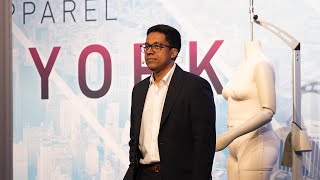
A MAS executive explains how digital co-creation is transforming apparel design. The company cut lead times by roughly 50%, tripled design adoption, and saved over 5,000 physical samples in one season by moving brands, suppliers, and designers into a shared 3D workspace with digital twins and rapid sampling.
Chapters
Welcome to Winning with Digital Co-Creation: A Playbook for True Product Collaboration. And really today, I'm excited to share with you real work that we are doing with our brand partners, our supply partners in fashion, in apparel, to move product design and creative genius forward, but not at the expense of speed, price, and service, and sustainability, of course. And that's super important because a lot of times when we think about the way strategy works and the way organizations work, we are always thinking of trade-offs, right? What do I have to give up to gain something else? And in this endless pursuit to get faster and leaner and more efficient, we feel that maybe we are losing some of the creative genius, some of the collaboration that's required to make really great product. So I've already been introduced to you, so I'm not gonna spend too much time talking about myself, but I'm really excited to talk a little bit about MAS, the reason we're all here. MAS is truly a global company. We are in multiple locations all around the world. We are primarily into manufacturing of product, apparel product, and MAS Intimates specifically focuses mainly on clothing close to bodywear. In just a minute, I'll play you a small introduction to MAS just to give you an idea of, you know, who we are, what we do, and where we come from. And hopefully that will set enough context and maybe inspire you and excite you a little bit so that you look forward to what comes next. So on that note— Thank you. So that gives me goosebumps every time I see that because I'm so excited to see real product, right? And everything that we do here in this room is aimed at creating that feeling of excitement for our consumer. And so sometimes I remind myself why we are here by watching that video and also really thinking about that feeling that we want to evoke in the hearts and minds of our customers, right, and the people that we are trying to service. So on that note, I want to speak to you about 3 broad industry trends that inspired us to take this approach towards digital co-creation. And this is really nothing new. To all of you in the audience today. But we do see a certain acceleration in some of these trends that's really forcing or influencing a new movement in trying to mitigate the risks that we are all facing in the apparel industry. So the first is this ever-evolving and disruptive voice of the consumer. It's never been more important to listen and understand your consumer Today, we know statistically that shopper loyalty continues to be in flux. Consumers are less interested in sticking around if what you make for them does not make sense. And so we are increasingly learning that, yes, it's absolutely important to know the consumer you are selling to, but you also need to know and understand the entire broader population. In order for you to win in market, we have to be really switched on and listen carefully. The second is that disruption is a constant. Again, you've heard this many, many times over. I am almost stating the obvious, but I think 2024 has really reminded us that, yes, disruption is a constant. And also the disruption in technology has come to the forefront. And I don't know, I mean, you guys tell me, don't some of you feel a little overwhelmed when you're out there in the exhibition hall and you have so many wonderful startups and companies that are providing us with all this exciting tech? But I'm all— I'm facing decision paralysis. I don't know what to pick. Right. And so all this disruption is creating a lot of anxiety in the minds of not just our C-level executives, but also in the entire industry. So what do we do about that? How do we address that? And then, of course, we have the dispersion of new generation talent. Again, I don't think we need to look to Accenture for official statistics. Every leader in this room, I'm certain, is sure that there is a skill shortage in our industry, in our companies. People are more mobile than they've been ever before, and they are more open to asking questions and moving on. And finding greener pastures, as they should. And in a global scenario such as this, how do we make sure we have the best people working for us? Do we recruit all of them? Do we move everyone to New York? I'd like that. It's probably not going to happen though. Do we move everyone to Paris? Do we move everyone to Sri Lanka? Do we move everyone to Kenya? That's not possible, right? And again, the answer may seem obvious, but what I'm going to try and unpack for you in the next maybe 10 minutes or so, and I'd love to leave some time for Q&A so that we can interact and we can learn from each other as well, is I want to really focus on how at MAS we've used a very, very simple concept that has existed for as long as fashion has existed. That is co-creation, and then how we've unlocked that, how we've supercharged that by really bringing in digital elements, and more important, bringing in a culture a culture of celebration and a culture of collaboration. So let's get into that, right? But before we speak about the playbook, which I know is why you're all here, let's talk a little bit about the status quo. Why is this such a problem? Why is it so hard for us to listen to our consumer? Why is it so hard for us to make decisions on technology? Why is it so difficult for us to keep great people at our workplaces? It's because of the way we work. The status quo is equal to legacy ways of working. I'm a massive Formula 1 fan, so it only made sense for me to have a Formula 1 car up here. And you know, everyone in this room, and I'm certain all of your teams, all of our organizations are best in class. There's very little that differentiates all of us. But why are we all going so slow? Because we've got multiple gaps in the way we work in the value chain. If you think about the way we work generally, now I'm generalizing here for ease of reference, right? Generally, a season starts with some comp shopping, some ideation, and then from a vendor lens, you will receive a vendor brief. Everybody goes away. You are supposed to interpret using this two-dimensional document exactly what the creative geniuses want you to do. And then you've got to squeeze all of that into one, and if you are lucky and if you are great, maybe two, maybe three days. And you probably travel halfway across the world for this design meeting. And you visit 10 other suppliers. Or 10 other vendors as a brand. If you are a vendor, you're probably doing this with your mills, with your raw material suppliers. You'll be doing the same. Be sitting down with them, and you're trying to be inspired in what, 8 hours? Trying to build a whole collection. And then you have that design visit, you have conversations, you say, "I love this, maybe not so much on this front, let's make these changes." Everything's again 2-dimensional. And granted, yes, we have PLM, that's amazing. We have digital tools that allow us to record some of these notes, but really, truly, it's still very two-dimensional, the way we communicate. We go back again, and there is again another break, another bump, another gap. And between each of these handover stages, there is so much lost in translation. How many of you guys relate to this challenge, that what I want from the team I'm working with is not what I'm getting? Show of hands. Really? Not many people have that problem? Amazing. All right, let me wrap up and head out. Let's be honest with ourselves, right? All of us have this challenge. So much is lost in communication, lost in translation, because we are trying to communicate something that's 3-dimensional, something that's creative in this 2-dimensional workflow. And just FYI, I'm not here to speak about the ultimate workflow. I'm again stating the obvious, but it's important to acknowledge and address what these challenges are in order to really identify why this new approach can really unlock value. So a couple of things that are, I think, key observations, right? We generally have very low connectivity and very little creative exchange between stakeholders in between these periods. And these are the periods of time when you're inspired, you're back, you're reflecting, you're doing your work. This is when you really need that feedback, that support, but that's not coming through. Have you guys heard of this exciting term that we use in all our corporate offices? That's called hindsight. We do a lot of that, right? We have a lot of strategy meetings, we do a lot of hindsight reports, right? Endless, countless amounts of that. We have, we all have hindsight, but none of us have Enough foresight. We don't spend enough time thinking about what might come next. We don't talk to our partners who understand what might come next. And then finally, limited in-season feedback to really inspire and propel the creative genius that's required between these stages. And I see some of our wonderful partners here in the audience with whom we've unlocked some of this exciting opportunity, right? And I see some of them smiling. Some of them are getting a little excited because they're feeling, right, okay, yeah, We are starting to do something about that, so let's find out what that is. So our vision was really, really simple. How do we really drive a co-creation approach that's digital and that's allowing us to be connected wherever we are in the world? We can easily explore, share, and ideate, and we can seamlessly collaborate with each other towards this one single objective of Creating a product that a consumer wants, on time, at the right price, at the right levels of circularity and sustainability. These are all factors that we today consider when putting product together. But how do we do all of these things parallelly within a season? Right. So I have a quick video that introduces the concept of co-creation. Let's have a look and then let's talk more. So that's co-creation at MAS. It's a very quick snippet to give you an idea of what that engagement, what that interaction is like. And some of you might realize that a lot of that is in person, right? And that was a large part of the journey for us. Very early on in our digital journey, we were strong proponents as a digital transformation team at MAS that everything's got to be digital. Oh yeah, we can absolutely make a bra and we don't ever have to see it physically. Or that's what we thought. But our design friends and our technical design friends are quick to point out that's not how the real world works, right? You have to see physical product, but you don't have to see physical product at every stage for every decision. And again, I am not the first speaker to speak about this. We've had multiple other speakers here in the room talk about the same concept and multiple other exciting partners and vendors that have unlocked this for their supply chain. I am simply here to speak about what we've done differently to go on that journey so you may learn from us. But before we talk about the real playbook, let's talk about what really unlocks this, what enables this, and what is the impact it has created at MAS so far. So of course, we have these shared hybrid digital workspaces, and these can be easily set up, whether it's in our brand partner's office, whether it's in our office. It could also be completely virtual. And generally what we do is we adopt this hybrid way of working because we ramp up to a design visit, we ramp up to an in-person visit where we are using digital technology, using 3D to make decisions quickly on what we want to see more of and what we want to see less of. And the shared digital space really allows us to do this quickly. And again, I'm certain that when you watch that video, some of those tools look really, really familiar. And that's why I said at the beginning of this presentation, none of this is really brand new. It's not rocket science, right? We've just put all of this together and we've just figured out how to create a culture to get us to a place where we can create impact. And that's what I'm hoping to share with you. It also helps that MAS has multiple design studios attached, co-creation centers where you can quickly turn around physical product within the day. We are privileged to have that capability, and I know a lot of our partners here have similar capabilities. And what we've seen are brands and some suppliers do is leverage that. And that has become a large strength and a cornerstone of the success of this model as well. And finally, the cherry on the cake, or the cherry on the dessert, is the real-time digital sampling that we unlock. So having physical product and digital twins next to each other, and then being able to quickly make changes in person and validate and say, hey, this is exactly what I want to see, this is exactly what I want to make, this is exactly what I think my consumer is going to love. And you are literally seeing that in 3D as well as when required. If it's a deep innovation product, physically as well. So again, we've taken a very practical approach. And what's— what all of this has done is it has allowed us to really rejig or really truly redefine the way we work within our seasonal calendar. So you remember that Formula One car I showed you with all the bumps on the road? It's really not a straight line. It's not a broken straight line anymore. It's a constant feedback loop. And that's allowed us to be connected real-time at any point. It's got to a point where it's a little annoying, frankly, because I am, out of curiosity, on some of the collaboration boards. And it's interesting because I'd wake up to have water at 3 o'clock in the morning, and I'll see people pinging each other. From all across the world. And on one end, it does wake you up sometimes at night, but it's also really exciting to see that your customer, your supply chain is always engaging even when you're asleep and you see that in real time. So what's the impact we've created? And this is really, really exciting. We have actually been able to 3x our design adoption at MAS with the partners we are working on digital co-creation. And that is really, really creating impact within our business and also making a difference in the purpose of existence of our people. All our designers are so much more excited to come to work, do their job, because all of a sudden the hard work and the effort they put into building product for our partners is getting picked. They feel like they're part of that journey, so they're so much more invested. In the process. And remember I spoke about the dispersion of new-gen talent? We now have, for the first time, and this is hilarious, for the first time we have designers sitting outside our digital office waiting to be trained on 3D. 6 months ago, that was not happening, right? We had to go behind them. And that's because they're starting to see the impact, they're starting to see the value. From a lead time perspective, we've almost slashed 50% of our lead time. And what's really interesting is it's important to anchor the impact you're creating in your business so that the leaders and the stakeholders all understand what this means to them. But what's also exciting is with co-creation, even the way you look at lead time is different. With AI, with the introduction of real-time digital sampling, You are essentially doing multiple rounds of prototyping very, very quickly. So even what we measure is starting to change. We are starting to measure the level of interaction, the number of engagements on a product, because that's becoming the true measure for how much is my customer, how much is my supplier engaged with me in creating great product for our consumers. We've almost saved, actually no, we've saved more than 5,000 samples just year to date with 4 partners in one season, which is creating some bottom line, bottom line impact as well. But again, like I said, I think what's really exciting about this slide and about the impact we're creating is the momentum that we're building and how that's really creating changemakers in our business. So on that note, let's talk about the playbook. What do we really need to do to make this happen? What do we really need to do to unlock this level of impact? 3 things. You have to find digital changemakers in your business. So you have to focus on talent. And that seems counterintuitive, right? We are at a product innovation conference which has a deep focus on digital transformation and digital tools. You'd expect me to talk about technology, but really talent is number one because you have to get people on your side. You got to get people on board to drive this change. And I'll speak a little bit about our learnings and maybe a couple of insider hacks that we can share with you so you can go do this in your organization. Secondly, technology. We spoke about decision paralysis. We started following this really simple 80/20 rule. Leverage the 20% you have within the organization to try and get 80% of the results and bootstrap for success. And I'll speak more about some, I think, great examples of how the team managed to do that. Then finally, and this is I think super, super important at all levels of the organization with all your partners, trust. Again, sounds really easy to say, but it's really, really hard to trust someone, especially when you're talking about changing the way you work across multiple destinations, across multiple countries. I'll speak a little bit about how we had a shared vision with our partners that unlocked, that allowed us to build this trust and get moving very quickly on this journey. So some of the people you see on screen are my colleagues back in Sri Lanka, in the UK, in Hong Kong, in our different design and product offices that have all come together to make this happen. So big shout out to all of them because they are the true champions, the true changemakers that making this work for all our partners. So what does it mean to be a digital changemaker? I think the key observation of the objective we had when we started this was how do you build momentum and how do you build momentum to get everyone in your business to adopt this workflow, to want to adopt this workflow? So yes, quite a challenging objective to have. And the biggest problem is that people are resistant to change. People don't want to change the way they work. Again, I'm stating the obvious, but what were our learnings? And I think this is super, super important. We had to go out there and find changemakers. The reality is not everybody wants to do 3D. Not everybody wants to know about AI. Not everybody wants to think about product all day long, even if they are a tech designer or a designer or a global merchandiser. But you have to find changemakers within your business, and that's really more of an art than a science. And you have to be willing to put yourself out there, kind of, you know, call to action for people to volunteer. And then with the folks that do, you have to empower them. A key thing that we learned is that we very quickly learned not to tell them what to do. Because when we told our digital changemakers, designers, what to do, things are lost in translation. And unfortunately, we don't have 3D for that. Right? So what we had to do was we had to kind of let them build the workflow on their own. Of course, we guided them in the right direction. And whenever we got it right together, we celebrated often. So I've definitely spent more on drinks this season than any other. 'Cause, you know, taking people out, celebrating, giving them a pat on the back, just making them feel valued that the progress they are making is seen and heard. So the insider hack from myself and my team is create a shared sandbox and a true sandbox where you test, be open to failing, and try to learn while you're scaling. Again, a lot of buzzwords in there, so let me really speak to an example. We created access to different digital tools, different digital interventions when a design visit was coming up, and we let designers play with those tools. And sometimes we didn't do so well, but that's okay because they were invested in it, and they started coming up with different ways to hack the system. And it's unbelievable, we started using tools we already had for things we never imagined we could use them for. And that's really, really inspiring. And that's what's created this workflow. I'm a little short on time, so I'm going to start talking about the technology piece. So decision paralysis. The real objective here was how do you simplify your work to amplify the impact? MAS today has a PLM system. We've got a shop floor system. We've got an ERP system. We've got a system for everything. We've got a system to book travel between one factory to another. Right? So everything's been thought of, right? It sounds perfect. It's good, but it can always improve, right? So instead of adding more and more and more, we said, right, let's make this real simple. Let's start talking to open-to-use platforms, platforms that we can easily reach, our partners. Let's start bootstrapping. Right? So we literally bootstrapped tech together to provide again a shared sandbox for our designers to build a workflow. The only objective was, hey, let's work towards what? Getting the entire supply chain more engaged so I can listen to my consumer better and understand my consumer from different perspectives. I can I can stop fretting over the fact that I don't know which software or tech to use and get on with it. And I can finally tap into talent all across the world instead of simply saying, "We just don't have that here." And that's really worked. So we used the 20/80 rule, or the 80/20 rule, to be open to bootstrapping, and we gamified that experience. We created multiple locations, and maybe some of my colleagues in the room can recall, even in our office, we created little pop-up stores. I mean, if our brands can do it for our consumers, we should make work exciting and fun for our people. So we literally gamified the experience at the office. We created pop-up booths where people could come interact. And very quickly, I started getting phone calls. "Hey, what's that touchscreen you have on there with like this revolving 3D avatar? I played around with it and I have an idea." Yeah, come over, let's have a conversation. That was a huge success for us. So we tested fast all of these concepts and we piloted always with the intent to scale. We always had an intent to scale when we created or launched a pilot. We never did anything just for the sake of testing. And on that note, I come to trust. We had a shared vision with our partners, and that's very, very easy to say. Right? It's easy to say, "Hey, I want to empower each other to unlock success for all." Yeah, we all do. If you look to your left, you look to your right, wouldn't you like to inspire and empower the person next to you? Feels good. But the reality is that our organizations have very different cultures and very different mindsets. Our incentive structures are different. And where you are on the journey is different. You have some of your partners that are just dabbling in 3D. You'll have others that are so advanced that you are really trying to learn from them. And everything in between. So it's super important to take stock of where you are. And that's what we did. So we found— one of the things we did realize very early on is at the beginning to find partners with equal value principles. They don't have to have the same culture. They don't have to have the same incentive structure. They don't have to really have the same mindset when it comes to work. But hey, we share common values, right? We care about the same problem. We might approach it differently. And we established a steer co. We checked in often and we created this joint culture of celebration with our partners so that we can foster this trust, grow together. And so my insider hack, and this is, I think, critical. We're all meeting different people. You probably met a lot of people you want to do business with in the future. Align on a very simple and clear measure of success and make it visible to everybody so you can celebrate as often and as much as you like, because that's the only way to get everyone on the journey. Finally, just to wrap things up, and we might be out of time for questions, right? We started off by saying that the industry had this huge challenge but also this massive opportunity to capture an evolving voice of a consumer. We've got to stay more relevant. We've got to widen our consumer insights. We know that technology is really frustrating sometimes because there's so much out there and it's constantly getting disrupted. How do you create agile ways of working, agile operating systems that allow you to still do what you need to do without getting into that endless battle of deciding what's next, what's next, what's next? And finally, how do you tap into global talent, not just by going and recruiting them all on your own, but relying on your partners, building on that trust, building on those shared values to tap into a global ecosystem? So on that note, ladies and gentlemen, I'd like to wrap up. This is how you win in digital co-creation. Hopefully you took something away. Thank you very much.










