Unpredictable Consumers: Tackling the Inventory Control Problem | FWKK | PI Apparel
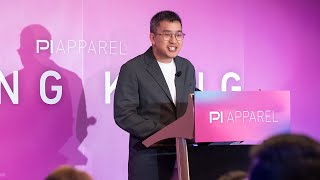
Arthur Ling, Director of Sustainability at FWKK, explains why apparel companies struggle with inventory. In 2023, 12.8 million tons of clothing hit landfills, and luxury brands sit on up to 40% unsold stock. He proposes AI forecasting, faster buying cycles like SHEIN's, and closer supplier partnerships to cut waste and protect margins.
Chapters
Good afternoon, everyone. Hi, I'm just going to start by reading out the little synopsis that I prepared to get everyone focused on today's topic. Managing inventory can be difficult due to unpredictable consumer trends. Overbuying results in wasted resources, while underbuying leads to lost sales. Therefore, it is important to find effective strategies to ensure better margins for all parties involved. Can artificial intelligence solutions, new buying practices, or strategic partnerships with suppliers be viable options to achieve this goal? So, hi, my name is Arthur Ling. I'm the Director of Sustainability and Customer Success at FWKK. FWKK is a third-generation swimwear manufacturing business We've been making swimwear for the last 60 years. I'm the youngest member of the third generation, and I have to emphasize I'm the youngest because I actually have the most white hair despite being the youngest in the third generation. But before joining the family business, I worked as a Hong Kong lawyer in construction arbitration. So I went from lawsuits to swimsuits. All right, so let's get— last year we produced roughly 24 million pieces of swimwear. FWKK has production sites in China, Cambodia, and Vietnam, one in each. And like many of the presenters here today, we are a sustainable organization that has adopted the low-carbon manufacturing program like Liebherr Style mentioned yesterday. And we also use the HIGG platform to benchmark our environmental progress, as Cecilia from Legend talked about yesterday too. So before I dig into this talk, I really have to thank Po, uh, their— especially their ChatGPT-4 bot, um, helped me do a lot of research for this talk. Um, and so thank you, Po. I could not have done it without you. Right. So let me, uh, start here. So when I was asked to speak about managing inventory, I thought, maybe a brand would be better suited to discuss the issue. However, as a manufacturer, I realized this was also an excellent opportunity to highlight our challenges and discuss potential solutions for the bigger inventory problem. So let me attempt to set the scene. So firstly, brands must balance consumers' changing preferences, consider social media influences, or changing lifestyle trends. Certain products, especially swimwear, are also highly seasonal or trend-driven. So even if a brand correctly identifies the product, it must ensure its suppliers and lead times can react or deliver in time to capture the sales opportunity. Suppliers will quote different lead times depending on their overall capacity. But more importantly, the availability of materials is usually a determining factor. If a brand overestimates their demand, it can result in excess inventory that ties up capital and incurs storage costs. To clear such stock, brands need to heavily discount their products, which erodes margins contributes to waste. On the other hand, if a brand underestimates their demand, it can lead to a loss of sales and potential damage to the brand as customers turn to competitors. All this impacts your gross margins and profit, but the impact on the planet is equally important. And as Edwin talked about only just this morning, the supply chain of the future will be a smart one, meaning that it will be more accurate, and generate less waste. So allow me to illustrate this with a simple slide. This is a typical purchase order placement plan from a fictitious brand. As the manufacturer, we received the first forecast in August of 2023. The final— and that forecast totaled 910,000 pieces across 3 different bu-byes. The final buy totaled $1.1 million, which results in a total variance of $23,000, which is within a plus or minus 5% margin, so it looks pretty good. However, if you look deeper into the table, particularly the bottom row, you will see that for Buy 1, there was a decrease of 24% in actual versus forecast. For Buy 2, there was a whopping 42% increase in actual versus forecast. And then for Buy 3, there was a 67% decrease in actual versus forecast. As a manufacturer, thousands of employees are counting on me to provide for their families. This is a considerable responsibility, and the way that these forecasts are done at the moment is greatly exacerbating this problem and the current buying practices. So I really believe that AI can and should be used utilized to improve upstream forecasting, which is only one part of the inventory equation. So here is another quick slide to show why we need to do this as an industry. And I borrowed these numbers from a presentation I listened to a couple weeks ago. But here's the numbers: 12.8 million tons of clothing were sent to landfill in 2023. And within the apparel industry, we can roughly agree that 30% of inventory is never sold. And potentially it's 40% for the luxury category. So that's a lot of waste. And according to Cecilia's talk yesterday, sustainability is what is at the forefront of Gen Z's mind. And that's going to be continuing to be a growing area of concern for them year on year. So this is why we need to address this inventory issue. So the billion-dollar question: how can brands buy more accurately to reflect market demands? I'm going to talk about 3 things. The first, AI solutions. Two, new buying practices. And three, forming strategic partnerships. So let's dive into the first solution. How are brands using predictive AI? Now, some brands have already adopted AI very early on, uh, particularly generative AI machine learning algorithms. And according to them, they are already achieving fantastic efficiency gains, and that's increasing their margins and profit. But by how much? That information is not disclosed. I'm sorry. But in my research, here are some of the most exciting examples of how AI is being used, uh, by these brands. So firstly, uh, it includes using AI to determine what the best inventory position can be for a high-performing physical store. So if you have one store that's selling really well, you can use AI to analyze what was the inventory mix of that store at that particular point in time. And you can use it to perhaps help other stores that are not doing so well and use that learning to aid them. And this helps with full price selling down to, uh, style, color, and size. The second, um, way that AI is being used is for reorders. So AI can determine the quantity required for in-season replenishment following a successful small quantity test of the product. And this is something that Stanley also touched on yesterday, and that there's a trend for companies, uh, and brands to buy small initially, and then chase if they see the sales coming back. And that's something that AI can help you do. Furthermore, if you have a new store opening or we call them a memorable experience. So, an example of an experience could be a yoga session from Taylor Swift herself, and that would drive significant post-workout sales. And AI can help identify what should the what should the correct inventory mix be in that particular store or during that particular experience to help you maximize sales. AI can also help brands identify a product's likely return rate, and it can give deep insight into what drives that. So you can give feedback back to the product development team to correct this very quickly therefore minimizing returns in the future. And finally, and this is by no means an exhaustive list, but AI is constantly assessing social media sentiment about previews of new product categories and providing speed to insight, which allows you to make better buying decisions or give you the confidence to go deeper into the buy to realize more sales. These are all good examples of AI in practice on the retail side. Uh, but I personally hope that AI will, or perhaps it already has, uh, I'm just unaware of it from the customers that I'm working with, but they can be utilized more also for that upstream supply chain optimization I was talking about earlier around forecasting. But as Stanley said yesterday, he will leave that piece of, uh, the puzzle to the brands to work on themselves. I next want to dive into the human and AI dimensions of demand and inventory planning. And I believe they go hand in hand. And I firmly believe that AI enhances a human's ability to do their jobs. Humans fully understand the business and the strategies that leadership wish them to, implement. Humans also can collaborate together using the fast insight that they've now gathered from AI to make more solid decisions. And that human intuition or gut or whatever you want to call it is going to be more valuable because now it's combined with even more insight and data from AI. Ultimately, AI is going to give you the data that you need, But the decision rests with the human to make that final buying decision. So on the other side, AI is helping humans, uh, and based on those 5 examples, how it went about to achieve those 5 examples, it's analyzing vast amounts of historical data, uh, that includes sales data. It can scrape information from the internet to help, uh, make its decisions. That includes things like the weather, perhaps a local event, the demographics of a certain region, the social media sentiment, and maybe there's specific marketing activities that are happening online that are driving certain sales. AI can purge through customer review information. It can look at returns data from physical stores, e-com stores, your wholesale e-com transactions. The more data that can be derived from an e-com sales point, including, for example, the clicks, and items in a basket but not generating a sale, even how long a customer is holding something in their basket before paying and then removing it from the basket, this is all valuable and relevant data you can harness AI to study and summarize for your decision-making. So my company is only in the early stages of exploring AI, and we're mapping out our roadmap. Map, but in that initial process and listening to those who have forged a road ahead in other industries, um, I've reached some guiding principles, uh, that I wish to share with you about AI. So first, you really have to identify the problem you wish AI to help you with, and that's a challenge in itself. But if you are able to do that, the next question is, can AI or whether AI can actually solve that problem for you. AI is not gonna be the solution to everything. But if you approach it like that, you will be disappointed. It's also good to remember that math is math. And when you boil AI down, it's just really complicated math. So if you don't get it, it's okay. It's complicated. It's just math. Not everyone's good at math. Some people are. I'm not. AI is not out to take your job. I recently attended an alumni gathering of my alma mater here in Hong Kong, and the current Dean of the School of Law put it this way: AI will not take your job, but A human who is competent with AI applications and utilization will, because they will be inevitably more informed and efficient than you. Or as a targeted Instagram ad put it to me, if you are only using ChatGPT, you are already behind. That really hit me. Um, at least I'm using Midjourney, so I'm not completely behind. Um, next, AI provides speed to insight, which helps to inform decision making. And to be successful in your AI implementation, you must have an enterprise-wide technology evolution strategy that's flowing from the top. And finally, uh, and this one's key, AI isn't perfect. Change, as all good things, will take time. So there are bound to be failures along the way. So I hope as you continue your AI journey, um, perhaps these guiding principles can help you. Now moving on to the second prong of solutions, um, and this is related to, uh, new buying practices. So there's always been a lot of talk about just-in-time or vendor-managed inventory, but these are not really new buying practices. And for the interest of time, I'm not going to discuss those today, but I do want to focus on two companies who are really shaking up the traditional way of buying. And actually Stanley gave a lot of great insight into one of these companies yesterday, um, SHEIN. Shein and Temu. So I think it's safe to say that both have already changed the definition of fast fashion. American consumers can enjoy extremely competitively priced goods because of the de minimis principle, where e-com purchases under a certain value can enter the US duty-free. And this has allowed for the rise of Shein and Temu and other e-commerce giants. So what are SHEIN and Temu doing? They are creating products that use AI to analyze what branded companies are selling well. Then they figure out how to make the exact same thing without any branded affiliation, using less costs, cheaper materials, and it gets to enter the US duty-free. So thanks to YouTube and other platforms, I'm sure you've all seen SHEIN or Temu hauls where people buy a lot of things and they're very proud of what they've bought and they're bragging, "Oh, I got this at a great deal." These sales or these videos, they even provide more demand indicators for AI to analyze. So the comments on those videos will be dissected for value. SHEIN and Temu also have much shorter development calendars, potentially 1 to 3 weeks to deliver goods. So this really challenges that traditional buy-ready model where development can start in some cases 8 to 12 months before launch to market. And these startup brands have so much less decision-making hierarchy, which allows that development calendar to shrink more. And ultimately what it results in is they're— they can be less inventory heavy. So I've seen some of my customers now adopting much shorter development calendar, buying less and chasing more. But more importantly, because they are much less bogged down by inventory because they're buying in this new way of buying, they are more willing to choose speed over perfection. And because they can always adjust in a subsequent buy, the chase is so small. They're not bogged down by that inventory cash that they have to put in upfront. So this new buying practice is still not the norm in many of the brands that we work with today, but I can see small shifts in the mindset of our, the buyers that is gaining momentum towards simplifying the processes, getting rid of so much decision hierarchy, and there's momentum towards moving towards this much faster development calendar, which will allow you to have less inventory and challenge that traditional long development model that we've seen for so many years. Alright, so the final solution is one that is all about people and connection. And this subject is very near and dear to my heart. I feel the word partnership is really thrown around quite loosely whenever orders need to be canceled, lead times reduced, or a discount is required. And I honestly, I don't see that as a partnership, but I loved how the head of sourcing at Adidas put it to me. She said, um, she wants now to have the manufacturer take a seat at the table as equals. And I was listening to a podcast about supply chain, um, and the former director of sourcing for a major UK retailer paraphrased this notion in this way: Strategic supplier management is not looking at suppliers purely through a transactional value lens, but working with the top 20 to 30% of your suppliers who deliver the most value to your business and have a continuous dialogue where you work together to understand. And I mean really understand each other's business. So what I take away from that is we need to work together, suppliers and brands, and the brands really have to empower the suppliers to solve your most complex problems. If that involves sharing financial data to empower us to be better informed, positioned, to negotiate prices with our supply chain, so be it. Share sales data to empower us. If there's scope to review MOQs and MC requirements, let's do it. Let us have more meetings with your C-level executives because we want to gain insight into the challenges you are facing and speak directly with those who can make decisions. If you're doing focus groups with your customers, please share your customer feedback to guide our innovation and ensure that the quality of the product we are creating meets the performance. All of these examples of empowerment build trust, and by trusting in us as your strategic partner, suppliers will treat your business like their own and go out of their way to think of solutions to solve your problems. It sounds very fantastical, but I'm speaking from personal experience because we at FWKK are very lucky to have many customers we have worked with for more than 10 years, 20 years, and a handful for even 30 years. And the longest running one for us is 50+ years. And these are real partnerships where I have seen examples of the things that I have shared. Those customers can always count on us to have their back when the times get tough. And together we can create value and profits that are not visible on any budget plan. So as Cecilia mentioned yesterday, we invest in sustainability, and that is something that you will not see on the P&L sheet. But we must work together to make sure we are making the right product to realize full price sales and to prevent waste, whether wasted inventory from the supply chain angle, wasted capacity, or inefficient use of resources to meet sporadic demand. And data transparency and partnership are going to play a considerable role in achieving a sustainable future. And only if the future is secure can we enjoy the profits of our labor. So in a very simplistic conclusion, um, I believe that all three solutions working together in tandem will be a win for your business. Start or continue your AI journey and evaluate whether there is room to reduce your guardrails on the development calendar and process by truly partnering with your most trusted suppliers in order to effectively reduce the need for excess inventory. Borrowing from Edwin again, the supply chain of the future is going to be smart, fast, profitable, and it must be good and sustainable to achieve that. And we must manage our inventory and waste better. Thank you very much.










