Waste Less, Win More: Turning Fashion Waste into Business Advantage
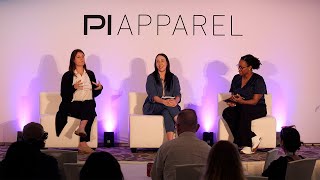
Lauren Harper moderates a panel with sustainability leaders Katrin and Oni on turning fashion waste into profit. They break down waste into materials, manpower, and money, then share case studies like Cyclo fiber technology and dead-stock marketplaces that cut costs while reducing environmental impact. California's SB 707 textile law is pushing brands toward supply-chain transparency and circular initiatives.
Chapters
Thank you all for being here so much. My name's Lauren Harper, and I am the Director of Sustainable Cities at LACI, and it's wonderful to have you all here, and I'm excited to moderate this panel with these two great people that I also know on a personal level, so. At a city, and really also at an ecosystem level, waste is really much more than an environmental burden. It's really something that is a resource and efficiency challenge, so today we're gonna focus on wasting less and the innovation that supports that, so, We're trying to think through what supports resource efficiency and how can we help the industry win at all levels of the triple bottom line. So we've seen tariffs and then increased costs impact the changes to consumers, distribution of supply chain, which means that as brands, we might be offering less options and less creativity, and then there's a ton of different byproduct that is underutilized. So in my experience, I come from an environmental science background, a conservation background, sustainability, clean tech, I've seen the power of public-private partnership. I've seen startups, and I've also seen the private industry have a deep curiosity in how to create a textile ecosystem that builds a circular economy, wastes less, and really supports a better supply chain. So today, I have two professionals with me. So I have Katrin, and I also have Oni. And so I'm going to introduce them both, and then ask them an individual question. So Katrin, first to you. So you hold an environmental study— you studied environmental studies at Brown University. You also studied apparel design from the Rhode Island School of Design. Go smallest state in the country. For the last 15 years, you've worked on different companies at different parts of the spectrum. So in New York, you worked at Lafayette 148, and you were working on sustainable product there, material development for that luxury brand. And then you also worked at SHEIN, doing some of that big e-global retailer giant's sustainability. So with that, can you share how you've seen waste not as just an environmental issue, but also as an economic risk inside of fashion?
Yeah, so I've been working in this space long enough to have some of the sustainability pessimism that I think a lot of my colleagues do. But I actually really love this topic of wasteless innovation, 'cause I think it's the one area where the business leaders can really see eye to eye with the sustainability leads, because at the end of the day, waste is a problem for people, planet, and profit, which means that it also has triple bottom line benefits to solving those waste issues. And so if we want to be protecting those 3 Ps, people, planet, and profit, we really need to look at the 3 Ms of waste, so I think of that as materials, manpower, and money. So I think when a lot of us picture waste, we're probably thinking about materials, thinking about all kinds of excess fabric and clothing being thrown out in the Atacama Desert. This is causing a huge amount of pollution in third world countries, and it's a problem that each of our brands is a part of, but it's also not a part of the value chain that most brands are thinking about. But as those tags are found in the desert, it can become a little bit more— it can be more visible to customers these days of whose products are ending up in these landfills. And a lot of brands have a really hard time dealing with that. But the hidden waste that a lot of us are more able to do something about is within the supply chain, within that materials management, because at the end of the day, wasting materials is a data problem usually. Working with a luxury brand, I went to their merchandising meetings, and they were saying, OK, the sell-through for these products is 60%. "that's really good." And I remember thinking, "A 60% sell-through? We're all here talking about circularity and how to make zero waste, and we're planning a 40% excess into our daily operations." That's 40% waste of materials, but also the manpower that it takes to make all those things, and the money that it costs to buy all those materials and hire those people. So getting rid of the problem of overuse of materials by using some of the data solutions that we have here can be really, really helpful for that process. And I can talk a little bit more about some individual ones I've used. But just to touch on the manpower one, I think we all know that time is money. And especially in the US, hiring people takes a lot of, cost. That's a huge economic risk. It can also be a huge economic risk when it comes to your reputation from human health and safety issues within your supply chain, within your warehouses. So the more that we can automate and the more that we can free up people from doing challenging labor that can also be dangerous, and the more that we can free them up to be doing things that we— that take a little bit more human creativity is really important. And then the last is money. I think everyone wants to waste less money, but often what they're doing is they're cutting costs in a way that is actually adding more economic risk long term. What do I mean by that? I think all of us have been in situations where a boss has said, no, you can't use that material. It's too expensive. Let's get a cheaper material. But over time, that can add to more returns of that product. Sure, you might sell more. I think Fit Collective did a great example yesterday. Of a best-selling product, but when it actually got into the hands of customers, they were returning it at over 50% return rate. And so something that seems like it was really, really good for the business was actually losing them money. So those are kind of the areas that I see the most need for improvement.
Yeah, I like the 3 Ms, money, manpower, materials. That's a good one. Okay, I'm going to come back to that with you later. And then Oni, you've been in this industry for 2 decades. You're a thought leader, you've done it all, you've built brands, you've helped scale businesses, You've driven innovation, you've worked in supply chain sourcing and design product development. You're also the former head of Vans sustainability team, and then you've also championed the circular practices there and worked on responsible strategies for both the business and environmental impacts. And then now you're the founder and have been the founder of ITB Beauty, which— and it's also, you're also a corporate consultant and you've had the experience of looking at clean beauty, but then also helping companies scale their circular strategies. So with that, from that perspective, what opportunities do you see for brands to turn waste streams into to a business advantage?
Thank you for that stellar introduction, Lauren. I appreciate that. I love this question because I think it's one that companies are not asking themselves at all or asking themselves enough. In actuality, are we using the totality of our raw materials? Or if you look at it through a different scope, are we getting all the juice from our orange, depending on the lens that you're looking through? I think from a pure margin perspective alone, the opportunity is actually enormous. And I'll tell you a little story. I'll give you an example. So I was working for a company called Adore Me, for context, they're now owned by Victoria's Secret. I was the senior director of new brands overseeing development of new brands with a perspective and lens through sustainable technology integration and innovation, and essentially would lay out white space based on research that we would do. And then we would follow through kind of with a specialty towards each brand. There was one brand in specific where we were using a technology called Cyclo. Now there's many different versions of Cyclo, it's been about around for a little bit. They all have certain restrictions, but it's a great technology. And essentially, it takes your production fabric waste, and it utilizes it in a closed-loop system with no water, no re-dyeing, and it spins it into long filament yarns that you can then utilize for new production. Now, this sounds really simple. It's not simple. It's like a 12-month rollout. You have to obviously test it, pilot it, make sure it works into your supply chain.
Absolutely.
But once you get something like that integrated, that concept is actually wild. Actually, I'm going to get more excited about this because I'm a chill person. Listen, that concept is actually wild because you're taking something that's a loss, right? So Adore Me, they own many brands. The span of product genres is all the way from like activewear, sleepwear, bras, swimwear, right? Let's think about a size extra large one-piece swimsuit that has crazy cutouts. We're talking about like insane yields. You should be hitting a 75% margin. You're probably hitting a 59% margin. Something like that. You're taking something like that, and not only are you flipping it on its head, which was a complete loss, and now you're turning it into net positive profit margin. And not only that, but you're able to take that and shift it into your next production round in a closed loop, and then that's also saving you profit margin on your next order. So I think that, again, it sounds really cool and easy.
Yeah, it does.
It took like 2 years, but I did it successfully. They keep making it cool and easy. Yeah.
Woo-hoo.
It has to be integrated into your supply chain in a way that makes sense, right? But something like that can be life-changing for a business, can be life-changing for a sustainable economy. And I think money speaks, as you said, and so that's something that shareholders really care about, unfortunately. And so that's something that they cannot ignore, but at the end of the day, you're doing something positive on a sustainability front. And from a strategy perspective, if you're working in design or product development, et cetera, instead of thinking about a singular product or your merchant wants you to come up with a singular sustainable collection, we've all been there, fun. Instead of being like, OK, I'm going to use recycled polyester, which is like the best of the worst, I think it's really important to think in terms of long-term ingrained evergreen systems and strategies that you can unfold into the entire ecosystem. Of your supply chain for long-term success. So something like that, it's really cool, it's really innovative, but we were able to put it into the larger fold of the ecosystem of our supply chain. So that's just a little bit example.
Amazing. A new part that's actually feeding in and then also feeding back to the margin, which is amazing. So both of you spoke a little bit about working with other people, working with different teams. And I can't speak for all parts of business, but I know that, like, From where I've been and probably where a lot of you have been, sustainability takes a village if you're going to implement it. You've got different teams, different personalities, you've got different jargon, different ways of operating. Even at my organization, each team is its own island sometimes. And so this can kind of hinder project progress or even have a project be deprioritized because people just don't understand where you're going. So within that, how do you guys, especially also with this current climate that we're in, with people also maybe in our conversation also taking away— people wanting to take away or move away from circularity. How do you foster inter-team collaboration within an organization to make sure that sustainability or circularity is a shared value, wasting less is something that everyone is on board with, and how do you convert that into an actual actionable or policy-based type of goal?
Yeah, I'll start. Is that good? I think if you think about each department, like if a company is the United States and each department is a state and you have highways running through, right? I'm going to use a little metaphor.
I like it.
She's like, I don't know where you're going, but you got to have the traffic moving, right? We can't have a bottleneck of traffic. I think a lot of sustainability experts sustainability product development experts really think that their job, and I know it is because I've had lots of conversations, think that their job is to convince their cross-functionals that something has to be sustainable or convince them to integrate something into their ecosystem, but I truly disagree. I think we really have to meet departments and people where they are, so it's not my job to go meet with the marketing director and say, we have to do this, we have to talk about this. Actually, a funny story, when I was at Vans, the head of marketing. She's hilarious. The first time we ever met, she sat me down and she was like, Oni, I really like you, but I just want you to know that I will never talk about regenerative farmers on social media. And I was like, cool, bro. You don't have to. And I think she was so shocked because that's not the typical approach. But you don't want to bottleneck traffic. State, every department has their own goals, their own perspective, their own timelines, their own initiatives, and their own budgets. And so you have to respect those departments. Sustainability is going to touch more departments than anybody else. I mean, even down to the landscapers and the people that handle the trash and the recycling in the building, right? And so it's really to see where those business avenues align and how you guys can move forward seamlessly together. So one of the things that I initiated when I was at Vans is they had never had consumer insights towards sustainability ever. So I was the first one to get that across the line. And the reason that it's so important is because at the end of the day, look guys, we're still producing stuff and that's not great, but our job when you work for those companies is like, you have to sell whatever it is, shoes, you have to sell hats, but we have to take responsibility for the things that we sell. Having consumer insights really lands where that specific consumer understands the product and how they understand sustainability through that product. So we know the top touchpoints to sell sell these shoes is like, wanna be cool, wanna have good shoes that fit well, like whatever, right? I don't remember all of them. So then we figure out where sustainability lands on that map and how do you attach those two? So it's natural synergy in building that consumer loyalty and trust over time, but it really takes time. So I hope this is a really long way to say, meet your other departments where they are. Build those relationships so you can keep the traffic flowing in unison. Don't bottleneck anybody. And then over time, I think, things will have a natural flow and you'll figure out how to integrate it into your supply chain. Now, having that said, you are going to have conversations that are not natural because you're going to be like, we want to use these regenerative materials and they're going to raise costs like $0.50, smart, smart, and they're going to be like, get out of here. We can't do that. The profit margin has to be 72%. You will face challenges like that. I think if you have good leadership, you're going to look at it from a holistic perspective. What is the totality bottom line, meaning not not what's the margin on this one collection, what is the overall margin and where can we affect things in our supply chain that actually ease tension?
Yeah, absolutely. And similar to looking at lifecycle analysis, what's the scope? And also, where do we want to put our focus on? What are we trying to reduce? What are we trying to improve? And then, Caitlin, to you, the same question. How have you fostered inter-team coordination or collaboration?
No, I completely agree. I think as sustainability professionals, we can be a bit perfectionist. We want everyone to be doing something 100% sustainably, and we may have a grand vision for a brand or a product or a campaign, and we're like, it has to touch all these different parts, but the fact of the matter is, if we want any part of that to go through, it can become a bottleneck if we're not meeting our teams where they're at, and I think there's two ways to kind of walk and chew gum at the same time. I think the first is the long-term approach, and that's with education, making people actually understand why does sustainability matter. Now, as someone who grew up with that sort of ethos, and like studied it for 5 years, and then had a whole career dedicated to it, I don't expect anybody else that I work with to have that background, and to care at that level. Some will, and that's great, but that's the minority. And so that education piece takes time. So some things that I've done for that part is partnering up with the HR department, because they know that if they have a more sustainable brand, their recruitment will be easier, they'll get better talent, and have to pay lower salaries, not lower salaries, but more people will accept a job that doesn't pay as much if they love the brand and what the brand stands for. So HR teams get that, and also you'll retain more of your talent if they really feel passionate about what they're doing. And so a big part has been, um, putting on just awareness events that are fun. The HR budget already allots for a monthly happy hour, so like, let's make them all themed around sustainability and have a, uh, movie screening for the cost of, um, the true cost. I can't tell you, I put on this movie screening, I wasn't sure how many people would come. We served pizza, so some people came, but one of the people who came was the head of the procurement department, and they became my best champion when it came to procuring sustainable materials. So you really don't know, and you have to meet, and you meet people where they're at. Another fun event that we did, because people just like People want to have fun at work, they don't want to do more work, but the education part has to be fun. We put on clothing swaps right before the holidays. We had people bring in their clothing and learn a little bit about circularity while like getting to shop at the same time, and then everything that was left over we donated to a good cause. This was a women's like kind of workwear brand, and so we partnered up with a group in the city that supports women from more difficult backgrounds in giving them outfits to interview for and be able to really take advantage of their economic circumstances. And so then we got volunteers from inside our team to go and present to these women and to help steam things and hang them up and give them the real sense of these clothes are meaning something in a community. There is a social impact of these clothes. Clothes, and also, if all this had ended up as waste in a landfill, it would have an environmental impact. And so it was little things like this that allowed us to really grow a cultural shift within the company. The quick way to do it, to get quick wins, and to get people understanding what this has to do in their daily life, is collective problem solving. So you have education, long term, collective problem solving, short term. Everybody has some problem, and it's a business problem that they have that they really want to solve within their department. I can tell you there is some way to spin a way that you can help them with that in a sustainable sense. And so I did this a lot when it came to bringing some of these sort of vendors with technology into a process to help us save, use less manpower, less time, and save materials. So giving example of like bringing in Browzwear for our print design process, we— I can't tell you, when I first started, we were working with Italian mills. We would ask them to send us a print. They would print out a huge piece of paper the width of a fabric and ship it overseas for us to look and see what the scale would look like. And then we could sort of cut out a body shape to to see what that would look like. Huge amount of time, huge amount of carbon emissions, huge amount of waste. So we implemented Browzwear to be able to make 3D garment forms and be able to, in real time, shift how big the scale of the print was so that our design teams felt more empowered and they could make better decisions. And we were able to sell a lot more pieces when it came to the sales floor because if a, if a Neiman's came in and they said, okay, we like this, but we don't really, we think it's a little too big in scale, or we like this dress pattern, but can you make it in a shirt? We had the ability to do that and run it over into the showroom right then and make that sale. And so you were wasting less in terms of all those things, but you were also solving a business problem.
Amazing.
And I have more examples than that, but I'll stop for now.
It's just also great that you guys also put together not just analogies and metaphors, but also like real case studies of where you've done this, 'cause I also really enjoy having fun at work. So if I have to learn something that's not about sustainability, I want it to be fun too. Which is pretty cool, Lauren, it's fine. Well, one of the other things that I have learned that still kind of haunts me is a statistic that we have enough clothes for the next 6 generations on the planet. And I think we talked earlier about how there's a lot more young people who are interested in going to thrift stores and things like that. And then even with the fires that we saw earlier this year, we saw an outpouring, an overwhelm of people donating clothes, really showing that they want to do the right thing. But a lot of those ended up probably going to landfill because it was too much at one time. Time, right? And then over the past year, we've seen SB 707 come to light and a lot of EPR bills, which are asking really brands to think about their responsibility. And trying to do this and be in compliance with this seems like a really daunting task. And we still don't necessarily know how we're going to get there, but we're in the rulemaking process. So I want to know from you, how do you feel like businesses can move beyond compliance and really transform like wasteless innovation, waste reduction innovation, whether it's through transparency or whether it's through looking at different ways to recycle on the floor into both a short-term and long-term advantage, and also maybe even build brand loyalty along the way.
Yeah, I think the good thing is that all of this legislation in New York and California and the EU is sparking, it's the catalyst to these conversations that some people like us maybe have been having for a really long time, but it's forcing people to really sit down and think about these things. So I think that's the good thing. The bad thing is the lack of preparation on the side of SB 707, for example. We've talked about this before. How are they going to achieve this? Ah! Do you want to tell people what SB 707 is for those?
Sure. So SB 707 is the Textile Responsible Recovery Act. So it's really focused on figuring out what's the extended producer responsibility, how do you look at things at end of life, and is there a way to create a fee for brands for them to pay into a system that helps recycle and recover those through a product— I forgot what the PRO means. Essentially creating a PRO, someone who's an organizer who's in charge of that product.
Product Responsibility Organization.
Responsibility Organization.
Thank you. Yeah, and there's an argument that we don't have the infrastructure locally to kind of support these systems, which is why America has made things overseas for so long. But anyways, another topic for another day, but it's super interesting and it does feed into this conversation. So I do see why legislation is pushing now. We're behind. We have about 50 to 60 years left on this planet, and the few regenerative farmers we have are what's slowly keeping us going, and people like us are really trying to move the dial, I think, to start, if you are starting your journey in sustainability, I think start by looking at two main business structure buckets. One is your data systems. How are you storing your data? Where are you storing your data? How are you measuring your data? The second one is waste management. How are you actually collecting the data around waste management? Where is your waste going? Do you own your factories? Do you not own your factories? When you have that transparent information and then you can connect the two, there's a lot that you can do with that information. To then move forward and really ingrain evergreen systems long term. I keep saying evergreen, take a sip every time I say evergreen. But it's super important because you want to be able to take strategies that you can ingrain into your supply chain long term and be able to track data even post-consumer experience. And then short term, in the immediate, have short-term KPIs, have short-term goals, within a roadmap that you can track. Nothing is perfect, but I think if you understand where your data is coming from and you understand where your waste is coming from, then you can really put two and two together to enable those things to speak smoothly.
Yeah, and I'd say, you know, what do they say, like requirements is the mother of invention. I think that regulations are going to change the math a little bit on, oh, do we really need to worry about this? Well, you're about to have you have to pay tax on it or fees on it. So you actually will have to put this as part of your business model and understand how it affects your P&L. But like take that as an opportunity. I think, you know, take that as an opportunity to do that packaging assessment and see what is even coming in your products. Do you need all this packaging? Can you actually save money on weeding out some of this packaging? Question some of the assumptions that you have, or the hidden wastes that are within your system. For example, deadstock fabric is a huge, huge problem, like worth millions and millions of dollars. I don't know the exact figure, so I'm not going to try to quantify it, but for most brands, you know, they're sitting on tons of fabric liability, and their warehouses may know that, and maybe their procurement teams have an idea of that, but their design teams don't, and they haven't been brought into it at all. So it's really about, okay, how do we either recycle this to make room for more, or how do we sell it off? But it can be really difficult to do. I, when COVID happened, most brands were just drowning under the amount of deadstock fabric and finished goods that they had because they couldn't move it around the world. And at the same time, the design team that I was working with was like, let's have a meeting, Okay, how are we gonna make the next collection? We can't get materials. It was like, we have a lot of materials that we can't sell right now. Let's get creative, let's just do the data tracking, let's figure out what we've got and redesign the next collection around those materials. And it was such a novel idea, but when you're thinking with a circular mindset, I think these things feel so obvious. Another thing that we did was bringing in a tech platform solution called Allocia. At the time, it was called Queen of Raw. But they are a SaaS platform to help brands sell and buy deadstock materials from each other. This is material that is perfectly good, but it's sitting in warehouses for various reasons because it was overbought, and then the department stores decided that they didn't want to actually order that many, so then the brand becomes stuck with all these materials. Well, another brand might be able to use them perfectly well if they're not a proprietary print or something, but they just can't see it. How would brands know that? So this Alokea platform is a way for brands to start thinking about how to use other brands' high-quality waste materials and actually have it be a valuable input and relieve those brands of some of that fabric liability cost. One other example that I'll give is that brands need to start moving— not that they need to, but we would suggest that they start moving away from only thinking that selling more stuff is what is going to be right for their business, is the only way they can make money, tapping into the circular economy and figuring out, okay, for footwear— I'm working with a footwear startup startup called CYCON right now, stands for Circular Concierge, and they're working with brands who their customers are coming to them and saying, "Hey, we would love to do repair," and they're like, "Sorry, we can't do anything about that. We can't do repair." This app actually allows those customers to go in, take pictures of their shoes, and it uses AI to assess what needs to be fixed about them and how much it would cost and send that bid to local people local cobblers in the circularity space. So for brands, and brands can take a small percentage of that repair money, so that allows them to offer a new service to their customers and keep that customer kind of in their own circles, and also allows them to have an approach to their circularity strategy as well as supporting the, the local social economy. So I think more value can be made that is not everybody is knowing is there.
That's fair. That's a good excuse for that.
Yeah. Sorry, we have 2 minutes.
No, you're fine. We do have 2 minutes left. But often, so we talk about a lot of the ambitious goals that people have. A lot of brands sometimes look at folks like, and if there's anyone Patagonia in the room, you guys are doing a great job, and they're trying to figure out, how do I also get to that same phase? But they haven't necessarily dipped their toe in the water. Water yet. So for businesses that are looking to figure out their wasteless journey, their more sustainability journey, Oni, what do you think are some— what do you recommend as a first step, and then how can these companies benefit over time?
Sure, I'll keep it short because we're almost out of time.
Yeah, yeah.
I would say at a complete baseline, transparency is really the key to solving any sustainability issue and really understanding not only within your supply chain, but even post-consumer. Why you're doing things a certain way, why you're sourcing certain materials, why your margin is where it is. If you have complete transparency across your supply chain, that will enable you to make solutions. I already touched on the data buckets. I already touched on the waste buckets. I think that was pretty clear. But I think if you take that approach, knowing that you need transparency in order to be successful in that realm, that will go volumes. I would also say that when you create a roadmap, you can build certain things in for long-term success. For example, a shoe recycling pilot with SuperCircle like the one that we did at Vans, that's something that will lean towards a full complete circularity programming for future that will really become a larger philanthropy play, will build consumer trust, it'll have a play in margins, it'll affect the overall sourcing of renewable energy and renewable materials, whereas if you have something like an internal recycling initiative, that's a short-term play. That's a KPI that you mark off to feed into things that will have a more extensive marker towards your success.
Thank you. That's helpful. And then—
2 seconds.
Katrin, really quick, what next step do you recommend that companies take today to start? Their wasteless journey?
I'll just reiterate, figure out what the problems in your business are and find— you don't even have to hire a professional to do this. If you want to use ChatGPT and get super scrappy, figuring out how sustainability principles can be solving those. And then make sure you tell the people that you're working with that you're helping them solve their problems how this activity is affecting sustainability. Be that touchpoint of sustainability within your brand. But help them solve problems that they know they already have so they fall in love with it.
Absolutely. And I think unless there's any questions— are there any questions from the audience from the Slido?
No?
If not, if you guys can give a round of applause to my two amazing panelists.
This has been amazing. Thanks, Lauren.
Thank you guys so much.










