Why Cars Need to Feel Human Again | Inside Lucid Motors’ Interior Design Philosophy
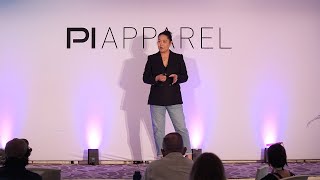
Joanne, an interior designer at Lucid Motors, argues that car cabins need to feel human again. She describes how Lucid uses natural materials, light, and personalization rituals like a jewelry-box drawer to create spaces that feel like personal lounges rather than sterile machines. The company's "Sanctuary" mode synchronizes lighting, sound, scent, and seat massage to support well-being.
Chapters
Hello. So, hi, my name is Joanne. I'm your closing act for 2025 PIAO Parallel West Coast. So welcome. Yeah, yeah. As you can see, The image. For me, life is all about storytelling. Design is all about storytelling. So let me spend a few minutes to tell you about me. I spent the last 20, over 23 years designing the smallest space, small, interior, about 100 cubic feet. So it's little. It may sound tiny, but it is so personal. It's a car interior. That's what I do and what I love the most. A tiny is the personal space where I could create the most intimate connections between human and machine. So you may think that I'm at the wrong conference with a car gal doing an old-fashioned apparel, but I assure you that we have a lot in common, especially these days. So I studied in LA and moved to Michigan for 12 years, the mecca state in North America, car company. Worked at Ford Motor Company, loved it. Came back to California, but this time not Southern California, but Northern, where all the innovations were happening. I mean, I love it there, but let's just briefly talk about the Bay Area, Silicon Valley. It is a global mecca center of all the innovation that we know of today and the technologies that I cannot live without. And that changes how we live our life and our culture. It's— but it's always has been focused on the software, internet services, the latest wave of artificial intelligence, ChatGPT, AI, cyber security, machine learning, autonomous vehicle. Not to mention eVTOL, which is the vehicle that goes up in the sky. But the latest movement is humanoid robot. That's the magic world for me, human. So all this innovation, all the time that we spend last two decades, where is a human in that? But that's where we come in. We come in as the creative mind to put the humanity inside of today's life cycle. Because the storytelling— I'm not a particularly romantic person. I have my dear old friend from school, Safir. He will now— he'll tell you I'm very dry. But when it comes to designing or creative process, that becomes my love story every single time. So I joined Lucid Motors back in 2014, a small, very ambitious EV startup with about 70 people. Now we— I hear that we are over 6,000 globally. Cars are increasingly described as computers on wheels, and I blame certain company which I love. But when you step inside, you don't want to feel like you're walking into sterile machine. I'm human. So at Lucid, our work is about making sure that human warmth and tactility and emotions resonate, are never lost. My role has been the transforming automotive interiors into spaces that feels as intentional, personal, and human. I just went through a few slides without talking about the car. I don't like showing interior design. I always want to show how you could feel as a designer what we could offer. All of us in my field, we're racing towards digital, yet consumers are asking the opposite— more tactility, more warmth, more humanity. So we're seeing a shift where all the interiors are borrowing design cues from home furnitures, the fashions, the textiles, all the things that we touch and that we carry deeply in our daily lives. The textiles with depth, the natural fibers. And we don't— I think it's pretty simple. Um, the reason is because I can't— you don't connect with pixels. You don't connect with glasses. You just don't connect with the plastics by itself. It's not the same. It's not the same way how I feel about the woven fabric or surfaces that carries warmth under my hands, much like the way that Fashion communicates identity through the textures and drapes. Automotive industries, I mean, we could carry the language of care and intimacy through the surfaces that we touch every day. Familiar designers, we all have the same process. We sketch, we do 2D images, 2D. This is, for us, is our language, our— this is how we communicate. How I show you what's in my mind and what's in my head in 2D form. We do more sketches because I want you to like my design, and it takes days and nights and months to convince you that it's worth investing your 3 years of your life and millions of dollars to make this car. But I got to do a lot more to convince you. So at the point that I need to convince myself, like, do I love it? Am I going to commit to this vehicle, commit to this lifestyle for the next 3 years? Because that's what it takes to design a car. To the— there are many product process engineers and ergonomics, but for sake of looking at the lovely things, this is an image generated by Alias Modeling rendered by Maya. The reason why I chose this is, again, I'm not showing you a design. This is really old design that we've done 10 years ago, but this is the feel that I want you to feel. I want you to touch this fabrics. I want you to touch the seats with your eyes first, and you could almost smell it, and you could almost feel the light through this glass canopy. I want We use our images, our designs to touch. I want you to evoke all of your senses. So, speaking of senses, I love light. I design surfaces for natural light. I like to design cars where it has negative and positive surfaces. Many cars' interiors are very rigid and linear. And Lucy would like to design the large, simple surfaces with complex movement without any unnecessary decorative elements. All I need is the form that it invites natural light and you could dance with it. I told you I could be very romantic with design. Think of how pleating a garment catches the light, or how drapery softens The Room with the Shadow Play. The concave surfaces can— it can make you feel embraced and safe, while the convex surfaces, the form might give you the sense of openness and clarity. The light is not just illumination. For me, light is the emotional material. It may not be tangible, but it is something that we have, and we— I like to use it all the time. In a way, it's free. Designing with the shapes, the perception of comfort, and it could somehow create memories. So much like the fashion communicates identity through the texture and the drape, We, automotive interior, can carry a language of caring and intimacy through the surfaces we touch every day. So this is our first vehicle called Lucid Air. Again, I'm not showing you the whole dash. I just want you to focus on the areas that we pay attention because we designed the, um, IP— the dash normally is really big because they're underneath it. There's cross-scribing and airbag and air ducting, HVAC, the I mean, you name it. It's all plastic. But we shrunk the whole thing and eliminate unnecessary surfaces. We start carving. So how I see the interior design is we're not designing the positive. Positive needs to be there. I need steering wheel. I need screen. I need all this safety elements. So what do I have? The void, the negative surfaces, the areas that you don't see. Let's design that. And I think that could give you the sense of emotional connection and uniqueness. And that's where this Mother Nature comes in, in handy. Oh, the light, the beauty of it. If you design your surface and your texture or color with the light in mind, then you get surprises throughout the day because you'll be surprised how color changes and 4:05, 7:00, and the direction of the light and color of light, or the same time from, um, Bay Area, do you drive same time, 101, same car, it gives you completely different vibe of your atmosphere. And that is the power of positive and negative. And then EVs are expected to be really cold, technological, but who decided? I mean, I disagree. Just because it's a computer, just because we're on a computing system and the batteries, it doesn't mean that it has to be cold. In fact, EV platforms give us more freedom than ever. The flatter floor, the quieter cabin because there's no engine, And the new layout— a designer coming from Ford Motor Company over a decade, coming to Lucid— for me, it was interior designer's dream come true, and it has been that case the last 11 years. This is, for me, the new layout. It's an invitation to design sensual spaces. Where surfaces invite the hand, light soothes the eyes, and the material carries acoustic warmth. It's the same principle that we find in luxury garment— the sound of fabric, the lining against the skin, the cut that makes you feel seen. I love this jacket, by the way. I made it because I have different body shape, and I feel so comfortable. And I want people to feel this comfortable and this confident when you get into your vehicle, your space. And I think that's— that is our job as designers. So here you could see All the, uh, the textures that we use, it's just the simple beauty of a textured canvas, this draping everywhere. An interior, car interior, not home interior. IP to center console door to the back of the seat. Well, I don't look at it as a seat, I see more of a lounge chair. And do you want to put plastic lounge cover on your office chair that's just yours. You want something that pleases your eyes and brings warmth. So with that, I would like to share a clip of the video that how we operate at Lucid. This is— we filmed one of our CMF designers, CMF, color, material, and finishes.
I've always been drawn to sort of the beauty of objects and what makes something remarkable. It's the quality of the build. It's not just the materials themselves, but really how they all come together. That's been a very important philosophy of how we work. What makes something good design is creating with passion, creating with care. We're literally measuring the pitch of the stitch, the weight of the thread, the suppleness of the leather, how it feels to run your hand the wood, that it actually feels like wood. We're always looking at those little minute details, things that people probably don't even really think about. When you first open that car door, you're getting to enjoy the idea of being a passenger and enjoying the journey.
Before Lucid, I didn't work on materials, but as a startup, we only had one person, Sue Magnuson. We hired her because she had the most beautiful sense of style, sophistication, and we needed that. I wanted that, especially in the EV car company. I wanted to bring the warmth. She was born and raised in Santa Cruz, total California gal, perfect person to give us the color and the personality. Ever since, I learned so much about the textile, about the wood. So I don't call myself interior designer anymore because car interiors, we design plastics. I feel like I became a truly, truly interior designer who understands the tactility, who understands the emotional value. So this is our latest car, Lucid Gravity. You see that is again The photos just don't justify enough. They're beautiful. And if you sit in the vehicle, you don't feel like you're in an SUV. You feel like you're in, I don't know, some personal space. The center console is made of glass, actual glass. I fought for that. And when you move it, it just glides so beautifully. And everything that it touches feels like your home office. So, for Lucid, we often say the luxury is not about more, it is about care. The way door handle opens, the way storage drawer is revealed, they're not functional afterthoughts but the ritual. Much like the difference between putting on a beautiful suit versus my lounging t-shirt. We want every interaction with our interiors to feel like an event. A Lucid Interior is something that you wear, something you live in, crafted to remind you that you were personally considering every detail. This is another view of my, uh, one of my favorite views because it shows everything. It shows all the materials, but more than anything, it shows the volume. It shows the negative surfaces. It shows the light. I always bring images and I do this exercise at work with my team. If we were to have our final image or your rendering or your proposal, can I replace your image onto one of my mood boards? Do seats talk the same language? Do they belong together? And when they do, like, bingo, that's it. We have something. We feel this connection. And this is one of those images that I really like. It's a back seat, second row. You have a table, front seat, you have a center console. We call it a coffee table and your living room at home. And I know that it belongs to one person. But the car is mass production. But when you design something so carefully with such a detailed intention and thinking of human first, I think we could all relate to that. So one of the greatest gifts of design is in engaging people to make a space for you, for your own. Personalization. In our car, open storage space becomes like a drawer, a beautifully organized, deeply personal, telling you everything about the person who owns it. When you open a Lucid center console, it should feel like— it shouldn't feel like a container. I want you to feel like you're opening your jewelry box. It should feel very curated. And I believe that these small acts of personalization allows customers to imprint their identity and carry what matters most into their journey.
Lucid Gravity to me is like a magic trick. It's a series of amazing experiences that seem like they shouldn't be able to happen together. On the outside, it's nimble and agile like a sports car. On the inside, it's this big 3-row experience. And on the digital side, we believe technology has to serve the experience, not dictate it. It's about blending physical and digital experiences together to give that confidence, that control, that sense of mastery about handling that vehicle in these different environments, and to have empathy for the user.
Lucid Sanctuary is a desire for us to give multi-sensory experience to our customers.
If you need to relax, if you need to rejuvenate, the seats, the lights, the HVAC, music, and media all work together to deliver that experience.
It's not like watching a TV. We have unique screens, unique lighting. We have this beautiful spatial sound system, so you almost feel like you were there. Imagine you're going through this beautiful seascape, and the seat massage will mirror that. And we have the climate control to emulate sea breeze, for example. As it evolves, you'll have more features and more content specifically designed for Sanctuary.
OTA is a game-changing experience for the automotive industry. Anytime when we have new feature improvement, we can push it out to the customer without having them drive the car into a dealership. We want to have technology behind the scenes to create a sense of mastery. With the steering wheel, we looked at ways to support not only the typical sort of presses and engagements, but also to support swipe and gestures. So without taking my hands off the wheel or eyes off the road, I can engage simply and quickly with these new capacitive User Interface. We've got these 3 customizable buttons to deliver the value that they need when they need it. Maybe they want to adjust the temperature of the seat, open the glove box, or they want to adjust a mirror.
It's a way that we build trust between the user and the car. They know that the car will act as they prefer.
With Multitasking, we've got 2 different screens up front. I can let my passenger create the tunes while I'm navigating to a different place. Lucid Gravity is a step change. An SUV that really conforms to how people live and the ways in which families get around. To experience entertainment and productivity. To be confident in how I'm driving without distraction. To understand that my family is able to do the things that they need to do. It's beautiful, compelling, and interactive in a way that they've never seen before.
I work at car company, but believe it or not, that's how we speak. That's our language. We never talk about the metal. We never talk about— I mean, I talk about the bomb cost. I always get yelled at, but that's my job to go fight. But this is how we communicate through interior designers, engineers, UX/UI designers, ergonomics. I think I am very blessed and lucky to have this opportunity to create this, and I I'm very happy that I'm sharing with you. Um, so the point is, when we prioritize human needs of a space, we design not just for the utility but for well-being. Cars are becoming digital platform, but that doesn't mean that they need to lose their soul. Through materials, through light, Through mindful design, we can reclaim the comfort, identity, and the connection. The reminding people that even in a world of technology, design is still all about— it makes us human. And that's the one thing that we have in common, whatever you design. Thank you. Any questions? Yes. You have to forgive me. I'm very nervous because this is not my familiar playground. I feel so— I don't know. I don't know enough about— I learned so much, by the way, last couple of days about the perils and technology and how you guys all work together. So I will bring my own people next year if you let me. Yeah, I had a question.
You mentioned using light as a design element, which I found really intriguing. I'm curious, all your images were driving during the daytime. So I'm curious how you consider driving at different times and how that impacts your design.
Thank you for asking. I was waiting for that. So when we don't call it red car, blue car, green car, we have names. Mine, my first error was Tahoe. It's Lake Tahoe. And when you open the door, the steel plate with the exact location, the time, longitude, everything. And then you go there that time, you see the color that is really desaturated. Orange is not orange, is like a burnt brown. It's very, very moody. And black is not black. And we bring that into the vehicle. Mojave is California desert. I wanted to call it Death Valley, but then marketing said you don't want to call something death. So Mojave it is. A still plate is right before the midnight sky. Nothing is black because there is no man light. And you see all the lights, all the stars, and you see the gray, you see a darker gray, and it's just dense of light. And we wanted to bring that into vehicle. So we don't have a black car. The front, I call it a lucid black because it's like 85% semi-purple, cool gray, dark gray. That's the black. But the back seat, we go slightly lighter. So you have this contrast just like in the Mojave. And if you get a chance, please drive our car, either Air or Gravity, because they both offer canopy and go to Mojave at 1159 and just look up and you There is no word to describe screen. We have a lot of screen, a lot, but they're all curved a little bit. So if it's not a screen stuck in on your IP, it is actually a part of the design because it also carries the light, artificial light that we could design as a designer. So we also have a different font, different color, different background, so it doesn't distract you from outside. But it also gives you from daytime to nighttime different personality. And the sanctuary mode. I'm on a search for all the right scent, burnt wood to green forest, wet to ocean, the saltiness. And we designed the light that wraps around you and we never design. I don't like I don't believe in spending a lot of money on a light gets you better result. It's all about how we place the light, what color and where, and how much you could just distribute the light on the surface. So you cast, catch the light and then cast a shadow. And there is a drama. So we have the ambient lights. And then we have a screen, nothing but whatever you wanted. I, I always like the greens, and all I'm missing is the scent, because it is interior, it is a cocoon. And we're living in such a fast pace, and I need to be in my car because I need to be there tomorrow in San Francisco. So What do we do? We have a tool. Let's design a place where you want to be. It's not a tool that you take to get to your destination. Imagine that you get into my car and then as soon as you walk, because interaction doesn't— it doesn't have to start when you sit in. The thought of getting excited, I'm going to get into my car because no one could talk to me anymore and I could be in my cocoon. That is the start of the journey. And perhaps I could give you all that for 20 minutes a day. I know it's just a dream, but I think we're getting there. So we— yes, I work with Alexandra Bontemps. She's from Paris. She was not a trained fashion designer, but she was into all the fabrics and product design. She was truly industrial designer, and we— I worked with her a couple years at Lucid so that we could break this automotive interior design and adopt more personal lifestyle design into that. That's a really hard question. How are you testing the validating the emotional design? In a nutshell, we at Lucid, we use us, not all 7,000, but the people who are at headquarters. We use us as a benchmark. We use us as a database. And everybody knows their roles. You cannot be biased because what you're selling, what you are telling, what you're giving us information will only help your product. They love me because I'm 5'4" without the shoes. Apparently I'm the perfect average size, so I'm getting called left and right all the time. You don't want to call a woman like, you're just a perfect average. Thank you very much. Where do you want me to sit? So we do that and It's just being mindful. And when you don't have the army of people that you are accountable for what you do, and that's what we are relying on for you to tell me how you feel when we do all this validation, especially emotional. Because when we do global vehicle, one color may be perfect for me, but one color may not be great for you. It just It's not exciting, and that's what we rely on. And because we're— luckily, we're very global in our company and we could make our own. I don't know, it's UN. So sustainable material is the very special topic for me. We do use 3 different type of wool. I can't tell you exactly the term, but for two of the textiles that we're using are 70% recycled plastics involved, and the black one is 100%. So when you touch it, you may see, oh, it's not as soft as, I don't know, Mercedes. And I said, it's okay. It is really okay because it's easy to clean. It's the bottle that you— do you want it here or you want to be in the ocean? So for me, it's all about the education and using the right materials. The reason why it's close to my heart is it's beyond that. It's never about the fabric. For me, it's all about the journey. It's all about the process. I travel the world to visit our suppliers. I interview them personally because I don't know, I'm obsessed with this. And I ask them, what is your process? And there are multiple companies that we are willing to pay premium because they have 360, their, their own ecosystem. There is— we use leather. I went there and I actually almost puked because I smelled blood, but it is the byproduct. Surprisingly, only 30% of cow hides are being used. Today, 70% are just landfill. Not saying that's— I don't really eat red meat, but it's not because of health reason, it's just ethical. I love animal. But again, I cannot be me when it comes to business. I like using byproduct, whether it's a cow or soybean or banana cover, what is that's left after we consume, if it's not biodegradable, I want to find a way to use it. And I want to find the company, even if it's small, I want to support them as a smaller company also so that they could have a platform. Us being their platform, we're using this type of plastic or soil, we're using water instead of oil. We're not as comfortable as animal product, but it's okay. Look at us and we're doing something better and you're going to have to get used to it. So it's being small company actually help us to have a voice. But today's design, if you don't have a voice, you don't have a brand. That's where I stand and as company stands. And instead of making something easy and vanilla and cheap and mass-produced. There is the best business model there, but what we believe, how we want to survive, the only way we know how to survive is having a voice, having an identity, thinking about the people, being proud of what you produce. And it may be slightly more expensive, and we may be using different material, different companies and different sourcing. But at the end of the day, we would like to produce that matters to you so that you take care of your, your belongings because it's nice. And I think it's very similar talk that we had last night here. Sorry, I'm not wearing glasses because I can't really read much. Traditional sculpting shapes and flow modeling. Diego, clay, you're talking? Yeah, we do. I love clay. I love the smell of clay. I still have all of my clay tools and knife. I call her Martha because it was Martha Stewart's knife. That's perfect weight for my hand, and I've been using it for 20 years. Digital could only get you so far, especially car interior. You could never see the whole thing at once unless— there's no unless. There's no way except an alias or a CAD. So it may be perfect in CAD, but I— everything looks better and different in person. The perspective, the vanishing point, the distance changes and perception changes. So I'm a big believer of using all the tools that we have and cleaving part of it. Have you ever been expected to sign? I'm not really following the second question. Second one. Oh, yes. What does that mean? I see it as a— I'll be lying to you that I could— we could design something to please everyone. Ah, denim. It was made for a reason because the workers needed really strong fabric. It was made for purpose. But yet we have countless brands. Why? Because we're human. We are destined to express our personal identity. So when you design the car, Mini buyer will never buy Audi. Teutonic design versus playful, youthful, fun. French buyers, the Renault, Fiat drivers will not buy Mercedes. So it's about finding your customer and designing for them. The problem that I have is designing mediocre, hoping to please everyone. And I will have to change my job. That would be so boring. Okay, thanks everyone.










