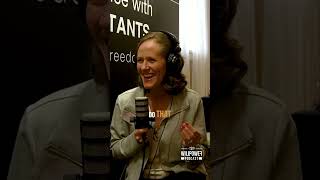
Highbar PT’s Blueprint for Culture, Brand & Growth With Michelle Collie and Dave Pavao

Michelle Collie and Dave Pavao built Highbar Physical Therapy from one clinic into a multi-location practice by choosing a distinctive brand (bright orange, "Get High with Highbar") and embedding four core values into every hire and daily decision. They prioritize clinician growth and belonging over hierarchy, train 80-90 students annually, and structure the business to prevent burnout by putting people first.
Chapters
This is the Willpower Podcast live at APTA CSM. We're here with physical therapy leaders and practice owners from across the country talking about where the industry is going and what it takes to grow in today's landscape. Get comfortable being uncomfortable. That's the message from today's guests, and they've built an entire company around it. Michelle and Dave from High Bar Physical Therapy join me today to talk about branding, people-first leadership, and what it actually takes to stand out. In physical therapy. This is the kind of conversation that will make you think differently about your practice.
Dave and Michelle, I am so excited to have you guys on the Willpower Podcast here at CSM. Thank you so much for being here.
Thank you. I'm even more excited to be with you, Will.
Thanks for having you, Will.
Now, what you guys don't know, I kind of alluded to this right before we hit record, but I walked up and down the aisles And I have been a physical therapist for 25 years. I have had multiple companies in this space. I'm telling you this because I'm very particular about brand. And I want you to know that in my humble opinion, you guys have the single best brand presence of any other company here at CSM.
Wow.
Yes. You get the Will Power approval and award for the best branded company in CSM.
I just feel like I won a prize.
You did. Unfortunately, it doesn't come with an actual prize other than this recording. But I wanted to bring that up because I was walking and your booth, it was, it was, uh, first of all, describe what you're doing at your booth. Whoever wants to.
I'll let Dave go.
Well, I was going to ask what stood out to you, Will. This is a podcast and not a television. So are you going to start?
No, tell me what you guys are doing. I want you to describe it for the audience.
Sure. It starts when you come around the corner and our colors are bright. We're orange. It's a bit like our personalities. Um, But our theme is Get High with Highbar. I think that's a little bit about being in California, maybe. It's a little bit provocative, which it should be to get attention. But then to us, it opens the conversation about how to get higher in your career. All right. So that's where it begins.
Well, maybe a little tongue in cheek, but I'll tell you that didn't land for me that way at all. Like the get high part, it was this, because when you look at your booth, the way it's decorated, it's all about high-level performance and you show different pictures of functional things on the back. I told you this yesterday, remember? I was like, I walked by, it was so different. I said that dramatically. The orange jackets helped though. Describe the jackets, Michelle.
I actually gave mine away last night. I gave them to one of the guys at Prompt because he loved it so much.
I wanted to ask for one.
Yeah, well, Mike Dwyer has mine from Prompt, FYI, but I'm going to track him down. Um, yes, that was actually the person who oversees and runs our student program, Michelle Falecki, who decided on the dress code, which were these sparkly, wonderful orange bomber jackets.
And you hear on the audience, like, orange sparkly, and you're thinking, no, there is something that somehow it pulls off this cool factor to the highest degree. It grabs your attention, but in a weirdly, like, oh, that's cool way, not in a, oh, look at those guys. It was so amazing. It's not the jackets I'm proud of, like, the whole messaging, the energy of the people. You don't have a massive booth here. You don't have one of these massive, like, things. You have a very, like, Will, respectable-sized booth, but what's coming out of it was Radiant. And we're going to talk today on this episode about how to differentiate ourselves. And here we are at the largest event in physical therapy. And to me, to even have a booth here means you're doing something at a level that's different. But for you guys to be the different of the different in the best way possible, I wanted to make sure I figure out what it is about you guys that makes this company so unique. Mean.
I'm kind of feeling pretty good about what we're doing right now, Dave Faber.
This podcast is going well.
Well, I will jump in. I will say, Will, I really appreciate your comments and a little story about HYBAR. We originally were an organization with one clinic called Performance Physical Therapy.
Yes.
Where I was at and Dave was a student with us 17 years ago. So this one clinic, we collaborated, we aligned, we always wanted to be the best versions of ourselves. And we learned from each other and we did stuff in the community and like we're this wonderful practice. And then folks would say like, oh, I'd like to open a clinic in my hometown. And we'd like, okay, let's do that. And so we continue to grow and evolve. And yes, we grew rapidly because we had people who wanted to grow and evolve. I was, had the opportunity to do a lot of things in the profession and learn a lot through advocacy and through APTA and private practice section, all of those things. We had so many wonderful friends and people. And then we realized, I was like, huh, I think we're actually doing something good. And so we said, all right, well, let's take it to the next level. And that's, we actually, 4 years ago, went through the whole process of rebranding and being very thoughtful about our name because we wanted to differentiate. We wanted to show that you can actually grow a company that's very much based on being unapologetically people first, taking care of your clinicians at a whole different level so that they don't get burnt out. They can grow and evolve and be amazing, and then they give great care. And so, yeah, so our branding was very intentional. Like how we made you feel makes me so happy because that was the goal.
Interesting. I'm going through a rebrand right now with Virtual Rockstar, and it's interesting because I've had all these things top of mind, and maybe that's why I was extra sensitive. They've been spending weeks with a brand specialist who's brilliant with colors, brilliant with words. So, uh, high bar, get it. I think that's really clear. I love that element. Um, why orange? Because the orange I feel like is an essential part of this. And by the way, the audience might be bored like, oh, who cares? Pay attention. Because if you're a PT student or a new grad who's trying to grow a personal brand, you should be. If you're not, this matters. If you're an existing company that is wondering why you're not grasping, you know, your growth potential, this could be a part of that. And by the way, this is one of the things that make it fun as well. So what was it about the orange that was chosen? Do you guys remember?
Yep. I mean, I spent a lot of time with some very interesting people learning about branding. It was a cool experience. We looked at lots of different colors and look around the exhibit hall. I didn't want to be— I didn't want to be the same as everyone else. And also, orange does bring you joy. It does create creativity. It changes how you feel. And so you'll see it in our clinics as well, because it also wanted to think about not just our clinicians, but our patients. How do you feel when you're on that healthcare journey, when you walk into a clinic? And we're not gaudy, everything's orange, but there's always like one orange wall or something. And so again, it's how colors—
it's a reinforcement.
Yeah. Change your experience.
Yeah, it's amazing to think about. Um, there again, rock stars, as you're listening to this, like the theme of this episode is being different. And by virtue of being different, we decommoditize, which commoditization is simply, uh, an economic term to describe how things become so similar that they start becoming less valuable. So for us to take a stand in the industry and for physical therapists to be different in healthcare, it's about being different. My favorite comedian is Steve Martin, and he had this quote, Cause he started out, he was very odd how he'd put like a bow between his head and like his whole comment was, I liked being different because by virtue of being different, I was already good because nothing could compare me to them. There's not a single business here that highlights orange the way that you guys do. And I, that's not the main thing. It's just an example of everything that you're doing from a branding perspective. And it's based on a culture you've already built. So this isn't like, I mean, you can start a brand and build towards that vision, but you already had the company. You more retro, is that my saying that right? Then you guys more like took what you learned and with where you wanted to go and connected that through the brand.
I do.
100%. Well said.
And it was a pause. It was a reflection to say we've grown for the past 15 or 20 years. And yet it also showed we were being intentional about where are we going the next 10, 15, 20 years. So it was a reset essentially to get our team excited. It, it actually was, was an exercise in revisiting our core values, doing it as a team and knowing if everybody understands where we're at and are excited about the future following this, then we've done something that's better than just our maintaining our baseline.
Yeah. And it's hard to stand out in an industry that is highly commoditized. When I remember branding my old PT practice, uh, uh, a marketer and a brand developer told me, you only have to be one degree different than everyone else in physical therapy because it's so similar. Most people like, what makes you better? The most common answer is, oh, we give better care. Really? Really? You know, that's not the thing that makes us better. As we learn, the only three true differentiators in the business are to do it better, faster, or cheaper. So with insurance, we can't really do much around that. Faster. I would argue that as long as everyone's doing the best they can, that they have similar outcomes. I'm sure that could be controversial, but how to make things better. You guys are choosing to do being better through your culture. So let's talk about these revisited values that you mentioned. What would you guys say are some of the key values that you think are what separates Highbar from every other business out there and makes it like so that I visually like come to you? When I'm walking around.
I'll jump in and it was, we created a structure around this process so we could be very clear that our values and our culture was definitely not a picture on the wall. Like it had to bleed through our organization. You'll feel it when you look at a job post, you'll see it when you're interviewed, when you're in the clinic. And I, you'll ask any of our clinicians, not ask them their values and how we expect people to be treated, they'll tell you what they are. So we have 4 key ones. First one is care deeply. Care deeply sounds good, but it's really about how you show up and behave. I am going to choose to trust you and know that you and I are always gonna like show up and be and act in ways that's gonna help the other person, right? I'm gonna take your perspective. I'm gonna listen, but I'm not gonna listen just to be like, oh yeah, I'm listening to you, Will. You're awesome. I'm gonna like listen and like, I'm gonna like really try and understand you. So whether you're a colleague. Or an insurance company or a patient, like that's what's caring. That's what it means to really care.
It's almost like taking people's agency and making, like saying, hey, we here as a value, it's a rule for us that if you're gonna be a part of our culture, you have to use your agency to go that mile deep because you really do care. Yeah. I wanna be present.
Like lean in and be present. So that's the first one. The next one is grow forward. I love this one too.
I love this one.
Yeah, I do too. Grow forward, because he's always like, grow, get bigger. And I was like, growth is about movement and movement in a forward direction. So as we grow, yes, we're going to do something called the toddling, which is practice at the top of the license, like continue to evolve yourself, not just clinically, but also as a person, like continue to grow. And so growth is like evolution rather than, oh, we're just going to open more clinics.
Absolutely.
So again, and that's also about embracing change. People will say we don't like change, da da da, but we have to figure out how to move with that change and have agency own it about it so we can have a better future. And that's one of our other sort of results with that. When you truly grow forward, you can create a better future for more people. Like there's a result with that. For everyone's sake, so they don't get sick of listening to my accent, we're gonna pass it over to Dave Paabo for the other two.
Before we go to the other two, I gotta say, Recently I was listening to a video from Tony Robbins. He made this comment, which I believe in to some degree, if not a lot of degree, about how the only way to find happiness in life is you're growing or giving. And I would, I would add the one that I thought he missed was gratitude. I think growing, giving, and gratitude are the three steps of being truly happy. So when you talk about growing forward, you're defining the word growth for me as a happiness principle so that I'm not about expansion for expansion's sake. Intentional creation from a place of personal desire so that we can become the best version. I love, I love growing, uh, Race Forward.
Yeah. Well, thank you. And so I agree with you. And so I do, we've actually bought on other brands as we have evolved our practice and they like purchase other companies. Yep. But they have to be culturally aligned. And so some folks are always like, oh, you're growing too fast. You're growing. I'm like, we're not growing. We're growing forward and evolving and supporting so we can have a better future, but it's a journey.
Yes. Love it. Okay, Peter, let's hear about it. What are the next two?
That's a great, great jumping off point. Lead the way. Lead the way. It's about being innovative. It's about carving our own path, and it's about doing it for our team. As you said, PT can really feel like a commoditized industry, it can wear on you a little bit. Healthcare is challenging in general, and Leading the Way shows that we can be creative, we can do it differently, we can be forward-thinking for our team, and it informs our decisions as a leadership team down to our clinic directors who are leading their clinics all the way down to the clinicians when they're onboarded. Be creative. What do you think? We're the type of organization that's very leadership-forward. And people very quickly get used to having their questions answered with a question, which is, you know, what do you think? Give me a few ideas. We don't have all the answers. As PTs, we learn that pretty early. And at every stage of your growth, that's still the case. So lead the way takes a little courage, makes you, you know, bring stickers to CSM that say, get high with Highbar. And things usually turn out well when you're there.
And I love how you have the jump hype thing that you got your, your station where you can measure people's vertical. And so people are jumping high and it's almost like this physical manifestation of what you're trying to input culturally in their minds of like, yeah, we are helping you reach further heights. Right? So I love that leadership concept. That's wonderful.
We also know how PTs think and a, a jump tester might as well be a magnet for PTs and students. We can't help it. They get competitive. They keep coming back.
That one guy wouldn't go away. He kept jumping. I was like, at my age, I'd go once and go, okay. You know, he was like, I killed 4. I'm like, all right, that's a, that sounds like someone in a really kind of fun way to filter is someone that might be a good fit for you guys because he wouldn't give up. He kept trying to go higher and higher. He loved that. So what's your last value?
The last one is create joy.
Create joy.
Create joy. Um, pull joy into every day in the clinic. Um, it means as a leader, not only are you making sure your patients are having an amazing experience, and I think PTs naturally get that. They naturally understand that we tend to always be, right? We sometimes have like the tree-hugging dream, right? We want to do what's best, the Peace Corps gene, do what's best for our patients. And that holds true in giving them an amazing experience, but also means each other. Create joy for the team, celebrate the small wins, celebrate the big wins in their careers, their personal lives, what they're doing at work. That's where creating joy begins.
Yeah, it's amazing for me because I have been around for a bit and I've seen the different stages of business over the years and I've had my own journey. You're, you guys to me are in that golden spot where you're not new, you have experience, you have team, you've made those earlier mistakes of learning how to find the right people, and you're at a size where you keep growing and scaling. And like, to me, I wish all new grads who are thinking about leaving or, or experienced PTs who are thinking about leaving our profession could know more about the, the high bars because there's no one like High Bar. And over time, as people commit to these concepts, there, it sounds like it's the same rock stars because in a, in a world where everything is insurance, there is a degree of, of control over how we can be different. So culture is where we differentiate, but cultures are different. Like if someone who would be a great fit for your great company could be for one of the other great companies out there, be a good fit for them, but not for you. So like, as if people knew there was multiple options and finding their right tribe was such a big thing, it would give people hope and make it to where they don't wanna leave the industry.
And I, I mean, again, I wanna hug you, Will, cuz you're like so right. And it's one of the things that makes me really sad when you hear the stats of the folks leaving the industry. Overall. And I'm like, just pause and give it a chance. Like, find your tribe. Like, what a gift it is that we get to help people when we go to work. Yeah, like, that's our job as physical therapists. Like, who gets to go and spend a day helping people, making them— empowering them to feel better, move freely, live fully, every single day? And the fact that it is hard work, but it's extremely rewarding. But you have to have the right environment because of course you'll get burned out. If you're considered just a number, if it's only about productivity, if it's just these things, yeah, of course you're gonna get burned out. But as employers, and so I sort of believe very strongly, strongly as an employer that it is my responsibility to create an environment where clinicians, early professionals, and those that are seasoned can thrive. And I urge other employers and folks in academia and in leadership roles, like That's part of their respons— responsibility. There's their responsibility is to make sure we provide the opportunities for people to thrive rather than saying, oh no, it's the next generation's fault. It's their fault for being burned out. I'm like, it's not their fault. Yeah. It's our fault because we've done a shitty job at providing the right opportunities for people to grow and thrive. So take some accountability for it and then do something about it.
Yeah. I think when people blame others, cuz I've heard students talk about how most owners are about the money, or I've heard owners talk about this next generation doesn't know how to work hard. It's because they don't know how to look inward and make those changes. But what's amazing again is I know your people. I've seen them. They love working at your company and they're not burned out. They're, I don't know, but I am willing to bet that they're highly productive because as we all know, production is the basis of morale. So they wouldn't be happy if they weren't highly engaged and productive. But when they feel a cultural connection and they belong, that's how you guys have differentiated for your tribe, how to attract them, bring them in and keep them, and keep them happy. Not just keep them, but like giving them a path for growth. Cause they know you're, they're committed. You're committed to their long-term growth.
Mm-hmm. And that was the whole philosophy. Even when we had just one clinic.
Yeah.
It was really important to me that growth wasn't about, oh, I want to grow and evolve. So I just automatically become a clinic director because, you know, a really good clinician does not equal a really good clinic director. And so hence why we developed our partner programs, hence why I pass, you know, I'll pass it here to Dave. Like when we look at all of our professional development and it's not just clinical, it is also leadership training and management and all of that. It gives folks different pathways. Like I don't think of growth or an organizational chart, it shouldn't be, you hierarchy. Growth is, it should be like on one plane. Like you can reach out and move into teaching or mentoring or a clinic director. Like it's just different parts of the journey and growing.
So beautiful. Anything you would add, David?
I do. I think it goes back to that value of grow forward and we should acknowledge, especially in this profession where there's so much opportunity to grow and you're really either, you know, you're growing or you're dying. It's like the air we breathe. You are going to grow in order to thrive. We do it on a personal level. Every single student walking around right now, you know, has desires. They want autonomy. They want purpose. They want mastery. Um, and when do we over-commoditize and kind of squeeze that and take that opportunity away from them? Um, and it's a set of choices and a set of structures we put around them. So there's a great book, How. Right? How we do everything means, means everything. And, um, you know, how you approach these things is culture. Now we can make that overly cookie cutter, much like the healthcare industry is right now. We can say this is the defined pathway. Anybody can come up with a pathway.
Yeah.
Anybody can offer a particular continuing education course, right? These, those can be commoditized as well. The cultural piece, right? We often say culture is how do, how do things really work, right? How did the decisions really get made? That's how you approach each employee, giving them the opportunity to grow in their own way. You know, what about when you want something that doesn't even exist at this company? That's the culture we have. You're going to bring something up. You may want something we don't even have. How are we going to react to that? Because if we knew exactly what every person wanted, we'd all make the same pathway, right? If every company would offer the same pathway, the same continuing education, if that's all you wanted, every single person is an N of 1. We say we have roadmaps, not rulebooks, because people are going to zig, they're going to zag, people are going to lean out based on, you know, maybe family needs professionally, they're going to lean in at times. How does your culture adapt to that? That's leadership training. That's people training. That's values. You need the offerings. You need the professional development offerings as a baseline. But how you implement those, when, how you connect to people, that's That's the culture side.
Love it, guys. Well, this has been such a phenomenal interview. Thank you so much for building what you've built. It's inspiring as someone who's been an appreciator of all things physical therapy to see a company in my mind stand out amongst a company of people who stand out. So how do people want to get— if people want to get ahold of you, how do they do it? Like if they want to learn more about the company, maybe it's a business owner wanting to learn more about cultural development or brand development, or a student or new grads like Yeah, I live in the California area. I want to come work for this company. How do they get ahold of you?
Well, it's pretty easy to find us. Highbarhealth.com.
Highbarhealth.com.
Highbarhealth.com. Um, I give you my cell phone. My name is Colette and we've got our email addresses, which I'm sure we can attach here.
We'll put that on our notes.
Okay. Well, we added that into notes. Great. I mean, we have a huge student program, so we're always offering, hey, come and do your student affiliations with us. So we have a Very large. I think we had close to 80 to 90 physical therapy students come through and do their full affiliations last year. So we work with— I can't even count how many schools we have worked with. 80 plus.
Wow.
A lot there. So love students. Love even people coming out and taking our professional development just to see what it's like, especially if you're not from the Northeast. Like I've offered, I've offered my third floor in my house to many students in the last day, um, maybe a little too much, but I have. I said, come and stay, come and take a course, come and learn how to dry needle, come and like visit a clinic. I don't even care if you don't want to work here one day, but what I want you to do is understand the different kinds of places there are to work and the right questions to ask. So if you end up somewhere else, it's fine, but we're all on the same team. So yes. Where, where I just, I want a better future and, and you've, Will, given me such joy today in what you've said. Cause someone said to me once, you know, what are you trying to do? What does success look like? And I said, we're trying to make a difference. We really are. And the moment someone from a state in say Texas or California raises their hands from the other side of the country and says, hey, what are they doing? And learns from that. I'm like, we just, that's it. You just told me we did it.
Exactly.
So I can now go home and go to sleep.
Well, guys, what a wonderful episode. I'd like to wrap up with some rapid-fire questions. Are you guys ready?
Ready.
Absolutely.
All right. What do you think is your favorite value of your company? Gun to your head, David.
Oh, grow forward. Always has been from day one. Growth, professional development. If we take care of our people, I mean, our people are our are our product. If we take care of them, then our patients will have the opportunity to grow forward too. But we are unapologetically people first and grow forward. I think of our team.
I love that. What about you?
Lead the way, because that means about being different, taking risks, having courage, trusting your team, all of that. We did receive, um, the Private Practice of the Year Awards, um, years ago, the Jane L. Snyder Award. And part of that is about being a leader and being innovative. And so even though that award was in the past, it's past, I hold it dear to my heart because it, it makes me feel like I have to continue living that.
You made it. I mean, I mean, when you get that award once, you've made it. You've gone as, as high as the recognition gets in our industry. That's phenomenal. Next question. What do you love most about working with David, Michelle?
Oh, he's like my little brother. Slow walking, smooth talking Dave Pavel. I have so many names for him. He's laughing cuz he knows it. 17 years. He started as a student.
Wow.
And, um, seeing his, his growth, his kindness, his— like, he's now, you know, married with two kids, and he is cool, calm, and collected. Every student loves him, every clinician loves him, and he is tolerant of my craziness because I have always— hey, what about this? When I told him, hey, let's get high with High Bar, he didn't go like, oh God, Michelle, what now? Because I knew he was thinking that. He was like, huh, heavy pause, let me think about it. So that's a lot, but so many things that I love about—
By the way, I love your kind of energy. You know, I said my kind of craziness. What about you, Dave? You know this was coming. What about Michelle do you love working with?
Oh God, the opportunities she's given me for 17, 18 years now. I've never wanted for opportunity for growth because it's always been there. She's given me things before I've had to ask every step of my career. So every time I talk to somebody outside of this organization and I tell my story that started with being a student to where I am today, I say I can discuss opportunity because I've lived it. And that's thanks to Michelle.
Wow.
All right.
Next question. You guys have children?
Yes.
Okay. What would you want your children to know about your passion for what you do? This is, remember, this is going to be recorded now on the internet for a long time. You're not just your kids, your grandkids, sometimes, you know, descendants you won't even meet are going to see this. What would you want them to know about the passion that you have for what you do?
So you are, uh, Very good at this, Will. Something I offer young students often, it's related to my own journey. It all starts with people and relationships and being curious. So many, maybe new graduates, early professionals might relate to this. You graduate and you think, I've got to have all the answers. You know, I'm going to watch how much I can talk to this patient. I'll tell them everything I know.
Yeah.
You know, and then you realize it's about relationships. It's about asking the right questions. And that's what gets you to the next level. Now then you go ahead and make the same mistake. Then you become a clinic director and you say, I've got to have all the answers for my team. And then you pause and you realize, no, you're never going to have all the answers. It's about relationships. It's about asking the right questions. It's about learning. It's about a growth mindset. So my kids, Aiden and Grace, are 11 and 8. And if I can instill that growth mindset, that love of learning and no fear of making mistakes, because every day you're just doing a little better than the day before, then that I, that I will have done okay.
Love that. What about you, Michelle?
Well, how's this for a cute story? Dave is married to a woman named Michelle.
Oh, very convenient.
And he has a daughter called Grace, and I have a Grace as well. And I have a Jude. So Jude and Grace are both in college. I think they could probably answer this because they have watched my journey and they know how much I truly care and lean into our profession overall. I think they know that too because they've also seen me very comfortable with being uncomfortable. And so I hope that what I've displayed to them and their kids— but wait a few years, you guys, in case you're listening to this before you have children, not old enough to be a grandmother— is that get comfortable with being uncomfortable because it will, like, you'll continue to grow and learn and it's awesome. It's okay to feel uncomfortable. Like, embrace it.
What a wonderful message. Guys, thank you so much for being on the show today. You're both phenomenal. Congratulations again on being a standout company for this whole event.
Thank you. I appreciate it.
All right, rockstars, that's it for today. I'm really grateful that we were able to stay together in this thing called different. Being different and leaning into the uncomfortable, as we learned, is the key of being better. And recognizing that it's not about being better in a way that makes other people worse, but as an industry being united in the fact that we can be different through our values and be better for our tribe so that we can be successful and rise the tide across the industry. So as always, thanks for watching. Remember to lead with love and never give up. Until next time.
More from Will





Highbar PT’s Blueprint for Culture, Brand & Growth With Michelle Collie and Dave Pavao