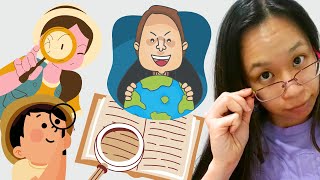
In this instructional video, Winnie (Miss Tang) guides viewers through the process of analyzing antagonists in narrative writing. She explains the purpose of studying antagonists—to entertain readers, create relatable characters, and understand conflict— and outlines success criteria: examining how an author creates the antagonist, comparing the protagonist and antagonist, and making inferences about the antagonist’s motives. The video defines the antagonist as a character who opposes the hero, creates conflict, and believes they are doing the right thing, often mirroring the hero’s traits. A detailed comparative framework is presented, covering characteristics, worldview, fears, aims, plans, and reasons for mutual dislike. This framework is applied to a concrete example: Harry Potter (hero) versus Voldemort (antagonist) from Harry Potter and the Philosopher’s Stone, illustrating opposite traits and motivations. The presenter encourages students to extract textual clues from their own reading, use a provided template for creating memorable characters, and promises a follow‑up video on developing antagonists. A link to the template is mentioned for further practice.
Chapters
Hi everyone, this is Winnie or Miss Tang. Today we're going to be learning to analyze how authors develop engaging and memorable characters, namely the antagonist. And this is because we want to entertain our readers and we want to know how authors do it. And we also want our audience to relate and connect to our characters when we are writing. So we're going to get some tips and ideas of the authors that are already out there and have a look and analyze how they do it. Our success criteria for today includes: I can examine how the author has created the antagonist, which could also be the villain of the story. I can compare and contrast the protagonist, the hero, and the antagonist, or the villain. I can make inferences about the antagonist. The antagonist is usually a character which is there to cause conflict because obviously the main character or our hero of the story, not everything is going to go perfectly well for them. There's going to be some conflict, and the antagonist is a character there to cause a bit of trouble or some problems. They usually oppose or fight against another character like the protagonist, and they are usually opposite to the hero, and we'll dive into that a little bit later. They are also created, um, as the opposite of the hero to kind of show the audience how— or show the hero what not to be and what not to do. And antagonists also believe that they are doing the right thing, so there's a reason why they are doing what they're doing. And protagonists and antagonists might also have similar character traits. I do have a video on how authors develop, um, the protagonist, um, and how they change throughout the story and why, and also why they change, and we'll have a look at an example as well. A step-by-step guide on how to develop the protagonist so that they grow throughout the story. So if you'd like to have a look at that, then you can check that out and see how, um, the protagonist can be developed to link to the theme and the message of your story. This is a table that we are going to use. So we'll have a look at the hero, we'll have a look at the villain, which could also be known as the shadow because they're the opposite of the hero. We'll have a look at the characteristics the way that they view their world, their attitude, what they might be scared of, what their aims are, and also how they plan to achieve what they want to do in the story and why they may dislike each other. Now we're going to use an example. So we are going to use Harry Potter as our hero, and our villain or antagonist/shadow character is going to be Voldemort from the Harry Potter books series, namely the Philosopher's Stone or the Sorcerer's Stone. So you can see here now that I've put in the characteristics for both the hero and our villain, our protagonist and our antagonist. And we've got Harry as brave, caring, determined, courageous, hardworking, whereas Voldemort can be described as cold, cruel, powerful, terrifying, unforgiving, fearsome, dangerous, fierce. So you can see are two opposite characters. If we have a look at their attitude and their worldview, we can see that Harry is strongly guided by his own conscience. So he has a feeling of what is— a strong feeling of what is right and wrong, and he believes in making the right choices. Whereas with Voldemort, he believes that he's really superior or really above everyone around him, and he is really wanting to to conquer both worlds, um, Muggle and Wizarding worlds. What are they scared of? So Harry is scared of the destruction of the Muggle and Wizarding world. So you can see that it conflicts because Voldemort is wanting that, whereas Harry doesn't want that. And Harry also doesn't want the Philosopher's Stone falling into the wrong hands. Um, with Voldemort, he fears— he mainly fears death. Their aim. So Harry's aim is to get the Magic Stone, so he doesn't want to get it to use it. He doesn't want to use it. He just wants to make sure that the stone and its power doesn't fall into the wrong hands. Whereas with Voldemort, he wants the stone so that he can regain his power and conquer the wizarding world and get rid of, um, muggles. For their plans. So Harry's plan is to try to get to the stone first so that Voldemort doesn't get it, and for Voldemort, it's his mission to find the Philosopher's Stone or the Sorcerer's Stone so that he can bring himself back to life so that he can achieve his goal. Why do the hero and the villain dislike each other? Well, Harry doesn't like Voldemort because he is— because of everything else that we have spoken about, but also because, well, Voldemort did kill his parents and also other wizards and muggles as well. So he— because Harry is really believing in making the right choices, he knows, he really believes that what Voldemort is doing is making the wrong choice. and then with Voldemort, he does not like and really dislikes Harry because he did try to kill Harry as when he was a baby, and he does blame Harry for being in his weakened state. Now what you can do is in your story that you are reading, you can pick out some excerpts from your text, see if you can figure out the clues. What clues does the author use to communicate that this character is the antagonist. What you can also do is you can also analyze how the author has developed the protagonist or the anta— and the antagonist in your book as well, and you can have a look and see how they differ from each other. If you would like, um, this resource or this template on creating memorable characters for your narrative, including brainstorming key messages and themes and coming up with the protagonist and the antagonist and the other, um, characters in your story, then I'll be putting a link in the description below. And up next, I will be putting out a video on how to develop your own memorable antagonist for your own narrative writing. And there you have it. That's how you analyze, um, the antagonist in the story and how you can use these tips to also support developing your own antagonist when you write your own narrative or your See you in my next video. Bye!