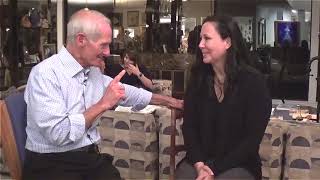
Pediatrician Dr. William Sears discusses attachment parenting, arguing that ADHD is an attention difference, not a disorder, and that removed recess and poor nutrition drive medication use. He emphasizes physical affection, emotional honesty, and a toolbox of coping skills like gratitude and meditation over material provision.
Chapters
Thank you so much for having us. Oh, you're welcome. You're welcome. Thank you. Thank you. It's been a wonderful evening.
Yes, it's been a wonderful evening.
I know. So you have children, do you?
I do. I have 5.
Congratulations.
Thank you.
You don't look that tired.
But nor do you. And I think you have more, right?
8? Yeah. Gray hair.
Mine's coming too.
Mine is coming too.
So I read that you are from originally around St. Louis. Alton, Illinois?
Yeah. Alton, Illinois.
Normal, Illinois.
Oh, good for you. Yeah.
My husband's family is in St. Louis.
Oh, Martha's from St. Louis.
Yeah, I saw.
I call it St. Louis woman.
And then very Catholic family. So, but then I saw you were Catholic Man of the Year in 2016. But I thought I had read that you had converted to evangelical, or is that the same thing?
Long time ago. Actually, I started out, I was going to be a Catholic priest at one time.
I had read that. Yeah, that's fascinating.
And then we, like, you know, many people, we kind of fell away from everything, you know, when we got into and college and all that stuff. And then we kind of went to various churches. Then we came back to our roots about 10 years ago.
Okay. So yes, we have a cross collection too. I love that.
It's beautiful. And you know, Corinne, it's— tell you a story. This happened the other day, last week in my office. I see this a lot. Parents, parents would come in And sometimes, because there's so many problems among teens right now, teens are, they're lost. I mean, they're kind of, where do I go? What do I do? What do I believe? And in my 50 years as a pediatrician, I've never seen an epidemic like this. So I will sometimes ask, well, what is your faith? What belief system do you have? The answer that I call it Dumb and Dumber is, well, I'm just going to let my child make their own decision. I'm going to let them make their own decision when they're older.
Based on what information?
Exactly. And parents don't realize that that goes completely against how the brain is developed. It's like you plant You plant seeds into a garden when the soil is most fertile.
Right.
And it grows beautiful plants. You don't wait until it's overcome with weeds and then say, well, let's sow some seeds.
Right.
So a lot of parents have got it backwards. So what we're trying to do is to plant seeds of some belief system of faith into your children at a young age. And then when they get older, they can grow into something. They can grow into something, but they will— you have a seed there.
Right. Yeah. That's interesting because I did want to ask you about, about teens actually in particular, because I have a couple of them now. And I have one who is— we didn't get till he was 13 years old. And his upbringing before he came to us was very different and very different than how I raised my others. And I was I didn't know it was attachment parenting at the time, but that was kind of how I raised my children. Yeah, like a lot of— you couldn't spoil them with hugs and, you know, attention, just material things. And it just hurt my heart, you know, to not be close to them. Sure. But he, our now 16-year-old, did not get a lot of that as a child and was left alone. And I see now some issues, some differences between him and our other children. And so I know your philosophy, or I think that I understand your philosophy of nurturing the children from a very young age and providing that love and that security. But how then do you overcome that as a teenager when they haven't had that up until that point?
Well, one way, Corinne, is through the brain. You can think change your brain at any age. The brain is the most changeable organ in our whole body. Body. And but the younger you start, the easier it is, right? So start at any age. Uh, and how old is the child?
16.
16. Okay, 16. Um, I, I would teach him a few things. First of all, the power of a hug. The more hugs, the better. Nice long hugs.
I've heard that you hug your patients.
I do, yeah.
I told you that. I read a lot about that. I'm fascinated by it.
And it's interesting because I started doing that maybe 20 years ago. New patients come in and I'm sitting there, may I have a hug? And just, they open up.
I've heard they all leave with a smile.
They do, yeah. And so I think that's one thing to do. A nice long hug. In fact, there's some research that shows a 20-second hug is best. 20 seconds, a good nice long hug. Nice long hug.
That's bordering on awkward sometimes.
Yeah, that's pretty long. So the more hug, facial contact, eye-to-eye contact. Another thing we used to to do with our team is I said, well, let's make a deal. No matter what you tell me, I promise I will never get angry. I promise. I don't care. I'd make something like, even if you told me you robbed a bank or something, I will never get angry. But I want you to tell me. I want you to tell me anything you want to tell me. I want you to ask me anything, feel free, because nobody will ever love you the way your mom loves you.
So is it ever hard to keep that promise?
Oh yeah, it's hard for everything, yeah. But, you know, it's, um, but I think having dinners together, spending time together, making up for that.
Right, and we do.
We have dinner every night together. Where they just learn that the value of having people together.
So let me ask you this, because my family is very touchy-feely. He's not. Again, like, he didn't grow up with that. So I've tried to respect those boundaries because I don't want him to be uncomfortable.
No, that's tricky. You're right. That's why you have to go very slow. Almost like when he gives you a clue. You know, wait for a door to open. Now, have a lot of your children been called sensitive?
No, no, no.
Because sometimes a person will say, well, she's so sensitive, or he's so sensitive. That can be a good thing, right? You know what we need, especially males, we need more sensitive people so they don't become bullies. But sensitive people, because they're so kind and compassionate, also are more easily hurt and are more easily going to anxiety or depression. So sometimes sensitivity means you carry around a larger toolbox of tools to pull you out of those things.
Yeah, that's interesting.
And I mentioned that because Children who are very highly nurtured when they're young, with attachment parenting, sometimes grow up with the label, "Oh, she's so sensitive." Which is good.
We were also a military family, so they also grew up with a lot of opportunities for resilience.
Oh, good for you. Resilience is a big deal.
So that is probably why none of my kids are sensitive. And I don't view it as a bad thing, but it's just not an adjective that usually applies to them. Also, before I came, I asked my readers if they had any questions for you. I told them I was going to talk to you. Oh, good, good. And a couple of them had sent some. One of them, and I wanted to ask you this because I wanted your take on this, and again, it has to do with teens. She said she was very concerned with how our kids, but she said particularly teens in her question, are being taught now. She doesn't think that schools now are teaching critical thinking skills, that we are teaching, we're just teaching different standards. And I feel like personally every generation says that, right? Like, oh, what is, you know, what's happening with their kids? But are you involved in that at all? Like, do you pay attention to what's being taught in school? How is curriculum changing? What are your thoughts on that?
Oh, I'm going to try to give you a short answer to a huge problem in our country. Yes. I would, I wish I could be superintendent of schools in the whole country for one day.
And what would you change?
First of all, the kids are brighter than the teaching many times.
Many times.
And what happens is, see this epidemic of ADD and ADHD and learning disabilities. It's not, it's a difference. See, children are different. They have attention differences, not disabilities. It's not a disorder. They learn differently. So a smart teacher will teach a child in the way that they were wired. Right. Schools can't, the public schools can't do that.
They can't, and I will say I have a lot of friends that are teachers. When you've got a class of 25 students, there is no time to do that. Exactly, you can't do that.
No, you can't do that. Secondly, once they took recess out of schools, the Ritalin dosage went up.
I agree with you.
And another thing I would do, I would design schools with large windows. That open. I would have a lot of classes outdoors, weather permitting. We would have walks in the park. Like Mom used to say, go outside and play. Or even as adults in board meetings at corporations. I remember I would be on a board and we'd have a important decision to make, the CEO would say, well, let's all go out and take a walk on it. Let's take a walk for 20 minutes out in the woods, think about the decision, the problem that needs a solution, and you'll come back with a solution.
So why do you think it's so important? So that you don't have a stagnant environment? Because it's the fresh air? For the exercise? All of it? Like all of it mixed together?
All together. Number one, the way they start school with healthy food. You put junk food into a child's growing brain, you get back junk behavior and junk learning. And it's incredible that food stamps can cover junk food. That should be against the law. That's what you can change. Secondly, have classes outdoors when you can. Get children out in sunshine. Children Learn more from natural sunlight than they do looking at artificial screens.
Why is that?
It's the way the eye is made. It's called eye feel good. Our visual pathway in the brain occupies a lot of real estate. That's why I tell my patients who have learning problems Well, one of the complaints is, "Oh, he stares out the window." That's because he wants to be out the window. But natural light stimulates the thinking area. Where artificial light, you watch people, their eyes start to close.
And they get foggy. Yes, that's an interesting thing. If I'm sitting at my computer and I'm stuck on an idea, I look out the window.
You look out the window. So even if kids, they're gonna have computers at school, that's a thing. But I tell them every few minutes, look out the window, look out the window like that. Or if you're gonna have to sit at a computer a long time, have a standing desk. They can do isometrics at their desk. So they eat the wrong food, they sit too much, They have artificial lighting. They're forced to learn in a way that they weren't wired. Check, check, check. There's a lot of stuff going on. And I think it's— and finally, I think it's the fact that the public schools cannot teach. Right and wrong anymore. It's like everything is okay, everything is okay, everything is okay. Your hands are tied, and that's not going to change. They have to do that so you don't offend anybody. So I think you're right, and we have a, we have a big job to do. But here's what I tell my patients I say schools are only as good as the parent demand. You're paying it. Your tax money is paying for that school. So join the PTA, get all the moms and dads involved, go to the principal. And I did this one time at one of the PTAs. I said, "Principal, can we get junk out of the— can we get drugs out of the school? Quit selling drugs to our kids." "We don't sell drugs." I said, "Yes, you do. You sell drugs to our children in our school. In fact, I can walk 20 feet and for a dollar and buy a drug." And I walked up and came back with it. I said, "This drugs our children's brains." They had no clue.
But it's true.
It's true, yeah.
My daughter, my girl, my daughter in college, her boyfriend gave up sugar for Lent. And he likes sweets.
Good, good, good, yeah.
And so, yeah, 2 days into Lent, he had a terrible headache. And he said, "I don't understand why I have this headache. I hope I'm not getting sick." And then he said, "I think it might be." might be the sugar withdrawal. And sure enough, he had a piece of fruit because that was allowed, and it went away. And it scared him a little. This is the— it's a drug. You have withdrawal symptoms when you cut it out. Yeah, it's scary.
Yeah, and the energy drinks. Yeah, children are bringing these energy drinks with 500 milligrams of caffeine in them, a huge That's not good for the brain.
No, they had an epidemic, I think, of kids that were dying from taking too many of those.
Oh yeah, it's one of the commonest reasons for calling the poison control centers is energy drinks.
Really? I did not know that.
Yeah, yeah.
Oh, and before I forget, my readers had another question. I have a lot— several of them came in the same. That they have kids that are— the mom is like a single mom that's working two jobs, or they've got lots of kids and juggling lots of activities. Like, how do you connect with your kids when your life just isn't— when life's just too crazy? And I know you guys coped with this. Yes. Get a lot of children.
My heart goes out for single moms because I was raised by a single mom. I told you. And, um, My dad took off when I was a month of age. And so, bless their hearts, it's tough. It's really tough. What I remember about my mother, she had to work a couple jobs. I remember my mother did the best she could with the resources she had. And God bless your mom, that's all I remember. That's all, you did the best you could with the resources you had. And that's all they can do. And what I had a single mom tell me one time, you know, I realize I can't give my child all the stuff that my friends can buy for their children. But I can give her myself. Right. And that's more important than stuff. More important. So you just do the best you can.
And you're right, we can only do the best that we can do.
That's right.
And hope it's enough.
And sometimes, you know, a single mom, they come home from work and they're tired, but to lay down with your child And it's okay to say—
it's for the closeness.
Yeah, lay down with your child, snuggle off to sleep, say, honey, you know, mommy's really tired and I had a long day. I just need you to know. And it's okay to download on your kid, you know, I'm going to spend a little time, we're going to have a shorter time with you tonight. Mommy's so tired. And you don't have to pretend, you know, kids need to know that. Mom, you worked hard today. Thank you, Mom.
That's good advice. Another question, much more lighthearted. She just wanted to know, she has a child and I took the note but I forget how old she is. So I'll just ask you, at what age is it okay to let your child walk to the park alone or play outside in the yard alone without supervision?
That's changed considerably.
Yes, different now, yes.
When I was young, I'd say, "Tell her I'm home." Oh, I used to wonder, at 5, I was 5 years old. At 5 years old, just tell her, "Tell me where you are, what time you'll be home." Don't come back till dinner. Yeah, I think I think a lot depends on the neighborhood, the child. I think we have to be more careful nowadays. Gosh, I— it's hard.
In some places it's not even legal.
Yeah, it's hard to put an age on it. I just think you have to— every mom has to use her— there's something called a mommy brain. Now, in the book, this is a derogatory term. You know, you forget where you put the car down. It's not. When you grow a baby inside you, the most greatest profession in the world, growing a baby, having a baby, mothering a baby, adopting a baby. But when you grow a baby, you grow an extra center in your brain. It's like a GPS. And that even grows more after birth. And so I think every mother has to I have to make a decision how much I can, how long the rope can be, when to pull it in, when to let go. When in doubt, you know, go with them. I think dads, there's a nice balance oftentimes between moms and dads where moms will be overprotective, you know, naturally. On a monkey bar, be careful, honey, and dads will People say climb higher, you know, it's just a balance there, that's normal. But I think nowadays we have to be careful.
You know, I love that about you because a lot of what I've read from you, I think some of your ideas have been taken and people make them extreme, right?
Yes.
But you've always been— what I've read from you is it's about finding what works for your family. It's not so extreme, like you have to do it this way or you have to And I'm glad you mentioned that, the extreme journalism magazine articles.
In order to get people to read them, they have to make you controversial.
Right, they have to polarize.
Yeah, yeah. I remember when they had the Time magazine article on our family. They said, we've got to make you controversial. I said, okay.
Okay.
And, but yeah, we're— I think we do what works. And I like when patients come into my office, I say my role is not an expert in your baby. My role is to help you have the tools, to give you the tools to become your own expert. So if you ask me how long How long should I let my baby cry? I can't answer that. I don't have a mommy brain. You do. I can give you some tools to help you make the decision. So that's how our philosophy has always evolved. To help and say, here's the tool. Here are the basic tools. Take the tools and then use them and then evolve your own.
I like that a lot. All right, one more question. I know we have a whole house full of guests who'd like to ask questions. I wanted to get to. So back to the resilience issue and when we were talking about, you know, how moms tend to be overprotective but the dads will encourage you to take risks. I read very recently that one of the reasons for the epidemic of depression and anxiety in teens in particular now, some of it, some of it's social media and some of it was related to being overprotective of our children that we haven't encourage them to take risks and fail. And again, like in schools, how we don't want anyone to be offended or to feel like their kids aren't, you know, just right. And because they don't have those experiences, they're not— they don't have any coping skills.
Yeah.
And so when they finally face something adverse, which happens a lot in your teen years, that's when they have all these emotions because they don't have any way to cope with that.
Exactly.
So Let's assume then that you have an overprotective parent and they get to the teen years and their teen child is showing signs of depression and anxiety. What do you do at that point?
Yeah, and you're exactly right. The epidemic of teen depression and anxiety and worse. So now, this is the worst I've seen in my 50 years I was a pediatrician. So I have a little talk with parents early on, like at 7 or 8. I said, I want you to start building a toolbox for your child to carry on to high school, and a bigger toolbox to carry from high school to college.
And how do you fill it?
And that toolbox, number one, One is, how do you get up when you fall? Because you're going to fall, right? You're going to make mistakes. But honey, I want you to focus on the solution and not dwell on the problem. Can't change the past, learn it. For example, uh, I see you're getting upset a lot. I see you're getting anxious. Um, So let's learn some— we call it meditation. I call it keep calm or chill skills. Chill, keep calm, anything. So let's do it together, honey. Let's go out in the pool and let's do a mantra. Think of a mantra. How about guide me God or something? Now let's swim together. Guide me, God. Guide me, God. Or a bully. You come, I got bullied today, Mom. They called me a really bad name. And they called me stupid and ugly and all that. Let's talk about that. I'm better than that. I'm beautiful. And I want you to write down on your mirror 5 things you like about yourself. I am a good soccer player. I am smart. I have a mom and dad who love me. I love my hair. That type of thing. Attitude of gratitude. So when things hit, when stuff happens, and it's going to, you click into your Attitude of gratitude. And you go to bed at night. I am smart. I am nice. So that your mind, it's almost like that anxious center, that bully bullied you and put all those bad things into you.
Forcing it out with positive self-talk.
Yeah. You want to shrink that and you want to grow the happy center.
I like that.
And that's what those attitudes of gratitude thoughts do. So that's just one tool, right, that if you can plant early on, so when stuff happens and they feel like getting depressed—
so when you see the small things happen, you identify it, right?
Cool. And they'll feel like sometimes when you just go outside, ah, high to the sky, sometimes just getting up and getting 20 feet away, anything that works for you. But I want you to develop your toolbox. And maybe on graduation, you can tell me all your tools that you put in your toolbox.
Thank you so much.
Oh, you're welcome. I appreciate it. You're a wonderful interviewer. Thank you.
More from Corinne
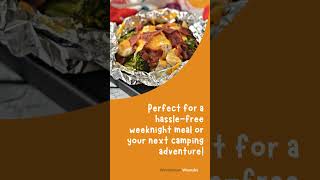
Chicken Bacon Ranch Foil Packets #foilpackets #chicken #easydinners #chickenbaconranch
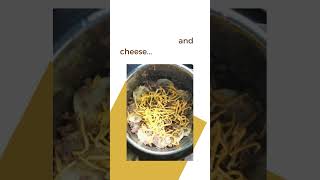
Instant Pot Cheesy Hamburger Potato Casserole #instantpot #easydinner #casserole

Texas Margarita #texasmargarita #texasmargaritarecipe #cocktaillover #margarita
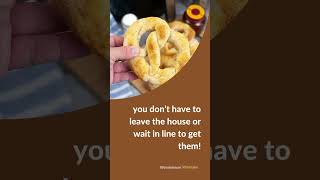
Air Fryer Pretzels Copycat Auntie Anne’s Recipe #airfryerpretzels #copycatauntieannespretzels
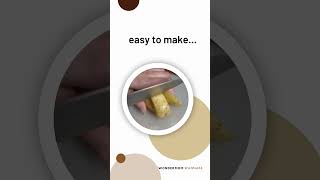
Air Fryer Diced Potatoes #airfryerdicedpotatoes #airfryerpotatoes #airfryer #potatoes
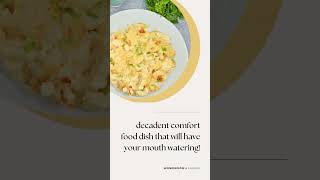
Copycat Chick fil A Mac and Cheese #copycatchickfilamacandcheese #copycatchickfila #macandcheese

Ham with Pineapple and Cherries #brownsugarglaze #spiralcuthams #holidayham #easter

Edible Sugar Cookie Dough #ediblesugarcookiedough #ediblecookiedough #cookiedough #sugarcookie

Grape Salad with Yogurt and Pecans #grapesaladrecipe #creamygrapesalad #grapesalad