13. Let's Get Empowered with Guest Lyndsay Hume, Female Empowerment & Life Design Coach
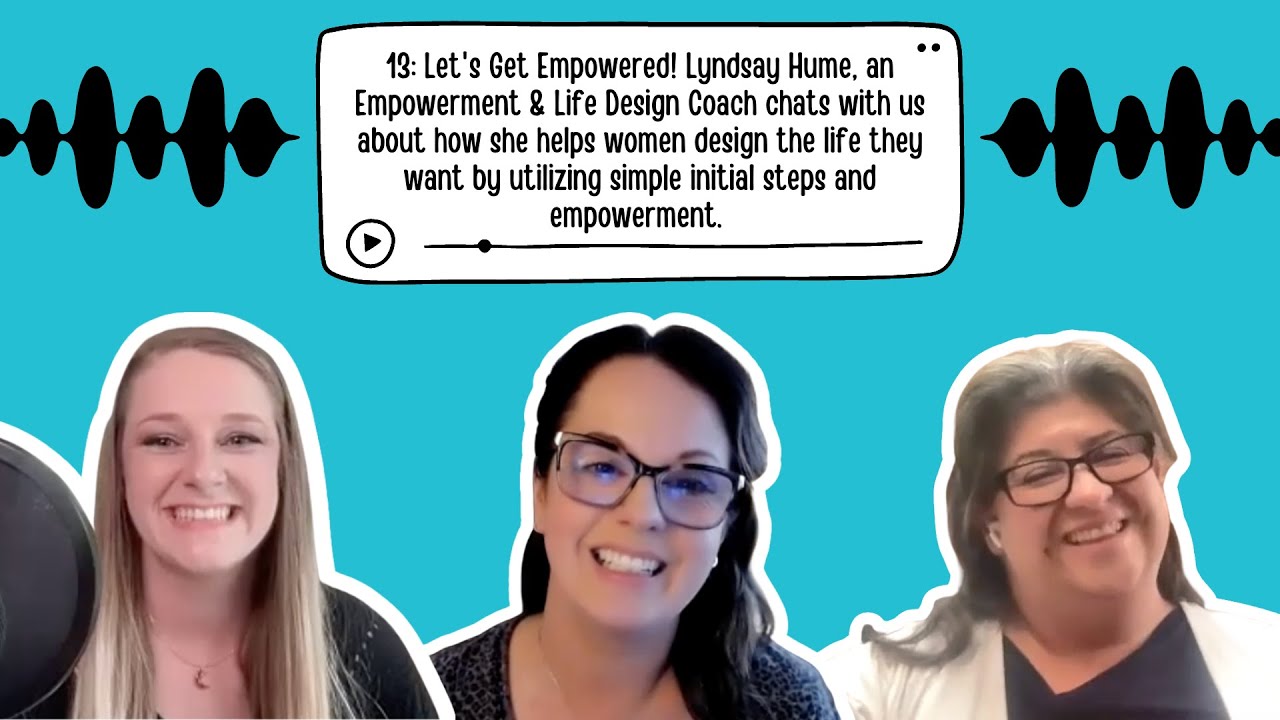
Lyndsay Hume, a life-design coach, left corporate consulting to start her own practice in 2022. She works with working mothers on mom guilt and the pressure to do everything, using a six-month coaching model built on powerful questions rather than advice. Her approach: time-blocking and small, realistic changes instead of the hustle mindset.
Chapters
They wouldn't say that to a man. No one would say to a man, "You're working too hard. Shame on you. You're doing too much work." Like, no one would say that.
Well, I think that's where a lot of the mom guilt comes in. So I'm like, "Am I the only— I have to be the only one doing this." And then you realize when you actually have the conversation, you open up that, you know, and you're like, "Hey." Like, "Oh, me too." You know, talking with other women that it's hard for all of us to shut off that kind of hustle mode.
And decide that we can be successful another way.
We're Erika Radis and Marie Lifschultz, a San Antonio area realtor and lender, but most importantly, we're working moms.
The goal of this podcast is to provide support and a sense of community to San Antonio area working moms like us.
So join us in trying to find a balance between career, family, and everything in between. Welcome to this episode of the Working Moms of San Antonio podcast. We have a guest on, Lindsay Hume, and she's a certified female empowerment and life design coach. So we're going to turn it over to her and let her talk about all the work that she does and just kind of go from there.
Cool.
Thank you for having me. Yes. So like you said, I'm a certified life coach. My background is actually in therapy, so, um, I took my master's in counseling, counseling psychology, probably 13 or 14 years ago now, and did about a year's worth of work in that area, and then kind of realized that healing, which is kind of how I define therapy is healing wasn't necessarily the path for me and how I wanted to work with people. And I really wanted to work with women specifically to— that were like maybe stuck, yes, and maybe didn't know exactly what they wanted or how to get it, but that were excited, you know, and wanted that self-transformation and really were committed to that journey. And so, I mean, oddly enough, I didn't start doing that right then and there. I actually transferred into management consulting to work with businesses on business issues. But it just stuck around years and years in my head that this is what I wanted to do. And so, October 2021, I quit my corporate job and started this business in January 2022.
Oh wow.
Yeah, that's so exciting and, and kind of recent. Um, but that's amazing. It sounds like it's something that you wanted to do for quite a long time.
Yeah.
Yes.
Yeah.
And so what does a typical workday look like, um, for an empowerment and life coach?
So it's interesting you asked because it's something that I've actually been working on, which I know sounds strange, but it's like coming from the corporate world, I was just so used to like rolling begrudgingly out of bed and, you know, getting dressed and doing the hair and makeup and all of that. And, you know, generally I was traveling for work, so I was in a hotel somewhere, so commuting to the office and working with the clients all day. And so when I started my own business, I really had to— even though that— even though I didn't enjoy that daily routine that I had, I really had to fight to get out of it. Um, it had become such a habit. And so it's taken me some time, but I've now, I think, curated what feels really good. And so for me, my day starts off pretty slow, and I get out of bed with my son who's 4, and I get him ready, and we spend some time together, and then I send him off to preschool. I usually spend the next like 45 to 50 minutes working out in a way that I love, which I've never done before, maybe listening to a podcast. And then I get ready and I, you know, make coffee and I make my morning breakfast and I bring that into the office with me. And my commitment to myself and the business is to be at my desk by 9:00. And I spend the next hour like journaling, reading, meditation, and then just like starting my day with a lot of intention and knowing like where I'm going. Um, and if I don't start with a client, then I will start with, um, just connection. I like just connection, to connect with people that are already in my world. Um, I might do some work on Facebook, you know, posting, doing some marketing. Um, I might continue doing some reading for like self-growth or development, which I love to do for myself, yes, but also I find on that journey, and when I do that on a day-to-day basis, I'm able to to take that to my clients. Um, and then I love to write, so I'll try to get some writing in there around whatever subject it is that I'm currently working with my clients on. And then of course the client work. So that's what my day looks like now, and it usually typically ends around 5:30, 5:45, and then I am shut off for the evening.
Oh wow, I bet that's a big change from the corporate world.
It's a big change from the corporate world, and you'd think that it would be an easy change. But I think for myself, and I do believe just from talking with other women, that it's hard for all of us to shut off that kind of hustle mode and decide that we can be successful another way.
Yeah. Oh, yeah, I bet. I think you're talking about routine, and I gravitated to that because the routine feels safe. It feels, um, it's something we're used to, and I think that's a lot that we can— we tend to do day to day routines, get through the day, get up, going, put your makeup, get out the door, get the kids to school, that kind of stuff. So to have that change and kind of develop your own schedule and not have somebody dictate it to you is a big change.
Yeah.
So, wow, I love it though. It's great.
I love that you said that, get through the day, because what it brings up for me is it's exactly what I was doing, and it's what a lot of women are doing, and it's the exact thing I don't want us to do. Like, getting through the day is not living. And when you— when you're getting through the day, it's like, you know that you're on autopilot and you're kind of just surviving. And I really— and it's still, don't get me wrong, like, it's an effort for me still. Um, nobody's perfect at it, but it's like, instead Instead, I want to strive for myself and my clients to have intentional days. So I don't want them getting through the day. I want them like intentionally making choices, whether it's, you know, to go to that office and go to work or to stay home with your babies, like whatever it is, like intentional choices that you feel in charge of and that feel good to you. So no more getting through the day.
Yeah.
And that kind of thing is something that you would work with your clients um, with to sort of make sure that they are making those intentional choice— like, that's part of your services is having conversations about those type of behaviors?
Yes, I always try to work on a daily routine with them, and we start slow, you know, like, you have to meet yourself where you are. So trying to change everything all at once isn't, you know, realistic for any of us. But yeah, that's one of the things that we do, because wherever it is you want to go right? So in other words, whatever, however you want to ideally spend your day, you have to start doing now. You have to, right? So you have to start, you have to reach into your future and be like, if I want to have an intentional day where I focus on my health and my mindset, and then I go to work, and then I, you know, feed my family, or whatever it is that your life looks like, we can't wait for that to just suddenly start happening for us. We have to start practicing it now, but in a way that meets us where we're at right now. And we can talk a little bit more about that, but it's kind of like saying maybe you don't have 3 hours in the morning to dedicate to yourself. Someday you might, okay? But right now you have maybe 30 minutes. And so we work with that and we're like, oh, Someday you would like 3 hours to work out and journal and do all of these things, but right now you have 30 minutes. So how can we start to bring that to you now? And so maybe it looks like a 10-minute workout, 5 minutes of journaling, getting your cup of coffee and sitting down. Like, it's just infusing what you want your future to be right now and meeting yourself where you're at and what you can handle.
Lindy, that's a great tip. I like that. So I was like, well, how would I fit 3 hours in the morning? Like, how am I going to do that? I already get up at 5. Like, how do I get more, more time in the day? But like, if you just section out 30 minutes, that becomes a good habit. And then you can always tack on another 5 minutes as your day allows it. You know, so that's a great tip, starting off small and then focusing on it, you know, and however many long it's going to take you to get there. But that's great. No, I love it.
I love this example of like, this uses money, which I think is so easy for us all to like We can, we can comprehend it, right? When I use a money example, it's like if you're— and again, just an example, not suggesting this is me or anybody else on this call— but if you're a woman, for example, who really would love to wear designer dress to work every day, it's like, of course we're not going to go out and buy the Gucci dress right now, but we are going to start to be our future self now by reaching into that future and pulling forward what we can do now. And what that means is you go buy yourself the best dress you can afford, and you start wearing that now. So that's a kind of more concrete example, right? It's like, yes, you're not going to go buy the $1,500 dress, but you might go buy the $50 one that is the best one you can afford. So you're calling your future self into you, you're designing your life, you're stepping into who you want to be, meeting yourself where you currently are.
I like that because I feel like that takes the pressure off, right? So like at first, you know, it's like, okay, this is where I want to be at, and you're like, oh my gosh, I'll never get there. You know, there's— it's just so— it seems so far away. But in the examples that you've used, you're taking tiny steps, um, to sort of implement a little bit of that, you know, depending on whatever it is that you want to accomplish. I like that.
Yeah, you get there by being there, if that makes sense.
You know what I mean?
Like, there's no, like, suddenly you're there. It's like, we got to start being her right now.
Yeah, yeah, yeah.
No, I think that's great. No, it was kind of the same concept. I was trying to figure out, like, in my, in, in my line of work, um, things change quite a bit, so I have to continue to learn things. And I needed to learn how to time block. Like, no matter what, I'm gonna put 2 hours a week aside to read up, to read up on guidelines, to see what new products are available so that I'm continuing to educate myself. And that was extremely difficult because I'm— I was being more reactive versus being proactive. So I learned how to— okay, Wednesdays are the day I'm gonna schedule out 2 hours in the morning. I'm not going to take calls, I'm not going to return texts. I'm going to read and, and catch up on the last week's guidelines that have changed so that I'm up to date for whatever's coming new. So it's just making the intentional point, this is what I'm going to do. I'm going to do it because I needed to. I needed to. So that's exactly it.
Yeah.
Not the fun part of having the dress. That dress would be more fun. Yeah.
It's such an easy example. Do you know what I mean?
Yeah.
Well, Lindsay, so how long do people usually work with a life design coach or an empowerment coach? Is it like an ongoing thing? Do you meet once per week, or is it different for every client? Like, how do— how does the setup work?
Yeah, sure. Um, it will depend on the coach that you see. So each coach has a little bit of a different process. In my business, we work together for 6 months. I just feel like it's a really good amount of time. Um, there's a lot of mindset work that we do at the beginning that is uncomfortable, I guess, and uncharted territory for most people. So I think it just takes, you know, a good period of time to kind of let that soak in and feel like, okay, I, I'm on board. Um, and then of course to get through all of the beliefs, right, that we've had I will say implanted in us, and then to then work on what specifically it is that you want for your life and how we're going to get you there. So I just think 6 months is a really great time, um, it's a really great starting point for most of my clients. It will get them from, like, for example, uh, working in a job, whether it be corporate or, you know, for somebody else not for yourself, to at the end of 6 months, um, starting their own business. After that, I, I think a coach is always helpful, so I always have a coach and I'm always getting coaching. And sorry to just jump back, once a week. So 6 months, once a week. And so I get coached at least weekly because I find that, well, one, we're just human So no matter how much mindset work you do to work on your thoughts and how you're thinking and the, the attitudes that you approach the world with, you're just human and you have a brain that was built for survival. And so it's always going to kick in when you're doing something that's new, hard, uncomfortable, all of these different things, and try to stop you. Um, and so That happens regardless of how much coaching you've had. Two, it's just so helpful, I find, for somebody else to just hear me talk all my stuff out loud, all the ways that I'm confused and can't get through my own thoughts, that has the training to ask me the right questions to provide clarity. Because that's really what coaching is. I am not ever providing advice. I have no idea what you should do with your life. Right? Like, it's not up to me. I don't know better than you. I'm not an expert in that area. What I do know how to do is ask you the right questions so that you can access that, like, deep inner knowing, because it's there. You already know. Every single one of my clients already knows. They have the answer and they have the solution, but coaching will help uncover it. So yes, I think like 6 months is a great starting point, and if you can take it from there That's fantastic. And there are some people that are really great at self-coaching and they learn that tool really well, but some people love to use it as quote-unquote maintenance or to even deal with new issues as they come up. And so it's really up to the client, and I just let them decide because again, they always know what's best for them. I, I don't know, right?
No. Yeah, I mean, I think that's good. That's— it's kind of interesting. I mean, I guess that's what the, you know, life design coaching is, right?
You're—
I mean, people have their own lives, and like you said, they know what to do. You're just kind of guiding them on how to get to where they're really trying to go. So yeah, that's great.
I think a lot of people might use like friends or, you know, family members who might not have that knowledge and how to ask those questions, right? And not help guide you to get you to the answer that you already know. You know, a lot of people, like she said, you know what you want to do.
And it's probably beneficial to use sort of a third party that doesn't really know you in that way because like when you do bounce those ideas off your family members or friends, you know, or you have those type of questions, they may be more inclined to give you one particular answer and you may take it to heart more in a way because it's like, oh, you know, my, my dad said that, so that must be, you know, what I should be doing right now. Or, you know what I mean? It's just, you know, family members always have a lot of sometimes solicited and sometimes unsolicited appearance.
Well, and I always say it's actually better that I know less.
Yeah, that makes sense.
That I just come in completely, um, empty, full of like love and support and non-judgment. Like, there's just— in coaching, there's never any judgment because we come completely empty. And so it's, it's best that I know less. It's different than therapy where you talk about it all. Um, in coaching, I'll often just— I can not interrupt, but even just say, that's good, I don't need to know anymore, right? We don't want to start diving into the story because all of us have a story that is stopping us from doing what it is we really want to do, and we're not here to I don't believe in that story, right? I don't believe in your story that you're not good enough or that it's too hard or that you don't have enough money or that you're not skilled enough. Like, I don't believe that. I come empty and then I— part of my role is to help you contain that story, right? Like, not allow it to get out of control and kind of take over and help you just see the facts and then ask the appropriate questions. That you can really access what you already know. And I like, sometimes, sometimes, a lot of the times, if not most of the time, I end up inspired by the solution my client comes up with. I'm like, holy, did you just see what came out of you? Like, that's amazing, you know? And it's, it's, it's even if I have an idea, and sometimes I do just because of my training and background, I have an idea of what's going on for you already, and I might know It is so much more powerful when you figure it out than if I tell you, right?
Right.
Like, you just believe it so much more, and it's so much more effective and easy for you to walk away and implement than if I were to just sit there and rattle off all the advice that I think you need or tell you what I think you should do based on my own experience or my training, all of that stuff that really isn't important for you, right?
Yeah, that's a big change in our, in our world today because we're always with the quick gratification. I want someone to tell me, give me the button or the pill or the what or the shot, whatever, to make everything great. So, um, but when you come to it on your own, it is rewarding, you know, to get it.
So yeah, and that is when it's the right answer, you know what I mean?
Yeah, then you know.
Yeah, then you have that certainty in you that it's the right answer.
Now, before you mentioned, um, sometimes ultimately these women, they open their own business. Is that a goal of— a typical goal of your clients, would you say? People that— women that you work with, they're trying to start their own businesses, or, or is that just kind of in the mix of the things that you do?
I don't know why—
I shouldn't say I don't know why, because obviously it's part of my story, right? Right. Because I was corporate and then I opened my life coaching business. But there's a lot to my story. That's not the only part. And so I do find it very interesting that that is what's been attracted to me, though. Yes. Yeah, 100%. Women that are in corporate jobs that don't want to be there anymore.
Yeah.
Well, sometimes I think when we're even in the work that we're— Marie and I being in real estate, we end up often attracting clients that are like us, right? I don't know. I mean, I'm sure there's some, like, psychology to that. Um, or, you know, I don't know how it works, but you end up— I mean, and that's kind of the ideal situation, right? You want to work with people that are maybe similar to you because, like, common. Yeah, like-minded. And so maybe that's what happens in your business as well, just like it sometimes happens in ours.
Yeah.
Yeah. Well, and I think that— and I'm hoping that it broadens a bit. And what I mean by that is these women have this desire as well, but it just seems that it's coming through in the, in the business category. But I have a big desire to make a big impact, right? And to impact not, you know, not just women and it have it stop there. It's like I want to be impacting women so that, that they discover what it is they were uniquely gifted and the impact that they can make in the world. And then we all just keep going out there and it's a ripple effect, right? So that the world becomes a better place. And so I just find that women desire to make that impact, obviously, through the work they're doing, right? So I kind of think that— so that's really who I work with. And it just so happens that most of us decide that the impact we're going to make is through our daily job or whatever we do to make money. Yeah, I'd happily coach a woman who's independently wealthy and just wants to go out there and make an impact in the world, right? That's what I do, and I would love to do that. But I've just so far attracted people that are like, I'm in this job that I don't want to be in, and I want to make an impact in a different way. So yeah, yeah, that's interesting.
It's just, it's funny the way it works out. Like I said, the people that are attracted to you.
Yeah.
Um, well, so, um, I have one of my questions here because this is something that, uh, I experience a lot, and maybe you can give some advice. Um, a lot of working moms suffer from mom guilt, right, when they're trying to pursue their goals And so do you have any tips for women to sort of not suppress, but sort of deal with that mom guilt feeling, you know, and how to empower them in that way?
Yeah.
Guilt is an emotion that is always backed by a should statement. Okay. So whenever we feel guilt, it's because we feel like we should be doing something. We shouldn't have done something. There's some attachment to a should. So the first thing, I guess, and this may be obvious, but I really just want women to hear it, is that we have been told that we should be all things, that we should be nurturing and take care of our children. But we also now are in this space, which I love, in the world where we also should be out there creating, you know, financial wealth for our families. Um, and we should be taking care of ourselves, right? We should be doing all of these things. And so just know that you— we've been programmed to a certain degree to believe all of this, that we need to expect all of this of ourselves. Ultimately what it comes down to though is it's all a choice. And so this is where kind of like— and sometimes people will get angry at coaching because it really is just the truth that all of it's a choice. We don't have to do anything we don't want to, okay? So it's like looking at your life and being like, I don't have to go to work. I really don't. There will be consequences, right? I may not have enough money to pay my bills. My children and I may go hungry. They may end up in, like, in the extreme cases, like, in social services, like— but you don't have to go to work. And so what it helps is put control back and be like, so what do I want here? And the answer is I want to go to work, right? I want to go to work because I'm doing something beautiful for my family, right? I'm supporting my children. Or I'm— even if you don't— well, I guess you said moms, so it is all moms. Other women have, you know, different kinds of guilt that isn't related to this, but it all is coming from the same place, like I should be something in particular, and it's not aligning with who you think you want to be, which maybe is a woman that stays at home with her children, right? But if that's not your reality, staying stuck in the thought of I wish I could or I should is only adding to pain you already feel. So if we remove the emotions from it, which I know can be hard, and just look at the facts and decide what it is you really want, most of the time you'll land on you're doing really what you want to do in reality. Now, it may not be what you want forever, but you want to take care of your babies and you want them to see a beautiful role model of some woman that goes out into the world and that you can choose to think about it as a service or an act of love that you're doing for them. You can choose to do that. You can choose to say, I am setting a good example. I'm showing them what it means to work hard. I'm taking care of them. I'm— you know, you can think all those things, or you can think I'm a terrible mom, right? Right.
It's changing your mindset. Your mindset about—
changing your mindset totally, because all those things can be true, right, depending on who you talk to. And that's why we have to just understand that we get to choose how we think about ourselves in our lives, and none of it's the truth. And so why not think the things that make you feel the most empowered, right? Because one woman going to work, taking care of her kids, and we've got this group of people over here that says, wow, she's amazing, look at her go. And you got another group of people that is saying, look at her, she should be at home with her children. So you know already that their beliefs about her have nothing to do with what she's doing. Their beliefs are coming fully from their upbringing, the way they were taught, their religion, the TV they watch, all of it. So her behavior, your choice to go to work or not, says nothing about who you are as a person.
Yeah.
And it can mean a million different things. So make it mean something that matters to you. Make it mean something that makes you feel really good and empowered. Right? Because when you create thoughts that make you feel guilty you end up taking action from places of guilt, and it completely changes how you show up in the world. As opposed to when you make yourself feel empowered and proud and all of those things, then imagine how differently you show up for your children even when you're in that mindset. So it's more complicated than I know we have time for, but I'm really passionate about it because I don't— I really want women thinking the things that are just most empowering to them. This is not me being delusional. I'm not asking women to go from thinking, um, I'm a terrible mom to I'm the most amazing mom in the world. You don't have to think the opposite or the most positive thing. You could be thinking I'm a terrible mom and let's just shift you to like, I'm doing what I feel I need to do.
Yeah, like, which I think is fine.
Well, just that small shift can completely change how you feel going to work every day. So this is not about positive thinking or like, what do they call it, positive toxicity?
I don't even know what—
there's a name for everything now. But, um, this is just about choosing to see it in a way that's factual and not adding additional strain or struggle to how you already feel.
Yeah, and I think that's— yeah, that's like a huge thing that women have to deal with all the time. I feel like, like, I know for me, for example, I mean, obviously not every day and not every client, but I like to— I like to work. I— it's just my deal, you know? And so, but there are plenty of people in my life that will tell me things like, you really need to slow down, you know, you're doing too much, why are you doing so much? If I didn't want to do it, I wouldn't be doing it, but I'm doing it because I like it, you know what I mean? And so, and I just feel like they wouldn't say that to a man. No one would say to a man, you're working too hard, shame on you, you're doing too much work. Like, no one say that. And so it's hard for women. I feel like who— I mean, it's hard for women who want to stay at home and do need to go out into the world and work, you know, for monetary reasons or, you know, whatever. And it's hard for women that maybe don't want to stay at home. I don't— I mean, I'm fine with saying that. It doesn't make me feel bad. I don't want to stay at home with my kids constantly. And that's like—
it just—
for me personally, I don't know that it would fulfill me completely, you know? And that's not to say that there's anything wrong with that, but it's just not my preference. And so I just find it interesting that they say those things to women. You're doing too much. Okay.
I mean, yeah, well, we have to deal with a lot of society's expectations and thoughts about us. But the thing that I say, and this doesn't come from a place of anger or harshness, but what other people think about you is none of your business.
Yeah, no, I mean, that's right. Yeah, it's hard to think about that, but that's true because their thoughts are—
I'll tell you, I promise you, 99.9% of whatever they say about you has nothing to do with you. It has to do with their own beliefs, and you had no part in that, right? That's their parents, it's their upbringing, it's the TV they watch, it's everything, their environment.
Yeah.
That's how they're taking the world in and then interpreting it, and you are a part of their world. So then when they tell you that you're doing too much, you can be certain that it has absolutely nothing— because what that person thinks is too much, someone else thinks is totally lazy.
Yeah, that's true.
That's how we know that nobody's opinion matters, because nobody's opinion is actually really the truth. In fact, we're all just interpreting and making inferences based on beliefs that are programmed.
Yeah.
Part of what I'm asking women to do is look at those programmed beliefs and say, do I want these? Do I like these? Do I like the thought that I'm a horrible mom because I'm going to work? That has been programmed into me. I did not create that, but I have chose to hold on to it. That has been a decision unconsciously for all of us, I'll say, But once you know that it's a choice, then we can work on changing it to something that feels much more like expansive for you.
Yeah.
Yeah.
And that just takes time because that wasn't programmed yesterday. Right. Right.
Yeah.
You know, I'm in my 40s. So, I mean, at that point, it's been, you know, I've been a mom now 19 years.
So, yeah. But it's important to know it's not you. Right? You're not unique. There's nothing wrong with you, and we're not fixing anything, right? Like, yeah, it's just how the human brain works and how we've been programmed. And so once we can really sit, look at it, and say that, then it doesn't become about like whether you're a terrible mom or a terrible person or not. It just becomes, do I want to continue believing that? Is it serving me? Is it serving my children? And if not, I can help you change it. And and you get to believe whatever you want about yourself. So I choose to think every day I'm a fantastic mom, and at the same time I can hold the belief of, and I have no freaking clue what I'm doing, right? Like, you can hold these two beliefs at the same time. Yeah, right. So it's not that we're perfect and suddenly you go into Superwoman mode, but you're just able to be like, I'm a freaking awesome mom and I have no clue what I'm doing, and some days I screw up, and, you know, and, and, and, and, and.
Yeah. When she said you can kind of label yourself, I'm like, I identify as Superwoman. That's what I am. And she just happened to say that, so I started to giggle.
Yeah, but that's a great thing to identify with. I think that's positive, right? Well, Lindsay, we can definitely tell that you're passionate about what you do with your clients, and I feel like this is so interesting, but Can you pinpoint maybe one or two of your favorite things about the career that you're in? I know that's hard. It's always hard for everybody. Well, I really—
I'll tell you, I love having conversations like this. I'd do it all day. Yeah, just with other women. And so, um, that's one of the best parts about my job is just having these types of conversations with women and like inspiring and enlightening each other. So I think it's like team effort. Yeah, that's how I want it to be, you know. I don't want it to be me telling or teaching. I like it to be this conversation. Um, so for me, that always just lights me up. So whether it's through networking or podcast or coaching, I just love connecting with other people. And, um, you know, I don't walk around like this in my life, this passion. It just happens when I have these conversations. Yeah, it's just like I go into another— like, it's almost like I watch myself. It's really weird. I become this different person, and then I end the call, and maybe an hour later that kind of wears off, and I'm like, what am I doing? I have no idea what I'm doing in this world or where I'm— you know, like, so yeah, types of conversations that are the most fun for me. And, and obviously coaching and seeing women have their own insight and transformations. So yeah, that's great.
I also— each woman's experience is going to be different. Yeah. So I think you get a new perspective every day on someone. So it's always, it's always a new day.
You know what?
It's so funny that you say that because so many are so similar to— yeah, every time I'm talking with a client, I'm like, oh my gosh, I just had this conversation.
Yeah, I know.
Sometimes I feel like that too.
Sometimes I feel like we're all saying the same stuff, but just to each other.
Yeah.
Yeah. Well, I think that's where a lot of the mom guilt comes in because I'm like, am I the only— I have to be the only one doing this. And then you realize when you actually have the conversation, you open up that, you know, and you're like, hey, like, oh, me too.
Yeah.
Don't realize it.
Yeah.
Yeah. And then lastly, we always have our guests sort of tell our listeners um, how, how they can reach you for your services.
Yeah, sure. So you can find me on Instagram. I'm just @lindsay_lifecoach. Um, and then I love— like I said, I love having these conversations. So please, if you want to reach out just to talk, I'm totally open. It's not like I'm gonna, you know, drive into direct sales. So I, I am opening that invitation. Um, And another way they could do it, I guess, is through email, which is just Lindsay at LindsayHume.com.
Okay.
Those are the two places. That's where I spend my time. Yeah, I'd love to hear from anybody that wants to talk or wants more information or has questions. All of it.
That's awesome. Perfect. Yeah. And we'll put some of that information then in our show notes. So if any of our listeners want to reach out to Lindsay, that information will be there and you can just click and send her a quick message and you guys can connect that way. So, yeah, but thank you so much for being on. I feel like I feel a little bit more empowered just being on this conversation.
Thank you.
Thank you.
It was a lot of fun. Great.
And then I'll also say thank you to our listeners for tuning into this episode, and we will just catch you guys next week on the Working Moms of San Antonio podcast.
Awesome. See you guys next week.
See ya.
Thanks so much for tuning in to the Working Moms of San Antonio podcast. Be sure to follow us on social media at our respective Instagram accounts or join our Working Moms of San Antonio Facebook group. Those links can be found in our episode description. If you have an episode topic suggestion or question, please email us at office@workingmomsasantaantonia.com. Erikaradisagent.com. And be sure to subscribe to the podcast and leave us a review. See you next week.
More from Erika


I don’t want a prenup, I just want you!" 📜💍 …until you realize you just agreed to 50% of zero! 😂


In Texas, a 17-yr old is legally considered an adult in the criminal justice system



What Every Parent Needs To Know Before Your Child Talks To The School (Texas Law)

Is Your Marketing Strategy Tasting a Little... Muddy?#podcast #podcastclips #podcasts #


