Branding That Sells: Women-Owned Business Growth in San Antonio | Nat Marie Design
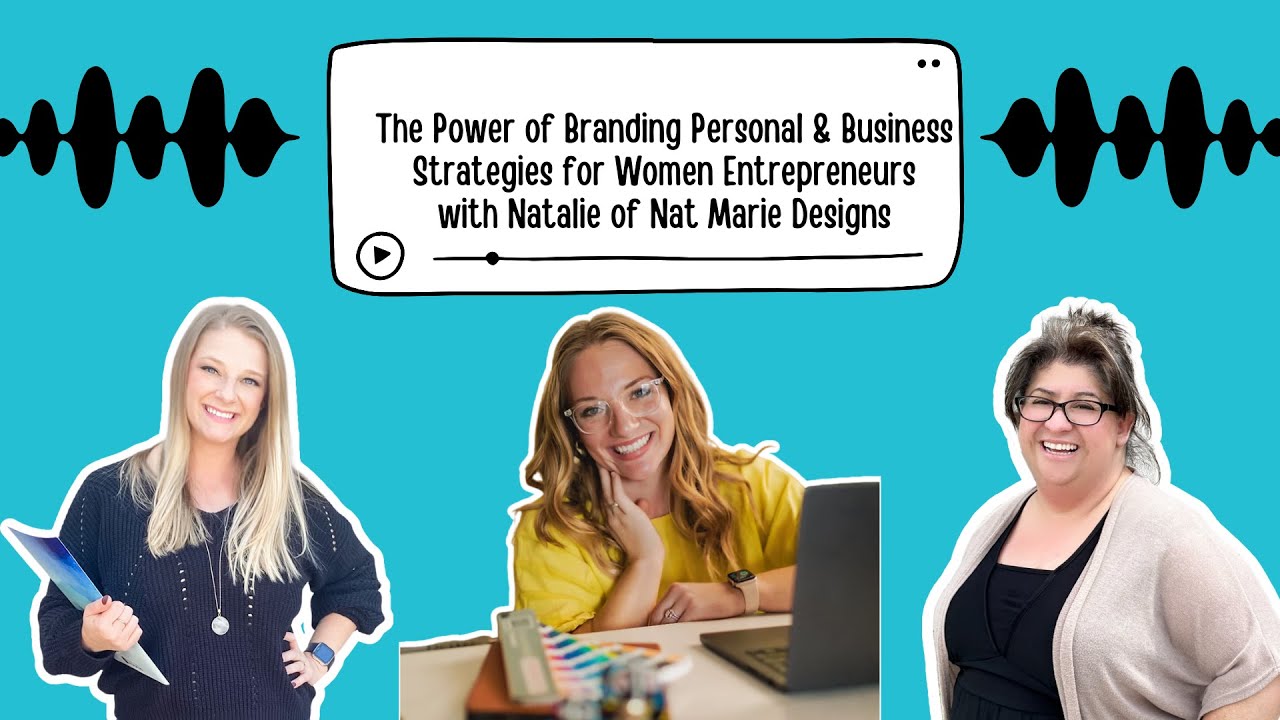
In this episode of the Working Moms of San Antonio podcast, hosts Erika Radis and Marie Lifschultz interview Natalie, the founder of Nat Marie Design, about how branding and design can help small‑to‑mid‑size businesses, especially women‑owned ventures, grow and feel "real." Natalie walks through her own path into graphic design, explains her flexible service model (logos, brand guides, mood boards, web design, social‑media retainers, and ongoing marketing support), and shares practical advice for entrepreneurs with limited budgets. The conversation covers the psychology of logos, the role of mood boards, why a full brand guide matters more than a single logo, how to balance DIY efforts with professional help, the importance of personal branding for service‑based professionals, the resurgence of websites versus reliance on social media, and actionable email‑marketing tactics. Throughout, the hosts and guest stress authenticity, consistency, and the emotional impact of visual identity on both business owners and their customers.
Chapters
Welcome to the Working Moms of San Antonio podcast. We're your hosts, Erika Radis and Marie Lifschultz, a realtor and lender here in San Antonio. But most importantly, we're working moms just like you.
This podcast is all about creating a space where we can come together, share stories, and learn from each other. We love connecting with local moms in business Hearing about their journeys and how they're balancing it all, because let's be honest, it's not always easy, but it's so worth it.
Before we dive in today's episode, we're excited to share some big news with you all.
Our business community and coworking memberships are officially open. Whether you're looking for a supportive community of moms in business or need a beautiful space to work and grow, we've got just what you need here at Working Moms of San Antonio. You can visit the link in our show notes or workingmomsofsanantonio.com/membership for more info.
Now on to today's episode. Grab a cup of coffee, settle in, and let's get started.
Welcome to this week's episode of the Working Moms of San Antonio podcast. We are here with our guest Natalie of Nat Marie Design, um, and I'm gonna turn it over to her to talk about herself and her work.
All right, awesome. Thanks guys. I'm happy to be here. Happy to be with Working Moms. It's a great organization. Um, like she said, I'm Nat. I run Nat Marie Design. We specialize in anything kind of in the branding marketing world. Yeah. So Logos, web design, social media retainers. If you have questions, I probably know, or I can point you in the direction of someone who does.
Sure. Um, and can you tell us just a little bit, um, I have a, a background in design. Um, it's not what I do for a job, but I paid some money for a degree for it. Um, but can you tell us how you got started in design? I love to hear people's stories about that kind of thing. Yeah, seriously, because everyone's are different.
Yeah, definitely. So I studied graphic design in college and then minored in marketing. And honestly, going in, I didn't really know a lot about it. I knew that I loved art and I was creative, but I wouldn't say I was even like a crazy artsy kid. I was sportsy and all that too. My dad always said, "You'd be so good at this." And I was gonna go in a completely different path. And then I literally was signing up for classes and I felt like God was like, Hey, why don't you do graphic design? I don't know, I just had like a weird feeling, so I raised my hand signing up for classes in a whole different major, and I was like, I'm gonna switch to this one, and I don't even really know what it is.
That is—
that's awesome. Isn't that crazy?
I love that.
It just was like a feeling, and then I totally fell in love with it. Like, once I started studying it, I was like, oh my gosh, this was— this job was made for me. This is what I'm supposed to do. And Dad knows best.
Yeah, Dad knows best.
I know, he kind of planted the seed.
But that's awesome, I love that. Um, and so let's talk a little bit about kind of what it looks like to work with you. What kinds of things do you do? Um, so that way our audience kind of knows.
Yeah, definitely. So I try to be really flexible. I work with mostly like small to mid-sized businesses, and what we usually do is they'll, they'll have a goal in mind. I know I need a logo, or I have a logo but it's not working for me, or I need a website. Um, you know, something kind of visual, and then We'll sit down, we'll have a meeting, I'll just talk to them, I'll, I'll learn their goals, and then from there kind of propose, hey, this is the project plan that I think is perfect for you. And then we kind of go from there. Some people work with me long term, so they're on retainer. They're like, hey, can you just do my social media every month, or can you take care of this? And then some people a lot of times come to me with rebrands or web design or social strategies, things like that.
Yeah. Do you, oh, I'm sorry. I was gonna ask, do you find that people are coming to you? Cause Marie and I talk about this all the time. Like the stuff that you do is like the fun part of like opening up a business, right?
Yeah.
And I feel like it's where people go right away. Like they're like, hey, I don't really even know what this is, but I know I need a logo and it's the pretty part.
And it, it makes, it makes the business feel real.
Mm-hmm.
Yeah. When you have a logo, when we ask you for Roger's logo, like having something for his welding, I'm like, Oh my God, this is happening. Yeah, we didn't have a business like plan, nothing.
No banking.
It was no, yeah, nothing. No, nothing. We were just like, we need a logo. That's the first thing we thought about.
Yeah, that's what I always say. One of my old bosses when I was working in agency world said, hey, keep in mind you're the most fun meeting of the week. Yeah, actually, which is so fun because really what I'm doing is just getting to know them, trying to like get to know their business and their goals, and then turning it into something visual. So people do get really excited and it is something that I think typically if you're starting a business, people will reach out to me. So I do a lot of speaking and things like that for new business startups or people know that they don't have that kind of budget, but a year, 2 years into their business, they're ready to reapproach it.
Oh yeah.
So I do a lot of like branding, rebrands. Um, with that, like I said, I'll kind of customize it to I, you know, you're going to need a website, you know, you're going to need email marketing, whatever it is. And then sometimes it works out really well and people are like, well, let's just keep you on, you'll be our marketing partner. But those are kind of the avenues that typically people come to me like ready to get started.
Yeah, it's what, it what makes your business real, I believe. Like, I know, I know it sounds weird. Obviously business coming in makes you money, but the brand and how important it is, it makes your business a real thing.
Oh my gosh, it is so fun and rewarding because I've had people who I've known that DIY or, you know, and they're coming to me a year later and when we do their rebrand, they're like, they blossom. Yeah, like they totally flourish because they, they feel confident. Like even just the way they walk, they're like, oh my gosh, I put money into this, like look how good it looks, you know. They're happy to give out their business cards. And I've had people come and like will go through the logo presentations or the brand guides and they'll start like crying. I've had it several times, like so many times I've had people get emotional and they're like, wow, like you really— you took what I— my dream and like what's in my head and then showed it in a way that now I can show it to people.
So, well, I think it's when you— when you don't have that creative brain and you have it here, like you kind of understand what you want but you can't see it. I'm that way. Like, I'm very logical, I'm very number, but I'd like to be creative. I have all I, you know, but I can't see the things I have in my head.
Yeah.
So I need someone to put it in picture form or something like that, colors that make sense for how I feel about what I'm doing.
Yeah.
So it, it, you can. Yeah. Because when I see something like, oh, that's pretty, I can't do it. It does, it makes you emotional.
No, and it's cool because I think a lot of people they almost come to me like, "Oh, I'm not creative. Don't look at my website, it's embarrassing," you know? And first of all, there are so many things that I don't know how to do in business that I need help with. And I'm not a numbers person, you know? That's something that I am like, "Oh my gosh." Yeah, you're probably more like me, creative. But it's so fun because really a lot of it feels like psychology. I'm like, "Oh, well this, they said this is important to them," or "This was part of their story." So I think that's why people get so amped up about it, because I'm like, this is really like me just pulling out what's in you, what you're good at, the reason that you were meant to start this business. Like, don't give me all the credit. I'm just finding the amazing pieces of you, and then my skill and like my talent is to take that and like think a lot and then turn it into something visual.
So yeah, yeah, it makes it look pretty. It does. You make everything look pretty. Graphic designers are the best.
I know, and we were just talking about it briefly, um, before this, but like you talked about doing like mood boards and, you know, those type of things. And like, I know what's a mood board, so well, we'll let Nat describe it more. But, um, I know for me, like, uh, when I would just say like, hey, send me just like inspo photos, like, and it doesn't even have to be in your same industry, it doesn't even have to be logos, like just some colors or fonts, or like send me anything that you kind of like. And for me, it was so fun to try to like find the commonalities and be like, okay, this is kind of what we need to do. And And so I imagine maybe your process is similar.
Yeah, definitely. So mood boards are basically kind of the first step before anything visual. So I'll go through and pull Pinterest inspiration or even things like pictures of things and logos and brands out there, inside or outside of industry. And I'll just say like, these are some different, almost like vibes.
Yeah.
You know, if this is your business, you could have this look and feel to it. You could have this one. And it's a fun meeting because I just have my clients tell— I'm like, point to what you like, point to what you hate, you know. I'm gonna get to know you from that. But to your point too, like, sometimes those conversations will turn into— like, I've had a client who, in that mood board meeting, she's like, I just love the Renaissance era and the classy feel. And I'm like, oh, this will be fun. Like, I got to look up stuff. Or, or, I am a bookkeeper, but what really drives me is that I'm able to afford a vacation for my kids. And I'm like, okay, like, let's bring that in, you know. So a lot of times it's like that conversation starter because it's really hard as a designer to just dive in. Yeah, I mean, there's so many directions you can go, so it's just pulling a ton of like beautiful imagery.
And I can understand that, like, because in what I do, I deal with a lot of numbers, and I can— numbers can make things work a lot of different ways. There's a lot of ways to manipulate those numbers. So understanding someone's goals Yeah, it really helps you put the numbers to make sense for them.
Exactly.
I understand. So I get it.
Yeah, like, what's your goals going into it? What are you naturally drawn towards? And that kind of gives me those like magic nuggets to— okay, I know her now, I can go in and sketch.
Now, would you advise someone or help them if they have an idea that might not be the best for their business? Does that make sense? Like, I just want to be all black. Yeah, or whatever. And like, you know what, that one's not going to drive customers for whatever the business is.
Yeah.
Is that something that you would advise people on?
Yeah, definitely. I think that, um, you know, a lot of people hire me because they know that I'm— they trust me, they've seen my work. So if I feel like they're going the wrong direction, I'll say something, you know, in a nice way, and I'll give them an alternative. Like, hey, maybe you're personally drawn to that, but like, that doesn't make sense for your industry.
Yeah.
Um, and I never present anything that I don't want them to pick. You know, because that, that happens too. Like, designers always joke, oh, they picked my least favorite option.
I'm like, all the time.
And it does, it will happen. So I'm like, I have to feel so confident with like all the things that I'm gonna present to them so that I'm happy with— I know whatever they choose is good for their—
I got it—
their business and their industry.
Even your least favorite is still a favorite.
Yeah, exactly. Like, I still have my favorites, but you know.
Yeah, I used to tell people like Hey, this maybe isn't gonna print great, or this isn't like, if you do, like, people wanna get like really, really detailed with a logo.
Yeah.
Like tiny details. And I'm like, when you put this on a business card that is this tiny, you're not gonna see, it's gonna look like a blob. Like you're not gonna see any of this stuff. Um, and so sometimes you can sort of, and maybe that's like the real estate in me, like trying to like be like, all right, like, yeah, sometimes you can kind of work around where it's like, this doesn't make sense cuz it's just not gonna look like it. Yeah. It's not gonna look good in the applications. I think that you need to use it. So you can tell people stuff like that and it's the truth. I mean, it really is.
Yeah.
Um, and that is some guidance I think that you can give people and I'm sure you do. Um, have you ever like gone into these meetings and you like, people will tell you, and they do it in real estate all the time.
You're lighting up so much.
This is what I, this is what I want. And you're like, cool, I'm gonna pick all these things that you said you want. And then by the time you get to that meeting, they're like, no, like none of this works.
And you're like, really?
Yeah.
You said I have had that happen before. Um, I mean, I've really only had like one instance where I think I struggled with like capturing their vision in the beginning. And it was because they told, they basically what they ended up with was like exactly the opposite of where they started.
Yes.
You know, like they were like, we don't want to be too Texas. We don't want to, you know, be, and then their logo ended up having like the Texas state. And I'm like, okay guys.
Yeah.
But I try to be patient with people. Like I tell them, You know, if we need to explore different things, even if you go back to the original, if you have to see it, you have to see it, you know?
That makes sense.
But with boundaries too, like, I'm like, look, we have this many rounds of revisions because we can't just go on forever. Like, we have a timeline. And so I have to find those boundaries of here's where we have to keep the project on track, but also where I need to be patient and like give you grace if you, if you totally change things around. Like, What's important is that you get what you love, you know, and you have a logo that's perfect for you.
So do you have any advice for someone that maybe, like, maybe they're just starting out so they don't have a big budget? Um, where would you recommend they start in terms of their branding?
Yeah, I would say if you're— if you need to set up your brand, don't just do a logo, do a full brand guide. Um, and if you don't know what that is, I can share them. I can, you know, talk on that more, but try to think about, I need multiple versions of my logo, but also where am I going to be showing up? If I'm a brick-and-mortar space, do I need to have some custom patterns and things that I can turn into signage? If I know I'm going to be on social media a lot, how can I have icons and illustrations that are really good for digital use? That's what your brand guide is. It's kind of walking you through logos, colors, fonts, um, you know, any sort of assets, but cater it to what you need for your business to start out. Because I think a lot of people just do their logo and then they, they never have like a full aligned like visual plan. And there are ways you can DIY it, you know, and then there are ways you can work with a designer. You don't have to spend tons and tons of money at an agency. You could find a freelancer like me. We're not as expensive, obviously. Or what I tell people too, I'm like, look, if you know you really don't have a budget, and you're gonna go DIY this, I will go get coffee with you. And I'm— that stands for anybody listening. I'll get on a phone call, like, if you just need to, like, pick someone's brain.
Yeah.
And say, hey, because I totally get it, you know, we all have different budgets when we're starting out.
Now, can you go a little bit more into why the brand guide, like, why that's important, like, what, for a small business? Yeah, like, why is that important?
I would say your brand guide is going to help you have the full visual toolkit set up. So I think a lot of people, like, yes, your logo's the strongest part of your brand, but if you're struggling with, okay, now I'm gonna post different colors every single time I'm putting something out there, or I'm gonna use different fonts on my website versus my social media, it kind of makes your brand look a little bit more amateur.
Yeah.
So just having it basically, it gives you the consistencies that you need so that when you go and make your marketing materials, you're, you're aligned, you know what I mean? So that's why I say like a lot of people think I just need a logo, but you kind of need to build out a system.
Yeah.
Because you want to build trust. Really what your branding is doing is it's connecting with people and then it's, it's showing you're legit. It's building trust. It's showing— so if you can have consistency in how you're showing up visually you just show up more professional, more cohesive, and people kind of trust you more.
Got it.
And having that together is fairly inexpensive. I mean, you can, you can look together fairly cheap. Yeah. You know, I mean, in, in the beginning, but I, I mean, and we talk about it all the time, um, I'm a really big proponent of like doing that thing and then staying with that thing, picking that thing.
Yeah.
I understand like some companies have to do rebrands, you know?
Yeah.
And if not for that, you know, Sometimes you wouldn't get the work that you get.
Mm-hmm.
But, um, you know, you've gotta kind of stick with something because if people start to know you as that and then you do a switch, mm-hmm, they, they may lose trust and be like, what is this? Like, oh, they must have not been doing well. And so now they have to redo, redo, you know, do all that stuff. And so I think putting together that simple, um, kit in the beginning and just being like, look, I don't have to love this, but I can live in it.
Mm-hmm.
Um, I think is, is important. Important.
Yeah, and I think like what— like you said, a brand guide, like having a good logo and a brand guide in the grand scheme of what marketing can cost isn't, isn't super expensive. It's on a project basis. It's like a one-time fee usually. Yeah, you don't want to pay for paid advertising on Instagram without that. You don't want to start actually putting money behind different ads if you don't have it. So just get yourself set up and, and be consistent with it. Like, if some people know, hey, I'm gonna DIY this, I'm gonna come back in a year, and we'll strategize, okay, how can we rebrand you but in a way that your audience, it transitions well, you know what I mean?
Yeah.
So whether you're like starting out or you're, you, you know, you need to reapproach it, but you want to do it right because you don't want to rebrand every year, you know?
Oh no.
No, that would be horrible. Yeah.
Yeah.
And expensive. Yeah. I mean, think about it, like especially places that have like brick and mortar and that kind of stuff. I didn't learn until we got this place. Mm-hmm. Signs are expensive.
Yes.
Yeah. Very expensive. I know. And again, yeah, if you're going into a brick and mortar business, getting your brand guide is probably the cheapest part of all of that. Oh yeah. Compared to production and, you know, signage and all of that.
So, well, I think that's how people recognize Working Moms.
Mm-hmm.
You know, it, it's, we've kept, you've kept it consistent. Yeah.
Yeah. And I don't love this logo. Like, honestly, it's just— but it's fine, you know? And it's the colors and it's, you know, it's what it is. Like, it's got the Elmo on it. Like, I mean, it's, it's fine. Um, if I had created this logo today, it would look different, I think. Yeah. Um, but this is what we are and I can live in it. And that's the thing. I think people, um, and when I made this, I probably did love it. I was probably like, yeah, this is the best. But you know, you change just like you change with anything else. Your styles change and you know what you think is is, uh, aesthetically pleasing changes all the time. Um, but it's what we're known for now, and so we're gonna keep it.
No, definitely. Yeah, you, as you should. And you've created— I mean, you have a whole vibe. You have the blue colors.
You—
so you've, you've honed in on your branding where, like, your logo is only a piece of it, right? I know you guys are my— when I'm scrolling through Instagram and I stop and it's that blue, you know, so you've kind of created a whole um, vibe around it.
Originally it was pink and brown.
Yeah, originally it looked a lot worse than this, but that's okay.
Yeah.
Um, well, that's awesome. Yeah, no, and I think that's great to kind of get started there, um, and kind of just build on it from there as your budget builds, you know, and that kind of thing.
Well, I mean, there's a lot of, um, the DIY, I think for me, because my brain— I have such a hard time seeing things. Like, I can describe, oh, I like this type of style, I like, you know, the clean lines and whatever, but I have a hard time visualizing it. So having someone like you, Nata, or even Erica, to help me see— because I think I— when I was trying to looking for like, I need a logo, I want my name, and my name's long. Yeah, how do we make this look where it's legible, right? Because if you like— you— I hadn't thought about it. When you put it on a card, you're not gonna be able to read it if it's tiny and it's, you know. Yeah.
And it's funny, like you mentioned the long name. Like a lot of times companies, they do want their name in there. What if your name's spelled weird? My name is spelled weird, right? My first name. I've spent my entire life saying Erica with a K, and I hate it. Yeah, you know, and so it's like, or even Marie, you know, Guaranteed Rate.
Yep.
They changed and rebranded just to Rate because no one could spell Guaranteed.
Yeah, people are like, what? And I'm like, the problem with the logo for my company is like it says Rate, which is great, it has something to do with what I do, but it doesn't tell people I'm a mortgage company.
It's not like Mortgage Rate.
Yeah, or, you know, Rate Lender. Like, it doesn't say the whole— they're like, a what? And I'm like, huh. So I'm sure I had no choice on the branding.
I'm sure you have to have those types of conversations where it's like, hey, have you thought about that maybe people can't spell this or maybe this is really long, you know, or that kind of thing.
Yeah, definitely. No, I've had, I mean, people will come to me ready to brand and we'll help even with their name, you know? So that's a service I'll do with people too because it is, you have to check even things people don't think of, checking the domains are available, checking social media is available, thinking about spelling, thinking about like visually is that length gonna work? Um, and if, if I feel like they're making a mistake with that, or, you know what I mean, I'm like, okay, well, I'm not going to tell you what to do with your business, but here's what I suggest, or here's like an alternative, you know?
Yeah.
Are there any like tips that you could give our listeners when they're starting to think about branding and that kind of stuff?
I think, I mean, mainly pay attention, you know, to what's around and what's standing out to you because that will help you a lot to wrap your head around it. Like you say, I'm not, you know, I can't click with the visuals and creative, but you are. Like you notice things when you're grocery shopping, you know, everybody probably does. They just don't, you know, see that in themselves. And then I also have, it's like a brand discovery worksheet. So I can send that to you if you want to give it to the listeners. But it helps people think about their target audience and their vision and, you know, some of those prompts that even before branding you want to start to think about because it'll get you in the right headspace of, okay, is my— is this path that I'm taking, is this logo, even if I like it, does it connect with my audience? Will it make sense for my industry? You know, things like that.
I was just thinking as you were talking about that, I work for a company but I'm 100% commissioned person. So I'm self-employed in the sense, right?
Yeah.
So I have to build my business, and I've not really built my own brand for me. My company, I'll share, obviously it has a nice big red arrow and has Rate and stuff like that. But for me, myself, I've not ever thought about like making sure that I'm branded. Does that make sense? Yeah. So even companies, like, even if you're like— because real estate agents do that as well. You have the logo for whatever company or brokerage you're under, but it's you the person That's the brand. I need to do that.
Of course you do. I do.
Yeah. I'd love to talk about that a little bit. So how important do you feel like personal branding is maybe in industries like ours where you are the face and you, I mean, there's a million, like in my industry they don't really care what brokerage I'm with. Yeah. Um, so for us, I feel like it's very important. Yeah. My realtor, same thing.
But for the most part, my realtor partners, as long as they can get ahold of me, I'm good. They don't care what company I'm with. Yeah.
How do you, how important do you feel like that is in terms of personal branding in that?
Yeah, well, I think the first thought is kind of what I was saying with that target audience and vision. Like, do the mental work, I guess is what I would call it, of that. I think anybody should do that. And also pull out what makes you special and you different. So that's kind of pre-branding, you know, the planning and things like that. But really, like, a lot of people in that type of field, like real estate, maybe they've never thought about that before. Why am I the right real estate agent? What is special with me? Or the right lender? Um, I think that's a super important exercise. And then think about where you're showing up, and that will tell you how much branding and marketing you should do. If you know, okay, I find my audience with social media, then you probably want maybe a more simple logo but investing in social media templates, you know, investing in things that you can use and, and headshots, things that you can show your face. If, you know, I mostly know people through networking, I'm gonna need a logo and a business card and maybe even some sort of like brochure or flyers. So that's what I would tell people because it's different than like a brick and mortar where everything is so visual. Mm-hmm. You know, there are ways, like I like to meet people where they're at and like customize it around. Yeah. This makes sense for you. I'm not gonna sell you something that you don't need. But if you know you need a website, invest in that. If you don't have to work on that, then invest in social media templates or something else instead. But just thinking about what makes you special, all of that kind of like brain work up front, and then thinking about, okay, realistically, what sort of visual tools do I need for where I show up? And I think everybody should have like a logo too. Sure. I usually think that's like a foundational piece, but yeah.
Do you feel like the age of websites is coming back around again? Like, I feel like it used to be that like everyone had a website, it was like super important, and then for a little while it felt like websites weren't that important. And now I feel like it's coming back again where people need them.
Mm-hmm. That's what I think. I think with social media it's fluctuated. So you, you had to have a website before cuz social media didn't exist, and then a lot of people just relied on their following. For social media, which is so scary, which is— and then I think people are realizing they can't do that anymore. So they are having— and also long-form content is really hot right now. So people are going back to having a website, having a blog, having an email list, because we've seen what happened with the whole like TikTok ban and all that. I mean, what if you built your whole business on that? And then I know it came back, but what if it would have stayed off? You know, like people were really scared. And same with Instagram or LinkedIn or anything like that. So I think, I think that we're starting to realize we're not guaranteed social media, right? Um, we're, and really we don't own any of that. It could just disappear. Yeah. So people are going back to, okay, traditionally, like what do I need to keep my audience? And people are starting to really fall in love with, okay, I'm gonna actually go check their blog, go check their website, sign up for their emails because people want that human connection. They're investing more in that long-form content.
I mean, I use social media to kind of find someone, and then I go look for their link and I go to their website now. Yeah. So I want to see— it's a little easier for me to find products I want or know about that, that particular person or company by going to their website. It's easier.
Yeah.
Versus trying to find— go through all the reels or go through all the posts and stuff. I will eventually do that, but I go find them, I see it, I like their, their content, and then I'll go to their website.
Yeah, I feel like I need to see their website to, to trust it.
Like, are you real? Does your website look like it's from like 1995? Like, I literally opened a website the other day and I was like, this is like a blast from the past almost, you know what I mean? I was like, this person really maybe doesn't have their stuff together.
I get really frustrated. I was like, under construction. I hate when I drive— yeah, it's been so—
oh, it drives me nuts. Yeah. And if it is, you're like, okay, has this not been used? Like, if it You know, if it's out of date, it's, it's like, I don't know if they're still alive or, you know, working on this.
Yeah, that's true.
Yeah.
How do you know they're still actually— I mean, because social media, you can find accounts and go on through them. Sometimes I have a hard time seeing when it was posted. I don't know how long ago this was, but if I can go to the website and see recent activity, then that makes more sense.
Yeah, it legitimizes it for sure.
Yeah. And I tell people too, like, when you're— when we're working on a website together, or if they're DIYing it, You need to think about the customer journey. So break down if they found me on social media or if they met me at Working Moms and took my business card and they're looking me up, what are the top things they need to know first? And I think the hierarchy of your website is just as important, if not more important than the design of it. Okay, I know that I'm a restaurant and the first thing they're going to check is my menu and my hours. Is that accessible for people? Yeah.
What do they say? Like above the fold or whatever, you've got to have all your—
Yeah, all your info up at the top person. But yeah, like you have to try to— what I usually do is like capture them with the way that they land on your page and then think of like your top 3 things that, whether that's breaking down 3 different services, whether that's, you know, 3 things you know people are looking for, and try to include that and give it more context on the subpages so people get everything they need on your homepage. They don't have to dig and, you know, be buried in your website to find the information they're looking for.
She's making me feel like we need to adjust our website. We may have to adjust our website.
You think so?
Yeah, some of it.
Yeah. I need to adjust mine too. I mean, you always, that's the thing with marketing and branding, like it's ever, it's ever changing. Sure. There's always ways to improve.
It's, it's marketing. It's such a pain point in my life. Oh, I, I, I love, I love pink.
You don't like it because you don't like the colors and all the stuff that you're affiliated with.
I can't stand it. But it is, but it's just hard cuz when you, when you're focused on your job or what you do and what you're good at. I'm not good at that, and I don't want to think about that. Why does it have to be a thing? So having someone in your corner to help guide you or do it for you, yeah, plus no, definitely.
That's what I think, especially I see this with social media, like business owners will take hours and hours and spend all their time on there, and then they come to me and they're like, I just don't know how you do this. Like, this is so frustrating. And you as a business owner, you want to work on your craft, like what you're passionate about, why you started your business. So I try to help set people up so that they're, they're looking at it the way a marketing agency would. So I'll work with people ongoing, you know, hey, I know that I need you to help me with email and social and website updates every month. Here's a retainer. Or I tell people If you know you don't have that budget, let me get you set up, but I'm gonna teach you how to do this so that you don't have to have the pressure of posting every single day. Like you're gonna do it the way marketing people do it, you know?
Yeah.
So I try to teach people about that cuz I'm, I'm really passionate about what you're saying. Like when it's a pain point and you feel like it's taking up all your time and it's really frustrating, like I want it to be the fun visual part of your business.
Yeah.
So I want to, wherever you're at, like, try to give you that support.
Yeah, I spent all day yesterday as we were not working but working, trying to— I, I needed to do something. Like, I haven't posted anything personally. Like, we have templates that my, my company will provide and so forth, and they're good, they're not bad, but they're, you know, they're not my style. So I wanted to put out something, so I actually had someone, a friend of mine just at my other office, take pictures, and she gave them to me, and I'm like, oh, I'm gonna make some post out of it so they can see my face and see this.
And I, mm-hmm.
I, it ain't gonna get done cuz I didn't like any of 'em. It didn't, it didn't come out good. Yeah. It was awful.
That's hard. I mean, I feel that way too sometimes, but then I have to, cuz you know how I like things to be, but then I have to kind of get outta my head and be like, okay, well done is better than not done. Right? Yeah. Like posted is better than not posted. Mm-hmm. Um, and it probably looked fine.
No, I could not make Canva work. The picture wouldn't fit in the square and, and it just didn't. I'm like, I can't, how do I, if I minimize it, then you see the back. It doesn't look. I would just finagling with the graphic drove me bananas and then I couldn't pick the font. I mean, you know, I started and then I overthought anyways.
Yeah.
But it was just so painful. If I can have someone just either show me like, hey, always use this font.
Yeah.
Always use this.
Yeah. And maybe like frame or whatever. That's the point. Maybe then that's why having that brand kit is so important.
Yes.
You don't have to think about it. You've already set which fonts you're gonna use for which types of items and that kind of stuff. And so you don't have to mess with that.
You don't have to think about it. Yeah. So having someone to guide you exactly would be amazing to have there, because it's just not— that's not where my talent lies. You don't want me doing graphics. You want me working on numbers. Don't, don't let someone else do that. Yeah.
So that's totally why I tell people like why the brand guide is so important, because if you already knew, I don't have to pick a font, or I don't have to, you know, it will save you so much time. Same with a lot of people will do social media templates with their brand guide. They're like, I know I have to post on social media I don't wanna have to pull something from a blank screen every single time I'm pressured to post. Let's create some templates. We, we're doing it with your brand guide anyways. You're doing it with a designer. Mm-hmm. So you can trust that it looks good and professional. Like you have to approve it before the project's done.
Yeah.
So that'll help. Or, you know, same with website. Some people like really struggle. So I try to find where people, where I know their business needs to show up, but also where I know that they're gonna wanna save time later. They're not gonna wanna have to struggle with it, you know? Yeah. Because it, it, I, I hate that for you. Like, I feel so bad and I, I totally get it. I talk to people all the time and like I said, there are a million things and that I get super, I get so frustrated with like bookkeeping and things like that. So it's just, if it's not your thing, like you didn't start your business to post on social media, but you know, it's kind of one of those things when I started. Yeah, it's like a necessary evil. Like, you know, you have to. So how can you get yourself set up so that it's not such a frustrating experience all the time.
Well, you had to mention something early, made me think about— you had said, hey, we put your money where you need, like, so if it's a website, let's put it in that. You need that, let's put your money there first. For me, I feel like I get the best reach on social media when I have, um, when I show my face, like when I— people know that I'm your— my goal is to be the next-door neighbor type person that is going to help you with questions that someone— you don't have to call away 900 number, call me, let me help you with that kind of thing. So I, I realize I get— but I, I need to, I need to invest money into some really good, uh, photos or headshots, that kind of stuff.
Exactly.
So then I can implement it because I think that's what's bothering me, like these don't really work for what I need them to do. So understanding like, hey, you can do some DIY but put money where the money is going to make you money.
Yeah, yeah, definitely. No, I mean, I tell people all the time to go get headshots done, and I'll do them for people. I've done photography classes, but, you know, it's more so if they need it, it's part of their brand. I tell people, hey, go to this person, they're great at that. Or if you need video, like, find someone for that. So even if it's outside of my scope, I'll sit down and tell people, you have a personal business. That's the thing with those personal businesses, they, they love you, you know, they feel comfortable with you. So definitely investing in headshots, because then you could have a couple templates around that, and then you could even post just your headshot with like a really meaningful message, and that will resonate with people.
Yeah.
And it simplifies it, you know? Yeah. The other thing that I, I don't want to get on my soapbox too much, but don't feel like you have to do every single social media trend.
Yeah.
Do what's smart for your business. Give the information that you know your people are looking for, and that's going to have a return and lead to a conversation. So if you feel like the pressure of, oh my gosh, I have to do this new dance or whatever trend that's happening right now, if it's fun for you and it makes sense, yeah, do it, have fun with it, you know what I mean? But I think a lot of people put pressure on themselves for that too. I don't fall into every trend on my social media, but I always talk about my services. I always talk about my personal journey as an entrepreneur, and that's the stuff that resonates. And I always invite people off Instagram or off LinkedIn. I will go get a coffee with you. We can get on a call because that's really what I wanna do is show people I care, you know?
Yeah.
Yeah. No, I like that. And that makes a lot of sense.
And it takes the pressure off.
It does.
Mm-hmm. Yeah.
Because trying to do those lip sync videos, not happening.
I can't.
Just can't.
I know.
I can't do it.
But thank you.
It's funny to watch, but I can't do it. I mean, in our industry, industry, and I could be totally wrong, maybe people want to see that from me. I, I can't imagine they do because it would be horrible. But, um, I think in our industry, the type of clientele that we're attracting are, are— I mean, they're not younger kids. We need people that have some money that can buy a house, right?
Yeah.
And so maybe that's not where it's at, you know. I mean, I've— we've had a lot of people be like, hey, I don't even touch Facebook, um, because that's not my demographic. And totally, for some businesses it isn't. For ours it is, you know. So there's a lot of money to be made on Facebook if that's where your demographic is. Um, and so yeah, I think it's all about your business and like the people that you're trying to serve. And does it make sense, like you, like you mentioned, to even do that kind of thing?
Yeah. Think about, I mean, I just bought my first house last fall. Yeah. And the biggest thing was there's so much people don't know. They want to use your social media to teach people.
Yeah.
Like I follow a couple real estate agents and I'm like, wow, they do such a good job of explaining that.
Yeah.
And that's what they're looking for from your industry. You know what I mean? Same with if you're thinking about working moms, the reason people are gonna show up and come to events is because they see that connection you're building and they see that it's genuine and it's authentic. Yeah. You know, so you don't have to lip sync to a song.
No.
If you're showing like, look, these, yeah, you don't. I mean, you can say, look, these workshops are gonna help you. This is, I'm, We're providing you with a community. We're— we care about you. I mean, that's what drew me to you guys when I started coming, was just seeing that, seeing the community aspect. So that kind of goes back to like, look at what makes you different and what makes you special in your business, and then how can we hone in on that visually, you know what I mean? How can we find the tools that make sense for you?
Yeah. Well, Natalie, we just wanted friends.
Yeah, that's right, that's right.
Um, You touched on it just briefly a little bit.
Mm-hmm.
Email marketing. Um, anyone that knows me knows that I'm real big on email marketing.
Mm-hmm.
For the reasons that you said, social media is so scary and they can just snap it away at any second.
Mm-hmm.
Um, and so, and I know so many small businesses that have like thousands of emails.
Mm-hmm.
And they don't do a thing with them.
Don't use them. I know.
So if you're just breaking out into email marketing, what do you suggest people kind of do and how often and that kind of stuff?
Mm-hmm.
If you've got a little collection of emails but you're not doing anything.
Yeah, I mean, first of all, if you have thousands on your email list and you're not using it, I know several people. I just know I'm jealous of you because I'm like building my email up, you know, and, and it— I'm like, man, that is so powerful and so much more special than you think. And I'm a big believer in email marketing too. So for email marketing, what I suggest is use the touch points that are working for you already to gather that list. So if someone is buying a product from you, gather their email, you know, have them subscribe to it so it's all consensual.
Sure.
Um, if you are really active on social media, like we keep saying, that could disappear tomorrow. So invite people from your social media following onto your email list, like find those touchpoints. That's a good way to build your list. And then just sit down and think about like what's important to your audience. Freebies are amazing. You don't have to do a new freebie every month. You can kind of like reuse those or provide, you know, information. Right now, long-form content, education, that's something people are looking for. And start simple. Like, it's better to be consistent and maybe slower than to do 3 emails in a row and then not touch it for 6 months. So if you say, hey, every month I'm gonna do a newsletter And then you build that up to biweekly and then you build that up to weekly. You know, like you can, I suggest the same thing with social media. If you know I can post twice a week and I can put out good content, then do that and build from there. But I think if you can kind of use your touchpoints to build your list, think really hard about what people actually could take away from this. What can you provide to them? Um, so it's not just spammy emails that they're gonna unsubscribe from. And then just find like a consistent path, you know?
Yeah, that's really good advice.
I think emails provide a lot of value. I've started to see more that I pay attention to them more often.
Same.
But for a long time I'm like, oh, it's spam. I might—
I—
but no, nowadays I'm actually looking at my emails and reading stuff that I've subscribed to. Yeah, that I obviously have asked for it, so I want— I want to look at it.
Yeah.
And I don't want to miss out on information.
I think it's like a people want to learn, you know, and they want to build. It builds a lot of trust for you too. Um, they say like when you're selling, 80% of it is giving, you know. Like if you can give freebies, if you can give information, if you can just show you care, you know, that's, that's the most important thing because then they'll trust in you as a business owner. So your email is a really good way to do that. I mean, and it if you can have a loyal email following, you can give longer content. You can talk about things in depth a little bit more that you know are important for your audience.
Yeah. Yeah.
And I think people are afraid to sh— especially like when we talk about per— personal branding, I think people are afraid to share like a story about your real life or like a picture of you with your kids or whatever you wanna do. I think people are confused and I think they feel like that's like unprofessional and I feel like it couldn't be further from the truth.
No.
Or at the end I like to say like, hey, um, if you have questions about this, or like if you have done this, or how was your experience with this, reply to this email. You know, you're gonna get me reply to this email. Um, I think even for working moms, people are like, can I email you here? And I'm like, when you do that, it is me.
Yeah.
You know, it's not, you know, staff. We don't have staff. It's not, um, you know, some assistant or whatever. It's me. Um, and so I think putting those personal anecdotes and like photos and different things isn't an unprofessional move. It just makes that bond between you and your list stronger.
Yeah. One of the biggest emails I put out for my business, I also made it a blog. So reuse your content, you know, put it on your website and put it on an email. But I put something out last summer that was why getting laid off was the best thing that ever happened to me. Oh yeah. Because that's like, I was doing Nat Marie Design as a side hustle. I wanted to do it full-time, but I didn't really believe in myself. And then I got laid off and I was like, no choice. Nope, I'm gonna do this. I really don't want to apply for other agency jobs. I just want to pour into this. And it, it was one of the best things that ever happened in my life. But people— I was scared to say that, you know, that's kind of embarrassing in a way. But people connected with it, you know. So they— I had so many people reach back out and they're like, I just got laid off, like, this was so, you know, impactful for me, and things like that.
Yeah. So I think making it personal makes it more valuable for people. They know that, like, for my industry, I'm typically a— I am just an email. Sometimes they don't see me in person because most people don't want to come in to the bank and talk to me. Um, or I'm a phone call, or sometimes I'm a text message. So like, if I'm able to make it more personal, like, hey, I'm a mom of 3 boys.
Yeah.
Um, been married 20 years. Like, this is Mrs. Who I Am. I feel like it makes a bigger difference in my business. Um, funny story is I ran into someone unfortunately was at a funeral, and they kept staring at me like they knew me. And I'm like, I don't know who this person is. I was like, who is this person? Like, I don't know. And they came up like, I know you from somewhere, I know you from somewhere. And it was a client, it was a client of mine. I had never met him in person.
Yeah.
And he's like, hey, I, I, I got a text message for you saying happy birthday and blah blah blah. I'm like, oh my God, it's Mr. Vela! Like, how are you? And he goes, I— he goes, I— your emails, I get them all the time, and I saw your face and I know I knew your face, but I couldn't displace it. It was— it made me feel really good because he was, he was happy to get my content, my emails, um, but he recognized me, so that was kind of cool. So, but yeah, make it personal.
Yeah.
And then he asked me about the kids, which was a little odd because I, you know— but yeah, I put it in an email and he had read it, so that's awesome. Yeah.
I mean, people want to, I think now more than ever, invest in humans, you know. Yes, we have a lot of content going out that just feels so generic that when you can be meaningful and, you know, personal, it really, it connects with people. It makes people feel good. It, it's the reason that you want to go shop from someone and then tell the story of it later. Hey, I actually bought from like this cool boutique and I met the owner.
I do that all the time. Yeah, post about it.
Mhm. And the reason you want to give someone a shout out, you want to cheer them on. So I think I think just having that personal touch, it isn't unprofessional. It is something that people love and that they're looking for. I mean, you don't wanna get all political or like super, you know, unless it makes sense for your industry. Don't, don't get too personal with stuff. Yeah. Like be professional, but in a way that's encouraging and inspiring. And it's like, hey, I'm a mom. Like when you work with me, you're supporting my family. Yeah. Like how good does that make people feel?
I say this exactly. Yeah.
Yeah. No, and it's so true. I mean, I think in the beginning, especially like in our industry, And I'm sure many other industries are like this, finance and things. Like it was, I felt like I had to look a certain way. I felt like I had to present myself a certain way and it wasn't who I am as a person. And it really made me attract the wrong kind of client that I wasn't really interested in working with anyway.
Yeah.
And so I think now, I mean, now I dress how I dress and I'm very casual. Mm-hmm. And that's part of my brand really is like, hey, I'm gonna come in jeans and sneakers and this, but I can sell a house just as good in a sweatshirt as I can in a blazer, you know? Right. And that's fine.. And so I started all of a sudden getting more mom clients and more people that I was really interested in helping and serving. Um, because my brand really aligned with that client base. And so, um, I think it's so important to have somebody like you to, to kind of bounce those ideas off of and, and maybe be like, hey, look, I know you feel like it needs to look like this, but really it sounds like it probably needs to look like this.
Yeah. Yeah. No, I mean, that's the whole thing is when you're working on your branding, Like, my favorite thing ever is I get to know them, I build something that is special to their business and their story, and then people walk around so confident.
Yes.
And they, they know, like, this is going to attract the, the women I want to work with, or the men I want to work with, or the industries, you know, or this is telling my story. And when I talk to a client, I can say, yeah, like, you know, I'm, I'm a bookkeeper because I like that I can build a business and take my family on vacation every year. And then that's part of their logo. Like this logo that I keep referring to is, it's got like a sun kind of beach theme to it. Not in a cheesy way.
Yeah.
You know, it's really subtle.
That's really cool.
Yeah. But it's a part of their story.
It means something to them. Yeah.
Or like I worked with an artist once and her color palette and like her, her logo mark was pulled from her sketchbooks and she gets to go tell people that. So it's cool to find those like nuggets of, this is part of my personality and this is part of who I am. That's why I like small businesses. I worked in corporate agencies for a long time, and, you know, there, there's so much red tape and it feels so impersonal sometimes that it's so much more fun for me to be able to design around people and get to know them.
I think social media's forgot that we are people. Like, it was hard for me with social media and, and what, what's real, what's not. Like, I— the whole catfishing, like, I, I want to look nice, but I want to look like me. Like, you're gonna have to look like me because this is me. Yeah. But you know, when you see things— so when you have a personal brand, it makes you realize they're real people. Like, it's not a machine, it's not just— it's not AI, it's not that kind of stuff. Like, there are real people behind the product that you're looking for, and that's something that, that's kind of cool to have someone in your corner to help you design that.
Exactly.
Yeah. Well, this has been great. I could literally talk about—
you could talk about design all day.
This was so fun.
Yes, and thank you for being on. Can you share with our listeners, um, how they can get a hold of you for your services?
Yeah, absolutely. So everything is pretty much under Nat Marie Design, so natmariedesign.com, @natmariedesigner on social media. Sorry, it keeps—
it's okay, don't worry.
Yeah, um, @natmariedesigner on social media. And then if you want to get on a call, or if you're in San Antonio, you want to go grab coffee, just email me at hello@natmariedesign, and we'll get something on the books. I mean, seriously, like, I, I love community. I'm all about it. So that's a good way to just reach out to me too.
Yes, that's perfect. Well, we love having you as a part of our community.
Yes, we do.
Um, and we will also make sure that all of that stuff is in the show notes so people can easily click and get a hold of you. And then I'm just also going to thank our listeners for tuning into this week's episode, and we will catch you guys next week.
Yes, thank you guys.
Thanks so much for tuning in to this episode of the Working Moms of San Antonio podcast. We hope you loved today's chat and found a little inspiration to take with you into your week. If you have a podcast topic suggestion or a question you'd love for us to cover, definitely send us an email at hello@workingmomsofsanantonio.com. We'd love to hear from you. And until next time, see you in the community.
More from Erika


I don’t want a prenup, I just want you!" 📜💍 …until you realize you just agreed to 50% of zero! 😂


In Texas, a 17-yr old is legally considered an adult in the criminal justice system



What Every Parent Needs To Know Before Your Child Talks To The School (Texas Law)

Is Your Marketing Strategy Tasting a Little... Muddy?#podcast #podcastclips #podcasts #


