Episode 36-Let's Get Glowing with Jackie Rodman
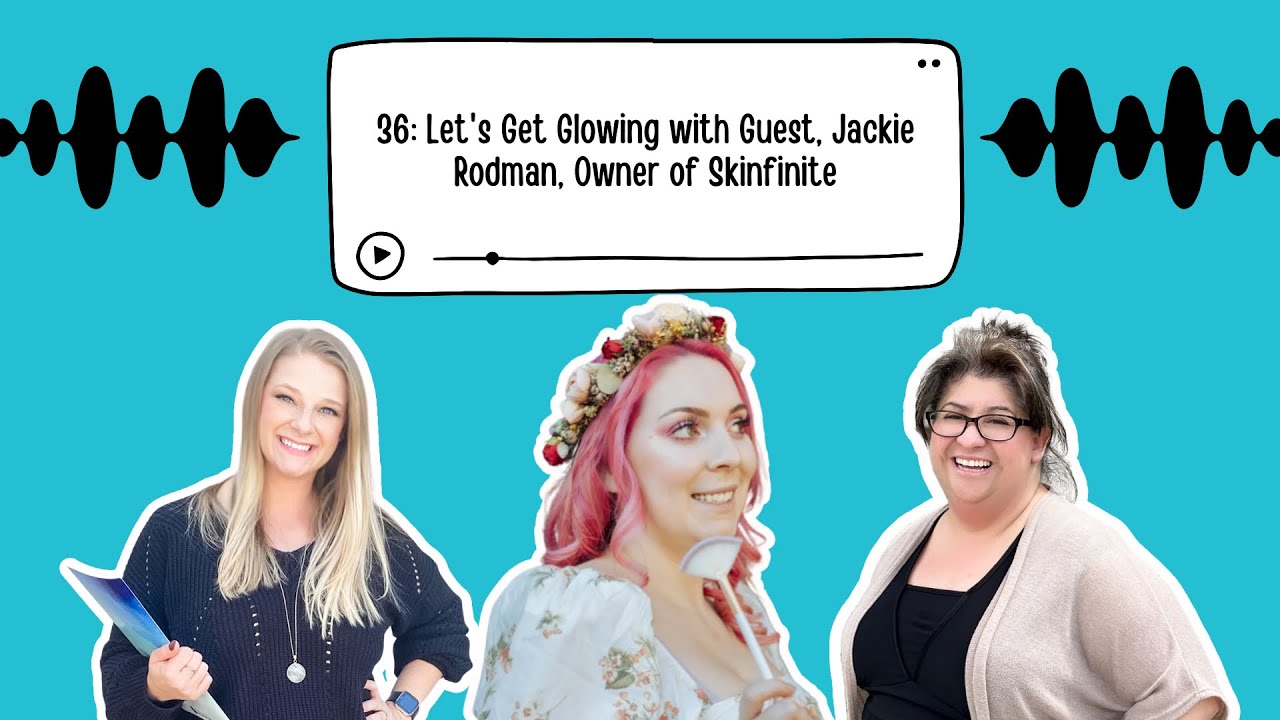
Jackie Rodman, an esthetician at Skinfinite in San Antonio, offers virtual skincare consultations for busy moms and explains the four essentials: cleanser, moisturizer, serum, and SPF. She identifies common acne triggers like dairy, stress, and hormones, and offers in-person treatments including enzyme facials, chemical peels, and sugaring.
Chapters
Hey there! Are you a local mom business owner? If so, we've got some exciting news to share with you all. The doors to our Working Moms of San Antonio business owners community are now open! Join us now in our supportive new community for local networking events, customizable social media templates, classes and workshops, business resources, and to be a part of our exclusive referral directory. We love to help our working mom business owners grow. So visit workingmomsofsanantonio.com/membership or just click the link in the show notes to join us. See you in the community.
We're Erika Radis and Marie Lifschultz, a San Antonio area realtor and lender, but most importantly, we're working moms.
The goal of this podcast is to provide support and a sense of community to San Antonio area working moms like us. So join us in trying to find a balance between career, family, and everything in between. Welcome to this week's episode of the Working Moms of San Antonio podcast. We're here with our guest Jackie Rodman. She is an aesthetician with Skinfinite here in San Antonio, and I'm going to turn it over to her and she can introduce herself a little bit further and talk about her work.
Hi guys, I'm Jackie. I'm an esthetician. My spa is located inside Salazmo JC on Huebner Road, and I have been licensed for 3 years now, and I am about a year and a half into business here. I actually got licensed in Tennessee, and I, during school, I got pregnant and I kind of put my career on the back burner a little bit. And then right when I was 8 months, they're like, the military told us, okay, you guys are going to move. You have about like 2 months to move there. And I was like, oh, okay, so we're just going to pack up and head to a new state. So came over here, took me a while to transfer my license, have baby and all that stuff. And I started just doing like virtual skin consults for busy moms. I mean, I was a pretty busy mom with a new baby and everything, and I had my daughter and I just— I grew having a love, like curating, you know, home care routines for moms. And then after a while, like a couple months, I was like, I really miss doing like in-person treatments. So I was like, okay, I'm going to— I'm going to open my business here and we're going to do it. I had my virtual clients in like other states.. And I, I didn't have like one person local, but I was like, I'm just gonna, we're gonna get this thing going and do it. So yeah, I'm like a year and a half in and it's been like, it's just been wonderful. I, I don't know what else to say.
No, you're good. No, that's great. No, I was like, I was just thinking about that, like moving from one state to another, opening a business is sometimes difficult because you don't have your clientele with you, right? You can always take a sabbatical, take a break to have your kids, but going from one state to another, you have to re— not reinvent yourself, but you have to kind of reach out, get to know people, you know, and build your network and build your clientele. So the fact that you're only a year and a half in of opening your business here and doing well, that's fantastic, right? Like, it is, it's fantastic because it is difficult. It's difficult to to meet people and get out, and especially having little ones.
Yes. And so I should have added too, like, I'm a military spouse. And so at my last duty station, there were a lot of moms that they, you know, have moved their business. They move their business every 4 years. And I was talking to my husband about that. I was like, man, that it has been difficult, like building a clientele, but doing it like, you know, just every, every 4 years.
It's crazy.
Yes, I was down. I was like, well, I'll, I'll just turn my clients into virtual clients if I move and then have different locations, I guess. Like, I, I mean, we'll, we'll start that journey when we get there.
But, but it's extremely innovative, you know. Like, I think during— we've talked about this a couple times, Erika, where where COVID has made us reinvent things, you know, where you having to do in-person business and then you have to be virtual and that itself can, you know, help at least a business thrive if you do have to move up and move to a different state. Yeah.
So during COVID a lot of estheticians were starting to just do virtual consults only because you couldn't go in and do like virtual treatments and stuff. And even when I was in school, school, we had to wear like a mask and a shield when we were giving facials and stuff. But a lot of like skincare companies were starting to do like protocols for like how you would, I guess, curate someone's routine just at home but still get the same results as you would if you were going in for treatments, or just to prep your skin so you're ready to go back in for treatments. So you're not, you know, having this like this time of, you know, not, not getting treatments, I guess, like, you know, home care. I tell everybody that home care is like 80% of your results because you're doing that routine every single day. Right. And you can still do a really great exfoliation at home, like in between treatments or even like I have some clients that are local and I see them every like 6 months.
Yeah.
And I'm like, wow, your skin is still incredible because you're keeping up with it every single day, morning and night, wearing your SPF. So I love to stress home care. If someone's too busy to come in, I'm like, that's totally fine. I get it. Just stick with your routine and follow it because consistency is the key to results.
Yeah, no, that makes sense. I'm like, as you're saying this, I'm immediately feeling like horribly guilty about how I don't do any of those things.
No, same thing. Same thing.
Yeah, you know, and it wasn't until we met that I had really even heard of a virtual skincare appointment. And so I'm curious if you can explain to the listeners what, like, kind of what does that look like? How does that work? Because I just think even if you're in the same location, even if you're here in San Antonio, as a busy mom, you might not be able to get to come in. And so, but we still want your advice, you know. Yeah.
Yeah. So for somebody that's busy and let's say they come in and it just, it depends too, like what you're looking for, like what concern you have, your routine will look a little bit different. But some of the important things I would say, like the top 4 things, if you were just to like narrow it down, if you're a busy mom, would be a really good cleanser. This cleanser makes up 50% of your routine right there because it's important to cleanse your face, of course, and do that morning and night. I mean, okay, so I tell people cleanser first, have a really good moisturizer for hydration. Third would be a corrective serum, but that's based on your concern. If it's aging, like brightening, acne, whatever. And then SPF is So important. And I know people hate wearing SPF and it gets annoying. They're like, oh, my hands get greasy, or, oh, do I need to still wear it in the wintertime? Like, the answer is yes. You have to reapply every, every 2 hours. I know it's annoying, but they do make powder SPFs now. They, you know, the technology of SPF have just like just advanced so much. Like, I have SPF drops I use that I love. I have SPF SPF cream, SPF in makeup. It's like, it's easy now. And I tell my clients, like, no more excuses.
Yeah, it's everywhere, right? You've got to use it. Well, we do have it in makeup, but I think I've always been told that that's not necessarily enough, right? Like it's not strong enough.
So I, so I notice a lot of if a lot of foundations, at least if they have SPF in their makeup, it's usually like the most I've, I've seen is like SPF 15. And I ideally tell people to at least wear SPF 30 every single day. And I mean, it doesn't matter if it's SPF 30, 50, or like 100, you still have to reapply it every 2 hours.
Right.
But that's it. It goes by like grade of protection. So if you're wearing SPF 30, you're getting 98% protection. And then if you go up to 50, it's like a 1% difference. Oh, but you still have to have like coverage, if that makes sense.
Yeah.
Yeah.
But, but yes, it still only lasts for 2 hours.
Oh, that's so interesting because that's not the way I thought it worked at all. And so I would go to— because I'm so pale, I would go to the beach and wear like SPF a million and everyone would tease me while they're like out there tanning or whatever. And I'd be like, no, I'm good. But I don't think I would ever reapply it.
If you're wondering like, oh, I just need to go up in grades because I'm burning, it's— it's— no, it's because you have to keep reapplying it every 2 hours.
Oh, I see.
That's how it works. And not only that, but you have to make sure your SPF has zinc oxide because that, that protects against both UVA and UVB rays. And UVB rays, I like to think of it as the burn. That's what's the burn rays. The UVA are like the aging rays.
Oh my gosh. For something that we need, this is really problematic.
Yes.
Like some SPF only have the titanium dioxide in it. Some have both. They have the zinc oxide and titanium, but zinc will block against both.
I see. Okay. So, yeah.
Yeah.
So, so when you're going through these virtual appointments, you're kind of assessing— well, first, I guess you're giving advice about these kind of things and you're kind of assessing their needs you know, obviously you have conversations about different concerns and that kind of thing. And then just virtually you can see what their skin like kind of looks like and what you think it needs to, to be better.
Yes. So how I go through my virtual appointments is I send over my consult form and then I ask for, you know, forward picture and then side profiles on both sides. And then I ask like, at least if it's an acne appointment, I'm like, okay, like, where's the location? Is it only on your face? If someone is— has like sun damage or something, I'll ask to like, is it shoulders back? Is it, you know, what or what's your lifestyle look like? You know, if you have sun damage, like whatever. But if it's so, my virtual appointments, I'm trying to like think of where to start. So I do the initial consult. We talk about their form, their health history. We talk about, okay, how long have you been noticing whatever it is? And they say, oh, it's been this long. I've noticed it maybe after kids. And then we go dive into their like, okay, what lifestyle factors could maybe be contributing to your skin? Are there any products that could be maybe like affecting your skin now that weren't affecting you before? 'Cause our hormones do change. And with pregnancy, at least for me, like I couldn't use maybe half the things I was using before.
Everything changes after having a kid.
Everything. Yeah.
Yes.
Yes. And I get it. I hear it all the time. They're like, man, I used to use this product and now it's not working. I'm like, yes, we've become more sensitive to it because our hormones will go up and down. Even like when I set up people that are pregnant, their routine, I'm like, okay, like this is what we can't— like there's certain ingredients you can't be on. We just need a very nice, simple routine and then we can like adjust like post-baby and then post-breastfeeding, things like that. But we go over basically just all factors that could be contributing to why your skin is how— like doing whatever it's doing, I guess. So I don't talk very scientifically.
Yeah, no, that's okay. You don't have to.
I understand what you're saying. I definitely understand. No, I think it's a big deal. Like, I, I, I, when you said, hey, sometimes you might be using a product and it, it doesn't work, I, I'm actually— I said that. I'm like, I love this product. I've been using this product for years. I have, I have fairly sensitive skin, so I don't like any kind of fragrance or anything in my— in the stuff that I use on my face. And I'm like, what is going on? Like, I've used it forever and it's not doing what it used to do. Like, I'm having a very, very, very dry skin all of a sudden that has never, never happened before. I hadn't thought about trying it. I'm like, do I just need to put more? Maybe I'm not doing enough. But it's— so I didn't realize, like, maybe your skin either doesn't react to it like it's supposed to or whatever changes has happened. You've also gotten older, so that's probably a big thing.
But yes, when we're younger, too, like our needs are different than when we are older. So I kind of say, okay, you know, maybe a young girl can get away with some Sephora products, some Kylie Skin. But when, like, aging skin, we need like a lot more. We need a lot more. We need, you know, I tell everyone too, I'm like, retinol is super important because as our skin ages, our cellular turnover rate isn't like it was when we were younger. So you think of baby like baby skin. It's super, super soft. And that's because their cells are turning over at a, like, super, super quick rate. And as we age, it starts to decline. So then our dead skin cells aren't turning over, so they're kind of piling on top of each other. And you're thinking like, man, my skin's super dry. It's super like, you know, it's textured. And it's because the dead skin cells are getting trapped. So they're not, you know, they're not turning over like they should. So that's why I tell people exfoliation is super important to help those skin cells, you know, like we have to slough them off ourselves now. Gotcha.
No, that's true. I didn't know that. Yeah, that's what I've been like. I'm having— I had never really had to exfoliate very often. I guess. But now I'm like, I have to because if not, it gets bad.
Yes, yes. And then retinol too will speed up cellular turnover and it will plump the skin too and make us look still, you know, young and youthful. So I stress with a lot of people like retinol and exfoliation is super important when you're getting older and using an exfoliating cleanser at night too.
Yeah.
Yeah. So what you're saying is at 36 years old, we shouldn't just be hitting this with a makeup wipe at the end of the day.
Thank God.
So makeup wipes are very stripping too. So if you're noticing like, hey, my skin is feeling a little sensitive, could be the wipes. I don't like the Neutrogena ones. I know those are the most popular ones and it's easy. You're like, man, it's so easy. I tell people I love using a good cleansing oil instead of makeup wipes that will, you know, get all the dirt, debris, and like your makeup completely off. And for some it's annoying, but I— my go-to for removing makeup is cleansing oil and super hydrating too, not stripping. And you're replenishing your skin with like moisture too.
Oh, that makes sense. Yeah, I feel like— and I think it's probably like a just being uneducated about it, but whenever you think about something like that, like an oil-based something, it's like, is that going to make this worse? Because, you know, it's oil, right? So it's like, what's going to happen? Am I going to break out? But obviously these things are made for these purposes, I guess.
So, no. Yes, it sounds counterintuitive. Like for some oily skin types, I, you know, tell them, you know, your, your skin is trying to hydrate itself, so it's producing more oils. So in reality, your skin is producing all these oils to hydrate because you keep stripping it so much with— it could be a product, it could be makeup wipes, or maybe you're just not using like hydrating enough moisturizer, a good hyaluronic acid, because hyaluronic acid is great as well if you want to hold moisture in your skin and stuff. But yeah, there's just so many.
I'm like, I could talk all day, but no, I think I For me, I actually recently tried an oil cleanse, like for my mascara and eyeshadow type stuff. And I don't use makeup very often. It's very little. But I did like the result. I didn't like the feeling of the oil. That was like— I felt like I'm like, I feel like I have Vaseline all over my face. Or like it was just— but once I, you know, took a cloth and wiped it off and used some water to kind of work it in, my face did feel much better than just using like a foam cleanser on my face.
Yeah. And it depends on what oils too. Like there's some oils that are pore clogging, but that's if you, you know, are you— you're prone to getting acne. Maybe you don't want to use like a comedogenic ingredient in your oil. But typically, like the— I mean, there's a couple oil cleansers I love, but yeah, I'll use an oil cleanser as my first cleanse just to remove the makeup and then I'll follow up with my like corrective cleanser, whether it be— it doesn't have to be anything fancy. Like in the mornings I keep it super simple. Sometimes I just use the oil cleanser, but at night I'm like, okay, we need to remove the makeup first and use oil cleanser and then we have to follow up with our second cleanse. And that's what's doing the work, whether it be like we're working on aging, pigments, hydration, sensitive skin, maybe just like a gentle cleanser. But yeah, the second cleanse is basically your second, like your extra assurance, like, okay, we've gotten everything off and we're work doing correction if needed.
Right.
Yeah. So many steps. All the steps. I don't do any of those steps. I have to do all these steps.
No, I hear it all the time.
I've gotten better at the steps, but I haven't like when I'm supposed to. Like, I'm really— I get lazy and I don't clean my face like I'm supposed to at night. I want to go to bed and I'm like, okay, I just wiped it off. Good night. I'm going to bed. Yeah, but I've noticed now that I've gotten older, I need to do those extra steps in order for my face to feel better. So I'm like, oh, it's real tight, like dry, and I'm uncomfortable.
And you're okay. So we all like to stress, okay, you have to do your night routine, but it doesn't have to be at night. Like you can do it right when you get home. You can go and wash, like cleanse your skin and you're good till morning. So for me at least, I have to do this on the weekends because I make plans. We get tired later. I'm like, oh, I'm so tired. I don't want to wash off my face. I'm like, okay, it's better. It's better for me sometimes when I'm making dinner, I'll go and I'll wash my face and then I'll come back. I'm like, okay, dinner's ready. I'm good to go for the night.
That's a good tip.
Yeah. It doesn't have to be right before bed because at that point you've already bathed children, cooked dinner, washed dishes, and now you're going to bed and you don't want to take— I'm like, I just want to put my head down.
Yeah. And sometimes with kids it's a fight to get them to bed. And then I've been up at midnight being like, oh, I still have to wash my face. Yeah. And yeah, for me, when I like— I think months ago I had heard someone else say, like, you know, your routine doesn't need to be right before bed. It can be right when you get home or whenever you have like that down period. Like for me, it's okay when I'm waiting for something in the oven, I'm going to go up and do my routine. Timer goes off, go back down, continue, continue with whatever you were doing.
Yeah, I like that. I like that. And then plus too, it's nice to just, you know, we have this nice fresh face when you wash your face and you feel good and you go right to sleep and you don't get to really enjoy it, you know? So if you wash it like at dinnertime, it's like, hey, I still have a few hours and like, this feels nice. So that's something. Well, I also know, so Maybe you can go into some of the services that you offer in person. And then I'd like to hear— I know you're big on sugaring services, and so I'd like to learn a little bit about that. And maybe you can tell us.
Yes. So some of my in-person treatments, I start with my new client facial and consult. So basically, I like my new clients to select that option so we have enough time to go over your skin concerns in person. But I do offer virtual consults if you don't want to make two trips. I, I guess you can do the consult and then we can do a regular treatment, like from whatever you— from whatever we discussed. And besides my new client facial, I have my Skinfinite Signature Facial. That's my signature enzyme treatment. And then I also offer hybrid peels, chemical peels, and I offer a few Korean treatments as well. So that's I— something I, I love too. I love Eastern treatments and with sugaring. So sugar hair removal is awesome. So I'm more prone to sensitive skin. That's kind of why I got into this industry too, is because I couldn't find answers for my skin and I was like, man, everything's making me red, irritated, inflamed. Like, I was like, man. So I was like, wow. Like, I learned how Powder Sugar in school, and I like did, you know, I did the waxing and stuff, and I was like, I really, I want to try something else. So that's— I was looking up sugaring, and it's basically— it was created in Egypt. They would like roll the ball, like a ball of sugar across the skin, and they would just like just take the sugar off. And apparently back when they used to do it, it was very uncomfortable, so they've made like ways to how they, how they cook the sugar to different, different consistencies. So we have like a soft paste, medium paste, and like a hard paste. And it depends on what climate you're sugaring in too, because sugar, sometimes it's hard to work with just because sometimes, at least when I'm renting, I've rented from spaces you can't control, like the temperature. So it's temperature dependent. So it's like I have my fan going so the sugar doesn't like melt or something. But I'm making sure I use the right paste too, like depending on my temperature.
Oh, so you're melting— it's melting the sugar to apply to your skin?
Oh, so I'm just saying like the sugar comes like we— I have a sugar warmer, so it comes like pretty stiff and we have to like just not melt it but like warm it up slightly so it's in the consistency of like molasses. That's how I like to put it. It's kind of that like it feels kind of like honey too, in a way, if it's really like melted down. But basically how it differs from waxing too is it's applied in the like opposite direction of hair growth and then it's removed in the direction. So it's not as like irritating.
Yeah.
And it's only sugar, lemon, and water.
That's it.
My paste All organic. Yep. And it has no fragrance, nothing, nothing like that. So it's, it's safe for sensitive skin. I've, I really like it. It's rare if someone's like very like red after getting sugared or like inflamed. They can— it doesn't look like you've had any work done really.
That's amazing. I've never done that. I mean, I've had my eyebrows waxed and different things like that, and obviously that's not very pleasant. But, you know, I feel like— I feel like we've all been taught, you know, as women, it's like beauty is pain, right? So you're just going to get it done. And so— but I've never tried sugaring. And so if it's less abrasive for the skin, I think I might like that.
Yes. So a lot— it's the most gentle. It's the gentlest form of hair removal. So it's not— it's everyone that tries it tells me like, man, that like was way less painful than waxing.
Yeah.
Wow. I haven't had someone say it was more painful than waxing, at least.
And it works for— it works for all types of hair, like depending on the fineness or how coarse it is or, you know.
Yeah. Mm-hmm. It works for all types of hair. I do it for the whole face. I love doing underarms too. Like, that's one of my favorite things to sugar just because I like feeling nice and smooth. Yeah. And I even now too, for like the face and stuff, I offer strip sugar. So this is literally like the, the sugaring company I work with made like something even softer than the soft sugars. So they made sugar that kind of looks like soft wax, like the way it's applied and it's just removed with strips, but it's still the same great like sugar, lemon, and water. And that's it. You know what I mean? It just can't be like manually removed with like your hand.
Oh, I see.
And so it gets more of that, those like finer hairs better. At least I've noticed.
That's great. Look at the things that they have now.
I know, right?
Oh, they have so many things now. And it's like I'm, I'm always trying to stay up to date with everything.
Oh, I bet. Yeah. Well, so sometimes we like to ask our guests is like what one of their favorite thing is about what they, what, you know, what they're doing. And I can tell just by listening to you talk that you love all the things about what you're doing. But you know, if you can narrow it down. Yeah. So do you have like, what, like what do you feel like brings you the most joy when you're doing this, when you're helping these clients?
Oh, okay. So I, my The thing that I just love most is helping people with, with acne. That's just my, my thing. Acne and sensitive skin. For me, it's like I feel like I can totally relate because my skin, I kind of didn't know, didn't know what I was doing before. And then like how I, like, I was like, man, my skin like just used to be so sensitive to everything. And I like knew how that felt for me every day. Like, man, I just got my license and I'm just like, don't know what I'm doing. So I just went on this spiral of classes, classes and classes on sensitive skin and acne. And I— one of my first acne clients I got, I just like was just, oh, I get so attached. And I was like, man, like we cleared her skin and her— she's just like, she's just walking and feeling so confident about herself now from like how she felt before. And it's just like that. Like, that's what I live for, is just helping people with their confidence again and like, not feel like ashamed to leave the house.
Well, I can see that. I mean, I know that as you get older, you think you only have acne as a teenager, right? You're like, I'm an adult now and why do I have acne again? Yeah, it's annoying and it can be painful. I've seen people that have very painful acne and it is— it does— it does take a toll on their confidence. So I can see that can be rewarding as someone who helps them get past that.
So yeah, yeah, yes, absolutely. So that's like my main thing is like, you know, you don't have to just wear this mask going out every day anymore.
Yeah, for sure. That's, you know, Frank and I, my husband, we were just having a conversation about this because of course he walks around here with his like perfect skin as a man does, right? And I'm going through all these like hormonal things and, you know, whatever. And I just looked at him and I was like, I'm 36 years old and I'm like breaking out. I was like, what's happening? And he looked He looks at me like, sort of like, I don't know, you know? And then you just want to slap him.
I know. That's literally men. You're just like, man. I mean, my man, I swear, I'm just like, babe, the wrinkles are starting to settle. I'm like, it's time to exfoliate. He's like, no, I don't know. I don't want to. You have to. Yeah, I was like, I still love you, of course, but let me help you, please.
That's funny.
That makes a big difference. It does. It definitely makes it. My husband will only use my cleansing stuff if he's been out welding or something like grease. Like he needs something to get stuff off his face. Like other than his normal, like, shampoo on his face. It's like when he gets all dirty and gritty, that's when he'll use it sometimes. But on a regular basis, he doesn't have to. He doesn't have the issues that women do.
I know. Yeah. Men have different, like, different kinds of skin too. I mean, I— it just depends on the man, I guess. But yeah.
Yeah.
Yeah. My husband, I'm just like, one time I just laid out the routine for him. I'm like, okay, here's step 1, 2, and 3.
Yeah.
I said, okay, you have to do this. And after a week I was like, okay, have you been doing it? He's like, been doing what? I was like, oh Lord, they were literally Sitting lined up for you all week.
Oh, how funny. Do you, do you have a lot of men clients that come in for your services?
So I have some, not many. I would love to get more in, but I think it's the whole, like, men, it's like, it's typically like I'll have a husband and wife come in. Oh, and the husband, the husband comes just because the wife wanted him to, like, That's usually, that's usually like how it goes. Like, I've never had a single man come in for treatment. It's only— it's always been like a husband and wife combo, which is great. I'm like, I tell them, like, you can— if you guys kind of have the same concerns, you can share the same products, you know?
Yeah, yeah.
Don't have to double up. So that's kind of nice.
Well, you know, that's, that's funny you say that because the boys— I have teenage boys. And their helmets and stuff. So I make sure like, hey, you need to disinfect those helmets because you wear— they wear like to put that— I call it mascara, but it's not mascara. It's whatever goop they put on their eyes in order to look— I don't know, in football and lacrosse.
Oh, the eye black.
Yeah, the eye black stuff and whatever. I'm like, it's still makeup on your face. You got to take it off. It's not going to be everywhere. So, but they started to break out right around their cheek area and I'm like, you need to clean your helmets. Because that dirt is sitting on your face and you're not cleaning your face. So I bought them a soap and an astringent and some kind of moisturizer on. So they have a routine that I have them do on a regular basis just because, and it helps with their breakouts, but also cleaning the stuff they're putting on their face. Like whatever equipment you're using, you need to clean those. They get sweaty and gritty and, uh, so a lot of bacteria.
Yes, absolutely. So, so yeah, if it's not a husband wife, it'll be like a mom bringing in her teen boy or daughter. And with teens, sometimes it can be hard because you— I don't like to give them this whole routine because I'm like, okay, let's, let's start with two things. Let's just start with a good cleanser and a good moisturizer. If you stick to it, then we can add more. If you, you know, follow— they're not going to follow the first two steps or they're just going to do it sometimes. And it's like, okay, Yeah, I like, I like my clients to be curious too about it, you know?
Yeah, yeah, for sure.
I don't like to push, so I'm just like, okay, like, I'm curious, how, how much do you feel like—
because we hear it all the time— how much do you feel like what we eat and stuff affects our skin?
Oh, so definitely a lot. Yeah, a lot of times for adult acne, I'll notice it's something almost all the time it's something internal or it's like they're using the wrong makeup and wrong products. So I like to look at people's lifestyle factors like stress. Stress is a very big one because it increases our androgen levels, which increases our oil production, and that can cause acne. Or if, if someone likes, you know, a diet that's filled with a lot of sugary foods or dairy and stuff, it's Dairy is like the number one inflammatory ingredient. That's one of the ones I love.
I know, me too. No ice cream for you.
Oh man, I know, it sucks. And I tell people, okay, we can, we can stop dairy for 3 months and see if it has an effect on your skin. And then while we're doing our treatments and our home care when we're done and we see a difference in clearing your skin, we can slowly start to incorporate things back and like see if that had made a difference. Another thing is like whey protein that can cause acne as well. And same with biotin supplements, which is super random. Yeah, but there is an ingredient there that can affect your skin.
Isn't the biotin what people typically use for like hair growth and nail growth? Yeah, like that. Right. Yeah, I noticed that when I'm heavy on dairy, I have eczema. So my eczema acts up, like I get inflamed more. It's annoying, but I noticed it's my, when it's, it's my diet that affects, that makes it, I guess, inflamed or flare up.
Yes. Eczema. Yes. That's one that I, I've noticed as well can be caused from internal inflammation. Consumption or sometimes stress too. I tell people, you know, if you are wanting to start supplements, like probiotics are great to introduce like good bacteria into the skin because if you have a happy gut, I tell people you have happy skin.
Yeah.
Oh, that's interesting.
Mm-hmm.
Yeah. Well, your skin's your biggest organ, you know, like it's your biggest organ. Like it. And, and I believe everything starts in the gut. Now that I've been reading some more about stuff, like, if you have a happy gut, like, the rest of the other things don't seem to take care of itself. So yeah, it's a lot to do with what you eat.
And sometimes if, you know, sometimes too, like, our hormones are off if we start birth control. Like, there's certain birth controls that, you know, cause more acne. And some doctors will tell you birth control will help with your acne, which is not true. Yeah, but there's, there's, there's just so many things that could play a role. I don't know. I hope you guys don't hear my dogs.
Oh, no, you're good, Jackie. Don't worry, Jackie. Is there a way to know, like, if whatever skin issue that you're having, is there a way to determine whether it's hormonal or if it's food or environment? Like, how, how do you determine other than— is it just eliminating those things and, and test and try or trial, I guess, trial and error, trying to figure out which one it is?
Yeah. So for, for some that I talk to that they'll tell me like, oh, if they have a certain— they have like an autoimmune condition, I'll say, okay, have you done like, like hormonal testing? Have you done like— what have you done so far? What can we do next? So first, first off, if I think it's a hormonal issue, I'll say, okay, you can take a Dutch test, which is basically a Dutch test is a blood test and it goes more in detail on like all your, like your hormone, like your hormones. And if something's off and something's not, I personally don't do them because I just deal with the skin, but I'll refer someone, I'll refer my clients to someone like a a person I have here that will help you with nutrition and help you with like, see if it's really like a, like a hormonal issue. I would like to bring it into my practice at one point and have me just do it all. But for right now, I'm just like, okay, I, I'm just focusing on skin right now and to be like a nutritionist and everything because estheticians actually aren't even allowed to like recommend supplements or recommend dietary changes. I can make suggestions, but I can't like lay out a plan for someone. I tell people, okay, maybe let's just try cutting out dairy, eggs, whey protein. For some people, even shellfish can have like a response. And with stress, I'll say, okay, like, what's— we'll try some de-stressing methods too to help. But I, I can make suggestions, but I can't say like, okay, here's your like written, you know what I mean? Plan.
Oh, sure.
Yeah.
Would. So I'm like, okay, I feel comfortable when I refer people out to a nutritionist just to go a little bit more in depth. Yeah.
And doing those tests will be able to help you narrow it down.
Yeah. And this too is like if we've like tried all of our options, like, okay, like the acne is still coming back or like, let's then, then let's see if cutting all these things will help. I mean, I have some people that right off the bat they're like, okay, I'll just take dairy out of my diet. I'm like, okay, great. Wonderful.
Yeah.
And yeah, those people don't like ice cream.
Yeah, that would be a hard one. I just feel like I'm so interested in how scientific this all is. You think you go to an esthetician, it's like, hey, can I get a facial and it's like, yeah, this feels good. My skin feels a little better, you know, all that stuff. You know, I just didn't realize how much goes into like the study of it and like trying to kind of pinpoint what people's troubles are and trying to obviously alleviate those troubles. It's very interesting to me.
Yeah.
So, I mean, I will say there are fluffy estheticians, which I love. I personally love going and getting a relax. Waxing facial and just having just that relaxation moment. And some people specialize in that and there's a place for every esthetician. Like even if you specialize in waxing only, I have like tons of friends that only do waxing and then I have people that only do facials or only do like lasers and they have their med spas and stuff and they do injectables. I feel like there's always a place for what you want to specialize in and if you want to do it all, that's great too. But for me, like in my practice and stuff, I like to just focus on skincare and just trying to find like why your skin is doing what it's doing and try and fix it.
Yeah, no, that's great. I think that's a service that a lot of people need. So I think that's really good. And then lastly, Jackie, do you want to just tell our listeners how they can get a hold of you for all of these services?
Yes. So my website is skinfinite-sanantonio.com, and I'm also on Instagram @skinfinite_sanantonio and on Facebook, Skinfinite San Antonio. I've added San Antonio just so people know I'm in San Antonio.
That works.
Yeah. Okay.
Well, perfect. We'll put some of that into the show notes as well so people can, you know, click and get a hold of you. And so I just want to say thank you so much for being on this episode. Like I said just a minute ago, I've learned so much. I just feel like there's so much to it. And so I appreciate you sharing all of this with our viewers and our listeners and just for being on with us.
Yes, thank you so much for having me. I was just so thrilled and excited to get on here. I was just anxiously waiting for the day. So thank you guys.
Thank you for being here.
Yeah, and then I'll just also do a quick thank you to our listeners for tuning in to this week's episode, and we will just catch you guys next week.
See you guys next week.
Thanks so much for tuning in to the Working Moms of San Antonio podcast. Be sure to follow us on social media at our respective Instagram accounts or join our Working Moms of San Antonio Facebook group. Those links can be found in our episode description. If you have an episode topic suggestion or question, please email us at office@erikadisagent.com, and be sure to subscribe to the podcast and leave us a review. See you next week.
More from Erika


I don’t want a prenup, I just want you!" 📜💍 …until you realize you just agreed to 50% of zero! 😂


In Texas, a 17-yr old is legally considered an adult in the criminal justice system



What Every Parent Needs To Know Before Your Child Talks To The School (Texas Law)

Is Your Marketing Strategy Tasting a Little... Muddy?#podcast #podcastclips #podcasts #


