Episode 37: Let's Get Baking with Kim Reince Owner of My Cookie Therapist
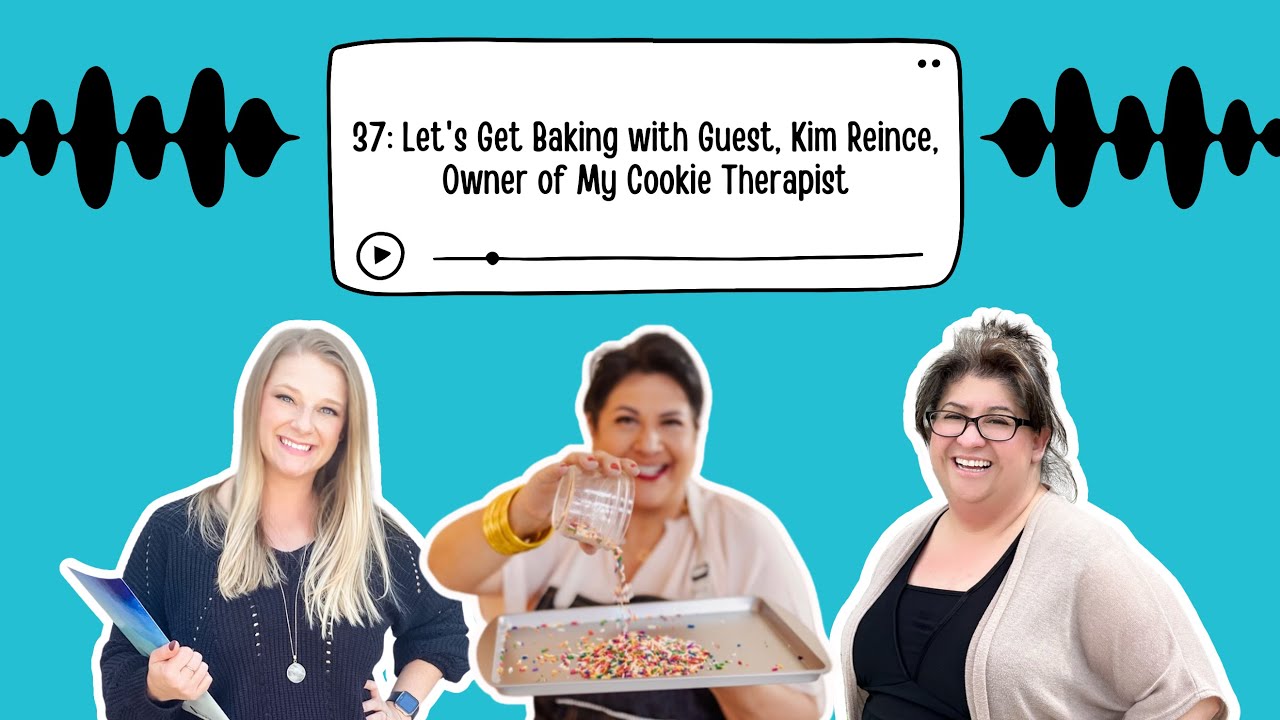
Kim Reince, owner of My Cookie Therapist, discovered that baking became therapeutic after her son's autism diagnosis. She turned that into a business serving markets and corporate clients while juggling motherhood and entrepreneurship, relying on community resources and peer support from other working moms.
Chapters
Hey there! Are you a local mom business owner? If so, we've got some exciting news to share with you all. The doors to our Working Moms of San Antonio business owners community are now open! Join us now in our supportive new community for local networking events, customizable social media templates, classes and workshops, business resources, and to be a part of our exclusive referral directory. We love to help our working mom business owners grow. So visit workingmomsofsanantonio.com/membership or just click the link in the show notes to join us. See you in the community.
We're Erika Radis and Marie Lifschultz, a San Antonio area realtor and lender, but most importantly, we're working moms.
The goal of this podcast is to provide support and a sense of community to San Antonio area working moms like us.
So join us in trying to find a balance between career, family, and everything in between. Welcome to this week's episode of the Working Moms of San Antonio podcast. We're here with Kim, and she has a company called My Cookie Therapist, and we're going to turn it over to her to talk about her story.
Hi guys, I'm really glad to be here and to share my story, and I kind of wanted to share my story in the month of April because my business kind of ties in with Autism Awareness and Acceptance Month. And as odd as it may sound, autism is what led me to create this business in the first place. So yeah, kind of goes hand in hand, the things we do for our kids.
Absolutely.
I don't know how much, you know, experience, you know, people have with autism, but I did have— I have one child and this child happens to have autism and he was diagnosed early here, right after I moved to San Antonio from Florida. And, uh, He was about 2, almost 3, you know, physically he was just off the charts, but developmentally and his language was just, wasn't there. It wasn't happening. So I knew something was wrong. I gotta get something. So we put a name on it and the name happened to be autism. And I was a stay-at-home mom at the time. And of course I just threw my life into just, okay, what do we need to do? We need to get occupational therapy. We need to get physical therapy. We need to get speech therapy. We need to get ABA at the time was proven to be the most effective therapy. Be for a child with autism if they get it early enough in life. And we had everything going on, sunup to sundown. I'm, you know, driving around the city, taking him to appointments. You know, people are coming over to the house, meeting each other, coming and going at the doors, whatnot. And we were just living in this, you know, kind of got to be this fight or flight syndrome 24 hours a day. The adults in the house, just that tension and that there was just, you know, no rest. Even when you thought you were resting, you really weren't. And then we just stumbled across yet another protocol or a therapy that was called RDI, Relationship Development Intervention. And this one was just to stop and you just slow down and you need to just, you know, rethink. And we're not gonna, you know, just so much be hammering at him to talk, talk, talk and do this and do that. We're just gonna let things progress naturally. We're gonna let things progress without forcing verbal communication. We're really gonna work on nonverbal communication. We're gonna work on eye contact. We're gonna work on you as a parent being the giver of good things. Which, you know, all parents are anyway. I just wasn't allowing my child to see that side of me because I was so busy with, you know, the language development and whatnot.
Yeah.
And, you know, and just relationships were unraveling at the time and, you know, health issues were popping up and it's all from stress. You know, autoimmune issues can be a real, you know, bee whenever you're all wrapped up in, in just chronic stress. And that's where I found myself at the time. So we started doing these nonverbal activities and things really calmed down and the family unit was just a lot more relaxed. And a big part of that was nonverbal communication and making eye contact with the child who's still not verbal at the time. He was just a little over 4. Um, and just, you know, a little tornado, just an ADHD whiz all over the place. But baking, you know, one of the directors of the program says, you know, baking has really been well, you know, look at each other, you know, you Hand them an egg, you know, you just, it's almost down to the silliest time. I remember my husband and I were looking at our stuff going, yeah, right, whatever. Okay, we're going to crack an egg and we're going to turn on the mixer and he's going to be all right. But it wasn't quite like that. It was just the relationship building that took place during that time with me not talking. You know, there were pictures on the back of the Betty Crocker recipe box. You know, you just point to it. What do we do? Eggs. How many eggs are there? There's 3. Oh, look, I have 3 eggs right here. You crack the egg and, you know, it's letting him do the things that I would never let him do before. Crack an egg? Oh, good Lord, no. Get next to a liquid in the kitchen? That's off limits.
No.
Right. You know, turn on my mixer? Oh, never. Those were all allowed. And of course, you know, there was a lot of setting up before the activity. But with that, he was able to just look at my face, which, you know, he'd never really done before, you know, just to really look at me and to really see me. And through these activities and just waiting for the next step and waiting for me to go ahead and shake my head yes, or waiting for me to smile, and then he would reciprocate the smile. It just went on like that, and we just, you know, built it onto other things. Like, you know, I'll never forget one time I was at a birthday party and there were, you know, just, I don't know, maybe 40 kids, all in the backyard across the pool at the jumpy house. And, you know, I remember being really nervous at birthday parties and stuff. I remember always having my eye on him. And I remember he looked at me from across the yard, which was really kind of far away, and he made eye contact with me. And it was such a huge deal. I just wanted to share it. I mean, he just wanted to make sure that I was watching him and looking at him and see what I'm going to do, which was typical. Kids do that all the time. And I just wanted so desperately to find someone who would understand that and could enjoy that. Yeah.
And like celebrate with you.
Yes. Just feels like, oh, it never made eye contact. Technically from before, especially, you know, across a swimming pool and a bouncy house and everything. So things kept progressing. And well, now he's a 21-year-old adult. He just graduated from college with his associate's degree and taking a gap year to figure out what he wants to do for the rest of his life. Like a gap year. If I told my parents I was taking a gap year, I have no idea what they would have said.
But I know what I would have said.
No, ma'am. That's where we're at now. Yeah, I think it would have sounded like that in my house, except in Spanish. Or something. Are you crazy? What's the matter with you? Yeah. Anyway, okay. I tried to keep it cool. So here we go. But that started, and that led me to, you know, baking for school. And at first I was doing just a lot of cakes, a lot of cupcakes, a lot of cake pops. And that was my little era then and doing all that with baking. And I really did like it. And I felt like I had a knack for it. And then, you know, we progressed to where we're in sports and then I'm just a chauffeur from 6:30 in the morning to 6:30 in the evening, taking and working in between. So, and then the time in life came when I felt like I was going to be an empty nester. And I was like, gosh, I'm going to have all this time on my hands. What am I going to do? So I got a big dog and trained her to be a therapy dog. So she's great. And then I, you know, I took up baking again and this time it was cookies and I absolutely loved it. And then I didn't turn out to be an empty nester because he stayed here instead of going away to college, which was fine in the end. But so much for my empty nester plans. I had a plan. Okay. I stuck with my plan. Stuck with it. And then it just grew and it grew. My Cookie Therapist just has just in a short 2 years, you know, had quite a few little evolutions. And I even going back to the autism and my small business and, you know, how this kind of planted the seed very early on. Then I thought, you know what? And he has trouble like in big social situations with social anxiety. I can go to markets and this could really help him. Or, you know, maybe he's considering studying business. He can run the business end of my business. That will be great. That'll take So much off my plate. Zero interest in business.
Okay.
So I'm still doing all that. You know how it goes in the marketing and everything else. A small business continues yet to take an interest in anything except for my red velvet cookie stuff with brownie.
So yeah, just the taste testing, huh?
Right. Yes.
Yes.
Very good taste testing.
Quality control.
He's tired of me doing the decorated cookies. He wants me to go back to doing the gourmet ones, which I generally just do for markets. And I just kind of took a break from markets for for a while because that's where I make all the different funky flavors and the big cookies that like 4 people could eat and all this stuff. So he's ready for me to get back into that, that stage. But I did take him out to the markets at least saying, okay, you know what? And I need, you're going to be my helper. You're living here. You know, I need help on Saturdays. Come out to the market with me, you know, not just lugging the heavy stuff, but just to talk to people, to be around crowds, which is something else that's just not really that easy. Or it's a non-preferred activity. He'd rather stay here gaming. So we out and about we went and he did great handling the Square, she just baffled me in the beginning, you know, I couldn't, you know, and he figures it out like a whiz. So he handled all these Square transactions and the cash transactions for me. Well, I just, you know, talked to people and explained to them what the cookies were and, you know, different things they want to talk about. So it worked out really nice. So I'm, uh, looking forward to starting in the markets again and, uh, and bringing my helper guy with me.
Yeah, that sounds like a good balance for both of you. You get out there and do what you have to do, and then he's at least around other people, even if he's not Talking with them constantly and that kind of thing. Just a little bit of that I'm sure is helpful. So that's a good situation for both you guys.
Yeah, absolutely. Yeah. And by the end he would warm up to it and he would be talking to people or giving them compliments and stuff like that. Stuff that he would not do, you know, it takes a while for him to warm up. The more time you spend inside, like now his thing is gaming, you know, it goes through these phases with autism, you know, when he was younger it was, let's say like a Japanese anime and then it switched for 6 years. It was like hardcore tennis playing, just nonstop. And then he graduated, dropped his racket, has not picked it up again. Then he taught himself how to play guitar during COVID got a collection of acoustic, bass, electric, you know, played them all great, stopped, built a computer, which he calls the Lamborghini of gaming computers. And that is where we're at today. I'm just waiting for the other—
what's next, right?
The other whatever it is to come along and replace gaming.
Yeah, it's an incredible story. Like, I love the fact that, I mean, like all moms, right? We, we do what we need to do to, to help our children. And I think it's great that it led into something that can be profitable for your family and something that you guys can somewhat do together. I think absolutely. Like when, when I had my boys, I'm like, so my husband, I don't want anyone else to raise them. I don't want them to be with Grandma and Grandpa all the time. I don't need them to be in daycare. Like, we need to figure out what we need to do so we can be there and be part of whatever sport they're in or whatever play they're going to be in or activities that we want to be. So you created your career around— Absolutely. —what you needed. And I love that. I think it will resonate with a lot of entrepreneur moms because I think that's amazing.
I think so because I really don't do anything different than any other super mom out there or any mom here. It's just that my activities had to be just a little amplified, just a little extra in those departments. With the language, with the coordination, with whatever it may be, with the social skills, with getting along with friends, with solving disputes. Luckily, academics came easily to him, but the rest of the world did not.
But you know, Kim, I think even a lot of kids go through that, even if they're not on the spectrum of any sort. Like they have, I mean, with COVID I mean, especially the social interaction with children have changed. Like, you know, my youngest son, he definitely is less mature than my older one. I think he was in that 4th, 5th grade era when we were in COVID and it came out that they display weird behavior sometimes. Like, wait, you're 14. That's what a 10-year-old— what are you doing? Like, what are you doing?
Right. But you know, being shut in for a couple of years will do that. Yeah.
You know, but I think it's great that you have— you, the, your business taught him also life lessons, right? I mean, yeah, I really do try to tie it in.
I do tie it in. And, and, and during the day, like my Cookie Therapist is my passion. It's my love. It's my small business. It's really cool. I'm really kind of proud of myself because it's something in the back of my head. What do I want to do? I always want to do this. And then I do it and then I'm like, you know what? I've never had a small business. I want to see what that's like. And boy, am I getting a dose of that here too. It's a lot of work. And, uh, and it's, you know, getting busier and busier. And I love that part of it. We just keep branching out and, you know, and Working Moms of San Antonio has been just a huge gap for me. I had, you know, we all have our mom groups of friends. Well, thankfully I have my group friends who have children on the spectrum and can identify with the growing pains that maybe I'm going through, and we can bounce things off of each other all the time and laugh and say, remember when? But what I didn't have was the business moms and things to bounce ideas off or bounce questions off about whatever it may be— websites, advertising, target audiences. And so it's just been fabulous, just meeting and getting to know and just being a part of what you guys have to offer.
It's really good stuff. I love hearing that. I'm so glad. I mean, really, when we started it, that was us too. It was like, in our industry, people wanted to go out drinking because we're in real estate and that's what you do for some reason. And it was like, we have little kids. I'm not going to go do that. You know what I mean?
I can't do that.
And so Marie and I were like, wait a second, we need to find other people that are working moms. And so we did that. And then it was like, well, I also want to know the people that are running their own business because that's a whole different side of it. Right. So then we found those too.
You know, it's good. Who knows what you're going to find next? Yeah, who knows?
Well, definitely, even though you're in different industries, it doesn't mean the skills that you've learned over time can't be shared in another industry. Right. You know, like, hey, my kids were 2 when I did this and this is what worked. I can put them on my back or I can take them with me and we can do different things with them. We have moms that lug kids around during nap time is going to be in the car because they got to drop off laundry. You know, they got to do XYZ or whatever the case And I'm like, oh, I never thought about that. You can do things. And when you see other people like you doing things that you thought maybe it was a little hard, like, wait, wait, wait, if they can do it, I can do it. It's empowering.
It really is. Yeah. And so like I said, this is, you know, currently like what I do at night after, from 5 to 9, I kind of do that. I usually get home. I work as a behavioral therapist through the day. So that was just kind of another career change. I went when my son was little and getting a lot of those ABA hours that I was talking about, you know, I just kind of wanted to peek in on his therapies. I just wanted to make sure it was being done right. So what do I do? I sign up at the University of North Texas and take the master level courses in behavior analysis and, you know, get all that done just so I can, what, micromanage, double check, who knows. But that's what I'm doing now during my day job. So I do work with, you know, kiddos of all ages on the spectrum right now doing private one-on-one therapies. And, and just, it's a lot of fun to see them grow and blossom. We had some parent meetings this morning and it's just, you know, fun to take that walk down memory lane to September when school started to maybe what the child may have been doing that they were having problems with to the, you know, maybe the frequency of how often it's not happening now, just to see how much they've blossomed and grown. And, and prior to this career that I'm in now, I was a news anchor for like 15 years, different markets. Wow.
I didn't know that about you, Kim. Yeah. Yeah.
Over in Corpus Christi. That was my Texas stint. And then Florida for about 8 or 9 years. And there too in Orlando. And And it's funny how the cookie business, just because, you know, aside from the baking cookies, we have to worry about all of our own advertising and marketing and all that good stuff, just kind of brought me back to that because that's what my degree is. It is in broadcast marketing and management. It's just kind of, you know, sending little signals that way of, oh, I remember this. Yeah. Oh yeah. Of course, you know, it's completely, you know, it's the same but not the same because now, yeah, I essentially run my business on, you know, Facebook and Instagram basically. Those weren't even an issue or those weren't around when I was in college. Okay, I'm gonna go ahead and date myself. I'm a Gen Xer, no doubt about it. Yeah. So it's just, it kind of, you know, brings back that marketing and advertising, a little experience and an education I had way back when. And it's fun and enlightening and I'm enjoying that part of it too.
Do you feel like because you've been on the camera so much that like you can And because, like, one thing that I really struggle with is putting my own self on my social media. I don't ever want to do my face. I've been trying to do it a little bit more now, being a little bit better. There's a gal in our group that's helping me. But do you find that it becomes very easy for you to, like, film? Like, you know, hey, like, let me talk about my business.
No, no. And, you know, and everybody I come across, they're like, you need to put your face on there more. You need to put your face on there more. Like, they tell me that too, and I don't. And I used to do it for 15 years every single day, day and day out. Early morning, new newscast, 11:00 newscast. There I was. But to put myself on my own Instagram, shudder at the thought. Or really, I don't mind so much the video of myself. It's just the talking part. I don't know why. I guess because I'm so far removed from it. It's just like anything. Once you start doing it more often, and I'm trying to put myself out there more often on my own little reels and whatnot as my cookie side of my— the baking aspect. Yeah. You got to show your cookie side.
Right. I know. Right.
I'm just showing cookies now.
So yeah, I need to get back.
But I think all of us working moms struggle with that, you know? Like, I— when I see myself, I'm like, I look like that? That's not what I see in the mirror. Like, wait a minute, what? But I came— I think I came to the point where, you know what, they're gonna see me anyway. That's the way I look. It is what it is, you know?
Like, I, I know. Yeah, nothing's ever gonna be perfect. You know, all my videotaping and photography I do at night because because, well, that's when I'm home and do it. So I've got my lighting things set up really to photograph the cookies, or if I were to do anything like this, like to tape anything on camera, it would all be done at night after a very long day and probably not looking my best. But oh well, again, who cares? Yeah.
Well, I'm glad to know I'm not the only one that struggles. It's just they keep saying, you've got to get your face on here and you've got to do this. And it's like, just one more thing.
I'm totally in hearing it. Yeah. Oh my gosh.
Well, one of the most interesting parts of your story that I found was when you were talking about how once you finally stopped doing all the things, then that's when things finally started going well. And that really resonated with me because I feel like sometimes we all as working moms need to just— we're trying to do the best for our kids, like Marie mentioned. Like, you want to get like, okay, this is going to help and this is going to help and this is going to help. But sometimes I think what does help is just stop, like, stop a minute, you know? And for us, it's hard, but it sounds like that made things go in a more positive direction for you and your family.
Oh, it absolutely did. I mean, we built what was a genuine relationship. It wasn't anything, you know, staccato or it wasn't anything drilled or wrote or it would build real relationships with each other. And yeah, I'm just really excited now at this age that we're still, you know, we have a good relationship and, you know, we talk to each other openly and we ask each other for advice. And those are really just cool things that I didn't know if I would ever be able to experience or not. You just don't know, you know, two kids. Kids can start out at the exact same age with the exact same protocol to have two absolutely different outcomes in their development. So you just don't know.
Yeah. Had you, had you been around anybody that had autism before your son?
Never. I had done one story as a news reporter, and I remember going into a home and there was a little boy and he was blind and autistic, and he was in a daycare. And the story was not about him. It was about— I don't even recall what it was about. It was so long ago, but it left an impact. It left mark on me. And, you know, years later, I had my child a couple of years later, and then he's diagnosed with autism. And I thought back about that little boy.
Yeah. Well, not, not only were you learning about how to be a mom, right? First-time mom. It doesn't come with a book, but you also have another layer of learning to, to, to work with someone or be with someone who's, who is on the spectrum, who has autism and your different behaviors in there. I always, they're not disabled, their abilities and what they can do because they are great. Meet. I was very blessed in my early, early high school years and college. I got to work with children with special needs, and autism was one of those, with a lot of cognitive disabilities. And they're amazing. They're absolutely amazing. But it takes a little while to learn how to work and find those gifts that they can offer. And it's just learning that part. But when you're a new mom, you're told there's these milestones and these things that you have to hit, and you freak out when your kid's not doing it. I know. What did I do wrong? Like, did I drop them? Like, what happened?
Right?
Like, you don't understand. I gotta fix it was my motto. And I don't need to fix anything. You know, my son, despite my expertise and suggestions, he's managed to achieve everything that I wanted him to achieve and more. But he does it on his own timeline and in his own way. I may make these suggestions. And again, this is what any parent would do, you know? Okay, I'm going to want you to go to college. And you're going to do this, this, and this. And we don't take my route. His route is his route. But the important thing is, you know, historically the outcome has been the same or generally exceeded what my expectations are, just not my way. So there are other ways to do things. How about that? Who knew?
Yeah, that's my way. I struggle with that all the time because, because my way is the best way and everyone son should know that.
Tell your mom. Yeah. Oh gosh.
Yeah, that's just kids in general, I think, to some degree.
Yes. I remember I was really freaking out. I had my— I have two boys, and they were— well, I have three boys. One's a step— my stepson, but two that I, I had. And they're my youngest, and they're, they're really close together in age. And that was not planned. Not planned. And I, I was worried because my, my oldest son, when he came, we hadn't had children in our family quite some time. And so he didn't have to walk. Everybody grabbed him. He was carried everywhere. And I was— he wouldn't walk. And I'm like, this is— he's so behind. Like, what's wrong with him? Is there something wrong? And I didn't realize that how much he was being carried by grandma, aunties, and uncles and everybody. And I'm like, your brother's coming out really soon. You need to walk.
Like, very soon this is going to be a problem.
I don't blame him. Why do it if you don't have to?
I need all that attention, the caring. Yeah. So how did it work out.
Oh, he finally— eventually done. Like, you're gonna have to walk. This boy's gonna have to walk.
But then you didn't have to have a baby in each arm, huh?
Nope. Dad did. I did not. But, but again, he— Tyler is— it doesn't— on his own time. That's just him. It, it's not typically not my way. He'll listen, but it's— oh, he's always been on his own time.
So maybe that's just boys. Is that true, Eric? Is that just boys or is that girls?
Yeah, no, I think it's— I think it's all of them, you know. I mean, the Girls, I don't know. I don't have boys, so I don't know. But I always hear that with the boys, it's a little bit more aggressive and that kind of thing, but they let things go more quickly. And then with the girls, it's more like psychological damage where it's like they'll cut to the core of you verbally and it'll really stick with you.
Oh my God, how funny. Well, I can see that in myself. We haven't been yet. Daughter of a mother, but even, you know, now at the 21, I'll be talking with friends who have, you know, typical kids, or I'll be, you know, going on about something or the other that probably isn't going along with my timeline. They'll look at me and they'll say, Kim, that's not, that's not, you know, just autism. That's normal. That's Gen Z. I'm like, oh, there's a whole other thing.
It's Gen Z. Definitely Gen Z. I'm a Gen Xer. So it's a Gen Z thing. That's what I hear.
It's like, no, that's what 21-year-olds do, but that's not an autism thing. That's a Gen Z thing.
I'm like, okay, well, you had talked— you talked about the guitars, the gaming, the anime. That's boys, right?
I can't even think of what else. But yeah, so yeah, he keeps me in line. I try and keep him in line. And, and, and the cookie business has been a growing experience for both of us. You know, if I, you know, rope him in, he will come in. And like I said, I'm looking forward to doing, um, some more outdoor markets and things before it gets to triple Fidgets where I melt, cookies melt, so it's really not a good mix. So I try to get those in beforehand. And, and also I'm kind of taking a turn also working with small businesses and large businesses and company with corporate logos and branding and all that good stuff, except on a cookie. Instead of handing out, you know, pens and umbrellas or little water bottles, I think we'll do— the cookies have gone over really well. This was just some little ones that I had made. This was where my Lucy's Doggy Daycare— oh, Lucy's Doggy Daycare!
I know where they are. Oh, that's so cute.
That looks amazing. Well, I can personally attest for working moms that she does an excellent job.
My son works at H-E-B, so I did that one there. Just put the little badge on a cookie. Yeah, yeah, I didn't keep a sample of the working moms one. Yeah, everybody knows this logo. Yeah, but yeah, you put them all on cookies and they just make really fun gifts. And, and I've been really fortunate to work work with some, you know, corporate companies and, and some marketing agencies and whatnot for their doing the cookie logos, cookie business cards, cookie whatever they want to put on a cookie, put it on a cookie. So I've been doing a lot more of that, and that's a lot of fun. So I've been enjoying that part too.
Oh good. Kim, do you, do you share your story with regarding like why you started doing the baking and the cookies when you— I'm not— when you market or when you're going to like big corporate. Do you share your story that way?
I have never. You know what? This is the first time I've actually shared my story. And I, and I put a little paragraph on my website this month when I wanted to do something for autism awareness acceptance. I'm like, what am I gonna do? You know, years past, I kind of like put up a carousel of my son's pictures and it's like, I just wanna do something different. Like, you know what? And it was weird because I read back on that and it was kind of cathartic because I had never. Shared that with anyone. There was one part of it that I wrote after my son was diagnosed at the developmental pediatrician. You know, they kind of talk to you and I'm just kind of hearing, you know, the wah wah wah wah wah. Kind of come home. I probably left my husband at home. I remember driving to Barnes Noble and just looking for a book on autism. And then I just opened it up and I just sat there in a corner by myself and cried and cried and cried because I saw him in those pages. He was there. Every page I turned, there was something about him that he was doing. He was living. We were living. I was like, oh yeah, it's true. It's true. I did not buy that book either. That was just— but I guess it was just a relief. I guess, you know, you just, you have your testing done and it's kind of like, wait, wait, wait, wait. And then you get your diagnosis and, you know, it's not the death sentence that I thought it was. But, you know, as a new mom, only child, you know, it was an older mom and you always seem to be my only child. So Yeah, it was a hard thing to hear and I guess that just helped me soak it all in. But like I said, I've never really shared it before. And yeah, so no matter what your kiddo's deal is, you're really not alone, even if you think you are. I thought I was alone for a long time, but I wasn't. Yeah. Just had to let my guard down and yeah, you know, fight to do things in life.
Do you have, for, for maybe some of our listeners that do have children on the spectrum, do you have any like advice or resources that you found that really helped you, you know, during those early times when you were trying to kind of get it all figured out? I do.
You know, there's an agency, and it is still a gold star agency here in town that just really helped me just, you know, take a deep breath. And they really understood. And it's Any Baby Can. They have phenomenal autism services there and trainings and, you know, help with prescription medication if need be, help with transportation if need be. And they have lists of, you know, these days it's just built up to, you know, when my son was young, there was wasn't that— there weren't very many services at all. But now San Antonio has really gone, you know, gangbusters and there are lots of services and that's really good and therapies and for all, you know, incomes. And UTSA has a big department now where you can get a degree in behavioral analysis. So they have their own center there and, you know, children can come in for free and work with the behavioral technicians there that are in training. And so Any Baby Can is really It's anybabycansa.org and they just have a wealth of information for you.
So that's a really good starting point. That is good. I think what a lot of us don't realize that when you have a child that's on the spectrum or might have some special needs, the family doesn't get respite. You can't just call just any babysitter to come over because you want to go to a movie or if you want to go to H-E-B and pick up groceries, it's difficult sometimes when you have a child who is on the spectrum or who might have some, you know, some challenges that need extra hands sometimes. Absolutely. Yeah, it's very difficult. You can't like, you can't call up and sometimes if you don't have family around, you can't mention that you are from maybe from Corpus, maybe there might not always be family that's able to come in and, you know, sit overnight if you have something going on or if you have surgery. So there's a lot of programs now. I think people start to realize that you need to have something that provides respite. So I remember I worked for a team team that would provide respite. So I was on call that I would go if someone had— I was, I was trained to work with different, different abilities, and if they needed respite, I was on call. I would be there in 30 minutes to do whatever it was. And we had one family that had a— two boys that were actually autistic, and they couldn't— didn't have family, and the mom was having her third child. Oh wow. And they needed someone to stay at home so dad could be with mom having baby. So I went over and spent the night and was able to be there and, you know, and help them, you know. So there's a lot of things like that.
I think that's huge. It is, it's a huge—
so having those programs—
my son was little, I remember we— I don't even know how I found out about this agency, but if we wanted a date night and somebody to watch our son because we didn't have any family here or anything, we would drive to New Braunfels and there was a church there who had respite for special needs parents night out. And they had special needs children, people who were trained. So it was so nice. We would just go out to dinner in Green. We would just come pick them up and drive back to San Antonio. But that's kind of how far we had to get. Yeah, it was hard. Yeah, it was nice.
It's hard, but yeah, there's not a lot. And especially if depending on— and you have kids that are on the spectrum that could be very mild, where they might just have some social behavior that's a little different. And maybe, but there's some that have extreme that they need help with everything. Absolutely. And so you have to have someone aggressive or they're escaping.
Their thing and running. Had those.
Yeah, we had the youngest one jump out the window and they didn't have any fear, the boys.
Right. Yeah. No sense of fear. Right. Yeah. Well, wow. You had your little— Yes.
So I'm just saying it's just different as a mom that when you're a brand new mom and there's not a lot of help with kids that might need some— there's extra care. And the programs now, there's so much more than was. And 20 years ago, there wasn't a lot available.
Exactly. Yeah, luckily there is respite now because every mom and mom and dad need that. Every caregiver, they really need that, especially, you know, when you don't have family in town or you don't. And then it got to the point where I did have babysitters. My son did give language and won't never forget, I'm still friends with this particular babysitter. And she came, we came home, she goes, oh, we gave, I gave Dre 10 milligrams of 10 melatonin. Cause he said you increased it. I'm like, we did not. He takes 5. Why would you listen to an 8-year-old? Take your medicine. Why? I mean, he buys with the melatonin gummy, but apparently I'm like, No, no, no. Yeah. So then he got a little too verbal and convinced the babysitter that he needed more melatonin than he really did. So yeah, always, always something to look out for. Oh my gosh. Yeah. But that's a cute babysitter story we tease her with. But it does, when you have, you know, a child or a special needs child, it truly takes a village. And little by little, you know, I built my village and I'm so thankful for them because, you know, I became a single parent, which is, you know, another statistic, divorce statistics are sky high in families with special needs kiddos. And, and after that, yeah, I had to have a lot of help. So luckily I found people in my life that were able to, you know, pick up my child after school, drive him to my workplace, and then he was able to stay at my workplace until I got off of work and people to bring him home. So yes, the village life is very important.
You got to have your tribe. And every, every mom does in some circumstances, you know, that you need that tribe around you. And, and being an entrepreneur mom and a mom of a special needs kid, that's just a little bit extra people around you.
Luckily they all fill in the place when need be. But yes, I'm excited about, you know, my new chapter, my son's new chapter, my new, you know, small business. And, um, is venturing off into his end of his university years and see where that takes him. But it's been a long road, sometimes fun, sometimes not. But like parenthood, you know, it's all good. Like parenthood, isn't that what they say? Or motherhood, I think it's Motherhood. Yeah, motherhood, definitely. Yeah.
Well, so sometimes we ask our guests what their favorite thing is about what they're doing. And so I'm curious, with this new endeavor with the cookies, what is your favorite thing when you're doing that?
Honestly, it's just meeting new people. I mean, I love my job, but I'm with the same little people every single day. And, you know, so just, just meeting different people from all walks of life and, you know, going out to the markets and just meeting the other vendors. And then meeting other businesswomen like yourselves, and it's just really opened just a whole new, you know, window or door for me, and it's been a real breath of fresh air. Just at a point in life where, you know, I just felt that was a change that I wanted and I needed, and I'm really happy it's going in a great direction. Oh, I love that.
That's good. No, and we're so happy for you. We can tell that you're really passionate about it and you do such great work. And so I, I love this for you, Kim. I mean, they're very good.
I got to have them at our book club and they're extremely good.
I'm glad. Good. I'm still trying to finish the next book. We'll see. Yeah, I know. Same, same.
So, and then will you also let our listeners know where they can find you for your cookies?
Absolutely. I am on Facebook at My Cookie Therapist. I'm on Instagram at My Cookie Therapist and my website is dot com. So all those places. Perfect. Well, that's easy. And we'll find me and I'll get back with you. No problem. Um, yeah. And if, you know, anybody had any questions about autism or anything else too, you know, I've been working in it for 20-something years. Go ahead and put me a question if you'd like, or maybe I can, you know, hook you up with another agency or something, whatever need be. Okay. Great. Perfect.
And we'll put your information in our show notes. And then I just want to thank you for being here and sharing your story. Um, yeah, super fun.
Thank you. Yes. It's great.
I feel very honored. Very honored that she's sharing it with this. Yeah, for the first time.
Oh, I love it. And I'm so glad. And I know that our listeners will be able to be helped by the information that you shared. So I'm excited about that. And then I will also thank our listeners for tuning into this week's episode of the Working Moms of San Antonio podcast. And we will catch you guys next week.
See you guys next week.
Bye.
Thanks so much for tuning in to the Working Moms of San Antonio podcast. Be sure to follow us on social media at our respective Instagram accounts or join our Working Moms of San Antonio Facebook group. Those links can be found in our episode description. If you have an episode topic suggestion or question, please email us at office@radisagent.com and be sure to subscribe to the podcast and leave us a review. See you next week.
More from Erika


I don’t want a prenup, I just want you!" 📜💍 …until you realize you just agreed to 50% of zero! 😂


In Texas, a 17-yr old is legally considered an adult in the criminal justice system



What Every Parent Needs To Know Before Your Child Talks To The School (Texas Law)

Is Your Marketing Strategy Tasting a Little... Muddy?#podcast #podcastclips #podcasts #


