Episode 40: Let's Get Creative with Guest, Alyssa Raymond, Owner of Artist at Work
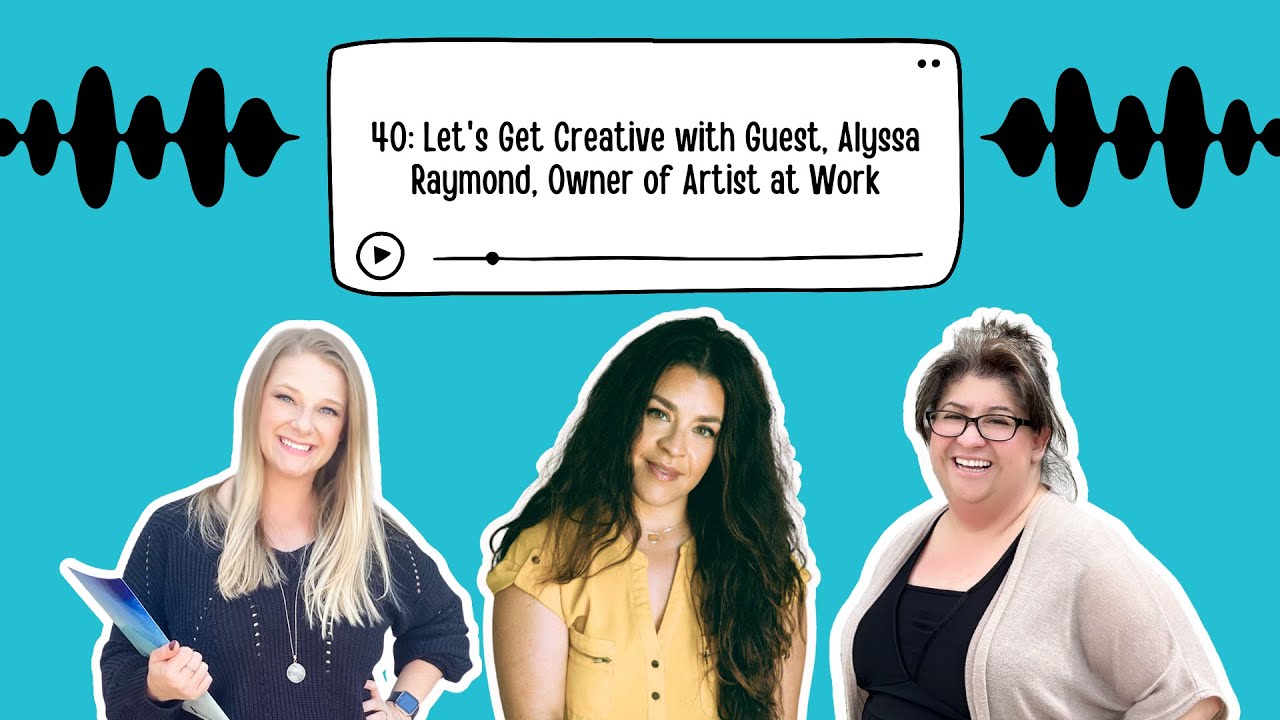
Alyssa Raymond, a San Antonio muralist, lands unconventional art commissions like elevator installations by researching placements and reaching out to manufacturers. The hosts share how their Facebook group for working moms grew to over 6,500 members and spawned a Business Owners Community with workshops on LLC formation and bookkeeping.
Chapters
Hey there! Are you a local mom business owner? If so, we've got some exciting news to share with you all. The doors to our Working Moms of San Antonio business owners community are now open! Join us now in our supportive new community for local networking events, customizable social media templates, classes and workshops, business resources, and to be a part of our exclusive referral directory. We love to help our working mom business owners grow. So visit workingmomsofsanantonio.com/membership or just click the link in the show notes to join us. See you in the community.
We're Erika Radis and Marie Lifschultz, a San Antonio area realtor and lender, but most importantly, we're working moms.
The goal of this podcast is to provide support and a sense of community to San Antonio area working moms like us. So join us in trying to find a balance between career, family, and everything in between. Welcome to this week's episode of the Working Moms of San Antonio podcast. We're here with Alyssa Raymond, a local San Antonio artist, and so we're going to turn it over to her so she can talk about her work.
Hi, thank you all so much again for having me. I was, I was very lucky that you guys let me be in this community with you again. I had reached out because because I wanted to find some resources that were local. I wanted to connect with women that were in my community and that have been like in different positions that I have been, who have been, you know, who, who are raising families and who are in the working field and who have responsibilities locally, just so I can get like a better connection. So thank you guys for—
hey, that's us!
For welcoming me. Yeah, that's you.
Great, great. And so do you want to talk a little bit about how you got into the field that you're in and some of the things that you do?
Sure, sure. So do you mind if I start just a little bit, kind of like from, I guess, when my art passion started? Should I start there?
Yeah, absolutely. Yeah, start there.
Yeah.
Okay, so let's start there.
So we love stories.
Good. So I started my passion and journey for art as a child, I think, like as most children do, they, they get a sense of freedom and creativity with different mediums. Right. And so I, I was more of like the creative thinker and the creative writer. My strengths were not in like, you know, math and science and so on. So I gravitated towards art because that is where my— like I could run free. Not until high school is when— so at Providence High School, I had a really, really cool art teacher, right? That's like what everyone, you know, starts there. But I had this art teacher who gave me like this freedom to create. And the most special project that she gave me as a senior in high school was there was like this wall in the stairway and she told me to do something with that wall. It was like a, it was like a two-story wall. And I was like, what do you mean? So then she started introducing me to installation art. And so she, you know, I use the materials that we had there, but like, so I created these boxes and I, so it was 9 boxes and I strung them and I put like X's and O's. So it kind of looked like a tic-tac-toe thing. And it didn't have to have like a super impactful message, but it was just like something to look at. Because there was so much traffic in that stairway, right?
Yeah, right.
And so all of my peers were just like walking through this stairway, and all of a sudden they were just like, oh, like, look at this. Like, there was like colorful, and it was hanging. Of course I had to have help installing it. I had to get the custodian to like get the ladder and climb super high. But so that installation for sure sparked, um, my idea for like public art.
Right.
And so I didn't realize that that's kind of what it— here I am today, but it's, it's public art that I have a passion for. And I don't know if it's the, like the reaction or if it's the, like now I think there can be so much with installation art and murals because you can tell stories, you can create an energy, you can create so many different feelings just by colors and lines. In public art, right? And so that's kind of where it started. So then when it was time to choose a career in college, I just kept on just like, I don't know, I don't know, but I just kept on taking art classes. Like, I don't know, I don't know what I'm gonna do, focus on, just gonna do art because it's my thing. Like, I'm comfortable, I'm getting better at it. And then, so then went to Vista, got my associates there. Vista was from like 2004 to 2006, '07. It was very small back then and got my associate's. Then I went to UTSA, received my Bachelor of Fine Arts. And then when I was coming close to the end of that degree, my advisor, she was like, okay, what are you going to do? And I was like, I don't know, I'm going to be an artist. And she was like, okay, really? No, what are you going to do?
Yeah.
All my professors—
we have those teachers.
Yeah. So all my professors were— they were artists too, but then they were teaching, you know. So they had, they had gallery showings and they had strong pieces of work, but they were still teachers. So it was just like, this is what I'm going to do, I'm going to be an art teacher. Really, there was no— at that time, there was no like guidance on careers in art. And if there were, they were not really emphasized, you know, like, like professional photography or professional, like, graphic design. At that time, Adobe Photoshop— this was like 2008 to 2010— Adobe Photoshop was like one class. It was like in this, like, built-in this, and I was like, that's not art, you know, like drawing with like a mouse, you know. So I didn't really gravitate towards digital art. But here I am today, definitely like, man, I should have, could have, should have, but it's not all it's cracked up to be.
But I think it isn't. That makes me sad because I think, I think now how, how much art is really important and then it gravitates to people, you know, like back in those days, I guess I, if I'm a little older than you guys, math and sciences were really pushed, like really pushed. So I'm really, I gravitate to the sciences and math just because that's what I was told to do where I started my degree in music therapy. And then I realized I have to do what? I only make what? Like, I can't survive off of that and completely switched my degree to biology. Like, I can't do my music because that ain't gonna— they told me I couldn't make a life out of it, you know? So I'm so glad that you stuck with it, but it's sad that you can kind of see the difference in what was pushed as a career.
Right, right. There was not— I'm sure those careers existed, but they were not emphasized, you know, at that time yet. It was mostly art education. Okay. And so then the program that I was in really just hooked us up with the district, like a school district, and we started student teaching. And then it was like, got it, got a job right away. Now, of course, I was— it was still about the hustle, you know, it's like, okay, I still got to find a job. Even though I look back, I'm like, wow, that was like really quick, like a quick transition from graduating to getting a job. But I was still as just as concerned, like, I need a job, need a job. Not like my parents were kicking me out or anything like that. I was just like, okay, like, now this is the next step. This is what you do.
We're adults now. We have to do that thing.
Yeah. So I was so honored. My very first principal, I also had a connection with her. Coincidentally, she sent her daughter to Providence High School, and she saw that I was, you know, you know, fresh out of art school. And she— and we opened up a brand new campus. It was called Martin Elementary in Northside. That was in 2010. It was called Jim Martin Elementary. And it was like the first green school at that time in Northside. So they had like, you know, recycled material or recycled like tiles. And it was like green where like, like the water and electricity and stuff like that was like thought about its use and stuff. Yeah. So she gave me the opportunity to open the school, and with opening a new school, you have to basically like do a dedication to the community. So what you do is you create a program like a show, and you basically showcase— so Jim Martin to the community. This is what Jim Martin, who he is, what he did for the community, and you present that in a program, in an art show, and in like a music program. So how cool! Yeah, so it's a big deal. They now— Northside opens up schools like almost every year and a couple, you know, a couple times a year. But so I was— I had a really— he was a really great music teacher, and he, he was— he kind of was like, okay, this is what we're gonna do. So I was just like, okay, so what kind of props do you need? What kind of, you know, things do we need to do? And so I was like fresh out of art school, so I was like, we're gonna build this and we're gonna paint this and I'm gonna do this. But then I was like, oh wait, wait, wait, I need to get the kids to do it, right? Okay, yeah, but the kids are gonna do it. So then it was like, what do I need to do to get like, okay, this is the vision, how do I get the kids to do it, and how do we tell the story of Jim Martin in, in, you know, like in a play and with visuals and with art? And so, and so anyway, so that was like my first, first, you know, way of like creating like a big show, right, in my career using my art. Background. Then from there, I did an installation almost every single year I was there. And so what I mean by installation is like, so I got students to create art and we— collaborative art. And we had like, we use recycled materials and, and we created these huge installations that just live on campus still to this day. So like one of them was like Post-its. We all drew a heart and I got a huge canvas made for me, a huge canvas. I want to say it was like 10 feet by 10 feet. It's a square. And I just— and then we had about 800 students, and so we just Mod Podge hearts all over this huge canvas, and then they installed it for me on the building. And they, like, the maintenance people. And, uh, so then I was just like, I was, I was satisfied at that time. Like, I was still being an artist, but I was— my, my students were then my medium, you know? So I was like figuring out how to teach them, expose them to different materials, and then show them, hey, look what our art is doing for our community, you know, through installations, which is like where my passion was. So I was like, this works, this works. I'm happy. Like, this is good. This is like a good job. And, um, so I did 5 years at that first school. They were— I was sad to leave, but it was— it was— I was moving out here towards Potranco, like out towards Castroville. That's where I live now. There was a new school being built out here. My husband's like, come on, how much— how often is Northside gonna build schools out there? You gotta, you gotta move, you gotta move closer to home. So it was sad to leave that first campus, but then I came out here with another Northside and, and, and stayed here for 8 years. I had my daughter when I left my last year of Martin. I had my daughter, and so then she attended school with me, and so it was just like It was like the perfect, like, setup, right? My kids were in my safe zone with me. I was doing my art thing. I still had time with my kids. I had different outlets. I had, I had access to all different types of materials. I had art teachers that were around me who were amazing, who were just kind of like me. I actually went to— there was like 3 of us who left UTSA, and then we were all like art teachers. And so we were all just like living the dream, the art teacher dream, the artist dream, the art teacher dream, you know. But just like with anything, you kind of like, you know, it only lasts so long, like the newness, you know. And then, you know, then you start seeing like the different politics and like the different things that you're like, like, that's not cool.
That's not fun.
That's not nice. That's not fun. That's not, you know, that's not good. So yeah. And so then after, and then I had my son. So my kids again were going to school with me. It was right down the street. And, and then I just started to, so I'm 38 now, but I was like 36. Okay. But this is also kind of like when in 2020, when the pandemic, you know, started, but even before then I was like, I, I, I'm interested in doing something else. I had achieved lots of different things within the art teaching field, but there was nowhere to go, right?
Yeah.
Like, there was nowhere— there was no growth after that. There was, there was, there was just no, like, finance— like, you know, monetarily, there was no more growth. Teachers, we get like a 2% raise annually, right? But I was seeing some of my other friends who were just not in the teaching field, and I was like, they're, they're growing, you know, their employers, like, they, they grow, you know, at a faster rate than teachers do with their pay. So, but then, you know, what people would say, like, oh, well, teachers get off and this and that in the schedule.
And so people always say that, that's like a big thing where it's like, yay teachers, you know, you guys don't have to work at this time. And it's like, I mean, Is that the benefit, you know, that, that it's really cracked up to be? I don't know.
Right, right.
So, I mean, I think for a while it sounded like it, it was a good life-work balance for you. Yeah. But it, it sounds like maybe towards, as you started feeling it, it just wasn't fulfilling enough. Like there was something missing.
For sure. Yeah, for sure. And I had a great support system.
In my—
in both of my schools, you know. And so it was just, again, it was just kind of like, I don't know what happens when you turn a certain age, um, you just start to feel like, okay, like, what else am I gonna do?
There's more. Yeah, there's more out there.
Yeah, there's definitely more out there. And you know what, I didn't even have social media at that time, so I didn't really truly know, you know, like, all the different avenues that you could do like I do now. I didn't have social media. I was I was not interested, you know. I just saw it as like people just, you know, share sometimes too much about their lives, and I— that's how I just saw it. So I was having conversations with my husband. So my husband sells— he sells a product. And so he was like, maybe you should try selling something, you know, because he was like, then you can maybe have control of your own growth, right? I was like, I don't know what to sell, you know.
I—
like, he sells inspections, fire inspections. Oh sure, so people need those, right? People need— businesses need fire inspections. So I was like, well, the only product, the thing I know how to sell is my art. Like, that's the only thing I'm confident in, you know? But I didn't know how to go about selling it. So then I had to get social media to see like, okay, well then I'm just gonna start like posting my work and following other artists and see what they're up to. And let's see where it goes. That was like in '21, 2021. So once I started that, I just started to see that there's options. And actually, I also started to follow teachers. They were doing their side hustles, and there was also support groups for teachers who were trying to leave the classroom but didn't know where to start, right? Or didn't, you know, didn't have the confidence Right. To me now, I look, I'm like, no, we all have other skills. I promise you. I promise you we are all capable of doing other things outside this classroom. Right. And so I started to learn from other people and I just started to figure out how to build my business. I, I started to reach out to other artists, local artists. And I said, hey, like, are you really doing this for real? Like, you're really like, like living and, you know, paying your bills? And they're like, yeah, yeah, I am. So I was like, wow, okay. And so then I really started to connect with them. And not like they were like sharing with me all these, you know, things, because I think they're also trying to like, you know, you know, go through their own art journey as well, but They were like, no, this is possible. This is what you can do. And then I just really honed in on it. So it took me like 2 years to really figure out, okay, this is my teacher income. How can I replace that? How can I grow from there? Like numbers. I was breaking down math. Sure. All the time. I was breaking down my bills like, this is what I, this is what my husband brings in. This is what I bring in. This is like, how I can make this amount of money with this product, selling this product, this product. And then I found Muraline.
Yeah.
So one of the librarians— or she was the first librarian that I worked with at Martin Elementary. Her husband owned a restaurant and he had his first standalone restaurant. And she reached out to me in April of '22. And then she's like, hey, we want you to do some— because she, she had seen my work at Martin. And I was like, oh, I don't even know how to charge. Like, I wouldn't know what to do. So I had to Google how to charge, you know, for murals, and it was by square footage and design. And I gave her the lowest rate, which was like $10 a square foot, because I felt like it was an honor just to be like painting on her walls that they had, you know, paid so much money for. And I'm like, oh my gosh, if anything, like I could just start over, like paint it. Whatever. Yeah. So that April of '22, I was like, it's muraling. That's what I'm gonna do. That's how I'm gonna get out of teaching. And I was, I had to just like get better at it. Then the business part, right? Because I was an art major. I was not a business major.
Yes.
Not a business major.
Yeah.
So then Erika Radis, yeah. Learning the business part of it.
Yeah.
I can relate to that so much. Just, you know, like I can make things look good all day long. But like in terms of how to charge or like what's appropriate, or even like should I be keeping books and like what does that look like, like all of that stuff. We all, I mean not just art majors, but I mean just people that, you know, aren't necessarily money or numbers people, it can be kind of intimidating to have to learn all that stuff.
For sure. I mean, you, I had an employer for 13 years actually. I mean, I started, I was working all through college as a waitress and then as a receptionist at a day spa. So I was an employee the whole time, but everyone handled my, you know, your 401, your taxes, your, your like Social Security, you know, like what you contribute to. My employer handled all that for me, right? My medical insurance, my employer handled all that for me. So that's what I was also intimidated. Like, how am I going to like do all of that? Right, figure all that part out. And it's just step by step. And it's so scary.
Yeah, because a lot of Googling.
Yeah, a lot of Googling for sure.
I think we see that a lot in our group. So we see a lot of women like, hey, I don't know what to do and how to start. We might be different industries, but the concept and the steps you take are exactly the same. We all have the same fears. How am I going to support my family? How am I going to replace my income? How am I going to have XYZ, whatever it is, whether it's in art, whether it's in real estate, whether it's in counseling, whatever it is you're choosing to do to step out on your own. The fears are the same for working moms. It's the same. So her story is very unique, but very similar.
Yeah, I relate.
Yeah, we can definitely all relate to that.
Yeah.
Yeah.
And What I had mentioned when y'all had asked me, or, you know, like to think about, you know, what you're going to say, is that your fear at a certain point, that your fear has to overpower— I'm sorry, your confidence has to over— has to overcome your fear. You know what I mean? Like, you have to have way more— your passion has to overcome your fear. And you, and you get to a certain point where you're like, you know what, I have, I have a lot to lose. But if I don't ever try, if I don't ever try, I will never know. I will never know if I don't try. And you do have to ask grace from your, your family, from your spouse, from your children.
Yes, definitely.
You have to say, hey, I'm going to go through something here. I'm going to, like, transition. Because when I was transitioning, it was painting on the weeknights and the weekends, right? And so it was like, okay, y'all know. And I would be like, tell my kids, okay, y'all know why I'm doing this, right?
Yes.
It would be like, like, where are you going, Mom? And I'm like, I'm gonna go paint, you know, like on this side of town. I know you don't know where it is, but it's kind of like my grandma's house, and that's where I'm gonna be, okay? And then I'm gonna be back, and I promise I'll be back for your game. I'll be back for the game.
Okay. Right.
If I'm not here, I'll meet you there.
Right.
It was a lot of that.
Right. No, totally. I mean, I have those conversations too where it's like, my kids are like, where are you going and what are you doing? Or like, you have these meetings or this and that. And it's like, I'm working so hard right now so that later on we're going to be able to spend so much more time together. And it's hard to explain that. Like, kids, you know, it—
Yeah.
You know, this work-life balance sometimes I feel like is very elusive. You know, it's like, where is it? Because I don't— sometimes I don't feel like I have it, especially, you know, when you're first starting out. And so I have definitely had those conversations as well.
Yeah. Yeah. And it's a sacrifice. And but you just kind of like, I'm like, you know what, if they— if I just stayed still and stuck in the position that I was in, that's not good for them either.
Right.
Yeah.
You know, that's not good for them either. They're just going to see me not happy, not fulfilled. And then what am I going to share with them later? You know, like, what am I going to— what am I teaching them right now if I just stay still and do what's, what's, you know, safe? What is, what is, you know, working at this moment? How do I show— how can I not talk about, like, you know, evolving? Growing, following your passion and making yourself successful? How can I talk to them if I don't even try? Yeah, you know, that's a good point.
We've all been there. We definitely can feel that, like, you know, you make changes to— for yourself to be fulfilled, but also to set an example for your children. We want them to learn to grow and not be scared of change. And sometimes you got to try. If you fail, it's a learning opportunity. So I tell my sons, Like, hey, I might not always be the best at something, but at least I tried it. And I, I didn't, it wasn't always a loss. I learned from that experience. Realize, okay, didn't like that. We're not doing that again. We're going to try this route instead. So even if it was bad, it's still a learning opportunity. So no, I think it's great. I'm glad that you, but it is hard. I, I always tell people who are going into business for themselves, you got to give yourself grace. I love that word that you had used. 2 years. Typically it's a 2-year mark where you feel like, hey, I can breathe a little bit. I see the light at the end of the tunnel. I see where I have a little bit more time with my family, or I see money being made. It's your typical, on average, that you see when you go to be self-employed is about a 2-year mark for most people that you'll see where there's some— you can breathe a little easier, you know.
Yeah.
So it's always hard in the beginning.
Yeah, there was. So, I mean, our parents, my husband's parents and my parents, there was no one who has done this. But interestingly enough, my grandmother and her and her husband, so my grandfather, they did have their business. So I'm like, wow, like my parent, you know, my parents did like they had employers, like my mom worked at USAA, my dad was a truck driver. My in-laws had like their stable jobs, you know. But I'm like, because I'm like, who— they can't— they're supporting me, but they can't really relate, you know. They can relate to where— yes, yes, Elisa, you know, jobs get rough. You think we all like our jobs? No, we don't like our jobs, but we do it, you know.
Right.
So I'm like, but so I look back at, you know, my grandma Josie and my grandpa Rudy, like they had their own, they had their own businesses and they even had less than we have today.
Right.
You know, so, and they made it work and they did and they made it work. So I just had to, I just had to try. And so when I started my business, okay, so I officially like created my LLC in July of '23 last year. But I had been doing nearly, you know, since April of '22. And I wanted to— I called it Artist at Work, and I called it that because I wanted to be like, no, artists do work, you know. Yeah, can work and they can make a living. And, and I am a working artist, you know. And so I called it Artist at Work just to kind of like, you know, that's kind of like how I feel about it.
Yeah, that— I like that too.
Thank you.
Yeah.
Yeah, so, and then, so I started that and then, and then went full on, full time. So as, oh, I mean, I guess like when I finished the school year, like in May, June of '23, got the LLC and then went full force going out, driving around town, passing out flyers, um, reaching out to people, trying to figure out who to speak to, you know, and then trying to figure out different avenues, different ways to bring in income through our And so, like, on my website, it shows now all the different services that I have done that are successful and the ones that I want to, to bring to light to show that this, as an artist, is what I can offer to our community. Yeah, you know, for sure.
So you, you started off in the beginning, it was murals. That's kind of your, was your stepping stone to begin to make or earn an income.
Yes. Well, yes, I was like, this is, this is where it's at. This is where it's— I, I can paint. I love painting, paint large, paint for the, for the public.
Yeah.
And who I'm painting for, I help them tell a story that they can't really visualize yet, but I help them tell the story. And that was where I was like, this is it. But I did, when I was first trying to figure it out, so like in October of '21, October of '21, I put out flyers just on my street. And I was just— and I wasn't even like the whole neighborhood, it was like just my street. I was like, hey, I'm gonna have art classes in the driveway. And so whoever even looked at the flyer— I don't know if that many people looked at the flyer— and then I was like, I'm gonna— and I put out a table and I was like, because at first I was like, I'm just gonna do art classes, but I want to do small group, you know? Like, I can't do like 25 5-year-olds at one time. Like, I just can't anymore, you know? I want to do small groups. So I was like, I'm just gonna invite my street thinking that they would all show up. Yeah. Only one showed up. And of course my mom and my mother-in-law and like family showed up.
Yeah.
And I did like a little chalk drawing and I led the thing. And then my neighbor was like, you gotta do something more than this. You can't just invite our street. She's like, you really need to get social media. And so that's when it kind of, it all started. I remember another neighbor. I, so I did it like 3 or 4 times. And one neighbor had walked by, and he goes, what are you doing? What are you— are you selling something? And I was like, well, I'm doing art classes. He goes, for who? And I was like, for anyone that passes by. I don't live down a busy street. So I was like, hey, hey, you want to come do some printmaking? Come on.
That's awesome, though.
I think that's so neat.
Yeah, yeah.
But like, my kids are just like, what is Mom doing? That was in October '21. But then, yeah, then The librarian, she reached out to me in April of '22, and then I was like, oh, okay. Yeah, no, I need to stick to muraling. Like, I can't— yeah.
I mean, I have to say, like, what you do in terms of muraling, and I have, as some of our listeners know, I have a little bit of an art background, but I mean, not everybody can paint large like that. I mean, there's, there's a skill to that, that while some people can paint, not everybody can paint big.
It's that—
I mean, I think that's an amazing skill. And so I just find that so fascinating, just being able to think conceptually that big. I mean, I remember being in school and I'm not the best painter, I'll tell you that right now. But even just doing it like this where I can see the whole thing and it's all right there could be a challenge. So I think there's really something to that.
Right. And I'm telling you, I think when I was in high school, that moment where that, that my art teacher, she was like, look at this wall, what can you do with it? And that was my first— I had never thought about art that way. Because yes, typically I think about it on a canvas, on a, in a frame.
Right.
You know, like that. And so, and then I just got such a kick out of installation art that I just like, that was, became my passion. Now don't get me wrong, okay, Susslan's, the very first, the first 4 murals that I did at that restaurant, I freehanded those with just a grid system. And like, I just kind of like would draw on this lift.
Yeah.
And I would just, and then I would get off the lift and I would go step back.
Yeah.
Okay. And then it would go back on the lift, I would draw it. Not until like I met one of my mentor artists, she was like, projector, hello! And I was like, oh my God, what was I thinking? So no, projector for sure helps you, but now that's what I, I do. But, but I can't lose my skill of drawing on like that scale, you know what I mean? Because sometimes you— I've noticed like, man, I'm just going to rely on the projector. No, then I'm going to lose my skill. So I have to like make sure I can still draw and move that large and step back and make sure it looks, you know, right proportion, proportion, stuff like that. So Providence mural, that one. Yes, projector. Okay, I was like, projector for sure. But then the lighting, the sun started—
it's outside. Yeah, yeah, yeah.
So I had to, I had to freaking freehand that, and I was like, oh my gosh, I'm gonna freehand.
Well, I see it every day. I see it all Monday through Friday. So my boys go next door.
I see it. It's gorgeous.
I love it. I'm like, it's such a small world. So I know exactly where that's at.
Oh, thank you. So one of my girlfriends that was helping me paint that, she started putting the— because the sunlight was coming out, and I was like, I can't see the lines, I can't see lines. So she started to like hover over me with her pop-up, like the pop— she was like, I'm trying to hide this, that I'm trying— because it was just like panic. Like, I was like, I'm, I'm screwed, I'm screwed. But then I'm like, no, hello, trust yourself, draw freehand like, you know, you can, which you went to school for, you know, like your skill. So yes, projectors are great, but it's a shortcut. And then I feel like, I mean, it helps you, of course, with precision and time for sure. But as an artist who started out just drawing with no projector, like, don't forget you have a skill. You can count on that too.
Yeah, yep.
So yeah, yeah, that's good advice. Are— so are most of your clients now, in terms of the muraling, are they— it's commercial spaces, or do people ask you to do their homes and things?
Right, it's a, it's a good balance of both right now.
Okay.
So I have people who love to do like either accent walls or a special mural like in their garage or their bedroom or something like that, like You know, so for like a young boy who is, you know, super into the Lakers, he wants a Kobe Bryant mural. And so we kind of like do something like that, you know, like something customized like that, where we put like his name into, into the Lakers colors and stuff. And then, yes, and then we have also like commercial clients who are wanting to like enhance their space with, you know, just they just, they're not sure sometimes what they want. But I'm like, okay, well, let's start with your logo. Like, let's start, you know, and I kind of, I need to like know more about the client and the history and the purpose of what they're doing.
Yeah.
So I can definitely give them something that's worth, that they really can't visualize yet, but something that's like, hey, this is like worth showing your audience, your community. So they can like be like, oh, have a connection with you. Like, oh, this is a story behind them. This is the product that they sell. This is how they want me to feel. When I walk into their building. So it's not just me, you know, like painting a wall to look pretty. It's more about like, it's, it's sharing, it's making a connection between who owns the wall and who is looking at the wall. And that's where I try to help the, the business owners that way.
Yeah.
You know, that's such a pretty—
I like that.
Yeah. Yeah. That makes sense too. And so it's probably like a lot of back and forth, right? Like in terms of like the ideas and, you know, you go to them with something and they say maybe something like this. Is it a lot of that?
It is, it is. And so it, it, but you know, cuz a lot of people at first reach out through either social media or my contact page through my website. So it's just like words, you know, pictures help for sure, but definitely conversations need to happen. So coordinating that conversation, that initial like consultation is helpful because then I get to feel their personality, understand what their goals are. Tell me about your timeline, tell me about your inspiration, you know, and then of course tell me about your budget, because then I can also design to the budget. And so getting that conversation going is a lot, and back and forth coordinating that conversation. But, and it takes, it takes a long time, but it's definitely like worth it. Once you see like an end product, it's like definitely worth it. So, but yeah, you need to like grow each project, you know.
Yeah. Yeah, that's interesting. And so, like, obviously I'm sure it varies, but like, to do a big mural, how long does that usually take? Is it like— I mean, it's got to be several days, I would think, or weeks. I mean, I don't know.
Actually, I would say there's more time conversating about the project. Yeah. Um, uh, you know, doing the proposal, showing them options, buying the materials, coordinating the date. Takes longer than the actual installation. But actual installation, I would say, I mean, like, it also depends. Can I get help for that mural? You know, can I hire some assistants in that? Is it— does the budget allow for me to hire assistants? So I would say anywhere between 2 to 4 days. Okay, 2 to 4 days of actual paint time, and I'm talking about like 8-hour days. Sure, that's what I tried to like stick to because I'm still trying to be home for the bus when the bus drops off the kid. Yeah, yeah. So I would say about— it can, it can vary anywhere between, between 20 to 40 hours, I would say, if you think about it like in hours.
Yeah, yeah. So I didn't realize that you could use assistance, um, but that's probably super helpful. I mean, if the budget allows for it, you know.
Yes.
And do they— I mean I don't know, I'm so hard about like letting things go out of my control. I'm like a crazy person. And so, I mean, it must be people that you work with all the time, like you know them and you know they're gonna, you know, do a good job and paint like you and, you know, all that stuff.
Right, right. Well, no, I mean, I've seen— I've— I can like demonstrate for them, but no, I do have like one assistant that I always go to, and so I trust her and I've seen her work. And so I'm like— and then if, if anything does you know, needs adjusting, then we just adjust it. And so she, she is really like my go-to assistant. But it does, it does help for sure because it's kind of like I will do like the drawing and then she'll do like the fill-in. Yeah. And then while that's drying, and then I'll go and do like the details.
Yeah.
You know, for the Providence mural, we had the— I don't know if it was the art club or like the National Junior— I'm not sure which group they were, or maybe they were a little bit of both. It was National Junior Honor Society and some art club kids and the art teacher there, who was not the same. Oh, that's cool.
That's really cool.
Yeah, so we knocked that one out in 2 days. It was 2 or 3 days.
It's a big wall. Like, it's, it's large. It's a very large— yeah.
So we, we— so went with stencils and projector, even though the projector didn't work. And then the other sides were like, kind of like, just— I'm like, what do y'all, what do y'all want to do? What do you think? Like, you know, we just kind of kept it simple design.
Yeah.
So the front was more detailed, but we kind of, you know, there's a lot of preparation before when you actually arrive on site that happens. But so, but that large wall, there was about 10 of us attacking that wall.
Alyssa, now for that particular project, since you actually went to school there, is it somebody who reached out to you or did you possibly reach out to them and let them know what you were doing? I reached out to them.
I reached out to them.
So that's a great, great tip for people. Like, hey, you never know. Like, oh my God, your contacts are, you know, if you're looking to start a business, a lot of people forget about their close contacts, like people, your inner circle.
And thank you.
People don't know what you do. Like if you don't tell them and hey, share my name, share my business. And you went to your high school and said, hey, I am now self-employed and I want to give back to my community. Do you? I have a you know, project that I could do. And they said, sure.
Right. And so that for sure.
Okay.
When you're just starting out, you're just like me, new to social media. I was like, oh, social media is just gonna like do it all for me. People are gonna like hit me up and it's gonna go like, they're gonna, I'm gonna get so many phone calls and it's gonna go. No, no, that's not how it works. People just like things and they like it because they're, it's pretty and they think it's cool. And it's like, but you know, you have to like initiate those conversations. And the other thing that I do is like, where would my work that I provide, where would it fit best? Okay, so where does my work serve the best? Who could benefit from it the most? You know, so my passion, again, public art, community art, but in, in learning spaces, because that's like, you know, my background. My art, I feel, is best in like learning spaces, educational spaces. I like to do motivational, inspirational work that has like, you know, an illustrative aspect to it. So for example, the Providence one, it has these because she was like, well, I don't know what we want. Let me think about it.
And I was like, well, okay.
So because they have like their famous sisterhood or like their— right. Like, yeah, what, how they like a way of living and a way of teaching and a way of working, right? Sisterhood or like the community they build within the campus. We want that word in there. And I was like, okay, so I'm gonna do these two young women, and I want them to look bright and bold in, in their color and their hair, and I want them to look up because I want them so— because, you know, so thinking about the subject matter, I want these girls to look up and hopeful and bright and powerful and confident, you know. So then I start looking at images and I started thinking about that, and then the background, I was like, I want it to display the San Antonio culture.
Right?
Because you're in the middle of downtown San Antonio. So I think about how can I incorporate that plus that and make like an image that everyone can feel like you do get the impact that we're trying, you know? So, but definitely, so it doesn't, because that the person I was talking to, she didn't have an idea, like a, like a visual idea, you know, when I first started that, I was like, hey, can you kind of, can you walk me around and like show me some walls and maybe I can I can show you some ideas, you know. So what are some wall spaces you have? So reaching out to the potential client and saying, hey, this is what I do, do you have any spaces that can maybe benefit from this? Right? Because now, like you're saying, that wall tells a story to everyone who passes by. Yeah, right. Central Catholic, I think they had they have like one by their band hall.
They do. They had, and it was actually a young artist, uh, a student there as well that graduated from there. And I, I saw his story on Instagram because I didn't know about it when my boys started going there. And it's the, their, the button, the snake, the, you know, down the side of it. So, and I, and of course we walked the campus and seen it. Of course Providence is right across the street. So, but yeah, it's definitely something I think is a great tip for just working moms. Like, hey, your inner circle. I think a lot of people who go into business don't think about their inner circle or their close people. Yeah, your networking group. Yeah, starting there. And it's— and not only will people who don't even go to that school see it, but it's the middle of downtown. Like, it was a perfect place for you to have your art displayed or your work displayed so people can see it, you know. It was, it was a great— I thought it was great too. I just happened to know what it was. I'm like, I know that one, I know that one. I saw you on your website. Life's easy. Yeah.
Yeah. So it's, it's also with the murals, you have to show people the potential that a wall has.
Mm-hmm.
You know, if, if a business is struggling to bring in customers or if a business isn't really like relaying the message that they want to be relayed, murals and color and design, that, that can help. You know? And so, but it's an investment for the business owner because they're like, wait, what? Like, how much is it? And so it's like, well, there's, you know, there's a lot to it than just slapping some paint on the wall. There's a lot to it, but it's definitely an investment for them as well. So it's a, it's a hustle.
Yeah. I love it. I love your story. I just think it's number one, so inspiring. And you can just hear in your voice like how passionate you are about, you know, beautifying these spaces and doing so with meaning. And it's important to the, you know, the customer, like you said, it's important to the receiver of the image. And it just almost gives me chills having, you know, listening to you talk about it a little bit.
Oh, thank you. But, but it, but it is a big deal, and, and it is, it is, it can be overlooked sometimes. Yeah. You know what, what art can do for us emotionally, mentally, like what it, what it does for us. And so that was like my whole, you know, my whole thing as an art teacher. I would preach to these kids. I'm like, guys, like, y'all, we can like You know, and so we would— I would take their art and we would just like blast it all over the building strategically. And you know, there was thought behind what we were doing, and we were just constantly putting up installations. And I would always put a paragraph to explain who did it, what did we use, why we did it, what did we learn, and the like, the perp— like, you know, just the purpose of it. So people knew that there was more to it than what you just see.
Yeah, right.
You know, so I always put up like explanations, you know, an artist statement of any work that we put up at school. And so, yeah, yeah, yeah, I'm sure that helps.
I mean, you know, people— you don't want people to just walk by and be like, oh, that's pretty. There is meaning. And it's nice that you did that for your students and explained kind of how impactful art can be. I mean, if you— right. If more kids, I think, knew that at a younger and younger age, I feel like that could be hugely impactful, you know, just to society in general.
Well, I think people might find more joy in what they do. I think a lot of times you might be an artsy kid, you know, that don't realize that you can actually make a career out of it. I'm sorry, like, I, I felt like I was not punished, but like pushed into a career that I needed to, you know, make an income, and that my vision of what I wanted to do, no one helped guide me to say, hey, if you did this, this can be a career. So I chose another path, which is great. But when you look at something and you can feel like you're doing your passion every day, maybe it doesn't feel like work every day. You know, it feels like you're truly doing what you're made to do. And you can definitely feel that when you talk to Alyssa. Like, you can hear, like, hey, this is my passion. This is what I'm doing. And thankful that you're able to make a career out of it and support your family doing it. What's better than that? You know, in the end of the day, right? What's better than that? You're able to do what you love to do, share your gifts with people, and have a family at the same time. You know, a lot of people, it's hard to balance both, you know?
Right. So, right. So I feel like, I mean, I don't have it all figured out. I also want to say that, you know, I don't have it all figured out. Thank you for for, you know, recognizing that, I guess, the growth that has taken place. But I don't have it all figured out. You know, I'm still— I still feel very like aware that I am— I'm aware that there is— there has been growth, but I know that there is so much more to go. Yeah, right. You know, well, that's—
that's like groups like ours and networking that we do. You get to learn tips and tricks from different moms that are doing it as well. Still learning or maybe have ideas to share that you don't have to reinvent that wheel. You know, that's why getting a part of a community that supports your dreams. And like I said, it doesn't have to be the same industry. You can get ideas and figure out different ways of doing your business by sharing what you do, people sharing their knowledge with you. And it really, really helps. So being part of a local community is very important.
For sure. For sure. Thank you. And there, can I talk about one more project?
Sure. Absolutely.
Okay, not just on the illustration part.
Yes. Yes.
Okay. So when I— so when I, like I said, when I'm transitioning muraling, this is what I'm gonna do. I'm gonna paint for whoever, whatever. But then I started to like, okay, well, what makes— what sort of paintings make me happy? What sort of subject matter is true to who I am? And so then I started to kind of evolve that way. To, right? So yes, I create and I have the skill, but what— how do I use my skill to make me happy? And that, you know, do art that's representational of me, right? So I started to create, uh, digitally. Procreate is what I use.
Okay.
I don't— still don't do Adobe. I downloaded it one time and I was like, yeah, I'm gonna just—
it's a beast.
Yeah, it's not my medium for sure. Procreate's my medium. So I started drawing women in this like strong, confident pose, like in this strong way with bold colors. And then, you know, like in the Hispanic kind of feel with like a Latina woman who is dressed well and has a stance. But, you know, so I started to— I was like, this is what makes me happy. I'm going to keep drawing it. Anyway, it drew the attention of drew the attention of this company called Madame Paleta Tequila.
Okay.
And I was like, not even, you know, thinking about art licensing at this time. I was just drawing things that were just making me happy. And in this, this was like the coolest thing. I was like, is this even for real? Someone reached out to me through my website and said, hey, we are a women-owned tequila or a women-owned beverage company and we have a tequila brand and we're calling it Madame Paleta Tequila. And we highlight artists in the bottle. We highlight their work in the bottle.
In the bottle?
In the bottle. So like it's the sticker. So not like their front label, but if you turn the bottle around and you see like the— like through the tequila, they have artwork inside.
Oh, how cool is that?
I know. And so I met these women through Zoom because they were all over the country. Like one was here, one was like— there were different parts of the United States. We Zoomed and they're like, we really like your art and we feel like it's a really good representation of our brand and we want to give you a chance to highlight your work in there. And so I was like, oh my God, I was just like, I was in shock. I was honored. And I started to again see more, like, I was like, wow, like, this is like, besides muraling, this is also what I could I could do because it was, it was a world that I hadn't been introduced to yet. Right. So here you are taking this risk, but then it was like, oh wow, there's like, you see all like these, not these, all these doors get to open, but it's like, wow, there's like options. Like there's, you know what I mean? You know what I'm saying? Like there's things out there.
There are opportunity out there.
Opportunities for sure. For sure. That you may not be aware of yet. And so I was. I was so honored that these women had found me. I think they just said they were just like Googling Mexican American artists or artists that were in Texas because they had just launched their tequila in College Station. And then it was going to be launching like in Houston next, and then their next batch was going to be like, it's, it's, it's like happening around this time, like springtime. And so their next batch would have my art. And so I gave them 3 pieces of art. License, you know, license 3 pieces of art to them. And so that created just another avenue, like another, like, place where I could take my art. Yeah, I hadn't, I hadn't thought of. And it was just with, like, Procreate, you know, it was like I was just drawing because I love to draw. And I was like, I'm gonna draw stuff that, like, I feel good about.
Yeah.
And, and it took it there, you know. So there's, there's, there's definitely even if you find a way to transition out of whatever position that you're in, once you're there, that doesn't mean it's over, you know? It means there's just like, you know, different avenues for sure.
Yeah, I feel like sometimes—
you know what that is, Erika?
Yeah, I feel like sometimes when we are transitioning into a new path or career or whatever it is, I think— and I don't know if it's a woman thing specifically or if it's just generally speaking— I think our our first thought is to almost kind of think small, right? And sometimes I think we limit ourselves by thinking that way, you know, where it's like, oh my gosh, like, I'm getting into this thing. I talk about it a lot, like imposter syndrome, right? Like, what business do I have even doing any of this? Like, I have— there's— I don't know how to do this. I've never done this in my life, you know? And so we get into that role and it's like, well, if I'm gonna do it, I'm only gonna do this. Like, this has to be the only way that this is going to be successful. It's this. And then all of a sudden you're in that role and it's like, wait a second, just like what you described, why can't I do this? Someone's asking me to do this. And then you kind of back into it again where it's like, should they even be asking me to do this? Okay, but they are. So it must be a thing that is happening. This is happening now for me. And so then it's like, wait, what about this? And I find the more that I— when we started Working Moms of San Antonio and we started doing different things, the more that I— the more doors seem to open in an unusual way. And so— and Marie will tell you, I am constantly like overthinking and like going like, oh my gosh, like, should this be a thing? Like, how is this happening? But it is happening. So here we are, you know.
I'm the opposite. I'm like, let's do more. Let's do more.
Yeah, I don't know. But I guess the moral of that weird story, you know, about my insecurity is like, you know, maybe we all would do ourselves a favor and just start out thinking big and then it would happen a little bit faster.
Right.
That's so funny.
But I think opportunities come up that you couldn't even think of. Like, how would you imagine someone randomly contact you to— with a tequila bottle art? Like, what? That's incredible. Like, I would never thought of that. Like, how did—
where'd that come from? Like, exactly.
Awesome. Ask for bourbon now. Ask for other stuff.
Like, what else can you do, right?
And I'm gonna—
I'm gonna tell you this other person reach out to me, and, um, this one didn't go through, but this, this person reached out to me and said, hey, we're gonna put some art in, uh, the elevators. And they commissioned art. They commissioned— they, they take art and they print it on these like subs— these substrates, these substrates, like these glass, and they put them in the elevator. So I was like, oh my God. Well, it did not go through. It was just kind of on hold right now, but So someone was like, we can do— so, but then if you actually like really pay attention, look around in these, in the buildings, in like the malls, in the model homes. I was walking into some model homes to see like what their accent walls are looking like, and they have art everywhere. So yeah, there's— you wouldn't realize that the service that you're, that you're providing is already like around you. So how do you figure out how to get in there, right? You know, like how did they get in? You know, what do they do? Like And so I'll like, now flip the, like, the art at Hobby Lobby. I'm like, what? This is obviously a print. So I look at the back of it. I'm like, oh my God, like, you know, I need to reach out to this company and get my art printed and get it sold at Hobby Lobby.
Yeah.
But it's doable. It's the point is that it's doable and you just, it's so much research for whatever it is that you're pursuing. It's research. It's scary. Like you said, you get uncomfortable because you're like, ooh, this is not anything I'm like, uh, you know, I'm good at, or this is not anything I'm like a professional at, or this is like not my comfort zone. But when you get out of that comfort zone— right, not yet— but then when you get out of that comfort zone, you start to see like growth and potential.
Always. Yeah, I think I told Erika this a while back, like, I, I do best— I've always— I like to be in a community group. I've always worked with the same people for the longest time, but I've done my most growth when I've been— I took a step out of my, I guess, my comfort zone around the people that I've always worked with. And I'm going to go out on my own for a little while and I'm going to try different things. I made my most income, I've made my most growth. I've changed, like, grown in my own career the most. And not having my support system, but just seriously out of my comfort zone. And I'm like, it's scary to be by myself, but I'm going to do something new because no one else wants to do it. But I'm gonna do it. And I've always done much better. It's always been better for me. It's just, it's hard to see that until you get through it. Yeah, I'm like, oh, that was a good choice, I did that.
Yeah, but yeah, so I mean, all of these things are really cool. And thank y'all, like, for having this group. Can I ask y'all, like, what inspired y'all? Can I ask y'all, like—
yeah, no one ever asks us any questions.
I'm so curious, like, I want to know How did y'all meet? How are y'all doing this? And like, you know, so Marie and I are both in real estate.
Yeah, I love it. We're both in real estate. I'm a realtor and then she is a lender. And so some years back, and just to step back even further, in our industry, sort of to be in community, it involves like a lot of going out to like happy hours and like drinking. It's just kind of an industry thing. They do it amongst each other, which we're not I mean, that's not the clientele that we're trying to get. So I don't really understand kind of the whole deal.
But yeah, but that's what they did. I mean, that was kind of when you get into the business, they taught you like, hey, you need to go out and have happy hour with agents and, you know, meet these different people and whatever. But that's— yes, agents would refer business on, you know, but I need to get people who are looking for homes. That's who I need to meet.
Yeah.
Like, who will get to know me.
And so And so Marie, I went to Marie and I said, you know, we need to like meet people, you know, to get clients. We need to meet people and like be around people. But we can't. We had little kids. We couldn't like go out to the bars and stuff. And so it was like, it was like, how are we going to do that? So we kind of put our heads together and we decided we were going to start a group for working moms. And it was, it was because there was—
well, we went back and forth. You had said, I see a lot of groups. So I'm like, well, who do we like to hang out with? And we're like, well, people like us. We're moms. We like talking about kids. That interests me. So she's like, well, I see a lot of— you had said, Erika, you had said, I see a lot of groups that have like, you know, stay-at-home moms, stay at this, you know, that kind of thing. But there was no support system for a mom that worked.
Yeah.
Like, well, we need people who have jobs because that's how they can buy a house, right? That makes sense. And they're moms, so they're probably the ones making the decision on the houses. So let's get those people. Let's see if they like us.
Yeah. And so we started just a Facebook group and we thought maybe we would get like 50 or so people to be in community with us and we could talk about stuff. Yeah. And then now that Facebook group is up to 6,500 ladies.
Yeah.
And it's just a wonderful group and they provide support to each other, advice, different things like that. And then Last year, um, we were getting a lot of requests for like mom-owned businesses, like networking, like where do we network? What do we do? You know, that kind of thing.
Mm-hmm.
And so I sort of thought, well, why can't we provide something like that? So that's when we started our Business Owners Community membership. And so it's for moms that are business owners. We do the networking, we do business-related workshops, like we just did one on bookkeeping or like setting up your LLC, some things that kind of like what we talked about, you know, you might know your specific industry, but like, I know I wasn't great about all these other sort of business aspects. And so we try to share that kind of information. We have a mom-owned business directory where like, it was almost a situation where I was almost like, hey, I knew that if I could find a centralized place to support specifically moms, and I could just like search it, I would use that, you know, if I could. And so yeah, so I mean, that's kind of where that started. And here we are, we do the podcast, we've got the blog, you know, the membership and the group and Just, it just, it almost just came from, it just seemed like there was like a hole, you know, where we weren't really being represented. And I was like, well, wait, there's a lot of us, you know.
That is, that was so cool. That's exactly, yes, go ahead. I'm sorry.
No, so that's just the reason that we just really didn't feel, we didn't feel supported in our roles as moms and, and working and didn't realize there was a whole bunch of people that kind of wanted the same thing. You know, and then it grew into the, obviously the people who just owned a business. I mean, we, I like supporting moms who just work. They might not own a business, but you work and you have concerns and you have like, hey, how do you manage, you know, nursing at work? And there's a lot of things that, you know, those of us who've been moms for a little while might be able to share those tips. But then it turned into more of like owning a business and sharing those tips and tricks that you don't have to reinvent the wheel. There's a lot of stuff out there that we're happy to share our knowledge with, and it might help your industry and it might not. You know, but we can definitely share that, you know, share the wealth.
Yeah, that is so cool. So I was literally like, okay, so I was listening to— I think I found you guys on just on like the Apple, the Apple like podcast.
Yes.
Yeah. But I was always looking for like stuff with like working moms and working artists and stuff. But then I was like, wait a minute, I want something here like in San Antonio. And y'all were like the only ones that popped up.
Yeah, here we are. There were some other names.
Yeah, so I'm like, I can't believe there's nothing else like it, you know, right now. Like, there's no other, like, women— because there's a lot of strong women on, on these podcasts I'm listening to. I'm like, there's no women here locally. And so I was like, wow.
I—
so I was like, I found them. And then I started, you know, looking at y'all on, on Instagram and stuff. Yeah, so yeah, it is, but it's still even an honor just to like know like that you guys are doing something. Yeah, yeah, that's so nice.
Thank you.
That makes me feel like—
go, yeah, it just makes me feel good that, you know, we're, we're getting into some people's ears, like, you know, and hopefully our guests are, you know, inspiring others that are working and kind of in the same situation. That makes me feel good to know that someone's looking for us and some people are finding us.
Well, I think there's a lot of people, Alyssa, that were in your same position. It's like, hey, I, you know, maybe they see the side hustle or maybe they need, you know, something to transition out of. That's a big thing right now that people are just like, a career change would be, you know, life-saving for a lot of people. And to see someone who's done it and is starting to be successful at it, like, hey, it does give people hope, you know, to maybe give it a try. Yeah.
It's, yeah. It's, it's a jump, but you never know. You never know until you do it. So thank y'all for letting me like talk with y'all and stuff.
So yeah, do you want to really, do you want to really quickly let people know how they can find you for your services?
Yes.
Yeah, let's do that.
So okay, so on Instagram it's Alisa_Raymond_artist, and then my website is alisa-raymond-designs.com, and then my business is Artist at Work. Okay, right. So they can reach out to me through my website, through the collaborate page, and they can also reach out to me through Instagram as well. I'm always kind of keeping up right there and showing like my most current work on Instagram. So perfect.
Okay, and we'll put that information in our show notes too, so they can click and find you right away. And yeah, just thanks so much for being on. I really enjoyed this conversation and I so appreciate you being on here. And then I will also thank our listeners for tuning into this week's episode and we will catch you guys next week.
See you guys next week.
Thank you, ladies. Thank you.
Thanks so much for tuning in to the Working Moms of San Antonio podcast. Be sure to follow us on social media at our respective Instagram accounts or join our Working Moms of San Antonio Facebook group. Those links can be found in our episode description. If you have an episode topic suggestion or question, please email us at office@radisagent.com and be sure to subscribe to the podcast and leave us a review. See you next week.
More from Erika


I don’t want a prenup, I just want you!" 📜💍 …until you realize you just agreed to 50% of zero! 😂


In Texas, a 17-yr old is legally considered an adult in the criminal justice system



What Every Parent Needs To Know Before Your Child Talks To The School (Texas Law)

Is Your Marketing Strategy Tasting a Little... Muddy?#podcast #podcastclips #podcasts #


