Building an Innovation Culture with Garry Ridge - CEO, WD40 Company
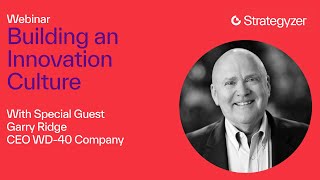
A webinar-style YouTube conversation with Gary Ridge (Chairman & CEO, WD-40 Company), hosted by Nick and Alex, about building an innovation culture. Ridge recounts his 35+ year career (joined 1987; moved to the U.S. in 1994; CEO since 1997), explains how WD-40 shifted from an inward, U.S.-centric firm to a global, innovation-capable company, and describes people-centered practices that enabled that change: servant leadership, psychological safety (eliminating the word “failure”), learning moments, the Maniac pledge, hiring for culture, clear purpose and values. He links culture to measurable outcomes (employee engagement, revenue and market expansion) and answers audience questions about innovation governance and feedback.
Questions this video answers
1987.
1994.
1997.
93.5% (reported as of March; transcript: 'Our employee engagement as of March this year was 93.5%').
176 countries.
Chapters
Okay, so we're going to go straight into the Invincible Company of the month and it's an absolute pleasure to be saying that WD40 is the invincible company of the month. And the invincible leader of the month is Gary Ridge.
So, Nick, my official self introduction is G'.
Day.
I'm Gary Ridge. I'm the consciously incompetent, probably wrong and roughly right chairman and CEO of WD40 companies. So just to let you know that it's not about me, it's about all the wonderful people that I get to work with every day. But I've been here 35 years. I joined WD40 company in 1987 in Australia. I opened our Australian subsidiary with a fax machine under my bed. So it was a true startup. And six months later we opened our office doors. I moved to the US in 1994 with a challenge to help take the blue and yellow can with a little red top to the world. And that's what we do every day is take it to the world. In 1997, I was given the honor and the privilege to lead as CEO. And since then we've been doing what we love to do, which is to create positive, lasting memories. Our why statement, why we exist is we exist to create positive, lasting memories. Solving problems in factories, homes and workshops around the world. I met Alex through the 100 coaches group. He and I are in that group with Marshall Goldsmith and a bunch of other amazing people. And I owe a lot of my learning to Dr. Ken Blanchard, who is the wrote the one minute manager. In fact, I just played nine holes of golf with him yesterday afternoon. He's 82 years old now. He's my mentor and friend. We spend a lot of time together. I met him when I went back to school in 1999 and did a master's degree in leadership. He was my professor and I adapted a lot of his servant leadership principles in what we're doing at WD40 company. So it's an honor, a privilege to be with you today and to share some of our learning moments and some of our scar tissue.
We had our common friend Hubert Joly recently on the show as well. Right. So servant leadership is not just a niche phenomenon. It's really taking off. So it's awesome that you're going to talk about this today day.
Thank you. Yeah, his book is great.
We developed the culture map. Actually, we didn't start doing this. This was our friend Dave Gray who came to even myself and asked, well, okay, I have all these concepts around culture. Can you Help us, help me make a simple tool. So we took all of that, we made a simple tool, and we're going to use it today in our conversation with Gary to actually map the culture when Gary arrived and then the culture that you created. So going to be really interesting. So very simple tool. It's all about simplicity. So we can get something going and map out existing cultures and desired culture. So first question to ask is, what is the desired outcome you want from a culture? You want innovation culture, collaboration culture, and competitive culture. So you have to make explicit, what do you want to achieve? It's going to be really interesting to hear, Gary, from you. What was the kind of outcome you were looking for? Now, outcomes don't happen just because we say we want them. They happen because we see certain behaviors in an organization. So the patterns of behaviors that you see, they lead to those outcomes. And that is actually the culture looking in, like an anthropologist looking at the behaviors and observing them gets us to understand what kind of culture is that. Okay, but now, most interesting, the only thing that you can influence. Oops, I think this somehow I deleted something here. This was enablers and blockers, and it completely disappeared from my slide. So what you need here is enablers. There we go. This is innovation. Hacking it right away. You need to put in place certain enablers that foster, that boost the behavior you want to see going from here to here, and that lead to those outcomes. And you need to kill the blockers that are blocking the kind of behavior that you want to see. This is the fertile ground that you can work on. So we use this tool in a very simple way to visualize what you have and what you want to do. And it's going to be fun to speak to you, Gary, about. We're going to visualize it on the fly while you're talking us through your culture. Because at the end of the day, a tool does only one thing. It actually helps you map what you have and go to where you want to do. But at the end of the day, it's the action of the team of the leaders that put a culture in place.
We're actually using Strategizer's platform here. And on it, hopefully, you can see building an innovation culture. We're going to zoom into the old culture. So I believe, Gary, this was the one that when you first became leader at WD40, this is what you saw. And so, Alex, I think I'm going to hand it back over to you. It's like a tennis match. Hand it back over to you to guide the conversation over this one.
So let's start sketching this out. And Gary, I think what's important also to emphasize is when you arrived, it wasn't a broken culture, it was just not the right culture. Maybe we can start talking about the behaviors. What were the existing behaviors that you discovered when you joined WD40?
Well, thanks, Alex. As I said, shared with you and as you know, the culture that was at WD40 before I was CEO was not a bad culture. It just wasn't the culture we needed to have to go from an organization that was primarily us focused to one that was global. Because our desired outcome was as a, as a brand was to take the blue and yellow can with a little red top to the world. So some of the behaviors were more insular, inward looking. They were. There wasn't a need to be able to transfer responsibility to places at a distance. There was a sense of belonging, but it was more insular belonging than external. So, you know, some of the things that we observed were, you know, how do you build? Or what would you need to do to change a culture from being inward looking to being outward? So that was some of the keys. The other thing that we needed to do was we needed to have a culture that would empower people without. Because at one stage you could put all of our employees probably in a room and communicate with them. And the future we saw was going to be a future where our people were going to be spread all around the world if we were going to realize our dream. So how did we go from being, you know, this to that, as far as collaboration is concerned?
Right. So I can see Nick is so fascinated by what you're saying that he's slow in the capturing. Right. So maybe just to kind of check with our own words. So one of the outcomes that you saw from that culture was very us centric. Right. And very inward looking. So that's kind of the result that that came through a certain behavior in the company. If we have a look at the enablers and blockers, what would you say was, you know, kind of pushing those inward looking behaviors? What were the things in place that created that kind of culture? Was it, you know, the leadership? Was it what. What were those mindsets, those enablers and blockers that led to that behavior that led to that kind of culture?
Well, thank you. It's interesting you call them enablers and blockers. I didn't realize we had something so much. We call them kickers and killers. Exactly the same thing. So I think one of the blockers was that we were primarily a U.S. business. So there was no need at that stage to be outward looking because the most of the revenue was being generated in the United States. So, you know, it was fair that they were doing that, but that's not where the future was going to go. So much of our cultural journey was dependent on our commitment to being a global company, not a domestic company.
Would you say that, you know, when you joined and you looked in, you came in here and looked inwards, that it was maybe also a very US centric leadership that not necessarily aware or even open to lacking diversity to a certain extent?
Well, yes, and the diversity didn't exist in a global sense because no one saw that it needed to, you know, so completely true. Now I saw this pretty clearly because before I became CEO, I was in Australia working for the company. So I could see that even though we were an Australian subsidiary, there was a lot of us. I'll give you an example. I remember one time when I used to get faxes from our office in San Diego into Sydney. And the paper size in Australia is different to the paper size in the US So when I would send faxes back, I would be sending it from an A4 piece of paper. The size in the US is 8 and a half by 11. And I got a call from someone someday saying, hey, would you please use 8 and a half by 11 paper because we can't file your faxes. I said, it doesn't exist here. So simple things, you know, one of the blockers was there are differences so subtle that you need to understand.
That'S, that's pretty, pretty amazing. You know that it's unimaginable today. Right. One thing that, you know, I'm interested in just a little bit, the framing of the conversation today beyond, you know, we're going to get to the culture that you really promoted. If we take a quick detour on innovation, would you say there was already a culture where you had innovation? So we talked one about the regional aspect, focusing on which regions in the world when it comes to innovation, would you say that that was already existing or not so much yet in terms of the behaviors of the people that they were trying new stuff and they felt comfortable with trying new stuff? Or was that something that came later when you helped transform the company?
There was truly no innovation at all. We were myopically focused. Well, innovation comes in a lot of forms, as you know. There certainly was a, a desire to innovate by innovation through expansion. But product innovation, there was Zero. Absolutely zero. And which is quite different to our company today. But. And again, it's because they didn't need to, you know, they were. They were servicing the visible available market. That was at that time their absolute goal and did a great job doing it. What we needed to do was take all that learning and how do you translate it? So it's global.
So you could almost say that the leadership kind of behavior was the blocker to innovation to a certain extent. You know, focusing on the existing or no appetite, no appetite for innovation or new products led then ultimately to no, no new product development.
Right. You know, there was a statement that used to echo around the old building. If it ain't broke, don't fix it.
Absolutely. So I think what's going to be most interesting is if we, if we move towards the desired culture and how you put that in place. Right. Because we could go on with, for 30 minutes on mapping what you saw when you got there. But I think we illustrated this a little bit. So I think before we get to that desired culture and the enablers that you helped put in place, Nick has a different exercise reserved for us, is that correct?
Yeah, absolutely. We're going to move over to a mentor quiz, the Innovation Culture Assessment, mini assessment. And as part of this, we've got three questions that we'd like to ask.
And Gary, we usually ask three questions. We're going to focus now just on innovation culture. We asked three questions, a rule of thumb to see if a company is able to innovate or not. It'll be interesting to hear your perspective on this. So the first question we ask is, how much time does your CEO spend on innovation each week? Right. And we believe if it's somewhere between 0, 10%, innovation is not even going to happen. Right. Because what leadership does, you know, shows what's important to a company. So this is always a little bit of a frustrating stat and it's changing. And I would say that probably with this group, we might be in better territory than if we just take a general population. Unfortunately, we still have CEOs who spend zero time on innovation. And that doesn't mean picking the ideas, it means creating the environment, which is the topic for today. Creating the environment where people explore. Right. So I think you would agree, Gary.
Right.
The job of the CEO is not to do some of that work of picking the innovations, but creating the environment.
Absolutely. And I'm excited to talk about an aspect of this that I think is so important when we get onto the next part of our program, because it was something that was very clear.
Okay, so we do see. Yeah, most here are in the 0 to 10%. So that is not a great number.
But I like in the chat that we had Hatem saying, I'm the CEO, it's 20%.
Gary, do you spend any time on the topic of innovation in your organization?
Well, let's think about why does innovation actually occur? So our job as leaders is to create an environment where innovation can thrive. And here's a key to it. Why don't people innovate? Because they're afraid. So what we did, and one of the key elements of changing our culture was we took the word failure out of our curriculum and our vocabulary, and we took failure and turned it into learning moments. So we have never made a mistake at our company in our life. What we have every day is millions of little learning moments. And what's the definition of a learning moment? A positive or negative outcome of any situation that needs to be openly and freely shared to benefit all people. So if you want innovation in your business, all you have to do is reduce fear. Because when fear is reduced, you get an increase in curiosity, and innovation comes from curiosity. So we talk all day, every day, about learning. We are a learning organization.
And I think that's excellent to frame it that way. Right. Because when we ask, how much time does your CEO spend on innovation, sometimes there's a misunderstanding, which is, oh, you need to pick the ideas and do the work. No, it's exactly what you say. It's about creating that environment, that safe space where we can innovate.
Yeah. A lot of people think innovation is about. Did you create the new shiny coin today? No, it's not about that. It's about creating the environment of curiosity which fuels innovation.
Excellent. So another aspect that we believe is important to create that environment is to give innovation power in your org chart. So the question here is, where does innovation live in your org chart? Is it, you know, inexistent and kind of, you know, fighting for resources, or is it, you know, 100% job reporting to the CEO? And what we're observing quite a bit in the larger organizations who are our clients is that the strategy office is being redefined into growth and strategy and taking care of innovation. So we are seeing some redefining of some of the roles in companies, or you have literally growth officers, where it's specifically not R and D, not the cto, but specifically focused on growth. How does this resonate with you when you hear, Gary, that innovation needs some power in the org Chart.
I think innovation lives in every job in the company. And certainly if you think about a company's why statement or its purpose or its number one, if you look at our number two strategic driver, it's to make the blue and yellow can available to more people in more places and have them use it more often. Every one of those calls to action require innovation. Whether it's innovation in how you do. We do our sampling program, how we communicate digitally. So again, I think you have to be careful, Alex, to box innovation in, you have to let it go free. So having someone you can point to and say you're responsible solely for innovation, I think you need to be careful about that. I think the culture has to be one of we are an absolute learning organization and you cannot learn without curiosity and innovation.
Yeah, 100%. I couldn't agree more. I do believe the function can support some of that work, but you don't want to box it in. So 100% aligned. What's the third question you have for us, Nick? Which is our third question to kind of understand and we use language here to make it a little bit more provocative. We could also say, you know, what is your ratio of retiring project? And that it's okay. So it comes back to what you said before, Gary. Is it okay to explore and then kill a project? And nobody will say, well, that was a waste of money. But we will say what we learned and we'll adapt. Right? So the kill ratio is something we believe should be very high, that it should be okay to say, oh, this project didn't work the way we wanted to. We learn. Or we say we should stop this project and reallocate the resources elsewhere. How do you formulate this, Gary, in your organization you talked about learning moments, but how do you deal with this topic of sometimes having to kill projects?
Oh, because we have these things called kickers and killers and we are, you know, we have, we are constantly saying, you know, through our learning moment philosophy, you know, what did we learn? And we don't mind. It's not about just failing fast. It's about learning fast and learning often. So again, it's our around vulnerability and again, psychological safety. You know, we have a thing in the company, interestingly enough. And I don't know if I've ever shared it with you, Alex, called the Maniac pledge. And it's pretty interesting because it actually empowers people. And could I share it with you?
Absolutely.
Here's what the Maniac pledge says. I am responsible for taking action, asking questions, getting Answers and making decisions. I won't wait for someone to tell me. If I need to know, I am responsible for asking. I have no right to be offended that I didn't get this sooner. And if I'm doing something others should know about, I am responsible for telling them. So by giving permission through words, people will say, hey, I need to share this with you because I don't think it's going the way we wanted it to go. Now, that's okay. It's all right to have disagreement. It doesn't necessarily mean that, you know, we always are going to agree and we don't always want to agree. We want to have that. The freedom, if you will, to be able to have those conversations.
I love that. And I'm going to immediately adopt that in our organization because that frames the things perfectly.
I think. Nick.
Right. What we want to do now is, and Gary already moved us into that conversation, is to talk a little bit about the kickers and killers right, at WD40 to create that safe space, to create that psychological safety. So I'll pick some of the things that you said on top, you know, as outcome, you call psychological safety, which is to a certain extent the driver and the outcome. But the question is, what did you put in place in terms of kickers to create that psychological safety? Right. So maybe we can, you know, in that column, psychological safety, hear from you. What did you and the team put in place to achieve that outcome ultimately?
Well, the first part of it was to be absolutely committed to the fact that if we didn't have people who come to work every day and went home happy, then we were not maximizing our opportunities. Aristotle, who was born in 384 BC, said, Pleasure in the job puts. Pleasure in the job puts. Sorry. Pleasure in the job puts perfection in the work. So how do we do that? So we first said we need to be a people based culture. Therefore, we wanted to create a place where people felt like and were treated like they belong. Belonging was so important and words are important. So we call ourselves a tribe, not a team. Why a tribe? Well, tribalism is one of the earliest ways that the world was created. And there are attributes of a tribe. And the number one responsibility of a tribal leader is to be a learner and a teacher. If I was to take you back thousands of years ago to my homeland of Australia and we are observing a group of Indigenous Australians meeting, what would the leader be doing? He'd be teaching them to throw a boomerang. Why? Because without a boomerang, you Couldn't exist. So number one is tribal. Number two was very clear purpose. You know, people want to be involved in something that they're making a contribution to that's bigger than themselves. So a clear change for us was what's our purpose? And our purpose became we are in the memories business, not we're not in the lubrication business. We exist to create positive, lasting memories. And the third thing was values. Do we have a compelling set of values that protect people and set them free? Because we knew that as we expanded out of being us based to global micromanagement was not scalable. We couldn't micromanage. So we had to empower. So people first. Four things you need in business, people, purpose, passion and products. Did we have the right environment for the people? Did we have a very clear purpose? And how are we going to create passion through our tribal culture?
There's one thing I want to pick up from what you said before that we didn't capture here yet. And I'd be curious to hear what kind of behavioral change that led to. So you said you specifically eliminated the word failure. That for me is a clear enabler or kicker in your. In your terminology. Right. So we need to put that one there because that's a strong statement. Right? What. How do you think that affected behavioral change? You know, what did that lead to by eliminating that word officially?
Okay. What it meant to. What it. What it led to was over time and it took a little time to do it. It created psychological safety because people were openly open and sharing not only what worked, but what didn't work. And I had to implement a program to do that. In my first couple of years, I was asking people to share with me, you know, what's going on in the organization that isn't working. We put a program in place called the stupid policies program. We wanted to understand what all our stupid policies were. Now, in the initial stages, I wasn't getting a lot of feedback, so I did a contest across the company. I said, okay, I'm going to ask you all to share this with us on a monthly basis. We're going to have winners, and at the end of the year, we're going to give someone and their spouse a trip around the world. So what happened? As I was receiving this information, I was making heroes of the people sharing it. And suddenly, month after month, the amount of feedback went up and up and up because they got comfortable with the fact that this was a safe thing to do. So again, vulnerability is. And showing that vulnerability is a safe Place is very important, but the learning moment is absolutely a foundation for what we do in the company.
Would you say that because you started to put that in place, talking about learning moments, eliminating failure and putting in place this program. Right. To eliminate stupid policy. Would you say that the accountability and kind of just the buy in the engagement went up because people were seeing that their activity, their behavior can start to make a difference?
Well, absolutely. And we started measuring employee engagement 21 years ago. Our employee engagement as of March this year was 93.5%. The global average during COVID and our friend Hubert Jolly spoke about it in his book was 16%. So 93.5% of our people go to work every day and they're engaged. And 97% of our tribe globally say they love to tell people they work at this company. Why? Because as a tribe, we're a group of people that come together to protect and feed each other. So culture is an enabler. You do some wonderful work. You are a great strategist. And strategy is so important. But there's something else. There's a secret formula. It's the will of the people times the strategy that gives you the outcome. You can have a strategy that, Alex, you would market 70 out of 100 as being really effective. But if only 10% of the tribe are actually behind that strategy, 10 times 70 is 700. But if 80% of the tribe are behind that strategy, 80 times 70 is 5,600. So in today's world, it's strategy and the will of the people, and we're seeing that more and more these days. You know, they're talking right now about the great resignation. It's not the great resignation, it's the great escape. People are escaping from toxic cultures because they don't want to be there anymore.
So you have a long experience and a proven track record getting this engagement.
Right.
And it's the opposite of what you know. You just mentioned the study by Jolie that, like and what we see from many, many of the studies, there is no buy in. People don't feel like they're contributing to a company. It's just another day, another dollar.
Right.
So what would you advise a leader? And I know you're going to do more of this in the future. Right. You're working with companies to create much higher engagement. What would you say? Is that the number one thing you'd get a leader to start with. Right. Because you have a track record. I'm sure you've got some things wrong. Right. But you're roughly in the right direction. What would be your advice to say here's what you need to do to boost the engagement or the one or two, three things that you would do as what you would advise a leader to do?
Well, I want to introduce you to this person. This is Al, the soul sucking CEO. And Al has a number of behaviors that create these toxic cultures.
Good that it's not Alex. I was almost getting afraid there.
So the number one thing I would tell a leader is it's not about you. It's not about you. You need to have your empathy eat your ego instead of your ego eating empathy. I would also say it's not about being the master of control and the know it all. It's not about having all the answers. It's not about having a fear based culture. You have to understand that micromanagement is not essential. You have to make sure and you have to have an organization where feedback is freely applauded. So they're just a few things that. But it comes back to the point is Most soul sucking CEOs think they're corporate royalty. They've climbed up to the top of this corporate ladder. They have all the answers. We don't have all the answers. We have people around us that can help us get those answers. Our friend Alan Mulally. You've met Alan, Alex, who was the CEO of Ford. He talks about it all the time. It's. It's about having if the smartest, if you're the smartest person in the room, you're in the wrong room.
Absolutely. And, and you know, I'm fascinated to see that we are shifting towards more of this type of servant leadership. Is that a pattern you also see or is it, you know, the few friends we surround ourselves with that might, we might just be attracted to, to that kind of tribe. But you see this, you know, you work on the topic. Are you seeing more interest and more companies shifting or more leaders shifting towards a servant leadership? Because they know that they need to move towards that model to get more engagement.
You know, as much as all of us would wish, Alex, that Covid never existed and we all wish that what it's done, it slapped leaders up the side of the head and said if you don't pay attention to the fact that it's all about the people that you lead, they will leave you and they will go where? You know, before COVID people went to work and you know, engagement was probably, you know, between 20 and 30%. The job was sort of okay and they went home and life was kind of okay. Then Covid hit and disrupted us. Now the job was kind of not okay and home life was disrupted. So something had to give. And in some cases, sadly, relationships fell apart on a personal level. But in a lot of cases, people have said I have to find a better place to go to every day so when I can go home happy, you know, imagine a place where you go to work every day, you make a contribution to something bigger than yourself, you learn something new, you're protected and set free by a compelling set of values, and you go home happy. Happy people create happy families. Happy families create happy communities. Happy communities create happy countries. And happy countries create a happy world. We need a happy world. And guess who can do something about it? Everybody who isn't al the soul sucking CEO. Because we touch more people every day than anybody does as leaders of organizations. So we have a job to do. It's all about the people.
And I love that. And you know, linking it back to innovation, which is about more value creation, not just making more money.
Right.
If, if people are not engaged and they're not happy at work, why would they even start to innovate? Right. So you need to create that safe space, psychological safety and the engagement to actually try to improve products and services. And ultimately as a, as a company, we can contribute to the, to the bigger goods. Right. Because if we do create an environment where people are happy at work, we create new products and services that can improve value for maybe even for the environment that will make a difference. I love that, that, that type of, of leadership. Nick, maybe it's time to go to the hot or not, right? It's very unusual that I'm the one. It's up to this.
Is it worth just quickly summarizing that though, just using the tool?
Because. Just go ahead. Yeah.
Because I feel like we've used the visual tool to kind of guide the discussion here. And so I just want to go through it so we can summarize it so people really get the value from this, which is. And we often start, we tend to start with the behaviors.
Right.
And so from the first one, we saw that people were taking action, asking questions, getting answers and making decisions. Yeah. And I've taken that as well, Gary, from your blog as well. So I think you use that specific, that specific text and then you created accountability. And that was all through the enabler and the blocker of the maniac pledge, which he beautifully said. And I think we're going to be doing that as strategizer now. Alex said as well. So that's, that's the first one. And then you've got another behavior was super engaged employees and another behavior is telling people they love working at the company so that the outcome of that is happy employees. And there were many things that were enablers and blockers for this which was creating the right, the right environment and enabling employees to feel like they belong. And part of that was the tribe that's connected to that. And then purpose and values being a huge part of that and clarifying those as well as what you would was what you were doing, Gary. And then for this last part, this last bucket was sharing feedback. It's applauded. People are encouraged openly sharing positive or negative outcomes of any learning situation and encouraging people to be receptive of the feedback I think was massive.
Right.
Because it's a little bit easier to give the feedback than it is to take it sometimes, especially when it's the negative feedback or things to work on. And then you've got the psychological safety that was created as an outcome of that and free flowing feedback. And thanks Maria for the, for the suggestion for putting free flowing feedback in there. I took that feedback during this session and then in terms of the last enablers and the blockers, well, we eliminated the word failure at WD40.
Right.
The learning moments and that idea of learning. Gabby, you talk about learning moments all the time. There are so many videos I've watched of yours and learning moments you're constantly talking about. So much so that you called your website thelearningmoment.net right, cool. Thanks very much for letting summarize. If you enjoyed using the map, let us know the culture map, let us know in the chat. And what we're going to be doing now is moving on to the next section which is.
Nick, just one minute. I want to make one more point, Alex, because some of our folks out there might be saying, well this is all the soft stuff and you know, blah blah, blah and does it actually create anything? In our time of creating a culture which is a competitive advantage, we've nearly 6x our revenue and we've taken our market cap as a public company from 300 million plus or minus to over $3 billion. And we now sell our product in 176 countries around the world. So WD40 and remember back 20 years ago, 90% of our revenue is in the United States. 65% of our revenue is now outside of the United states. So nearly 6x the revenue. And so we've, we've achieved our well, we're on the way to achieving our dream, but it's all about the people, because at the end of the day, we just sell oil in a can.
Thank you very much. There you go. That's the proof. We've got the hard figures as well. So we can speak to people's hearts, but also their heads today.
Get them in the head, get them in the heart.
Perfect. So this is the next section, which is hot or not. As I said, this is one of our most popular parts of the webinar. And this is where we create a little bit of controversy, sometimes create a bit of a discussion. I don't know. I've got a feeling that there's going to be a lot of agreement today. Let's see. Unusually, let's see how we go with it. Because there's a few things, Gary, that you've. That you've talked about already, and this is where we put the idea, the concept up. In this case, it's the idea of purpose. And, Gary, you were really keen on us talking about this one and having a discussion around it, whether it's hot or not. Do you want to give us a little bit of context while you were keen on this one?
Well, purpose is absolutely hot. You know, people want to make a contribution to something bigger than themselves. They want to be able to go home at night and say, not I went to work, but I lived up to a purpose. Ours was. How many positive, lasting memories did you create today? You know, that's really what it's about with our end users, with our customers, with our people we engage with, with all that we do.
I would, I would add to that that, you know, I'm on the hot side as well in terms of purpose. You make explicit what your company is about, and you'll find the right talent that gets excited about that purpose.
Right.
And there's no right and wrong purpose. It's the right and wrong purpose for specific people. So if you don't make your purpose explicit, how are you ever going to attract the people who get excited about what you do? Right. So I really find it exciting how you made that explicit. And Hubert was actually on the same track saying, you know, how does Best Buy create value? What's their purpose? It's not to sell stuff. Right. And I think we don't do that enough yet in organizations. So exciting. I think this one is clearly hot. I have a suspicion also that we're going to agree on a lot of stuff today.
But what I love about this one, and Dan Kowalski has shared something really, I think, important here. He said that real purpose is hot, of course, but lip service to purpose is not.
Absolutely. That's called BS in my country.
Yeah, and that's a good point.
Right.
Because sometimes we put a purpose there and then we don't live up to it. What was it? You know, there's a couple of companies out there, they shall remain unnamed, but the purpose was like a mask. And then behind that there's nothing.
Well, then, you know, authenticity is so important around purpose.
We're going to move on to this next one, the big resignation. Again, I'm going to let you go first on this one, Gary, if that's okay, because I know this is another hot topic and you mentioned it earlier in the session as well. So what are your thoughts on it and also, why did you want to talk about this one?
Well, again, it's such a reality, as I said, I call it the great escape from toxic cultures. So you can fix the big resignation by creating a culture where people actually want to go to work every day. And how do you do that? Well, we've talked about that. Purpose driven, passionate people create amazing outcomes. So you create a place where people belong. How many people go to work every day and the only reason they know they're doing a good job is because no one yelled at them today? How stupid is that?
That's crazy. I think I would add a slightly different angle to the big resignation or, you know, big escape when we specifically talk about innovation. So I think a lot of the great companies out there from the past that might not be so great when it comes to innovation, they're losing their innovation talent. Why? Because they're making it difficult for innovators to innovate. Right. To come up with new stuff either. Because doing innovation is career suicide. Because, you know, innovation, you have all these blockers, you can't experiment. So I think that specific angle of the big escape or big resignation is crucial, that if you lose your best innovators, those who are creating the future, you're going to die. Right. Because one is to manage the existing and the other one is to invent the future. So there's a very specific angle on this big resignation that was even seriously happening before COVID is that best innovators are leaving first. They go to the competitor, they see it's the same thing, and then they go to the startup world. So I'm curious, Gary, do you see the same thing?
Absolutely. I mean, you know, they're going to. They're going to go to where curiosity and innovation feels natural and not threatened.
And the psychological safety aspect that you mentioned. Right. Where can I actually explore? So it's interesting that this one was, was. Was not as clear from the audience votes. Right. Than the one before.
For this one was a little bit more middle of the road. And I think this is. This is why we went for this scale today. Right. Rather than just making it black and white. It's interesting getting that middle of the road. So that's where the audience are. One person skipped it as well. One person didn't fancy this one.
And another thing might be too. You know, I think the great resignation is probably a bigger topic in the US than it may be in some other countries around the world. Because I think there are, you know, there's a difference. We're going to move on to absolutely hot. Absolutely hot. You know, what are values there for? They're there to protect people and set them free. You know, we say at our company, you should be able to make any decision you want on your own as long as you use our values to do that. But in companies without great values, what do people have to do? They have to quack up the hierarchy. Quack, quack, quack, can I do this? Quack, quack. And then eventually they get to the king Mallard, the big duck. Quack, quack.
I love that. I love that I'll actually be provocative here and I'll say corporate values, not rather than hot. But I'll tell you specifically why. Because it's what you did actually, Gary, with your team, right, that you put this in place because too much is talking about values without actually seriously working on the culture. So just for the sake of being provocative, there's too much talk when it comes to corporate values and there's too little actual work to create that culture. Because it's hard, Right. And it does create those results that you were mentioning. But it is a lot of work.
Right.
It takes care. Culture doesn't just happen. You design culture and that's what you did over the last three decades. Right?
So here's two things, Alex. We actually embed cultures in our Employee Feedback, the book that I wrote with Ken Blanchard, the One Minute Manager, which is called Helping People Win at Work with a byline saying, I'm not here to mark your paper, I'm here to help you get an A. We actually have people on a regular basis talk about how did they live our values in the last 90 days? And we only have two measurements. You either live values or you visit them and we don't want a lot of visitors. And most companies unfortunately have these values that stuck up on a wall and say these are, and pointing to them as our values. Values should be on the most coffee stained piece of paper you have in the organization and they should be used openly in the organization to make decisions. Now, as far as culture is concerned, here's the difference. When I was in high school, in my science class, my science teacher gave me a petri dish and they said, we're going to grow culture in this petri dish. So we put stuff in there, right? So what did the science teacher tell me? Watch that petri dish every day because bad toxins will get in there and when they do, they can sour that culture overnight. So here's the algorithm for culture. Culture equals values plus behavior times consistency. Values plus behavior times consistency.
I asked you this question before and I love what you were saying about, you know, this toxins coming in. So, so Bob Sutton, good friend, talks about the no asshole rule, saying that you got to be very careful what kind of people you hire or keep because they might be, you know, good performers on some very traditional ways of measuring, but those are the toxins that are coming in. So you, you need to manage that piece. How would you say, you know, did you focus on the hiring aspect as well to create the kind of culture you wanted or would people just leave, you know, because they didn't feel like the WD40 culture was for them?
Oh, absolutely. The hiring site, if you go to our, our website, wd40.company.com, the first thing that throws up in your face is not a can of WD40. It's all about our culture, who we are, what we do as a company, as an organization. So that's very, very important. We hire for culture.
And Nick is demonstrating that immediately. There it is, look, the visual of that, right?
So, and again, that's our opening page. What is it all about? It's about the people.
Yeah, and I love what you said, right, that culture is not the soft thing that you just kind of do to, you know, just in quotes, create happy people. But you, this is the essential foundation to create results, whatever the results are that you're looking for in terms of financial growth. And so, Gary, let me ask you, what would you say is the one biggest lesson you've learned, you know, over the last decades, you know, achieving these great results? What's your biggest takeaway?
Looking back, it's not about me. It's about our job as leaders. You know, Simon Sinek says leadership is not about being in charge leaders. Leadership is about taking care of the people in your charge. And the three most powerful words I ever learned in my life are I don't know.
Love it. And it's not a surprise, right, that Alan Mulally uses that. Hubert Jolie uses that, right? So it's a, it's a whole new a generation of leaders that say, we don't know.
I'm probably wrong and I'm roughly right. But I tell you what, I can create, help create an environment where, you know, we can together. Not one of us is as good as all of us.
Just a couple of things. Don't forget to check out Gary's website. The learning moment. I'm adding.
There you go.
The learning moment.net as the man himself, Gary, is there anything else that you want to signpost people to that have joined the session?
You know my LinkedIn site, I publish articles on there and there's a number of articles on this subject that I've put on LinkedIn. So I'd love people to follow me on LinkedIn and communicate in LinkedIn anytime.
Also, someone asked if we have a YouTube channel. We do have a YouTube channel. We've put in a lot of content on there. We'll be sharing the recording from the session with everybody afterwards. And also I can already hear there's some golden moments, Gary, that you've got there. So we'll be chopping up some short form versions as well and sharing other point is that we've got a virtual master class coming on testing business ideas with David Bland from the 10th to 12th of May. And if you use the discount code join uswebinar10, you'll be able to get a 10% discount now. We'll share that with you afterwards as well. You've got it there on the screen, but we'll share it also in the email after this session as well. And also if you want to be notified about future webinars, go to the strategizer.com webinars and then we'll let you know when we're doing the next one. We've got a few more minutes left. I think there's a few questions that we could answer. Is that okay? Is it right if we answer? We won't have time for all of them. We'll just do a couple because we always end on Swiss time. But is that okay, Gary, if we ask a couple of questions?
Of course.
Great. I'll stop sharing my screen. One question that I saw that was in the chat, but I can't remember who shared it, but they were asking about direction for innovation and new projects that come up. Did you give specific direction to say, yeah, it's got to be household kind of. Kind of products that can help in a certain way, or was innovation allowed to be more broad in terms of.
The project Scarry, we did a very interesting thing. We asked our end users how we could help solve their problems. So we spoke to our customers and in fact, one of the great outcomes from that was this. This is called WD40 Easy Reach, and this has a flexible nozzle on it. And it came from us having conversations with our heavy end users, auto mechanics and whatever we said we'd love to get your product to a more precise place. So this is one of our most successful innovations and it may look simple. It was not simple. It took millions of dollars and a lot of work to develop a way. So this is creating positive, lasting memories.
I love that one. Right, because when you look back at it, you say, well, of course we should have come up with that. But it's not possible because it comes from the conversations that you have with the customers and a dedicated team that actually wants to make it work through their curiosity.
Yeah. We have a group in the company called the Innovation Development Group, and they're the group of people who are dedicated on you looking at product innovation driven by the need of our end user. It's the end user who drives our curiosity. Because why make something that nobody wants?
You know the statistic. Actually, I love this question that you just asked. 40% of startups work on something that nobody wants. So you'd ask, well, why? Well, because the process is wrong. They don't do what you just said. Right.
So I think this is an easy one from Wilhelm, which is how do you have people willing to give feedback and be receptive to feedback? Listen, you've kind of answered that. It'd be nice to hear it explicit.
Listen to them listen. And you know, and don't use the words, no, but.
However, our friend Marshall Goldsmith has this game, right? If you say, but you have to put $20 on the table. And he does that with leaders and all the time that pile of money kind of grows.
One of the. One of the things that Marshall talks about is one of the habits leaders have is adding too much value. So someone comes to you with some feedback and ideas and it may be a great idea. And what do we want to do? We want to add a little value to it. So when we add value to it as a leader, we reduce the motivation exponentially. So you have to have what I call as a leader, bleeding tongue syndrome. Bite your tongue.
I think that's a wonderful moment to finish the session. I think we've added enough value there. Thank you so much, Gary, for adding so much value. Thank you to everybody for attending. Thank you, of course, as always, to Alex. I think we'll round it off there.
Brilliant session. Thank you very much, Gary. This is always a treat to speak to you. And thanks for sharing the wisdom with our group.
Thank you so much. Great to be here. Life's a gift. Don't send it back unwrapped.
Take care. Bye bye, everybody. Bye.
Bye.
More from Zaur






An Immersive Workshop to Calculate the ROI of AI Strategy - AUTONOMOUS session

Predict, Optimize, Decide: Enterprise Decision Making For The Simulation Era - AUTONOMOUS summit


AI Insiders podcast ep. 9 - Not so cookie-cutter: Consumer Choices in the Age of AI

