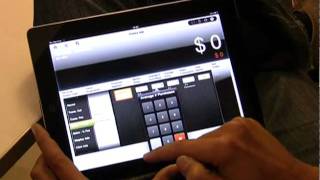
A short video walkthrough showing how to use a revenue estimator in the Business Model Toolbox. The presenter builds a simple case study around an iPad fitness app, entering an audience of 200,000 and testing two revenue approaches: an App Store one-time sale (5% market share, $9 price, 30% Apple cut → $90,000 gross, $27,000 to Apple) and a web-based subscription ($4/month at 5% conversion) to illustrate how subscription dynamics can change annual revenue projections.
Chapters
So we're going to do a little demo of how to use the revenue estimator and we're going to create a new canvas for that. We're going to work on a little case study from a friend of mine who is working on a fitness app. So let's keep it simple and say he's making fitness app for the iPad. And where do you sell when you have an app? You sell it on the App Store. Who is he targeting with that? Which customer segments? Well, basically anybody, you and me. How is he going to earn money from that little project? Well, he's going to sell his app on the App Store app sales. So we have a little business model sketched out parts of it. But now let's make this interesting and go on the revenue estimator here. And we can see a blue and green bubble coming up. So let's click here on the blue bubble to start putting in a number of how many people could actually be interested in this app. So let's say 200,000 people are interested in this app. But now let's throw in a revenue stream here, figure out what we could earn. So we're selling our fitness app to people like you and me. But hey, we forgot something actually, when we sell on the App Store, we need to take a different type of revenue stream. It's a sales minus a transaction cut that we're going to have to pay to Apple. So let's take sales minus transaction cut, selling our fitness app to you and me. Let's put in some variables here. Well, what's the market share? We think we can achieve 5%. How many times are people going to buy, well, an app, you just buy it once. What are we going to ask for? You know, $9 should be a price that they're willing to pay. How much do we have to Pay to Apple? 30%. So immediately we can see that we earn $90,000, but we have to pay $27,000 to Apple. Okay, so what if we played around with another idea because that might not even cover the development costs. Let's make a different value proposition here. Let's make a web app for this fitness program. Let's give it a different color so we can distinguish. And obviously when we make a web app, we don't have to sell through the App Store, we sell through the web. So now we're actually independent and we can make a new revenue stream here. And let's try something out. Let's play around with a subscription model rather than just a sales. So we go here on the revenue streams. And we won't select the sales, we'll select the subscription. And what do we want people to subscribe to? To our web app. And how many people do you think we can reach? Well, let's say 5%, and it's about fitness, so we think they might pay $4 a month immediately. You can see the dynamics are totally different. With the same estimations, 5% and a small monthly fee, we get to a totally different annual fee. So very quickly we can sketch out with the revenue estimator what would happen in this kind of business model.