Not All Pirates Are The Same: How To Make Innovation A Legitimate Part Of Your Company
Transcript of a Strategizer webinar (Aug 26, 2020) on making innovation legitimate inside large corporations. Panelists (Tendayi, Alex Osterwalder, Lyna List, Mario Zorn, Christian Lindner) discuss the ‘pirate vs privateer’ framing, how to generate early revenue from innovation, collaborating with legal/compliance in regulated companies, and organizing/aligning multiple corporate innovation programs with strategy.
Chapters
Hey, welcome, everyone. Just quickly in chat. If you can just sort of let us know where you're joining from. Be awesome. Montreal, canada. Uk. Uk.
Cool.
Welcome.
Wow.
Already at 120 participants. Amazing. Rhode Island.
Blue Pirate from Hong Kong.
Hi.
I know Thomas. Hey, Thomas. Good to see you.
Oslo.
Great. France. International crown.
Guayaquil.
Oh, my goodness, I love Guayaquil.
That's the first time I'm hearing about that place.
Ecuador.
Bangkok.
Niran. Good to see you.
Wow. Brazil. Brazilian. In New York. Sudan. Wow. Welcome.
That's interesting, right? Serbia, Peru.
Porto.
Karachi.
Hey, McLean, welcome back.
Good crowd, good crowd, good crowd.
Awesome. Cypress.
Okay, cool.
We're just giving folks a couple of more minutes to join and then we'll. And then we'll kick off. Atlanta, ga.
I love how international this always is, right? I mean, you know, from Karachi to Guayaquil, that's a nice spread. Like, Antarctica is the only place we didn't have yet so far on this webinar.
Not yet, not yet, not yet.
Fabio, good to see you. Okay. De la Torre. Rafael is just lying straight to me.
That doesn't sound like it's the truth. Mars, that's Matthias. We know who you are. All right, cool. Yeah, the numbers will keep coming up. Okay, fantastic. I think that we can get started now with the conversation as folks keep joining. Welcome again to another Strat chat webinar hosted by us at Strategizer. Today we have a really practical session for you where we're going to be talking to three really great innovation leaders that are sort of pioneering the way in the industry. And so we're going to share a lot of lessons and learnings from them to you. So today we're going to really be talking about how, as entrepreneurs, we can make innovation a legitimate part of our companies. I'd like to introduce you to my co host, who you might already know, Alex Foster Walde. Say hello to the people.
Hello.
You're welcome. And our guests today are. Oh, and I just want to say that, like, me and Alex are having an Amazon battle to see whose book is going to sell the most. I'm like, really, really behind. So help a brother out if you can go on Amazon and help me pass Alex for the first time in my whole life, that'll be awesome.
I'd say they go well together. Right. So I think the thing to do is buy them both. Maybe buy two copies of the Invincible Company and one copy of Pirates.
Thank you for your kindness, my friend. I will always remember that. So, yeah, but if you could just check out the books that were interesting. Both of them are really connected to the conversation we're going to be having today as well. So I'd like to introduce you to our guests as well. So the first speaker we're going to have today is Lyna List, who's currently the global head of new ventures and commercial partnerships at gn. She'll be talking about how innovation teams can get early wins, and she'll tell you a little bit more about the organizations that she's worked with and what she's done there. Then we'll have my good friend Mario Thorne, who is head of product development and innovation at AirPlus International. And just for the fun of it, we've got two companies that sound the same today. We've also got Christian Lindner and, yeah, sorry, I forgot who you surname on there. But he's the global head of Airbus Biz Labs at Airbus. So you're gonna have to actually make a distinction between AirPlus and Airbus while we're having this conversation. But as both of them start coming on, they'll be introducing themselves and telling you about their organizations and what they do. Also, just a reminder that between September 15th and 17th, we'll be hosting our Testing Business Ideas Masterclass. So we have a discount code for you there. You can see the discount code TBIVMC webinar 10 allows you to get a 10% discount. Gab is just posting the link to register for the masterclass in chat there, so feel free to join there. And we look forward to seeing you in September. And so let's really sort of start our conversation. So my good friend Alex likes to say to people that if you call yourself a pirate and you work inside the large organization, that's not a really smart thing to do. So can you just please explain to people why you say that all the time?
Well, you know, I like to joke, but I'm actually pretty serious about this, that when people call themselves pirates and rebels in, in an established organization, small or big, they're basically saying, you know, come and kill us, because that's what we historically do with pirates and rebels. Right? So it's a silly thing to say, hey, you know, you want to come and kill me, because I'm doing things differently. So I don't think it's the right setup. But then, Tendai, you came up with a better framing, so we can still use the word pirate.
Yeah, I had to do that because otherwise I couldn't carry on working with you. So I actually sort of. We started thinking about it, right? And we're thinking, okay, so what's a really good way to frame this? Because it was Steve Jobs who said it's better to be a pirate than to join the Navy. But actually, what can actually really work is, you know, it's better to be a pirate in the Navy, right? And, like, how does that work? Like, how is it possible for someone to ever be a pirate in the Navy? Because whenever you call yourself a rebel or a pirate or whatever, or a disruptor, you know, you meet those, I used to work in a startup guys, but now they're in a large corporate, right? And they're trying to be, like, offensive and all that. That's how you know that they're not going to be able to be successful. They won't be able to sustain their success. And the way that I kind of figured out how to make this connection between being a pirate and a pirate in the Navy was when I found out about this distinction between pirates and privateers. Right? Pirates are just criminals, right? They're sort of unattached to any institution. They roam the high seas robbing, killing and pillaging. It's a nice life, but it's not the kind of life you can have inside a large organization. Now, privateers are also pirates, or historically also pirates, but they were pirates that were working or representing specific countries, and their role was to go out into the high seas and sort of loot and pillage enemy ships from enemy countries, right? So when they brought whatever they were working on back to the mother country, there was somebody there to welcome them. Sir Francis Drake was even knighted for the work that he was doing looting Spanish ships. So all of these things were actually happening. And so that allowed us to make this distinction to say it's actually possible to do really disruptive work inside large organizations as long as you are able to build a bridge between the work that you're doing and build a relationship with the core business, sort of get a charter, if you want to call it that. And this distinction really matters because when it comes to leaders, right, nobody cares about your work if you're just a pirate, but if you're a pirate in the Navy, people are fully invested in your success because they're the ones that sort of asked you to do it, and they're looking forward to the success that you're going to have. And in terms of your status, if you're just a pirate, your status is very low. And even if you succeed, people are not going to celebrate it. We've worked with loads of Innovation labs, where they've got really great ideas that nobody wants to take to scale. Whereas if you're like a privateer or a pirate in the Navy, everybody cares about your success and they're likely to celebrate it. And then in terms of resources, like, if you're just a pirate, you're not part of the institution, so your resources are inconsistent, likely to be cut, especially in crisis times like these.
Right.
Whereas if you're. If you're a pirate in the Navy, your resources are consistent and likely to be increased. And then when it comes to your projects, if you're a pirate and anybody discovers a project you're working on, it will be made to walk the plank. Whereas if you're a privateer, people know what you're working on. And if it's viable, it's likely to be taken to scale. So this distinction really matters, and that's what we're trying to build today is like, how do we actually get this to happen within our organizations? So before we get to our first speaker, I'm just going to pull out a poll question for you, which is think about the innovation teams that are inside your company right now. Just think about that. And then think about how easy it would be for leaders inside your organizations to disband these teams, just, like, get rid of them and fire them. Would it be as hard as, like, getting rid of a key function like finance? Or is it almost a key function? Or would it be as easy as getting rid of external consultants? Right, so GAV is going to put up the poll, and then you get to vote.
Right.
Which of these you think you are? Like, how easy would it be for leaders in your organization to dispatch?
And while we're voting, I just want to highlight one thing. It often has nothing to do with success. Right. So we see some companies where the innovation team has successful, but they get dismantled for whatever reason. Oh, you know, we did a bad acquisition or, you know, the leadership doesn't understand innovation, and they go from a centralized working function to a decentralized one. So success is not always enough. Right. So that is interesting. When it's institutionalized, it's very hard to dismantle. When it's not institutionalized, like a consultant, really easy to dismantle. So success is not always the only factor to create longevity. Right, with these things.
Absolutely. So, Gab, if you could share the results. Oh, there we go. 38% of the people say we're almost external consultants, with 25% saying we are external consultants. And so you can really see here that Right. It is the legitimacy of innovation teams inside large organizations can sometimes be really low. So, Gabby, if you can just stop sharing that and then we can move on. So the question then becomes, how do you build that legitimacy? Right. And one way that we've discovered to build legitimacy within large organizations is to really focus on creating value. A lot of innovation teams are like, yeah, we have a lab, we do sticky notes and we do events and all this stuff, but they're not really producing real impact within their organizations. But actually showing that innovation can create new revenue, can create new growth is something that can be powerful and can start to build that legitimacy within, within your organization. And so with that, I'd like to introduce you to Lyna List, who will now talk to us about how she did that work of driving teams to really focus on early revenue so that they can build that credibility within the organization. Over to you, Lynn.
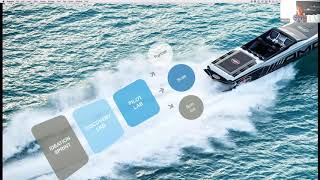
Thank you very much, Tsundhai. Pleasure to be here. And as you can see on the slide, it says I'm at gn. And for those of you that don't know gn, it's company with a vision to make life sound better. So some of you may be wearing a Jabra headset, then it's coming from gn. And if you should have any hearing problems, we also manufacture hearing aids. But I'm only two weeks into this company, but having worked basically my entire career as a corporate entrepreneur and for so long actually that I stopped counting. I guess I'm too old now for counting all those years. And as Tendaya said, the key focus for me, and maybe also because I have a commercial background, is to show revenue, show results, show that you can actually turn innovation into a new business for the company. So that is, I think my key focus area at all times whenever I work with innovation. But what you will see in the next couple of slides is some what I've done in my previous roles, which is very similar. It's all about driving innovation in large corporates. That's kind of been my life career for now. Yeah. So should we hit the floor and start with a beautiful hockey stick? The hockey stick of the revenue that is growing exponentially. The hockey stick that we all aim towards. And all startups being internal or in a corporate or external, are all aiming for this beautiful hockey stick. No news here. Right. And then I thought it could maybe be interesting to just try to add another line to this graph because that other line reflects my experience from working in large corporates. And this is the C level excitement line and it's not a beautiful line, but I try to visualize somehow what I typically experience. Right? So when the sea level initially decides we need innovation, we need to have a lab or another lab, whatever composition, they are super excited. But then that excitement has a tendency to drop quite dramatically. Maybe not as dramatically as I have put up on the slide, but really drop dramatically still. The key point here is you can see that the red line goes below the blue line, even when the blue line shows revenue. And I think this is interesting because at this stage, in this phase here, where the revenue has still not kicked into the steep curve on the hockey stick, from a C level point of view, this can still seem quite small even though we are making revenue. And I have experienced this firsthand. So I have two key points in my few slides today. And the first one is to shorten this value of death that you see there as much as possible. And then secondly, to ensure that you have KPIs in place to show the sea level management that even though the revenue may be fairly small, still it actually has the potential to scale dramatically. And how can you then shorten this value of death? And what I have done in my recent company with Ramboll, which is design and consultancy agency. If you go to the next slide, we have run the next slide, please, an innovation accelerator. And this is a program you can say in three phases where you have the ideation and then you move into the discovery lab and eventually pilot lab. Just fancy words really. You always have to come up with fancy names for these different stages. But essentially it's all about accelerating your idea from just being an idea on a post it note to actually generate revenue for the company and become a new business. And just to be a bit more concrete, because this slide doesn't say anything very briefly, in the first phase, we invite everybody in the organization, in this case 17,000 people, sorry, to participate. And typically we got around 250 ideas. And at this stage we don't ask for a business case and you shouldn't ask for a business case. It's all about the problem. Is there a problem that this idea is solving? But of course, even though you don't have a business case and a beautiful hockey line at this stage painted out on a slide and you should still have a good vision of what this idea could turn into. And then in the second phase, it's all about the solution. And keyword here is experiments. And the key word is also, when we say is there a solution? It doesn't mean that you Start actually building the solution, which is very tough for people, especially if they're engineers, because they love to build a solution. And that is what we're used to. You come up with an idea, then you build it and then you hope somebody will buy it at the end. But in this phase it's actually all about going out and validate with customers that they're actually interested in your idea. And it's also about business modeling and pretty typing, as is prototyping as well. And then in the last stage, this is where we start looking at the numbers and you want to see the beautiful hockey stick on a nice slide and the potential and all the nitty gritty into the financials. And then after this period, which takes around three to five months, the teams then present to the executive management to get funding for the idea. And as you can see, we went from 250 in the initial phase down to five ideas, making it all the way to the end. And we took out the poll that was supposed to be here. So I think I will just kind of SIMI asked it, which was how many of these do then make revenue and how fast do they make revenue? And actually they make revenue in year one, which from a startup point of view is phenomenal. But back to my first slide about the sea level. If that revenue is not dramatically high, they may not be as excited. Which is back to my point about it's so important to have KPIs that look at the sales pipeline and look at all the conversion rates because then you can convince that yes, the numbers may be small, but with these conversion rates it's a matter of scaling up. I know it sounds easier than it may is, but in principle, right. And that leads me to the last slide. Here you see the loading. I think we have all tried to sit in front of our computer downloading a program, downloading a movie, whatever, we are downloading something and as long as the blue bar moves, even though it's quite slow actually still you see progress and you feel okay, my movie is coming, although very slow, but it's coming. But then all of a sudden the blue bar stops. What do you do? Do you just lean back and think, huh? I just wait a bit longer. I bet that you will get pretty frustrated very fast and think what's happening? Is something wrong? What happened to my movie? Did it crash? Do I have to start all over? Should I just skip it and turn off the computer? And it's a little bit the same with running innovation. You need to show progress all the Time and all the time show that you will, even though you may not be at the end of this loading year, you will get there. And with that, I will hand over back to you. Tsing Dai.
That's really fascinating. Right. Because if leaders feel that something is stuck here, they don't see the impact of innovation. They're less likely to keep funding it. So that's sometimes why innovation programs get stopped, Innovation programs get cut, and then the teams get frustrated. They're like, but we were like, nearly there and then they just like stopped us. Yes, you knew you were nearly there. But to leaders, it looked like this loading bar here. And so that's why it's really important to constantly show progress, to make sure that leaders know that we're making progress. And it's really fascinating as well that you managed to get to revenue in year one, because a lot of people think that that can happen with innovation and then they focus on innovation theater. Right. Yeah. Anything to add there, Alex? Before we move on to the just.
One very brief question, Lyne. So when you go from one phase to another, how do you select, what are the metrics? Because this is pre revenue, so maybe a little indicator. What do you use to select the ideas?
Yes, and we actually have quite a few selection criteria, and they are different from stage to stage, so they reflect what they're supposed to do in the particular stage. So we have a selection committee, and they basically pitch like Shark Tank or Dragonstone style, what have you, and then the criteria change as they progress through the stages. So in the first stage, we look mostly at the market size and the actual problem they are solving. And at this stage, typically, the teams have already been out talking to the first customers or potential customers to see if there is some sort of validation that they are interested in this solution. And then as we progress through the stages, we have more and more criteria. And at the very end, it is, I would say, more financial criteria that comes into play.
No, thank you. About that. And then there was just a quick question about how often you run this cycle.
Yeah, yearly. So we do that.
Thank you.
All right, so let's move on to have another conversation.
Right.
And this conversation is a conversation around. Let me just get rid of this. This conversation is a conversation around, like, you know, the legitimacy of all the power of innovation within organizations. Right. So, you know, Alex, you like to say that, you know, startups can do whatever they want, but startups within organizations can only do what's legal. Right. What do you mean when you say that often?
Well, you know, I learned this from Steve Blank, where he shows the examples of Airbnb and Uber. They did things that clearly break the law or very clearly in a gray zone. You can't afford to do that in an established organization. And if you're in pharma, you'll. You'll literally land in jail if you talk to the wrong people. Right. Because you're testing your idea. So I, you know, I think there just needs to be a little bit of more, you know, professionalism and saying, well, even if we're in a highly regulated environment, let's figure out how to make this work, because it's possible. Like, we haven't seen a single thing that's not possible. You know, we have nuclear companies using this methodology, but of course, you know, they're not going to, you know, play around with crazy stuff, but you can apply it. And you need to have the right people in the room, which might be, you know, those who own the brand, those who own legal, those who own this or that. So as long as you systematically approach this, you're fine. But we have this kind of crazy thing that we say, oh, no, you need to behave like a pirate. No, you don't. Pirate in the Navy.
Yes, exactly.
And you need to be a pirate in the Navy, because one of the things you have to build is a bridge between the work you're doing with innovation and all those people that are going to have to touch you, the innovation product to help it become successful. And so what really matters here is you need to be able to collaborate with key functions within your organization. So we're going to put up another poll, right? And we need you to think about, like, you know, the functions in your company that are hardest to work with when it comes to innovation. So as the poll comes up, which one of these do you think is the hardest? Right. Is it IT Sales, finance, branding, marketing, human resources, legal and compliance. Gabby, if you can put. Put the poll up to see what people vote for. I put this poll up earlier on Twitter. Let's see if we get the. If we get the same result. Which of these functions is the hardest word?
Greta, it's always exciting to see these polls, right, because it gives us all, you know, kind of a little bit of a. We're all suffering the same kind of things. So I think it's getting better. So what's interesting is this data is slowly changing, so we'll see for this group. But it's become easier and easier to work with functions that have been impossible to work with in the past.
Cool.
So, Gabby, if you can share the results, see what legal and compliance wins. Legal and compliance always wins. And I love that because it is a really, really great way to introduce Mario. Right. Because in most organizations, legal and compliance wins and Mario kind of feel it out of the way. So, Gabby, you can just close the poll, the sharing. Mario kind of figured out how to collaborate with legal and compliance in a highly regulated industry. Right. So over to you, Mario, if you can talk us through the work that you did.
Thank you, Tenday. Thank you for the introduction. The way you say that sounds like I should earn a price for that. Not sure about that.
Nobel Prize. That's what you should get for that Nobel. So.
Hi, everybody. My name is Mario, Mario Zorn. I'm leading product development and innovation in A plus International. We are indeed a highly regulated business. I don't know how to compare that to pharma, but I come from financial services. I'm working in a financial services company in B2B payments. We do business travel payments, we do corporate payments. So we provide payments tools to corporates very, very much highly regulated. So if you could jump to the next slide, please. Tenday, he has jumped my slides. So we are only highly regulated. We are based in Germany. I think we have a very strict law and financial services company, but we have that all across the place. I guess by now we are to a certain degree a divided company by law. The regulator, the regulator and governing bodies wants us to basically split the company, the financial services company, into one section. That is the market side of the business, and the other side is the aftermarket. So market is all of your product management, marketing, sales, and all these fancy things. And then you have the aftermarket side of things where you have your legal, your compliance, regulatory risk, and all these kind of business units. So if you go very simply on this, you could even say, okay, it's like a little bit the good guys and the bad guys. But I deliberately didn't depict this here in black and white because it's not like in Star Wars. It's not. You have the Jedis in white and you have Darth Vader in black. To me, it's completely unclear who is who in this picture because I work on the market side of things. And of course, I could say, oh, the aftermarket side of the bad guys. The aftermarket side says, oh, these crazy people in product, they are risking the entire company. They are the bad guys. So it's very, very much unclear who is who in this picture. And you have to figure out the way to do that. And we did that. The way we did that in the past was the usual thing. How do companies solve problems? With committees and meetings and processes and so on and so on. So in the past, innovation and product development was split. Innovation basically was completely uncontrolled. People working on innovation basically could do whatever they wanted to, but weren't taken seriously at all. We were just kids with some plain money in the playground. Whereas the people working on product development, the serious stuff, they were strongly regulated. Strongly, strongly regulated. And it ended up in a process that for everybody who worked on a new feature, a new development, a new country rollout, a new product, what have you, you had to go through this complicated administrative process, speaking in front of a committee that, in its last version, saw 21 different business functions sitting in this committee, 21 people representing 21 different business functions. And believe me, everybody hated this committee. Both sides being the product people presenting there and the people on the other side, because it didn't help at all. It was like, I don't know, the Roman emperors telling you, yes, you can go or no, you can't go. And with 21 functions, you never could go because you always missed one thing. It was always somebody saying, ah, did you talk to this unit? Did you see that thing? And so on and so on. So we really, really had, so some need for change. So, yeah, this had to change. So we looked at this and said, okay, look, we need a radical new approach. The first thing is we killed these committees. I don't know if you can see that, but we said, okay, this committee needs to stop. The committee cannot be the governing body, but rather we need to create a focus for clear ownership and responsibilities across the entire organization, irrespectively, if people are sitting on the market side of the business or on the aftermarket side of the business, no more committees does not mean we can do whatever we want. I don't know if you can see that from Zoom, but we introduced eight legally required because we're still a financial services company, highly regulated. So we have the rules that we have to adhere to. So we introduced eight legally required. We call them compliance gate owners. I come to that later. But the first stop was to say, move away the committees and unnecessary processes, but let's focus on ownership and responsibilities, please. So, next slide. So what did we do? And maybe it sounds crazy in the beginning, but we gave the aftermarket people much more power. It's not that they didn't have any power in the first place. I mean the aftermarket, legal compliance, regulatory and so on. We had the power to stop us right from the beginning. We gave them different kind of power. We made them responsible. We did say, look, we need you guys in legal and regulatory and wherever in risk to be our co designers for new products. You need to be co creators. We don't need you to be the rules checkers, we don't need you to be the police officers. Yes, that's your role. You guys in the aftermarket are the people who have to make sure that we don't blow up this business. But you need to be co creators and co designers and help us basically from day one of an innovation project or a product development product to build the right thing. So we urged these people to make it possible to join our product development units or to make to join the innovation units as early as possible. In an ideal world, they would join my team full time, but that's not happening. The good people in legal or the good people in Risk or the good people wherever in your organization that you.
Need.
In an innovation project, you don't get them full time, but you need to make sure you can get access to these people whenever you need them. And this only works if they see a benefit in that. And the benefit is they have less work in the end, cleaning up the mess that you did, because the mess doesn't exist, it doesn't happen. That requires that you need to train these people. Yes, people in legal and compliance and risk and so on. They have heard about business model canvas, value proposition canvas. They have heard about Lean startup and these things, they love that, but they have never applied it in real life. For them it's theoretical concepts and they don't know how to do that. So you have to help them. You have to explain to them this is the difference between explore and exploit. This is the way we try to work, this is the way we move along in iterative agile product development. This is how we go with MVPs, hypothesis testing, building prototypes and so on and so on. That's hard work. You need to find the right people, you need to find the right ambassadors to start this movement, basically. But it works. I will share with you some of my lessons learned later on. It can work. It's not easy, but it can work. But we not only put more responsibility to the aftermarket people, we gave our people on the market side of things, the product people, we gave them more power too. And we did that basically indirectly because we removed all the processes and all the committees that they were possibly where they could possibly hide behind. In the past, it was an easy thing to say, oh look, my project didn't work out because the evil committee said I'm bad. However, now we made them responsible for the entire business model. So my idea owner, the product owner, the product manager, whoever is running an initiative for a new feature, a new product, a new idea, whatever, they are responsible for the entire business model. Before we scale anything, we want to see a validated or at least a somehow smartly work through business model business model canvas. And they need to make sure that this includes a holistic view on this business, on this product, including the aftermarket side of things. If they don't take care, nobody else will. So they need to make sure that they get legal IT security, data protection, all these wonderful organizations in our company that they involve them whenever they need them as early as possible. Because it's the job of the product people to either create a sustainable, profitable business model or to kill that thing as early as possible. So in order for that to happen, thank you. We created this new process. What you see here is a traditional stage gate process that we know from innovation theory for the last 600 years or so, a little bit stakeholder management, that's what you want to show. However, I said earlier we had these two different words, innovation and product development. We made our innovation process, ideating, validating, finding problem solution fit, providing product market fit, finding a validated business model for a new product. We made that the official product development process of our organization. Working with hypothesis testing, working with experimentation, working with MVPs and so on and so on, is now the official rule of the game on how our company in a class develops new products. There is no way to do it, but you can always do differently. But if you want to adhere to the rules of our organization, if you want to do it legitimately, this is the process. And this process, product development process is owned by the market people, is owned by actually our chief marketing officer. And the target of this process is to create again sustainable, profitable business models. Do we own money with that? Yes or no? And then we created the second process that didn't exist before. And it's the red box here. We call this the risk assessment for new products. And this process is owned by our friends in the aftermarket of the organization. This risk assessment is totally different to this committee before because it's what you see with this black thread here. It's intertwined, it's interlinked, it's stitched to the product development process. We call them sister processes. One cannot work without the other. And it's the job of the owner. It's the job of the owner of the product initiative to involve all these people in IT security, data protection and so on in those key functions to manage and to understand the risk that you are entering at any point in time. It doesn't matter if I run to run an experiment and talk to five customers, or if I want to launch a new product globally to tens of thousands of customers. You have to manage the risk that you as a product person add to your enterprise. You have to manage it adequately at this point in time, irrespectively. If you're talking about five people or 5,000 people, it's just a different magnitude. And you need the help of the experts on the aftermarket side, your IT security people, your legal and compliance people, to actually assess this risk and to make sure you manage it properly and to have it transparent. And this is what we put on the, let's say, the rule book of all of them. So we've introduced this pretty much a year ago. We went through all the hoops and loops and we installed these stuff as the official processes in summer last year. What did we learn so far? It didn't make everything better overnight. Yes, of course we still have struggles and fights with key functions. Not everything disappears overnight. That would be naive to believe. But what I've realized is that we have totally different discussions. Even though my product people might hate me for saying that, but it's much better because they are much more content related and they are at a different point in time. I'm discussing with legal whether or not, I don't know, the idea for a new product is legally possible. When we are talking about the idea and not when the product is developed. We have through that a much higher degree of transparency and interaction through this constant communication. But I can also tell you that this is very exhausting because you're constantly talking to people, you're constantly having to talk to, to your stakeholders. So it's a people's business, but. And that's very satisfying to see. You run these, I don't know, you run your steering committees, you run your Sprint reviews and so on. And people from the aftermarket side of things, your tax advisor, that's a very wonderful example. They voluntarily come to the Sprint reviews. They sit there, they are eager, they are excited, they say, okay, come on, let's get this new product going. It can't be too difficult. Let's get this stuff. Because they bought in, into this. And that's very, very cool to see. And we will be continuing like that.
Cool.
Thank you, Mario. Really, really fascinating. Right. And what I love about this. Right. The concepts that you're actually sort of presenting, Mario, is that they really raised this question of, like, you know, when you're working on products, you can't just do whatever you want and you really want to collaborate and sort of bring people in. And I like that you've created this sort of alignment. I remember when we were having that meeting, right. When we were together, and the chief counsel was like, thank you so much for involving us so early. Because it used to be that people used to send each other emails trying to figure out how to get bi legal, give each other advice of how to get bi legal, and then forget to delete their conversation when they forward their questions to legal.
Yeah, that's very good. Yeah.
No, no.
So, yeah, of course, have fights with.
Legal because they have to protect our organization from us doing stupid things, but we have different conversations with them. It's still a long way to go, but it's good. And I like what you said in the beginning about pirates and companies are most likely to be killed because they are a disturbing factor. We still like to see ourselves as pirates because we are the innovators, but we made it that we are now an official thing in our. So I don't know how you use the picture. We are pirates wearing the Navy soldiers uniforms or whatever you wear.
You're like a pirate in the Navy. You're like wearing a suit and a pirate hat and a patch.
It makes me actually think, you know, Tenday, one of the things you like to say is that instead of breaking the rules. Right. You need to change the rules. So, you know, we've seen companies giving prizes to people who broke the rules. Right. Oh, how can we get around legal?
Right.
How can we break the rules? That's not the point. Don't reward people for going around the rules. Change the rules in a way to make it work. Right. So. And again, that come. That goes behind. Beyond that pirate mentality, it's not about breaking the rules. It's about setting up the system so people can actually just do their work. And I think that's where legal in the companies that are succeeding, like, you know, you're doing a great job, Mario. That's where we're really seeing real success.
Exactly.
Make the rules. Make the rules flow.
Mario, I have to cut you off because we're like 20 minutes, really exciting conversation, but we can during the Q and A. But I need to move to Kristen because one of the other things that we're noticing inside larger innovations, a lot beyond people thinking they're pirates, is that they then take their piracy to the extreme, right? And they start opening barriers. Innovation programs here and there, different types of innovation programs, labs and all types of things. So just a quick question to people on the call. How many innovation programs do you have in your organization? What types of innovation programs are you running in your company right now? Do you have innovation labs? Do you have venture capital? What do you have within your company?
Hackathons, idea competitions, Silicon Valley Zoo tours. There's a whole list, right? 0yan. Oh, my goodness. And if you're a consultant, you know the companies you work for, right? So type it into the chat window. Let's see, can put individual ones. We got Innovation Lab, operational excellence hackathons, right? That's the big favorite always. Let's do some hackathons. Let's bring in some consultants.
Dear. Competitions, prioritization metrics, right? So we have. We have all of these things happening within our organizations, right? But actually what we like to say as a strategizer, that the role of innovation is to really try and balance two things, right? One part of it or one half of it is to make sure that the programs that we're kind of working on are creating value within our organization. We need to make sure that we're doing work that creates value. Exactly. What Lena presented to us do stuff that actually creates value. And then the other part is the work that Mario showed us, which is work where he changes the culture of the organization so that you can innovate in a repeatable way.
Right?
But actually what happens inside most organizations is we don't think about, like, prioritizing things in this way, in the way that Mario and Lina were actually talking about. Instead, what we do is we open an innovation lab, and then somebody else opened the skills and learning program somewhere, and then somebody else opens a venture capital arm somewhere, and then somebody else does an innovation outpost thing in Silicon Valley. And then before you know it, you've got literal fires everywhere, like mushrooms just burning everywhere. And this is a real problem inside organizations. And it's something that Christian faced when he first joined Airbus. And so over to you, Christian, so you can tell us the situation you faced and how you dealt with it.
Yeah. Many thanks, first of all, for inviting me here today. And it's actually what I like about these chats here is that from theory you come to reality, right? Because exactly. Whatever you put on those sticky notes before this is one thing you don't find then facing a real large corporate. So whoever does not know Airbus, I.
Mean.
With given humbleness, I can say it is the leading aerospace company of the world at the moment still. Not only because our competitors have a grounding problem, but also because of the scale that the travel market took. So at good times would sell about 800 aircraft a year, which is massively. And one thing I also underestimated is that making something fly, having the aircraft there, it's not just a pipe with some wings on it, but I think it's the most complicated vehicle in the world to make something fly. And there's so many things on the way. You have cycles, development cycles of 10 years. And the scale and magnitude of building these things is what also attracted me to this business here. Previously I came from Telefonica, right? Telco Digital, and now running into the hardest hardware business you can get into. So being now bizlab, biz labs, corporate accelerator, doing entrepreneurs, startups, all that stuff. But I'm going to show you now the magnitude of this company and the scale of this company. Started in 2015, actually with the start of Safari to Silicon Valley. Previous CEO Tom Anders, great guy, went to Silicon Valley, took a look at all the digital tech companies, came back, what he did then immediately, next slide was to mount up the monster, the innovation monster of Airbus. So whatever you put there on the sticky notes, you're going to find it here, right? In any division, Commercial helicopters and defense and space, Innovation labs, accelerators, hackathons. There were people doing an improvement of the wing, very incremental stuff, calling it innovation. We're innovators. There were other white collars in their fancy offices with bubble balls and colorful stuff doing sticky notes, calling it innovation, right? None of both is innovation because we're incrementally doing something better. It's a product innovation. If you just theoretically doing stuff without executing, it's not an innovation. So you also have to differentiate what is technology, what is an invention and what is an innovation, right? The company is full of great inventors. It's an engineering company, 50 years old. These guys are geniuses. But also failing on so many things and not getting proper new business models or really disruptive stuff done, that's not an innovation. It's a good invention, but it's not innovation. So if this would not be enough, then next slide, the monster is even bigger because all in all we have around 60 or 60 to 70 changes, depending on the situation and on daily weather, how many incubators or labs or accelerators we have. But it's a lot. And it's kind of like big corporate start the game, which is not. It's not bad to do that, right? To just see and start whatever people want to do and just lighting up this innovation spark, right? People would say then, oh, well, innovation is everywhere. Well, yeah, it is, but. But if you don't get it on the street, it's not really senseful, but really starting that spark on what could be possible. So we had to start up Safari, then mounting up all the different things, and now I'm seven months with the company. And actually the most exciting and most radical innovation I have seen was when I was touring around all these sites. We have four core countries. We're in India, we're in China, we're wherever. And you always have these huge sites. And I was in southern France. They do helicopters, they're fantastic vehicle. And I would go into the plant where they literally just put the helicopters together. And there were some guys there. So, I mean, like, look, you guys, you come from your fancy headquarter office. You know what innovation is for us. So they had a problem then when putting something into the helicopter, they would scratch a little bit part of the helicopter. And then customer gets annoyed, the customer argues on it. They put a 3D printer in the plant and just printed something around it. It would scratch the surface of this 3D printing. They said, look, whatever you're going to tell us, it's not useful for us. This is what we call innovation. And that's what impacted me on the creativity of engineers, that they don't think in our processes and academia and testing, but they just get stuff done. And I think that's where we have to get more.
Uh oh, did we lose Christian right at the most powerful moment? I think we did. I think you froze up. So that's an interesting, dramatic turn of events. But while he's getting himself reloaded up, Kristen has been given this role of trying to clean up what is happening here. Trying to clean up exactly what's happening here and build a nice little structure to make innovation work at Airbus. And in doing that, he had four options. They could centralize innovation and move all these things to the center and have them managed by the center. They could leave everything the way it is, just democratize innovation, allow people to keep opening up and setting up more fires everywhere. They could bring me and Alex to do innovation so they could totally outsource it or they could just, like, stop because they would just give up and say, we're a large company, we're never going to be able to innovate, so let's just stop. So we're going to put up the poll. Gab if you can. Yeah, Christian's back. Christian, we're just putting up the poll. And what do you think, like, Airbus is going to do? What do you think Christians should do? Do you think, centralize, democratize, outsource, or just stop? Let's see what people vote for.
Kristin, that was an amazing slide showing. And you know, I put a terminology that I just stole from you. Now it's the innovation activity monster, where you have innovation everywhere, but it's so not integrated that you actually. The results go nowhere.
Right?
Because sometimes we say, you know, we hear CEOs say, oh, everybody needs to be an innovator. That's the worst message ever. Because that's what you get, right? You get activity, but you don't get results. It's crazy. So that slide was very powerful.
Very, very powerful. Gather results. See what people. So people are actually saying you should do more democratization. So that's interesting, right? So over to you, Christian, so you can tell us what you did exactly, or what you're working on building as a structure. If you could quickly talk us through that.
Yeah, so that's very interesting, what the outcome is, because. Because actually, democratizing innovation is actually the structure that is in place. So you're basically saying it is good that innovation is everywhere. And what we would now have to do is exactly the following. Because, I mean, let's face it, right? If companies, they have an existing business model, they're profitable, and why should they even innovate? So this is the first question we have to answer. The right answer would be, okay, you're profitable today, but what about the next 50 years? You now have the money and the power and even the time to build something that is adjacent or even disruptive to your core business. But we've also seen that and taking a turn from you, Alex, from the beginning, that the disruptors in Silicon Valley doing, putting up an outpost will also not solve a problem because they're just too far away from the headquarters. Right, the headquarters in Toulouse. So what are these guys doing in California besides having a great time in Silicon Valley? Right? So if you don't connect those outposts and what these innovators are doing to the headquarters, it will not survive. Because at the end, either you want to spin out, you need to help us that or you want to get it inside of the business again, so you need the help of them. So connecting the company strategy with innovation strategy would be the first one to then link it into the company. So in a technology driven company, as Airbus told before, and research and technology, we plan the technology roadmap. So if you want to fly 2050 to zero emissions, we have to fly, plan those roadmaps on how to get there. Because it's so many different steps to get there, each of them being a moonshot. So we start not even with RD, but R& T research and technology. So very, very early, driving those projects of electrification, hydrogen. And then we see, depending on the technologies we get, what kind of business models can we build? On top of this, on top of this again, then we also take the opportunity and pretty smart now on that, the Airbus, the aerospace business can be disrupted. So instead of just trying to build by yourself, opening up the doors to those disruptors, saying like, okay, we have something, we have a brand, we have assets, we have tons of technologies, why don't we do something together instead of trying to compete ourselves, right? So we look at the hotspots of this world and one certainly is Silicon Valley undisputable, but the other one nevertheless, nonetheless interesting is Shenzhen in China, right? Combination of hardware, software at speed, without regulatory boundaries, right. So you have to be there to test out stuff you cannot do in Europe. So current friend of technology, taking disruptors into the game and then having the next layer of the onion which then would be opportunistic. Taking early stage startups a little later stage, have to have the Runway to work with us and then having the CVC fund another tool on corporate venturing to make it nice, round picture and to then have the possibility to invest into startups that might make it and want to partner with us. So the company is kind of learning how to partner with the outside ecosystem and not fearing any IP or invention being stolen away from the company. So learning how to do this not by ourselves. And as you can see, this is all with almost 400 people inside and just shows this magnitude. And I just want to give you an insight on, on the amazingness I found here and how big this can be. How what I like being in a corporate that the wave gets bigger and bigger and you always have to swing against it, but when it crashes down, you really get something done on execution. That's an innovation that can really change for the better, I think even humanity. So that is the bigger picture and getting into small process now.
Thank you.
What I love about this visual, right, is that strategy is right at the heart of everything, right? Alex, we often say this like innovation guidance, making clear where organizations want to play and then allowing that to inform all the other decisions you make around projects and the startups that you collaborate with. So if you guys ever, if there's folks there with just a couple of questions, maybe we can sort of answer those. I think somebody saying, how can disruption be made a concentric circle with the rest? You know, how do you do disruptive innovation in a system that's planned and driven? Alex, how do you do that actually, like, from your perspective, how can strategy inform disruption?
So if we go back to the slide before. So, you know, if I may, the thing that I find a bit of a danger with having strategy at the center and then everything around that is that we don't make a distinction between running a business and improving it and disruption because they're two different worlds. So sometimes it's my fear, what is great here, what is positive, is strategy at the center. But the problem is most of the strategy is about execution. So I feel like sometimes when we don't admit that the worlds are different when it comes to creating new businesses, which is the circle all the way outside, but it's just as important. And when you put the circle so the visual might not actually communicate what you have in mind, that the working together with others, the disruption with outside bringing in technology and improving the existing. But the strategy informs both. Sometimes I have a bit of a fear when we put that we fall right back into everybody's running the business and then there's no more, there's no more outside of improvement of the business. So just that, you know, and I'm saying that because the visuals we communicate in our companies will inform what people do. So visuals have an extremely powerful symbolic aspect. So that's why I prefer when we take the transformative innovation and the more improvement innovations into two buckets, because that's one of. I don't know how it is for all of you, right. For me, it was the biggest job to first hammer into the leadership the CEO. Innovation is not a word alone. There is efficiency innovation, there's transformative innovation. These are two different buckets. And we can have efficiency innovation in one. We can do that in the current business structure. We can't have disruptive innovation in the current business structure because then even if you don't call yourself a pirate, you'll still get killed because you don't fit anybody's P and L. So Here's a small thing that I observed that I picked up that I've seen as a challenge. So interesting that you have the strategy at the center. Sometimes I'm almost fear that then everything is execution. And I'm sure you're dealing with this, right?
A little bit.
Yeah. It's also very interesting to see all those questions starting from technology and from the human side. It's also you have to distinguish on what part of the company we are. So we are technology. So we take a look at the technologies we have and what can we do something else, actually, this picture here, what you were saying, there actually needs to be some like an antenna that also lets stuff from outside in. Right. These are sometimes things we are doing more in Shenzhen, like really seeing, like what can be the disruption that we might.
Okay, cool. So, you know, thank you to all the folks who joined the call. We're actually at time. We've kind of run out of time. But it was a really interesting conversation. I want to thank Leena for telling us really great, wonderful stories about how she was able to create value right from the beginning and the impact that has. Right. So that leaders are not sitting there looking at the screen saying, loading, loading, loading, and nothing is happening. Really powerful metaphor, one of the best ones I've seen, actually explaining what needs to happen there. Thank you, Mario, for that really great description of how you can collaborate with legal and compliance and really create shared responsibility and a shared conversation that really transforms you from just being a pirate to becoming a pirate in the Navy. And then thank you, Christian, again, for showing us. What is the word? Innovation, Spiderweb. What is it like, this proliferation of various programs and how you can link those together through having strategy at the core. So really, really powerful messages that we can all take away and hopefully apply within our organizations. So I want to thank you all for joining again. Please remember to take maybe a screenshot of this discount so you can sign up for testing business ideas webinar. And also, you know, the competition is still on, so you got to help me catch Alex. So thank you very much and have a wonderful day. To all of you. Cheers. Bye bye.
Thanks everybody.
Thank you.
More from Zaur






An Immersive Workshop to Calculate the ROI of AI Strategy - AUTONOMOUS session

Predict, Optimize, Decide: Enterprise Decision Making For The Simulation Era - AUTONOMOUS summit


AI Insiders podcast ep. 9 - Not so cookie-cutter: Consumer Choices in the Age of AI

