Practical Lessons From Building an AI First Science Company with Aadit Patel from NotCo
Aadit Patel from NotCo explains how his company uses generative AI to formulate plant-based foods. Customers buy outcomes like cost savings, not the AI itself. NotCo invests in an AI-enabled workforce of scientists and chefs, allocates exploratory bandwidth to find innovations, and captures proprietary supply-chain data to expand into adjacent markets like fragrances.
Chapters
Hello there. How are you doing? Great. We've got people filing in from the last last talk. So I am here to introduce Adit Patel who's going to talk about practical lessons from building an AI first science company. He is VP of Product and Engineering at Notco. Very excited to hear about your practical lessons and I'll hand it over.
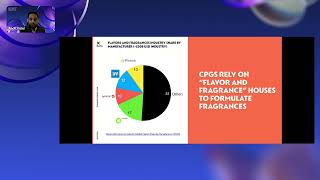
Thank you. Yeah, first of all, thanks for having me. Excited to be here and share lessons. Hopefully I'm sharing my slides. Okay. If you can't see them, let me know because I can't see you. Just a background on my. Great. As a background on myself. If you want to connect with me, here's my LinkedIn. My title is SCP of AI and Product at Nocco. I've been at this organization for about five years, but my past is really varied. I started my career aerospace engineering, programming satellite systems that are now in space. I moved over into autonomous and real time control systems with computer science. But I got put into ad tech and fintech for revenue optimization systems and I joined Notco. Early on I was brought in to lead the AI organization. First employee in the United States, the Latin based company. And to build out a machine learning and AI team organized here in San Francisco, California. I oversee a team to build out our AI platform. And just a brief history on Knotco itself. If you Google what our company looks like today, you might say, oh, this is like a food tech company. And I'll take you a little bit through the journey of where we started and where we are today. But we're about seven years old, eight years old. We've raised $430 million today with our last raise in 2022 valued at a $1.5 billion valuation. And we have a great set of investors coming from the tech space, from the CPG space as well. So it's been kind of an interesting mix of how we've been able to kind of scale up the company through time. What I want to talk to you about today is my perspectives of building out the tech side of this business and what it really meant. So the mission of the company really early on was how do we innovate with AI to create products that are more sustainable for the environment. Right. So we really focused early on the company of trying to create plant based alternatives in terms of physical products, but using a digital AI innovation to begin with. And this is kind of the vision and the dream. We wanted to create an AI system where we had really highly technical users and experienced users in terms of chefs, scientists, product developers at cpgs and deliver these engines for them in order for them to innovate much faster and to get more sustainable products into the market and actually make an impact in climate change and other aspects of the environment as well. And this is actually exactly what we ended up building. So this is five years ago. This was our first generative AI system. This was pre LLMs. This is using something called a Wasserstein autoencoder. And the idea is on the left side you can actually prompt out what you're trying to create from an animal target. So we're looking at, you know, we're trying to create a beef jerky, a bacon and beef stick. You know, you configure that prompt on the left side with a bunch of information, including nutritionals, et cetera, of this product that you're trying to create. And the idea would go through our cloud system. You're using this optimization and neural network design and you'd basically get out on the other side a bunch of just AI generated formulations. Now formulations are a little bit different than just recipes, but I won't dive into it. And we thought this was a great sort of SaaS tech product and we can go out to the market and, and I talked to a bunch of different companies trying to sell this thing. And that brought me to lesson number one about building this company in the early days was that no one actually cares about your AI. Especially for us, I think we're a little bit early. And so we really had to figure out how we can prove otherwise. And this is a really hard pill for me to personally swallow because I'm an AI practitioner, I don't actually code things and deploy them into production. And we just have to take a step back and say like, well, what are we trying to do here? We're trying to sell this very innovative engineering to a very historically known conservative and risk averse industry. The food industry is well known for not innovating fast. It's just a well known, it's kind of a joke at this point. And second of all, we were really early with this whole generative AI thing. Our generative AI system would spit out things for milk to replicate the taste of milk using pineapples and cabbage. And when people would see that, they'd be like, your system is wrong. There's no way it's going to taste like milk if I actually make this. And I'll get to that point in a second as well. And so what we ended up doing was kind of pivoting a little bit early on we said, well hey, we need to prove out that AI actually can make an impact in the market. We can actually innovate with the AI. So I had a mandate to hire 60 engineers inside the company. I said, let's take half of that headcount and actually just hire scientists, experimental chefs and food product developers into our AI org to actually prove this out, that this can actually work. We went on this hiring spree and what we ended up pivoting to was trying to create the first AI enabled workforce. Right? So instead of just focusing AI on core machine learning and algorithms, we really invested in UX and design of our AI platforms and systems and brought these sort of users in house to actually co create these AI systems with us. Right? These are scientists, chefs, they come from very different backgrounds, big industries, small startups, etc. And this really helped kind of framework what we are trying to envision from the innovation engine. And, and within a year we actually had this more comprehensive platform that we thought could be situated really nicely inside the context of a CPG where you could basically put these inputs into the platform and unlock these sort of AI enabled workflows to actually innovate much faster than a traditional company could. And this is literally what we did. We said, hey, screw it, let's just launch our own brand and own products using AI. And as a small company we were able to launch over 100 different products in about four years, which is kind of unheard of while using our generative AI systems and other systems through the loop. Our milk does have pineapple and cabbage in it that wasn't come up by a human. Our chicken plant based chicken has featuring tomato. Turns out if you combine those ingredients, it actually tastes like chicken. Our burger for example has spinach and cocoa. So all these weird ingredients that are now known as hallucinations, we actually put them into our products and we had to prove that you can actually innovate and cause revenues to occur through powerful innovation using AI. Right. And so as we're kind of scaling up the food side of the business, we're scaling up our AI and partnerships. We were able to partner with very large brands like Starbucks. You can order a not latte from Starbucks if you go into Latin America. Shake Shack. We rolled out in the US Burger King in Latin America as well and it's been really successful. And then we started getting inbound about three, four years ago from Kraft. That said, hey, we've seen what you guys have been doing, it's really exciting. Can you actually use your AI engine to help us better formulate our products. And we thought this is a great opportunity. This is exactly what we've been looking for since day one, to actually partner our AI engine with a big company to actually make a bigger change in the marketplace with more sustainable products. So we're working today together with Kraft. We ended up launching a joint venture with Craft where we're using our AI engine to formulate things like Kraft Mac and cheese, plant based, etc. Oscar Mayer Wieners. We just launched in just a couple of years of the formation of this company. What was really interesting when we're working with Kraft is really understanding where value drivers were from AI and innovation. And one of the things Kraft said to us like, hey, it's great that you could launch all these crazy products in a short period of time, but we really care about efficiencies as well. Right? We're a huge organization. We care about cost. And this was kind of pre Covid. We really care about inflation as well. We see this as a, as a main driver through Covid and post Covid. And of course they were right about this. And so we said, hey, we need to extend our AI engine not just to innovate on top line, but also to create efficiencies on the bottom line. How do we do cost savings with the platform as well? So where we're using AI. And I have a whole nother talk on actually how our AI works. If you look at the Autonomous Innovation Summit from last winter, I go more into details about it, but the idea here is like, hey, we can use AI to create these formulations with just a handful of data points and get to optimal foaming capacity of a plant based milk that Starbucks cares about, but Kraft actually cares about cost reduction. And so with craft, we're able to figure out how to use our AI to actually reduce cost of these products such that it would actually impact consumers better. And that was a really great sort of lesson learned early on, which was no one really cared about AI in the beginning, so we had to make our own foods brand, which was a really circumvent of what we were trying to do. But once we were able to prove that out, we were actually able to launch a B2B unit of our business where we have our joint venture with craft. We're working with several Fortune 100s right now, with a bunch of different project partnerships as well, and moving in a direction where I can actually execute. So from a practitioner point of view, I thought what was very interesting about this, probably three, four Year journey was if you're innovating with AI, no one actually cares about your AI. Yes, they'll ask you about it, they ask me a lot about it, but they don't care. They only really care what you can do with it. And that's a hard pill to swallow. And if you really can't trace your AI systems back to top line growth in terms of how is your AI contributing to new products or new unlocks, new innovation to grow the top line of your P and L or bottom line efficiencies in terms of cost reduction or efficiency gains in your supply chain, then it doesn't really matter. Your AI is going to just live in a demo mode and not actually be an impactful part of the business. You're never going to be AI first, so to speak. So that was lesson number one and I'm just trying to be mindful of time here and I'm going to go a little bit faster. You can watch this back in half speed. Lesson number two that we learned was when we were creating this AI workforce, one of the things that is really hard for people to do is explore with AI because you have to think in bets, you have to think with probabilities. And the example that I'd like to give is the one that I was talking about earlier. Let's say you're trying to make a plant based milk and the system generates something that says, hey, use pineapple and cabbage to replicate the milk test. I call it Schrodinger's Milk. Like do you actually go and try this? You're going to spend time and resources to make this product, is it going to actually do something useful? This is called a hallucination with generative AI these days. We were doing this about five years ago. Or do you just ignore it and say, no, your system's messed up, this is never going to work. And you just make a preconceived biased notion that this is never going to work and we actually don't have a good solution to the problem. So the only really thing that we could do is to say, hey, let's create a structure within our organization where 10% of this sort of scientist and culinary bandwidth is going into just pure exploration, right? We're just going to create all these crazy concepts with our AI system called Giuseppe and we're just going to create them and we're going to just have people try it inside the company and see if there's any winners here. And so we call this program Giuseppe Bites and we make a Bunch of stuff. I don't even know what half of this stuff is because we do new stuff every single week. And the idea is let's just explore and maybe one day something will stick and we'll make a home run product. And this actually started to manifest. I won't get into all the details, but we went in on this exercise of how to create a chocolate without chocolate using fermentation techniques. And we used our AI systems to control the different various configurations of a solid state fermentation. Long story short, we were able to create 100% cacao free chocolate. And it's just sitting there as an innovation that we explored with GIUSEPPE until like six months ago when we started seeing cocoa prices jumping 3x. Right? And so this has allowed a lot of new inbound for our company where we've been demoing these chocolate free things for a while. Once again, no one cared about at the time. But as soon as the market started moving and companies started saying, hey, you guys have this weird cacao free innovation that actually tastes like chocolate, that's kind of crazy. And we're getting killed on the, on the, on the cocoa crisis. How can we help and partner together? We ended up being lucky because we were able to explore more specifically with AI through exploring probabilities and stuff like that. And we maximize your chances of being at the right time, right place with the right solution. So we actually have some partnerships in place where some of these explorations that we took bets on, we took hedge bets on are actually manifesting into real revenue streams down the road, especially in our BW line. And the last lesson that I'll leave you with and we can open up to Q and A is how to expand your market size with proprietary data if you can like think about it the right way. And so without going into too much details about food is made, if you look at some product and you look in the back of the label, you see natural or artificial flavors, right? This is coming from another company, typically called the flavor house or fragrance house, where they put together these different molecules together to make something taste like a chicken or the flavor of Coca Cola, et cetera. And it's a multibillion dollar industry and it's owned by these suppliers and they own very specific IP of formulations of these different flavors and fragrances, etc. So what we ended up doing was we figured out a way to incentivize the network, the supply chain and our partnerships to say, hey, we have this AI engine, you have access to all this proprietary data from your 100 plus years of existence. What if we actually partner together and bring that data in house and see if Giuseppe can do something with it? And this is exactly what we did. We were able to get a large set of very proprietary data that would not exist on the Internet through like ChatGPT or open source LLMs and brought them in house. And what we wanted to do was create a generative AI system to create new fragrances. So smells, perfumes, et cetera. And so we designed a system that can really go from natural language. You say the application perfume, you can put any natural language. So we're testing things like what does unicorn and youth and rainbow smell like? And the system will run through this transformer network. You actually can start creating in silico a bunch of different formulations in parallel. This typically takes a scientist or a formulator a good one days to do. Sometimes it can take weeks or months to actually get to write formulations. Essentially what we ended up building were these two transformer networks inside this partner company. And we were able to go within minutes of a natural language prompt to an actual formulation that we could actually design and dose out and create some interesting smells and scents and stuff like that. Long story short, we did a bunch of blind tests with actual scientists and perfumers. We proved rigorously that the generative AI is on par with human performance or better. At the end of the day, you just can't tell what this thing is coming up with in terms of if it's a human. Was it a human based composition or was it a gen AI configuration? It's hard to tell from even an expert which one came from the human and which one came from gen AI. So the partner is really happy about this by applying their data to our tech and they're actually bringing in a potential client for us to create our first gen AI fragrance application into. And this is a new revenue stream that we can really hit into. So yeah, we started as a plant based food company and showing that. But what we really evolved into was this sort of tech engine where we can basically apply different data sets into the same kind of methodology of thinking and formulating different crazy products and then move into these tangential markets. So fragrance industry alone is a $67 billion industry. And we have our first avenues of putting our technology to use in this industry. And we started having a lot of conversations outside of food as well, which has been really interesting with kind of a more tech forward approach to designing these innovations. Right. So of course we started in food. We're going to flavors and fragrances. We're now in calls talking about personal care and home care. Right. It sounds maybe unsexy to people that are not in cpg, but there's really big challenges to solve in figuring out how to design more sustainable formulations across the entire consumer landscape. And that's what we think our AI can really empower. So I wanted to end there. I know it was a little bit fast and open it up to any sort of Q and A here for the last minute. One of the things we do here, if you want to add my LinkedIn, if you're in the CPG space, we'd love to connect and talk more about it, but thank you for your time.
Amazing. Such a notably dense presentation. I love the way you took us through everything and really added some awesome detail. Thanks so much for that. I do have some questions from the crowd and if you'd like to add yours to the Q and A question section, I'll monitor that. We have about three and a half minutes left. We've got a bunch of innovators in the crowd who are admiring your pivots. You know, we know that's hard, whatever, but for a new formula, what are sort of critical points for success? Is it the problem statement, capabilities, research, any, any sort of, sort of surprising takeaways there for the audience? Yeah.
So once again, it really depends on what you're trying to create and what you want to launch into the market where you think the differentiating factor is. So with that said, the AI system, you can put it more in exploration mode like I showed you, or exploitation mode. So depending on if you're just trying to do a cost reduction exercise of something you already know, that's going to be quicker because we're just going to exploit known ingredients that are cheaper and try to make that faster. If you're trying to create a brand new innovation with materials that have never been tested before, it's going to take longer. But using the AI guided exploration, you can actually get there to attractable, tractable problems. So really dependent on the sort of problem definition and the product brief that you end up getting.
Right, Got it. And then I was really interested in the Coco story and how that you sort of made an early bet and it paid, panned out later. As markets change, how do you sort of prioritize those problem statements? You're just talking about those briefs. Is it client driven? How do you think about that?
Yeah. So inside the business we do have two lanes of how we do exploration. So one is just we're always talking to potential customers and we're hearing what they're thinking. So we'll relay that back to the exploratory team. But if you want to have a really great exploratory team, you have to give them a little bit of freedom to do what they want as well. Otherwise they're not going to work at your company anymore. So they also have a bottoms up approach, approach to exploring things, trends. Fermentation was all their idea. So it's a split between coming top down from the business and customers and bottoms up from like a really creative AI enabled workforce that we have. Awesome.
Yeah, that makes perfect sense. And with a minute 40 left, talk to us a little bit about IP issues. This is from INA. How do you solve IP issues with AI generated innovations? Are there any challenges there?
Yeah, of course there's challenges there. When we generate depends on who the brief is for. Right. So if we're generating a product with a brief for a third party, the IP distinction is very clear in the partnership framework and typically how most companies like to partner and say, hey, we don't want to pay a bunch of money for a hypothetical ip. And so our framework is, okay, we'll own the IP until we show and prove that it can actually hit the benchmark performance that you care about. And, and then we can talk about what that transfer of IP can look to you. Right. So we kind of milestone it, we stage, gate it, et cetera. But it ends up being a win win for both companies where companies can take less risk of investing a lot to generate IP that might not pan out, but they only pay when they see the value. And it's better to price that IP that way in the first place. So that's the approach that we end up taking to that. Cool.
Well, thanks so much for your great presentation. Great answers. You've got 30 seconds before everybody's kicked out. Is there anything you'd want to leave this audience with?
I would say the exploration part with AI is probably the most underrated part. So if you can get teams to explore better with AI, I think you're going to get with more optimal solutions. So test it out.
Yeah.
Awesome.
I would love to. I could talk to you for hours about what you learned about hiring scientists, server developers and really design this organization. It's so cool.
Well, thanks so much.
This has been a great presentation and yeah, I will see the audience in the next one.
Oh, thanks guys. Take care. Bye.
Bye.
More from Zaur






An Immersive Workshop to Calculate the ROI of AI Strategy - AUTONOMOUS session

Predict, Optimize, Decide: Enterprise Decision Making For The Simulation Era - AUTONOMOUS summit


AI Insiders podcast ep. 9 - Not so cookie-cutter: Consumer Choices in the Age of AI

