Selling with Innovation Tools: How Strategyzer's Framework can Improve your Sales Process
Webinar (≈45 min) led by Andy Martinello (Head of Sales, Strategizer) explaining how Strategyzer’s innovation tools (Business Model Canvas, Value Proposition Canvas, patterns from The Invincible Company) can be used in sales and pre-sales to better understand customer business models, surface risks (desirability, feasibility, viability, adaptability), and position offerings. Key examples: Google (multi-sided model and monetization through ads and Android), Amazon (efficiency/sustaining/transformative innovations like AWS), Hilti (shift from product sales to tools-as-a-service / fleet management), and a live demo with Tim Pillipow (American Express) applying the Value Proposition Canvas to a CFO persona (jobs: cash flow, access to reserves, DSO; pains: cash-out, borrowing costs, late payments; gains: unsecured lending, evolved finance ROI). The session closed with practitioner Q&A and invites to deeper training.
Chapters
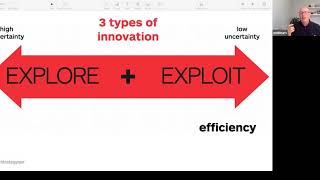
Hello, everybody. Good afternoon, good morning, good evening. Depending on where you are connecting with us from right now, we still have some people logging in, but we do want to get going here in a minute. In fact, we should probably just kick off right now. Thank you so much for joining us. We're absolutely thrilled to have you here with us today. Joining us for this session of Selling with Innovation Tools. My name is Andy Martinello. I am the head of sales for Strategizer and I'm based here in Toronto, Canada. And of course I hope that wherever you are, you are safe and staying well. Thanks again for joining us again. We're thrilled to have you here with us. So we're going to spend the next 45 minutes or so exploring this concept of using tools for innovation in a sales context. And so the purpose of this is finding a way to better understand the business models and value propositions of your customers and your prospects in an attempt to better make a connection as well as illustrate your understanding of their needs and then potentially position your own solution and see where you can help them evolve and potentially transform the way that they're doing their business. Now, this isn't a net new idea. This is a bit of a switch and a bit of a take on how these tools for innovation are used. But it is being used by a lot of very large organizations, large enterprise in the technology space are starting to reach out to us and to start these conversations to help to have us help them better understand how to use these tools in their sales and pre sales departments. So that is why we decided to broadcast this message out to you folks and go through that. So the way I want to do that today is I want to start by introducing some of the core concepts really quickly, just to set some context so that those of you who are on the call better understand how did we get here? What is it that is underpinning all of the work that we're doing? And then in addition to that, perhaps add a little bit of a new framing for yourselves as you're going in and exploring and better understanding the customers that you're working with. Then we're going to get right into the tools themselves. Then I'm going to bring in an old friend and colleague of mine, Tim Pillipow. He's going to join for a bit of a lightning round right at the end so that we can kind of illustrate. It'll be a bit of a test. We'll see how it goes. We can illustrate how Tim is using the tool to address one of his most critical customer segments. And then we're going to open it up for questions and answers. And if you do have any, please don't hesitate to post them in the chat. I know that there's also a question and answer function here, but we will be looking at all of that. In fact, my colleague Dave, who's on the call as well, he'll be gathering those up. So if you have any issues as well, please just flag them in the chat and we can address them there. Tim, if you can just hit mute on yours as well, that would be perfect. Thank you so much. All right, so let me begin. I want to switch to sharing my screen. I wish I had a real fancy way to do this, but I don't. Let me just do this and let's get this up on the screen. Okay, so to begin to introduce the concepts, I wanted to again bring a little bit of background of Strategizer. And to do that, I have to start by introducing this guy. This is Dr. Alex Osterwalder. He is the creator of the tools that we're going to be talking about today, as well as the methodologies and systems behind it. He is the co founder of Strategizer. And all of the work we do is essentially predicated on the thought leadership that Alex drives. And the way the story begins very quickly is going back about 20 years. As Alex was doing his PhD in, he decided to focus his thesis on business model ontology. And so partnering with his PhD supervisor, Yves Penur, who is a fantastic guy, one of the nicest guys you'll ever meet, and of course, incredibly brilliant, the two of them partnered up to really expand on this notion. Alex completed his thesis, posted it, and in that really embodied the first iteration of the business model canvas. And what's amazing to see is that fast forward this many years, the canvas itself has evolved very slightly, but the core concepts have remained exactly the same as these two had created way back then. Fast forward a few years. Alex is starting to get connected. People are reaching out to him to say, hey, we love this concept. It's really taking off. Can you come and speak at our school? So the largest business schools in the world are inviting him to speak, and he's starting to travel around running workshops, and eventually he connects with this cool dude. This is Alan Smith, who is an elite designer. Alan goes to a talk that Alex is hosting here in Toronto and knows about him and says, hey, I think we could partner up and taking your methodology and your thinking and thought leadership along with my design we can actually create something pretty cool. And they did. They founded Strategizer. And then the three of these guys, along with a few of the contributors published their first book, which is Business Model Generation. And in this is the real core concept of what we're going to talk about today, the business model canvas and the methodology behind it. A few years later they recognized that there was a need for another tool. I'm going to get into a little more detail on that in a little bit. And that of course is the Value Proposition Canvas. So they published their second book, Value Proposition Design. Now very recently. Well, towards the end of last year, Alex partnered with David Bland to write this book. So David wrote Testing Business Ideas. Essentially, David Bland is testing guru and an extremely successful entrepreneur based in California, in Silicon Valley and really well known in that space. So he wrote this book with Alex co authoring. We're not going to get into a lot of detail there because we start to get really heavy into the innovation conversation there. But just to help you understand context in terms of the background of the organization. Now the last book, which is the most recent one, is this one, the Invincible Company. Now I am going to speak a little bit of the concepts of that are in this book because this really focuses on the world's best business models. This book is all about understanding how large enterprise embraces the concept of balancing the work that they need to do to execute with excellence in their existing business model or portfolio of business models or collection of business models. At the same time exploring for net new. So this is why we get involved so much because it's all about innovation. And I think there's a really cool sort of, sort of transition to the conversation that we're having about how we use these tools in a sales setting because we're always talking to people about transformation. Now definitely a little bit overused, bit buzz wordy, but the concept is sound, right? There's no refuting that. We're talking to people about helping them embracing their need to change. And so when we're in this conversation about transformation, it can be an interesting sort of twist and it can sort of inspire some different thinking if you think about the an organization works and how they're aspiring to change through the lens of innovation. Which is why I want to bring that into our conversation and also just helps start the story as to where we're going. So let me begin with this. When organizations, we think about how they function in the world, they're really focused of course on their core business, right? This is their main area of focus. And so when you think about their core business, it's about how do they execute with excellence, right? And they're always thinking about this, they're focused on that. We refer to that as the exploit area of their business or exploit portfolio. So these are the things that they do really well. They've been doing that really well for however long, a year, 10 years, 100 years, and they're continuing to iterate on those business models and make them better and better. Then on the other end of the scale is innovation. And of course all organizations talk about innovation and the importance of innovation. However, one thing that we recognize is that all innovation isn't necessarily made equal. And there are three types of innovation that I'm going to introduce in a minute. And it's important to think about because when we're talking to organizations in a sales context and we're embracing what they're doing and how they're trying to change and evolve from where they are, it can be extremely useful to identify what type of innovation are you focused on. And because it's a tricky thing. And of course, when you're in the innovation conversation now on the other end of that scale, we talk about being in an explore mode, right? So versus exploit. We're now in explore. Now a characteristic of being in exploit is that uncertainty is very low, right? I mean, you're really sure of what you're doing, you're really good, you're expert at it. Now when you shift over to an explore environment now, uncertainty goes really high. When uncertainty goes high, risk goes high. Which is why we get involved because this is often what it kind of looks like. This is a representation of the work that needs to go into transitioning from an early stage idea to something that is actually part of your exploit portfolio. So your core business, how are you actually creating a growth engine in this? And that work of starting with an idea or ideally a funnel of ideas and having that eventually evolve into a core part of your business is the work that we as strategizer are often engaged in. So helping organizations move through that, that process of search to actually developing a growth engine. So that again, just to introduce this concept of explore exploit, this is the leadership challenge when we think about transformation is how do leaders balance the work that goes into continuing to iterate on their existing business models and explore net new ones. Here's where I want to talk about those three types of innovation that I mentioned. The three that we identify are efficiency. Innovation, as you can see, is really over in the exploit side, then there's the sustaining innovation. So it's something that makes it better, but it's still close to the core business. And then there's transformative innovation. Now, most organizations are constantly talking about transformative innovation, but with this new lens that maybe you take into the sales conversation, you can start to identify. Yeah, actually that's a little bit closer to efficiency innovation, which isn't a bad thing, by the way. Right? I mean, there's a lot of value in taking a look at your business model and refining it, fine tuning it so that it just continues to get better and better. Let me throw an example up to help explain this. So Amazon is an organization that is really good at this. So from an efficiency perspective, Amazon has of course automated all of their warehouses. So it's their core business. Everybody knows their core business around E commerce and E tailing, right? So by automating their warehouses, they dramatically increase their efficiency as consumers. We experience this by having faster turnaround times, fewer errors and so on. And of course their margins increase. Right. As they increase their efficiency. So really, really good at that. An example of sustaining innovation at Amazon is the Kindle, right? So it's still very close to their core model. We're selling ebooks, so how do we create an environment and device for people to buy more of these? And we perhaps create a little bit of wall around this and switching costs if people are loading this onto this device and in itself is another revenue stream. Right. So it's a really good example of sustaining innovation. Now we want to talk about transformative innovation. And I'm going to guess that many of you either already know it or have guessed at what the example of transformative innovation at Amazon is. And of course, it is Amazon Web Services, right? So a complete move away from their core business, which has now eclipsed the core business, the initial core business, in terms of revenue. Right. AWS is the largest part of Amazon. So an incredible example of really seeing how this exploratory innovation is brought to bear. So for those of you who haven't already, I would encourage you, Google Jeff Bezos and Day One, you'll see him speaking about their philosophy towards innovation is extremely interesting. He's very clearly very good at this. So hopefully that starts to introduce the concepts of the core of innovation and why it's so important to understand the business model of an organization and what starts to become available as we explore these things. So now let's get into the tools. Let's transition to this piece. The business model Canvas, and here it is, is designed to be a storytelling tool. Right. So you're not getting into detail in this. You're really staying high level and introducing concepts all the way through. And so there are nine building blocks, as you can see here. And I'm going to introduce all of them one by one. So we start with a value proposition. It's a typical place to start. It's where people love to think and start the conversation. So, value proposition, what is the value that we provide to our customers? It's really pretty straightforward. Who are our customers? Right. So what is the customer segment that we're focusing on then? What are the channels that we use to bring that to the business? And then from a customer relationship perspective, how do we connect with our customers? I'm sorry, I'm just going to move something here on my screen. Okay, now that went a little bit faster than I expected, because what I wanted to do is introduce this concept. The four, in fact, the four elements that we've already introduced, the four blocks of value proposition, customer segment channels and customer relationships. They represent the way in which we show up in the world. Right? So we kind of refer to that as the front stage. This is, as you can see, this is how we're bringing our products and service to the market. Now, when we think about the types of risk that we're always faced with when we're building a business model or executing on a business model, there are four that have been identified, and we use it internally all the time. We're trying to assess those types of risk. The first one that comes to mind that layers on top of these elements is desirability. Do people want it? So we're going to ask a lot of questions when we're engaged in this conversation with somebody about their business model around, how have you explored the desirability? How does that show up? So that's a really important framing that you take into this conversation. Now let's move to the backstage. We've talked about the front stage, of course, using this theater metaphor. So now behind the curtain, what's happening to enable the work that's happening, happening in the organization? And the first one, there we go, is key activities. What do we need to do to deliver this value? What are the activities that we're engaged in on a daily basis? And then what are our key resources that we're leveraging? And we're going to get into a lot more detail. I'm going to show you an example. And then what partners do we need to bring in so now we're into the backstage. We know that people want it. Well, the next question is, can we build it? Is there a feasibility, something that we've really gained a strong understanding for the last two blocks? The first one is cost structure. So what are our most significant costs? And again, as I said at the, at the beginning, this is a storytelling tool. So we don't get into a lot of detail. We really want to highlight what are the most significant elements that we want to consider here. And then, of course, how do we make money? And ideally, are we making more money than we're spending on this? And all of that helps us understand the viability. So can we sustain this business? So a couple of different ways in which we're using the tool to better understand how this organization operates in the market. Now, I mentioned there was four ways and types of risk around innovation, but also just the way a business model operates. And so the fourth is what we call adaptability. So how does this business model show up in the environment in which it's meant to operate? Is the timing right? And so there becomes a series of questions that we, as salespeople, just as we do on the innovation side, would want to think about and potentially ask our customers or our prospects. And even better, if we come into this with some desk research, understanding, what are the trends that might impact your business model? What are the regulatory shifts that might be happening? So for those of you who are selling into highly regulated industries like finance, insurance, and so on, Tim, you can definitely appreciate that, as that's part of his world as well. So what are some of the shifts potentially in cultural or societal values? Of course, we have very important examples of that happening in our society today. So by understanding that and going into your appreciation of the business model of your prospect, that can shift your ability to really engage with your customer or prospect. Now, looking at the front stage, again, what are the market forces that are potentially creating some downward pressure on this business model? The more you understand those, how well able are you to again, articulate that back to your prospect and then potentially position your product to make a difference? Looking at the backstage, so what's the value chain? How are the competitors? Who are the ones that are encroaching? Who's coming up behind them? Do you have an understanding of that? And of course, all of this can be applied to your own business model as an organization and. Or your customers. And. Or your customers. Customers. And the chain can continue. The last one, of course, looking again at the viability element, the macroeconomic Forces very clearly. We currently have an incredible example of that happening in the world today and the impact of this on the economy. So how well do we understand how things can shift? Speaking personally, for us as strategizer, this massive economic shift that we're experiencing right now on a global scale is definitely having an impact on us. It's driving a lot of net new conversations as organizations are recognizing the fact that hey, we need to sharpen the tool around understanding our business model and potentially exploring that new one. So there's a bit of a positive shift for us, certainly not being opportunistic in this scenario, but this is the experience that we're having and we spent a lot of time as we were trying to keep pace with the change, understanding, well, how does this potentially impact our business model and the business models of our prospect customers? So let me try to make this more real for everybody by bringing in an example and I want to break down the business model for Google and specifically Google search. So let's dive right in. What's the value proposition of Google search? Of course it's finding information, customer segment, Everybody, right? Pretty much everybody uses Google. What's the channel? Of course it's the URL. Right.com ca wherever you are in the world, customer relationships are automated. So meaning that if you had to reach back out to them, you do that through social media or chat or something along those lines. How do they make money? They don't. Right. We don't pay to Google first up seems like a bad idea for them, but the story continues. So on the back end, of course there's tremendous investments happening in terms of PX activities around engineering with the software network, key resource, the code. Right. The algorithms, the patents. You'll see always, almost always in the resource section is things like IP and brand patents, things like that. Right. Makes a lot of sense. Key partners, the Internet. Right. Without the Internet we're not getting anywhere. And then of course cost structure is really heavy in terms of all that engineering and paying for that bandwidth and, and so on. Right. So so far we're at zero. But here's the thing about the Google business model. It is a multi sided business model. Right. So that's one perspective. But now let's bring in another customer segment. In this case we're talking about advertisers, right? So what's important to advertisers while reaching an audience and being able to sell them? So that's the value proposition that Google brings. Right. A lot of this of course is very obvious to Most of you, what is the key resource? Well, the traffic, right? Here's a really good example. I said earlier that usually when we're talking about a business model, we start with the value proposition. Well, here's a great example of where we started with a resource, right? So they said, hey, we got all this traffic. How do we monetize it? Well, through advertisers, right? So they're one of the originals in this whole approach. So the channel is Google AdWords. Customer relationships is the same. Do they make money? You better believe they make money, right? This is where they make a tremendous amount of money on their keyword auctions. And that's where they are now. Look at the backstage. Nothing shifted, right? Because all of that work has already happened and now they've just shifted and created a new way of reaching out. Doesn't stop there, of course. So they introduced the Android operating system. So the key activity is developing the operating system. The resource becomes the operating system itself. Of course, there's a lot of costs that are associated with that. The value proposition evolves for both finding information and creating new channels for advertisers to reach all of us and sell us more stuff. Key partners are the ones that make the devices. They're also an important part of the customer segment. The value prop isn't. Is the operating system itself revenue stream zero again. But of course, the story doesn't end there. So we continue, we look at Google. They are reaching out, using the mobile platform to the users. So looking back at the previous customer segment of users globally were the ones that they're targeting, right? And they do that through Google Play Store. They bring in another customer segment. That's app developers. The value proposition to them, of course, is access to billable users. Those are us and Google once again, back in the money by taking 30% transaction cut. So, really quick overview, but the idea is to try to illustrate for you folks how we can really get a deep understanding of the business model and the complexity of the business model. So it can be a little misleading, right? Because the tools themselves are so simple. You look at it, it's a series of lines on a piece of paper. But when you start to really engage in it and understand and get into the conversation, that's where the real power comes from. So this is an example that, you know, is good to use because it's broadly understood. Everybody understands what Google is. So from here I want to shift into another perspective, carrying the conversation of business models further. We want to talk about patterns. When Alex and Eve and the rest of the team sat down to write the Invincible Company. They recognized that when you look at a very broad range of business models, you start to see patterns evolving. Right. And it's interesting for us as salespeople to identify that because it adds yet another perspective for us to think about the market that we're engaging, the people that we're engaging, the organizations that we're engaging, and what else can we understand about how they're trying to make money? So when we look at a business model, we'll challenge it, we'll ask nine questions and we'll go through it in a lot of depth by trying to basically poke holes, nine questions representing all nine building blocks on the business model canvas. And we're trying to poke holes, obviously trying to create additional strength. How we in sales can use it is by again adding an additional view for us, an additional perspective that enables us to be more intelligent in that conversation with our prospect. So let me go through all nine of them. I'm going to go quickly and we're going to show some examples as we go. The first one is what we call market explorers. So these are the ones that unlock new markets and you can see how the typical map sort of shows up and where they tend to focus. We are in the front stage now. This is our focus for the next few years. So these are the pioneers. Pioneers, not necessarily brand new markets. But even more interesting, I personally think, is when it's an existing industry and someone comes in and disrupts it. I almost hesitate to say the word disruptor because it's so overused, but it's so true. This is what so many organizations are doing and our ability to understand how that's happening, happening just enables another level of conversation that we can have. So a great example, Tesla, right? So they didn't invent the electric car, Right. You know, mostly invented. But he came up with an idea, him and his team came up with an idea that says, what if we were to introduce a high performance, luxury level vehicle in this space? And of course, they developed their business model around that and have been very successful. First, a little side story is that, you know, I think most of us know that this isn't the mean business model. It really is all about enabling another business model around batteries. Right. But this is one way to look at a market explorer, someone who's really unearthed this new part of a business or part of a market. The other one, channel King. So access to customers. So how does an organization find a new way to access customers? New Channels to access customers. A great example is a dollar Shave Club. For those of you who don't know, this is a direct to consumer razor. So they have an amazing product, a really, really good online presence, they've done a great job. And you know shavers are expensive. I know I use shavers quite a bit as maybe evident. So it's a really good industry and they've done an amazing job of creating a viral impact. If you haven't already, Google dollar Shave Club and you'll see some of their videos are super entertaining and very effective. So they really championed that channel. Next one up is Gravity Creators. So how do you lock in customers? Us in sales of course we're always talking about how do you increase the shift, the stickiness of our connection, how do you increase the switching costs for our customers? Once we have them, we don't want to lose them. Great example there. Of course, Microsoft Windows. If you're not currently you have at some point in your life been in the Microsoft Windows environment and is no getting out. Right. So they really lock you in and are super effective at that. Resource castles. So once you have clients, how do you maintain them and build a mode around them so that you really hang on to your competitive advantage? It's resource castles because we're talking about key resources. Right. So Dyson is an amazing example of an organization that has taken high technology, very complex technology, built a really strong wall around it with patents and continued to dominate in a market that has been around for a long time and has a tremendous amount of competitors. They do make a really, really good product and it's based on the resource that they have, the technology that they have and there's no one that can break into that activity. Differentiators. So here's a good one thinking about how do you take again an existing industry and do it a little bit different by doing something different. So Dell is a great example where instead of doing the traditional, we'll build out a warehouse full of computers. Let's do it on demand, just in time. Right. And have those built to order. So Michael Dell did that, as most people know from their dorm room, his dorm room scaler. So how do you grow even faster? A really good example here is Ikea as they shifted into the DIY space that enabled them to grow at an enormous scale incredibly fast. By the way, we've shifted to the backstage. I forgot to identify that. Now we're actually shifting into disruptive profit models. Right. So now we're looking at the viability element. So revenue Differentiators. This is one that is extremely familiar to everybody, ways in which we're boosting revenue. Spotify is one example that use the freemium model, right? There's lots out there. Very likely some organizations that potentially you folks are part of or have been part of are showing up here where you start with a free offering, gain a following in a community and then drive them through increased experience and better experience into an actual premium pay for subscription. Subscription model is happening all over the place, but it's one that's extremely effective. And then the last one is cost differentiator. Sorry, there's two more cost differentiators. How do you kill those costs? Well, here's a great example. How about building a hotel empire without having to put a shovel in the ground anywhere and build anything, right? So talk about changing your costs. Airbnb very clearly a major disruptor in this space. And the last one is margin boosters. We're all talking about how do we increase margin? A great example of this is CitizenM. Maybe not as familiar a brand for many of you as the ones that we've already gone through, but I've had the opportunity to stay at Citizen M. If you have, you'll appreciate this. They created a model of a hotel that enables a luxury experience, but. But they've stripped away all of the unnecessary parts and they've done it extremely well. It is an amazing experience. They've taken out a lot of the elements that they've now replaced with a self serve function. And so as a result, of course, they bring down their costs. They have what they call all rounders. These are folks that know how to do everything in the hotel. So they've got a team that's constantly cycling again, reducing their costs, improving their margins. They still charge a recent reasonable rate to make their money. So a really good example of margin boosters. So those are again an additional way of looking at the business model canvas itself and understanding how you can potentially frame this conversation as you're going into this with engagements with your prospects and your customers. So as I said at the outset, the whole notion of the business model canvas is to tell a story, right? Is to enable this storytelling. And so when Alex and Eve, you know, had this starting, they realized that this is how they envisioned it to work. But as they went through workshops, they started to identify that in reality this was starting to happen a lot. People were over indexing on the value proposition on the customer segment for good reason. Right. We have so much to say about those two parts of the Business Model canvas. And so it got cluttered and they recognized the need to create an additional tool. And that is the Value Proposition Canvas. The Value Proposition Canvas allows us to drill right in on the customer segment and the value that we bring to it. So we start to identify what is the customer profile and what is the value that we bring to address the most important things for that customer profile and where are we establishing the fit. So once again, I want to bring another organization into the conversation to help us expand our understanding of what that is and how that works. So I want to use Hilti. This may be. It may or may not be a brand that's familiar to many of you. It is obviously a tool manufacturer. They're targeted directly into the construction industry. So it's not necessarily for users and DIYers like myself and very likely many of you. But. So here's the thing, bringing back in this notion of exploit explorer. Hilti's exploit portfolio was making tools and doing that extremely well and selling that into the construction industry. They ultimately said, hey, how are we going to explore net new things? And spoiler alert, they went into looking at how they can create a service in addition to their products. So let's expand a little bit on that. So we know that they're a tool manufacturer targeted into the construction industry. Taking a look at their business model. So they produce high performance machine tools targeted directly to builders and construction workers. Folks that are right in there, men and women, are on the ground doing this work. The channel that they sell this through to is an active sales team and an enormous sales team around the world. They have specialized stores for people to go to and buy these products. And they manage the relationships, direct one on one through those same salespeople. They make their money by selling their tools. Of course, the key resources are the factories, the patents and the brand that they have. Key activities are producing the tools and then selling the tools. And of course, they, like most manufacturing companies, partner with other organizations to bring in parts of the tools. The costs are typical, the production, the brand as well as all of the overhead around. Some so doing extremely well, great tool. But then 2009 comes, they realize that they've got a problem. Their sales are dramatically dropping. Why? Because the increased competition coming out of China. They also have been a bit of the manufacturers of their own demise in a way by just making tools that are so good, people stopped buying them. There wasn't enough resales. So they recognized that they needed to do something to become competitive again. So they said, let's Take it out to the market. Let's see if we can shift our understanding of customers. Because we already know what builders want. We've been doing that extremely effectively. But where else can we take this conversation? And one of the things that they uncovered was it wasn't so much about owning a tool as much as having the right tool at the right time in the right place. Most critically important, because when you expand out from looking at just the builder and you start thinking about, well, what about the construction companies themselves, this really rises to the surface as one of the most important things. So to illustrate this, I want to bring in the value proposition candidates. We start by understanding the customer jobs. What are the things that is most important to the customer segment that we're targeting? What are they trying to get done? So goals, objectives, other words, to use for the same initiative? This is where we begin. So what they did, of course, is they shipped it away from the construction workers, the builders themselves, and said, let's connect with the bosses, these construction companies, and see what's important to them. And they uncovered the jobs to be done for them are finding and executing, of course, on these contracts, respecting the deadlines, delivering on time, and then managing their fleet so that they can deliver on time the most critically important things for them to do. Now, what are some of the pains that they were experiencing? We, as salespeople spend so much time talking about pain, right? Surfacing pain. So this is a very familiar space for us. Us, we're really good at doing this. And so this is, again, just another way of capturing it and driving it back to the jobs to be done. So as we're using this as a storytelling tool, it can be very effective because we're now illustrating this and we're doing this in this way mostly because of our requirements. It's actually the only way in which I can reach out to you guys. But think about, you know, being able to do this on a whiteboard and expanding on this. It can be an extremely powerful experience for your prospects. So what are some of the pains that the CEOs, the bosses of these places were experiencing? Of course, upfront investment, broken tools, thefts, all of that leading into delays, and delays, of course, leading into penalties. That really is the biggest risk. And when we think about pain, of course, we're always thinking about risk, right? I mean, that's typically how we define the number one thing that people are trying to resolve for is how do I mitigate my risk? Because the risk is the thing that's causing me the most Pain, the most unrest. Right? So there's the element of pains. Now we want to think about gains. And so gains are really interesting. And I think for us, it offers an opportunity for us to expand on not just what are the things that are over and above resolving the pains, but what are the things that we can provide that are unexpected gains. And so when we think, and I'm going to say a little bit more about this later, but when we think about the Challenger sales model, for those of you that may ascribe to that way of thinking, where we're going into our customer conversations with some way, some perspective that we think is new, we actually are proving over and over again that is actually something that is sort of revolutionary for our organization. This, in my mind falls under that heading of unexpected gains. Right? So we start with an organization to talk about their jobs and their pains and the things that they would expect to gain. And then if we can drive a conversation over and above that, that really differentiates ourselves. And this becomes a tool for us to really highlight and illustrate that. So what are the gains that the CEOs of construction companies were looking for? So, of course, healthy margins, safety, access to newest tools, 100% uptime and predictable costs. Think about these and realize that they could actually survive without these things. Right? So these are things that are over and above their initial instance. So we're all trying to resolve pains, but where are we going to take this above the experience of just resolving pain? Okay, so there's the snapshot of the CEO for a construction company. Now over to you, Hilti. What are you going to do to resolve for this? Well, they sat back and thought and they came up with this idea. Fleet management, right. So essentially, tools as a service, not just selling tools for individuals, but now creating an inventory of tools that was mobile that would be able to show up on time at the job whenever they were needed. So we start by mapping this on the value map. And the first thing we do, of course, is list the products and services that we're going to bring to bear. Really simple. We don't have to overcomplicate this, just like we don't overcomplicate any of these tools. It's fleet management. That's it. That says it all. Now let's shift into, okay, so how are we going to relieve the pains that we've uncovered and how are we going to create those gains or enable those gains that we've also learned about from our prospect in our customer segment? So how did they do it? Well, I'm sure it's becoming quite obvious, you know, the subscription model really addresses that upfront investment and no cost repair for replacement. You have tools that are showing up on demand that is alleviating the concern around broken tools or thefts even that of course plays into the delays. It mitigates the delays. And when you mitigate the delays, you mitigate the penalties. Anxiety starts to go down for the CEO on the gain side. So again, access to the modern fleet, immediate replacement, less downtime, cost management. So understanding from a predictability perspective what our costs are going to be, it's now a managed process. So all of that is now also making its way back into mitigating delays and mitigating the penalties. Because fundamentally that is the most important thing that we're looking to solve for. So this is the snapshot of this new service. Let's map it back onto the business model canvas. And again, and just a reminder, it's not about replacing their old business model, right? It's now creating another business model. So multi sided business model once again. So in addition to selling tools directly to individuals, now we've got the customer segment of the construction company CEOs, we've got this fleet management service using our existing sales channel. Right. We just skill them up to, you know, have them go out and sell in a different way. They've added in an online service, same customer relationship process, they've added an additional revenue stream. Key activities of course is the work of managing the fleet. Key resources is now an inventory, tools instead of just shipping them out and selling them and of course all the costs that go into standing that service up. So here's that example of having shifted from the traditional selling tools to now creating this service. So this view of being able to tell this story I mentioned earlier about this notion of bringing in the Challenger sales model, which again obviously I'm a fan of, I think there's a really good connection between the two. Of course we're not connected to Challenger at all. It's just something that, you know, I've learned over the years and incorporated and the notion of, for those of you that aren't that familiar, it's really straightforward in the sense that the better we understand the value that we bring to our customers and the better that we are in educating our customers in the way that we can really impact their business, the stronger we are. Which is why I think that there's a really good fit when we talk about all the way through these tools. But it resonates for me and It'd be interesting to hear from all of you to see if it does as well. When we're talking about those game creators, right. Beyond the delighters, the things, the way in which we can actually educate our prospects so that we can bring our solution to bear in a way that changes their business. And going back to the very beginning of our conversation, we talked about organizations wanting to transform. Right. This becomes such a critical element of it. So a lot of information coming at you really fast. We're 40 minutes in. What I want to do now is I want to shift. I'm going to stop share and to give Tim an opportunity to introduce himself and then come back in and we're going to go through this little demo. Over to you, Tim.
Okay. Andy, can you hear me? Just a test. Yep, Excellent.
Thanks.
Fantastic. So, hello everyone, good afternoon and a good day all around the world. And to echo Andy's sentiments, I hope everybody is safe, healthy and evolving.
How about that?
So to introduce myself, Tim Pillipow. I work for American Express. I am the Western director for our B2B acquisition team. So in Canada, I should probably add. So we cover about 3 million square kilometers. We've got a great team that goes out and tries to affiliate buyers and suppliers. Really simple. Working with small to medium to large enterprise types of organizations to hopefully get them to use an American Express facility for their B2B payments.
Awesome. Thank you so much, Tim. So I'm sharing screen again. Tim, can you confirm that you can see the platform?
Perfect.
Awesome. So we're going to use the Strategizer platform to execute on this. And if any of you had the opportunity to download the free trial, terrific. If not, no worries at all. These tools are available in many places, including our own website. You can download them for free, you can google them and download them almost from anywhere. And frankly you can just draw them on a piece of paper or on your whiteboard and use it from there. But if you are in the tool, terrific. I'll give you a very quick orientation. And as much as it's difficult in this large sort of scale to really engage in a back and forth, perhaps as we're going through this little demo, if there's already an opportunity for you to start thinking about some prospects and customer segments that you want to apply onto the value proposition canvas, terrific. And with that said, of course, if you have any questions or if I can help, please don't hesitate to reach out at any time. So quick orientation to the tool, lightning quick really is. If you wanted to add A canvas. You right click here, you click on canvas and now you have availability of the value proposition canvas, both the customer profile value map and then the business model canvas. And then there's a series of other canvases that we're not touching on today. But of course you are very free. Use those as part of the tool and we'd be happy to have you using those as well. If you click anywhere, you will produce a sticky. And if you want to change that, here's a little menu down here. So Tim and I are going to go through a view of the CFO as the customer segment. Obviously a critically important customer segment for amex. Always an important customer segment. CFO always gets engaged on some level, but not always your target customer. Right. Which is what makes it different a little bit for you, Tim. So let's dive in and let's start by talking about what are the customer jumps, the most important things that the CFO is looking for.
Yeah.
So when we deal with a cfo, the, you know, the buck always stops with his or her when we get our go ahead to implement one of our solutions. So, you know, from a pains or a customer jobs perspective, you know, the first one, they're, whether they have a control or not, they're always measuring cash flow. So they're taking in sources and they're using their cash and they want to make sure they have a good head on how that cash is being utilized. That's number one.
Makes sense.
Yeah.
And then, and then also having access to cash reserves. Right. So cost of capital, what do I have to expend to be able to use or have access to cash in a emergency situation or a strategic position.
Terrific.
Yeah. So improving your day sales outstanding or DSO, always a huge metric for our CFOs to sort of measure in terms of how long it's going to take to take that sale and turn it back into cash on the back end.
Fantastic. You got one more here.
Yeah.
And kind of a newer one, or maybe not so newer, but the ability to evolve their finance department.
Right.
So they're clearly the head of finance. And finance has always been challenged with being a cash out type of opportunity. But CFOs are now being called on to say, hey, you're part of this too. What can we do to make sure that you're contributing to, you know, the overall success of the company?
Fantastic. Great. So great capture of some of the most important customer jobs, obviously through the frame of American Express, which is how we would do this. Now let's switch Lens down to the pains.
Yeah. So again, when we get into some of the pains, picking up from what I just spoke about, you know, cash out as a negative return on investment. So that is finance. Right. They're just utilizing. It's a cost center with full FTEs. And again, they're looking at the pain when we're, when they're asked to try and contribute to the overall department head meetings.
Yeah, it makes sense. And we can already see how you're connecting obviously the pains back to the jobs to be done. Right. And that's a critically important and resonant.
Yeah. So you know, borrowing cash for cash flow purposes, you know, whether you be a small, medium or large enterprise, you know, you have to go out and access that cash and that costs money to get money. So we want to figure out, you know, this, that's a pain point that the CFO is always trying to measure.
No doubt. One more in here.
Yeah. So clearly not getting paid on time, everybody reflects that industry of that, you know, 30, 60, 90 day types of terms before you can collect payments. So again, not getting paid on time and having to procure other individuals to go and chase down invoice places is a huge concern.
No doubt. Now let's switch gears to some of the gains that you've captured for the cfo.
Yeah. So, you know, unsecured lending at no cost is pretty much the holy grail. Right. So if you don't have to give up any collateral to take on any type of lending, that is a huge gain.
Sounds right. Next one.
Yeah, this one is very again, back to the evolving nature of the finance department. So by utilizing, you know, finance as a, giving them tools to be able to create a positive cash flow or create a revenue stream for finance, that's the evolving nature that a CFO is looking for for their finance department.
Fantastic. One more here.
Yeah. And this is one that we come across from time to time, which is, you know, CFOs at certain different levels have various metric tricks to achieve and you know, if they improve certain metrics, certain bonuses may or may not kick in from their own personal contracts with their employer.
That strikes me as a potentially unexpected gain. When CFOs are considering using MX, it's.
An unexpected and a very welcome gain when we get that information coming down to us.
I can imagine. I can only imagine. Okay, so that's terrific. Now let's shift over to the value map and let's talk a little bit about how AMEX solves for these issues a little bit. Let's look at the products and services that you want to bring to bear.
Yeah. So with our products and services, we really are both sides of our business model, which includes, you know, AMEX acceptance, which is my colleague, so accepting American Express as a form of payment, and then the side that I'm more focused on, which was Amex payments. So how do you use an AMEX solution to Pay for your B2B type of raw goods, materials and or services?
Excellent. Okay, so now let's look at how those solutions create pain relievers for some of the pains that you've identified.
Yeah. So again, by giving float to our clients, they shorten up their payment terms. And again, that really tries to directly solve that pain of not getting paid on time. Right. So they can pay their suppliers and still use the float from American Express to manage their cash flow. And again, it probably even dovetails into utilizing working capital for other strategic measures.
Excellent. So would there be another pain that you would attach this to or a job to be done?
Yeah, probably access to cash reserves. Right. Because again, now you don't necessarily have to go to your banking syndicate or your bank or your financial institution for as much or if at all to borrow because again, you strength, you've lengthened out your term to be able to utilize that cash elsewhere.
Makes sense. Awesome. Okay, here's the next one.
Yeah, along the same sort of lines of avoiding access to those, to those operating lines. Again, by using an AMEX facility to pay or even accept American Express, you know, you can actually free up almost 60 days of cash is what we like to say. Ideally to be able to again use those funds elsewhere that otherwise would have got stuck in the, you know, chain.
Right. Yeah, that makes sense. So where would you point that to in terms of pains or jobs to be done or even gains that this would potentially impact? Yeah.
So, you know, borrowing again for those cash reserves and really type of improving your dso. Those also work as a customer job that I like to sort of utilize that way. Yeah. You know, it's funny, as we go through these, a lot of these pain relievers point, you know, almost to all of them in the back end.
It's true. Right. You can definitely relate them, which makes sense. Right. Because you're refining the view and so that's. And it can be. There's no limitation to it.
Right. Yeah.
Last one you got here.
Avoid a need to operating security for lending. Right. So again, a CFO in, when he or she is actually negotiating, they don't want to give up security in may Be tied up for other parts of it. So avoiding that need to offer security is having access to cash reserves. It improves the dso and again, it helps to solve that pain. Point of borrowing for the cash flow purposes.
Right, okay, excellent. And so one thing that I want to note here is that as much as. And you made a great point, Tim. You said so many of these things would address, like, almost everything. One of the most powerful things that I know we all experience in sales is that you don't have to solve all the problems. Right. And it's not about creating a sort of a disingenuous view where we're just wanting to look at, okay, here's your main problems, but I conveniently ignored the ones that we don't affect. In fact, it can be very powerful to keep all of those on there. And it would be advised and then say, look, this is what we can do. These elements we don't address. And it creates another level of connection with customers. So let's, in the very last kind of minute we've got here, talk about some of the gain creators.
Yeah. So payment with American Express. Right. This is, you know, really, you know, stretching and utilizing that type of cash that would come out. And again, that really ties back into making sure that finance is now evolving and becoming a cash flow positive.
Right.
Because when you pay with American Express, there's usually some sort of incentive, whether it be be points or cash that's tied back to paying vendors. It's part of our business model. So by utilizing that payment facility, finance is now turning into a ROI positive and contributing just as much as us nice people in sales like to think we do.
So it's interesting because then that actually then loops down the pain of cash out. Negative. Right. So now we're showing the reverse. Cool. Okay, we've got one last one.
Yeah. So it creates a positive cash flow for those CFO metrics.
Right.
And again from an undiscovered process. And it's very, you know, welcomed when we find that out, is that by hitting all these metrics, that undiscovered gain of, you know, may or may not trigger certain bonuses for certain metrics that were achieved for that CFO or even for the finance department as a whole.
Right.
So. So again, that's a huge gain creator and as you said before, Andy, a very unexpected one.
Fantastic. Tim, thank you so much for this. This was a really cool way of starting to really explore what does it look like in real time right now? We spent some time before this because we just didn't have the right facility to do it on the fly. But if we could have recorded that, that would have been exactly this. But this time really just keying the stickies in as we went. And so again, thank you so much. Let's turn it over to you, Dave. Is there anything that we should address, any questions that have come up that maybe we can spend the last few minutes talking to?
Yeah, a couple questions from the audience. So the first one was one challenge I usually get after creating a detailed value map is what's the phrase to describe it in the business model candidate? This value proposition block question mark.
So that's. So that's it. That is, if you look at how the two kind of map. If we were to look at the value map, it shows up on the business model canvas as the value proposition block. That's exactly right. So that is the drill down. If you think about that image earlier, you guys will all get access to the content. I think, Dave, correct me if I'm wrong, but remember, it was a drill down to say as Alex and Eve started to recognize that people were really over indexing in the value proposition canvas in the customer segment, then they created the tool and it became the value map. And then the customer segment is a standalone. So we have multiple versions of these. Right. As we go through and build out. So for us in our sales process, we grab a file of all of the different customers that we're targeting and what's important to them. And of course, this is applicable across the scale and maybe even more so when we're talking about a highly complex conversation.
Great.
So one more question from Javier. It says many times the value proposal creates new pains. How do we revisit those when they come up?
Yeah. So that to me is an opportunity. So if we're uncovering some of the pains by describing our value proposition, I actually think that that's an opportunity to shift it into a game. If our value can address that same pain right now, depending on the complexity of the person who's asking the question, to me, it creates an opportunity again to explore how does this conversation evolve and also to not make it something it isn't. Going back to that earlier comment about of we as a solution provider or whatever it is that we do, we can't solve for everything. So embracing that and just saying, okay, so if this actually turns into a bit of a negative in this environment, well, let's look back at our own business model. So now we're understanding something different about what's desirable to the market. And so taking that learning, what are we going to do from a feasibility perspective? Is it worth it? Is it something that we want to build out? Can we sustain it? Right. So do we. How all of that maps back potentially onto our business model. That may be too grand a response. Right. If we're having this exchange with a prospect and we're uncovering something that we don't address, we don't necessarily want to or need to change our business model, but the conversation is available to us. Right. So that's kind of my thinking. Tim, would you add anything to that or change anything?
No, that's the same sort of thing that I would agree with. Right. Is take that as an opportunity to really, you know, sort of dissect that even further.
Right.
And that's what. That's what we get paid to do, is be super successful with dissecting and getting to the root of what that issue truly is.
Right. Perfect. Dave, anything else, or is that just the two?
Let me just take a look here. Okay, so one more says, is the job to be done here contextual or must it remain stable time?
So also excellent, excellent question. So there. There is no. There's no constraint around whatever you capture on a canvas, right? So one of the things we say if we were doing this live, right. It's interesting to see because, you know, people who are new to working in this sort of sticky space, you know, they'll get very concerned about what they're putting on there. The truth is the stickies are. They come and go, right? So we have an opportunity to change and evolve it. So if the context shifts, then that's another view that we want to take into this. And it's an extremely important view because again, in a highly complex sales scenario, that is really common. Right. We know that as potentially the environment changes, whatever the situation where the context is that shifts, we can go back to this tool and evolve and we can change it. We can layer on top. Right. Depending on what serves it. So don't feel any constraints. If you put it down there and captured it, that's not the end of the story. That's what's so cool about these tools. There's huge flexibility in that. Dave, anything else? Or is that.
That's it. That's all that's in the Q and A right now?
Well, that's terrific, and thank you so much, everybody again for attending. If this triggered anything for you and you'd like to listen, learn more. We have a couple of things coming up. We do have a masterclass so what I did but times a thousand because not only will be a lot more content but it will actually be delivered by Alex Osterwalder. So you'll get a whole other level and degree of understanding very clearly of what it is that these tools can do. We've got that coming up. Dave, I'm going to ask you to remind me of the dates but we also have a discount code for attending today. Would love for you to come out. There's a 10% discount for you if you'd like to attend that masterclass that's coming up. In addition to that we've got Dave's posted that into the chat but we'll send a follow up email as well and we'll have that detail. In addition, if there was any interest for anybody to have us come in and skill up your sales teams or any other teams for that matter in terms of using these tools, we have a deliverable around that. We have a service that we bring and it's called the Facilitated Cloud Academy. We use our online learning in combination with coaching. It is a low touch, high impact process. It's not a lot of time for folks but it really gets them into using the tools. As I mentioned earlier, some of the very largest organizations in the world are starting to engage us with that exact solution within their sales and pre sales teams. So if there's any interest please don't hesitate to reach out to us. You can reach out to me directly, you can reach out to SalesStrategizer.com and again thank you so much for your attendance, your attention and we look forward to potentially connecting with you again down the road. Tim, thanks again for your help. It was terrific to have you on. Dave, thanks so much for supporting and we'll talk to you all again soon.
More from Zaur






An Immersive Workshop to Calculate the ROI of AI Strategy - AUTONOMOUS session

Predict, Optimize, Decide: Enterprise Decision Making For The Simulation Era - AUTONOMOUS summit


AI Insiders podcast ep. 9 - Not so cookie-cutter: Consumer Choices in the Age of AI

