Strategyzer Webinar: Ways To Present The Business Model Canvas
Benson Garner walks through how to present the Business Model Canvas without overwhelming your audience. Avoid showing the full canvas at once (he calls it "cognitive murder"), use color-coding and layered visuals instead, and structure it like a story. Hilti's shift from selling tools to renting them through Tools on Demand shows how this works in practice.
Questions this video answers
November 18, 2015.
Over 4,500 people registered.
62 videos, about 6.5 hours of video content.
21 lessons and 100 bite-sized learning pieces.
A one-year Strategizer web application subscription (noted value: $300) provided free if purchased before the deadline.
Chapters
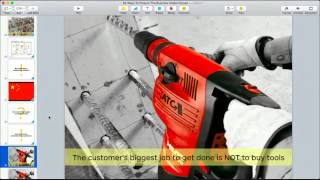
Hi there, this is Benson Garner from Strategizer. We're going to go ahead and get started with the broadcast. Just a couple of minutes, just a quick sound check. If you can hear me just right in the question box, I can hear you. Alright, it sounds like you guys can all hear me. We're going to go ahead and get started then with the webinar here. Right on time. I'm going to go ahead and click into presentation mode on my keynote here. So just bear with me for a second. Okay, I want to welcome everybody today to our webinar ways to present the Business Model Canvas. I'm Benson Garner. I'm your presenter. If you'd like to join us on Twitter, you can find us with RateGizer and you can use the hashtag to tweet about the webinar using StrategizerWebinar. And again, like I said, I'm Benson Garner. I'm a business design consultant and I'm a member of the Strategizer content team. I help companies all over the world of every shape and size to improve their business models and their value propositions. And one of the things that I've done on previous webinars is I've given people the opportunity to if they've got questions regarding content from the webinar or just questions in general about their business models or value propositions, I've given them the opportunity to schedule a free call with me. Just go to that link there and that link is going to be available at the end of the call as well. So don't worry about quickly jotting it down. But again, like I said, I'm Benson Garner. You can also find me on Twitter, Ensign Garner and just about everywhere else on the Internet. And my goal for us today is to basically take you guys from being non presenters of the Business Model Canvas and the Value Proposition Canvas to hopefully expert presenters who can give killer presentations around your business models. Before I dive into the content though, just a couple of housekeeping items. We apologize for, for the frustrations that some of you had with the registration process. We were notified that some of the that there were some calendar issues. When people clicked on the calendar links, they were downloading what appeared to be my entire Business Model generation calendar. And so we apologize for that. We're using some new platforms and some new technologies. So you know, please just bear with us as we test out some of these things. And the reason why we're testing out some new technologies is because in the first two or three webinars we did. At the beginning of this year, we had so many people register for the webinar that we actually maxed out the capacity of GoToWebinar. And in this webinar, we had over 4,500 people register for the webinar. So obviously, we've got to be able to accommodate a much larger group of people all over the world than what we can do with GoToWebinar. So, as I said, we're testing out some new technologies, some new ways to register for the webinars, as well as to host and deliver the webinars. And that's because of you guys, our global audience. You're so engaged. You're a phenomenal audience, and we appreciate that. But please, like I said, just bear with us as we work through some of those technical challenges. And again, I apologize for anybody that struggled with the registration. So what we're going to go ahead and do here, actually, hold on. Appears that my slides are not showing. So hold on a second. All right, can we see the slides now? It. Okay, hopefully you guys should be able to both see my slides and hear me at the moment. Okay, so it sounds like when I go into presentation mode, you can no longer see the slides. So I'm gonna just have to do this from. From the. The edit mode. So I apologize for that. Okay, so again, if you, if you needed the, if you needed the Twitter information, here, we're at Strategizer, hashtag, Strategizer Webinar. There's my information there. You can hit me up on social media, Ensign Garner, and of course, you can schedule free by going to that link there. So one of the things that, like I said, I'm hoping to do with you guys today is to bring you guys from novice presenters of your business model canvas, your value proposition canvas, to becoming experts. Now, the things that we're going to share with you today are things that we have learned by working with clients all over the world, things that Alex Osterwalder has learned from workshops and from his clients. And this comes from a lot of years of working with people. And we've seen a lot of good stuff and we've seen a lot of really bad stuff. And so I'm just gonna go ahead and share with you right here at the very beginning some what. Some. What we call presentation killers. Now, forgive me, because, you know, I can't be in presentation mode. So my animations are not gonna work the way that I had designed them to work prior to the webinar. So you're just Gonna have to bear with me on these slides. But this guy here, Ivan, he's probably a lot like many of you on the webinar today, and actually a lot like I was when I first started working with the business model and value proposition canvas. Now, Ivan, like many of you, has, you know, he's been working on a business model design project for, you know, three months, six months, and he's ready to present it to, you know, his managers or to his board or, you know, what have you. Insert your situation here. And the first thing that he does, which is probably what many of you have mistakenly done and what I have mistakenly done in the past, is you start by throwing up the entire business model canvas all at once to your audience. When you do that, we have a term for that, we call that cognitive murder. What happens is that your brain cannot process, or rather your audience's brains cannot process, the information that's being displayed on screen all at once. And so you put them into a position where either they have to listen to you speak and not pay attention to what's going on on the screen, or what's more likely to happen, they're going to stop paying attention to you and what you're saying, and they're going to try to read everything that's in that canvas. So we call that cognitive murder. It's probably the number one presentation killer that we see with people working with the business model canvas. The next thing that you might see, there is too much granularity and detail. When you. Again, when you do that, you kind of. You take, you take away from the main story, the main purpose of the story that you're trying to, you know, that you're trying to deliver to people, and you get people confused and the story message kind of gets convoluted and it becomes less clear. The next thing that we see people do all the time is they try to put too many ideas into one canvas. So, you know, Ivan here, he might be talking about multiple different customer segments, multiple different, different offers, different channels, different revenue streams. And he's trying to throw all these different ideas into the same business model canvas. And again, it just kind of convolutes the story and makes the message unclear. Another thing that we often see is what we call this idea of orphan elements. So in this situation, he's got this customer segment that leads to a value proposition, but he has no revenue stream coming from that customer segment. And so how are you going to have a customer and a value proposition with no revenue stream, even if there is no revenue. Even if it is a free situation, you still want to notate that in the revenue stream box. Whether that's by simply saying free or $0 or something like that. But when you, when you do something like this, like I said, we call that orphan elements. That means you've got elements of your business model or your value proposition canvas that no connection to anything else in the canvas. Another thing we often see people do is they mix present and future state. So they want to talk about the business model today and the business model tomorrow, but they put it all into the same business model canvas without distinguishing between the two. I'm going to tell you in a few minutes how you avoid that and how you can, you can talk about both the present and the future state very effectively. And then the last thing is that Ivan here, he gives into the urge to blah, blah, blah. And what we mean by that is, you know, he'll get on a topic and he'll start going off on a tangent about that specific element of his business model and he might even, he might even allow his, his audience to start asking questions mid presentation about those individual elements. And they'll get off on a long, you know, 5, 10, 15 minute tangent about something that's not happening on the screen. It's not part of the presentation. And so you kind of derail the presentation. And so we want to avoid that urge to start blah, blah, blah ing without any visuals to tell the, to kind of sync with your message. So just as a review of these presentation killers that we often see with clients and people all over the world is that the first thing they do is they commit cognitive murder. They throw up the entire canvas on screen all at once. They put too much granularity, too much detail into their canvases. They put too many ideas into one business model canvas. The next thing that they do is they, they create orphan elements in their canvas, which, which means that there's an element of the story that's kind of out of place. They mix the present and the future states and they often give in to this urge to blah, blah, blah. So rather than killing your presentation by making some of those mistakes, what we want to do is we want to give a killer presentation. Now many of you have seen some of those presentation killers already. If you've been on our other webinars or if you've engaged in some of our other content before, and that's okay, I don't want to spend too much time on it. But at the same time, I want everybody to be aware of, and it doesn't hurt to repeat some of these things. But if you haven't heard those things before, those presentation killers before, you can actually go to our second webinar. It's available on our blog. If you just search webinars, it's webinar number two where we talked about how to design a business Model Canvas. We talked about some of those same elements, and you can find a review of them there as well. So if we move on here, in order to give a killer presentation, we've got to do a couple of things. First and foremost, we have to recognize that the Business Model Canvas is not. It's not a formal business document, it's a design document. It's meant to help us to design and think through our business models. And it's really up to you whether or not you even want to use it in your presentation. Okay. And many of you are saying, well, why on earth would I not use the Business Model Canvas in my presentation? Well, there's a few reasons why you wouldn't do it, but probably the most important reason is that if your audience is not familiar with the tool, when you use the Business Model Canvas, you've already put them at a disadvantage. And put yourself at a disadvantage. When you try to communicate the message of your business model to your audience, you're going to be using a tool they're not familiar with. They're not going to understand what those nine building blocks mean, and so on and so on. So what you want to do is either if your audience is familiar with the business model canvas, by all means use it in your presentation. But if your audience is not familiar with the Business Model Canvas and you have some time in your presentation, you might want to take 5 minutes, 10 minutes, and do a quick walkthrough of the tool to give your audience a general understanding of what those nine building blocks mean so that as you go to present your business model, they can understand it within the context of the tool. If you don't have the time to go through a quick presentation of the tool, I would just simply recommend that you not use the Business Model Canvas in your presentation. Hopefully, you know, hopefully that makes. Hopefully that makes sense. If you choose not to use the Business Model Canvas in your presentation, of course you're going to use it prior to your presentation to get prepared to think through all of the elements of the story that you need to tell. But. But then you're going to go through and tell that story in a different way through other visuals, multimedia, maybe sketches. You Know something else. The other problem that we often see with people prior to presenting their business model canvas is that many of your managers or the people participating in the presentation are going to want to see your pitch deck ahead of time. And one of the things you have to realize is that your pitch deck is also not a formal business document. It's a presentation tool. So if you're going to send your pitch deck to your soon to be audience, I always recommend that you do that by adding in the presenter notes. Don't bullet point every presenter, every piece of your presentation onto the slides and expect that to be your formal business document. If you do want to do it that way, create a separate pitch deck. Create a separate pitch deck with your bullet pointed information and send that out. But don't just send your slides, either your visual slides or just a set of bullet pointed slides alone. You have to remember that your PowerPoint presentation or your keynote presentation is a presentation tool and it's not a formal business document. Create a separate Word document. Create a totally separate presentation deck that's got the bullet points or that has the bullet points that you want to make put into the presenter notes and they can see those aligned with the, the graphic and the visual that you're going to show. Okay, so as Ivan goes to give a killer presentation, one of the things that he wants to remember if he's going to use the business model canvas. You can't see all of my animations obviously, but what you would see here is that I'm going to start layering on these sticky notes one at a time onto the canvas as I walk through my story. And you can see those arrows. Those arrows would actually kind of annotate different elements of the business model and how different components of this business model connect to one another and reinforce each other. So again, you're going to want to layer on your sticky notes one at a time, even use arrows to kind of give some direction to what's happening in the business model and show some flow. Show how each building blocks, each building block connects to the other building blocks. The next thing that you'll notice here is in this specific canvas, I've color coded based on the customer segments here. So you're going to want to use color coding in order to make it very clear which elements of the business model connect to different elements. So in this case it was a customer segment and the various components of the business model that are relevant to that customer segment. You want to mix visuals with your words. One of the things I'm not going to get into all the science behind this, but just rest assured that there is some science that tells us that combining a visual, a small visual, with words together is much more effective. It's going to get your audience much more engaged in what's going on. They'll actually be able to remember and connect with the story that you're telling. And of course, you're going to keep those simple, those words simple, those graphics, very simple. So that what happens is the audience member is not trying to read a bunch of text. Rather, he sees the image and he hears your voice and he connects those two things in his head and he continues to listen and follow along with the story that you're trying to tell. And of course, as you do this, remember the prior thing, right? We want to layer in those visuals with words one at a time as we're telling the story, so that there's some syncing between what you're saying and what's actually happening on screen. So your final. Your final canvas might look something like that with a bunch of small graphics along with some very quick small descriptors. The next thing to remember is to be concise. And I think that goes along with that idea of blah, blah, blah. You really want to be concise with the message that you're trying to convey, with the element of the story that you're trying to tell. Don't get mixed up in that granularity and that detail. Another thing that you want to be clear on is determining the difference between which of these elements of your business model are facts versus those are just assumptions. You want your audience to be able to very clearly see what do we know today versus what are we going to need to find out to make sure that this business model is actually correct? Okay, the next thing that you want to. That you want to make sure that you do is add interest to your presentation through relevant multimedia. So this could be videos, this could be images, photos, graphics, charts, numbers, graphs, things like that. But make your presentation interesting, make your story more compelling. By adding in interesting and relevant multimedia. Then the next thing that you're going to want to do here is I keep mentioning this idea of telling a story. Now, some of you may or may not recognize my graphic here, and he would have animatedly walked across the screen had my slides worked properly. But, but you want to create some suspense in your presentation. You want to follow good plot structure. Every story needs to have a beginning, a middle, an end. You have to have kind of that rising action, that climax, that falling action. You need to follow good plot structure and create some suspense for people, just like Alfred Hitchcock would do with some of his films. So make sure you're following good plot structure. You're creating some suspense in the story. That's going to help to add a lot of interest into your presentation and keep everybody engaged and wanting to follow, follow along with you all the way to the end of your presentation. Okay, so last, you know, just to kind of recap here, if you want to give a killer presentation, you need to make sure that you're using visuals and words together. You want to make sure that you're color coding things. You want to make sure that you're layering everything into your story one at a time. Make sure you're not getting too granular, you're not getting too detailed. You're making sure that your audience understands what today is a fact versus what is just an opinion or assumption that needs to be proven or tested. And you want to add some interest through relevant multimedia, videos, pictures, charts and graphs. And you want to follow good plot structure and create some suspense within your story. And if you do that, you're going to be able to give a killer presentation. Everybody's going to love it. And you know, you're going to get obviously a thumbs up. You're going to have a much better, much better time convincing your managers, your board, your investors. You're going to get the financing that you need. You're going to get the, you know, the human resources that you need, whatever it is that you need to be able to execute on this business model or this value proposition that you've designed. Okay, so now what I want to do is I want to take about 10 minutes here and I want to walk you through an example of how to tell a very clear and compelling story around your business models and value propositions. I'm going to do that through a company called Hilti, which some of you may or may not know of Hilti, but hopefully you'll get a pretty good idea of what their business model and their value proposition is as I go through this example. And again, just as a reminder, please bear with me. This would have been a much presentation had the slides actually been able to be animated the way that I had intended them to be. And the, you know, those animations actually would have synced with the things that I'm telling you at the moment. So just please keep that in mind. And unfortunately, this isn't as effective of an online presentation as I would have hoped. So if you're familiar With Hilti. Hilti is a tool manufacturing company. Hilti manufactures and sells light machine tools for builders. So, you know, drills, saws, things like that. And again, remember, this would have been an animated story of the business model. And so I'll try to walk you through this and maybe you can see my mouse on screen and hopefully that'll help. If not, I apologize. But again, like I said, Hilti is selling high end machine tools and they're selling that to builders, people that work on construction sites. And the way that they reach these builders is they work through a direct sales force and they also sell through retail locations. Now, the relationship with these customers is very direct. It's one to one, typically. One to one, typically, you know, kind of a close relationship between that salesperson and the purchasing builder. And the revenue, the revenue from these high end machine tools is essentially a transactional revenue every single time they sell a tool or a set of tools or a whole bundle of tools. Now, of course, to be able to provide this, you know, these tools to builders, they've got to have their own factories as key resources. And the brand name Hilti is incredibly important to them. It actually stands for, you know, a good, high quality tool. And of course, in terms of key activities, they've got to manufacture tools, they've got to engage in the selling process directly to those customers. And in terms of that manufacturing, they're going to work with critical manufacturing partners to help them do that. And so those elements, manufacturing and branding, those drive the majority of Hilti's cost structure. At least they did at the time. Now, there was a huge problem with this business model as it went, you know, as it kind of went on through time. And that problem was that eventually they had to start competing with low cost labor in Asian countries. You know, they could, they could manufacture a set of tools at a significant, at a significantly lower price than Hilti. And, you know, maybe not as good of quality, but at least close enough, you know, so it was a really big struggle for Hilti to be able to compete with these other light manufacturing tool companies that were getting all of their labor at a very low cost in Asian countries. The question that they had was, how are we going to regain competitiveness? They learned how they could do that by better understanding who their customers were. When they looked at the customer, they recognized that, you know, a builder, his biggest job is not to buy tools. Okay, you might think, you know, if you're a tool company, you think the biggest job of your customer might be to buy tools. But, but in reality, it's not. The biggest job of a builder is that they've got to manage, maintain, replace those tools. So think about it. They need the right tool at the right place at the right time. And Hilti identified through this process, actually a new customer segment. So it actually the person who cares most about right tool, right place, right time isn't necessarily, of course it is the construction worker, the builder himself. But, but actually more important than that is the boss, the CEO of the construction company. His jobs are to find and execute contracts. He's got to respect deadlines and he needs to plan and schedule a fleet. So this is super important in the world of construction. If you don't respect deadlines, for example, there are fines, there are actually fees that you incur as a result of not meeting those deadlines. Some of the pains that the CEO or this construction crew boss is experiencing is when he needs to have the right tool, right place, right time. He's got a huge upfront investment in tools. Sometimes a tool grows legs and it walks off of a job site. Oftentimes tools break down. They've got delays in construction. I mentioned penalty costs for not meeting deadlines. And there's all the stress related to meeting those deadlines and making sure all of his employees are safe. But what that construction CEO wants is to have profitable contracts. He wants the safety of his workers. He's looking for predictable costs when it comes to providing, you know, to having the right tools for his crew. He wants to have access to the newest types of tools. He's hoping that they've got 100% uptime. So what type of a value proposition could Hilti design in order to, you know, to meet those needs of that construction CEO? I'm going to try to show a video here and hopefully you'll let me know pretty quick whether or not it's working out. But I'm going to try to show a video here to explain from Hilti's perspective what the value proposition was that they designed to meet those needs of that construction company. CEO.
Have you ever wanted to just focus on your work and forget about administrative issues and managing your tool fleet? If so, Tool Fleet Management Hilti's long term Tool Usage Service is for you. We take care of your tools while you focus on the job. Hilti helps assure that your team will have the best tools, each unique and labeled using RFID and an inventory number so you can maintain control of your tool fleet. If something breaks down, no problem. Hilti has another way to make your work easier we repair or replace your tools quickly at no additional cost. Hilti will also update your tools on a regular basis, always with the latest generation models. All this on a single monthly invoice. This will seem incredible to you, but the benefits of the more you choose Hilti, the more Hilti services benefit you. Like Tools on Demand. Hilti's new service reserved for customers with at least 10 tools. Now you can put high performing Hilti tools to work when and where you need them. We call it Tools on Demand. You'll call it Smarter business. Tools on Demand is ideal for handling planned peak periods on the job site since it meets your demanding tool needs all the time. Tool Fleet Management and Tools on Demand from Hilti. Two services with a single objective to maximize your productivity to help you save time, resulting in lower management costs. Now your tool crib can evolve with your business.
Okay, so the, the value proposition that Hilti has designed to meet the needs of these construction CEOs is this idea of Tools on Demand and this online fleet management system. And essentially what, what they're providing here is a pain reliever using a subscription model and no cost for repair and replacement of tools that's going to alleviate the pains for this construction CEO of the upfront investment in a whole, you know, a whole, you know, truckload or trailer load of tools and this issue of theft and broken tools. Right. There's no cost to the, to the, to the construction CEO or to the builders for repairing and replacing lost or damaged tools in terms of gain creators. What's going to happen here is that this idea of the online fleet management system and Tools on Demand gives the construction company access to a modern, modern fleet immediately immediate tool replacement and sound cost management to allow them to predict the cost that they're going to incur for every single project. Now if you're familiar with both of our tools, the business model canvas and the value proposition canvas, and as you saw just there, you notice that we kind of took a zoomed in view to the value proposition building block and the customer segment building block to better describe those two elements. So what I'm going to do now is show you how by zooming in and better understanding that construction CEO, how that's actually going to come back and affect Hilti's business model. So Hilti, who started out as a product centric company with this original business model, is now a service centric company. And you can see here in my presentation, I've kind of blurred out the original business model and I'm bringing to the forefront Those elements that are only, you know, that are, that are specific to this idea of tools on demand and fleet management. So now, rather than focusing on the original customer, the builder Hilti is now going to be focusing on the construction company CEO. They are providing online fleet management and tools on demand. They're selling that still through the Salesforce, but now also they have an online web component that allows this CEO both to order and manage the fleet that's going to be bringing the tools on site to the construction company. And we're still looking at this kind of one to one very dedicated relationship. But the difference here is that we've now moved in terms of revenue streams. We've now moved from a transactional business to a recurring revenue business where the construction CEO actually engages with Hilti via a long term contract and subscription agreement to get access to the fleet management tools on demand. Now if we jump over to the back end or the infrastructure side of this business model, we're now going to need something new. We still need to manufacture tools, but now we actually have to create a fleet management service. We actually have to purchase and invest in a fleet, fleet management. The other thing is now we also have to have inventory. We have to have a huge inventory of tools to be able to provide tools on demand to construction companies at any type of job or construction site that they might be working on. And so again, like I said, we've now turned this products company into a service center centric company who, you know, now a big element of their cost structure is geared around providing this service to construction company CEOs. So hopefully by having gone through that presentation, you guys got a decent idea of how we might use the business model canvas and the Value proposition canvas. A presentation how we might use some of those, you know, killer presentation elements that will help you to present a much better business model story to whoever your audience might be, whether that's investors, board members, your man, you know, the management team or what have you. So what I want to do now is present to you an offer. We did this last time, the last webinar that we did, and people loved it, they appreciated, was a very popular offer. So we wanted to bring that back. Before I get there though, if you need additional training on anything, of course, go to our blog, read up there. You can get our books and other things like that. But if you need additional training, what I'll ask you to do is just go to strategizer.com training and we have a forum called the Business Model Hub where you can Go online and engage with business model Value proposition design community. Ask your questions. There's a lot of experts that kind of frequently that forum and that site and you can get your questions answered there. You can attend a public masterclass if you'd like. We have a couple, a couple coming up here soon. And if you need in house training, we actually have a group of certified trainers who you can access through our site and get in touch with and they can actually come in house to your company and train you know, you and a group of your employees or your staff or your executive team in business model and value proposition design. So now for the exclusive offer just for people who have joined us for the webinar. What we want to provide for you today is access to both our online course and our Strategizer web application. So the exclusive offer for just like I said, just people who've joined us for the webinar is that if you purchase our online course called Business Models that Work and Value Propositions that Sell before Sunday night at midnight, then we are going to give you access to a Strategizer project for free on us. That's a one year subscription to the Strategizer web application that's got a $300 value. Again, that offer is good until Sunday night at midnight. So the way that you're going to go about redeeming that offer is you're going to go to also our training page, actually the same training page that I mentioned before. You're going to click on. Excuse me, you're going to click on the online course and you're going to go ahead and purchase that. When you get your receipt, simply send your receipt directly to me, BensonRategizer.com and I will be send. You will get on Monday of next week a link or actually an email that will allow you to redeem that free project. Okay, so again all you've got to do is go to that training page, strategizer.com training purchase the online course. Send, send your receipt directly to me, BensonRategizer.com and you're going to. And then on Monday I'm going to send you out access to a free Strategizer project. Okay? With that online course, what you're going to get is 100 bite sized learning pieces. There's 21 lessons, six crucial topics to business model innovation and value proposition design, 62 high quality videos. It's about six and a half hours worth of video content along with additional readings, exercises, tools that you can download that will help you in your process of designing better business models and value proposition propositions, there's even elements in that course about presenting. If you're not, if you're not certain yet whether or not this course is good for you, you can take the first lesson for free. So you can go through the first lesson of this online course for free and determine whether or not you actually want to purchase the course. And again, like I said, you've got until Sunday night at midnight to decide whether or not you want to do that. If you purchase before Sunday night at midnight, we're going to give you access to the strategy web app for free for a year. So that offer is designed specifically for individuals that want to go through additional training with us. If you work in a bigger company, maybe you've got a team of people that you want to train. We have an additional offer for you. You're going to need to get in touch with the sales team at Strategizer. Their email is right there, SalesStrategizer.com and that offer is essentially, it's the online course facilitated with one of our trainers. So you're going to get access to a trainer who will actually work with you and your team of up to 10 people through the online course. So they'll be there to guide you, to kind of hold your hand, to answer your questions and to tailor the content in the course directly to you and your team within your company. Offers good for a team of up to 10 people. If you've got a team bigger than that that you're looking to train, you can also contact sales at Strategizer and they can give you additional options and additional information of how you might go about doing that. But we wanted to make sure that we gave this additional, this additional offer to teams, you know, to teams that are a little bit bigger. So with that, I want to go ahead and answer some, answer some questions that have come through. As we've been on the call, one of the questions that I just got is, is the course available in different languages? The answer is yes, the course, and I can't remember all of the languages, but I know that the course is available in English, it's available in French, I believe it's available in Dutch, and I want to say Italian, but, but don't quote me on that, but I believe it's available in Italian. So I know. So that that online course is available in four different languages at the moment. The next question that we've got here, give me just a second. So the next question that we've got here. Sorry, trying to pull this up. Okay, can you give an example of good plot structure? So. I wish I knew how to better tell you how to design a good plot structure. You know, I learned this when I was in, you know, junior junior high school or middle school. How to create good plot structure. A good story plot always has a beginning, a middle, an end. It has rising action. It has a climax or a, you know, that. That most important point of the story where everything kind of comes together at, you know, in some type of a big event. And then there's some type of a falling action or what they call exposition that kind of closes it out. Just think about your favorite movie or your favorite TV show and think about how. How the. How the writer has actually taken you through that story in a very compelling way. You notice how they introduce the characters, how they introduce kind of some context around what's going on in the story. They bring you through that rising action and keep creating the suspense throughout. And then usually somewhere near the end, there's some type of big, you know, a big climactic center of the story. And then they kind of close out the story with that falling action, and they kind of tie up loose ends and things like that. So one of the things that I've actually done with teams with clients is we'll actually take. If you just Google plot line or something like that plot structure, you'll see a big plot curve. What we'll do is we'll actually take sticky notes and we'll write down individual elements of the story and we'll start positioning them on our story curve so that we can make sure that we tell the story in the order, you know, with the elements in the order that we want them be in to actually send the, you know, send. Send both a clear message and also keep the audience engaged throughout the whole. The whole thing. But again, you know, I don't. I don't know that I have a specific example of a good plot structure. Just think of your favorite movie or favorite TV show and think about how well the writer pulls you through that story the entire time. The next question, is the canvas a design thinking tool or is it a design communication tool? I'm not sure I completely understand. Understand what you're asking there. It is definitely a design thinking tool. You'll notice that the Strategizer team has been heavily, heavily influenced by design thinking and that whole methodology. Definitely the canvas, both the business model canvas, the value proposition canvas, are design thinking tools. They can also be communication tools. If you choose to pull them into your presentation. Of course. The third question, how to jump from a business model canvas to a business plan one page pitch and actionable tasks. So that's an interesting question. How can you go from the business model canvas to a full out business plan? If you go to the book Business Model Generation in the last chapter, there's actually an entire spread. There's two pages that shows you how to take elements of your business model canvas and put those into a traditional business plan format. Now I couldn't, you know, I can't guarantee you that you could get your business plan on one page. Maybe not the entire business plan, but maybe definitely an executive summary. And so I would say that the elements of the business model canvas, you know, the elements that are going into those nine building blocks in the book Business Model Generation, you can go to that chapter and it'll show you exactly where those elements fit into kind of a standard business plan or executive summary type template. How to the next. How does Hilti establish direct one to one through store sales? So I don't know that. I don't know through their retail stores that they're actually creating a direct one to one relationship with these customers. I would say that that's by and large more related to that sales force that that salesman that's actually going, going out and engaging with builders and with construction company CEOs. But good, good question. The next question, would you recommend to use the business model canvas to explain the as is and then move to the to be and next? Absolutely. So the way, the way that you could do that, and again remember this is, this is based on whether or not your audience has any familiarity with the business model canvas or the value proposition canvas yet. So if they don't, then no, I wouldn't. But if they do have some understanding of what those tools are, then the way that I would do that. There are two different ways you could do it. The first way you could simply color code based on, you know, one color for the the current state or the as is business model and then use a different color for the to be or the, you know, the future state or the next business model. The other way that you could do that is simply by using two different business model canvases. So use one business model canvas for the current state, one business model canvas for the future state. That's a very effective way to show the difference between what you need today versus what you need tomorrow. Actually, there might be even a third way to do this. And Eve Preneur Alex Osterwalder's co author has found a very effective way to show two different business models. And what he does is he'll actually take architectural tracing paper and he will layer tracing paper over the top of one business model canvas and then show the second business model canvas layered onto the first one over the top of that tracing paper. You notice in that Hilti example that I gave, I kind of blurred out first canvas and showed you what was needed for the second. That would be kind of the same idea of tracing paper if you're doing this in a physical environment. Let's see. The next question. So we should create a digital version of our physical canvas. That's really up to you. The web application allows you to create digital versions and we've done that. We do that with some of our clients. The reason why the web application would be beneficial is to have kind of a repository of all of your physical canvases that you've created. It's also good if you have a distributed team. You've got people working in various locations that all need to join into the same business model canvas. That's when that web application is very helpful, keeping a repository or kind of a history of your canvases as well as to bring in a distributed team. But you know, there are different reasons why you would want to do physical canvases versus digital canvases. You know, different tools for different settings. You just kind of got to know what, what context that you're in and why you want to use a specific tool. Next question. Will you please review the details of your online course offer for both individuals and a company? Yeah, absolutely. Let me just go back to that real quick. The online course. So what you're going to get in the online course, this is everybody, what you're getting is 100 bite sized learning is 21 lessons, six crucial topics to business model innovation and value proposition design. It's broken out into 62 videos, a ton of downloadable exercises, PDFs, other additional text that you can read, images, graphics that you can download, posters you can download. But 62 videos, six and a half hours of high quality quality video content that's available immediately. You've got instant access to that and that course never expires. So the details there, what you're purchasing, you're going to go to that training page, strategizer.com training you're going to purchase the online course before Sunday at midnight and then on Monday morning you're going to get in your inbox an email from me, an email from me or Rather from the Strategizer team, basically giving you instructions of how to activate your free one year subscription to the web application. The enterprise offer is basically that same online course, but with a facilitator. So we're going to basically pair up your team of up to 10 people with one of our facilitators who's going to hold your hands, you and your team through that online course. You're going to have weekly phone calls to answer questions to take you through different exercises, email support and a couple of other things to redeem that. You're going to want to get in contact with the sales team, SalesStrategizer.com and they can give you additional details about that offer. Now that enterprise offer is kind of a, that's kind of a new beta offer for us. We've done it in the past with some companies and it's gone really well. So we won't make for a limited time to people who joined the webinar. And so that's what that is. The next question is to present the business model to a customer. And I'm actually just going to say to anybody, how much time should they be willing to give you? I guess the answer to that really depends. I mean it depends on, you know, it depends on the complexity of the model. I would say it also depends on whether or not you're going to go into the value proposition canvas like I did. It depends on whether or not you're going to open it up for questions and answers. But you should be able to, you know, I've seen people present their business models in as short as, you know, one and a half to two minutes. Nabila, who's a member of our content team, has created some case studies, some case examples of companies business models and she's, you know, in a video can, can deliver a presentation about that business model. One, two to two and a half minutes. So I've seen it done as short as that. Even better, if you've got maybe 10, 15 minutes to fully explain the entire business model, maybe bring in additional elements, charts, graphs, additional multimedia content if you need to, like I did with the Hilti case. But I would say on average probably 10 to 15 minutes is a good, you know, a good rule of thumb when you're, when you're looking to present your business models and value proposition canvases and then give time at the end for question and answer. So if you present the canvas for, you know, 10, 15 minutes, give another 10 or so minutes to answer additional questions from your audience. To get some clarification, does Strategizer offer certifications for any of their training courses? If no, which according to you are some notable training certifications in the industry for mastering the business model canvas and value proposition opposition design will get. If you take the online course, you will get a certificate of completion. You know, you'll get, you'll get a certificate that you've gone through the course, that you've gone through the training. There are, there are not any training, training or certification partners that we have that we know of within the industry for mastering this stuff. The best way that I can think of to do this is like I said, take the online course, attend a public masterclass, get one of our in house trainers to come in house and train you and your team. But there really is not, there really is not a certification process per se that would say certify you to then go turn around and teach this to other people. But there is, you do get a certificate of completion. When you go through the online course, you get a certificate for having attended one of our public master classes. And that's, and that's what we offer. People want to know, can you do calculations with the this. So in the web application actually we have some built in financial functions. So if you want to do additional, if you want to do additional calculations or look through the, look at the financials of your business model, if you want to look at the, you know, the revenue coming in versus the cost going out, you can do that using the web application. And we actually have some other presentations that you'll see in the online course that you'll see in our public master classes and things like that where we very effectively show people how to add the numbers around your business model canvas directly into the canvas and tell that story in a very compelling way. Those are all of the questions that I have for now. And we're actually a minute past time, so I just want to recap. Feel free to leave if you need to, but I just want to recap for you what we went through today. We talked about some presentation killers. This idea of cognitive murder, this concept of adding too much detail and granularity, having too many ideas in one canvas, avoiding what we call orphan elements. We want to avoid mixing present state and future state into the same canvas without distinguishing between the two via say color coding or just separating it out into another canvas. And we want to avoid this urge to blah, blah, blah. Now if you want to give a killer presentation, you want to make sure that you layer on your sticky notes one at a time. You want to sync what's going on on the canvas and in your presentation with what you're actually saying. You want to make sure that you use effective color coding. You want to use small descriptive words with an image, which is going to be much better than just words or just an image. This is the best way to go. You want to avoid, again, like I said, too much granularity, too much detail. You want to make sure that you distinguish between what is an assumption and what is a fact. You want to add relevant multimedia pictures, videos, graphs, charts. And you want to make sure that you follow good plot structure and create some interesting, compelling suspense within the story of your business model and your value proposition. Thank you so much for joining us today again, I'm Benson Garner. I was your webinar host and presenter for today. You can find me online ensongarner on just about any social media site. If you Google my name, Benson Garner, you'll find me. You'll want to email your receipts for your online course offer directly to me, BenSolidTrategizer.com and if you have additional questions, if you would like to schedule a free phone call with me, just go to this link and you can schedule that call with me. We're going to go ahead and end the webinar now. We're going to send out a recording and the slides so that you have access to all of this information. So just keep an eye out in your inbox for that recording and for those slides. And thanks again for joining us. We hope to see you next time. Have a good one.
More from Zaur






An Immersive Workshop to Calculate the ROI of AI Strategy - AUTONOMOUS session

Predict, Optimize, Decide: Enterprise Decision Making For The Simulation Era - AUTONOMOUS summit


AI Insiders podcast ep. 9 - Not so cookie-cutter: Consumer Choices in the Age of AI

