The Challenge Most CEOs Fail To Understand
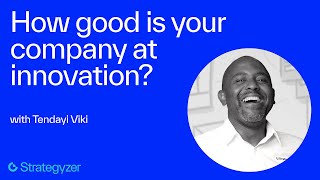
Senday Vicky argues that large organizations waste money on isolated innovation projects instead of building repeatable systems. Companies need a balanced portfolio of efficiency, sustaining, and transformational innovations managed separately, funded through small bets and stage gates, not by picking winners upfront. The real work is creating an ecosystem of structures, programs, and culture that lets innovation happen after consultants leave.
Questions this video answers
Senday Vicky, Associate Partner at Strategizer.
Discovery Sprint, Validation Sprint, and Acceleration Sprint; capability-building (internal coaches, assessment tools, pitch decks).
September 28, 2022.
Chapters
Every CEO that I spoke to, I would be saying to them, you need to do more innovation. And then they would always come up with an example where they go, well, what do you mean we need to do more innovation? Last year we had that app that we launched and everybody was like, yeah, we launched the app. That app was really great. But actually, the challenge that I was presenting to them is not the real challenge. The real challenge is beyond that one app that should launch every now and again. Can you actually do repeatable innovation? Can you consistently create a portfolio of new innovation projects that you're testing, iterating, and sometimes taking some of those ideas to scale? Hi, my name is Senday Vicky. I'm associate partner with Strategizer where I work with large organizations, helping them create their innovation ecosystems. So we've just written from Innovation Theater, the Growth Engine, which is a piece of work we're very proud of because we like to help large organizations move from doing just one off innovation projects, but actually create an ecosystem that allows them to do innovation in a repeatable way. Because if you do just one off projects, you might succeed or fail, but if you're able to do it over and over, then you're at least able to test ideas and see which ones are much more likely to succeed. What's interesting about innovation is that there's a lot of stuff out there in the world, right? So when leadership sees a lot of the kinds of programs that companies run, you can go into a company, find an accelerator program there with startups in it, you can do idea competitions, you can do hackathons, nobody's really thinking about how all of those things combine together to create value. And so that's part of the challenge that large organizations are facing. And so in from Innovation Theater to Growth Engine, what we're trying to do is help organizations figure out how to knit all of these pieces together so they can create a nice tapestry of innovation programs, portfolio and culture, so they can create a repeatable process for driving innovation within their organization. So there's three insights that we kind of land on Insight. Number one is you need a really great innovation portfolio, and you need to manage your innovation portfolio in a way that's separate from how you manage your core products and services inside your organization. You need to make sure that your innovation portfolio is balanced so that you're not just working on improving your core business with efficiency innovation, but maybe you engage in sustaining innovation where you're taking some of your existing products to new markets, maybe you're creating new products for your current customers. But you also need transformational innovations where you're investing in totally new value proposition and new business models that your organization has never worked on before. If you don't have a balanced portfolio, what we can say is you're probably efficiently innovating your way towards the death of your company, and we don't want you to do that. We want you to be improving your core business for sure, because there's a job you have to do. We want you to be thinking about how you navigate the company into the future. Another important principle for having a really great innovation portfolio is how you manage that portfolio. The best way to manage an innovation portfolio is to understand that as leaders, we can't pick the winning ideas on day one. We have to be making multiple small bets and then only increase investment in those ideas that are showing traction. I've worked with leaders sometimes that tell their teams, bring me 10x ideas, I want a 10x idea. And I often say to them, there's no way you'd even know what a 10x idea looks like if you saw it, because good ideas and bad ideas are indistinguishable from each other on day one. And so the way we manage our innovation portfolio has to be distinct from the way we manage our core products and services, where we can predict the customer, the revenue. With the innovation portfolio, we're really experimenting and trying to find value. So we make multiple small bets and increase investment only on those ideas that are showing traction. So here's an interesting principle. A lot of what companies end up producing and putting out into the world is based on some organizational structure, principles, practices, and processes. Those are the things that allow the people to come to work every day and create value. But when it comes to innovation, we don't think we need the same things. We just think that we can use what's already there. And that's the mistake that large organizations make. Like to drive repeatable innovation, you need to create an ecosystem for innovation. And so an innovation ecosystem is the combination of the structures, processes, tools, practices that you have inside your organization that enable innovation to happen in a repeatable way. You also need to think about how you organize the activity. And the best way to organize the activity is to think about the innovation programs you're running. So some companies will have accelerators where they bring in external startups. Some companies will have incubators where they incubate internal teams. Some companies might even do like corporate venture capital activities where they invest and take stakes in external startups. The goal Is to make sure that all these innovation programs that we're working on are actually creating value. And there's really two jobs that you can do with innovation programs. One is to actually create net new revenue, net new profits, improve the company from a bottom line perspective. But there's another group of innovation programs that are focused on driving culture change. And so when we design our innovation programs, we need to really think, are we doing this to drive culture change or are we doing this to create net new revenue and value for our organization? What we don't want to do is to do an innovation program because we saw another company do it. That's innovation theater. So we just need to really focus on making sure our innovation programs create value. The final pillar of a really great innovation ecosystem is the innovation culture. And with innovation culture, what really, really matters is the enablers and blockers that are in the way of innovation inside large organizations. The things that are often visible inside companies are people's behaviors and also the outcomes that those behaviors create. What's often invisible are the things that drive those behaviors. And so what we really want is to sort of put the right nutrients in the soil of your organization so that you start to create the behaviors you want. Really great leadership support where the CEO spends a lot of time, or at least a lot of leadership, spends a lot of time on innovation and supporting innovation. Really great organizational design with great incentives to motivate people to engage in innovation. Also giving innovation power within the organization and then a really great innovation practice where people have the right tools and processes for working on their projects. So at Strategizer, we help organizations in two ways. The first way we help companies is by helping you create actual value. So we can help you work on actual innovation projects, helps you work on products, services, value propositions, business models through our Discovery Sprint Validation Sprint and Acceleration Sprint. And so with those sort of services that we provide, we, we work with your teams to test their ideas, iterate on those ideas, and see if you can find something valuable that you could actually take to scale. The other way that Strategizer can help your organization create value is to really think about how you can do innovation in a repeatable way after the consultants leave. We're not the kind of company that likes to hang around and just keep giving you advice. We like to help you build your own capabilities so you can actually do innovation yourself after we've left, after our coaches have left. So we help you build the ecosystem, make sure you have the right structures and processes, the right investment Methodologies, the right assessment tools, the right pitch decks. And also we help you build your own group of coaches inside your organization that will then drive and support teams once we've left your business. By the way, I think that really matters. The idea that large organizations should be creating their own capabilities to drive innovation themselves after the consultants are gone really, really matters. I'm a strong believer in the fact that innovation is supposed to become a core function of a business. Kind of like how HR is a function, or marketing is a function, or finance is a function. It's not a nice to do a thing you do on the side. I think companies should really start professionalizing innovation, creating a career path for innovators and really driving that practice. Because in the century and the next century, the way things are going, there's going to be something that's really important for creating continuous value going forward. It's the missing function, right? Innovation is definitely the missing function. And I've heard people online say stuff like, if you have an innovation function inside your company, you're not really innovating, because everybody should be innovating. But we don't say stuff like that about finance or hr. We don't say, like, if you have a finance function in your company, then you're not really doing finance. It just sounds ridiculous once you put it in that context. And if leaders are saying that innovation is the number one driver of growth, then of course it makes sense that every organization should have an innovation function. When I first started doing this work, right, the argument was whether or not companies needed to innovate at all. Like, I was involved in a lot of those conversations, but right now, those conversations don't happen anymore. There's a general acceptance that companies need to use innovation to drive growth. Now the challenge we're facing is this aspiration capability gap. We have the aspiration, but leaders are not satisfied with the capabilities they have inside their organizations to actually drive innovation. The question on deck now is how do you build those capabilities? I think it's really the CEO's job to drive that capability building because nobody else can make decisions around organizational design. Hiring people, putting people in the right places, deploying the right tools, all of that has to be happening at the highest level within the organization. So that's what I would leave you with, which is it's time to build innovation ecosystem. Every organization should have an innovation ecosystem that they use to drive innovation as a repeatable process inside the company. Sam.
More from Zaur






An Immersive Workshop to Calculate the ROI of AI Strategy - AUTONOMOUS session

Predict, Optimize, Decide: Enterprise Decision Making For The Simulation Era - AUTONOMOUS summit


AI Insiders podcast ep. 9 - Not so cookie-cutter: Consumer Choices in the Age of AI

