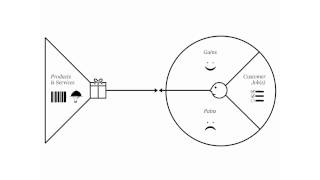
The Value Proposition Canvas helps you match what customers need with what you're building. It has two sides: the customer profile (their jobs, pains, gains) and your value map (products, pain relievers, gain creators). Use it to test problem-solution fit before chasing product-market fit.
Chapters
Lets look at the Value Proposition Canvas, a tool that will help you design, test, build and manage great customer value propositions. It's like a plugin to the Business Model Canvas. The tool is based on two elements of your business. The customer segment, who you intend to create value for and the value proposition which you believe will attract customers. With the Value Proposition Canvas you you can map out both in more granularity and show the fit between what you offer and what customers want. The Customer Segment Profile describes the characteristics of your customers in more detail. The profile is composed of the jobs your customers are trying to get done in their work and in their lives, the related pains, outlining the negative aspects they hate or would like to avoid and third, the gains, describing the positive outcomes and benefits which your customers would love to have. Now let's look at the profile in more detail. Jobs describe an important issue your customers are trying to solve in their work or in their lives. It could be the tasks they're trying to perform and complete, the problems they are trying to solve, or the needs they are trying to satisfy. Then jobs can have a functional, social or emotional intent. Some jobs will be crucial to the customers, others will be trivial. The second aspect here are the pains describing anything that annoys your customers before, during and after getting a job done. This could be undesired costs and situations, negative emotions or risks. Again, some customer pains will be severe, others light. And the third aspect of the profile are the gains describing the outcomes and benefits your customers require, expect, desire or would be surprised by. This includes things like functional utility, social gains, positive emotions and cost savings. Again, some outcomes and benefits will be more relevant to customers than others. These three elements of the profile describe the customer characteristics that you can observe in the market. Now let's look at the Value Proposition map describing the features of your value proposition which you are designing to address your customers most important jobs, pains and gains. The map is composed the products and services your value proposition is built around the pain relievers outlining how your products and services alleviate customer pains and third, the game creators describing the positive outcomes and benefits your products and services create for your customers. Now let's look at the map in more detail. First, the products and services Simply outline the bundle of products and services that you're offering customers to help them get a functional, social or emotional job done and to address their pains and gains. Now the second aspect here, the pain relievers make explicit how your products and services will alleviate specific customer pains before, while and after the customer is trying to get a job done. They show which of all the customer pains your value proposition is addressing by eliminating or reducing them. Next aspect Here are the gain creators. They make explicit how your products and services create customer gains. They show which of all the customer gains your value proposition is addressing by creating benefits and outcomes. You have achieved a so called problem solution fit. When the features of your value proposition map perfectly match the characteristics of your customer segment profile. When the market validates this match and your value proposition gets traction with real customers, you have achieved a so called product market fit. But don't forget, successful businesses have more than just a great value proposition. They have a great business model that makes a customer value proposition possible. Now, do you have what it takes to design great business models and value propositions with pain relievers and gain creators that match real customer jobs, pains and gains? Class dismissed.