Ideas to product—navigating the founding journey ft. Sharath Kuruganty (FULL EPISODE)

Sharath Kuruganti built product muscle through repeated side projects and Product Hunt launches, emphasizing audience-building and learning from failure as experiments. He shares mindset habits like journaling and low expectations, advocates building in public, and sees podcasting evolving into a mainstream media engine for founders.
Chapters
Hey everyone. Welcome to the Founder's Foyer with me, Aishwarya. This foyer is full of conversations. The space where creators, founders, and builders look for all the support and concepts to grow their ideas into products. How is it to have ideas constantly bustling inside your mind? The creative spirit is the one that's so effervescent. One day you wanna kickstart a new project and just by evening you wanna build something else. Navigating this path of building things for fun and also aligned with monetization and community goals is definitely a huge challenge. So how do you get going with this? Say hello to Sharath Kurugardi, a seasoned creative builder who loves exploring ideas, shipping things quickly, and iterating and learning from feedback. Sharath's experiences go so wide, from helping creators launch stuff at Product Hunt to growing communities on On Deck. interviewing underdogs on his podcast, and building out products like Shoutout, GuestLab.ai. He's just a complete creator product package that we can meet. Hey, Sharad, so good to have you on the show today.
Appreciate you. Appreciate you for that intro. Thank you. Thanks for the kind words.
Yeah. Oh, well, it's really fun hosting you, and I think I've followed your journey on Twitter for the longest time, and it's so good to finally have you on the show, and I can't wait to get started on all the discussions forward.
Absolutely. Yeah, let's do it.
Awesome. So, you know, Sharad, like I was telling, I've been seeing your journey into building side projects and helping out creator communities. You've been there, helped people launch stuff on various platforms like Product Hunt, IndieHackers, so many places. And in fact, we ourselves know each other through one of the Product Hunt launches that you helped me with years ago. So what was it like for you to enter this space and when did this all get started and How, how did the journey pan out for you?
Uh, if you, if you were asking about, uh, me being a founder, it's been like, you know, long due. And I, I came to the US with this, you know, big ambition or, you know, biggest, one of the biggest dreams of mine is to like build my own thing, build my own startup. So, and I heard, I learned the hard way, which is It's not going to happen as quickly as I, as I wanted to, but at the same time, you know, uh, it's something that I can pursue as a, you know, as a thing. Like it's not something that you, you enter and you become succeeded. Like, so, um, the whole point was to build muscle. You know, I, I, I was on the, you know, I was on Arvid's podcast and he asked a similar question and, you know, my answer is to like, How can I build muscle when it comes to building products, when it comes to building community, when it comes to doing some growth hacks, marketing, branding, you know, everything that, that a founder needs to learn about. So yeah, along the way I kind of like saw the power of building community because when I started launching products back in 2018, I saw people on Product Hunt, strangers who I never met, you know, saying kind words, helping me, guided me, uh, put me in places where I can learn and excel and all sorts of things. And I was like, okay, this is amazing. That's when I realized I have to build an audience for myself. And yeah, and it's, it's not a nice to have, it's a must have, you know, it's still a must have and not many people won't take it that seriously. Uh, And that's, that's how I kind of entered, entered the, uh, realm of building communities and mastermind sessions and hosting them, hosting events, uh, doing like basically bringing people together in one way or the other form. And
Right.
as a founder, I, I know the pain, I know, uh, the struggles, I know the highs, I know the lows. So I also wanted to be very intentional about helping others. So I think one of the biggest things you can do as a founder is to help other people. Right. Many times it's about doing things for yourself, like building product, building, you know, building a company, building like businesses and all that. But I think that's only like the 50% of the game. The other 50% is actually you paying it forward. You know, in whatever the bait is. So I realized that quickly enough. Of course, like, you know, I've kind of like inspired from people like Ryan Hoover, you know, who always helps other people, other founders. Uh, and yeah, that's where I kind of like, oh, you know what, let me actually help. Uh, because I launched so many things, I kind of know the semantics of how to, how to do go-to-market. Mm-hmm. And that's where I started like, okay, let me actually help other founders, other makers, other builders. to ship their products. So yeah, it's still an ongoing journey, I would say, but it's been like one of the joyful things I ever did.
Yeah, no, it's very much an ongoing journey and I've like seeing you do that every day. And thanks for sharing that story, Sharad. I really want to touch upon so many of those spot-on things that you mentioned. I think starting from The way you mentioned how it is to build a muscle reminds me so much of what it takes for solopreneurs or in general, like if you really want to set out your mind into shipping something, I think often we stumble upon this fact of, oh, like I have so many things to figure out and the mind immediately would go to, I have to collaborate with XYZ people and this has to come out and this means I have to coordinate so many things, but a lot of the initial days is going to be you building that muscle to learn something from basics and sort of wear multiple hats. So I think that's clearly very evident from your journey as well and what you've seen with other creators too. So I'm glad that you touched upon that aspect. And I can't agree more on the community part and the way the internet works because it's so much relatable to how I discovered my own potential and meeting so many people, learning from them. It kind of reminds me of conversations that I've had with guests in the past. And Aarthi, one of the guests, she mentioned how finding people on the internet and just shipping things out is your way to attract the builders who you will eventually befriend and you can be of good help for them. And this kind of builds a very organic way of knowing each other on the internet. So I think that's, that's, um, I, it's one of the best feelings to have, uh, as, as for a creator perspective. So yeah, glad that you, um, you know, experienced that.
Absolutely. It's, it's, I think it's the only way I would say there is no other way organically, at least organically, like, you know, there are many other ways to be in a particular network or in a particular community, but I feel the most human way to, uh, surround yourselves with smarter people than you, or people who are ambitious, or people who are like you, is to put yourself out. And it doesn't necessarily need to be building products. It can be anything that you're interested in. Like, you know, if you're a podcaster, start hosting. If you love podcasting, start hosting podcasting, not just consume a podcast. podcasts and feedback. So I think there is a, there is a big shift need that needs to happen from consumer to, you know, someone who takes action. So that's all the game, I think, you know, everybody should play that game in my opinion and play that in a long way.
Yeah, very true. It's like constantly trying to, like a switch mode between a consumer and a creator, right? In the sense that you consume as much as you create and vice versa. It both would bleed into each other. But you're right, like the balance and looking at the way this can help you surround yourself with the right set of people. I think, yeah, that's definitely the way forward. And so many good points. I really want to go deeper into each of those. And I really want to start with the muscle part that you said, right? Because it's kind of nice as a phrase, building a muscle. And as much as you build out, ideas and all of that, that would come later on. I feel like building a muscle also calls for a certain amount of a pull towards something, right? And for a lack of a better word, it's also like kind of the discipline that you have ended up with. So committing yourself and making no excuses is something that I've often seen you quote. So do you relate this with the muscle part, or like, why did you have to believe in that phrase? What do you think people can kind of learn from that?
I think it's kind of like a mindset that I've kind of developed over time. Again, it's not something that I was born with, right? So I often tell people about how I kind of developed most of the things I'm doing right now over time, and everybody can do it. So if I can do it, anybody can develop that, but taking action is the key part there. Right. So I think going back to that, committing yourself is, I think if you want something really, really bad, you really have to commit to yourself, like give you 100%. And when you do that, basically you need to sign up yourself to have no excuses. You are basically writing a contract with yourself. Saying that no matter what, I am going to make, I am going to be like, whatever it is. I'm going to make something. I'm going to be someone, whatever the thing that you're admiring or, you know, visualizing yourself. And in that process, basically, in a way, it's, it's me saying that you should never give up.
Right.
And that is something that I kind of truly believe in. And I feel if you play long enough, I think, I don't know who said this, I think either it's Charlie Munger or Warren Buffett. If you play long enough, you'll get what you deserve. So,
right.
It's basically the same thing, you know, put it in a different way, right? So if you play long enough, not giving excuses and not giving up, you'll get what you want. So the question, real question is, do you really have something in you that you can chase that, you know, that long game or long play that long game? Yeah. And I feel the best way to do that and, or the best way to put that into perspective is to, uh, allow yourself taking multiple shots. That's why I was, I always go back to think about building muscle. It's about you taking multiple shots. So every shot is going to be new. You are going to take, uh, you're learn— you're going to learn something new from that shot. Hopefully you implement that in the next shot and it keeps on going until you make it. Actually, you actually like whatever it is, like, you know, you, you've set yourself for. Yeah. And that's, it's all interrelated. So commit yourself. You know, don't give up or don't, don't find excuses and play long. And in that process, you know, take multiple shots, build that muscle.
Yeah.
You know, become better. 1%, 3%, whatever it is that, that you want to measure.
Yeah, absolutely. When you were saying this, I also got reminded of, I think it's Deborah Liu who put a very similar thought process, which is To increase your surface area of probability, you just kind of take multiple shots at it and you take so many chances so that eventually as you come closer, you get better at wanting to take the right decision. And how do you get to that is initially increasing your number of bets and increasing your probability surface area. So very true. And in your case as well, what you said, it sounds more like being there and just showing up and trying to do these things. not really look at the result or the outcome at the start itself, but kind of keep going and then eventually get that better over time. And yeah, that's very true. And I think also, some of what you were saying also involves a lot of commitment in terms of not just time or effort, but it's also a mind shift change. So I liked how You change this whole aspect of how people say, oh, never give up. And I think it's sort of become a very clichéd thing to say, right? When you go to folks and you're like, hey, I started this, and then you never give up. But this small rewiring, I feel, is very powerful because when you make it sound like no excuses, then it becomes your identity where the next time you try to do this activity and you're like, what would you remember better? Would you remember never give up or would you remember like, Hey, I don't wanna make this excuse. So it's nice that, uh, for the same thought, you rewired the concept and made it more actionable, I would say.
Yeah. I mean, it's all narrative, like whatever the thing, whatever, whatever kicks you in, whatever kicks you, uh, gives you energy, whatever makes you tick, whatever makes you move forward, do that. Like, you know, it's all, again, it's all like words and, you know, expressing, expressing know, ourselves in multiple ways, but you just basically have to find, um, something that'll make you work, you know? And
I
think for me it's about, uh, yeah, just, you know, you just have to commit to this craft and be the student of the game and play along. And if you make it, good. If you don't make it, tell people.
Yeah.
how they've messed up or how can they mess up and help them avoid that mess. So either way you will win because you're making progress in life.
True. Yeah. So for me, what comes up next is as we adopt this mindset and as we go ahead with learning to take our shots, showing up, committing ourselves to, there's also more room for improvement, which means of course there will be mistakes here and there. So one thing that I found both with myself when I initially had this whole thing of learning a craft and getting better, and with fellow folks that I see in the creative space, it's kind of very delicate to associate creativity with mistakes because one small thing that goes wrong, you immediately start obsessing about it and you kind of carry that hurt or remorse along with you. So it's, I feel like it's always a fine balance that you deal with creativity without also letting any small setback affect that creativity and sort of get the bigger picture out there. So how do you see the relationship between create— being creative and also like learning from mistakes and how do you keep both going together?
I don't think you need to give— I think first of all, I feel everybody needs to chill the F out. You know, you should, you should not take life too seriously about, you know, the things you try. Uh, and I think in order for you to get there, I think you need to be very content with what you have and not satisfied with what you want to achieve. Right? So there's a big difference. What's the difference? What you have is you have everything you need, right? Like for example, you have, you have a life, you have a family, and you basically like every, every basics that you need. So. Be content with what you have, but don't get satisfied with what you have. And try to basically aim for what you want. So that is something that, that should drive you, right?
Mm-hmm.
I feel, yeah, once you, so I, I think Naval said this infamously, uh, which I think is really, really, uh, on spot and it's so powerful. He says, have one desire. And suffer on the desire, period. So I think what I, what he means by that is basically have one, one of the things that you really, really, really want or really kind of, you know, dream about or whatever that things that is actually your ambition, right? Have one ambition. Right. And everything that's not going well with that ambition, you can suffer. You can basically take the hit, like you said, uh, get hurt, like, you know, feel bad about, like, every— everything else is immaterial. So say for example, you're launching your event. Say for example, your biggest dream is like build a, build business, build a startup, be a founder, right?
Yeah.
And in that process, you are kind of taking, you're launching a side project. It failed. You shouldn't necessarily be hurt for that one move because it's not going to actually impact the bigger dream. Right?
Right.
So if someone wants to, uh, run a marathon and he or she started like, you know, running, you know, a 5-mile hike, for example. And he didn't, he or she didn't make it the time he set up. That's not the, that's not the endpoint. So I feel if you try to convert or try to shift your mindset where your whole focus is on one, that on one big dream, whatever it is, right?
Mm-hmm.
You will start treating failure completely differently because that's when it becomes experiments or that's where it becomes lessons. Yeah. And everything will be like, so you'll, you'll tend to fail more because you're not treating yourself as a failure. You give more opportunities to yourself and which actually eventually makes you become more creative or make you, makes you become more smart, makes you become more wiser because you are taking, you're learning, you're being, you're, you're in that machine of Doing a thing, either it's a failure or a success, you learn something, you kind of do another thing, you know, so you keep on moving towards that bigger dream. So I feel that's how I think people should be at it. Have one ambition, you know, don't have multiple. So you can't have, you can't have like, I want to be a millionaire and I want to build a business and I have a I have to have like a, you know, a podcast which is successful and I have to have something. So you, you can't have 10 different dreams and you can't basically like, you know, go towards them.
Right.
Because you'll be so distracted. So I think the best thing to do is have one thing, achieve that in, in that process. Take those shots, whatever it is, take those actions. And if it is failing, learn from it because you're not, you are eventually, you will, you will set yourself to go there. That's the whole point. So, um, I think that's how I think, you know, I view, uh, for example, last year I launched, I think, 2 or 3 projects. And every, everything was a failure. If you, if you describe it like I launched an AI product called Bluebee and it got like good waitlist and all that, more than 1,600 people was on the waitlist and all that, but it never took off. No, nobody actually tried to like pay, you know? So I launched another thing called Next Step, a community of second-time founders. Nobody actually, uh, took a, uh, took it seriously. So that's a failure in a way, right? So I think, yeah, but you still have to go keep on going. And I launched this thing called GuessLab and the first, I think, 60 days I didn't get any signs, you know, but I think after like, after like 2 months or so, we launched MVP and all that. And then we got our first paying customer. It was like, okay.
Yeah.
So you basically have to make a gradual process of taking shots, learning from it, improving yourself. You make mistakes. I think it's fine. I think, you know, without making mistakes, if you're not making mistakes, I think you're not learning a lot. So you just basically like, you know, convert that mindset or turn, flip the page and say that I'm in the process of Going after one big thing.
Right.
I really don't care about like all the, you know, slight missteps or mistakes or whatever you wanna call. Doesn't matter, right? Because I want, my end goal is there. So put your focus there and everything will be like, you know, you'll be basically, you chill, you'll be chilled out cuz you don't panic. That's how I think one of the ways to at least
Yeah.
Uh, encounter anxiety as well, like kind of, you know, resolve that because when you remind yourself that that is the goal, everything in between is kind of, you know, it's a process of the journey. So yeah, again, that's how I view it. Like, you know, it'll actually fuel you to be more creative, fuel you to be more, uh, you know, you want to, Drives you more, in my opinion.
Yeah. No, of course we don't need chilled out creators and founders, honestly, because now, uh, there's, there's a lot of this hustle and, you know, the, the burnout and whatever would come with constantly being associated with like the sign of doing well or like technically the sign of, oh, you're killing this. And, but you're also like going through a lot of, um, uh, traumatic experiences of sorts, which I think should no longer be seen as a sign of perhaps growing or a measure of going forward with your stuff. So I'm with you on the whole more grounded, more sensible, and a very sense of calm kind of an approach to building things out. And so many good points and very relevant examples. And thanks for sharing what you've built as well. And in terms of being vulnerable with what worked out, what didn't work out for you. And, uh, it's, I think for me, this, this sounds more like, hey, you know where the destination kind of has to be because, uh, that's your ambition, but you have different pit stops through the way and you basically like decide if the pit stops are good for you. If they're not good for you, just pack your bags, go to the next pit stop. But it's just like finding different routes, but you know, you kind of want to go to a certain spot and you're sure on that. So I think that approach is very interesting because, uh, that will also like help you. find newer things on the way, like, you know, somebody who would perhaps not discover a podcast, but ends up wanting to do this on the way as a pit stop and, you know, gets better at it and it eventually helps them with their final goal. I think it's nice because it's also helping them discover newer skills. So I really like that, you know, that approach to having one ambition, but, you know, also have several paths to get there.
Yeah, absolutely.
Right.
I think that's, that's what I feel like, you know, I don't know, it's working out for me, but I, I'm not necessarily saying that, you know, people who are listening should do it.
But yeah, yeah.
Again, I think it's all about you finding out what works for you. I mean, you kind of take, uh, inspiration from other people's playbook and, but you have to design your own playbook. And start implementing it. If it really is working, go for it.
Yeah. Yeah, for sure. For me, one thing that I find, um, on this journey of going for some, going for what you really want to achieve and, uh, you know, trying to build stuff out, I, I've always felt that authenticity and, uh, showing who you are as a person is very important part of this journey. Right. And, uh, like, for example, like we both are sitting here and when I ask you something, you're more Confident, you're more open to sharing what your perspectives are, what your ups and downs and mistakes are. So this also calls for being aware of oneself and also trying to take that first step in showing who you are as a person. And with you, Sharath, I've really seen that through a lot of what you do, like AMAs, podcasts, sitting down on conversations like this with me, on tweets. There's always that sense of, hey, I kind of understand my values, and here I am, and here I'm sharing my thoughts. In fact, I feel like you also met the right people, like we started this conversation with, like you met your co-founder, you met folks with whom you helped launch projects. So for somebody who's just getting started with this journey, I think to put that form and shape to their thoughts and be more open to sharing it in public is gonna be a very important part, but very challenging part as well. So how do you think somebody can get started on sharing their ideas publicly or Just trying to get to show who they are as a person as much as they ship and build things out.
Just start sharing. That's it. There is no recipe. It's all about, one thing I would say is start really small. Like, if you have an idea that you want to tinker about, start tweeting about that. If you have a newsletter that you wanna like, you know, write about anything that's going in your mind, I feel, I feel people who really are good at journaling are really good at building in public. If you think about it in a way, because someone who's having a habit of writing down what their day went, you know, at the end of the day, for example. Right. They have the most, I would say they're the most qualified to share or be an expert in, in this whole building public movement. So I, I think it is about just sharing it, you know, start some small, really small, tweet once a day, for example, about the journey you're going through. And I think you just have to experience it in a way. One thing you should eliminate is not having a goal for this strategy. That is really hard. I think a lot many people start building in public with the, with the goal, I have to get 100 users. I want to make, you know, $100 revenue, ARR, MRR, whatever it is. And I want to basically, you know, Get some visibility, followers, and so on and so forth. If you eliminate that, there is no pressure for you. You basically have to, you basically will share everything that you do in public. And, and I think start doing that, you'll see some small miracles happen. Mm-hmm. Like, you know, suddenly random people start giving you advice or feedback. Suddenly you'll meet your co-founders. Suddenly you'll launch. Suddenly you'll find. So I think you should leave your goals to serendipity. Let it happen, which is really hard. So you just have to really truly believe in it. And in order to truly believe in it, you should experiment with it. So I would say the biggest advice is just start.
Just start.
Just start. Don't have goals. Don't actually tie goals to when you start, you know, start doing things in public and, you know, have fun. If it is not working for you, don't do it. You know, it's like, yeah, that's a good point. Hiring and it feels like, oh my God, I have to do something. I don't want to do something. Just don't do it. Like there are like a million ways to get what you want and Doing this in a public way. So it's not for everybody. And I, like I said, I think it's for people who are very authentic and they, uh, they're more or likely fearless.
Right.
They really don't care about other people's opinions. They are someone who wants to improve and have accountability. In public. Right. And generally they're the ones who are very transparent. So if you are among all these, if you, if you have signs of all these in you or qualities in you, then you should excel. You will excel doing things in public. So if any of these, like, okay, you know what, I'm not that transparent. I feel very uncomfortable sharing, you know, then don't do it. Like, so For beginners, I think that's the best way. Just start, figure it out, try it. If the water is too hot, don't touch it, you know?
Right. So I think the last couple of points that you mentioned are also like good qualifier questions because sometimes I think the real challenge would be, I don't even know if I, you know, have an opinion on this in the sense that, hey, I I think I have these ideas, but I don't know if I'm authentic enough, or I don't know if this is something that I would be comfortable sharing. So I think the couple of questions that you mentioned towards the end act as a good qualifier to kind of sit and think about it, analyze and see, hey, when I start this journey, how on a scale of like this, what do I really feel about when I have to share about something that just occurred to me in my mind? It's like, I feel okay. Like I definitely feel okay sharing about it, but I'm still not able to take that first step. I think then there's a different problem to solve. But if it's going to be more like, hey, no, I'm not comfortable, then like you said, this is not your path and you can obviously like choose something that really works for you. Yeah. But yeah, I do see the pointers as a good start for somebody to really self-reflect and figure out if this is for them and this is a good start. And for the ones, just curious, and for the ones you kind of know that, hey, I am comfortable sharing and this is okay and this is where I get at, there's also the little bit of fear initially, right? In terms of, but where does this go? And of course I'm not really fixating on the journey or the goal, but where does this go? And there's no traction. What's happening around me? This is boggling questions that would come up. So have you faced that when you initially started out or know, how is, how is that, uh, working out?
Oh, of course, you know, we all have our self-doubts, right? So it's, it's, it's part of the game. I think, um, I think as a founder, one of, one of the skills you need to develop is to manage your self-doubt, not kill it. You can't kill it, you can't eliminate it, you can't bypass it. You have to manage it. So It's about how you shift your energy and focus on, on self-doubt from self-doubt to something that, that makes or helps you feel better. Right. So, of course, you know, I've had a million, you know, I think it's always good to have community around. That's why you should have an audience for yourself because sometimes they will let you know, or they will remind you, hey, you are not. You know, the person you're doubting yourself for more than, you know, who you are. So having like an ecosystem around is really important. That's why I think everybody, every founder should actually have a personal brand for themselves. Right. For this very reason, you know, you're kind of putting a fence around yourself so that you, you, that's then the right way to do that is to help other people when they're in self-doubt. Like remind them, hey, you know, much bigger than who you are, who you're thinking right now. So you basically have to, it's a, you should have a giver mentality. That's when like, you know, people start giving you, right? Uh, yeah. Hell yes. I think, you know, I think at times the way the things that worked for me is to like take a step back again. Is this really going to define me? Ask certain questions like that. Is this particular thing that's bothering me is going to stop me, for example? Hell no. Right? Like, you know, in that moment you might feel like you're not moving forward.
Yeah.
But you are also not moving backwards. You are staying where you are, which is, which is way better than moving backwards. Better. Right? So you just have to remind yourself like, oh, okay. I'm not, you know, uh, I am better, but I, I think I did, didn't work out. So you just basically like frame it in a way that, that helps you, right? I've framed myself like, you know, in positions like that. Take Blue Bee, right?
Mm-hmm.
The project was like, okay, maybe this will turn out well. So I think one of the things is have low expectations. You know, and the way you need to have low expectations is to have fun. So there are a lot of ways, uh, one should, you know, uh, a founder should like really focus on, again, try all these things, write journal. You know, I, I practice gratitude journal every day. That reminds me, okay, you know, at the end of the day.
Yeah, that's a good habit.
I think I, the other day. Uh, there is this, you know, football coach, college football coach. Uh, mm-hmm. Forgot his name. DeAndre, uh, I forgot his name. Sanders, you know, that's his last name.
Okay.
So he says he will never have a bad day.
Hmm.
He might have a bad moment or he might have a bad hour, but at the end of the day, he's never going to allow other consequences control his feelings or emotions. That's really powerful to me. So I think you have to put yourself in that position. And once you do that, uh, basically like, you know, you are, you, nobody can actually impact you. So, uh, yeah, if these things work out, you have self-doubt, go back to that narrative. Like you have to build again. I think you have to build that narrative, uh, and, you know, follow it.
Yeah. Keep revisiting it. And the journaling part is very important, right? I think that's a great tip. And for somebody who's probably very new to it as well, I think honestly for me too, writing things has always been very clarifying. Like when you have so many thoughts running in your mind and ideas that keep popping up, sometimes just sitting down and just documenting those is a great sign of relief because you're like, hey, like whatever dump was there in my head, I've just put that in the paper. I've just put that in a doc. I know it's going to be there, but it's also very relieving to give it some form. And, you know, you do this every day, do this consistently. So I think for the folks who are listening who are also very new to this, This is a great place where they can start with because this is where they can also find, I think, a lot of, not traditionally calling it content, but the lot of ideas that keep coming to them, which can actually become the narrative that they share online. And that can become a great start as well when especially you don't know what to tweet about or what to share, just writing things that come to your mind and what you really feel more confident about, more your own beliefs, your own values. Eventually getting this in writing can become a good form of sharing it on with the public as well. And, you know, seeing how to build your community around it.
Yeah. By the way, it's Coach Sanders. His name is Deion Sanders. People should refer to him. Yeah. His philosophy is amazing. The way he—
yeah, no, that's a very powerful theme as well. Like you don't let a bad moment or a a couple of moments declare the day to be very bad. It's also reminding me, I don't know if this is a quote or I don't know why I so vividly remember it. It's like saying you don't go to bed with a bad thought that stays on with you, right? You ensure that you deal with it before you actually get to bed because you don't want to take or carry that off to the next day and carry that off with you as the day ends. Um, it's very related to the thought that you were putting out, very powerful to kind of know that some of these things are what we can do, what we can practice, um, on our day-to-day basis.
Absolutely. Yeah. Those are all, I think the, you should have all these, uh, things in your playbook, whatever the, you know, you should basically be in a position to like pick them, use them, and, you know, rinse and repeat.
Yeah. Like just have your own storybook for sure.
Yeah. Something like that.
Yeah, for sure. Cool. Um, Sharath, there's one thing that I wanna switch gears to, which is, uh, your podcast. And you know, this is so good because, uh, you kind of do this with almost every guest around the world. And now I like just make you switch gears and, you know, we are like trying to have you as a guest and I, I wanna bring about the fantastic podcast, The Undefeated Underdogs that you host. And I know that, you know, as much as you love talking to people, there's also this other sign of commitment that you have towards podcasts. And because I've heard you say this a lot of times, I've seen you tweet about this, that you are in it for the long game. And this also reminds me of a conversation that I had with Danny Miranda on the show last year where he was kind of hinting at how podcasts are like very eternal. Like, you know, it's kind of very easy for people to think, oh, there are so many podcasts, like why would I wanna start one? But podcasting is more in the long game and it's kind of like, it's good and it's very healing to have these conversations with people. So you're not just hosting podcasts, but you're also building something out in the podcast space, which is the Guest Lab. So tell us more about your belief in this podcast as a system and what is it that you see in the next decade as podcasting grows by?
It's one of the Underrated formats where you get to express yourself. Um, and I've recently discovered, uh, you know, podcasts that, podcasts that are like solo, like, you know, you don't necessarily have to have a guest.
Yes.
And you basically have a thought or you are like, you know, you're going through, uh, an experience, you share it, or you have a ritual. Uh, I think best example is Founders Podcast. You know, David Sandra, incredible, incredible, incredible host. He reads, you know, autobiographies of people who are the, you know, the greatest, some of the greatest people the human mankind ever encountered. Yeah. And that's a solo podcast, right? So I feel, I think everybody thinks about it so much effort, so much. Uh, energy. You have to put so much energy, so much time, and, you know, so much money as well and all that. But the whole point is, um, you know, you don't need all that because you are comparing yourself with the, the best word, the current version of Tim Ferriss, but not comparing yourself with the first version of the first episode version of Tim Ferriss. Right? Or Danny Miranda or whoever it is that you admire. So I think I would, I would highly recommend people to eliminate that so that they become free from these expectations and treat it more of like an experiment, you know? And if it works, it works. Right. I think predictions, I think it's going to become mainstream, like quite a lot. Uh, in as a market, I would say, not just as a, as a medium where people start, like, you know, there are like these, uh, you know, late night show hosts who are doing podcasts right now. Trevor Noah has his own podcast, uh, so on and so forth. Like there are so many. So I think—
Who else is doing it?
It's basically becoming a mainstream medium, but I think there's still time to have a, have podcasts as a mainstream market. So, uh, that will take time, meaning there is, there is a billion dollar money there, which is still not there yet. Right. So I feel that's why my curiosity is all about, like, I'm trying to build products around podcasting. Primarily because for myself, not for, again, build that muscle, you know?
Yeah.
In that flow, if it clicks, it works, you know, if it doesn't, you know, it doesn't. So, uh, but I think, yeah, it's going to be a bigger market in the next decade for sure. Just like how, uh, you know, iTunes changed the way people consume music. I think there should be like something that will happen eventually, like, you know, where, uh, I, I, I, I think it's a, it's all about, again, um, coming from a demand standpoint as well. Like how many people are actually starting podcasts, right? Yeah. So there is, there is a bit of gap there. People try, people do podcasts and you know this as well, you're hosting one. It takes effort and time, but, um, if you remove that expectations of satisfying your listeners, then it'll be more fun.
Very true.
And that's where I think, you know, you know, people should start putting their heads into when they start podcasting.
Mm-hmm.
And eventually it'll go, you know, if it takes off, it takes off, right? So you need to pivot, pivot, like you need to change the format, change the format. You need to change the name, change the name, like whatever it is that. So again, you play the field in a very, uh, in a chilled way. Right. So I think, yeah, I think it's, it's, it's becoming mainstream medium, but it'll become mainstream market eventually. Market. Like bigger, probably I'm guessing there'll be like bigger, you know, billion-dollar startups that, that might pop out. Very
true. And you're right, like somewhere I think the tools that have been in the podcasting space so far has like scratched that surface of streaming or, you know, trying to host these episodes, distribute the episodes. But there's also like another layer that is slowly getting built around the groundwork that it takes to put a podcast out or, you The other aspects of what would it make for the creator to kickstart their podcast. And even I think the recent example of looking at the Humes demo for me was fantastic because I was thinking that how the style of the empathetic conversational AI is so much like just sitting down with another fellow person and doing a podcast yourself, right? Like stuff that you would ask the guests, so-called, or stuff that you would sit and ask yourself, you just interact with the AI. And somewhere a lot of that convenience is kind of blurring the space between what could a podcast look like and what could a conversation look like. So for me, I think like you rightly pointed out, podcast was just the medium, but what's actually happening there is the conversation that you either have with yourself initially, if it's going to be a solo conversation or with a fellow person across the globe and who could perhaps share their thought process with you. The way AI sort of comes and bridges all of this together and wraps this is fascinating because it puts that innate thought in everybody's mind about, oh, this is how actually hosting a podcast would look like. And it's not any different because it makes me want to share more of my thoughts. It makes me get started with just no friction, but voice out what's really on my mind. It's like somewhere with the thought that you said about turning into a market, I feel like most of the voice AIs and somewhere a little bit of that development is putting podcasts on the mainstream, conversations on the mainstream, and helping people revisit or redefine what could be built in this space. And your example of building the Guest Lab is also very relevant to this because It kind of helps people simplify and you are scratching your own itch, which is a good thing because you get to test it out yourself again. So yeah, that's also been some of my latest reflections, especially after seeing AI enter the space and blurring out what could technically be a podcast or a conversation or anything that has to do with voice.
Right. Yeah, absolutely. And I think one of the things I also find it fascinating is about Uh, yeah, podcasts being a medium, podcasts, you know, being a bigger market. I think take, take the examples of All-In Podcast or My First Million. They're turning podcasts into media companies, you know, which is, which is kind of fascinating. Ah, right. Or Eric Thornberg's, you know, Turpentine. It's turning into like a media
Uh, yeah,
entity.
Very true.
So that is something is fascinating to me as well. It's something that people are not taking it as a hobby. It used to be a hobby and it is still a hobby for many, which is you're doing it on the side, you know, and you're doing it for fun.
Mm-hmm.
But when you put those, uh, lens of how can this turn into a media company.
Yeah.
Then the shift happens like in a very drastic way. So I feel Eric Thornberg is, shout out to him, he's, you know, kind of experimenting with, with that.
Yeah.
His company Turpentine and, you know, all in podcasts, hosting conferences. Like that's a, that's a bigger, you know, that's why I'm talking like it's becoming bigger medium. Uh, but I think interesting. What about like, you know, I, I'm, that's my guess. It might turn into a bigger market.
Yeah. Yeah. That's actually a very interesting line too. And for the longest time, I think it used to be, or it still is more of a podcast turned into a funding or a VC fund kind of a setup, like how Hari Stebbings and a bunch of others did as well, because you end up hosting founders, you end up discovering a lot of startup ideas. So the next thing would be to, how do I scale this as a business? And I think fundraising or setting up a creator fund or, you know, something along the monetization lane was mostly considered the immediate expansion of a podcast into a business. But like you're just mentioning, I think the media thing is very interesting because it's also trying to prove the start, which, you know, in the last week or so, I've also been like discussing this with a bunch of my friends who've been in the podcasting space and just building product space as well. Is that there is gonna be a lot of the in-person magic that podcasting and eventually the way podcasting leads to conferences or meetups would bring through. Because the energy that you get by, you know, of course, like I've done this virtual thing for whenever I started the podcast. So I love this energy. In fact, when I converted from audio to video, it was such a powerful thing to do because I was able to relate with the guest and find those micro emotions and expressions as we speak. But when podcast turns into a market and the experiences that it could do with more of in-person connection, like imagine if you and I were sitting and recording this in person and having a bunch of people who could come listen to us in person and build that out as, let's say, a community experience or an event experience of sorts through the media way that you mentioned. I think that's really powerful because it ends up being a space for people to meet. Of course, like the internet is great and it's done its tremendous effort and work in all other senses, but definitely the energy is more, you know, in terms of meeting IRL. So I feel like podcasts will also bring back that sort of nostalgia with when it turns into media, it also brings people together in person perhaps. And, you know, let's Them organize these events.
Yeah, and I think some people are already doing it. But yeah, it makes sense to see or build a community around. Of course, you know, a lot. Lenny Rachinski is doing his own community around.
Yeah.
You sort of then podcast. So yeah, that's why I think you know it'll become a bigger market. Which something you know.
Absolutely.
It needs to be matured enough, so it takes some time.
Yeah. I mean, that's where we're getting at. So I think it's a good phase to be in and kind of observe where we are leading towards.
Absolutely.
Yeah. Yeah. Cool. There's this one last thought that I would wanna wrap up with Sharath, which is we were talking about how founders can give back, how we can be of help to others who are just starting in this journey, who are who could take in all the help and appreciate each other's works. And so what are some signs of doing this? Like, what would you want to leave the audience with in terms of how can they cultivate this as a habit, or what are the simplest ways through which they can start to spot talent and give back and be of help?
Again, I don't think there is a playbook for it. It should come naturally towards, you know, within you. You have to be very intentional about your journey. So I don't think it's something that you need to be a natural giver in order to think about, okay, I want to like pay it forward. So,
right.
But I would say, I think, yeah, just take time, take time. I think, you know, uh, take some time out, carve out some time to really help others, you know, try, try multiple ways to, uh, it can be belief capital, it can be anything.
Hmm.
It's not necessarily need to have, uh, you know, it, you can share your time with them. That's the biggest, you know, asset you have. Again, you know, priceless asset is time. So yeah, I think, you know, there's, again, you should come from within. It should be an internal thing.
More of an internal drive. Yeah.
Yeah. So, uh, but yeah, I don't know. I haven't thought about like, you know, is there a playbook for being a giver? I don't think there is one. It should be like, you know, you should be doing things naturally.
Right. Yeah, absolutely agree with you on that. So yeah, thank you so much, Sharad. It's fantastic to have you in the conversation. I got to know a lot of other things apart from whatever I've been following you with in terms of your work and your experiences. And it's nice because it's coming more from what's worked for you and what you've done. And these are things that worked and didn't work, so it's very authentic. So thank you so much for sharing some of those with us today, and it was great having you.
Absolutely. You know, appreciate you for, you know, inviting me to, like, you know, fun conversation.
Thank you.
All right.
More from 5harath

Julian Weisser - Why ODF is on a mission of making things for people who make things!

Ryan Gilbert - How to master the art of building and scaling curation newsletters!
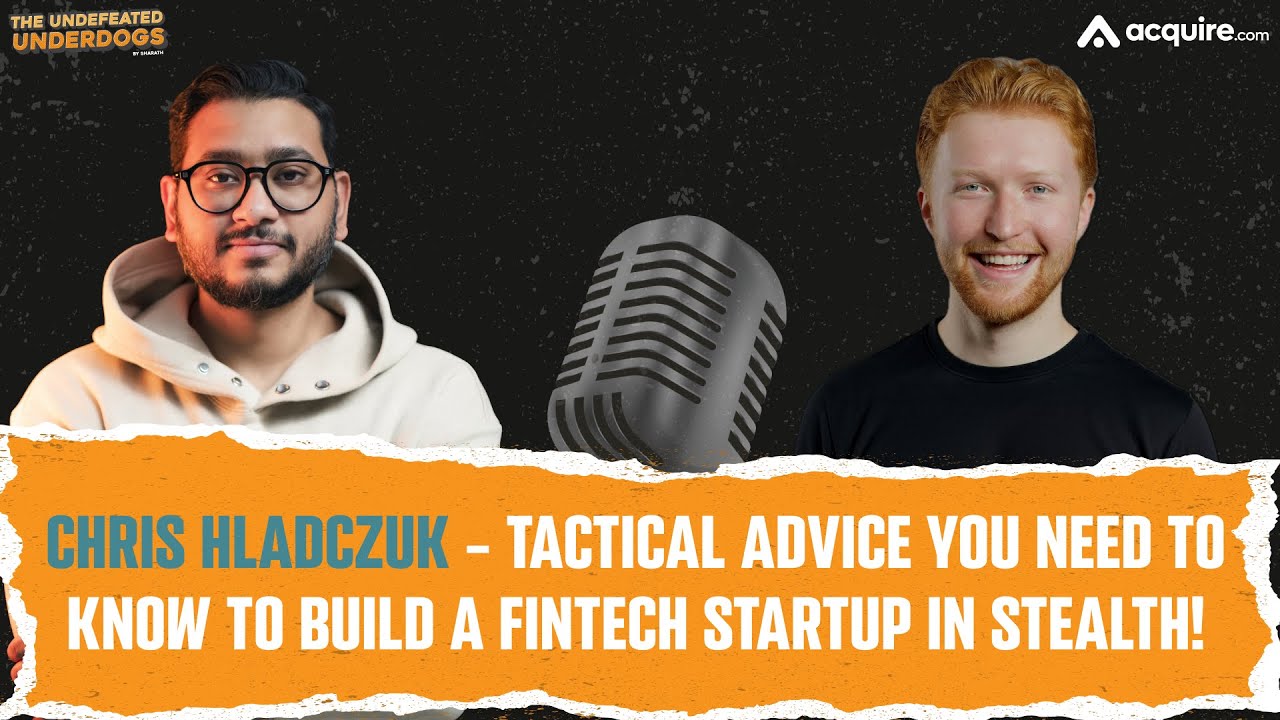
Chris Hladczuk - Tactical advice you need to know to build a fintech startup in stealth!
Andrew Rea - Why first-time founders should invest time and effort in building conviction!

Blake Emal - How to convert people browsing your website into people buying your product!

