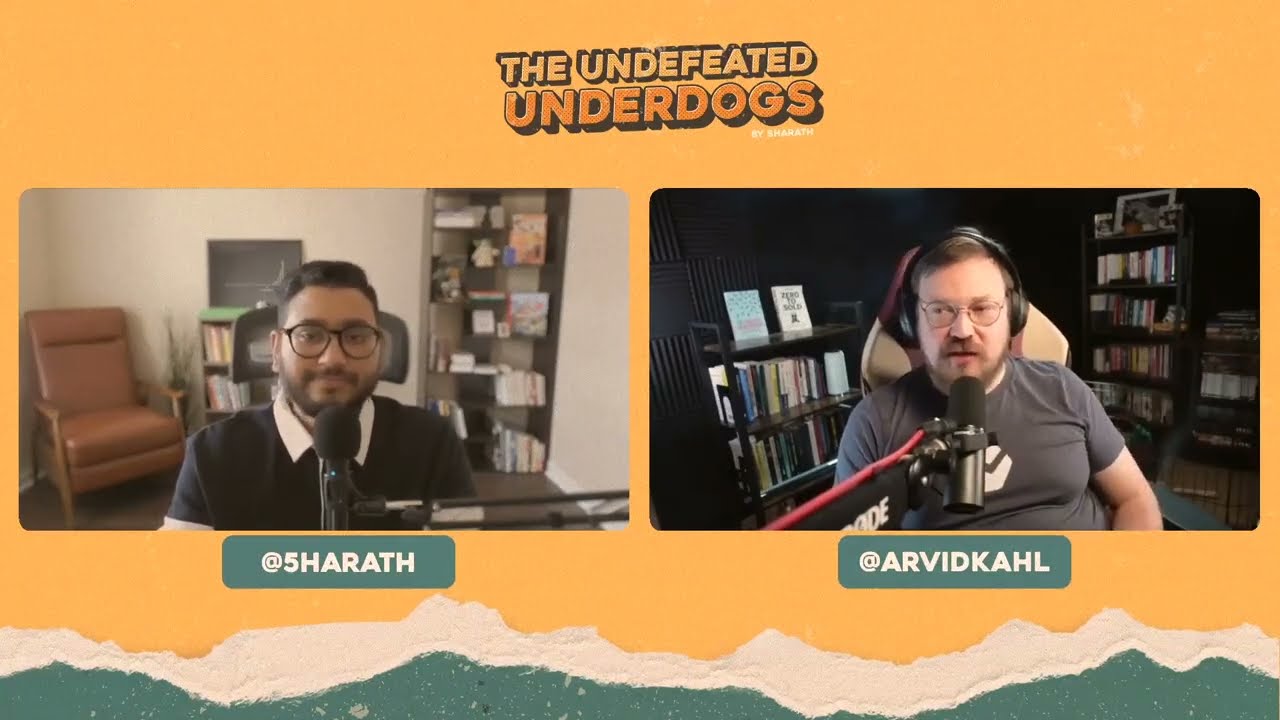
Arvid Kahl argues that schools teach a zero-sum mindset where one person's win means another's loss. But in knowledge-sharing communities, teaching others doesn't diminish you; it raises everyone. Collaboration creates better outcomes than pure competition.
Chapters
I think there's a kind of mindset in many ways where people approach a thing that they do or a community that they are part in as a kind of a zero-sum game. If you win, I lose, right? That's the idea. And that's something that we are taught in school, that we are taught by our families, right? If you don't make it to them, to that spot, somebody else will. Like, if you don't get the good grade, then you get the worst grade and other people get the good grade. There's a lot of competitive thinking. Which in many ways makes sense. Again, instrumental play, right? If you play soccer, if you play a game of soccer, of course you want to win. That's the whole point. But it's also fun to play as a team and you build certain kind of certain skills that are not necessarily goal-scoring related, but it's like taking yourself back and letting the team shine or involving other people or strategizing together. All of this is part of instrumental play, not just the competitive nature of the game itself. And many people take this competitive nature and apply it to everything around them. Because they think, hey, we live in a capitalist world. So if I don't win, I lose. But if you look at our community, and that's the thing that I learned over the many years that I was not an active teacher in the community, but the student, the consumer, people, even though they give away knowledge, they still increase their own value. It's not that they lose something by teaching other people how to do something right. They teach them and then they stay built and somebody else builds something else. And all of a sudden more people have been building interesting stuff and nobody lost, everybody wins. And it's this idea of like being Being the tide that raises all the boats, that's kind of what I think I want to be. I want to forget all of this kind of predatory, very capitalist, competitive thinking. Just push that aside and build a community, foster a community that I'm part of that thinks that we can all win at least a little bit more together instead of trying to compete with each other all the time. There is competition, obviously, in business, particularly in our community, right? Obviously, people try to build the same things all the time. Yeah. But in the end, if we work together, more and better outcomes appear.