Eps 9 | Her Story, Faith, and being a Author | Girl, You’re Good Enough Podcast

In this episode of the Girl, You’re Good Enough podcast, host Evangelist Irene Selby interviews Reverend Dr. A'Shellarien Addison, a former Army chaplain, author, and theologian. The conversation moves from Addison’s early ministry challenges—particularly gender discrimination in the military chaplaincy—to her spiritual response to political disappointment after the 2020 election, which inspired her book Living Unbothered on Purpose. They discuss her subsequent works, Going Back for Me: Reconciling Pain and Peace When Trauma Collides with Faith and Between Collateral Damage and Collateral Grace, which address trauma, abuse, and sexuality within the church. Addison shares her womanist and liberation‑theology perspective on the Bible’s colonial history, emphasizing the need to read Scripture personally. The dialogue then shifts to holistic health, where Addison describes her mental‑health advocacy, natural‑product line (Garden of Eden Reimagined), and the importance of nutrition for spiritual wellness. She offers practical encouragement for young women feeling “not good enough,” urging perseverance through the “meantime” between promise and manifestation. Finally, Addison promotes her media platforms—books, a Reach Gospel Radio show, a forthcoming Bethel Empowerment School of Theology, and her online presence—inviting listeners to connect for counseling, teaching, and further resources.
Chapters
Hey guys, this is your girl Evangelist Selby. Remember, you can call me your girl, your friend, your cousin, your sister, and this is my podcast called Girl, You're Good Enough. where we like to talk truth, we like to talk about problems and situations and lead you to Christ and let you know no matter what you're going through, you are good enough. And so today, today we have in the house my friend, my girl, Dr. A'Shellarien, Reverend Dr. A'Shellarien in the house. Say hi to my family.
Hey guys, thank you for having me.
Thank you for coming.
Absolutely.
What an honor, what an honor for you to be here, first of all. So I want I don't wanna jump too fast because I just wanna be free.
Okay.
Because we are family.
Yes, we are.
You wanna talk about how we're family?
Talk about how we're family. We met so long ago when our kids were in the 11th grade.
Was it 11th?
No, I think it was the 10th grade.
9th or 10th or something?
I think it was the 10th grade. And so, Kahlil was a musician, Lex was singing.
In the school chorus.
And they had no idea that this is where we would be all these many years later. Oh, goodness.
And it was instant connection. It was. So, and not to interrupt you, but I fell in love with Khael when we had something at our church and already seen them, I think, at the school singing. He might have been playing at the time, wasn't he? And so I invited him to the church or whatever. Probably I fell in love because he was a musician.
I think so.
But I fell in love with him instantly. Mannerful. I mean, I just fell in love with Khael.
I remember.
And Lexi was like, Mom, we're just friends. And it was probably me like, girl. Like, I love KaYel.
It was me too.
It was me too. And then I met his mom, which was a pleasure. Like, it was just a nice flow, peaceful. And again, like, I loved them from the day I met them. Like, I didn't even have to spend much time around KaYel.
No, and I was the same with Lex, because I remember he was like 17, 18 years old. He'd been a musician since he was 7, been playing the drums. He'd been a paid musician since he was 7. So by the time he got to be like 17, 18, he was like, Mom, I need to get married. And I was like, son, You need a ride or die. You need somebody who gonna love you. And I said, son, you need Lex as your wife. He was like, mom, what you talking about? I'm saying, I'm telling you, Lex is your wife. Show enough.
Oh my God. Well, he definitely got a ride or die. Lord Jesus. We gotta pray them through.
Lord. Yes, he definitely got a ride or die.
But it's a learning and a growing experience with everything. And he definitely has that. Something you made a point when you were saying, Um, he was, he was playing like at 7 years old. This is the funny part. Alexis was playing the drums at 3 years old.
Wow.
Listen to me. Um, and she was pretty good at it, right? She really was. And then, um, I had Aaliyah, um, which her middle name Renee, I emphasize on that because it means reborn, rebirth or something like that. But anyway, um, she liked the drums. She was little, you know, she was just born, but it was just something about her. loving the drums as well. I'm like, I guess I'm gonna have drummers. Really, I didn't even know.
You gonna have a bunch of Shella E's.
I did not know Lexi could sing or any of them at that point because, you know, babies. And so she was so good at the drums. And then Leah was just playing. She was a baby. She was— I was letting her play, you know, on certain evening or whatever services we had at the church, little. Then I heard my baby Lexi sing. We— it was so funny because we were at Easter program. She was so young, she might have been 3, 4, 5, 6, something like that. Very young, 5 or 6, I say. And we were practicing, me and my sister. She passed away, Apostle Curl. But at that time, we were working on the Easter play. And so it was a part that the babies had to sing, and they were kind of scared to sing. And so we were telling everybody to sing, and Alexis started singing. And she was so young, and we was like—
We ain't know that girl could sing. You can sing like that!
And it turned my head.
Wow.
And I was like, not that she wasn't singing around the house, but to be able to do it, like follow through with the actual song. And I was like, wow. I said, Alexis, are you gonna actually sing this for Ethan? Yes, Mommy, yes, Mommy. That day off, she froze up. But I'm just saying, we heard the potential. And I'm not kidding you, as she grew older, I can't believe we talking about her kids, but as she grew older, grew older, every time she sang, heads would turn. Heads would turn.
She was singing with her.
And as she got older and older, I would have her on the older people's choir, everybody's choir. And every time she sung, people's head would turn. Like, they would feel the Holy Ghost. And I said, my baby got something.
Yeah.
But that's the testament. I thought she was gonna be a drummer instead of actual singer. But you know, you got fine kids too that are musicians.
Oh my goodness, I didn't know Kayo could sing till he was 14.
Oh my—
I was asleep and I woke up. Kayo can sing! Not only can he sing, he can arrange music. And he was like 15 and I was asleep and I woke up and I was like, who's that singing? He had recorded a whole song.
That boy's bad.
I was like—
That boy is bad.
And that's why the devil's on them so bad. And I tell them all the time, that is why the devil's on you so bad.
When I tell you, when I tell you, when they get it together in Jesus' name, 'cause they gonna get it together, we touching and agree.
In Jesus' name, yes. It's gonna be amazing. I wrote this song called My Faith Can Do It All.
Go ahead and sing it.
No, just— No, Lex and Kion both singing it. I'm gonna play it for you after this is over. It's amazing.
Oh my God. But anyway, that's how we're family. This is long overdue. We have these conversations all the time. We promised a couple of months ago or last year that she would be on it and her schedule is packed. Crazy.
Yes.
And you know, I get a little busy over here, but here we are. Thank you, Jesus.
Yes, indeed.
Anyway, and so, um, I want to speak to every woman listening. I want you to know that healing is not wrong, growth is not betrayal, and becoming is not failure. Becoming is triumph. And I want this episode to be, or title to be Becoming Is Triumph. And the reason why I decide— I thought about it is because when I look at your bio, like, your bio is humongous, and— but, but it's so clear and evident about your journey. Like, when I look at, um, even though, you know, all the, the great things you've just done and things you've done in the past, but even when I look at the titles of your books and things, I'm like, It speaks directly to people that have, and I think every woman can relate. Even though God used you to do all that you've done, like, I can see myself in the majority of your titles, you know what I'm saying? To be honest and to be true. So I'm like, it was a process. This was something.
A process.
And so today's conversation is about evolving. Evolution, which is the process of becoming something new, the development of transformation. Because every woman, like I wrote down here, every woman has a story about how she is becoming the woman God designed her to be. Now, our journeys may be a little different, but the process of becoming something we all share.
Mm-hmm.
You know what I'm saying? So, um, Like I said, I looked at the bio and everything, and I saw, you know, like, the journey of your life, like, through your bio. What a— and I love how straightforward it was. Like, I love— like, I'm like, she is— you know, I always said you was bad, right?
No, seriously. Yes.
When I got a chance to go up Philadelphia and you spoke and preached at some church in Philadelphia, I went with you. I might have went with you about 2 or 3 times or something like that. But I was always impressed. Like, I love celebrating us, for real. I am.
Me too.
I'm serious. I am a cheerleader for us. I'm serious because it's not enough of us out there that's cheering for each other. I hate hating on people. I hate when, um, we can't celebrate each other because we are our own anointed self. Like, you stand strong in your area and you could even stand strong in my area. I'll be like, let's do it, girl. You know, let's have fun. So I'm a cheerleader for us. And when I see your bio, I'm like, this girl is bad. I already knew you was bad, right? I already said like, Girl, you bad, you know. Um, but when I see your bio, I'm like, oh my God, it's amazing. And so we're— you're gonna walk me through this, you're gonna help me through all of this stuff. Um, again, I, I wrote here, I said, I see a season that reflects growth, um, reflection, and purpose. Um, it's— I do not want to, um, define those seasons or anything for you, but I want you to like walk us through this journey. And so Um, when I look at the beginning of it, like your bio, it talks about, um, your most recent accomplishments, right? So let's start from there. Take me from— take, matter of fact, before all of your accomplishments. Let's start there. Before anything you accomplish, who is Shella? Who is— I call her Shella, y'all. Shella Reen. But who is— hey, Reen. We could go Reen to Reen.
Well, you know, It all goes back to who I knew I was when I was little. And so I've been present in myself for a long time. So I remember learning to pray when I was 2, and from that time to this time, I've always known that God heard me. I've always known that I could talk to God. So I don't remember not knowing who God is.
Okay.
And so every phase of my life has been framed around where God was with that, right? And so I remember being— so my, my formative years, right? So I'll give you an example. When I was 8 years old, this was my week. Sunday, I went to an AME church in Madison, New Jersey, because my father was friends with the pastor.
Oh my God.
Monday through Friday, I went to an all-white Catholic school, and me and my siblings integrated the school. So there were only 5 Black children. 3 of them were my siblings.
That's right.
So Monday through Friday, all-white Catholic school. Friday night and Saturday, I went to an all-black Hebrew Israelite synagogue in Harlem, New York. So I've got AME.
Was that led by your father?
Yes.
Taking y'all from different—
So he met this black rabbi in Harlem, New York, and he said, we going to be Hebrew. Not just Hebrew, Hebrew Israelites.
Wow.
So it was during, you know, it was late '70s, Black Power, Harlem, New York. You know, we were kings and queens. So I spent the week you know, being called a nigga by the white people. And then on the weekends, I was a queen because I had all this Black power. So it was just an interesting dynamic. So the womanist in me stood up when I was 8.
Okay.
Because in the church, we sat every— we sat together. In the synagogue, the women had to sit in the back.
Okay.
So I remember going to the first service, and my instinct was to go left because that's where my father went.
Right.
But they said, no, no, you're a girl, you got to sit in the back. And immediately I was like, that's not fair. Why do we have to sit in the back? They said, because you're a girl and God don't see you the same. You can't read the Torah. You can't lead. You can't be a rabbi. It was all these you can't, you can't, you can't. And I knew in myself that that was a lie at 8 years old. Wow. And I said, I could be a rabbi and I could do all of these things. I didn't have the skill set and the ability to articulate that I knew they was lying to me. I knew instantly that they was lying to me.
Wow.
So in that moment, I just became different.
Mm-hmm.
And I was like, just because I'm a girl doesn't mean I can't do this. The interesting thing about that is when I would go to Sabbath school, the rabbi would start talking and I would say, Rabbi, why we not talking about Jesus? Because Reverend Saunders said that Jesus love us.
Oh, really?
My Hebrew name is Divasha. So he would say, Divasha, we don't say— he would give me this whole litany about why we don't talk about Jesus. And then the next Saturday I would come to Sabbath school and I would say, Rabbi, why we ain't talking about Jesus in here? 'Cause Reverend Saunders said that Jesus love us and we gonna sign me up for the Christian Jubilee. So on Sundays, every Sunday he would sing that song, sign me up for the Christian Jubilee, write my name on the roll. And I believed it. So when I got to the synagogue, I was like, y'all ain't telling me the truth.
Girl, you a special—
But here's what happens when people tell you to be quiet long enough, you will. You will. And the womanist in me that stood up at 8, they kept saying, be quiet, stop talking, stop talking, be quiet, be quiet, be quiet. And eventually I just did.
You thought that was your role.
I stopped asking questions.
You thought that's who you were supposed to be as a woman.
Yes. So I shifted my focus and I said, okay, well, let me do some, let me do some, uh, young adult ministry, right? So my whole focus— so by the time I was 17, I went back to the AME Church and I started teaching Sunday school. I did the YPD. Nothing about womanist theology, nothing about empowering women. However, because it's in me, it was always in the forefront. So I was leading stuff and doing stuff, and I was going to school at night so that I can get my degree. So of course, what did I do? I got a degree in early child education.
Okay.
Okay, because that's, that's what you do when they tell you shut up. You move to something else. So I said I wanted to teach, but I wanted to teach people shorter than me.
Okay.
So that capped it at kindergarten.
Right?
So I said kindergarten below, because I ain't fighting with these kids. And so just life just began to life. And I, and I just, you know, always wanted to be a mother. I wanted to be a parent, but I never felt like I fit in my family.
Okay.
I always saw myself as like Hercules. Remember that story Hercules?
Yeah, yeah, yeah.
Where he just, they just, the gods just left him and then the people raised him. I always felt different because I just didn't fit.
Right.
Into certain places, because my mind, I always thought different. So that would explain why I would have so many things that I do, because life has always just been different for me from very early. I just, wow, I just thought different. I saw things different and didn't realize until much later, okay, that I just was never called to fit in. Never.
Wow.
I've always been called to stand out. From the time I remember being 7 and my favorite book was the Bible, The Jehovah's Witness Bible.
Uh-huh.
Somebody had given me a Jehovah's Witness Bible, and it was 2 stories. Solomon, when he had to decide between the, the moms with the baby.
Mm-hmm.
Favorite story.
Okay.
And I would always say, God, give me wisdom like Solomon.
Right. So how did you separate from going to the mosque, going to this place your daddy was taking you, and then going, you know, to church? Or, you know, because they're kind of different.
So Here's one thing that I find interesting. The synagogue taught me how to embody and integrate God because the rabbi always said that God is a part of who we are. We, we can't separate ourselves.
Okay.
From who God is. So the covenantal relationship. So I mean, I was paying attention to everything the rabbi was saying at 8. So I understood it was a covenant, you know. So we learned to speak Hebrew and pray in Hebrew. We followed dietary laws. And so I never separated that from Christianity because Jesus was a Jew.
Okay.
So for me, it was just an extension.
Okay.
So I just embedded it into what I already believed about God. It just gave me a deeper sense of covenantal connection with God. So I never had to separate. So by the time I was 17, I had been praying in Hebrew so long, I didn't even realize I wasn't praying in English, even though I was back in the church.
Wow.
And so because there's, there's so many things that overlap So you look at our liturgy and we do like the doxology. All of that stuff comes from the Old Testament. So when we were saying the AME liturgy, we were saying the same thing in the synagogue. It was just in Hebrew. So the transition was just— God just made it so smooth that I didn't have to let go of anything. It just enhanced what I was already doing.
Okay. So was your daddy like— at what point did your dad— like until 17, were you still going to all 3 of those different places or?
No. So the AME church we stopped going to when we moved from Madison, New Jersey.
Okay.
Right? And then the Catholic church I only went to for 3 years, 3rd, 4th, and 5th grade.
Okay.
By the time I went to 6th grade, we had moved to a different place. And when we had moved, we couldn't get to the synagogue. And so the integration of that Hebrew faith, my father had kept it. So it was just kind of what we would, we would do. So I didn't go back physically to church till I was probably about 17, because we didn't, we didn't do any of that. But my parents never gave us church. They wanted to give us God. And that's what they did.
Right. That was good. And so Okay, and so we're still on the journey of 17 and on moving forward. What was your— at that time, were you still home or were you, you know, out living on your own and you had to still make that decision? Okay, I'm gonna go to church. You know, like when we grow— when we're young, we have to go to church because of our parents. And even though it's embedded inside of us, sometimes we can't wait to separate from, from all of that.
Absolutely, and that was me.
And just do our thing. You know what I'm saying? I'm just saying we all, we all had our You know, that phase in us, if you wanna call it, where we were like, you know, wanna be rebellious. Like, okay, I had enough of church. Thank you, Jesus. I can do me. I can have fun and whatever. Was that you at some point?
You know, it's amazing to me. I've never had that desire.
Okay.
So I can't tell you what alcohol tastes like. I can't tell you what smoking tastes like or drugs or any of that. Because for me at 8, when Rabbi said it was a covenant, I believed it. So I never had the desire. So you were taught the principles. To go outside of where God was. That don't mean I was perfect, you know what I mean? I was 16 when I first had sex. Like, I didn't wait till I— and I made a decision not to. I, I made a decision I wasn't gonna wait till I got married because then I wouldn't be disappointed. So I had some things about my life that I was just like, I'm not—
Strong, strong teachings.
Yes, right. So for me, when I went back to the church at 17, it was because I was in love with this boy who wasn't in love with me.
Okay, okay.
And so when I look back over my life, My relationship with my father was always tension-filled. Like, I remember being 4 and being a daddy's girl and thinking he was the best, he was the most handsome, he was amazing, right? But for various reasons, he was very mean to me.
Okay.
So that whole rejection thing came early for me. And so as I look at my relationships with men, I would always choose men who rejected me, and I would spend so much time trying to— you gotta love me, you got— because that's what I was doing with my father. I didn't do nothing to you, so maybe let me try this and you'll love me. Let me try this and you'll love me. Right? So, as my dating years, it was always that whole rejection piece that I was trying to wrestle with.
Okay. And so, why do you feel as though you've— because, you know, the anointing, like, if— it doesn't matter who it is, the enemy will use the closest thing to you, and you'll be like, why? You understand what I'm saying? And it sounds like from you being so young, you were being grounded and rooted in Christ Jesus, and he was the one that was leading you to those places. So, why do you think Or felt like at whatever time that all of a sudden your daddy who loved you, took you to those places, now is, is like denying you, saying—
Well, you know, it's always been from the very young age, it's always been tension-filled. So the, the amazing thing is he was— we can't give what we didn't get. So he was an only child and my grandmother wasn't married, and so he didn't know how to be family because he didn't have any siblings.
Mm-hmm.
Right? So my mother had siblings, and so she knew how to kind of— because there's 4 of us.
Okay.
But he had no siblings, so he doesn't know anything about the dynamics. He don't know about anything about that. So he was just being him. It wasn't until I was older that I realized that he told me, okay, because I remind him of his mother.
Ah.
Right? So over the course of time, okay, we got to hear. So the healing conversation for me and my father happened when he went to jail.
Okay.
And I was the only one who could see him because I was clergy, right? So God just brings stuff so full circle. And I'm like, you know, 'cause in my flesh, I'm like, I ain't going to nobody. But God was like, get your happy self in there and go talk to your father.
Right, but you know what I'm seeing throughout all of it is that he did, he did, he had a deep love for you. And like you said, he didn't know how to, but he did though, because the best thing a parent can give you is Jesus. You know what I'm saying?
Yeah.
The best. So yeah, maybe that level of affection or whatever that you felt as though you didn't get from him, he had that— the right affection, because it led you in the path of who you were becoming.
Right.
Oh my God.
And sometimes we go through the ebb and flow of life and we're like, I don't know why this happened. But then afterwards you like, oh, This is why. And what's amazing is my father doesn't call me by my first name because we've had such a tumultuous relationship. Okay, he calls me Rabbi.
Wow, because he know you called and you chosen and stuff. And really, wow, this is good because yeah, he, he— the calling is probably on him. He just probably ran away from it, right? And the reason why I'm saying it, because I'm just discerning, like, um, like you said, he was the one who was leading the footsteps. He knew he needed Christ. He knew And he was searching, and he could have left y'all home and tried to figure it out, but he took everybody trying to figure it out.
Trying to figure it out.
You know what I'm saying?
Right.
That, for real, that for me, it gets an applause. Because sometimes when we see all the other pain that was caused down the road, we miss that main thing, that root.
Yeah.
You know, and he rooted Christ. God used him because whether And when you say he called you Rabbi, he knew. He seen something great inside of you. You know what I'm saying?
It took a long time. It took a long time for me to reconcile that, right? Because I spent many years trying to figure out. And my mother would take me for these walks and she would say, you know, your father, you know, he didn't have any siblings and he didn't know. And she would spend a lot of time talking to me about— and my grandmother, my great-grandmother used to have the saying that God don't like ugly.
Right.
So I remember that I used to be so mean. Like, I mastered the art of being mean. the art of cussing when I was 9.
Okay, okay.
Because my brother was a bully.
Right, right.
And so when I cursed at him, he would leave me alone.
Right, right.
So I said, if it worked for the bully, it'll work for everybody in life. So I mastered the art of cussing, and nobody even had to say anything to me. By the time I got to high school, they had started this rumor that I was in this gang.
Right.
Like, I was really out there. I was like that Chihuahua.
But you know what? You know what? And maybe you had to be.
I had to be.
Maybe you had to be.
Yes.
Because you know what I'm saying? Just because somebody may try to underestimate you because of your stature.
Exactly.
So it was building character. It was building strength. It was building resilience. It was building determination. It was building like, what's up? I'm just as big and tall as the tallest of you guys. So it had its purpose.
And then when I got to the point where I said yes to God, that same audacity I had to cuss people out is the same audacity I have to stand flat-footed on God's word. And so to me, it's like, I'm like, Like, so to me, when I walk into situations, I'm like, David, who is this circumcised Philistine? Who is this uncircumcised Philistine? Because if I can stand flat-footed and cuss people out, then surely I can stand for God.
But that's what God was using to build you.
That same energy, just redirected.
That same energy. Absolutely.
So now when I write a book, I don't really, you know, I'm not like, oh, what are people gonna say?
Right, right.
Who is this uncircumcised Philistine? I'm writing this book 'cause God says so.
Right, right. So, okay, so you have so many things that you accomplished. Let's talk about maybe the first thing that you— I know you said you got your degree in early childhood education. Um, what was the next thing that you accomplished?
So when I was 19, I went to Chestnut Hill College.
Okay.
And then I met this boy and decided I wasn't gonna go to college no more. And then I had Kha'iel. And then after I had Kha'iel, I was abstinent for like a year, 2 years. And then that's when I met my first husband, Carnell. So his father was a prophet, and all of that happened, all of that happened. We had Kael, we had Kashay, we had— so I went to school at night. So after I finished, so after I met him, I went back to school, right? And I got the early childhood education, right? Then I got a Bachelor of Science in Urban Ministry Leadership, right?
Right.
Because I wanted to take that secular degree and mix it with that Christian degree and still I was still focused on teaching, right? I wasn't thinking about sermons. I wasn't thinking about seminary, right? My first night of class, I remember I went to class every Thursday night for 18 months, right? First night of class, the professor said, A'Shellarien— he still calls me Dr. A to this day. He's my presiding elder. He said, A, you're called to preach the gospel. And I said, Dr. Hurst, I did not come here for that. I came here to get this degree because my plan was to go get a master's in clinical psychology.
Okay.
Because I was going to be a clinical psychologist. And so I went to 18 months. I did this whole degree, and by the time— so while I was doing that degree, that's when my son died at 39 weeks.
Oh.
So all of this stuff, I'm just like, God, you got to be kidding. You got to be— this is not— it's not making any sense. Even through that, my first response was, God, why didn't you tell me? Like, my relationship with God was such that I felt like God should have told me this baby was going to die. So even on the table after they told me he died and had no heartbeat, My conversation with God was, why you ain't tell me? And in that moment, God showed me a dream I had with Kashay.
He did?
Where the baby died.
Wow.
So when the baby was born— so when I saw the baby in the dream, it was this little chocolate baby. So when my son was born, he was this high yellow chunky baby, and I said, oh, that wasn't him, right? So that gave me some solace to know, like, this baby, right, this baby wasn't mine anyway. It didn't mean it didn't hurt. I just— my relationship with God says God is always gonna give warning before destruction.
Mm-hm.
So my son died, I still went to school, and my professor kept saying, 'cause I went back to school after he died, and I said, I'm back. And he said, Dr. A, I'm telling you, you are called to preach the gospel.
Mm-hm.
I said, I ain't trying to hear none of that. So I did all my stuff for St. Joe's, I got in. A week before classes, they told me, you gotta go back to Cuts, 'cause that's where I went. You gotta go back to Cuts.
Wow.
First night of class, this other preacher said to me—
He's calling.
He said, I don't know you and you don't know me. AME pastor. He said, but you called to preach the gospel. I said, you got to be kidding me. So I went back to class and my professor said, go to Lutheran.
Uh-huh.
I called Lutheran. Within 2 weeks I was in. They had housing, everything.
And you were young then, pretty young.
Packed the kids up, went to Lutheran. Packed my husband and kids. We moved on campus for 3 years, and I went to seminary full-time.
That's powerful. Wow. Went to seminary full-time. It's just in you, rooted and ground. And at a young age, I mean, at a young age, dedicated and focused to Christ. Like, your intentions were always to love Christ and to, you know, even though you didn't— you know what I'm saying? It was always in you. It was always embedded in you. You thought, I'm getting it for this reason and for that reason, but it was always Christ's reason. I was like, you gotta be kidding me. Oh my God. Okay, so that's a second or third or fourth—
Right. So I got a master's. So I got introduced to, um, Dr. Will Gaffney introduced me to womanist theology, and that just opened my eyes to a whole bunch of things about— so I got a Master of Divinity, but then I got a Master of Sacred Theology and womanist theology. So from there, I went to be a hospital chaplain, and after that, I became a children's pastor in the Baptist Church.
Okay.
And I was doing full-time ministry And then I got a doctorate of education. No, I got a doctorate of theater. They shifted some things around.
Okay.
And because I'd already had a master's degree, I had 2 master's degrees by the time I got back.
Right.
So I started teaching the graduate students.
Right.
You know, once you come through the institute and all that kind of stuff. So I was teaching the graduates.
Right.
I did that for about 8 years.
So what motivated you to be determined to get degrees? Like, you know what I'm saying? Because it had to be a push from somewhere. It had to— not— we know Jesus, of course, but you were at a place where you said, okay, I got this one degree. But what kept pushing you to make you want more, to be determined to get more?
I always wanted to go to Harvard.
Okay.
And the only reason I didn't go to Harvard is because I don't like the cold.
Okay.
And so I always wanted to be a doctor. So in the 6th grade, So I went to Catholic school 3rd, 4th, and 5th grade. And from that point until the 11th grade, I went to all white schools.
Okay.
So by the time I was in the 6th grade, I was teaching the English class.
Okay.
My teacher would be like, I'm gonna sit down, and he would say, Shellarien, stand up on this chair, and I would teach the class.
Okay.
So I've always been intellectually advanced. So I always knew that I wanted to be a doctor.
Okay.
And I want— but I didn't want— I wanted to be a pediatrician, but then I was like, I don't want to be sticking sick kids. So then I shifted to like psychology. So I always knew I had to, I had to reach that. So I did.
So what challenges did you face when you were getting your degrees?
Like, oh, going to school at night and my kids crying. Like, oh, Kashay was a crier. Not so much Kael. Kael wasn't really a crier, but Kashay was. And I had to go to school at night because I was working during the day. So just that, just the ebb and flow of motherhood and working and school and getting the work done. So that's why I'm a night owl now, because I'm just accustomed to having to do my assignments at night.
So it's like you have a love for education.
It sounds like I'm a lifelong learner.
Like, wow, I am.
So for me, once you finish one thing, you just jump into something else.
Wow. So, okay, so what part of you that feels the need— like, is it— no, and I want to make sure I, uh, put it in the right frame because, you know, after you accomplish so much Do you ever get— is it to keep you busy, or is it just to make you feel more accomplished? Because you're already accomplished.
I think it keeps my mind sharp.
Okay.
So I'll give you an example. So I used to pastor a church in New Jersey. So I had to do a sermon every Sunday. And so when I went to active duty, I also pastored a church overseas. So when we were in Kuwait, I pastored the church. And when I came back, I went to National Guard Bureau down in DC, so I wasn't preaching. So I said, God, I need to keep my skills sharp. I need to keep my mind sharp, and I just need to keep in it. So I would do like a— every morning we would do like a Clubhouse back when Clubhouse was popular. And I would do like a 5-minute sermon snippet every morning.
Right.
Just to keep my skills sharp, to be able to stay connected, just to— and so for me, education does that. It just keeps my skills sharp because I feel like you got to be relevant. I don't ever want to get to a point where I'm stagnant and not relevant anymore. So for me, education and learning and all that kind of stuff, it just keeps the wheels going. And then I've been a hospice chaplain for almost 20 years. And so people who have dementia, it's because they don't keep using that mind. So when you keep using your mind, it continues to expand.
Okay. So I heard you say relevant. You understand what I'm saying? I'm just trying to understand the need to feel like Okay, I'm not going to be that. And it— the Holy Spirit just connected the dots when you said, I need to stay relevant. It brought me back to your childhood when your father, or the, the mods, used to say, women in the back.
Yeah.
And you didn't feel relevant.
Yeah, no.
You didn't feel like you were seen. You didn't feel like you were heard. And so, um, when you pushed forward, when you was talking about as you got older, how it was times where people— something you were saying, you said you had to start cursing them out or whatever and so forth. No, I'm just trying to connect the dots.
Protect myself, yeah.
I'm trying to protect yourself. But it pushed you to be strong, to be the person you are today, which is making you more relevant. But I feel like that part where you say relevant is like a need. Like your system is saying, you know what? I'm not gonna be pushed in the back no matter what. I'm not gonna let And you got all documents, you'll never be irrelevant. You know what I'm saying? But it's something inside of you that tells you that no matter what, I'm not gonna be where I was when I was a kid. You know what I'm saying? I'm going to push forward and no matter what it takes. So do you connect that? I mean, when we talk about it, do you connect that with— 'cause you know you weren't supposed to be not relevant when you were a kid.
Right.
You knew that's not my path. That's not where I'm supposed to be. But you were so little, nobody's trying to hear a little kid.
What's interesting is even now, people don't— when people encounter me, their initial response is that I have no intelligence. It's not until I open my mouth. Like, so even now, I work in a lot of spaces where I might be the only female, or I might be the only Black person. And so you carry the weight of—
That's such a strong statement.
Having to represent every Black woman, every Black person. And so for me, you know, you could jump into a conversation just to prove you have intelligence, or you could just kind of sit back and watch. And then when they bring you into it—
Sometimes Black people don't even need to speak, you know what I'm saying? Until God say it's time to speak.
And so even though when I was 8, it was sit in the back, even now at 53, I'm in spaces with white chaplains and white men and white people who have that same mentality. You should be in the back. And so when I step forward, and I got all these degrees, they're like, how you get— and you, you should be running the company. I know that.
And look, and it connects me to my next thing about— and I'm not even following, I'm just going to flow, um, regarding, you know, your recent promotion of being lieutenant. Tell me about that.
So I'm the first woman chaplain in the history of Delaware since 1775. And so when you walk into spaces where there is no trail You have to blaze the trail. Now, unfortunately for Black women, we have to work 5 times harder. So I can show up into a space with 5 degrees and still be treated like I have none.
Right, right.
Because that's just the mentality of it.
Right. So then I, then I can now understand too why you keep stacking those degrees, because you said 5 times harder. So a regular white woman with 5 degrees will be, you know what I'm saying, considered as if she had 10. If we have 10, we need 10 more to measure up to them. It's not fair, it's not right.
It's unfortunate.
But I'm understanding the need for your soul to be fed with more and more. Like, it's in you, it's been embedded in you since you were a kid, 'cause God had purpose for you. He needed you to see where you're not supposed to be so you can fight for where you're supposed to be. That's the becoming part, you know what I'm saying? Like, okay, this is where I was. And then, you said, you know, at some point, you realized, like, you were saying how your father was saying, like, kinda like, be quiet, almost. Well, the synagogue was like, no women speak, no women speak, and to the point that you said, you know what? I don't care what y'all saying, you know what I'm saying?
That's right.
Or at one point, before you got revelation, you remained quiet. And so, you thought that was how I was supposed to be until the Lord broke the stronghold, the cords, the yoke, and said, no, you're not supposed to be silent. I'm raising you up to be a leader, to be someone powerful, to be used by God. And so I'm looking at the steps from your birth. I'm looking at the steps from when you had to curse people out because he was building strength and courage in you. And you said, if I could use that, then when I can preach, I'm a youth. So I'm seeing God build. I'm seeing the becoming. I'm seeing the process.
Absolutely. Yes.
I'm seeing the process, the progress, and the triumph.
Absolutely.
And so this is so good because people don't know— I know how awesome you are. I know, even though you done did 1,000 more things since I spoke to you.
Yeah.
But just to hear your journey, sometimes people don't understand people about their drive, their ambition, or where it came from, where it stimulated from. And just to see you as being this strong woman of God, Like saying no, being resilient, like you will not shut me up.
That's right.
And I think that's your— for me, I'm just seeing like that's the push, that's the drive that makes you keep feeding. Like, I don't care what y'all say, I'm gonna be relevant. You can't make me irrelevant.
Every time you tell me I can't, I'm gonna show you.
Well, girl, I love that. I love— I'm like, wow. But yeah, the Lord is just showing me like where, you know, all of this. And so let's get in. And if there's any other accomplishments you wanna talk about, let's talk about them. But you have a plethora of books that I love the titles to. And I'm like, wow, you know what I'm saying? I know I read some.
Yes.
But Lord, you done did 100 since then. I'm still working on the one. And Lord, but you have some books and I'm gonna try to find your bio and I'll go through it like that because I'm not even— I'm letting the Holy Spirit lead.
Yeah.
So I know like your first book that I was interested, all of them for sure.
Well, my first book is called, uh, um, what's my first book called? Now my mind just went blank.
You got 100 of them, you can't remember all. Let me see, let me see, um, let me see.
Does Love Cover That?
Does Love Cover That?
The Healing Process of the Fruit of the Spirit. Now that book came as a result of being divorced.
Okay, okay.
Right? So I was, I was married to a minister of music, and, uh, every church we went to, he had to have an assistant.
Right, assistant to play, to play the piano.
And then finally, you know, he messed around, had a baby with the choir director. And, uh, just going through that whole process, I was like, love doesn't cover everything.
Wow.
And I said, does love cover that? Love does not cover that.
You were bad though, because you birthed things out of your—
Absolutely.
I love that.
God's love covers everything. And so then I had to realize that even in a relationship like that, as a woman, I have to take responsibility for staying.
Okay.
And I can't rake myself over the coals, and I've got to give myself grace because I've never been through anything like that before. I had no frame of reference for how to go through it, and I stayed because my kids were young.
Okay.
And you know, when I was young, we We used to sleep in the car. Like, we had a lot of trauma in my life. And so I said, I don't care what's happening. So I made a decision, and I said, I'm taking one for the team. My kids are little, I'm an adult, I can handle it. So that's the way I chose to move. And even after everything I know now, I would have made that same decision.
You would have?
Because for me, I'd rather take the brunt of the craziness so that they won't have to.
Wow.
And so for me, does love cover that? I had to find a way to extend some grace to myself, right? I had to extend grace to myself. And then, so the framework is that you can have fruit in different places. You can have bruised fruit, you can have unripe fruit, you can have sour fruit, you know what I mean? And in those places, so for me, I had sour fruit cuz I wanted my ex-husband to get hit by lightning on the keyboard in the middle of praise and worship.
Right.
I wanted, you know what I mean? So the fruit that was in me had to be refined because I couldn't walk around in unforgiveness. forgiveness. I couldn't walk around in bitterness. And so what did it take for me to be able to say, God, help me, right? So it wasn't really about him. It was like, how was I going to live and move, have my being as a result of what happened to me? How am I going to get to a place of healing? Because how can I authentically help other women come out if I don't come out?
Yeah.
And so that was the, that was the foundation for that book.
She won a whole bunch more stuff. No, because—
So then the book after that is The Chick on the Side from the Heart of a Wife. Yeah, yeah, yeah. Talking about the sisterhood. Men only cheat because there's women to cheat with. Women only cheat because there's men to cheat with. And if we would honor the sisterhood, right, we wouldn't have these problems.
Don't you believe that, um, I feel like women of low self-esteem, um, go for cheating men? Like, if you— if they know they're married to— like, your husband knew he was, uh, the woman knew he was married, but yet she choose to still mess around with him, for me, that is—
Well, you know, I had a conversation with her and she said the reason she did it is because she liked the way that he treated her and liked the way that he treated her kids. But she said something to me that really struck me different. She said, you're his wife, everybody's gonna be on your side. What about me? And when she said, what about me? I'm like—
Yeah, you're not the victim here, honey. Stop trying to play like you're the victim. You knew he was married, so you were supposed to run away and move on.
But he told her that he was leaving me. He told her, you know, I still—
I still have no respect.
Right.
The fact that he's still married, he's not free until he's free, honey.
Right.
He's not free.
And that was my point.
He's not free. And so you can play the victim. You could play, woe is me. No, you're not the one that he did it to. You're the side chick. You were that sidebar that he know he can do all that extra stuff to because he was still married to you until you decided. Or is it, am I right? Until you decided. He was going to keep that role going until— Right.
So one of us had to come to some understanding, right? And I, you know, so when I left, I said, I'm not leaving you because I don't love you. I'm leaving you so God won't have to kill you. Because the Bible say, touch not my anointed, and I'm anointed, and you acting crazy. So I'm gonna leave you so God don't kill you.
And that took strength to leave.
Absolutely.
That took courage.
It took 5 years.
You had kids.
It took 5 years, right? I had a plan, right?
Good. Talk about it. And what I mean by that is because a lot of times people don't know how to get out of it, right? And they look at that, okay, that is my means for everything. Like, um, and that's, that's one thing why what I try to, um, instill into my daughters, even though some get it, some don't.
Amen.
But I'm just saying, like, I like how you said I had a plan. Yeah, you get what I'm saying?
So that's what that book is about. The Chick on the Side: From the Heart of the Wife is extending grace to those women who choose to stay. Okay, there's a lot of women who choose to stay. There's a lot of women who don't know how to get out, right? And then sometimes people are crazy and you can't get out.
Wow.
So then how do you find peace in the situation? So for me, the plan was to pray for the best. but plan for the worst, right? So the whole time my hope was that God would touch his heart, he would turn around. What I learned is that you can't fast somebody else's no to God. You can fast all you want to, but if they keep saying no to God, you might as well eat. You might as well eat, right?
Because that, that is so good. Let's elaborate on that a little bit, right?
So part of the plan was that if and when God said, right? So I had to work on my heart and on my spirit because if God said, He was going to turn around and he was going to stay. I couldn't hold him hostage to my bitterness.
But do you believe the fast was for you?
So originally, right? Originally, right? Because you got to think about how we fast. So for us, we fasted in the synagogue. So that has always been a part of my life. It wasn't until I met Prophet, my ex-husband's father, that I learned that fasting moves the hand of God, and that is really about. Put me in a place where I can hear your voice, right? So the fast for me was if it's your will and this marriage works, of course I'm ready. Of course, if it's your will and it's if no, not if it's your will because I don't believe that God wanted me to suffer. It was his no to God, right?
Exactly.
And then when we become the collateral damage of other people's foolishness, then we have to ask God to help.
So this is the thing what I'm and what I'm hearing and and believing correct me if I'm wrong. Like even when we do fast, it is for us. So so that we can hear the movements of what he's telling us to do. But not that we're not adding our spouse to the prayers and, or, you know, our loved ones to the prayers. But if they are in agreement saying, okay, yes, God, I do want the change, or yes, I do, you know, submit myself to you, then it will be a connection in regards to the fasting and the power of the Lord will be able to speak with them. Matter of fact, he would be in agreement fasting with you.
Absolutely.
And so that y'all would be able to move on one accord. Right? So that was powerful. What you said is that, you know what, that you made a statement about the fasting, and then you said, we can't— what did you say?
We can't fast somebody else's no to God.
Yes.
That's powerful. And as long as he was telling God no, my fast was not for his change.
Amen.
He has to do that for himself.
Amen.
And so for me, the fast was, I'm going to hope for the best and prepare for the worst.
Right.
And if I have to step off and raise these kids by myself, you're going to give me the strength. You're going to give me And so then that's, that's how it turned out, that I had to raise them kids.
But look how powerful you were, and look how blessed you are for stepping out on faith. You are an example to all of us, to women everywhere. I'm just saying, you know, the struggle is real.
It wasn't easy.
Yeah. And, and I'm sure you didn't have a blueprint. Like, Jesus, the Holy Spirit was just leading you and guiding you because you had him so deeply on the inside of him. You, you were raised in how to to try your best to live a life that was pleasing unto him. So, you knew what it took, even though you didn't know the results. You knew what it took, you know, to reach the heart of God. And so, okay, so the journey—
And then, like everybody else, parenting ain't easy.
No.
Right? 'Cause when you think you got it right with one child, the other child gonna go left.
Come on.
You be like, but wait, it worked with you, but it ain't work with you.
Exactly.
And so, no child comes with a manual. So you just gotta jump in there. It's like baptism by fire.
You be thinking every child's supposed to go in this. Yes.
And that's not what is happening.
Yeah.
And I just be like, Lord, I need your help.
But you're good. You've done a great job.
Thank you.
You've done a great job with all your kids. And so your other book, because you had some good ones that I was like, oh, your topics are awesome. I mean, you know, your titles. I'm like, this girl, it told the story of your life. It told the story of the journey, you know, the process, the progress, the trials. Yeah, and so your next, I had them down here.
I have one called A Conversation with Myself, Healing the Internal Voice.
Okay, okay, I like that.
Really, that one is how to have that internal, cuz my ex-husband was always telling me negative things about myself. And I had to retrain my brain to stop thinking so negative, that that wasn't my fault, that I am this and I am that. So that whole conversation with yourself is, what are you saying to yourself? And the tape that you're listening to, Is it really you or is it somebody else?
Come on.
Because I had a tape of my father.
Right.
I had a tape of my mother.
Right.
I had a tape of my ex-husband.
Right.
I needed to get to a place where I was listening to my tape and I was directing and I was listening to the Holy Spirit to say, this is who I say you are.
Right.
So that's what that whole book was about.
And so it's like, it brings me to the title of my podcast about Girl, You're Good Enough, because the enemy will try to use people to plague your spirit.
Absolutely.
To make you feel as though you are not who God said you are.
Absolutely.
And so by you hearing the negative, from your father, hearing negative quotations or whatever, however you wanna say it, from different— your ex-husband. It was the enemy because God knew who you were going to be.
Absolutely.
And matter of fact, the enemy knew who you were gonna be. That's why he sent certain people to try to plague your spirit and try to put it in your mind. And even now, what's going on now, we— I don't wanna rush, I don't wanna rush, I don't wanna rush. But the mental health part of how that devil tries to, like, attack our thoughts pattern. And we gotta know the Word of God to cast down the imaginations and the high things that wants to exalt and put it under subjection. Like, we gotta know how to fight against the power of the enemy and to be able to identify that it is the enemy. Because like I try to teach my kids, just because a thought comes to you don't mean it is a thought from God. It's a good thought.
Absolutely.
The devil can put thoughts in your head, and if you Play on that thought, it be it can actually become right.
Yes.
And so what you were saying by the negative that was trying to be planted inside of you, it tried to to like to attack who God was molding you to become. It was telling you you weren't good enough, right? It was telling you.
It was telling me you weren't.
But the devil is a liar. That's right. The devil is a liar.
That's right.
The devil is a lie. But did that motivate you to say, you know what, I hear you, devil, but I'm not receiving you. And so that's why I'm gonna keep on driving. Like, is that your ammunition to keep on being relevant? You get what I'm trying to say? Because again, it's still a mind game.
Absolutely.
And guess what? We could— and let's keep it real. real. Not only the mind game, but it is, it's a reality thing too, right?
It is.
Right. But I think from what I'm trying to say is that when you see signs from other people or places you go, it's like a trigger to make you go back to those spaces and places where people were saying things to try to shut you down, right? And so That Holy Ghost on the inside of you, 'cause greater is he that's in me than he that's in the world, was saying, we gonna overcome that. Keep on going.
That's right.
What?
We keep going.
This is good. This is good. But no, I understand your drive. I understand. I mean, I love it. I want that drive. Like, you know, I have my own in my own areas, you know what I'm saying? But I love it. I love it. It's an inspiration to everyone that's listening. Like, keep going. Don't let people shut you up. Don't let people say you can't. Don't let people. And even though you may not feel like you're the best of them, you still doing it. Doing one thing.
That's right. That's right.
You still doing it.
That's right. And God has a way of bringing things full circle.
Yes.
You know, because my current husband is a king. So I'm a queen mother.
Okay, let's talk about you. Um, your husband.
Yes.
Who we just spoke to on the phone, by the way.
Yep. So he found me on Facebook, of all places. He said he saw my picture.
Oh my God.
And God told him I was his wife.
Oh my God.
And I was like, nope. Because I was in the Army, right? And in the Army, they give you these briefs. They tell you about people trying to scam you.
Okay, okay.
I was like, nope. And he was like, I'm a real person. And I said to him, I said, you might be a scammer.
Right, right, right, right.
Right. So I think I was in, uh, the first time he reached out to me, I was in Kuwait.
Okay.
And then maybe a month later, he reached out again. I think I was in Saudi Arabia because I was traveling, visiting soldiers. And I was like, no, I'm good. And then he reached out to me again. I think I was in Afghanistan. And I was like, no.
Oh my God.
And then he reached out to me again. I was in Jordan. And that's when I started talking to him.
So how was it over there? I mean, because I know— It was hot.
It was 118 degrees.
She was praying, the Lord brought you back. God is so good.
Ministry was good. I had every intention of just being incognito, just doing my time and nothing. But when I got there, so chaplains can pastor over there, they can pastor the chapel. So I had no intention of pastoring. I had 300-some soldiers. I was just gonna do my time and chill.
You are awesome.
And then, but when I got there, the pastor who was pastoring, he said, no, you need to come pastor. Then the white chaplains wouldn't let me preach because I was a woman.
Okay.
So that took me right back to the synagogue.
Okay.
And it brought— and the cusser in me wanted to cuss them out. And I used to take my— my— so every, uh, chaplain has a chaplain assistant because we're noncombatants. We don't carry a weapon.
Okay.
So we have a chaplain assistant. So I would go for these long walks out in the 118 degrees and talk to the Lord because I didn't want to cuss these little white chaplains out.
Really?
Because I didn't want to miss respect. Yes.
Okay.
And they told me, and they were very clear, because I was a woman, really, they wouldn't let me preach in none of their services. But then the gospel service is where we were, right? So the gospel service had the gospel music and the, and, you know, brown people and all that kind of stuff. So they would allow me to preach there.
Okay.
But they wouldn't let me preach in none of the other services. So they had to call back to America to get the ARCENT chaplain to come out to tell them, you got to let this woman preach, right? So they let me preach one sermon in their service, and I preached, for heaven's sake, For Christ's sake, stop trying to tell Jesus what to do. That's my one sermon. So the pastor was leaving from the gospel service. So he said, chaplain, you go pastor the thing. So when I got there, there was probably about 70 soldiers a Sunday. Within 2 months, we had standing room only. We had 200 soldiers. We was going to a second service. And then COVID hit. So by the time my service had got so big, then the white chaplains was like, she won't let us preach in her service.
Tables turned.
Right, so I had left and went to Afghanistan, and when I came back, we got a new chaplain. And he said to me, we want to do a sunrise service, and you have the biggest service on campus, on the post. And so we want you to tell your congregation to come to the sunrise service, but you can't participate because you're a woman.
Wow.
And I said, well, let me say this to you, Chaplain. I said, I will not co-sign your foolishness. And if y'all want to have a service, y'all do what y'all want, but I'm not telling my people.
Right, right.
So then he was like, it's not about us, it's about the congregation. I said, well, if that was the case, then we all could participate.
That's right.
And then right after that, COVID hit and nobody had nothing.
Wow. And so all of those places you went, the experience was all about Jesus.
Yeah.
Everything. No, I'm— it— when you see the footprints Mm-hmm. Of Jesus carrying you.
Yeah.
From beginning, even going across seas.
Absolutely.
It's been all— and just the courage, like, just the boldness you have.
Yeah.
Is like amazing.
It's crazy.
You know, it's like when you were saying we— you were going, I was like, Jesus, please, you know, we were praying.
I remember.
And I was like, God, bring her back, please. But just to Just to be— oh my gosh, just to be, um, so, so strong in the Lord and confident and walk in boldness and no fear. And, and even though, you know, we're human, but to still go follow through, right, with the, the process to make progress, to triumph. That's what the Lord just keep bringing in, the process.
Yeah.
Progress you're making from the process, and it's bringing you victory.
Absolutely.
Like, you are winning, you know? And so you had— it's a title, and I'm thinking off, um, the top of my head, it was something about and not caring or something.
Oh, Living Unbothered on Purpose.
I like that. Tell me about it. Because Living Unbothered on Purpose, the Holy Spirit— it was a little situation I was going through, and the Holy Spirit was like, like, be unbothered, don't care, you know, trust me in the waiting, but don't care and be unbothered by it. Basically unbothered, don't care, same, you know what I'm saying? And trust me in the process. So I was like, wow, let's talk about that purpose.
Because to me, there's a distinction between not caring and being unbothered.
Okay.
Right? So if I don't care, so I, I'm quick to be like, forget you, forgot you never thought about And so when I say forget you, forgot you, never thought about you, that means I get out there, right? If I'm living unbothered on purpose, I'm still loving you. I'm choosing not to allow you to disturb my peace. So that's the difference. I'm making a choice, right?
No, seriously.
So that book came after Donald Trump won, okay? And I, I woke— because I went to bed and I was like, we, we— and then when I woke up and saw he won, I was like, I'm not gonna spend the rest of these 4 years struggling because I don't like the outcome.
Right. We gotta trust God to do it all.
So I said, how do I live and move and have my being without being harassed by or held hostage to disappointment? And so, yeah.
And when the Lord's— when that happened, it was like, I already had peace. I'm like, God brought us through COVID. And and nobody know how they were going to eat. Da da da da. You couldn't work or whatever. God made a way and provided. So when Trump, I'm like, nobody's bigger than God. Nobody's badder than God. God is powerful. He allowed what he want. He's sovereign. He can do whatever he want whenever however he chooses to. And we still got to believe no matter what it looks like. It looks crazy, but we can't shake. We can't let our faith be shattered or shaken.
Right.
And so when I seen that, it it related to. to me. It touched me so much because I'm at a place, and, and sometimes, you know, I step out of there because, you know, the enemy tries to bring that fear and so forth when different life situations happen. But God spoke and said, be unbothered, be unbothered. And so I want to stay connected to that. I want to stay connected to the being unbothered because the enemy tries to bring anxiety upon us and make us freak out.
Absolutely.
And when we freak freak out and, and be so worried, God is saying, well, where is me in all of this? Like, you said you love me, but now you're allowing the enemy— and I've— and I can speak on that. Like, with maybe a couple weeks ago, 3 or 4 weeks, like, the enemy just tried to— that mind game, that mind game, you know? And it's going around big right now, that mind— the attacking of the mind.
Absolutely.
And where I am in spiritual warfare binding up, you know, what the enemy tries to plague and put inside of you. And what it is is just fear, anxiety, feeling as though you gotta make that ultimate fast choice decision. And if you don't, da da da. But when you trust God, you know what? And because of the Daniel Fast, are you on the Daniel Fast? I don't know. But yeah, the Lord said, be on the Daniel Fast. And you know, you gotta get rid of those things that try to plague your spirit. And so by being on that, it's like I feel stronger.
That's good.
Because now I'm fighting against the flesh and what the enemy is trying to put in my head. So I'm getting a cleansing. But I was—I felt like I was under attack, like the last couple of weeks. Like the enemy was just trying to plague me with anxiety, plague me with being too concerned, being too worried, being too how how how how. And then you know through getting deeper because sometimes when we get a little bit of wet, we don't spend as much time in Christ Jesus. Even though I spend time. But you know, sometimes God requires more.
Absolutely.
He requires so much more. Like, what I was doing last year, that hour ain't enough. Now I gotta do 2, and what I'm doing, you know? And so, I believe that was just to push me into a place and a space where I could be more attentive to what he's speaking to me in regards to movement. And so, sometimes he allows certain situations to make you do do other things to get you to, you know. So, when you said, unbothered, it was like, wow, like, that's powerful.
The tactic is the same. It was a mind game with Eve. It was a mind game with Adam. That's where the enemy attacks, in the mind. He didn't— it wasn't like the serpent had a neon sign talking about, I'm about to cause you to disobey. It was that little seed of doubt. Did God really say that? And how often do we And we like, I don't know, I don't know. And we just start going.
Yeah.
And it's a mind game.
It is.
Right?
And I got revelation, like, um, in my prayer time and just spending time with the Lord, um, uh, which is a scripture that's so— everybody's familiar. Trust in the Lord with all your heart, lean not unto your own understanding, in all thy ways acknowledge him, and he will, he will. But you first gotta trust, acknowledge, you know what I'm saying? And then he will. So God brought me back to He said, why are you trying to figure it out when I already done worked it out?
How about that?
That's what he kept saying to me. And I was like, wow, I didn't get that until in prayer, right? Why are you trying to figure it out when I've already worked it out? Like, you don't even know— have to know my steps. Just know that I'm working it out for your good. And it reminds me of your life, of you didn't have— even though you, you went through hills, valleys, ups, downs, and downs. And you may have even had, you know, was in a space where you felt like you had to figure it out. But God already had a destiny and a plan for your life to be, to become who you are. Like, you evolved. You've seen yourself evolve. You've seen yourself grow.
Yeah.
Right?
Yeah.
And that's just, that's powerful. It's one more book that I, I'm trying to think of that book because the title is just, I love the title. But they were really strong in regards to—
One of my favorite ones is Going Back for Me: Reconciling Pain and Peace When Trauma Collides with Faith.
Okay, when trauma collides with— okay, talk about that.
So in the book of Matthew, it talks about when you go to the altar and you bring your gift, when you remember that your brother or sister has ought against you, you leave your gift, you go be reconciled, come back, and then you offer the gift.
Okay.
So that book is about We need to be reconciled to ourselves.
Okay.
Because we got a lot of unresolved hurt, a lot of childhood trauma, adverse childhood experience that we haven't reconciled in ourselves. So we trying to give this gift to God, and we got unresolved, unreconciled pain. We got stress, we got bitterness, we got unforgiveness. So we need to go back, be reconciled, then bring the gift of ourself.
When did you write that?
I wrote that book last year.
'Cause I feel like it's present now.
When I was coming back from deployment.
Yeah, 'cause I feel like it's a now, like, that for me, for me. Like I said, through the fasting, it show you everything about you, right?
Yeah.
It does, it does. And that's what you wanted to do. You wanted to be purged. You want to be clean. And that's exactly, so I think that's why it resonated. Like you were saying, we gotta fix things with us first. And sometimes we think it's everybody else.
Absolutely.
And at times it is. Let's keep it real. Let's keep it real. But before you can point the finger, let's say— and this is what I tell preachers. Like, for me, this is how the Lord speaks with— deal with me, even as a minister, a preacher, and so forth. When God gives you that word, sometimes we always visualize who it hits, who it's supposed to go to.
Me first. Me first. Me first.
Me first. I always do a self-evaluation, say, you know what? Lord, I see that part in me. Take it out of me. Or God, don't let it be me. Or he he will show you. Absolutely. He will show. So because how can you preach something that you really don't know about? Absolutely. It's for you first. Like they swear they be they they be slinging that shot to hit that person that they got in their head who they wanted to hit. Absolutely. But really, it's to hit you first, and then once you free yourself. or allow God to free you and show you you. 'Cause once you see yourself, it says those— what's the scripture? Confess your sins, he's faithful and just to forgive you and cleanse you. But first, you gotta acknowledge and see that it's you first. But yeah, I love that. It was— for me, I was like, did she just write that? Because it seems so relevant.
Right.
It seems so relevant.
It is.
A lot of your stuff seemed like, wow, like, I feel like you were about ahead of time. Or for me, it might have been for whomever at that particular time, but I'm like, I'm like, wow, it's so right now. It's so— yeah. Give me one more book. Because you got so many books.
I got another book called Between Collateral Damage and Collateral Grace.
Okay, I see it now.
Right? And so that book is about after realizing that sometimes things happen to us and it's not our fault.
Okay.
Like you think about girls who've been molested or the boys who were molested by the priests.
Okay.
Right? And you think about about you can't be judgmental if their faith is wavering because stuff happened to them that wasn't their fault. And we can't say that was God's will for that little boy to be molested by the priest. What we can say is that that was free will.
Okay.
And that as a result of people's free will, sometimes we're the collateral damage.
Okay.
And being the collateral damage, how can I extend collateral grace?
Right.
Right. The same way that collateral damage hits a bunch of people, collateral grace could do the same, right?
And so let's hit on a topic which is like very rarely talked about in the church, is homosexuality. Let's say someone was molested, touched, and unfortunately this is the outcome of it. And so people, how do you feel about that? For me, and, and I probably, you know, but God loves us all.
Yeah.
God loves all. He doesn't love our sin. He doesn't condone the married, unmarried, man to man being married and all of that. But he loves us and he still is, um, available. He's still available to, to each and every one, but it's up to you to see that you have the problem and to give it to him for him to cleanse you. You know what I'm saying? But, um, it just made me think about that. Like the example that you made, it's like a lot of people don't understand. We, we will point the finger in a minute, but we don't know their story.
Exactly.
Everybody has And you would be surprised. You'll probably cry tears and lay on your face if you really understood what they went through and why they are like they are. Now, it is still our job. It is still our job as Christians and saints, right, to still feed 'em the Word and let 'em know—
Absolutely, and love 'em.
And definitely, 'cause love conquers a multitude of sins. But definitely, to love them and to still give 'em the Word of God, because just because Because what I've realized is just because, you know, they may be walking in that, or I wanna make sure I say it right, is that, okay, they may be that, right? They may not even be active in it. It's just that at that time they may have been, and then God say, okay. And so they're fighting with— How would you minister to someone who is damaged like that?
That's an excellent question. Everybody's lived experience is different. And because I don't have that frame of reference, I don't know what it is to wrestle with sexuality. I don't know what it is to have to hide who I am because of what society will say, what my mom will say, you know. So that whole piece makes me sad that people feel trapped.
Yeah, in their—
In their body. They feel trapped in this lifestyle.
And they feel as though they were actually born that way. I don't agree.
Well, for me, I, I, I don't wrestle with their belief.
All of that.
Right? So if a child says they're molested, it doesn't matter if they were or not.
Yeah.
When they say it, you just go with it like that.
Right, right.
So for me, my intention is create a safe space for people to wrestle with what's going on in their life. Because you could be, you could be a straight woman and wrestle because you, you're in an abusive relationship.
Right, right. Right, right. And you could be like, right, collateral damage.
And so for me, it's not the, it's not the ability to really get into their life and understand why are you thinking that.
Okay.
My thing is, how can we create the space that regardless of what they're going through, they would have enough safe space to wrestle with it, to be able to either come out, to stay in, because ultimately Ultimately, they have to stand before God and say, and if a person is really thinking that's who they are, they're gonna stand before God and say, God, this is who I really think I am. And then God's gonna have to decide what that is.
Of course.
So for me, I don't really get into, I try not to get into whether or not you're in it, you're out of it, come out of it, come in it. My thing is figure out where does God fit in there for you, right? Cuz I have a lot of soldiers who might be transgender, or they might be wrestling with sexuality. And it's not my role as a chaplain to say, you gonna bust hell wide open. My role as the chaplain is to say, okay, now God promised never to leave us and never to forsake us. So in your prayer time, in your fasting, in your wrestle, in your study time, you gotta decide what is God saying to you.
Find the truth.
Right, you gotta decide, do you feel comfortable in this? Is there any part of you doesn't feel comfortable? Like if you totally like, this is who I am, right? you got to consider there are babies born with both, right? So if you born with both parts, you pretty much both.
Oh, okay.
Right? So I'm looking biologically, right? If you think about all the pesticides that's in the food, you might be born—
That's crazy.
With both things.
That's crazy.
So now I can't put you in the same category as somebody who got molested and now they with boys. Like, I can't put you— I can't put you in a category with girl who's been molested and now she wants to be with girls because she's terrified of men. I can't put all those things together.
So what, what would you do as a chaplain, as a minister, as a— how do you minister to them in regards to salvation? I mean, do you still offer that? Because that is what we're supposed to do. So often, and whether you deny it, you still did your part. You get what I'm trying to say?
For me, salvation It's my job is to sow the seed.
Okay.
And let God do the increase.
Of course, right.
So to say that—
Somebody may water it, somebody may plant it.
Right, some plant, some water, God gives the increase. So I'm not like gonna keep driving until I see change.
Of course, I just do my job.
Right, I just do my part.
I learned—
I sow the seed.
I learned that too, because my husband and my kids used to be like, no matter where I would go, like, I'm always— I love to just minister and try to reach. I always felt like if you're in my sphere, Like, it's a purpose, it's a reason. I still do believe that. And I use it as an opportunity to share Christ with no matter whom. And so, I would go anywhere, and my husband like, you can't save the world. You can't this. And I used to feel like, I got to. Like, it's my job.
Mm-hmm.
And so, if I seen a struggle in whatever it may be, at different levels or whatever, I would always feel the need. You know, because that's what we were taught, you know.
Right.
Sometimes, you become what you were taught, even though it may not still be, you know. And so, I would be a stickler for, you know, this is what it is, and this is how it has to be, and you wouldn't— and so, but I— by maturing in Christ Jesus, I realized, I'mma do my part and let God do his part. But I'm not gonna shut up, you know. I'm still gonna be a mouthpiece for Jesus. Now, it's like, up to you to receive it and how you take it. But at least the blood won't be on my shoulders because I was afraid to talk about it.
Yeah, my stance is always, with loving kindness have I drawn you.
Yes, yes.
You— I'm not going to— now there's certain things I'm just not going to stand for.
Of course, that's right.
But I'm, I'm not going to rake anybody over the coals because they don't meet my expectations.
Okay.
Now, if it's a biblical standard, that's something that's very Okay, talk about that. The Bible has a standard, and so we either say yes or no. The Bible says, how long will you halt between 2 or 3?
Okay.
Right? But then you got to realize that the Bible, the way the Bible was written, right? Because I went to seminary. Anybody who went to seminary knows how the Bible came to be, right? Who the audience really was. So this King James Version of the Bible we read is westernized, it's colonized. And so we got to understand that the reason why we have Black theology because master told us there were no Black people in it, right? The reason why we have womanist theology, because they told women to get somewhere and sit down. There's a reason why we have all these different versions, because the original version was written by white men to white men. They weren't even talking to white women, right? So once you get through all of that, right? But the good thing about the Bible is it's revelatory, right? You could read the Bible one time 5 years ago, read the same thing 5 years later, and God will give you a whole new revelation. It'll get different. revelation. So we absolutely understand the revelatory nature of the Bible. We also have to understand the history of the Bible.
Okay.
And how it was held in a place to hold us hostage.
Okay.
So we can't forget the history of the church, the history of how they killed people, the Crusades, all of that.
Right.
We can't forget that Master had a whole— I mean, Master thought he was saved while he was raping women, while he was taking people's babies away.
They thought it was their duty.
Exactly. So people could take the Bible and hold people hostage. hostage in so many ways. And so that's why it's important to read the Bible for yourself. That's why it's important, you know, just like Philip, you need somebody to show you. And that's why we got 1,500 translations of the Bible. But what did they say? They wouldn't let us read. So that's why we got call and response, because Black people couldn't read. There's a lot of things about this westernized, colonized understanding of Christianity, okay, that people don't even want to fool with.
Okay.
Right? They got a whole population of people called the They not affiliated, they ain't going to church, they won't hear nothing about church, and they are outpacing Christianity.
Wow.
Because some people have used the Bible to hold people hostage.
Yeah.
And so for me—
And that, that goes even now.
Absolutely.
It's a now and—
Absolutely.
It's, it's— yeah, it is.
Absolutely.
It's terrible.
We forgot that we're supposed to be the church, right? It's not the building. We're supposed to be the love of God. God. And if we ain't loving people, and if we ain't walking and talking and living and moving our being as love, then we lying. And John talks about that. If you say you have no sin, then you a liar and the truth ain't in you. And how many people walking around like they perfect and they're not, right?
Um, and in regards to that, the perfect part, because I, I would study that, because, you know, um, growing up I used to feel like I had to do everything perfect. Honestly, I would— 'cause I love God so much, I'm like, oh, no, no, no, no, no. You know, I thought it was about works.
Yes.
I didn't understand it was about faith. I thought it was about works. I thought I had— and God does have standards. He does want us to be the best of us that we can be, meaning the best, or represent him, or exemplify him the best of— to the best of our ability. So, I would just try to— you know, just be that godly girl. But I was missing the faith part. I had tiny— I don't even know if it was the size of a mustard seed. I would hope it was. But I was more focused on works. I was more focused— and until I had to read and get revelation, I was like, what?
Right.
You know, that, you know, of course, still tried to do, you know, the godly thing every day. day, but I was lacking faith. Faith is what he looks— that faith is what's going to draw you up.
Like, absolutely.
So, um, when you said read the Bible for yourself, that is very, very, very important. I mean, important— study it, get understanding, pray, ask God to give you revelation, because he could speak to you in regards to this scripture like no other.
Absolutely.
And I used to have a problem when Um, you bring a scripture that God may have spoke to you about, like, to, you know, um, and they would be like, well, that's not what it means. Well, okay, we already know, right? You know, we gotta, you know, what it means and what was happening back in the day, but today it's a right now word for a right now situation. And this is what he spoke to me. And so again, that comes with growth in Christ Jesus because you can be knocked down, discouraged by the wrong one who's leading you and then mess you up. So again, I tell people, have that relationship. You better know whose you are and who you are because people will, you know, lead you down the wrong path. Last thing before we end, you are strong in mental health. How did you get there and what drove you to that, in that direction? Because it's real big right now.
Yeah.
It's real big. And it's real— what I like about it, and I don't want to talk, I'm gonna let you talk about it. And I, I, I— you're the one that's—
One of the things that, uh, the Bible talks about being brokenhearted. And, uh, I was really intrigued by Psalm 139 and Psalm 42, where it talks about how long, and it talks about day and night my tears will be, and, uh, why is my soul disquieted within me? And I'm thinking if God is talking about anxiety, be anxious for nothing, all of these things, it's the taboo, it's the stigma around it that holds us hostage, right? And I remember being, um, we had this young girl in our church and she was dying from cancer.
Mm-hmm.
And we were believing God and we were praying and all this kind of stuff. And one day the prophet, he came up and he preached and he said, you know, the Bible says the prayers of the righteous availeth much. And he said, I went to the hospital and and I was praying for this girl. She was part of the church. He said, and she was just hanging on because I was praying. He said, and God showed me I should stop praying my selfish prayer and let her go.
That's powerful.
And when I did that, I let her go. And so a lot of times what happens is we hold people hostage to what we want. And part of being a hospice chaplain, I've learned that sometimes death is the healing.
Sometimes the healing we need is not on earth, right?
It's, it's in heaven, right? And so in doing that and watching people struggle, I found that people of faith were the hardest people to get to come to the understanding.
It's true.
That because you really have to let go. I'll give you an example. I was working at an inpatient unit in Philadelphia, and one of my patients had died, and his daughter came in and she said, he was such a man of faith, I can't believe he gave up. And I said, you know You know what's interesting?
It was just—
When you trust God, you can give over your spirit to God and you don't have to worry. She said, you know what, Chad? She started crying. She said, Chaplain, he didn't give up, he gave over. So sometimes it's just about terminology and how we see it. So for me, mental health has always been a part of faith, right? Because you don't always feel good. Everything that happens— when the Bible says you suffer with him, you reign with him, it's in the suffering Mhm. That we struggle.
No, no, you don't have to struggle.
Job was like, you could kill me. I mean, just take me now because this foolishness is crazy. So you think about your Job moments, your Jobette moments, and you struggling and be anxious for nothing. You like, God, you gonna pay the bill? God, I need you to do this. God, I need you to do that. That we need to focus on the holistic part of health— mind, body, and spirit.
Yeah, yeah.
And so that's where it came from, that I'm like, we've got to be able to help people really, cuz we all We all faking the funk. We all faking the funk. We are not okay.
No, no, I'll tell you straight up, I— no, it's exactly— yeah, I need Jesus every second, minute, hour, because we—
That song, I Need Just a Little More Jesus.
I need a whole bunch more Jesus. And I— when you realize that, you know what it takes to get a whole bunch more? You got to deny yourself, you know what I'm saying?
And then you got to tell the truth.
Yeah, and be honest with yourself.
COVID really taught us that people are not okay. Jesus. And unfortunately, the church has made bipolar Christians. We tell people, bring it all to the altar as long as you don't say nothing.
So that's, that's why. That's big. You just, you just hit something real big. As long as you don't say nothing. It's a lot of that going around. They don't want you to say nothing. You are okay, and you are okay in their book, right? As long as you shut up.
So they taught us how to lie.
As long as you shut that— don't have a voice. Don't have— and this is the thing, they, you know, they encourage the T.D. Jakes Disruptor. You know, that's a powerful book. I'm a disruptor. Yeah, like, I— and I, I already know you're a disruptor, but absolutely. And it's not a bad thing is God uses us that's not afraid to stand for holiness and righteousness, not afraid to stand up and say what thus saith the Lord. And people have a problem with that. They call you confrontational, they call you hard to deal with. They don't— they'll never see the Holy Ghost, they'll never see God because they want a yes.
That's right.
Yes man, a yes woman, you know. Yeah. And so It's a lot of things going around, and I like how you directed the mental health situation instead of, you know, that other what. But that is so, that is so needed. That part which you said is so needed. That part.
That's why I wrote that book, I Need a Minute.
That part.
And I wrote that book for people who want to cuss and shouldn't.
Mm-hmm. I need a minute.
I just need a minute. Give me a minute.
Give me a minute. Give me a minute.
That's why I wrote that book.
Oh my God, I love it. I love, I love your titles are just straight to the point. Like you don't have to think about it. You know what I'm saying? It tells the story all by itself. Like I need a minute, whatever that means for you. Whatever that means for you. Give me a minute. You better give me a minute.
Exactly.
Give me a minute.
I'm telling you, give me backup.
And I'm even learning that for myself. Like, instead of be swift to hear and slow to speak, let me, let me, let me— I'm learning. Yeah. When— this is what God taught me, is when you start babbling, that means I told you to shut up. You want to look stupid and crazy because you want to get what you want out, and I'm saying shut up instead of saying I need a minute.
Right.
But that's powerful. A lot of your titles are like— for me, I mean, I know it hit you at your time when you needed it. And when you wrote it, it was about you at that time. But for us that are like catching up to where you already been, it's so relevant, it's so right now. So we definitely have to work on making sure we publicize where to get your information from and so forth.
Yeah.
It's something that I wanted to— we talked about mental health, we talked about a lot of situations. things that you experienced. We talked about, what did we say, the past, the progress, and everything that you've accomplished. We understand who Dr. Shellarien is. And so is there anything we want to know where we could find the books that you've published? We want to know because you give counseling and stuff like that.
We did.
We didn't even talk about it. We need a part 2 and 3. And so forth, um, because I really enjoy talking to you. And I could go on and on. We could be here all night. Oh yeah, we could be here all night. But, um, and I love people like that.
We could be here all night.
But share with them where they can find your book, how they can get a hold of you.
Absolutely.
Um, and yeah, because you are more powerful than people can— they don't even know, you know. And you're quiet and you're humble about it, and that's why God can use you. And you are somebody that we need to get out there and have people connect to.
Amen.
You know, because, um, yeah, your titles of your books is bad. And I feel like, you know, the books that you wrote are ministry all by itself. So I feel like if someone gets your books, it will meet them right where they are and help them and encourage them. So share with the audience where to get your information.
Absolutely. So I'm on Facebook as A'Shellarien Addison. Really, you could Google me. Google me. If you Google my name, I don't know anybody who has my name. It's A-S-H-E-L-L-A-R-I-E-N. If you Google A'Shellarien, my YouTube will come up. I'm at Dr. A'Shellarien on Instagram, and I've got a show on Reach Gospel Radio Sunday mornings at 9:45. It's called A Healing Moment with Dr. A'Shellarien. So you could download the app Reach Gospel Radio Sunday mornings at 9:45. What's the channel?
You said Reach Gospel Radio.
What's their? Oh my goodness! They got a bunch of them. Oh my goodness! 107.9. They got 103.5. Like depending on where you are, depends on the call number. So I suggest you just download the app and just go to Reach Gospel Radio app and just download. You can listen to it anytime. But my show is on Sunday mornings at 9:45. But you can Google me. My website is Desa K. Joe's Flow. My middle name is Desa K. Joe. So my website. My website is desakajosflow.com. D-E-S-A-K-A-J-O-S-F-L-O dot com. I encourage you just to Google me because everything will come up if you Google me.
Because you're a counselor, you do a lot of, uh, different things. You counsel for finances, you counsel for mental health. What else counseling you do? Do you teach even Bible classes or, or, uh, theology classes or women theology?
open a school of theology.
Girl, I like that. I might join you.
I might. I'm about to open a school of theology.
Okay, where would that be?
And, uh, well, we don't know yet. It'll be in Wilmington. So we're going to start the Bethel Empowerment School of Theology. We're going to do— and then I also do some health and wellness. Okay, so I do some— so I got a new thing called Garden of Eden Reimagined, activating divine wellness through 4 pillars. So we've got, we've got 4 products that reduce oxidative stress. They had liquid collagen. Okay, then we got P84 that does the gut repair. And then we got our own MindBody GLP-1 with all natural products. The GLP-1, it activates the GLP-1 in your body. You don't have to take— the GLP-1 is what changes your appetite so that you can lose weight.
And it's all natural, natural, pure. Have you had any success stories?
Oh, we've had a lot. When you Google me, it'll all be on. They've done clinical trials or the whole nine. Oh, really?
How long has it clinical trials be? I'm, I'm just a stickler for old-fashioned. That's why I'm still chunky.
But so the Mind Body GLPM-1 is all natural. Yeah. So when you go on the website, you'll be able to look at it. The, you know, we've got this, this, um, Protandim that reduces oxidative stress, and that's been around for 10 years. They did a whole show on it on ABC News. Oh God. And so these products are, are amazing. Really? And I take them myself. They even have a pet Tandem for dogs.
Oh, wow. And what's the long term? You know how like stuff is new? Like they got all this stuff that people are taking now, those—
The Wegovy and all that stuff. I don't know all that stuff. All these side effects.
Yeah, I'm not— I'm like I said, I'm a natural person. And so with the longevity of taking things such as even that, is it a timeframe that people will say, you know what, only take it for 3 years, and give it a break or whatever? I mean, I'm just trying to understand it because—
These products are designed to integrate into your lifestyle.
Okay.
Right? So people say, well, how long? Like, we have this product called P84. That's why I don't have hot flashes anymore. Because all disease begins in the gut. And so when you heal your gut, you heal your life. So me taking the P84 is all natural ingredients. So it's stuff I already need.
Really?
So I don't really have to—
Okay, it would probably be in your food, but you're not getting enough of it.
Exactly.
Right. That's exactly what it is. So how long you been taking it?
Oh, I've been doing the P84 for about a year.
And what else have you been taking just to help us?
So I take the P84, I take the Protandim, and I take—
Protandim is the protein?
Protandim is the, um, that's the one that reduces oxidative stress.
Okay.
And so that kind of re— so let's say if you live to 75, then it would give you 5 extra years because it's reducing oxidation. The liquid collagen, I take that too. It's for your hair, your nails, your skin. So I don't have any knee pain anymore.
I need to take that. Can I get a trial, a free drop here?
You sure can. And I take the MindBody GLP-1 because it regulates your blood sugar. So I've got diabetes on both sides of the family. So it doesn't matter what I eat, it's going to be there.
Okay, so let me ask you a question. So if that regulates your blood sugar, what about— so it has to be something you take forever?
Yeah, so I'd rather take an all-natural product than the—
That's fine.
Than all the medication they give me.
Right. Of course. No, because food brings healing. Like, you could take herbs and that'd be your medicine. Certain herbs.
If our food wasn't so processed, we wouldn't have to take these things.
Of course, of course, of course, of course.
But you think about where we live and we live in food deserts.
Yeah.
Like, where's the closest grocery store? You got all these kids eating processed foods. They going to the Poppy store. They eating Oodles of Noodles.
Yeah, we need some farms around here. Exactly. We need some farms.
And that's the problem.
One soap.
Now, I don't agree with everything that's going on, but one of the things I do agree with With Secretary Kennedy is that he's saying get these processed foods out of here.
Yeah, please, please. And that's what he's saying.
Fruits filled with wax. Absolutely.
It's a lot. And we swear we eating healthy, but we are not. Of it is. Yeah.
There's a reason why Lay's say you can't eat just one. Period. I had to stop eating Lay's potato chips. They're so good. They are. You know, it took me when I knew that the MindBody GLP-1 was working is when I could walk past the Oreo aisle.
Really? So it takes the craving away?
So what it does is it quiets the food noise. So then it doesn't even cause— so I could walk past cookies and I'm good.
That's good.
That's how I knew it was working.
Okay. So did you see any— because you're slim, we wouldn't be able to tell if you lost weight or anything. We will never be able to tell if that works for you because you stay the same small, nice Cute size, but does it—
It does.
It does bring you down?
It does.
Okay. It really does. Who I hit? Yep, it does. Okay, well—
So it's amazing.
Okay, well, that's good. Um, anything else you want to share? I know it's time to, uh, close up.
No, I'm just grateful, and I can't wait for part 2. I am, because we could talk all night.
I know we can. Um, let me close out with my, uh, audience. I've— I I had something real good to say to him. But it has been a pleasure to sit here with you. I appreciate your time because you are a busy woman. So I pray blessings upon you for you just taking the time out and just coming sitting on the couch with me. You are awesome. We got to do some more things together.
Yes.
We keep saying that, but God is working it. Look, first step, first step. And so, um, you already shared with everybody everything they need to do. What would you like to take, um, say to our audience for girls that feel as though they're not good enough or had challenges or going through, um, a process and, and feeling stuck somewhere? How can we encourage them?
I would say the meantime of your life is the hardest place to be. That's between the manifestation and the promise. When God says something and then when It's in the meantime that we struggle. It's in the meantime that we almost miss our blessing. That's when it's the darkest, that's when it's the hottest, that's when it's the most painful. And if you could just hang on, even when your feet are swinging in the wind, I promise you that what's on the other side will be better than what you're going through. You're gonna come out not smelling even like smoke. Now, I'll give you an addendum. Be careful who you hang around.
Mm-hm.
Stop telling your business to people who don't mean you no good.
Come on.
Make sure you got a safe space. Make sure you got a support system. And you gotta have a throw people off your boat ministry. When Jonah was going the wrong way, he was the one who was causing the storm. You gotta throw people off your boat and stop the storm. And for heaven's sake, don't be the person who needs to be thrown off the boat.
Girl, you better stop preaching to me. This is so good. I was just studying Jonah, and it's because I feel like God is speaking, and I'm like, look at God prophetically. So, oh my God! But this has been a pleasure. This has been a pleasure. I love it. I love the conversation. I love the freedom. I love, you know, I just love who you are. I've always seen greatness. is in you. Even I don't have to be around a person to discern and feel, you know, that, you know, that God is definitely using them. The great— like I said, when I've seen you minister, I was like, she that girl, you know. And again, I'm a cheerleader for us Black women. So for girls that are, like she said, you know, don't give up. Be a cheerleader for other sisters too.
Yeah.
And know that you are good enough to do whatever God calls you to do. Hopefully we'll see you again next time. Thank you for joining us on this episode. Um, like it, share it, let other people know about this episode. It'll be coming out, um, very soon. So be encouraged out there and know that, girl, you are good enough. God bless. You are watching the Girl, You're Good Enough podcast with Evangelist Irene Selby. Make sure you like the video and subscribe to our YouTube channel for more.
More from Rev.




When You Have Receipts For No More Ice Cravings #activateyourhealth #menopausetruth


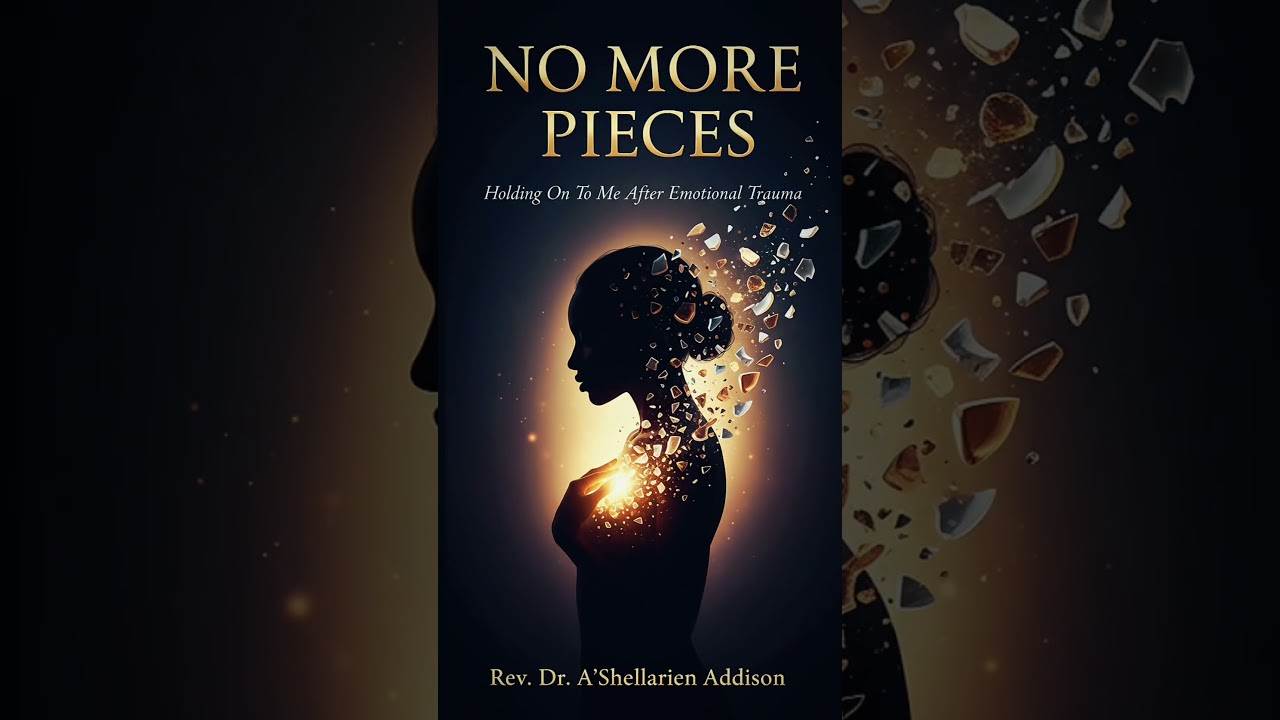
We Stand Flat Foot On God's Love...Word and Healing #emotionalhealing #love #traumahealing #shorts