Blood Flow Restriction (BFR) Training & Rehab in Physical Therapy with Nick Rolnick
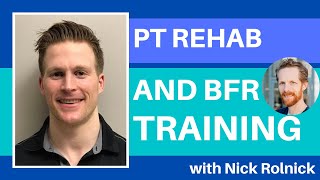
Nick Rolnick, a physical therapist and co-founder of BFR Pros, explains blood flow restriction training, which started in 1960s Japan. Low-load exercise with calibrated cuff pressure creates a hypoxic environment that builds muscle, strengthens tendons, and improves bone density. Safety requires objective pressure measurement with Doppler or pulse-oximeter, not just tightness scales.
Chapters
Hey, welcome back to the Cash PG Lunch Hour podcast. This is Aaron Labourer, your host and today my special guest is Nick Rollnick. Nick is a physical therapist and performance specialist and his specialty is bfr. So blood flow restriction. Nick is the co founder of the BFR Pros. I always want to say BFR bros because it looks like if on social media I would be hanging out with my bros if I was hanging out with them. So Nick, welcome to the show. Appreciate you being here.
Thanks so much. Really appreciate you having me and looking forward to a little bit of discussion wherever this may lead.
Awesome, man. Well, tell me what is BFR and what like just for. I mean, because I know there's people out there that have heard about it, but I haven't really heard about it other than what I see on social media over the last year. So give us a little brief like synopsis of what it is and who benefits from it or how you're helping people with it.
Yeah, I mean I think first, before we even talk about bfr, it's probably pertinent to understand or at least gain an appreciation for how blood flow restriction fits into my own personal philosophy and how that then shapes where I've been heading in bfr. And for me as my physical therapy practice, I'm a cash based at a network physical therapy practice that's just me. So it's the human performance mechanic. And my mission as the human performance mechanic is to really make this world a healthier and happier place to be by getting people back to the activities that they love as quickly as possible and by using the most evidence based modalities that are for me things like blood flow restriction. And blood flow restriction involves the use of a cuff that's calibrated by some sort of technology, whether that's automatically via a computer or manually via Doppler, an external Doppler and a Sphygmomoma. And what that is, is we're then exercising, typically exercising, you can apply without exercise, but we're exercising at very low weights. So anywhere from 20 to 40, even 50% has shown efficacy of the 1 rep max. And in doing so we can then accelerate the fatigue process using very light loads. So it's actually was was discovered, I guess if you want to call it that, by this guy named Yoshiaki Sato back in 1966 and he was actually a teenager at the time and he was interested in building muscle and I think he was at a Buddhist statistic, Buddhist church. And he was on his knees and he started to feel A little bit of like burning in the calves. And I always make this joke in my courses. My teachers like, oh, well, you know, for us physical therapists, we're always thinking sciatica. And instead of the teenager, bodybuilder was like, oh well, you know, let me just try to wrap something around my leg and see if it can replicate that feeling. And that was the birth of Katsu or added pressure training in Japan. And since then it's really been making a lot of headway, most recently in the last three or four years. But in general, if you look a lot of different people in Japan have been using it from cardiovascular disease to performance. And now it's kind of trickled and made its way into the western part of the world and is known as blood flow restriction training. And so we can now use lighter loads to challenge our musculoskeletal system to gain similar benefits in muscle mass and strength as heavier lifting, which opens up a lot of opportunity for us in the rehab realm. And so getting back to my own personal philosophy is that when we're injured, we're really not able to challenge ourselves to the degree of adaptation, of fostering adaptation. That's why we see a lot of atrophy that occurs. And really atrophy is just a symptom of all the negative things that are changing inside of our body when we're not using our muscle. And so that's just the symptom. And so with blood flow restriction, because we're able to use such very light weights, we're now able to create similar adaptations as if they were lifting heavy. And so we can accelerate their rehab and performance with the use of blood flow restriction. And that really makes people happy. And getting them back to the activities that they love quicker than the traditional means is really what exemplifies bfr. And so for bfr, believe it or not, the BFR pros is actually not doesn't stand for blood flow restriction pros. It actually stands for the better for results pros. And it's any technology that that is out there that is proving to be better than traditional or traditional peanut butter and jelly type approaches in rehab. So that's kind of how everything fit together or blood flow restriction fit into. My own personal philosophy is that the research now is really supporting that this is a viable approach to not only rehab, but performance. And it is safe when used appropriately. And. And yeah, so it's really nice to see that now blood flow restriction is gaining popularity. And so my job or my self imposed job is to try to make sure that safe practice is adopted as we continue to, as this continues to grow. So that's kind of what was your first.
Like, when did you first learn about it? Was it in school or after practicing for a little while?
So I've always been, I've always been interested in health and fitness. And prior to getting my doctorate at Columbia, I actually had a master's degree from American in Health promotion. Because I graduated college, had no idea what I wanted to do. Like to party like a lot of people, but never really had the grades and never really found my passion. And I'm definitely one of those people that if it's hard to keep my attention until you have it and then you really have it. And so I was in my master's degree program. You know, I've been into strength and conditioning. And so I've come across blood flow restriction literature prior to PT school and saying, oh, that kind of makes a little bit of sense. And so I kind of filed that in my back, my back pocket. And really it wasn't until I started to see these segments when I was in PT school with Dwight Howard and blood flow restriction that really was like, oh, wait, let me, let me circle back to this. And that's when now in PT school, I was like, okay, well, let's see how this fits into rehab. Going back to the science. And it became a very obsessive type of practice because I really got way into it and understand that this, this, this actually makes a lot of sense. And, and it's something that can really improve what we're doing as, as rehab providers. And that's kind of how it all started. And then I got into Owens, which Owens Recovery science has been one of the leaders. Johnny Owens has definitely been a Western pioneer in bringing this at least to the clinical side. And yeah, so I'm following Dr. Lennecke's work, who's another pioneer in the, in the field. And so just pretty much absorbing, doing as much being a sponge and trying to just again, get, get safe practice out there with, through, you know, my social media accounts and everything.
So did you have like a personal experience where you're like all of a sudden like, did you try it for yourself? And like, oh, man, like, like, like, like, I'm like, jack, I don't know, like, were you like, holy cow, I can like, bench more now? And I didn't do anything like, so,
yeah, I mean, so you have to also take a step back and you have to realize that. So I was a competitive Bodybuilder. Okay. And so bodybuilders will do whatever possible to, to make gains. I mean, and so bfr, or at least the primitive form of bfr, practical bfr, where you wrap a knee, wrap around your arms, your legs at a perceived tightness of 7 out of 10 to theoretically allow for blood flow in, but occlude blood flow out has been shown to be effective. And that was kind of my first foray into blood flow restriction. And really the pump that you get especially with using like light loads is insane. Skin stretching, like unbelievable. And that, that to me was like, oh, wow, okay, I can, can replicate this feeling with, with heavy loads but using light loads. And I was always injured because I was over training. I really didn't know, you know, hindsight 20 20, but right. Never really know what, what you're doing when you go through it, even though you think you know. And so I was always training injured and so high volume training with light loads was something that always was, was, was a tool. My toolbox. And blood flow restriction was, was used in that regard. And that was kind of like the practical aspect of it from a bodybuilding
perspective because you can't go 100% eight days a week.
No, no, you can't do that and be a bfr. Could, could allow you to replicate that intensity and not stress your joints to the, to the same degree. So that's where it really took a hold of me. And you know, it's been error. It's, it was periodically used throughout my training, but really it was, it was in rehab when I was studying to be a physical therapist that it really kind of took flight for me.
Was this working with a patient or like rehab?
No, this was literally, this is literally like, like on the rare chances in PT school that I was able to watch television and peruses.com that I was, I was, you know, I saw Dwight Howard undergoing that rehab and Stefania Bell talking about BFR and remembering. I was like, oh, wait a second, that's the same type of stuff that I'm doing. But then they're using it for injured popular. And I was like, oh, I connected the dots at that point and I was like, all right, well let me go back. And the beautiful thing about, about the literature on BFR is that it forces you to be able to connect different domains of exercise science. And so even though I consider myself an expert in exercise science, it's also been in muscle building. It's also been forcing me to kind of gain an appreciation of the cardiovascular hemodynamic the interaction effects between all of these. So it's, it's, it's nice to be able to link all of these domains together that you wouldn't normally necessarily consider when you're administering exercise. At least, at least we would like to think that we are. But let's be honest here. The vast majority of exercise prescription does not take into account some of these factors that at least in my personal experience observing and talking with other clinicians. So it's nice to be able to then integrate a lot of this stuff into the curriculum when I go and I teach the application of bfr. Right on.
So for those of us that don't play sports ball, although I play basketball, but I don't follow, like, can you remind us, like, who's Dwight Howard? What was his injury? And you know, give us some context around that.
So I think, I think I actually, I mean, Dwight Howard was an NBA superstar, um, and he was having it. I can't remember if it was recalcitrant knee pain or he was having something where he was having just problems loading. And in his rehab program and he, he really, like, he was using the Delphi, which is the, one of the devices that you can use for blood flow restriction, and he was having some success with being able to get back on the basketball court. And, and yeah, I mean, that's basically what, what you can utilize BFR for, for athletes is their rehab, but also in season training to reduce the ground and pound on the joints.
Right. So what are some of the other things that you use BFR for? Like clinically, whether it's, you know, outpatient or like, what, what would be some of the uses? Like, what are some of the uses that we might not even think about? Like, I can. My first think thought would be, well, when I was taught how to do ACL rehab, we were using electrodes to stimulate the VMO and doing these weird exercises people couldn't replicate at home in the clinic to try to get their quads and VMO to fire again. Is it instead of that kind of thing or what are some of those practical?
Yeah, no, that's a great question. I mean, the biggest thing that we have to. And the focus of the course that I teach is really talking about optimizing hypertrophy and strength. And those are obviously easy to visualize with use of blood flow restriction, irrespective of the science behind why that happens. Because you're lifting weights, you're going to get stronger, you're going to gain more muscle mass. If you get tired. But there's other cool, unique things that can happen when we restrict blood flow. I mean even going back to how BFR at least was brought to the States and how Johnny Owens kind of got into it was that they were, the military was using, restricting, restricting blood flow to help with limb salvage. And so they knew that the power of hypoxia can drive adaptation. But just like, just like I love chocolate, right? If I eat chocolate gives me that nice, oh that rewarding, satisfying feeling of deliciousness when I eat chocolate and I'm satisfied for the short term. But then if I keep on eating chocolate, keep on eating chocolate, what happens? I end up getting fat, right? So too much of, too much of something, just like a lot of pretty much everything that you can think of, like too much of anything is going to be bad. So too much hypoxia is also really bad, which is what we, you know, we see cell, cell death and everything. So. But hypoxia can be a potent stressor for adaptation in other tissues. So what we're learning is that even getting individuals walking on a treadmill at a very low relative intensity, we can improve their aerobic capacity. And that's because if we consider what actually makes up our aerobic capacity, it's the cardiac output multiplied by the, the how efficient we are at extracting oxygen that is delivered to the limb, which is, which is what we call arterial venous difference. And so we can either improve our heart's ability to pump out the blood, right, or we can improve the utilization of that blood that's getting pumped out back to the periphery. And we can extract oxygen more efficiently than our mitochondria or be able to utilize oxygen as part of the Krebs cycle to create oxygen. And thus we're seeing now that, that even getting individuals exercising at very low intensities, that we can improve their aerobic capacity because we're increasing the efficiency of utilization of oxygen, but also be able to improve their anaerobic power and other variable. Why? Because now we're forcing the muscle now to work in a very oxygen lacking or hypoxic environment. And thus we're creating a better ability of the muscle to buffer some of these ions that might be produced with higher intensity exercise. And so we're able to now create a situation where again, athletes get on and they're like, well, I'm not really doing much. Yeah, it's strenuous from an exertional perspective and somewhat painful depending on how you're going to be applying it. But you know, you're not. Your heart's not pumping out of your chest like you would with high intensity exercise. So we can use very low intensity cardiovascular exercise, much like we do with resistance training, as a bridge toward higher intensity exercise, but potentially create some novel adaptations that we might not necessarily get with high intensity training, whether that's aerobic or resistance training. Further, you know, bones, for example, bones heal because we have a need for nutrient delivery. And that nutrient delivery is given to that area via new formation of new arteries. Right. Vascular supply. And so when we have hypoxia, we now stimulate or we this up regulation of what's called HIF1A hypoxia inducible factor 1 alpha. What that does is basically says, oh crap, there is a lot of, I need some oxygen here, I need to get some nutrients. And that signals other mediators like vascular endothelial growth factor, which helps with creation of new arteries and new vascular supply from existing arteries, for example, to be able to now go and bridge that gap, to now start to deliver more oxygen to the bone. So we're now seeing, and actually we now have from Dr. Lambert, who's one of the, one of the. An MD who's actually showed in his ACL study that increased bone mineral density in the ACL group that that was, that was compared to the same group that was performing all over their body or just like. Well, just. It's localized. Yeah. At least we don't have evidence to suggest right now that it's a systemic effect. But you know that those mediators do travel throughout the body. But what we do know is that what we observe in the clinic and it all goes back to really, honestly muscle. Right. You observe muscle loss in the clinic, but that also is. It's just a symptom. Right. And then what we're learning now is that bone, just like muscle, just like tendon, just like our aerobic capacity, if you don't lose it, you don't use it, we lose it. And so we're seeing that we're having distal femoral condyle and proximal tibial condyle or plateau, we lose. And even the fibular head, we lose bone mineral density. And so this is one of the first studies that really showed that, hey, wait, like, bone can actually be preserved when we use bfr. So that's another tissue that we're like, oh, wow, we can affect that with low, low bfr. That's crazy. And then the most shocking one, which is tendon. And so when I used to teach Last year, year before that too, where it would be like, oh, it's great to know when to use bfr the indications. But it's also really important to understand when maybe we might not necessarily want to consider BFR for. And tendons were one of those topics because we have so much evidence. And again, tendons, tendinopathy is a very complex topic, but in general, right. The tendinopathies happen because of an overuse, the micro trauma, not able to adapt to the imposed demands. And so we want to increase the physical property of the tendon. Right. We want to make stiffer tendons. And the only way that we that's been shown to really improve the stiffness of the tendon is by moderate, is chronic moderate to heavy loading over the period of 12 plus weeks. Right. Light load when you perform that same exercise does not induce any changes in the properties of the tendon. Well, Sentner, German researcher last year published a paper that compared in the Achilles tendon 20 to 35% of the 1 RM standing and sitting calf raises to traditional 70 to 85% calf raises in the same, you know, type of paradigm and showed equal benefits in creating tendon stiffness, which not only challenges our understanding of how we can approach tendon, potentially increasing the capacity of tendons in rehab and performance performance, but also our understanding of tendon physiology in general. Because if hypoxia can create this change in adaptation. Well, you know, and we haven't been really able to show this with light load training in general. Well that opens up a whole plethora of other potential applications for this for, for use of hypoxia. Yeah. So it's, it's kind of exciting because there, it's really challenging our understanding of physiology, but it's also really, at least my hope is that it's, it's helping the rehab professionals gain a better appreciation for the science of exercise. Because people, I feel like that's a missing link. Ironically, Ironically.
Does this mean like we can, you know, it's. With BFR you're able to get people moving earlier in the rehab process when it otherwise would be too painful to lift at a higher load or higher perceived effort type of thing.
So it's funny that you mentioned pain because there is actually a very, very significant and growing body of literature supporting very strong pain relieving effects of BFR exercise. In fact, Hughes and Patterson, who are two of the researchers out in the uk, just published a study that was looking at some of the potential mechanisms that underlie the pain relieving effects of BFR and showed that not only is there a very, very, very strong end pressure dependent, meaning the more pressure that you apply to the limb, the stronger the pain relief. But also there is a slight systemic effect of pain of pain relief. Meaning that when you apply BFR to the quads, you can still see some opposite side pain relief. And that allows us to really play around with a little bit of the way that we structure a rehab session.
So you mean like kind of like graded motor imagery and mirror therapy. Like I do this, my left knee is the problem, but I could do it on my right knee and it'll help with the left.
Yeah, but, but typically I would just attack the site in and of itself. I mean, unless you had a contraindication. I mean typically BFR is, is something that, yes, it's low intensity and yes, it's very stressful, but in general there it's, it's, it's somewhat well tolerated in terms of just being able to apply it like for knees for example, as a home run population. But yeah, I mean, so you talk about the acl. You, you mentioned that earlier and I gave a presentation on this in, in France earlier this year about the strategies for ACL rehab. And you know, for my, my belief is that BFR does never will not replace what we're currently doing. What's tried and true, but it serves as a compliment. So it complements, it doesn't replace what we're doing. So you mentioned that, you know the problem with, with early on ACL is you have this ami, this arthrogenic muscle inhibition, the inability to fire the quad and you see that rapid muscle atrophy that happens as a result. And so what we can do with the Russian for example is you just slap some cuffs on, cuffs on, slap some cuffs on the, on the limb while you're doing the Russian. So not only are you getting the muscle recruitment right, you're getting now the additional cell swelling and there's the potential for that cell swelling and that additional metabolic stress to be additive to help with getting some more of that quad back. Not only that, we know that the more discomfort that you potentially, you know, that you're experiencing during your exercise bout even though it's low loads. Right. The more pain relief you're going to get. So we have, you know, my own
personal reading, more discomfort with the cuff
versus with the exercise you're doing. Yeah. So like it wouldn't be like knee. When I say discomfort, I mean exercise induced discomfort that's specific to the quadriceps. For example, not the knee joint itself, that would be a little bit different. But you can use, you can use this pain relieving effect to your advantage. So you can have individuals perform low load BFR exercise like isometrics for example, if you're really early stage and high pressures. So because the higher pressure is going to give you a better response and then you go gait train. So now you have some analgesic effect of, from the blood flow restriction exercise but now you're integrating it into your clinical practice. So it's not just okay, muscle mass is great, but we also need to consider the global effects of what's going on. So how is their gait, what are they doing? How can we then you know, make this part of their program, home program. Right. Or whatever you're doing in the clinic. And so it really is important to understand that, that yeah. Like when you're, whenever you're doing strengthening exercises, specifically those that are isolated to target muscle groups. Yeah. I think BFR can replace what we're doing in that capacity because you're just doing the same exercise, you're just adding BFR to it. Right. So but I don't think it's going to replace anything. Like you know, you're not going to do BFR over something else if like gait training for example. Like I still think that it's important to understand and implement what's tried and tried and true and my philosophy of BFR is always under promise and over deliver. So we already know that without a shadow of a doubt that we're going to improve our muscle mass and our muscle strength and we integrate blood flow restriction and now it's just alright, what are the benefits that are coming out that that's, that are beneficial. Okay, great, that's awesome. But if we know that we're improving our muscle mass, we know that we're improving our metabolic health, we know that when our metabolic health improves our systemic overall balance of inflammation and anti inflammation are going to be, are going to change and that's going to help promote better outcomes.
Right? That's awesome. So like I can clearly see like the performance benefits.
Right?
Like so let me ask you this one question. I can't. So I used to race bicycles, right. I'm sure I used to have even my wife said yesterday your legs were, you know, daddy's legs were a lot bigger. You know, when I was riding, you know, 400 miles a week or whatever, it was a lot. I mean four or five hundred miles a week, I spend 25 hours a week on my bike. Sure, I had a ton more mitochondria, right? Because I rode. I commuted to work today, quarter mile, and I'm like, man, my legs are burning. It's the first time I've been on my bike in like a year and a half. Performance wise, it can help me build more tolerance, more better system to process the blood flow. Not like without the blood flow restriction, but process all the energy, oxygen deliverability, anaerobic threshold, anaerobic capacity, etc.
Right?
So to me, I'm like, okay, yes, that's easy. Sweet. I wish I had a power meter when I used to race bikes so I could know how much power I did. And then I can see, okay, there's the people that, okay, they're post surgical, they're gonna atrophy. And we can help with that. Like what you just described. How about that? In between population, like the person with back pain or hip pain, it's a proximal joint issue or pain syndrome, even neck pain. Like, you're not gonna put BFR on my neck. We call that a neck brace or not, right?
Like, how do you do in private, right?
Something you do in private. You know, it's like, how, like what's the application there in that middle population, which happens to be majority of people we see in our clinic here?
You know, so. Good question. You know, there, there is. There is a couple of avenues that I could take this. In general, you know, I agree. I think mostly limb problems are things that you're going to use BFR for. There is something called proximal hypertrophy, and that's the concept that you can gain muscle mass and strength in areas proximal to the application of the cuff. So the best example that I can give, the easiest one to kind of grasp is glute gains from squats. Now, how is that, how does that relate? Well, if you look at what the squat exercise is in general, right? You're thinking if you're squatting, the main mover is the quadriceps, right? You're looking for closed chain knee extension, right? So what, what muscles now are involved with closed chain knee extension? Well, you have the quads, obviously, right? You also have the gastroc soleus because they're going to pull the tibia back in closed chain, which is going to, again, assist in the extension. And you also have adductor magnus that can act as a hip extensor along with the hamstrings that can also act as hip extensors. And they're Distal to the cuff. Well, what we do know is that low load blood flow restriction accelerates fatigue at any given load. Alright. So if we're consistently doing squats, then we're going to ultimately at some point reach the fact that our hamstrings, our glutes or one of the other synergists that are distal to the cuff are going to start to be able to lose their ability to generate force. And that has to do with the metabolite accumulation inhibiting the muscle fibers ability to contract. Right. Now the glutes then come on in an added way. Right. So. So in deconditioned clients, in people that have proximal, that have issues in their hip, you can definitely gain some benefit with using blood flow restriction. Not to mention that what I just said before, which is that pain relieving effect of using a very taxing exercise on the systemic benefits. Right. But I always say BFR is a bridge to heavier lifting. So I would never, if my glute hypertrophy is the goal. Right. I'm not going to go and slap on cuffs and have them do, have them do squat exercise in lieu of doing something like a heavy hip thrust or you in doing like a heavy single leg squat, heavy single leg bridge. Because really the benefit for your time is not there for me. Now if your rationale is pain relief and it's the okay, we're going to do this for that and BFR kind of fits into that plan. Sure. And the same principle applies in the upper extremity and we have research to show that, that there is some proximal hypertrophy that you can get and that's observed in many studies even there's a systematic review on it and it was just another paper published actually like last week with upper extremity exercise. So we see it a lot in lower extremity, but upper extremity exercise sees that as well. And that's likely a byproduct of the increased sympathetic activation that we get with, with the strenuous exercise. But again that kind of segues into, well, what populations might be for it. Because sympathetic activation tends to be a condition that exists with a lot of comorbidities like diabetes, hypertension, obesity. So as we're going into, and that's, that's a very important subtopic in, in BFR is that yes, generally speaking BFR is well tolerated even in those individuals. But, but we need to take strategies as this, as this methodology, this approaches is now going more widespread that we need to mitigate the risk of this from happening because blood flow restriction goes by a terrible name. Bfr. Terrible name. Blood flow restriction. When I go and speak with physicians, they're like, why the hell would I want to restrict blood flow to a limb? Muscles need blood flow, right? But, but we're never fully restricting blood flow. We're only, we're only restricting a degree of blood flow to facilitate a relatively hypoxic environment to then promote those adaptations on a long term scale. So it's, it really is like, and that's that this is where like the course that I'm writing and the course that I teach in person, it's, it's not enough to understand blood flow restriction and the benefits. Right. Because anybody can hand someone a paper and say, you read this, like whatever. And honestly physicians don't read that crap. Let's be honest here. They just want to know that evidence exists and you're not pulling something out of your ass. Right. Because I've spoken with many, many physicians and they don't read any of the papers like, come on, let's be honest here. But what they do want to know is they want to know how this can affect certain conditions and why, for example, we would hold off on BFR on one type of patient, but might want to do it on another population. And so it's important to really have a good grasp of the fundamentals of exercise science and then how our body is like a machine. I mean, I am the human performance mechanic. My thing is I view the body as like a very complex machine that when, you know, when something goes out of whack, it takes a skilled mechanic to be able to look at the problem, diagnose it, and then provide the remedy. But you need to know what the problems potentially could be and what the solutions could potentially be before you then go and say, oh, I want to do bfr. And so that's why we spend a significant amount of time talking about safety and exercise response in general and what the expected exercise response should be. So you know what the, you know, when you deviate from that.
Yeah. Are there like, Nick, are there like populations like neuro, pediatric populations that benefit or reasons to get outside of orthopedics with this?
Yeah, I mean, so the research on non orthopedic conditions is pretty scarce. You know, there, there is the potential for what they use a form of blood flow restriction application. It's called remote ischemic conditioning or ischemic preconditioning. What that is, is you basically inflate it for over 100% of your, what we call your limb occlusion pressure, meaning that there's theoretically, theoretically there is no blood getting in and there's no blood getting out. And then you do that for repeated inflation and deflation. They've done this actually before surgeries like transplants and they've actually shown that you can reduce post surgical opiate intake and perceptions of pain from having this potential intervention. And they've also done this on. Or there's the thought that if you highly fatigue out of spastic muscle, for example, and you have spasticity, that there may be the potential for BFR to help with that because it accelerates the fatiguing process. Right. But there really isn't a lot of research that's using ischemic training on neurological populations and in pediatrics. You know, there is no age limit for the application of bfr. We know that it really doesn't have any sort of negligible adverse effects on the growth plates. At least that's what the science would tell us. And in fact there's research now that's, that's looking at very young kids that are undergoing ACL reconstruction. I think it's the chop. One of the hospitals, Connecticut Children's, I think is undergoing an ACL trial with very young kids. But in general the tolerance or the attention span and the tolerance of the exercise is going to limit pediatric application because these kids, you know, it's not a fun, it's not, it's not fun. Fun to be able to go through BFR exercise. It's effective. Absolutely. But again, everything is a cost, right. If it's free everyone. You know, I always really like to go back to analogies that people can grasp and understand because that can contextualize anything that we, you know, we're doing. So bfr, if it was easy, everyone would do it and how bad do you really want it? And that's kind of how I frame bfr. It will work for you, trust me. The science is very sound. It's rooted in a lot of science. It's just that it's going to be uncomfortable.
Yeah. So one of the first times I saw it and I didn't know it was, what it was was like some program on. It was, it was called like the gun show or Armageddon or something like that. Someone's like trainers basically teaching people how to get, you know, ripped and jacked.
Right.
But what it was, what I, what it was were like elastic bands that they, you just like yank tight on
your arms to do your you know,
bicep curls and stuff like that. Is that the same thing? Is that safe or, you know, where.
I mean, I mean, let's be honest here. If, I mean, if in general, in general, you know, BFR has been shown to be safe and effective with a variety of different applications. And again, I take it upon myself to try to promote optimal evidence based practice. So we do discuss that kind of training, which is elastic band. You wrap it around. The problem I have with that is the lack of objectivity and reliability. What you want to do is you want to just maintain a minimum threshold of pressure, right? That's typically about 40 to 50% of the pressure it takes to completely occlude arterial flow in the arms and about 50 to 60% of the pressure that it takes to occlude arterial flow in the legs. Right. Higher pressures don't necessarily augment the results, at least from a musculoskeletal perspective, but may have other secondary effects on the vascular system that might be upregulated following hypoxia. Right? So like H1F and HIF1A and some of those other variables that might depend on higher pressure, but for generally speaking, you don't need that high of a pressure. The problem though is when you start to use a subjective scale like a pressure scale like that 7 out of 10 tightness, it works, of course, but then you're creating a situation where you might be exercising under full occlusion or you might be exercising with not enough pressure and then you're better off just exercising. You're better off doing something else instead. And so for me, I just want to make sure that safe practices is adhered to and is promoted. And so it's now the technology is out there where not only is there previously there was. You needed to use a Doppler, right? You need to buy a Doppler and you need to be trained in the technique. And now, I mean, even two weeks ago, there was a paper that was, that was the second paper on the topic that supported the use of a pulse ox for upper extremity bfr. Oh, wow. So. So pulse ox is very easily, is very easily used. You basically just pump it up until the pulse ox disappears. You pump it up about 10, 10 more millimeters over and then you slowly lower it. Once that pulse ox starts to register, that's that person's limb occlusion pressure. And it's very easy. And I've been experimenting it with ever since that first paper got published back last year. And so it's good to see accumulating evidence a more more feasible practices. So you know it does work. Sure. But the problem too is once you start to exercise with full, under full occlusion, you're now increasing the adverse responses to higher pressures.
What are the adverse responses and what like what is unsafe? Because you keep saying you want to help people do it safely. So what are the adverse effects? What's unsafe?
So every time we exercise we activate something that's called the exercise pressor reflex. And the exercise pressor reflex is a fantastic conglomeration of the complexity of the human body. We have these sensors that are called afferents that lie around in and around the muscle fibers themselves. And what they do is they sense chemical and mechanical changes in the local muscle environment. These connections then go all the way up to the brain, the cardiovascular control centers of the brain, which then upon activation will increase heart rate, blood pressure and ventilation rate. Right. And so when we exercise, we need to deliver blood flow to the exercising muscle. And the exercise pressure reflex, the afferents, they signal that, oh, we need more energy, we need to get more blood flow to the area. And so they signal that then increases the heart rate, blood pressure and again things that are associated with sympathetic nervous system, right? So we have an upregulation of the sympathetic nervous system, a depression of the parasympathetic nervous system. And so we have this increase in intra exercise blood pressure that's normal, right. And that's intensity dependent and that changes between type of contraction, exercise modality, etc. Etc. But in general, the higher, the more intense the exercise, exercise, the more demanding the exercise is, the higher the sympathetic response, the higher the exercise pressure reflex is activated. And so when we have individuals that have comorbidities like hypertension, obesity, diabetes, these are things that now are coming very common in our vernacular. We're dealing with a lot of patients that have these conditions. We need to be aware that there is altered muscle metabol reflex, meaning that the afferents, the particular afferents that are responsible for sensing the changes in the, the, in the metabolite accumulation are, they're like they're hyper ready. And so they're going to then signal and create an exaggerated response to this exercise, which is going to further increase the exercise induced hypertensive responses to exercise. Now there's a complicating factor, right, because the afferents, what they also do is they signal to the sympathetic nervous system to release all these normal epinephrine, adrenaline, all that other stuff. Now our blood Vessels should be able to dilate when this process occurs. Right. That allows for the, so the exercise pressure reflex signals to the body, hey, I need more oxygen. Right. Well now the local response is a vasodilation and we call this process functional sympatholysis. And functional sympatholysis allows us to be able to continue to exercise at a higher intensity because it allows our muscles to be supplied with oxygen and blood flow. Well, in hypertensive individuals, for example, this, because of arterial stiffening, this process now is impaired. So now you create this, this, this process whereby the afferents need more oxygen signal to the, to the body, we need more oxygen. Oxygen, blood flow continues to get delivered, increasing blood pressure, heart rate, et cetera. But then the artery doesn't, is not able to vasodilate effectively. So now it creates this feed forward, this vicious feed forward cycle that can really have the potential to spike intra exercise blood pressure to unsafe levels. So if we carelessly apply blood flow restriction, which we are literally facilitating an increase in sympathetic tone with the application of bfr, especially when we use higher pressures. Right. Because that increases exercise induced discomfort, but also hypoxia and all these other drivers that can potentially further the feed forward mechanism, we can create a potentially dangerous environment. So even though we're trying to help our clients, we can end up actually creating an adverse event. And so there are strategies that we can use to mitigate this exercise induced increase in hypertension with the application of bfr, but also with our exercise selections and other things to help reduce the chance of an adverse event occurring within our own practice.
That's important. Well, thanks for going in depth on that.
Yeah,
like real quick, we got a few more minutes, I got one or two more questions, but if someone's out there like, oh, you know, how do I know if BFR would help me in my practice? What would be one or two kind of questions or patient populations or problems? They could say, oh yeah, I should take a look into this, you know, because there's a lot of different types of physical therapy, a lot of different types of people that listen to the show.
I mean, so I will tell you that knee osteoarthritis is a home run population because those individuals tend to have a lot of exercise induced knee pain. And the current recommendations for strengthening involve moderate to heavy loading, which again has been shown in the long run to be effective. But the problem is they're in pain doing it. They're in pain the next day and then it turns them off to exercise blood Flow restriction can provide an avenue to keep them excited about exercise and really feel that, that burn. That's why we say chase the pump. Chasethepump. Because you're really, you're really feeling that burn. And you know that great beneficial muscular adaptations are happening when you're, when you're having them do that and they don't have any knee pain, which is even better. And then the second really is if you're challenging your patients at all. Right. Like all, all you need to do really is if you're using the traditional. And I hate to group pts, but this is basically what a lot of people do. Three sets of 10, three sets of 15, whatever. And you're doing any sort of upper or lower body exercise and you're, and you really just, you're just doing it for whatever. Well, just slap some cuffs on because you're going to augment the fatigue response and get them more bang for their buck in a nonspecific way. Even if you're not really, if you're not really like, oh, condition wise or whatever, the likelihood is that that, that muscle mass, that pain relief, that strength response, improving function is all going to help improve their quality of life, make them happier, get them back to the activities that they love quicker than whatever the hell you're probably doing. And so it fits into with my training, my model as well. I mean I do rehab to performance. I know that's cheesy, but I have people that are in rehab and they, they want to stay under my umbrella. And so blood flow restriction can help provide that bridge to get them from rehab to performance. But also occasionally when they're, when there are training, you know, I have clients that just want to do bfr. They love the feeling people get addicted. It's crazy.
Wow. Right on. So if someone wants to learn more about BFR and get in touch with you, what's the best place for them to go? Where do they, where should they find you? On online Instagram website?
Yeah, I mean my, my Instagram account at the hpm, so it's just short for the human Performance Mechanic is literally, I would say the most comprehensive open access BFR research platform on the planet on the Internet. I do my best to provide an unbiased source of education. So I don't have any dogs in the fight, I don't sell any cuffs, I don't do anything. It's purely about fulfilling my mission of helping get people back to the activities that they love as quickly as possible using the most up to date evidence based modalities that are supported by the research. So blood flow restriction is that. And so, yeah, so the HPM and then also the bfrpros.com is the company website where I do education. And hopefully in the next couple months, you'll be able to take the online course, which is probably going to be unlike anything that you've ever thought about taking because it's a very large, comprehensive course that you're not going to be able to take in one sitting.
Yeah, you've been working on that for weeks, months. Just recording. I mean, just recording.
Yeah, it's been a labor of love, but I think it's going to be something that's sorely needed because really it truly is just about making, you know, getting people excited about bfr evidence based practice and really breaking down very complex topics in exercise science. Because once we understand the body's normal response, then we can then talk about the abnormal responses and then how BFR can fit into that. That equation to help promote better outcomes. I mean, that's really what it's all about.
That's awesome. That's awesome, Nick. Well, Nick, thank you very much for coming on the show. Appreciate it.
I'm very happy to be here. So thank you.
Yeah, it's been exciting to see where you come and I'm excited to see where you go with this course and with BFR and everything you guys are doing. So check out Nick at the HPM on Instagram and BFR pros, not bros. We'll put all the links in the show notes.
All right, man.
Appreciate you. Everyone, if you're listening, this is the Cash PG Lunch Hour. Chase the pump and get out there and check out the VFR stuff because it's the new wave.
That's it.
Mine aren't that big. I'm tall and lanky, but I can ride a bike all day long, man.
I can't.
All right, thank you guys very much. Thanks, Nick. Appreciate it.
More from Aaron


My clinic has NEVER been in-network with insurance companies—and it NEVER will be! #cashpt








