Creating a CashPT Residency with Dr. Derek Nielsen | CashPT Lunch Hour #33
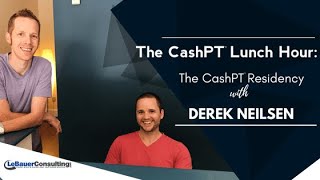
In this Cash PT Lunch Hour webinar, host Aaron LeBauer interviews Dr. Derek Nielsen, a recent graduate and cash‑based physical therapy resident at LeBauer Physical Therapy. The conversation covers Derek’s background, why he chose cash PT over insurance‑based practice, and how he entered the residency through mentorship with Greg Todd and Jeff Moore. They discuss the structure of the residency, the blend of clinical and business mentorship, and Derek’s early experiences observing treatments before treating patients himself. Key themes include developing hands‑on clinical confidence, mastering patient communication to secure buy‑in for treatment plans, and the importance of educating patients on the value of cash PT. The dialogue also explores marketing strategies such as direct‑to‑patient outreach, website and email education, and handling insurance‑related inquiries. Derek shares his perspective on pricing, emphasizing transformation over a service fee, and reflects on the challenges of conveying value. The conversation shifts to broader business considerations, including future practice goals, the desire to integrate wellness and fitness, and long‑term financial planning, with Derek describing his early investing habits and the parallels between investing and building a cash practice. The session concludes with a call for new residency applicants and final thoughts on continuous learning and growth.
Chapters
Hey, y', all, what's up? This is Aaron LeBauer with Labour Consulting, Labourer, Physical Therapy, and the Cash PT Lunch Hour. And I'm so excited to have you guys here and join us today. This is Derek Nielsen, Dr. Derek Nielsen. He is my employee and cash PT resident. And we're going to be talking to him today about what he's been doing in the last year, really even the last five months that he's been working here. While we're waiting for everyone to join us, go ahead and type in the chat where you're calling in from and if you can hear and see us. Okay. And just let us know that you're here. You can see us. And, you know, sometimes we get people calling in from all over the world. Had North Pole. We've had people from Africa, Asia, Europe, London, etc. In all over the United States, even down the road in Greensboro. So let us know where you're calling in from. And there should be a little chat box down to the right. And we'll get started in just a few minutes. What I want to do is give everyone a chance to get into the room, and then I'll introduce Dr. Nielsen. We'll talk a little bit more about what we've been doing, and at the very end, we'll have time for a Q and A. So go ahead and be sure just kind of close down any other programs you have running in the background. If you have someone else playing Xbox or something using your Internet, you want to make sure that all your Internet resources are available for the broadcast so that you don't have an interrupted signal. If something does happen and you lose the volume or audio. Well, volume and audio are the same. If you lose the volume or the video, just go ahead and refresh your browser window and that will bring you right back in. All right. What's up? Alina from Dallas? How's it going? All right, if you guys are just getting in, you're in the right place. This is the cash pt lunch hour, and I'm here with Dr. Nielsen, and we're going to be talking about the Cash PT residency. And go ahead and write in the chat box where you're calling in from and if you can hear us and see us. Okay. And we'll be getting started in just a moment.
I'm hoping I have some classmates show up.
Yeah, I hope so, too. Now we got Edwin from Texas. Awesome. So Texas is in the house today. All right, we'll be getting started. Just a moment. Let's give everyone a few More minutes before we get rolling. Go ahead. And, you know, if you want to get out a pen and paper, get it out so you can take down some notes. I'll also send you a replay of the webinar and you'll get access to any resources we talk about when we publish it onto the blog and podcast. Hey, Eric. What's up, man? How's it going? Appleton, Wisconsin. I used to race bikes up in that neighborhood. It's super weak out in Milwaukee. I did a lot of racing around there. All right, so if y' all are just. If you're just getting here, this is the Cash PG Lunch Hour. It will be started in just a moment. I'm really excited to have you join us today and get ready because we're going to be talking about not only cash based physical therapy, but basically a new person's perspective on what it's like to work in a cash practice right out of school. So this is going to be really awesome. All right, if you're just getting here, let us know that you're here and you can hear us. Hey, Michelle, how's it going? All right, y' all ready? If you're ready to get started, type a yes into the chat box and we'll get rolling. I knew I didn't do that. I mean, was that inevitable or what?
Right on cue.
Yeah, y' all didn't see that? I spilled my water, but that's okay. There's no computer or anything important around here. We're good there. All right, y' all ready? All right, let's do this. Hello, My name is Dr. Aaron Labourer with Labourer Physical Therapy, Labour Consulting. And this is the Cash PT lunch hour. Today we're talking with Dr. Derek Nielsen about cash based physical therapy and the Cash PT residency and his experience learning about cash based physical therapy, marketing direct to patients, even his clinical experience and clinical mentorship here. So this is Dr. Nielsen. He's sitting right next to me. And this is one of the few times I have the opportunity to interview someone in person. It's actually kind of rare and really exciting and here at our practice. So, Derek, just. Will you introduce yourself, tell everyone a little bit about you, and even just go back to why you became a pt.
Okay, so I. I'm actually from Utah, Salt Lake City. Grew up there and then went to undergrad, University of Utah exercise and sports science major, and then ended up moving out to Philadelphia for grad school. I went to Drexel University out there. And then immediately when I got finished there, I moved Here I am, an identical twin brother. Like, I don't know exactly what you want, how far you want.
Yeah, that's a good one.
But I got started in physical therapy because I had a friend that her brother ended up getting in a car accident, motorcycle accident. He flipped over backwards and got a traumatic brain injury. And her parents always said that the doctor saved his life, but the physical therapist gave him his life back. And I've always enjoyed exercise and being physically active, so that kind of. I was, like, trying to figure out. I was in undergrad, trying to figure out what I wanted to do. I was like, that sounds. That sounds awesome. I think we'll go for that. And then ever since then, just went to.
After undergrad. Were you working somewhere else before PT school?
No, no, I took. So I'm a little bit older, 32. I took five years off between high school and college, and then I went straight through. I ended up taking the first summer off of undergrad, and I was like, well, that was a waste of time.
Just kept going.
And so I just went straight through from undergrad into grad school.
All right, what'd you do between high school and college? Ski?
I worked.
I worked. What'd you do?
Most of the years I served tables, but there was, you know, there's a span in time where I had, like, five jobs in two months.
Yeah.
Where I couldn't find anything I liked.
Yeah.
And then I was like, I got. I gotta. I gotta do something else.
What was it about those jobs you hated?
A lot of. More like physical labor.
Yeah.
And I didn't want to grow too fast.
Right. What inspired you to get back to school?
My girlfriend at the time, her parents were pretty successful. They both were college educated. My parents aren't college educated, so it wasn't like my family ever pushed me to go back to school.
Yeah.
But I looked around in my surroundings and saw the people that I kind of admired had gone to school. Yeah. All right. I gotta do something here.
Yeah, Right on. Wow. So did you get loans for school or pay your way through or how'd that work out?
Yeah, let's not talk about that.
Yeah. Okay. That's what I did. Okay. Yeah. You know, I know. It's like, stuff like. It's like, when I went to school, it was just like, it was expected that I did it, and it was provided for me, and I took it for granted. You know, I didn't take it for granted that I failed out. But, you know, when. Like, when Andre went back to school, she was like, I'm paying for this. I'm doing it. And she just took. She was like, yeah, why am I wasting my time on spring break? You know, why are teachers wasting my time, you know, like, telling me a bunch of bs, like, you know, and so it's a very different, like, I mean, I went back to PT school as an adult, and it was very different than when I was an undergrad.
Yeah.
You know, did you. I mean, did you have that. Do you see that?
Yeah.
In yourself? Yeah.
Yeah. I mean, grad school is more about, go, go, go, go.
Yeah.
It was like the longest break I think I had through the two and a half years was like three weeks.
Okay. Yeah. So. So you got out of grad school, you saw, you know, someone, you know, someone in your life had been impacted by physical therapy, and you're like, okay, I like to work out. I like to be active. Let's go down that road. Did you. Anytime during PT school, you're like, this isn't for me. Or was it was the whole thing, like, yeah, this is everything that I've wanted.
No, I. Yeah, no, I never thought. I would never say that. I didn't think this was for me. I just thought there were certain populations that were. That I knew that that wasn't for me.
Yeah.
So, for instance, like neuro patients or, or inpatient or acute care. You know, I never thought. PT is not for me. I thought that just solidified, like, that's the population I don't want to work with.
Yeah. Yeah. I was lucky. I didn't have to spend. I didn't have to work, do assisted living in PT school. I got out of doing that. I was just like, it wasn't my population. And I. But I have friends who are like, boom. That was their population, you know, so PT school's going on and you're. You're in there, you're. You're plugging away, you're doing your thing, you're studying hard. How did you, like, was there something that was going on? You're like, all right, I've had this experience and I don't like the way that works. I'm more interested in cash based physical therapy or more interested in learning something that I'm not getting. Like, where did. Where was that point at which you. You were like, okay, what I'm learning through the school isn't enough. I need to go learn something more?
Well, I always knew that I wanted to work for myself. I don't know if it was. It wasn't necessarily cash based Anything. But I always knew that I wanted to work for myself and have some sort of business. So I started researching that, like what can I do? What is it going to take for me to work for myself? It wasn't okay, I don't want to work for insurance. That did. That never came up in my mind. It wasn't insurance versus out of network versus cash versus anyone like that. It was like what is the best route for me to be able to work for myself. And so the more research I did and looking at that and I don't, to be honest with you, I don't know exactly how it ended up working out. Like how I found cash base and this and I wasn't, it wasn't like somebody introduced it to me. Yeah. It was through the Internet somehow. And then I started, your name came popping up. Chad Madden. Those are Jared Carter. Those are the three names. I think those are the first three names that popped up. And then I just started researching it and seeing kind of what it was all about. Yeah. And then got into thinking that's what I wanted to do.
Yeah. And then you got into. And you found me or contacted me from Greg. So you got into Greg's program at some point.
Yeah, so I, so I got into Greg Todd's program just because I knew that the whole marketing, in order to run any sort of business, you need a new age, you need to learn how to market through social media.
Yeah.
So I ended up getting into his program, been following his stuff for a while. And then what I, what I really did is I, so I, I was with Jeff Moore's group as well. And I reached out to Jeff, I reached out to Greg. I think those are the two main. I reached out to him because I didn't know what I was going to do after I graduated. I knew I didn't want to work in insurance based care or at least primarily insurance. And so I didn't know. And I knew, I knew I wanted to find a mentor, somebody that was, had been there where I wanted to go. I didn't want to just try and do it on my own because I didn't. One, number one, I didn't trust my clinical skills and number two, I didn't trust business, my business skills, which I, and so I was like, I think the quickest way to do this is going to be to find a mentor. So I reached out to Jeff and I reached out to Greg. I think there was other people I reached out to. But anyways, I think Greg might have said your name and so I ended up saying, well, the heck, you know, I'm going to reach out to Aaron. I know he has a clinic. And then it went from there. And at first I think I just said that I wanted to check out your clinic.
Yeah.
And look at it and see. Come down for a couple weeks and see how it ran. And then I guess talks just progress. And lucky enough, Aaron was looking for employee. Yeah.
What did I. What was the first thing that I said to you? Not the very first thing, but like, remember. Do you remember that conversation?
I don't.
So you contacted me and you said, hey, this is. This is what I remember. Basically like, hey, I'm graduating in May. I can't take my boards in June. I've got all this free time that I can't do anything. Can I come and, you know, check out your practice, you know, help you out, whatever. You're like, you know, I've got five weeks. I want to. Can. I want to work.
That's right.
And I said, you know, well, go to the North Carolina website and tell me what you can do as a. As a non, you know, affiliated student. And you can do anything. Yeah. So as a. Here in North Carolina, like a tech can't do. You pretty much can put hot packs and towels on people. You know, can't really do much. And we don't have hot packs and towels. You know, I got dust bunnies and toilets. And I was like, no, we're not doing that. So. So then I said, okay. So I got this. I was like, all right. My thing was, is like, I know the answer to that question. But I was like, well, let me see if Derek can come up with the answer. And you did. And then. So what did I. And then what was the next thing that. Do you remember?
You brought me over to your funnel.
Yeah. No. So the next thing was. Well, yes, that was then. And I said, well, so in my mind, I was like, okay, well, what can I do with Derek for a week? And I said, well, come down for a week, you know, and you were like, you know, I'll do whatever you need, you know, you know, I'll, like, pay for an internship or whatever, you know, like, I really want, you know, you were hungry to learn. And I was like, all right, well, we can do that. But I said to you, I said, look, I can do what you want, but I need a six month, six month or a year commitment. And you were like, okay, we'll do that. And then. So I. And then I gave you. Then I Sent you to my hiring funnel.
Yeah.
And I said, okay, if you can fill that out, which is screwed up, would you. Would you screw. Don't you. Don't give away the secrets. Oh, yeah. But, you know, it's tough. You didn't really screw up. Don't tell the way the secrets.
Yeah. So it didn't go to the right area.
Yeah, yeah, yeah. So it was. Yeah. So, I mean, but there are a few people that did that. And I was like, hey, you know, and. But very few people who got past that point. So in tweaking my hiring funnel, I had to go through and, like, push people and nudge and say, hey, X, Y, and Z. Very few people went beyond that, you know, Very. I mean, there were only four people that finished, you know, after out of eight months of looking for a pt. But, yeah, so I was looking for a pt, and it was like, okay, I need a pt. And I was like, okay, well, let's see if Derek wants to come in. So we set up an agreement that would be more of a residency because you wanted a clinical and business mentorship. Not just business, but also clinical. And we started in. What did we start in May. And tell us about, like, had. You know, what did you do between. We kind of have hashed out an agreement in February and May to prepare. Yeah. And what else?
Study for boards. And. And then I ended up going to some continuing ed courses. So I took the sfma. I took number one and number two, and then I took a myofascial release course.
Yeah. All before you came here and graduated. Yeah. Which is impressive. I mean, that was one of the things that sold me. I was like, he's already, like, studying and showing that he really wants it, which is awesome. And you, like. And what set you apart from a lot of other people as well? Not just in applying for a job, which wasn't really there. You weren't really applying for a job, but it was that you said, I want to do this, and then you did it, you know, or I said, hey, do this, and then you took action on those things. So tell us a little bit. I want you to go to, like, go back to May. When you first started, what did you expect? Like, what were you expecting when you got here? Like, you know, to, you know, your role or, you know, like, life or, you know, anything about what we had talked about. What were you. What were you expecting?
I didn't know. I didn't know what to expect. I had seen your clinic online because you have the welcome to la Bauer pt. So I had seen the clinic online. I had seen some of your. I knew, I knew that you marketed because obviously you're out of network and you, you market to me as a pt, like we're doing right here. You market. And so I knew that you had some systems and different things like that to find patients. Outside of that, I didn't know. I guess, obviously I knew a little bit of your systems inside the treatment room, because you had me take a couple courses.
Yeah.
But as far as exactly what to expect when I got out here, I wasn't sure. Yeah. I didn't know how it was going to work out between you and me, how it was going to work out between me treating patients on my own or if you were going to be watching or if how, you know, all of that treatment was going to go. I wasn't sure.
Yeah. What, what was the hardest thing that you had to do that first few
weeks, which honestly I think ended up being a blessing in disguise because I was able to sit and watch Aaron treat for. I think it was two weeks.
Yeah.
Might have been a little bit longer. Two straight weeks. Being able to just sit there and treat and not being able to put my hands on patients or anything and watch how you treated everybody. And then I really think that was a blessing in disguise.
Yeah. What. And like a lot of my. This show isn't about necessarily treatment techniques, but was there something about the way that I was treating patients, interacting with them or something else that either you were surprised about or didn't expect or just didn't learn about in school or hadn't experienced before?
So that. I think that's two different topics. Well, yeah, so let's, let's talk like, not even treatment, but let's talk about how to talk up to a patient.
Yeah.
I would say was a big thing that definitely didn't learn in school. And I'm still learning now. I mean, it's going to take time. It's five months, a little over five months I've been here and I'm still trying to grasp the whole entire. How do I. How do I present this to a patient where they're going to understand? And I, I don't want to say buy in because there's, there's, there's buy. Getting them to buy in to treatment strategy and then getting the buy in because you're trying to sell them.
Right.
Getting into buy in to what they honestly need is still an ongoing process with me at this time. And I'd say that's that was a big part. That. With those first two weeks outside of treatment, that was a big part is. Is how to talk to the patient.
Yeah, yeah, I had to talk to him. Were we talking about on the phone, in the treatments, you know, like during the treatment or eval or everything?
Yeah, everything.
And we were working on this, this week.
Yeah, it's still an ongoing thing.
Yeah, it's.
It's. It's a lot of. It's a lot of confidence and knowing what to say in the moment.
Right. It's. It's something that I'm still working on too. So don't think that, you know, it's. It's. I've got it easy. It's easy for me to watch you and Sarah do it and give you feedback, constructive feedback, but, you know, I'll do it and be like, oh, I should have said, you know, and it's. It's really difficult because a lot of these things are, you know, we're selling. We're not selling a widget, you know, like, we can. I can sell a theracane all day long, but to sell like my. Sir, I can sell your service better than I can sell my own service. Because we're selling a personal interaction. And I think that's what's the biggest challenge is we're selling, like, a personal interaction that doesn't have, like a tangible something. We've got a tangible result that the patient can achieve independent of our interaction and our time with them. So tell me about, like, you know, what happened after those first two weeks? You started treating patients, and then I was heading out of town for two weeks in June. Remember that? So what did you do between, like, okay, you got your license in there to make you comfortable, or maybe you weren't comfortable to feel like you were prepared and ready to, you know, kind of basically run the clinic with within two months of starting here, like, what. What systems did we have in place? What things did you do? What did you learn that got you to that point?
I mean, continuing to work. I think one of the. One of the best things also about this has been that I'm not busy enough to where it's go, go, go, treat, treat, treat, treat. It's. I'm busy, but at the same time, I have enough time to be able to continue to research and continuing to study and continue to look at, okay, this is a patient I'm treating. Where do I need to go with this? And really try and dive deep on my own while I'm on the clock. Yeah, but I would say that one of the bigger things when you left was confidence. I mean, a patient's not going to know. Okay. This exercise isn't 100% correct.
Yeah.
Or his hand placement. You know, it. That's not how it's supposed to be. Like, they don't know.
Right.
And so I would say it's confidence. That's the big, the big thing for that two weeks when you left.
Yeah.
It's just being confident with, with what I, What I had.
Did. Were you confident before I left or was it after I, like after that two weeks that you felt a bigger change?
I would say. I would say when you left. Yeah.
Yeah.
Because it. Again, I mean, it's. I'm the only one here, so I can't fall back on anything else. So it's a, It's a confidence. Like, I've got it.
Yeah. Yeah. Did anything happen while I was gone that you didn't tell me about?
Still not gonna tell you.
That's awesome. Yeah. That was like one of my big goals of the year was I want to go out of town and not close the clinic. In order to do that, I had to have someone and, you know, come work here. And you're like, I can't get there till like end of May. And I was like, can you get here earlier? Because I don't know if a month's gonna be enough. And I didn't know basically until like that week if I was gonna be able to leave that Friday or Saturday. Like, I really just, I mean, I knew that once we started working together, but there was something about, like, it was, it was about. It was maybe a week or so ahead of time. I was like, okay, we can leave on Friday. You know, I was like, we can, we can go out of town Friday because, you know, I can take that extra day off on the front end to go get to my brother's house a day early because we had a two day drive to Illinois, so. Well, that's awesome. And then. So what have you learned working here with us that you didn't expect to learn,
didn't expect?
I don't know.
Like I said, it wasn't. It's not that I really expected a whole lot. I think it really just comes down to being able to talk to the patient. Yeah. And figuring out. It's not even necessarily selling them on anything. It's figuring out what they need in the moment and meeting them where they are and their expectations.
What are the questions you ask patients to get that information?
What do you Mean, like a number at the very beginning.
Yeah, at the very beginning. Or like, you know, in order to get that information from patients to find out where they are to what their expectations are, where, where they want to go, what do you, what do you typically say to someone, you know, to, you know, uncover that? I mean, are you asking them what their date of birth is in there? I mean, do we ask anyone?
We start with, like, what. What the problem is.
Yeah.
When they're having these issues, what. What they've done to seek out solutions, what their main concern is, what their number one goal, what do they want to get out of working with us? Just trying to dive more into who that real person, who that person is, and really trying to uncover and let them know that we actually care, I would say, because the more you just letting them open up and the more you can get somebody to talk and open up about their story, the more comfortable they are, the more they're willing to tell, and then that helps with allowing you to know the true them and where they want to go.
Right. Are you, do you feel like you are able to get to that, like, real answer quickly with people, or is it.
No.
Yeah.
No.
Is it. Is it because of your questions or them, you know, do you know?
Yeah, I think it's a little bit of both. Yeah. Sometimes I try and rush through it a little bit too much because I, I. Especially in that first visit.
Yeah.
Where sometimes I wish. Dang, I wish I had an hour and a half.
Yeah.
To sit there and, like, talk with them, but I want to be able to put my hands on them and give them something that they could do at home to immediately start seeing something that, like, they feel better or they see something. Some sort of change in that first visit where I wish that I could sit down and just chat with them a little bit longer. But, yeah, unfortunately, you just don't have time.
Yeah. Yeah. But we do have more. Do we have more time than your experience as a, like, doing one of your clinical rotations or. Yeah. Yeah.
Even. Yeah. I mean, we're one on one. It's. Yeah, you definitely have more time. Sometimes even if I had that hour and a half, I might say, dang, I wish I had two hours.
Yeah. I wish I had two hours. Yes. I can't get as much treatment in today as I want.
Yeah.
And part of that to me is like, like, I want to fix this. It's like I look at people. I used to look at people and go, okay, I know exactly what's wrong with you like, you just told me what's wrong, I know what to fix. But patients were like, well, why are you doing that? And they don't understand. We have, it's like, I think part of it's the buy in, but we have to have this almost slower pace to get people to understand we know what the problem is. I think that's the problem with medicine is that you go in and it's not just about wanting the quick fix and medications, but physicians don't have time to talk to us about what the problems are. And I don't know. That makes me, what gets me frustrated because I get all these patients come in to me and they're like, oh, my physician told me I had the worst X and that I'm never going to get better, blah, blah. And then like, we talk to them, we have to talk to them. And then two treatments later they're like, oh my God, I've never felt this good in my life. Like, well, you know, and part of it's just talking, you know, what's the, what's the most valuable skill that you feel like you've acquired in the last five months that you didn't have before?
Clinical. I'd say clinical. I didn't, Coming out of school, I didn't trust. No way did I feel like I could do one on one treatment. Been like shooting from the hip. I mean, I knew I had knew a little bit of hands on, knew some, you know, mobilization with movement stuff, a little bit mackenzie, different things, but it was more like shooting from the hip as opposed to, I know where I'm going with this. Like I, I have something objective to look at and know what I need to do.
Do you feel like you should have felt that way after school?
Yeah, definitely.
Yeah. And was it, was this like a factor of your clinical experience type of thing?
And the other thing I, I would, with clinical experiences, I always said to, I said to every CI outpatient CI that I had, I want to learn more manual skills. I would say I didn't learn much.
Yeah.
But much hands on even when I asked. And it, I, it wasn't necessarily because they didn't want to give it to me. It's because they don't have it either.
Right.
They don't have time, they don't have time to spend and delegate, you know, 45 minutes with a patient where they can offer 45 minutes of hands on if they need it.
Yeah.
So I would say, no, I didn't get it. And is it the school's Fault. I don't know. Yeah, that's a system. It's.
Yeah, I think it's a system. I mean, I look at my school and we did two three hour labs on massage therapy and no one wanted to be my partner the second lab, because I was already massage therapist. And you're intimidated. And I'm like, all right, well, I'll see y' all later. You know, there's a waste of my time. All right, what, Tell me a little bit about. Oh, I got this. This is a great question. Let me go back to this one. How much is too much to pay for physical therapy?
That's, that's a value based question. So as I would say, if you can educate the patient on the value you can offer which, which your back end system does, and your email, or not your email, your website does testimonials. If you can educate a patient on how much value you can offer them. Because most people don't know what PT is and there's a lot of PTs out there that can tell you. At least I think that we can tell you, like, what, what is pt? A lot of patients don't know what it is. And so without knowing what something is, how much value can you put to that? Sometimes a co pay is too high.
Right.
So the more we can educate the patient on what value we can offer, the higher you can charge. Like the freaking. The iPhone.
Yeah.
Thousand bucks for an iPhone. That's, that's more money than I, I don't give an iPhone that much value. But there's people that do.
Right. I was just looking at that website and I was like, oh, this looks so great. I wonder how much it would be to get like 50 bucks a month. And I was like, nope, that's a lot.
So how much is too much? I don't know an exact amount.
Yeah.
But I can, I, I, I feel confident that if I was in a patient situation where I would have the assurity that I knew somebody could help me.
Yeah.
That and a couple grand is not too much.
Yeah. How much is too much to give someone their life back?
Yeah. I don't know if you can even put a dollar amount to that. Yeah, yeah.
Like your, your friend, the, the guy that was in the head that tbi. Yeah. BTS gave him his life back.
Yeah.
Right. Yeah, that's, there's no, no dollar amount.
Yeah.
Right. So I think that's, that's just this important distinction that I think is important because we don't sell physical therapy. We sell like this transformation. You Know, we sell, you know, giving someone their life back, you know, and that's where people ask, like, how do we convince patients to pay for physical therapy? I mean, I think that's the answer. So on that note, tell, tell me, like when someone calls and they say, do you take my insurance? What do you say? And how does that conversation usually go?
So I, I skipped the question.
Yeah.
And I try and get, well, I say, who am I speaking with? Just try and skip over that question. Because if I answer, answer that question with no, we don't, or it's going to cost you 150 each session. They're going to automatically the value. They don't see the value. So I have to gather who that person is, what they're looking for. And just like you said, it's not physical therapy is the transformation. And if I can offer that transformation, offer the assurity that I can get them to where they want to be. It's not the $150 this session. That's not what it is. It's, it's, it's the not being confident in the value that they're paying $150 for. Yeah. That is going to get them to where they want. Yeah.
Okay. Yeah, you got it. Test is over. But you see how that's important, right?
Yeah.
Because you didn't always answer that question that way.
No, no, I know. But the more I've been here, the more I've seen how with the certain patient that's done their education and looked at the website or and looked at the emails and looked at the ebook and they begin to be educated on what we can offer, the easier it is for us to get them in the clinic.
Yeah.
And the less, the less work we have to do to get them in the front door. If somebody just calls us from, oh, you have great Google reviews. They're not coming in. Chances are they're not coming in.
Yeah.
They have to do a little bit more research to figure out who we are and figure out that we can get them to their goals.
Right.
We just, I think on the phone, basically we just set them up with the appointment and get a little bit more. But it, it really is, it works better if they're either referred from somebody that's been a past patient or somebody that they trust or if they've done their research on us and really looked into us more and then they give us a call.
Yeah. Yeah. What? That always leads me back. I mean, I agree with you. And that always leads me back to this question. For me, it was like, why I got into PT for massage therapy is that I wanted to be. You know, I wanted to get patients right when they started having problems, like on the acute phase. And what I've realized is I'm still getting them, you know, because it takes people months and years of pain to figure out, all right, I have to do something different and be willing to go outside of the norm. So I'm just like, what can we do to get those people? And I'm like, it's just be an orthopedic surgeon, you know, and. And not make money, because my idea wouldn't be to cut on everybody and inject everything. But maybe that's not what I would be taught. So I don't know.
Well, they don't put. I mean, it is like, there's a lot. You know, chronic pain is. Isn't easy to treat.
Yeah.
And so it's. Once they've gone through other PT or other Cairos massage, personal trainer, and they're not getting relief, then they start to see value in 150. $50 a session.
Yeah.
Like, this is. Hasn't worked for me. My co pay, my 50 copay hasn't got me there. Now, maybe if I'm paying 150, these guys would be able to help me.
Yeah.
So it makes you wonder, if you charge 200, some people might see more value in it. And they.
Right.
It's just a box.
I know. I just paid $224 to go get my teeth cleaned yesterday.
Were they.
I think so. My teeth are clean, and hopefully I won't have. I won't have more cavities. And they almost up sold me on the new, like, electric toothbrush that pushes the water through all the things, all this stuff. He's like, well, you. I was like, look, man, I brush my teeth twice a day, and I floss every day. At least they didn't give me, like, your gums are bleeding, and you're a five, you're a four, you're a three. But, you know, I didn't get any of that. So that's good. But, you know, I was just like, they're doing a great job. I mean, you know, I don't have dental insurance. Not many people do. But, I mean, we'll get, as a will, as a physical therapy profession, get there someday, where people are just like, okay, PT is, you know, out of pocket.
Yeah.
You know, because even if someone has a $3,000 deductible, you're not spending that much money here. Just for back or knee pain. I mean, 20 visits here, you're not going to get 20 visits. 20 visits here, you might get to 3,000, I think. But that's a lot of visits. Yeah, that's a ton.
Very few. We see that much.
Yeah. What, so tell me, like, where do you feel like now that you've been here for. Was it in May? It's been five months. Just about five months. Where, when you started, what was your idea? Like, okay, this is what I'm going to do when I graduate and, or when I finish this. And now, Now. And like, is there anything changed between now and when you start? About what you, where you see yourself in like a year from now?
Location? Yeah, I don't know. I don't know where I'm gonna live yet. As far as I do know that I want to go somewhere that has, you know, I can do dry needling, I can treat patients for, you know, if they need to come. 20 visits straight without having to go to referral. So I need to go somewhere for that. But as far as clinic, I, I do like the idea here that we can do a lot more with less.
Yeah.
We don't have much here and we get great results. It seems like a lot of people want the weightless treadmill or whatever.
Yeah.
And want the high, want all the equipment and I mean, with the right equipment, that's unnecessary unless you're treating. You know, you have six therapists on at the clinic at any one time.
So where do you see yourself in five years right now?
I don't know yet. We're, I mean, running my own out of network clinic somewhere.
Yeah.
But I don't, I, I, I still don't know. Yeah, I'm not sure. I, I want to get more into fitness. I would like to do a little bit more wellness and be able to take patient from PT into more wellness. Where I have my hand in that.
Yeah. Like training fitness.
Yeah. Not necessarily me training them, but I, I'm there and available and my, my expertise are in there somewhere.
Right, right, right.
So I like to do a little bit more runless.
Do you see yourself having, just solo practice with you or do you see yourself having employees, other PDs, trainers in five years?
I, I don't know about employees, but I'd definitely be collaborating with people. Yeah, yeah, yeah. Right on.
What, what's your, like, what's your ultimate goal for like, or your mission for wanting to, you know, be a physical therapist, Start your own practice?
Helping 10 million people?
Helping 10 million people. That's a good start. You're gonna help me help a hundred.
Oh, it's 100.
That's 100 million. Okay. Yeah, yeah, yeah.
Ultimate goal is I, again, I really don't know because I think things are going to change the more I learn. Yeah. And I think the more patients I treat, the more I see what they need, the more I'll realize where I needed, what I'm good at too. And so I, as I, as I continue to learn and continue to treat, I think that those doors will just open up as, as I find where I'm needed.
Yeah. All right. I'm just writing a.
No, that wasn't, that's okay.
That was great. Yeah, I know. I mean, you don't, you don't have to know. You're five, five, six months out of school. I mean graduation was June and it's October. Right. You don't have to know. I didn't know I knew PT school like, you know, how old are you? Yeah. I didn't go to PT school till I was 34. 32. I was like, I was 32. I wouldn't live in here in Greensboro.
Yeah.
You know, like whatever. Now I know. Let me, let's. I want to touch on something else real quick and almost not related, but something that's been going on in my life. We've talked about, this is, and this is a business thing as well, but it's investing because we've talked about that some this summer. Just tell me like what, you know, what, what have you. I think this is important because one, I'm learning about it more. I mean not only, not even not learned about, but I'm learning about it. But you know, just kind of give me a little overview about what you've learned just from our few conversations about that, from the book I shared with you and you know, those things just why is it important that you need it? Yeah.
They definitely should be investing and looking, looking towards the future. So right now I, I started putting 10 away.
Yeah. Which is awesome.
Which is up to like 700 bucks right now.
Yeah.
But I started putting 10 away so that I can start investing it. I don't know exactly what I want to do, but from what I did gather, it's. I don't know how in depth you want me to go with this, but investing in low cost index funds, little bit of bonds or seem to be the two ways to go, but number one was low income index funds. Yeah. And they talk about how the, the worst, the worst thing you can do is be out of the market. Yeah. And the worst thing, other thing that's not going to benefit is, is holding on to cash because it devalues.
Right. Or when the market goes down, selling everything, thinking you're going to save yourself from losing more. Yeah. Because, because the market always goes up, historically, it always goes back up. Yeah, that's one thing. And that I've been doing and looking at, okay, how much do I save and where do I keep it? And you know, the one of the other ones is I said there's these low cost investment funds, it's basically mutual funds that try to beat the market, have more fees and they're more managed and you have tax, you don't make as much money or earn as much money and they don't beat the market. But if you get the low cost like S and P index fund, you're going to do pretty, you're going to do okay. And then, you know, it's just about like, if you're not in the market, if you're not in the game, if you don't take a shot, if you don't try, you don't stick your neck out there. I mean that's a big thing that I think it kind of parallels cash based PT or what I did. And what you're doing is if you're not, if you don't even try, it's never going to be successful. You know, you got to have, you got to have something, a skin in the game. It's, you're gonna have chips on the table, your car or whatever. You know, you got to be in the play to be able to do it. And it's pretty impressive some of the different numbers that when you, when you run it, okay. If you're not in the market, you know, X, Y and Z, you know, you don't make as much money. I think the big thing is looking at, okay, I've got a cash practice. Okay, I've now have an employee. Okay, what happens when I retire? It's practice to keep running. Okay, great. Am I still earning money? If I'm a solo cash practice owner, I can't sell my business very well and I gotta have some money for retirement. But I think it's the, even if you only save like 20 bucks a month, you can still, you know, after 30 years of investing and compounding, you can have a ton of money for retirement. I think that's the, that's the number one thing. And you know, that's that piece that, you know, I wanted to share with you this summer because I was like, I am learning how important this is right now because I'm 43 and my savings is. Isn't as big as it should be because When I was 24 I was racing bikes and spending as much money as I could to travel around the country and. And I did that until I was 33 or something like that. So. So anyways, I just thought that was important for you to share and thank you. It's that little bit that's going to make this huge difference in the long term. So if you guys are watching and listening, you have any questions, feel free to post them in the comments and we'll get to them. Derek, what would be your number one piece of advice from what you know right now for someone who wants to start a cash practice?
Finding that for. Yeah, yeah, I would say that's. That's it. Like there's no reason to try. And I hate this saying, but it's true. Like, don't try and reinvent the wheel. If you can find somebody that already has a will, just see it, jump on it and there's no reason to struggle. You can save yourself time, money, you know, hurt, pain and all that. If you just learn from mentor. And that could be said with anything, anything. Any goals you have, like just find somebody that's where you want to be and try and jump on that bandwagon.
That's really, that's awesome. That's really great. And I didn't coach him on that. I didn't coach you on a lot of this stuff. So, okay, if you guys are watching and you're interested in having a mentor and this is a great segue because I've got a. This cash PD residency program. Derek finishes up next spring and we need to have another person come on
board so that somebody comes on and start my own clinic and leave. Because Aaron's not gonna let me leave.
I know. I won't let him leave. So if you're interested, what I want you to do is go to labourconsulting.com residency and you're just gonna enter your name and email and info so that I can contact you when I have the new application up. And you'll be one of the first people to know before I put it out to the public. You should also, if you're joining us live right now, you should see a little image pop up and you can click on the link there to register your interest. If you're interested in working here at labour pt for cash pt residency just click on or go to labourconsulting.com residency. All right, Derek, any final thoughts before we finish up?
No, I don't think so. I mean, it's been, honestly, it's been great experience.
Yeah, awesome.
Good. And first clinical, then learning how to communicate with the patient, which I think, I really think, even through the next. And I feel, I feel fairly confident right now with everything. But I think that learning how to communicate is going to be an ongoing process no matter what.
Yeah, it always is a tweak. It's always like, what can I do better? And that's the, I think to me that's a sign of, of growth and greatness that you're always kind of self analyzing what can I do and do better? So, I mean, I commend you for that because you have. That's huge for you. You're just like, what can I do? How can I get better? How can I learn more? That's a big trait and one of the, one of the main reasons you're here. Yeah. And your personality. Okay, if you guys have any questions, go ahead and put them in the chat. Otherwise we're going to finish up in just a minute. If you are interested in joining us for the labour PT, cash PT residency, go to labourconsulting.com residency. And I look forward to seeing you on the next time. This is the cash pt lunch hour. My name is Aaron LeBauer I'm with Dr. Derek Nielsen. Thank you very much. See you all next time.
More from Aaron


My clinic has NEVER been in-network with insurance companies—and it NEVER will be! #cashpt








