Decision Making & Patient Care Skills with The Rehab Scientist Tom Walters | CashPT Lunch Hour #103
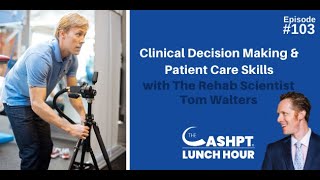
Tom Walters, a board-certified physical therapist, left insurance-based work due to burnout and built a cash practice using community referrals, Instagram, and condition-specific programs like kneecap pain and plantar fasciitis. He emphasizes therapeutic alliance and modern pain science, teaching patients biopsychosocial concepts without triggering fear responses.
Chapters
Welcome back to the Cash PT Lunch Hour podcast. This is your host, Aaron LeBauer And today my special guest is Tom Walters from Rehab Science and I'm excited to have him on the show. Tom is a physical therapist and has a cash based practice as well as does virtual consultations and he teaches other therapists. He's a board certified orthopedics therapist, physical therapist and all these great things. So we know he's smart. But he's also helping tons of people out there and I wanted to have him on the show because Tom's doing some unique things online as well as in person. And it's always fun to get to know new people. So, Tom, thank you so much for joining us on the podcast today and sharing your time with us.
Totally. Thanks for having me, Aaron. I'm excited to chat a bit today.
Yeah, so it was great. I think I connected with you on Instagram a couple months ago and sent you a message. You sent me a message or something. And I don't know, the Internet's cool. I get to meet new people. I don't think I've run into you before, but I got to learn a little bit about you on our call a few weeks ago. I just want to start off. Tell us, how did you get into pt? How did you know you wanted to do that and not, you know, banking, finance or even training or, you know, doing something else?
Yeah, yeah, it's a good question. I think for me, it probably like a lot of people, you know, a lot of students I run into, I think it's a similar story. I was an athlete, you know, from sort of elementary school on up and had knee surgery in high school. And that was my first experience with pt. So I think, you know, it was a combination of that experience. Both my parents are in. My mom's a nurse practitioner, my dad's a social worker. So there was a lot of this kind of discussion about people and healthcare growing up in my household. I think those being a pt, my parents were that influence. And a big part for me too was that I was also really into muscle anatomy and my dad used to make fun of me cause I always buy the men's or the. Well, not Men's Health, but Muscle Fitness magazine when I was in high school. So I was just intrigued and interested in anatomy and enjoyed that in college too and seemed like a good stable career with good outlook. So kind of all those factors sent me this direction.
What sport were you playing in high school?
I actually was a martial artist. I started taekwondo and judo in sixth grade and went up to a second degree black belt and did that, competed in that. And actually taekwondo became an Olympic sport the year I graduated from high school. So for a period of time I was considering just training, postponing school and sort of going that direction. But I was really big in martial arts, did some gymnastics, track and field, different things.
So that's awesome. I did taekwondo in college with some friends because within, like a semester, you could actually spar with people. It was a lot of fun.
Yeah, it's fun to kick people.
Yeah, it's fun to kick people and get hit or get, you know. I had one guy who was a brown belt, like, really got me in the nose and. And he wasn't supposed to do that,
but.
So were you doing Taekwondo when you were. When you ruptured your acl, or were you doing something else?
I was doing Taekwondo and I actually had a kind of funky condition called a bipartite patella. I was born with it in two pieces in my left knee, just a small piece that sort of formed the rest of the kneecap, but it was lodged sort of in my patellar tendon. And so when I would land, jumping and things like that were really painful. And so eventually it was interfering with my ability to compete well in Taekwondo. So I had that taken out. It was pretty minor, really. But, you know, it was back in the days when I immobilized people for so long. 96. And I was immobilized for six weeks. I remember. I mean, my quads are so atrophied, I had contracture. Just. It was. So anyway, so I had to. Ended up going to PT because I wasn't following through on exercises like a lot of our patients. So got and went there and saw the, you know, I mean, I saw things that, when you're not in the field, things like electrical stimulation seem really exciting. And so that kind of sparked my curiosity.
Right on. And tell me more. Your parents were both like social worker and a nurse practitioner, right?
Yeah.
How did they influence you back then? And even looking back now, well into the profession, like, how are the things you learned from them influencing you today?
Their influence is huge. And I didn't realize it at the time. A lot of people would know, thinking about going to PT school. We have all these psychology prerequisites, and at the time, they seemed sort of annoying to me, and I couldn't really understand how important it would be. And now with all this research on therapeutic alliance and I mean, now I realize that the conversation is probably more important than any of the. Or at least as important as the actual techniques you use on someone, whether it's exercise or manual therapy, whatever you're doing. So I think now when I reflect back on how my parents interact with people and their ability to build relationships with patients and just anybody in the community, that has been a huge. I feel grateful to have seen that model especially. My mom's a psychiatric nurse practitioner, so I think the way she. She's just so good at it, you know. And so I have a lot to learn. I still try to pay attention to how she interacts with people and her abilities to listen and build rapport. And so I've seen that now play out in PT and how important that is with, you know, especially thinking about persistent chronic pain and things like that. So, yeah.
What do some of the newer pts coming out today, like, we're just getting in the field. What are they doing differently than what we might have learned 10 years ago? You know, like, do you feel like that's progressing, like what they're learning, like in relation to having this conversation with people, or is it it kind of stagnating?
It's interesting. I feel like in the interactions I have with people now, I mainly teach undergraduate students who are Kinese majors who are looking at going. But I stay in contact with a lot of them as they go through PT school and come out. And I think there are times that I'm pretty excited to see that there's more talk about the relationships with patients and just kind of pain science generally. But then there are a lot of situations where I hear people still being taught very dated sort of concepts around pain and sort of a similar, you know, a similar educational sort of process that I would have had where there wasn't. I didn't really feel like there was a great integration of psychology and emotions and all that into clinical practice. I didn't get much of that. So I think I still see a bunch of students in that boat. But I think I see this slow trend towards better appreciation of the whole person and all the factors that can be associated with pain.
Right. Is there like one thing that you. Or like one question or one, I don't know, idea or concept that you think it would be something that you've encountered and found success with that you think, you know, other people need to know about, like in this regard? Like.
Yeah, I think just some of the basic. I kind of nerd out on pain science stuff, and I know that's sort of the trend and trying to have a healthy respect for the psychological, emotional sides of pain, but also realizing, I think sometimes people hear that to mean that tissues don't matter, that side doesn't matter. So that's always. I think maybe that's sort of a takeaway for new grads or people thinking about discussing those patients. That even for me, even when I try to show that I'm respecting both sides and the tissues can influence pain and these other factors can be a part of it, it's still. There are certain people I meet sometimes that still sort of leave with thinking that I'm telling them the pain is in their head and it's a thing. I'm on the exact opposite, you know, not trying to say that. And it still comes out that way. It's tricky with certain patients to they just as soon as I think, as soon as you start to bring up those kind of factors, your thoughts and emotions, they instantly sort of think that translates to this person thinks, my pain is in my head. And so, you know, that I think that could maybe be maybe someone who's newer to the field. Maybe that's something they can learn and maybe that gives them some insights into just how they communicate that message. There's been a thing going around social media, I think it was from Karen o'. Sullivan. It's a great sort of little tip, I think, clinical tip, that at the end of your session with a patient and you've sort of taken their history and you've maybe done some, ran through some, you've educated them in some way. Ask them how they would summarize what happened today to a family member. And I think that's an interesting. Is a neat perspective because I just had this happen the other day where somebody left and I was sort of co treating with someone else and this athletic trainer that I'm friends with got back to me and told me what this person, sort of what their take home was from my session. And the person said, well, he basically said, I'm a weenie. And I was like, what? That's not at all what I was trying to say. And so I think that can be a really helpful tip. Ask them. If you were to summarize this, our session today with a family member, what would you say?
Oh, that's important. That's a great question. It's interesting because I remember when I started treating patients 20 years ago, oh, my doctor told me it was all in my head, right? And so there are people out there saying, it's all in your head. And this is before Anyone was talking about pain science and how they're affecting each other. Like you're crazy. Like we can't find anything wrong with you. Just the opposite. We found this thing and it may not relate to you, but we're going to go surgerize it anyways.
Yeah, it's interesting to see that kind of old history. I think that's probably some of that. Maybe. Maybe that's where some of that stems from. You know, a time when maybe people heard stories. I think we hear that with patients who have had prolonged pain, that eventually people. I can't figure it out. It's just in your head.
Yeah, it's just in your head.
It's just.
They dismiss it and patients say, oh, well, it's not in my head because my body hurts. Your body? When I press here, does it hurt? Yes.
Okay. It's a tricky conversation to navigate for sure.
Yeah. So. So you've got a. So we talked a little bit and I kind of got off topic. My brain just likes to go down the interesting pathways. But you have a cash practice as well as one of the reasons I have you on here. And I was checking out your website and I noticed that one of the things that you do is offer these virtual evaluations and, or assessments and etc. But I want to ask you about that, but let me step back even and say, did you get into PT knowing you're gonna own a owner clinic and how did you end up deciding to like go into business for yourself? Like, was that like a decision or does that just happen for you?
Yeah, yeah. I did not think I would own a clinic or be self employed or anything like that at the time. I don't think. I think I sort of assumed I would just be like the typical PTE kind of model that I'd interned under where I'd just work for a hospital or some outpatient clinic and that would be kind of my jam and that's how it would go. It only took me. I actually only worked in a traditional insurance based clinic for the first three years that was in practice. And this is my 13th year. I was just sort of. That model burned me out really quickly. I think you hear people sometimes say that if a profession, a particular vocation burns you out, that you're in the wrong thing. And I just don't think that's always true. I really enjoy the information associated with physical therapy, sort of the academic side of it, but the way that it's often packaged, that's what burned me out. I think I had A sort of a drive for that information and that sort of care, but it just wasn't packaged correctly. And so it took me a while and I think I sort of realized that almost by accident a little bit. But I had been practicing in sort of a typical insurance based outpatient clinic and I knew that that wasn't sustainable and I couldn't last in that. And just slowly I sort of saw other people in my community that had small cash based practices and I decided to sort of start taking that on in small amounts and then just realized instantly how much better it was even to just spend. To go from spending 30 minutes to an hour with someone made a huge difference. And for me to do everything to do. At the time I was doing all the manual therapy, but the exercise was run by aids. And so to be able to do all that myself, I think we reached patients got better faster and I was not so burnt out, just didn't feel so fast. And so it kind of slowed things down. And for me that was better. I also, I really value freedom and autonomy and those are sort of my top values. And so it's really difficult for me to work for someone else and to be on someone else's schedule if I'm not just anything in life. I mean, even fun things. When I was in martial arts, I didn't like having to go to class at a certain time because it was someone else's schedule, you know, so maybe that's a personal problem,
do it on my own time, you know.
But it was definitely, I mean, those factors all kind of came together. I wanted to have control of things, spend more time with people. So it was sort of a combination of how the care was packaged and also having some freedom and how I set up my schedule.
And was there like a moment in which you're like, all right, that's it, you know, I'm going to go start my own business. Or did it just kind of happen, like with a move or slowly or something else?
Yeah, I think my realization that that model wasn't going to work was pretty sudden. I remember I had been at this clinic for two years and you know, they gave a week of vacation or two weeks of vacation. It was very difficult to get time off. And I remember my wife and I, who's also a pt, we're at the same clinic. We went on a trip and when I came back, when we came back from a trip, we both realized it would be a year before we could do that again and we quit the next day. So that was Pretty sudden. The cash, you know, a different type of model. I wasn't really sure what that. So kind of transitioning into a cash pay or just even being self employed, that was a more gradual type of thing. But knowing that that particular model wasn't gonna work was pretty sudden.
Yeah, yeah. And like, did you go directly from like quitting that job and starting your own business or did you guys go like travel around, do some other things get it?
Yeah, yeah, travel. I'm a. We're really into travel and that was a big motivator. So we actually, after that first two years in the clinic, we went into travel PT and so we were moving around the US and doing that. And so, you know, we were doing those things. We came back to Santa Barbara and then I was trying to figure out where I was going to go from there. And the cash PT thing that the one nice thing about my transition was that I ended up rolling into a teaching job in this kinesiology department here. And so that kind of paid the bills and gave me extra time, you know, an academic sort of schedule, at least at this small college, didn't take nearly as much time as a full time clinical practice. So I was able to teach and build that cash practice sort of slowly. So it wasn't. I could see where that would be scary for people to just make the jump from one into the other. So I had this really nice sort of built in transition.
Yeah. That's awesome. Is your wife working with you or is she doing something else these days?
We have two girls that are 8 and 5, so she's mainly doing that, but she is helping me with rehab science, so. Awesome.
Well, congratulations on the kids.
Yeah, thank you.
Thank you.
You got.
I'm your eighth friend, so, you know.
Yeah. How old are your kids?
8 and 10.
8, 10. 8, 10.
Yeah. The problems just change. That's awesome. So tell me about. So I loved it, what you call your virtual evaluation. So can you tell me a little bit about what that is and how'd you come up with that and where did you find the need to be able to offer this?
Sure, yeah. With rehab science. Rehab science kind of started as just a fun project and as I would interact with people on there around the world, I just saw that there were people often in situations where they couldn't access care or maybe it was too expensive or, you know, there's other things that prevented them from being. It just. It made it more difficult. And so it just seemed like that would be a sort of natural service to offer. To people. And you know, I mean, obviously I think it's really helpful in situations where people are too far away from care. There's not something in that community or whatever that it's really great for those things. Obviously the downside is I'm really manual therapy based in both diagnosis and in treatment. And so for me, it's always a bummer not to be able to actually touch someone.
Right.
So you're on video trying to teach someone how to palpate a particular structure to see if that's their familiar symptoms. And so that part's a little tricky, but it has been a cool, you know, neat service to have.
Yeah. Do you get. And so you're seeing people locally as well and this is just like a virtual way to get in touch with you for your opinion and some help from like a lot of people that follow you online, etc.
Is that right? Exactly. Yeah. I almost think of it as more of sort of like a consultation kind of thing. And I usually will build sort of exercise programs and then try to check in with people after. I mean, it's really similar to in person care, just without the in person parts.
Yeah, without the hands, without the being able to touch you through the screen kind of thing.
Exactly.
One day that might be. That might happen, but these days.
Yeah, exactly, exactly.
That's awesome. So how are you getting the word out? Is there like locally for your patients? Locally. Is there, you know, something that works really well or, you know, was there something that you actively tried to do and build that worked well for you?
Yeah, I think honestly in the community I'm in, which is pretty small and you know, it's. I mean, it's small size. Well, I mean, it's maybe 300,000 people, but the community of sort of movement practitioners is pretty small. Everyone sort of knows each other. And I've been. I've worked with most of the sort of groups around town. So I think honestly for me it was just being connected with people in the community. I don't know, it's not always. That was sort of my main strategy as I was sort of. I transitioned out of teaching. This last spring semester was my last semester teaching. And my biggest strategy was just contacting people and letting them know that I was going to be moving back to a more focused sort of clinical role and that I was available if they needed me. And so that instantly just kind of picked things up again. At one point in the past, I'd actually told my patients I wasn't doing any clinical. I wasn't doing any treatments anymore and I was just teaching and so I kind of had sent everyone to other places. So it was just a matter of kind of letting people know that I was back doing it again. So. But I think that's been. If I were looking to start a cash practice, I think I would be interested in getting to know other people in the community. Trainers, yoga practice, teachers, Pilates. The other people are inserting that cash realm. Yeah, it's really hard to I for me personally associating with the sort of connecting with other insurance based PTs obviously hasn't. Isn't it for me hasn't been a. Like they're sending me people and even doctors are a little tricky because most of their patients are planning on using their insurance for pt. So it usually is sort of connecting with other people. Honestly mostly a lot of my friends who are trainers and own businesses.
Right.
Good relationships and if they have somebody who's injured, they send them to me. And so that has worked the best.
That's cool. Does your social media, Instagram, does that feed your business or is that kind of like a little bit more online education separate type of thing?
Yeah, it actually has been interesting. I didn't think I would get anyone who would actually come for an in person appointment because people are just all over different places. But I've had quite a few visits. You know, people sign up for in person appointments who happen to be living locally and have come in for sort of for regular in person treatment. So that's been pretty cool. I didn't expect that. I just thought it would be all online. So. Yeah.
Cool. What else are you. So tell me a little bit more about your online portion. Are they two separate businesses or is this all one kind of like thing?
Yeah, they're two separate businesses right now and I need to kind of look more into that and figure out if I want to kind of pull everything together because I could see where some of the things I have online could maybe be useful to the people that I might meet locally in person and sort of maybe bringing those things together. Right now they're separate. So you know, what was the. Sorry.
I guess so my question is like, well, can you. I want to know a little bit more about the online part and I don't know, you know, I just wanted to clarify if it was the same business or two separate. So online, how did you get started with your Instagram account and helping people online and what are you doing to you know, like what kind of programs or content, what kind of things are you putting out there, you find, like, that connects with people.
Yeah, the Instagram account. I think I might have mentioned you before. This is actually the third time I've had it. I've deleted it a couple times in the past like a dummy, but I'm not planning to do that now. But, yeah, I had started it as sort of a fun side project, and it had, I think, back in the past, I had too much personal stuff on there and not really interested in that. So I remember I had deleted it and I had a student come up to me and say, what happened to your account? My mom has a shoulder pain and she was doing some exercises. That was helping. So I left class that day and realized, oh, this could really have a positive impact. So I went out and restarted it and just had the plan of I was gonna try and provide something daily that would be helpful to people.
Yeah.
So that was in December 2016. And so it's almost at three years now. And it just slowly again, I had no plan of it ever being a business. You know, it was just something fun to do and a way to put something positive out there for people. And after a while of it growing, I realized there was obviously a huge need, a lot of people in pain who needed resources. And again, we're often in situations where maybe they couldn't access things, you know, So I slowly. So then I started thinking about the virtual evaluation thing. Kind of came later. Initially, rehab science. My whole focus was to target people in pain and to create sort of somewhat inexpensive, just programs, exercise programs. So I took. I went and put together the 19 orthopedic conditions that I had seen most often in the clinic. And what exercise? You know, eight to 10 exercises, what I prescribed for those, and then just created programs like that where people would just come in and buy a program that could watch the videos and look at the instructions on their phone. So that was the whole goal. And that's kind of how it all started. And then I just added some of the other stuff later. But, yeah, that's been kind of the focus. That's kind of where it started and how it came to be.
That's cool. What's the one that most people want? What's the most popular? What are the problems that most people are like, oh, yeah, help me with this. Is it plantar fasciitis or is it back pain? And is there something that resonates more with people?
Yeah, it's funny, I always thought just because of back pain statistics, that that would be the one, but I Was just looking at the analytics on the site the other day. Patellofemoral pain, which I just call kneecap pain on site is the most viewed one. So I mean, I mean I just. That to me was a little surprising. I thought some of the spine things would be like for instance, neck pain. Hardly that one doesn't get as much, you know, as track as much traction. But I think, you know, patellofemoral pain, plantar fasciitis is definitely one low back. Things like where they have sort of sciatica like symptoms are popular. Rotator cuff stuff is really popular. Yeah. So I guess it kind of fits with the trends I had seen clinically with what diagnoses, what regions of the body would come in most. But it is interesting because people aren't
talking about those and. Or is it something else that makes those more popular?
Yeah, I don't know. I think about that and it is interesting. I can't quite. Yeah, maybe back pain is in conversation so much or maybe it sounds, maybe the name sounds too broad. You know, I think sometimes if you put a sort of biomedical description on it like sciatica or something or disc bulge or something like that, the consumers maybe gravitate towards a little more. So maybe something like patellofemoral pain or kneecap pain. Maybe that does seem. Maybe it's easier to grasp because it's more specific. I don't know.
I like the kneecap pain. I haven't heard anyone use that. Oh yeah, that. Because that's very. I know exactly where the pain and problem is, you know.
Yeah, it's been interesting because you know, I think, you know, when you've been a PT for a while, like we've been it. You start to. You get so into your world that you forget. I think it just becomes so natural to use kinesiological terms and you can forget what the average person grasp and understand. And so I've learned that has been a. I've learned it's been sort of a learning curve for me on social media to sort of understand more about what type of language people understand better. And social media actually in that way has helped inform my in person conversations. Yeah, I just think I, I assumed that someone understood what I had said and it was very different.
Yeah. What was. Was there a time where someone like totally got you completely wrong and you're like, whoa, I didn't say that.
You know. Yeah, I mean I've definitely had instances. The ones that stick out the most in my mind are these pain kind of ones where people Those are the strongest. Those kind of situations stand up to me the most where someone thinks the exact opposite of what I was trying to say. You know, I'm trying to just explain the complexity of pain. And their thought is, well, he just said, it's all in my head, doesn't believe me, what. It's the exact opposite message of what I'm trying to say. So that's. And that stuff still happens now. It's not like it was just in the beginning. So I actually, probably, when I first came out of PT school, was very biomechanical in the way I described pain. And actually, people probably understood me better, you know, so now I'm more aware of the uncertainty and talk about other factors. I think sometimes the danger in that is that people don't really, really fully grasp what you're talking about.
Do you think it's because you're trying not to give them a definitive. Diagnosis that's like this evil, bad thing? And by doing that, you're not being a definitive decision maker. You're saying, it's probably this. Which doesn't sound as bad, but, you know, because if I say, hey, look, Tom, you've got a. Oh, God, what movie was I watching? Oh, Angel Has Fallen, this new movie that's out. You know what I'm talking about? So it's Gerard Butler and what's his name? So. But anyways, he's a CIA Secret Service, you know, and they open it up and he's like, you got your headaches and migraines, and the physicians like, yeah, and you've got C2, C3, disc bulge, and you're gonna compress your spinal cord, and you need to stop taking the things and doing all this. And it's just like, whoa. It's like. What's it called? Like a nocebo effect.
Right, Exactly.
I guess my question is, and I'm sitting there going, oh, my God, you're just scaring everyone in the audience who has neck pain with your movie. But I guess what my question is, do you think as practitioners, we're trying to stay away from scaring our patients by not giving them a biomechanical diagnosis of some sort? Like, hey, you've got this patellofemoral syndrome. Do you feel like not being able to do that makes them question whether we know exactly what's wrong with them because we didn't give them a diagnosis, which many of them do want? Does that make sense, what I'm asking?
Big time. Yeah. This is a conflict in my mind. All the Time and something I'm trying to kind of work through because I'm. That nocebo research is on the forefront of my brain all the time. And it wasn't when I was a new grad. I didn't even heard of the nocebo effect until probably six years into practice. So I think for sure that that sort of explanation, I think when you're trying to avoid those kind of nocebos and things and specific diagnoses that to patients can seem like you're less confident and unsure. So it is a tricky. I find that often, I think patients, when you just give them something specific, you risk sort of creating some fear and anxiety, but they feel like, oh, this person's really confident. They know what I have. I mean, orthopedic surgeons function like that all the time.
Right.
You know, and then it's kind of a funny thing because now you spend more time as a clinician, you learn more about how complex these things are. But to your patients, you come off less certain because you're trying to explain all the factors and not. I think, I think it's just good for clinicians to have a healthy dose of humility and all that. And, you know, when you're talking about cash practice, it makes it even harder because there's an incentive to sound very like, this is what it is, this is what it is. You need to come see me every week because you have a business.
Right.
That business and having a person come back and you want to sound very confident. So. But, you know, then the sort of ethical PT side of you feels like, well, I don't want to. I know maybe I shouldn't act and educate them in that way, just in terms of helping them as a person long term. But educating them that way may be detrimental to my business.
Right, right. I mean, I'd be happy running myself out of business, but at some point, like, I have to actually convince patients that I have their solution. And if I can't convey that without scaring them into coming to see me, then I'm not able to actually keep my business alive and help them. That's why it's really important. I feel like we have to somehow figure out, okay, how can I give you this very certain diagnosis of a problem that you have, and here's our expected outcome without knowing the exact, like, magical date they're going to be better and get them to agree to do it. And whether it's a. In a cash practice, I just feel it's more important because patients are actually paying More attention and making a decision to do something a little different than just going along with the. With the Joneses in. Going to the. In network clinic, you know, so, like, it's like, how do. And I guess that's my question is how do we tease that out so I can give them something definitive to chew on and associate with without unnecessarily treating them or scaring them into needing more treatment.
Yeah.
You know what I mean?
Yeah. Yeah. I think. I mean, I bet we operate in kind of similar ways at this. I think as I've. I feel like I've slowly started to kind of blend my old self with this new self. And because you do feel like you want the person to have something sort of concrete, they have something to almost kind of blame their pain on a little bit, you know. So I think I have sort of come to this point where I do a sort of. A certain amount of bringing in anatomy and biomechanics and talking about those physical sort of components of the body and how that could be associated with pain. But then at the same time try to just plant little seeds of. These are other factors too, you know, and maybe start with ones that seem. Maybe that people can. That don't seem so much like you're saying it's in their head, like sleep. Like, you know, I think sleep and nutrition. I think patients are a little. Those things are a little easier for them to wrap their head around versus just jumping right into talking about how stressed they are. And if they're feeling sad, just emotions and thinking, I. I think I kind of leave that. I just put smaller seeds and some, you know, and maybe even it takes a few sessions before. I mean, I've had people like that in the past where you kind of mention something and then three or four sessions later, you know, I thought it back about that and I just had this thing happen in my life when this started bothering me.
Yeah.
You know, and so, yeah, it's. So I think that's what I've sort of come to, kind of blending those two. Do you do something similar?
Yeah, I do. And it's. It's been difficult because, like, well, why did this person not. You know, I'll reflect back and go, why did this person not stick with the plan? And other people, it's like, well, here's the. Here's the thing, you know, I'm trying to give people something concrete, but what they really want to hear is that I'm confirming their bulging disc diagnosis by their somebody else, even if it's Their friend who said, oh, you've slipped your back out of place and you need whatever it is they. It's like. So, yes, it's very hard. And I'm asking because I haven't figured out the easy way to do it because I feel like they want me to confirm that it's this problem that they think they had or they read on Google. And what I'm really saying is there's some things in your body that just are a little out of balance. And we need to balance the way that you feel, the way that you move what you do altogether so you feel good. And we can control your symptoms. Whether it makes it a little worse or makes it better. We, if I know we can do that, then we can move forward. And they go, okay, great. That's so subjective. But it's not concrete. And it's hard to be concrete and say this is your problem because a lot of times I don't feel like, you know, their problem is that concrete. It's so, it's complex.
Yeah. I think that validation piece for people is so huge. I mean some of the instances that I think back on, you know, where there have been sort of bumps in the road with this whole process. I think I've been situations where I didn't validate people very well. And you know, so maybe I can think of examples where someone had a diagnosis from a medical provider and I didn't spend enough time listening to that and sort of validating that them and that that could be, you know.
Yeah.
You know, part of what's going on and started kind of jumping to other things. And I think sometimes when I've done that, people feel like maybe I don't believe, I don't take any stock in that diagnosis. And I'm not. I just think that validation when you're saying kind of confirm things, we all want to be validated. And I think that that's a huge part, especially that, I mean it is in an insurance based clinic. But I think these things, these things become more and more important. The ability to build rapport with people is so important in a cash practice. I mean they're already at least here and this is a fairly. This town has an affluent population. There's still people are apprehensive about spending cash on pt.
Right.
You know, this is not their natural go to. It's. You have to get some buy in. And I find once people get in and they see how things that I think especially how much more time you're spending with people and that you're focused on them the whole time, that then they sort of buy in. But that initial. That first initial conversation is so important. And if you blow it with them not feeling validated and they don't think you're confident, then you can. It can be done right there. One visit.
Yeah. And you're in Santa Barbara, right?
Yeah, yeah.
Beautiful. Beautiful part of the country. I mean, you know, and they've made TV shows about Santa Barbara.
Yeah, that's soap opera. I grew up in Montana, you know, I didn't even know about Santa Barbara until my wife grew up here. So. Yeah, it's not a. When her parents were, you know, they were helping us figure out how to stay here, it didn't take much twisting my arm to stay.
Right, right. I know, I know. I lived out on the west coast for about 10 years and up in San Luis Obispo for a year, which isn't too far. And it was beautiful. When I was there for a year was when Santa Barbara county is right below San Luis Obispo County.
Right, exactly. Yeah.
That was when Michael Jackson's trial in. Was taking place in what was it called? Santa Maria, I think, which is part of Santa Barbara County. But it was really close to Santa, so it was like a zoo there. I'd go ride my bike through there. It was just a zoo.
That was a crazy time, all that hoopla, for sure.
So I want to get back on track here.
As you know, I'm into tangents like you, so.
Okay, good. What's the number one thing that you say to people like in there? One of the first encounters you have with a new patient that really gets buy in or conveys your confidence that you know what you're doing and you know what's wrong with them. What are some of the questions you ask or things that you say to people to get that across?
Yeah, I think that's a. I don't know if there's something specific that I say every time. I think that it really has been. I really enjoy education and the educational process is my favorite part of pt. And I don't know, I think it's sort of a cumulative effect of bringing together sort of research, sort of academic knowledge and then just the years of practice, you know, and those. I think that sort of. I think that more patients. It's sort of a combo of those things. I think patients sense confidence when you not only have some of this sort of this detailed sort of academic information that you can communicate, obviously in a way that's effective. But then also you can tie that to experience and being able to discuss sort of, you know, a prognosis, maybe how long this might take typically, or, you know, you know, in past encounters with this type of diagnosis, what's happened and being able to sort of walk them through a typical sort of trajectory of it, bringing those two things together, all the while coming off as genuine, you know, I think that's huge. I think you can say all those things and know the research and have the experience, but if you don't seem like you actually care, that might be that. I think sometimes just being nice is the best thing. Right? Just being empathetic and being nice to people, you know, and really caring. Because if you don't care, I mean, I don't. Nobody wants to really see that person. Like, I just. The idea that Bedside Manor doesn't. You can't have that while also possessing a good deal of academic and technical knowledge. I just disagree. I just don't think that's true. Yeah, I think you can have both those things together and the people, you know, it's sort of like social IQ combined with sort of academic iq, Emotional iq, maybe with academic. I think those are the best practitioners in any healthcare field or. And I can tell it in students, you know, I have undergrad students, lots of them are interested in PT and healthcare and things. And you just know which ones have the highest. The ones that possess that high degree of emotional IQ and can combine that with some degree of academic intelligence. Those ones, you just know, you can just pick them out. They just have this energy sort of, you just have this feeling about them that they will do really well on the field.
Yeah, yeah, yeah. That's awesome. Yeah. And you know, I think the interesting thing is a lot of those students struggle like with the test taking. You know, they're so good at connecting with people that when it comes to test taking, they just like, they struggle through it. And I've seen people, you know, last 20 years, I'm like, well, just get a degree everywhere you can because you're a great therapist. You know, like test taking strategies don't help you be a better therapist.
No, I always scored pretty average actually on generalized test scores. It was like the gre. It wasn't a good predictor of how I was going to do in the material that was associated with PT and obviously didn't predict at all my ability to interact with people. I mean, yeah, I think that emotional IQ and your ability to sort of read body language and nonverbal accuse those things are so important.
Yeah. Yeah. That's huge.
Yeah.
I scored one point over what I needed to get, like, lowest score for GRE to get into PT school.
That was about the same.
Yeah. Like, okay. And I almost failed out of neuroanatomy, you know, until my professor was like, start drawing the tracks and everything. I was like, oh, good idea.
Totally. Yeah, it's huge. And especially in a cash practice, people really want to feel like you actually care about them.
Yeah.
I think, you know, there are physicians here in town that are concierge type physicians and do some of these things. It's the same kind of thing. When you're there for someone you're willing to take that extra step of, you know, you maybe give them your cell phone number, they can text you and ask questions. That stuff matters to people, just little things. And feel like you're really invested in their care. I mean, if you have all the book knowledge that aren't invested, they don't feel like you're sort of emotionally invested in their care. That just doesn't go as far.
People want to be seen and heard, not talked at, you know.
Exactly.
You know, they want to be like, what's. The other thing is they don't want. I mean, they do want to be told what to do, but they really want their needs and desires taken into account when we create a plan of care for them. Yep.
It's all about that. Totally. I mean, it's really a collaboration and not a. I used to approach it as sort of a lecture, you know, you know, it's just all educational, and I realize it's. It's a collaboration. I think when people feel like they have some autonomy and what happens with their rehab and recovery in their program and setting goals, that's huge.
Yeah. That's awesome. Tom, There's. There's one other question I want to make sure we get to before we finish up. On your website, you describe yourself. Tom Walters, rehab scientist. Tell me, like, what is a rehab scientist, and how'd you come up with it? Or decide to use that instead of physical therapists?
Yeah, sometimes I feel a little ridiculous having that still be on there because I'm sort of particular on scientists or people who are actually producing research and things. The funny story behind that is that my previous Instagram accounts were called Rehabscientist. And then when I went to start the new one, it wasn't available anymore. And rehab science just ended up being much better because it's broad and less narcissistic and about the science of It. So it was kind of an accident, but I still like it. I think from a branding and a business perspective, it's a tricky thing because I think if I only refer to myself as a physical therapist, that just makes it even more challenging when I think about a cash practice. And so I think rehab science and that rehab science, essentially. You know, I was doing a doctorate of science at Texas Tech in rehabilitation science, and that's really what we do, right? And it's looking at all of the field of rehabilitation science and that informs our practices, pts. And so that's where it really came from. And I think people see that and they. I think it sort of changes how they view your business beyond just. It's just another physical therapy business, even though it's really all the same orthopedic PT stuff. But I think that branding has been helpful in terms of forming a cash practice. I think that's what other PTs are seeing when they have PT businesses that have a heavy sort of strength and conditioning side. Maybe their name and their brand sort of follows that. I think it can be useful and can be helpful in terms of building a cash practice.
I think it's great. I want to give a shout out to Carlos Barrio, who was on one of my early podcasts, but he calls him the Movement Pain Jedi or Sports Pain Jedi rather than a physical therapist. And it's because what do you think of when someone says physical therapist? To me, it's hot packs, leg lifts, and ultrasound. And people get this preconceived notion when it's something a little different. They think about it and they go, huh, he must do something a little different. And maybe I don't know exactly what it is, but I want to know.
It's almost like that brand, that kind of something that gets people, it sort of brings in their attention, is slowly helping people realize that PT is more than what just the ice packs and all those passive kind of modalities. I think it's nice because that has been a big kind of mission for me, is to help people understand not only pain and musculoskeletal sort of health, understand the complexity, but also understand more of what it means to be a physical therapist and that it's maybe different than what they have thought in the past. But that other name and sort of branding yourself as something different, I think kind of helps get their eyeballs on it and then brings them into understanding. PT can be different if you've had bad experiences.
Yeah, absolutely. So clearly you lift some weights or do some move Some things in there at least once, you know, what's your. What are your current. Like, what are you currently doing? Exercise wise to yourself, to work on your own body, Work on your own movement.
Yeah, I, you know, for quite a few years here recently, I was doing jiu jitsu. I really like grappling, but grappling does not go super well with needing to use your arms and PT and people trying to arm bar you and hurt you. So these days I'm a little more focused on resistance training. I started. I had a great PE teacher in seventh grade. That's when I learned resistance training and so just always loved it. So my workouts now are. I'm 37 now, and things are getting a little more focused on how can I stay healthy and not feel old. So less about competitive sort of workouts and things. But I. Yeah, so I mean, generally my workouts are, you know, kind of, you know, three to four days a week of resistance training. I put in some cardio just because I know it's good for me, even though I really, I was a sprinter. So I really can't stand long, slow cardio. But I do it is good and I feel good doing it or not doing it after. I feel good about myself. But then I like a lot of body weight training because I was in gymnastics, I do a lot of just body weight kind of stuff. So, yeah, my workouts kind of look like that. I usually kind of lift and run in the mornings.
Awesome.
Just general health kind of stuff.
Yeah. That's cool. That's really cool. Yeah, I'm always, like, trying some new things every once in a while. This summer, I've been playing with weighted club and a mace. Yeah. Open up my shoulders overhead. So that's been. That's been a lot of fun.
That's awesome.
Yeah. So, Tom, if someone wants to find out more about you online, where can they go to find you? Like website, Instagram, social media.
Yeah, in terms of social media, I'm mostly on Instagram, so it's rehab science on there. I do have Facebook. I do share some things over there. So people like Facebook better. Actually, over there it's rehab scientist. Rehab science is taken there, so I couldn't get that one. But. And then online, it's just rehab science. Or online, it's rehabscience.com so those are kind of my main. Pretty much the website Instagram. Cool.
Thank you. Is there any question that I didn't ask you that you think would be helpful or beneficial to people listening?
Yeah, I don't think so. I think this was a good summary. I think of things kind of my background and maybe some little nuggets here and there. If you people are thinking about, I think the cash practice, I've run into people over the years who are really interested in it but are scared to take a kind of leap of faith and pull the trigger, you know, And I think that's something that if people are thinking about it, I think you have to. I mean, there's a certain amount of kind of getting your ducks in a row and kind of making that plan as secure as possible. But you have to be willing to. And at certain person. People have different personalities and people are more willing to take risks and jump into things. But I think there's a side to it. And, you know, that's something that if some. It's so benefit. It's been so great for me to transition to this and just be able to have that control and flexibility in my life. And so people are thinking about it. I would encourage them just. Even if it's just stay at your current place of employment and slowly add, you know, cash pay, clients and patients after hours or something. Just kind of slowly build it up. Because if you put the time and effort and I think into it and just start kind of hustling, it'll happen. It's just. I think taking that leap of faith is. I've seen a lot of people struggle with that.
Yeah, yeah, absolutely. Me too. I see it a lot. It's just like, you got to just jump in, like, what's the worst thing that can happen? Go get a job at the hospital.
It doesn't work out, you go back to the thing, you're done.
Yeah, yeah. I mean, we're lucky right now, you know, in 2019, we're lucky. We have, like, fallback plans as PTs.
Totally. It's a great profession. There's so many jobs. I mean, because I get. Because we did traveling PT. I mean, these directories. I get like 10 calls a day for jobs. I mean, it's. It's so. It's such a. I'm so grateful to be in a profession that has such a. Has so much need.
Yeah, yeah.
It's a great profession to take a risk. And if it doesn't work out, there's probably 10 other jobs in your town.
Right, right. Because I can't find anyone I need to. That's awesome. Well, thank you, Tom, for being here. I really appreciate it, and thank you for sharing your wisdom and nuggets of information with everyone.
Totally, man. Thanks, Aaron. It was awesome to be on. Appreciate it.
Yeah, absolutely. Well, this is the Cash PT lunch hour for Tom Walters and Aaron LeBauer You know, just go all in, take a risk, because this is a great profession, and for some reason, you got something really good out of this episode. Take a screenshot and throw it up on Instagram, tag us, and we'll probably reshare it or give you a shout out or something like that. And we'll see you guys on the next show. Thanks so much, Sa.
More from Aaron


My clinic has NEVER been in-network with insurance companies—and it NEVER will be! #cashpt








