Dry Needling as Your Niche or Just Part of Your Toolbox with Paul Killoren | CashPT Lunch Hour #96
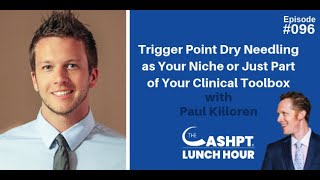
Paul Killoren left high-volume orthopedic clinics to build a cash-based PT practice around dry needling, then founded I Dry Needle to make better needles and educate clinicians. He uses needling as a neuromyofascial reset within a broader movement framework, not as a standalone tool, and warns against over-reliance on the technique alone.
Chapters
Hello.
Welcome back to the Cash PT Lunch Hour podcast. This is your host, Aaron LeBauer Welcome to the show. I've got an amazing guest today. His name is Paul Killorin and I've known Paul for a few years and we've met in person a handful of times. And I thought he'd be a great guest to come on the show because he's not only open to Cash practice, he's closed one down. He started another business. He's doing a lot of great things out there for the physical therapy profession, and I wanted to make sure that we got his story and all his business nuggets. So, Paul, thank you so much for joining us today. Appreciate you spending some time with us.
Yeah, no, thanks for having me. I mean, thanks for that very flattering intro. I mean, we've known each other for quite a while. You helped us get our practice started. So I've been a big fan early on of you and throughout the process. So happy to be a part of the Lunch Hour here.
Awesome, man. Well, thank you so much. Well, what I always love to do is start with everyone's story. Everyone's why, like, how did you get into physical therapy? Were you like 16 and playing soccer and going, all right, I want to be like a physical therapist, or did it come after college? Where in the journey did this transition occur? In the idea?
Yeah, you sound like you've heard that story before because I think you got it exactly right. I think I was 16. I mean, I was multi sport. Baseball, basketball, football. So football injury. I actually went through like a 6 inch growth spurt one summer and just my skeletal, my muscular system took a few months to catch up. So I was having back spasms as like a senior in high school. I think my initial exposure was actually my mom is a licensed massage therapist inside of a chiropractic clinic. And then I saw a PT there. So that was my initial exposure. And really, I mean, that kind of built the belief, but kind of the passion for just the body's ability to heal itself without surgery, without pharmaceuticals. So that's what got me into physical medicine. Physical therapy, but also that story kind of like, I don't really engage in the politics of like chiropractors versus pts and using massage therapists because as I just said, I was kind of exposed to multidisciplinary and seeing how it all worked together.
That's awesome. Did you. How old were you when you got your first massage?
I actually think my mom was going through massage school when I was in high school, so probably freshman year. First massage was being a test subject for her. And really aside from my mom, I don't think I've had a, like a professional massage except for like in Mexico on vacation. Yeah, that's actually my only exposure to it.
Uh huh. Yeah. My kids got theirs their first day alive.
But yeah.
Which is really funny. I mean, I got one when I was in high school. I think I was 16. My mom took me, you know, I was riding bikes, my legs hurt and she's like, you need to go get a massage. And I was like, oh, wow, look at that. I feel much better.
Was that how you got interested in the massage yourself?
That was the original, like exposure to it. And I was in college and I don't know if I was pre med or not, but my mom was like, you're good with your hands, you like solving problems. Like maybe you should think about doing massage at that point. I think I must have been like out of the pre med like trajectory. And I took a yoga class in college for a half a credit, which we needed like five credits a semester. I got like a half a grid for yoga and we did a. She brought in these guest speakers, we did meditation. And one of them was a massage therapist and taught us massage. Like, oh, this is great. But it wasn't until after I tried to get a real job before I ended up going to massage.
That's cool.
So, so you went to college, like going to college. Did you know that you were going to go to PT or was it just kind of like rambling around? It stuck in your head, bouncing around for a while?
Yeah, I knew it was PT and actually I slept. Born and raised in Wisconsin, so mainly financially, but also some academic scholarships. I stayed in the U Dub system. I went to University of Wisconsin lacrosse because I knew they actually had a really strong PT program. Okay. It was going to be bachelors all the way through PT school at lacrosse.
Wow. Football, lacrosse and what else?
Well, lacrosse is the name of the city.
Oh, lacrosse, okay.
I played football at lacrosse.
Okay, got it, got it, got it.
But that's funny because we'd even be like going to an away game, going through the airport. And I mean your football team, we have some 300 pound dudes and people would stop us like, oh, where do you play lacrosse? No, we play football at lacrosse.
That's awesome. That's awesome. Well, yeah, you're also one of the other people that's like taller than me that I've met.
I think we're pretty close.
Yeah.
When I Used to have the faux hawk that gave me like an extra 2 inches. I think it did.
No. So you were playing football in college and you guys were, you were at University of Wisconsin lacrosse. I interrupted you, so go ahead.
Oh, so it's Division 3 football. But I guess I was saying initially it was the plan to do PT school at lacrosse. I knew PT school is the plan so that, you know, your first guidance counselor, academic counselor meeting at lacrosse. I just said, what's the best bachelor's to get me into PT school? And they actually guided me towards biology. So I have my bachelor's in biology. I think hindsight, it's probably not the most directly applicable bachelor's. I think it prepared me well for the rigor of a DPT program. But I mean there are a lot of courses that I was not a huge fan of. In biology, I think the kinesiology, the exercise science, I mean maybe that has more direct translations to PT school. But got my bachelor's at lacrosse in biology and then wound up DPT at Regis University, graduated DPT 2010.
That's awesome. And that's in Denver, right?
Yep. Yep.
Awesome. And then did you go from there to Washington or.
I did. So When I graduated May 2010, Colorado, I knew I didn't want to go back to Wisconsin. Reimbursement or I guess salaries compensation for pts in Colorado is really poor. So I was actually looking, I was applying for jobs in California, Arizona, Alaska and yeah, I wound up in Seattle right away. I was actually there for a year before going to Minneapolis for a year and then winding up back in Seattle.
So did you just go and like get a job, like outpatient clinic somewhere?
Yep.
How'd that work out for you?
Poorly. I mean hindsight, I mean, it puts you on this path of like, you know, the cash practice and all that. I'm sure we'll get into it, but yeah, I was definitely one of those, you know, Thundercat autonomous clinicians. You know, I, I negotiated hard for my con Ed budget. I used it, I used the in house mentoring. Like I accomplished a lot in that first year. And I'd actually say if there is any silver lining to just going into one of those high volume outpatient machines is I got lots of reps. I mean, as a new grad, your assessment, your like being very technical with your skills and being very efficient. That first year I got thrown into the fire and I burned out. I mean, that's the moral of the story is I burnt out in less than a year with all the con Ed courses I was doing, patients I was seeing and just, you know, trying to take advantage of every opportunity I had. But a year down the road, it's. Everything that, you know and that we read about is, I can't imagine doing this for another 20 years. I mean, physically, mentally, I just, I don't think it's sustainable.
What was that moment that you had where you were like, this isn't going to happen anymore?
I mean, for me it was literally, it was physical fatigue. I mean, I, as a, as a. I like to think I'm a pretty resilient person mentally and physically, but I was spending my weekends physically recovering from just seeing patients nonstop and mentally recovering from having to do notes and everything. And I mean, it was a tough paradox because I almost got rejuvenated with every patient I saw. I'm like, okay, this is why I'm doing it, blah, blah, blah. But as soon as they're out the door, it's the notes, it's the looking at your schedule. There's no time for physical and mental rest. And that just caught up to me. Yeah.
Is that because you're doing a lot of manual work or is it just high volume of people or combination?
So, yeah, everything. I mean, it was high volume. We had 40 minutes for an eval and 20 to 30 minutes for a follow up. So full schedule and I mean, I guess good for the business is we were very busy. There was no shortage of new patients. But yeah, coming out of Regis and then a lot of my continuing ed in that first year was niopt so very Maitland based. So I was very manual heavy, very joint based with my assessment and my manual treatments. So again, physically, that's intense. But even like timing and like trying to be efficient with that is. It's challenging.
Tell me about it. Was there, like, when did you decide that you were gonna go open your own business? Like, what was, what was that process like? And you did it with a partner with Austin. Like, guys meet and chat about it. Was it like you did it? You're like, hey, come join me. Let's like, how did that all work out?
That's fun to reflect back. So I guess filling in the gaps, I left the outpatient ortho. I just took a travel contract in Minneapolis and that was a nice. Just like, just mentally, physically, like to recover, recuperate a little bit. But my next contract actually brought me back out to Seattle and I was working on campus at Microsoft. They have a on campus health facility and it was everything you want. I mean, Patients could walk right in. They weren't pressuring us for, like, billing units and filling our schedule. It was really built to be, like, the ultra convenient health resource on campus. So I was there for six months, and I really saw what therapy could be if you're not focused on billing and not focused on, like, how many patients can you see in a day? Yeah, that's where the ideas of the cash practice began. And I mean, as you know and anybody who knows me, that was also around the time when I became certified in needling, back when Washington was more of a gray stance on the topic. So needling kind of gave us the niche market in our minds that we could go start a cash practice. But I really think just stepping out of the outpatient ortho machine for a little bit and then going into a setting where it was not focused on reimbursement, and, you know, as many patients you could see, it was like a mental reset. And that's really what prompted the passion, the energy to actually start up our practice. And I think Austin, it was around the same time. I mean, he and I were classmates at Regis, so we had kept in touch. He actually worked at Pro Club, which, prior to the health center on campus, was the biggest Microsoft outpatient ortho clinic. So around the same time, we just went in 50 50, started our clinic in Kirkland called Doctors of PT, and we did really well for about five years.
That's awesome. I loved your logo, your branding. It was great. You know, I mean, I think looking back, I'm like, okay, you were. I think on Twitter, it was DPTwithneedles or something like that. Right.
That's still my Twitter handle.
Okay, good. You haven't changed it, but that was where you guys developed your niche, your brand, basically, your usp, your promise was that's what you did. How did that help you? And did that, like, was that always a bonus thing for you guys, or did that hinder you at all in any way?
What's that? Having a partner.
Having. Well, having partner, but, like, being like. You were like. Like you said, you were like the needling. Like, it was like. Like branded EPT with needles. You were doctors of pt, which is a brand, I think is great. But it was. Yeah, this piece to it that was about, you know, the trigger point, dry needling, and that's what we do.
And, yeah, I mean, as I mentioned, it became a negative when kind of the rug got pulled out from underneath us in Washington with an attorney General opinion. Mm.
But prior to that, it was like, it was the thing that set you apart, right?
Exactly. And I'd say, like, we, again, we were very successful. It wasn't even necessarily our intent to become known as like the needling pts. It's just one of those. I mean, we were in a state that had really. It's, you know, you're on the ground floor of people recognizing it and becoming aware of it, but it's just one of those modalities that people tell their friends and family about. So it wasn't even completely intentional that we just became known as the dry needling pts. And again, in the cash pay setting, we all know that those patients come in and it's like, yeah, I have my other PT that accepts my insurance. I'm here to see you for fill in the blank. I mean, it might be. It might be that you do online stuff. It might be that you have an hour long one on one. It might be that you're a specialist in pelvic health, et cetera. So needling became our fill in the blank form. Why our cash practice grew so quickly.
Yeah, I mean, I remember, like, it wasn't like you guys were advertising that you did it. It wasn't like that was all over your Instagram. You know, you guys were posting your fun photos and things. But I know because I know you guys, it was a big part of what attracted people to you guys, at least initially. And how did you get. Were you able to get people who came to see you just for needling and we're doing insurance somewhere else. You're able to get them just to come do their whole plan of care with you and stay with you guys?
Yeah. And I mean, this kind of gets into a whole, like, philosophical conversation. First of all, I teach for Connecticut now. Needling, even as a clinician, is very exciting. It's that shiny new tool. I mean, we get really excited to use it on every patient. It's my, my explanation on courses, but with every patient I see is like, even if we elect to use needling this session or for now, it's not the only thing we're going to do. And really, if you're just here for needling, you're not here for the right reasons. And we're not going to get the outcomes we want. So there are patients definitely that they come just to see you for needling. But it's the explanation of this is a small. And it's actually one of, like, the more immediate, like the faster, the more effective, but faster working tools I have meaning. We're only going to be needling for a certain, like a very small portion of the session or throughout the plan of care. And it really is maybe the other manual techniques, but it really is the corrective exercise. It's the modifications we're going to make after or how we reinforce what we're doing with the needle that's going to have longer lasting effects. So yeah, even if they're there for the needle, you kind of have to talk them down and explain. Small piece of the puzzle here.
Mm. Do you ever have people come in and after a while say, oh, well, I can get it cheaper somewhere else. Was that happening at all with you guys?
Or I mean, again, just in the life span of where we were in Washington, we weren't hearing much of that. Yeah, I do treat in other states. I have other licenses and it is kind of a different conversation. And you do hear that is that while this other PT accepts my insurance, I might go try them. And I'm just fine with that. Like, I've kind of refined my, my buyback pitch, which is. That's fine. You know, I actually have a list of good needling people that you should go see if you're not getting the results that you want or if it's not lasting as long as you want. I mean, come back and see me. Because even in a state where needling is everyone's needling, we're almost to the point where dry needling, the term is like manual therapy. That can mean like the way someone uses a needle can be very different than the way I'm going to use a needle. And it's just. Just clinic. Yeah, I guess I won't get too deep into that.
North Carolina we, it's now like pretty much like carte blanche. We can do whatever we want. And it's almost not even, say, unregulated. It's like the PT board can't do anything because that got thrown out. But then the other thing got there and whatever. It's like I don't know the rules, but basically it's pretty good.
I was. Side note, I was actually just in North Carolina in the Outer Banks for a family vacation.
Oh, awesome. So it's beautiful there out there.
It's amazing.
Were you guys in duck Kerala somewhere else?
Hatteras.
Hatteras, yeah. Hatteras Island.
What's the name of the city there?
Yeah. That's awesome. Yeah, but I mean, so like nowadays, you know, everyone in. Everyone but half the PTs in town do needling.
Right.
You know, it's more Popular in a lot of states and there are places like California where PTs still can't do it. Effective at treating patients.
Right.
While we're on the clinical side of things, is there one thing that you think that if, if someone's interested in needling or is doing needling, that, that you see as a, as someone who teaches this, pretty much you teach almost like once or twice a month, if not more, right?
Yeah. I mean, actually two to three weekends a month between like the courses and in the conferences and stuff. But yeah, it's been a big part of what I do the past few years.
Yeah. What's your big clinical pearl that you're seeing that people are maybe missing? I'm not going to talk about like a specific injury, but like in the theory of like, what they're needling or why or how they're using it. Like, what's the thing that you see that maybe people are missing out on when they first get into it, or even after doing needling for like five, 10 years, like you have, that they could do to improve or think about it in a different way?
Yeah, I mean, that's obviously an it depends answer. And actually what I kind of like about how we teach is we're try not to be too dogmatic that like, the way we use it is the only way or even like decidedly the best way to use it. It's just one of the ways to use it. Like both, like technically using the needle, but also within the scope of your practice. But I think it goes back to what I said is that if you are just needling or if you are heavily basing your plan of care just on needling, I think just that mindset is flawed. I mean, we should be using this as a reset. I would say it's one of the most powerful, one of the most immediate resets I've had. Like, again, I was very manipulation. I was very joint based early on and not even the needle. But I think the needling mindset puts you in much more of a neuromyofascial or just like, what sort of input can we give our patient's central nervous system? I have just found a needle to be one of the most. It's a novel input, one of the most profound inputs and most immediate inputs that you can see changes with. But if that's all you're doing, if you're failing to use the corrective exercise to make changes with lifestyle modification, I mean, if we have a really powerful reset, I'll steal the gray cook analogy. It's like reset, reinforce, reload. It's like reset is just like flipping the fuse box or the light switch. Right. And if you fail to fix why that fuse keeps going out or why this lights keep turning off, whatever. Now do you want to use. It's the reinforcement and ultimately reloading our patients that you get longer lasting outcomes. Yeah, I'd almost say, especially in the pendulum of like you get trained in needling, it's really exciting. You want to needle every single patient. Eventually you kind of swing back to using fewer needles or using it less, relying on it less than maybe you did initially.
Right. It's kind of like if I was trained in spinal surgery, everyone who has a problem, I want to do spinal surgery.
Yeah, I think it's true. And it's probably not just needling. I think if you, if you're a highly trained, manipulative therapist, you probably manipulate more people. That's just normal. And maybe early on, maybe you manipulate more than you necessarily have to. Like, it's just kind of something you rely on, something you're really passionate about and interested in. It's not a negative, it's just what's the least prescriptive dose? What's the biggest change you can have with the smallest amount of dose?
No, I totally agree with that. I think it's interesting. I mean, do you think maybe that's similar to or maybe it's different, but it's like all of a sudden this week I have five people come in with a shoulder pain or rotator cuff problem. Like, is this a pattern that I'm getting into or is it just a pattern I'm seeing right now? Because I'm observing?
Right.
You know, so that's, that's awesome. You know, here's the thing that I've seen and I haven't heard this. I'll say this, I haven't heard this in the last six to 12 months, but for a while I was hearing this a lot where and even seeing it on people's websites. It's like, just come in and pay me $15 or $20 for whatever needle you, whatever muscle you want me to needle, you know, and that was the thing that I was seeing. And it's like, that's not physical therapy. That's just me having direct me into where they want me to treat them. And that's not using our critical thinking. And even, you know, is that something you've seen or is that just like Aaron Labourer seeing that?
It's definitely something I've seen and I And I will say, I mean, back to everything I just said foundationally, I kind of disagree with that. If all you're doing is needling, then you're missing a big part of the picture. However, I think there are very specific subpopulations that benefit from that. Like I said, like, if dry needling is this big umbrella of manual therapy, there are some people that aren't addressing active pain, active dysfunction, or even an active injury. They are using it. And it's almost the realm I live in now, which is CrossFit, NFL athletes, triathletes, is. They're using it as a recovery tool.
Okay.
In that instance, I still think you need to be doing your other modalities, your other, the other aspects of your clinical care. But I think if your intent is really just recovery, you might be relying more on the needles. But yeah, if you're, I've seen that business model and just that mindset. If it's just like, pay me this much for two muscles, this much for four muscles, first of all, business wise, that's a slippery slope. I mean, are you going to treat more or treat less based on what a patient's paying you? I would say the mindset should be you need to treat what you're going to treat. You're going to treat what you're seeing and what needs to be addressed.
Yeah. That's awesome. Well, thanks. Thanks for that. You know, I think that there's a lot of pieces about this and I think it's interesting to have you here because it's like, how do we run our business and do we run it based on our clinical goals or do we run it based on like a business goal? And can we actually separate that all the time?
Yeah, I mean, that's the question, right? Because I'll say I've asked the same question to myself because, you know, right now, and even back when we had our brick and mortar clinic mean, there's people that if they're offering to pay you and really they are just coming to get needling. I mean, it's an ago, It's a, it's a discussion, it's a negotiation. Like, we would see patients for a full hour and you know, again, to some degree, an athlete would say, I have my exercises, I see my trainer, I have my other pt. So I'm just here to lay on the table for an hour. And it's kind of a negotiation of like, like they are paying out of their pocket. So my spiel again would be, you know, I get it, like, I'M not going to spend 30 minutes teaching you new exercises because you have some and reinforce the importance of those exercises. But I'm like, all right. I mean, these are hour long sessions. Really, your feedback is very valuable to me. I mean, what you're here, coming here for and your goals and what you want to address, that's high on my priority list. So we're going to do that. But the last 15 minutes is mine partially. There's like these corrective exercises to address a specific dysfunction or you can just frame it as you know, these exercises, these movements, these correctives that we do after the needling will actually decrease your soreness, it'll improve your performance, that sort of thing. Almost like you adapt your spiel to. I mean if it's for recovery, you say these exercises are really going to help mitigate that post treatment soreness, you can improve blood flow, blah, blah, blah. Or if it's a movement dysfunction, say these, this one or two correctives. I mean, I'm not going to give you 10 exercises. These one or two correctives after needling or we have this very small window right after needling that it's going to be most effective.
Yeah, yeah. I mean, look, I mean, getting needled isn't the most relaxing thing. If I just want to go lay on a table, like I'd rather go get a massage and especially if I'm tired and I've been training for 25 hours a week. But I get it. I see people and there are some people that they don't need, they don't have a medical necessity, they just work out a whole lot, they move their body a whole lot and they've got a couple dysfunctions that aren't going to be corrected or fixed to ideal. But they're always moving in a way that they want to improve their performance or maintain or continually get their body to the point where it can move better than it was last month. And I have no problem seeing those people.
Yeah, exactly. And movement health is a term we're kind of moving towards. Even for I dry needle. It's not just needling, it's like, why do you needle and why are we PTs? And the term that we've kind of landed on is movement health. It's almost like movement hygiene. I mean, whether you're addressing an injury or trying to improve performance, it's movement strategies and movement health.
Yeah, I mean, because I think like people get stuck on the. Well, if you don't, if the person isn't in acute phase or they're not injured. Like, we need to stop treating them. It's not ethical for me to keep treating this person as a physical therapist, but yet I can still look at someone without pain and go, okay, this is where you need to improve your movement. We can improve your quality of movement, which can improve your performance or your quality of life. Do you?
Yeah. I actually do disagree with the idea that as PTs, we should only be addressing pain or injuries. I do think that. I mean, I do think in general, our profession is progressing to highly skilled, highly specialized clinicians, like very specific subpopulations or very specific techniques, and there is room for us, like, in the injury prevention, the recovery, the performance realm. I think if we say that we are only rehabbing injuries or we're only addressing pain or, you know, the certain window of acute to subacute or potentially chronic injury, that we're really missing a big part of the pie. And I think there's some PTs that are doing really well in the recovery space, in the. In the performance space. So I kind of disagree with the thought that we don't belong there, I guess.
Yeah, I mean, I get, like. I hear people like, well, you can't charge. Like, how could you charge cash? I think it's based on what insurance companies would pay, and that's how we've been trained to think that when therapy stops, when insurance will stop. And it's kind of. It's not. I don't think people connect those dots and realize that, like, there's still a huge gap between when insurance stops and where a trainer or strength coach can pick someone up and take them to the next level. Because there's a big gap.
Right.
You know, people aren't willing to say, hey. Well, the people who are saying, hey, willing. I'm willing to get in that gap are crushing it right now because it's. It's devoid of people with the knowledge and skill that we have, I think.
Right. Completely agree.
So what's the big opportunity there for someone who has a business or wants to start a business while we're on the business topic of that, like, what's the opportunity that you see that you would jump on if you didn't already have to?
Yeah, I mean, it's a great question, because I don't think everyone necessarily is cut out to run their own cash practice, because I think it takes a mental energy and a passion that just not everyone enters in the profession. Some people want a very comfortable, reliable job at a clinic, and that's fine. But if we're just Talking about that subset of people that are frustrated, burnt out with that system and they're looking to improve that system, either personally or on a systemic scale. Nationally, I do think everyone has either a passion or a very specialized skill set. And that's not even necessarily needling, manipulation, etc. I mean, it could be knowledge based, pelvic health, bike fitting, all of that, or it could just be like, you are a very passionate, compassionate clinician. Like, you really dig in and you, when you spend an hour with someone, it's powerful, like that connection with your patients. So I think everyone has like a skill, whether it's a clinical skill or like a physical skill that they can leverage and they can, I guess, market or base a practice upon.
Yeah, that's awesome. So Paul, tell me, like, let's walk back to your business in Washington. And you know, you guys ran that thing for a while. You did really well. What was the transition from that to where you are now with I Dry Needle and supplying? You know, you guys have surgical grade needles for dry needling.
That's right. And actually they overlapped so it wasn't like, I'm done with clinical practice, I want to go sell products. That was really never the effort ever. So I think we founded I dry needle in 2014 and we had our clinic DPT until the end of 2015. So obviously we're still like in this very specialized kind of this emerging market of dry needling. So that's kind of the common thread that led us there. And I will say clinic wise, we actually closed our brick and mortar clinic at the very end of 2015 was for a few reasons. I mean, we were very busy, which is a blessing. But also I was teaching more for Connecticut. I Dry needle business was getting heavier. So just physically it actually became challenging to continue running a practice that is also around the time when the Washington Attorney General weighed in and said, right now needling doesn't appear to be in the scope of practice. So obviously that was a big part of our practice and that factored into why we wound up closing down. But really, I guess that's the answer to the question to why our practice closed. I mean, lots of factors why we started I dry needle in 2014. Like I mentioned, it was never really our goal to say, build this side hustle and sell stuff to people. It really was born out of advocacy, believe it or not.
Really tell me more about that because it sounds to me, I'm like, oh, there was a need, but it's advocacy, like to tell us like what was the driving force behind this?
So being directly involved with some of the lawsuits between PTs and acupuncturists. One of the items they always include in their lawsuit but in their filings against us is if you read the label on the side of a Searin box of needles, it says, for use by an acupuncturist only. And, I mean, they were sending cease and desist letters to everybody, I mean, including Amazon, anybody selling needles. The APTA actually commissioned an independent legal consultant, and they found that there's no basis for action there, meaning a PT can use an acupuncture needle to do dry needling. But that whole friction was really what planted the seed in our minds. Like, okay, let's create something called a dry needle. And, you know, we can make it higher quality. We can kind of innovate it to what we do with the needles, to what potentially they do with the needle. So that was the idea during our R and D. We basically saw that there was this product four or five years ahead of us in Australia, and that was the Myotech. So we essentially just became their partner, and we were really just a one product company for three years. I mean, we weren't really trying to grow it any bigger. We definitely saw that there was a need and there was an interest in the market, so that, you know, that's what gave it legs. But really, the foundation was just call the product what it is or let's just. Part of. It's just branding. You just change the name.
Right. So it's a. The need. There's. There's an initial need of. Well, in order to fight this battle, we got to have a product that we can call our own, and no one else has that. And it's like, hey, people might actually want to use it, you know, and we can basically partner with and, you know, whether it's a rebranding of another product or rebranding of a basically similar surgical product that we call it a dry needle, and you might call it an acupuncture needle. And look, we've got our own thing, and people want to buy it because it's fun, it's cool. And who doesn't want to hang out with you guys and you, you know, like, have a stick each other party.
Right, right. But I mean, we'll say. I mean, we. We sampled the product. I mean, it was a nice. It was a. It's a premium needle at that point. It was the best needle we had ever. So obviously, there's the branding, there's the, I guess the market entry opportunity there. But also it was, it was a nice needle.
So it wasn't just like you were taking something off Alibaba and renaming it dry needle.
That would have been a lot easier actually.
What was it about the myotech needles that you really liked in practice and using?
Well, I will say it feels different. And I mean we would notice this. A novice clinician, like we started using the needles on a level one for kineticore. To an experienced clinician, you can feel the difference. And I mean if you, if you don't needle or if you've never used myotech, it might be hard to visualize. What I'm gonna say is there's really only two innovations. They use a higher grade surgical stainless steel and then they coat the entire needle shaft with a bio accepted lubricant. So really the whole idea there is. First of all, I'm not going to speak for acupuncture, but in general, most acupuncture techniques are more superficial and they're just like static placement. You put a needle in superficially and leave it. What we do with dry needling is we get deeper into tissue. So you're penetrating not just subcutaneous but fascial, myofascial and even sometimes tendinous and more fibrous tissue. So anything we can do to reduce friction? Well, I guess. And beyond that, we're not just placing a deep needle. A lot of times we're moving it in and out. So anything we can do to reduce friction or like fascial drag and all that should be patient comfort, but certainly makes it easier for us. Two innovations on my tech made sense to us and now we're seeing, I mean, there's other dry needles and physio needles out there now it's a similar concept. Let's just make really consistent shaft and tip, which is what you get with the higher grade material. And let's coat the needle body because I mean, if you're a patient, you can feel the difference in uncoated versus a coated needle. Yeah.
And that's awesome. So what's the, what's the number one thing that you guys did to get that out in the market? What was the most successful thing that you did to get awareness of people on the other side of the country like me? Do you guys actually have some kind of product like this?
That's a great question because I'll say we are still not and never really intend to be just like the big box. You know, we have a team of sales reps out there repping our products or like the come and get all of your therapies supplies supplier. I mean that's never been our, I guess our goal or our mechanism. So I'd say like from where we started to today, a lot of it is, it's digital, it's social media. We'd obviously be really naive to say. Like we've been affiliated with Kineticore for several. When you have access to even just the exposure on courses, like if a therapist is trained with your needle, that's great exposure. Like the, the likelihood that they'll look to purchase that is high. But again, it's just. We fully believed it was the highest quality needle out there. It was the most expensive needle at the time. And I mean we just, we felt strongly enough in the branding and the quality that it didn't matter. And at this point, I mean we're developing our own needle which will be out in a few months.
So like you've gone back to the drawing board to have someone develop a brand new needle?
Yeah, so it's really similar to stuff out there. But we wanted to do everything we could do with our connections to decrease the price because again, the myotech is one of the more expensive needles out there, but keep all of the attributes. I just mentioned the high quality. I guess it has a conductive metal handle because we're using a lot more stem these days. So yeah, that's been in the works for the past year, but I think we'll actually be fully stocked September. So we're really looking forward to that.
That's cool. Are you guys selling other products these days besides needles?
Yeah, I mean like I mentioned, we were a one product, like a one needle company for almost four years and now in the past nine months, I mean we're going to onboard our own product. We carry all the stim units you use. We recently partnered with rock tape. So we have your tapes and your instrument assisted in your rock pods and floss and all that. And really, I mean we're looking to add more products, but again, not necessarily your thera band and your Bosu balls, all of that. Yeah, you kind of have this picture of like this innovative clinician. Like what else are these clinicians using that's cutting edge, that's kind of pushing the envelope of clinical practice, so to speak.
Awesome. Are you like looking at anything that might be used for corrective exercises or that part or part of therapy or more of the, you know, hands on treatment side of therapy?
Well, right now I Mean product wise, it's tough because consumables are supplies of what you need to purchase. Yeah but there's some, excuse me, some stuff we're working on now, not only in house, like developing our own education platforms but partnering with groups like you're saying like that they do focus on the assessment, the corrective exercise piece. It is.
That's awesome. That's awesome. What's the, what's next? Like what's the five year plan like? You've got a, you've got, you see patients privately doing more like a more concierge type of PT or you've got the eye dry needle, you know. Paul, what's your, what's your big goal? What's your five year plan? What's your ten year plan?
I have the five year plan written out and I can't tell you about everything but it's, I mean continued growth and again it's not even necessarily just get more products like get more exciting products or get a higher number of products. I actually just alluded to, we're trying to build. We really think what makes us unique even in the therapy supply space is that we're clinicians and I mean we're educators and we think that's important. So we're actually going to, it's, it's a value add for customers but we're going to start developing educational content and that will, it'll be just online type stuff. We're not trying to do online courses, that sort of thing but it's expert level kind of clinical specialist modules that for the dry needling clinician is how we'll start. But really we think that we can replicate that with corrective exercise, other manual techniques, taping, whatever it is. But I think almost all this education stuff is moving online in the module like in the three to five minute video sense. So that's our next goal.
That's awesome. And still combining that with in person technique training, you know, kind of stuff. Not replacing like what you might do if I came to a kineticore course with you guys but taking that and building that as the foundation for uk, you've learned your hands on treatment technique. Let's get more clinical reasoning, clinical skill, clinical pearls, that kind of stuff.
Exactly. I mean we're not trying to replicate what kineticore does because honesty, honestly, they're too good at it. I mean it's just. And I'm biased, I work with them but it's like disclaimer, reinvent the wheel. Honestly, I think if you have no needling training you do need, like, you need a weekend intensive to learn how to do your level one muscles and learn how to do your level two muscles. What I think the next wave of dry needling education will be is kind of that specialized clinician dimension. It's like, okay, you know, your level one and your level two muscles. But again, in my setting there's still very specific questions. I mean, we still get questions on advanced courses, like how very specifically would I manage an acute ankle sprain, an acute hamstring strain? Like how, what are the different, like you know, how to treat these muscles individually. But how does that look like in the clinic? What's the clinical application there?
How do we put it all together?
Yeah, exactly.
How does someone put it all together if they've got four people an hour?
Oh, four patients.
Yeah. And you got 10, 15 minutes of patient.
I don't know if there's an answer to that one. You have to be really good in eight minutes, I guess, because you need
the other stuff, you know, and that's the thing. It's like I have a, you know, I think there's some amazing clinicians out there that are a little there. They can get stuck, you know, they're really good at clinicians and maybe they're not business owners and they get frustrated because I hear from them all the time. But it's like, how do I, like how do I do the whole SFMA breakout if I only have 30 minute eval? How can I spend, you know, time doing corrective exercises and some kneeling when I've got, you know, four people an hour and I can't. The PTA can't do these things.
Right. I think even the most experienced, the most resilient and even the, let's just say best clinician, whether that's a clinical skill or whatever, isn't able to survive in that setting. I mean, that's just how I feel about it. Like again, whether it's day to day, you're not getting done what you need, or it's kind of my experience just it catches up with you after time. And just physically, mentally, you're not able to maintain that RPM or that workload. But I don't think there's a magic number that every clinician needs 45 minutes, every clinician needs an hour. But I do feel very strongly that the insurance based system we're in now is broken and that even the best clinicians are going to be really challenged to survive in that system.
Yeah, I mean, if not everyone can like have the, has the Risk tolerance to start a business. Like, what do we need to do as a profession to solve this? Because I mean, I tell you, I see it all the time and I see people who can't start a bit don't have what it takes to start a business, get burnt out and frustrated and leave and do something different.
You know, I don't know the answer to that because I think my answer is kind of this grassroots, like, if you keep doing what you're doing, more people like this start branching off from the system, eventually the system will recalibrate itself. I mean, otherwise the only other option is that you start pushing internally, which means getting these big hospital systems and these big like clinic chain systems on board to push back against reimbursement. But the conundrum there is those hospital systems, those bigger chains get reimbursed well, like they're not the ones necessarily suffering. It's the 1 to 5 clinic, privately owned chain that the reimbursement is really poor. The only way mathematically, financially to make it up is in volume and it's just not sustainable. So I think we're moving more and more towards this like, polarized system of you're either part of a big conglomerate or you're branching off and doing private pay, cash pay.
Yeah. Paul, what's one question that I didn't ask you that you think would be beneficial for everyone to hear the answer to?
Wasn't prepared for that question. I wasn't prepared for you to ask me a question about a question.
What haven't I asked you that you like, what have you learned in either of your businesses through your career that you think that I didn't ask you about, you think would be helpful for people to know?
Yeah, I'm a processor, so give me a second. But I think that's a great question and I'm almost putting it in my head. Like, if I sitting here right now is going to talk to Paul, 2011, 2012, when I was starting my practice, what would I want to know? And I mean, there's the. Okay, here's the answer. I'll start with a really cliche. It's like, you know, if you are passionate and you devote the energy and you put the commitment in to your practice, it's going to work. And that's again, me looking back before I started up during the startup and then years later, is the analogy that stuck with me the most. I read it in a book or maybe you told me about it. I don't know. It's like when you Start a cash PT practice. Like, it's obviously best to continue a part time and then start your cash pay practice part time. But eventually there's this point where you dive all in and that point feels like you're jumping out of a plane. And really it's like, you know, you're falling, falling, falling, and you have a parachute and you just have to trust that that parachute is going to catch at some point. Because I mean, the first six months, sometimes the first year, it's. You work hard and it's always not immediate return, but it's worth it. So again, the cliche answer is like, if you devote yourself like your time, your energy, your resources, everything you have to it, it'll work, is the cliche answer. The more specific answer I'd give you is almost back to the question you just asked me about how do we change the system? I think the only way the system changes is more of us. And that's not just like encouraging more people to start cash PT or cash pay practices, but it does mean support clinicians like that. Like, I would say support Aaron LeBauer I would say, I mean, I'm not necessarily here to promote my company, but I would say support companies like us. Like, we're a PT owned company, like to some degree. If you can go, if you can. It's almost. If you can support a small business or the large conglomerate, I'd say the small effect that it seems of supporting a small business, of supporting an actual clinician or an actual clinician's practice seems small, like a ripple, but that has massive implications. I mean, that's the only way we can kind of change the power shift.
Yeah, that's awesome, dude. That's powerful. Yeah, man, that's great. Those are great points and things that people need to hear. So you. Thank. Thank you, Paul. If someone wants to follow up with you, find out more about you, your companies, where do they find you?
So I still run all of our social media. So on Instagram and Facebook, that's at Idry needle. On Twitter, we are at us dry needling. So I mean, literally, if you write a dm, I'm the one that responds.
Okay.
And I would say, I mean me running it is like I, I keep it valuable in my mind, I think. I mean, I put research, I put state updates, like I said, I repost, I support other clinicians out there that are doing cash pay and doing needling and all that. So that's probably the best way. Otherwise, I mean, I freely give out my email on courses so that is just pauldryneedle.
Okay. Awesome. Awesome. And you gave me a coupon code. So if anyone wants to go try the dry. The myotech, dry needles or Paul stuff. Paul sent me. Is that the right coupon code? Yeah, get 5% off. So we'll put that. We'll put that details in the show notes for you guys. But Paul sent me. Just call him and say Paul sent me. Don't say Aaron sent me.
I'm not sure what would happen if you write Aaron sent me.
I know. Maybe you'll get 50%.
It's a secret code. It's like a cheat code.
Secret, secret code. It's like back in the day when Mortal Kombat you to get the guy to turn into the dragon, to rip your head off and pull the spine out like you had. You couldn't look that up on the Internet. You had to call someone or know someone or, you know, whatever. I mean, this was back in 90.
That's exactly what our coupon codes are like.
It's harder than the whole in n out burger thing. Secret menu. So, Paul, thank you so much for being here today. I really appreciate you coming on the show for the cash PJ lunch hour. This is Aaron LeBauer and Paul Calorin, and we'll see you guys next time.
More from Aaron


My clinic has NEVER been in-network with insurance companies—and it NEVER will be! #cashpt








