Effective Physical Therapy Treatments Using Telehealth with Dave O'Sullivan | CashPT Lunch Hour #126
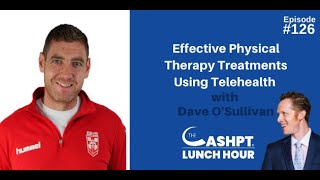
In this Cash PT Lunch Hour podcast episode, host Aaron LeBauer interviews UK‑based physiotherapist Dave O'Sullivan, who runs a ten‑year‑old sports injury clinic in Huddersfield and a global mentorship academy. The conversation covers Dave’s journey from professional rugby league/union physio to private practice, the challenges of building a profitable clinic, and the strategic shift from focusing on revenue to profit through expense control and prepaid treatment packages that increase patient lifetime value. They discuss the importance of setting clear expectations in the first session, mapping out a treatment plan, and using structured assessments to gain patient buy‑in. The interview delves into how the clinic pivoted to telehealth during the COVID‑19 pandemic, addressing therapist and patient skepticism, delivering hands‑off treatment through movement modifications, load redistribution, breathing work, and clear communication. Dave explains his mentorship program—a 12‑week online course with weekend workshops and a 30‑day telehealth sprint—emphasizing a step‑by‑step system over isolated techniques. They compare the business models of the in‑person clinic versus the online academy, highlighting differences in marketing, sales pipelines, staff allocation, and the need for online marketing skills. Practical strategies for patient retention during lockdown (email outreach, free discovery sessions) and pricing philosophy for telehealth (maintaining value, focusing on reassurance and coaching) are also covered. The episode ends with Dave sharing his top advice for therapists: develop a clear, structured flow from subjective assessment to high‑level rehab to boost confidence and authority, and a reminder of his upcoming telehealth program with a discount code.
Chapters
Hey, welcome back to the Cash PT Lunch Hour podcast. This is your host, Aaron LeBauer and today my special guest is Dave o', Sullivan, all the way from England. And Dave has a successful physio business. He also trains other physios in treatment techniques and especially in telehealth as well. And so today I brought on Dave because, well, we've known each other for a while and it's just been a long time coming. And he reached out to me and said, hey, Aaron, here's some information. Love to if this would help you. And I said, hey, let's get on a podcast. So Dave and I are on a podcast. And so, Dave, welcome to the show. Thank you for being here. I really appreciate it.
Cheers. Thanks for having me, Aaron.
Yeah, absolutely. So, number one, it's pretty awesome to be able to get people on here from England and Australia and Canada, even when I'm living in North Carolina. So, you know, like, thanks to Zoom, we can do that.
That's it. Technology. Yeah. It's going to save us a lot in the next few weeks.
I know it is. So, Dave, I just want to start back a little bit. How did you get into physio? Can you tell me a little bit about, like, how did you get started on the path of being a physio and you work for, like, I think the national rugby team. Can you just give us your brief overview?
Yeah, so I'm obviously, I'm Irish by Bert and when I was kind of 18 and said, you know, didn't really know what I wanted to do, seen the physios on the sports TV and I thought that looks pretty good. And spent two years trying to get into physio in Ireland and then came over to England in 2005 and studied physio in Huddersfield. Then my wife met my wife halfway through. Two kids now. So I'm kind of in England whether I like it or not, but kind of very fortunate to go straight into professional sport, I suppose, in one regard. So I went straight in from university to pro sports. I've worked in rugby league and rugby union, which are kind of two variations of the codes, for about 10 to nearly 12 years now, actually, and been fortunate to work with both national teams and do two World Cups actually in Australia with the rugby league team and Japan with the rugby union team last year. So, yeah, very fortunate to, you know, get to travel the world doing something that I love doing. And as you mentioned, I also have a private practice in Huddersfield, which is kind of in between Manchester and Leeds in the uk.
Okay, awesome. And so just for perspective, even from my own, like, number one sport in the UK is probably football, right?
Yeah.
Is rugby second or is that cricket?
Good question. I probably say they'd be similar. Yeah, rugby or cricket? Yeah, good question.
Is there anything else like in the top three like that, you guys, Rugby, cricket.
Netball is quite big with females and yeah, I'd say they're the three big ones. Cricket, cricket, rugby, football.
Okay. I just want to give you. Because majority of people who listen are Americans and they play our American football. Baseball, basketball and soccer is like this other thing that you kind of do. That was my sport in high school was soccer. So I played or football, as you guys call it, but I wouldn't go. My grandfather played football and leather helmets, American football. I did soccer in high school. So I just for a little perspective. So rugby's like big time, right? So what's the number?
Right, yeah, yeah, pretty big.
So what's the number one injury? What's the number one problem that people have? You know, when you're playing rugby, what are you doing?
Yeah, I suppose from a physio point of view, it's a dream in terms of your exposure to injuries. Sometimes not in a good way, but when they're tricky, but we get to see everything is probably the honest answer. So, you know, from slap tears, Ladder J's in the shoulder to syndesmosis and the ankle, MCLs, ACLs, disc issues in the neck, back, toms, wrists, you know, literally, we see it all, you know, which is good. As I said, from a physio point of view. Challenging, obviously, sometimes with certain injuries, but yeah, we get a lot of variety.
Yeah, more like impact injuries than overuse injuries.
Bit of both, to be honest. You know, we still get our hamstrings and our groins and, you know, quad tears, calf tears, Achilles issues. So a bit of both, to be honest. You kind of go through cycles where you won't see one mcl and then you look three and, you know, you kind of swings around the boats really.
Right, right. So how did you get from rugby league physio to owning a business? Was it like a natural thing where you're like, oh, this is like the next thing? Or was. Did you always think you were going to do that or was there something that.
Yeah, I kind of. I always had the vision of like, be having like this top sports injury clinic, you know. So when I was working with Leeds Rhino, straight out of uni, I set up my clinic above a running shop, you know, just Paid rent. As I seen people built up the word of my reputation, started training runners in Huddersfield, which is a nice one to start with your word among spreads, and just built it from there really. And obviously, you know, as you know yourself, you kind of, you have this dream of having a sports injury clinic and the next thing you realize is that it's the 50 year old plus with back pain that's paying the mortgage. So you kind of, you quickly pivot. But yeah, so I mean, we get the best of both worlds in the clinic, but the vast majority are non sporting injuries, even though we're called pro sport physio.
Right, right, yeah. People always say, oh, I want to get in and work with athletes. I'm like, yeah, athletes are a pain in the butt and they don't pay the bills.
Exactly.
So you've been doing that for how long have you had that clinic?
10 years now, just coming up to 10 years. So we're in this clinic for about years. So this is, this is obviously a little bigger now. We've got five treatment rooms, a yoga studio, kind of a personal training studio. So kind of built it up through the years, took on staff, you know, lucky to have some really good staff with me. And we've been able to build it up predominantly through word of moving. Obviously do marketing and stuff to compliment as you get bigger, which that's all well and good. Obviously it's a little bit scary times at the moment with the bigger wage bill, but yeah, I suppose you take the good with the bad.
Yeah. So what was the most challenging thing about building that clinic for you?
I think, to be honest, it was making it profitable. And I think it's really, you know, I kind of, I got mesmerized with revenue and it was only kind of when I started to focus on profit that I kind of started to see, okay, actually I need to run this business a little bit differently. And I think a lot of that as well was my own discipline. A lot of it was kind of spending on what you're spending on silly things really, when you have a bit of cash flow. I suppose I'm lucky now in this environment that we do have a little bit of cash. Not a lot, but we have a bit of cash in the bank certainly for the next month or two to kind of keep us going.
When you started looking at profit instead of revenue, what did you change besides just spending? Was there something like number one thing that made a bigger difference or that you changed?
Yeah, I think it was expenses, to be honest. I think I was probably subscriptions. When you look at your outgoings and you look at all the subscriptions you have and actually how much value they are and what you need to run a business. And even though, to be honest, I think in a way I'm trying to look at this as a positive and go, right, what do I need to run this business, essentially? And there's bits there that I can cut and even probably staff members, as bad as it sounds, you kind of look at them and go, actually, you know, to run this business essentially now on its bare bones, to keep it alive, what do I actually need? And you can kind of see, you know, am I getting enough value out of certain people? So it's a big opener. But I would say, yeah, it's the spending as opposed to the, you know, it all seems to be about, you know, offense. Get more patients, get more patience. Whereas sometimes you kind of, you have patience. It's the lifetime value of them or how many sessions they're having to improve. That side of it is, I think, made a big difference as well, actually, and kind of focused on people that we did have rather than, you know, always spending to get more.
Yeah. What's the one thing that you guys are doing with your patients to increase their lifetime value, which is, you know, get them to buy more or do, you know.
Right. Yeah. So that's kind of my. I suppose usp, if you will, is using the pro sport approach in private practice. So in professional sport, you know, a guy gets. Gets an injury, he may or may not have a scan, but the first thing the coach wants to know is, right, how long is he out for? And then the first thing the athlete wants to know is, right, what's my plan? What do I need to do to hit these milestones and get back? So a lot. I don't know what it's like in the US but a lot of therapists in the uk, it's like, patient comes in and it's like, okay, we just go session to session, and then, you know, the pain eases a little bit and then the patient, away they go. Whereas what we try to do with the patient is we bring them in, we'll assess them, we'll sit them down and give them an honest opinion of how long we think it's going to take. And we actually map out kind of a course plan. You know, this is what's going to happen this week, this week, this week. We hit these milestones, then you get back running. So I try to give patients a lot of Clarity in the first session. And then I find just like therapists, when they have clarity, they can understand why they're doing what they're doing. Then the adherence improves, the drop offs decrease and obviously they get the result, which is going to be massive for us, for word of mouth and referring people to us. So kind of, you know, and obviously they come back to us again then because they're happy they got the result.
Yeah. So like that first visit, you're not really. Sounds like you're not concerned about fixing the problem but getting buy in so the patients know what to expect and setting expectations.
Right, exactly. It's all about setting expectations in the first session. And to be honest, I was a bit skeptical about it. And I bet some of your listeners like, oh, you know, my patients expect hands on and they expect this, this and this and the first session. And I was a little bit skeptical when we made a decision to go like this. And what we found was a lot of our patients now, they're even happier because what they have is they've got a clear plan in place of what they need to do to get right. And I think we as therapists underestimate that a lot in terms of the, you know, I can use the analogy if you're. Well, if I'm in London and I'm trying to get to Huddersfield and I have no idea how to get over London, but I'm trying to get to Huddersfield, it's pretty daunting. Whereas if you plug the GPS in and you have that map to follow straight away, you relax a bit, don't you, in the car and you just follow the, follow the map. And I think that's what happens a lot of patients is they go away in the first session. Almost gone. Oh, God. Right, this is what's up. This is what I need to do. There's finally light at the end of the tunnel as opposed to kind of just, you know, trying to give them a quick fix and, you know, they feel okay leaving and then the pain comes back and you kind of go on this, on this roller coaster. So, yeah, we got. That's spot on what you just said. We work really hard on setting expectations in the first session. Yeah.
When you guys started doing that, what changed in your clinic? Like, was it, you know, was it on the number side for numbers of patients, visits, revenue, profit, something else?
Yeah, everything, to be honest, because, you know, if you get that expectation, then obviously if you sell packages, you sell pre, you know, prepaid treatment plans, then the person's a lot More confident that they know, you know, or the belief in you as a therapist that you're going to help them. So they're much more likely to sign up to the packages, which means your lifetime value or your number of sessions per patient will increase, usually, which will decrease drop offs, cancellations, all the silly stuff. So I wouldn't say we're 100% on, you know, patients and packages, but where we work very, very hard on trying to get people, get the money out of the way in the first session, and then it's just, right, let's just focus on getting you better then, you know.
Yeah. The number one question I get from people from other therapists and I'm teaching them how to sell, you know, packages and programs, is what happens if they get better before, you know, the eight visits that I recommended, you know. Yeah.
So what we do with that is we'll do a little drawing, and I call it effective explanation, basically. So again, the definition of that, you know, in layman's terms would be we use stuff, we come down to the patient's level rather than trying to drag them up to us with pain science explanations and stuff like that. So one of the drawings that I'll do is, you know, we'll kind of have 25% through the calf, the hamstring, the core glutes. We want everything to do its job. Whereas the middle drawing might have something like, you know, 15, 15, maybe the quads doing a little bit more, that's doing maybe 40, and the glutes doing 30. So what I'll do is I'll show the patient that I'm making it sound a lot more complicated. The visual system obviously takes care of this, but I'll just say, okay, so after three or four sessions, this is where we're going to be at. But can you still see there's a problem? And then they'll obviously be able to see there's still an overloading somewhere. So just because the pain's gone doesn't necessarily mean you're balanced, so to speak. So I make them answer that question, and then they can kind of process that information in the first testament. So then they kind of understand, okay, just because the pain's gone, we still have a little bit more work to do. And that's kind of the best, you know, the resilience bit. And, you know, I've got a little bit of a bugbear with therapists. I think we're very good to talk about resilience and Twitter and all this about we need to build resilience for patients. But actually, therapists are afraid to take that extra session or two when the pain's gone to build resilience. It's like, oh, no, they can't afford it or this or that. And it's actually, well, if it's a pro athlete, just because the pain's gone does not mean he's going back training tomorrow. I need to run him, I need to make sure he's right before he goes back training. So, yeah, so that can be scary for therapists at the start, but once you kind of get used to it, I think it helps a lot.
Yeah, that makes a lot of sense. It's part of that expectation. One of the things that we tell people is basically, you know, right when you feel like you don't need us is when phase three begins, when our get stronger, better, faster phase begins.
Right.
They think they don't need us and that's great. And I tell them, it's like, you're going to get to this point where you think you don't need me anymore. And that's when next phase starts and they go, oh, yeah, Dr. Labouwer said, you know, it's that expectation. But yeah, people can feel pain free and still move like crap, you know, and then they'll be back in six months or three months or something.
Right? Yeah. Another one that we use that helps as well actually, is we just do a graph. So, you know, just a linear graph and go, right, this is where you're at now. This is running 10k. This is the lower tolerance that your tissues need to take. I'm a big fan of drawing Stickman numbers. Keeping it real simple so people can understand in their terms, you know, everyone knows stickman, everyone knows numbers, and just go, look, this is where we're at. Just because, you know, you're pain free, doing this movement in the gym doesn't mean you've earned the right to get to that yet. They kind of tend most of them. I'm not going to say everyone does, just you always have an outlier, but the vast majority, it works quite well.
Oh, that's great. So, Dave, you also train other physios in your treatment, the treatment techniques and training. And can you tell me a little bit more about. You started that, what, few years ago in 2015?
Yeah, to 2015. So I was still working in professional sport and I said, right, you know, I had a lot of therapists emailing me, you know, saying, oh, can I shadow you? Can I do this, can I do that? So I was like, well, my second daughter was born at the time. So I was like, I want to get out of pro sport full time. You know, let's try this for a year until, you know, to certainly bridge the gap until I can get the clinic full time or I'm in a full time. So start at that. Honestly only thought I'd be in it for a couple of years. And it's taken off now where We've got over 350 therapists all over the world have gone through the mentorship, which is really good. And I started kind of teaching, it's a bit like patients as well. I started teaching hands on techniques and rehab, the stuff I use. But what I quickly realized is therapists need structure, just like patients need structure. I think the USP for our mentorship now is it's the step by step system and the structure that, that I teach as opposed to the techniques I use. Various bits from a lot of American therapists, English therapists, the kind of the best bits of everything. I've just packaged it into a step by step structure. And I think that's the value that therapists get first and foremost as opposed to are you just going to learn a few techniques? It's like, how can I take the patient safely from the bed all the way through to the high level rehab?
Right. You know, I think that's one thing that I was missing when I graduated from PT school was, you know, we had all these ideas, but I didn't know like have a better idea about how to treat people or how to like run them through some kind of system is that. And, but then once I kind of figured that out, I was like, oh, here's the system, here's my before and after. And I can pretty much do this with most people. Is that something that you're giving people? Is that what you're giving as like a basic outline?
Yeah. So again for us it kind of goes back to that graded exposure kind of low tolerance graph. And for me, in a session, in any one session, it's just trying to get them to the next level, lower tolerance. And I find that's very empowering for a therapist because it kind of takes away that urge to try do everything one session or you kind of go like this. It gives you a tunnel vision, but in a good way of. Right. I'm just focusing on this today to get you to here, to allow you to get to here so that you can run. So again, you know, I'd never run an athlete without, you know, Making sure they can do their hopping progressions and not react negatively to that. So, you know, we just follow that. You know, it's. I'd like to think it's very common sense, step by step program really of, you know, just the next step is the next common common sense, logical progression,
you know, what's the key piece of your evaluation that you use to either get buy in or get people to understand that Dave knows exactly where my problem is? Because would you agree that's an important piece?
100%.
What's that technique or question that you have that helps you do that?
Yeah, so we'll work very hard in the subjective assessment. So I look at their previous injuries and we'll do just a generic assessment. You know, we'll take bits like toe touch, backward bend, side flexion, you know, three planes of motion like Gary Gray, sfma all kind of mixed in into one. And then I'll use a little bit of like sub maximum muscle loading and stuff like that. What I try to do though in the explanation is we'll make it very specific to their story. So I'll say, okay, you know, when I'm explaining to them what I think the problem is, obviously here's your pain. This is what I think is causing the problem, which is very often above, below, somewhere else in the body. But I'll offer proof and I think that's very, very important is we offer proof from what we've seen in the assessment. So if there's something not quite right in the assessment, I'll make the patient aware of that. So I go, can you feel the difference left and right here? And then they'll say yeah or no? And I'll say, right, I'm going to come back to that later, just remember that. And then I'll also, when we're explaining, I'll say to them, okay, so remember in the examination when I said, you know, I asked you to do this and that felt a bit different. Well, I think that's contributing to put more pressure on your lower back because of that old ankle injury that you had in 2007 or 2008. That's why I think you're moving like that very often. You, oh, that makes sense. You know, they kind of say that to you and you get that kind of, you know, that agreement, which I think is very powerful. So we try to make it specific and put it into their context of their life rather than just going, you know, you've got weak glutes, you've got this, you've got that it's like, right, well, why do you have a weak glute? Like what's in your injury history that's causing that glute maybe to not do its job. And I think when they can make sense of it themselves there, then it's almost, as I said, it goes back to that relief of ah. So that's why, you know, when I do this, I can't feel, feel this work no matter how many cliffhand exercises I do or whatever, you know.
Yeah, yeah. Well that's awesome. And then. Excuse me. So when you started, when you started your kind of like this mentorship and training system, is it online? Is it. Do you guys do in person workshops, weekend trainings, how does that work?
Yeah, so we do, it's a 12 week course online and then you get lifetime access to that and then we do kind of weekend courses as well. So at the moment there in UK and Ireland, I was supposed to go to Australia because we've got a few therapists in Australia now. So I was supposed to go there in May for my first ever one which is now put on the backbone. And then I was hoping to get off to. I've got about five therapists in America doing it at the moment. So I was hoping to get, get off to America the back end of the year. Whether or not that will come to fruition is another story. But so, yeah, so we do kind of two day refresher courses as part of it as well. And that's where we just kind of come together for a weekend and just tune up the hands on and the assessments. And to be honest, the first thing I do in those sessions is the effect of explanation. I work hard on really getting the patient's clarity and the therapist communicating that treatment plan to the patient. You know, I just can't, can't emphasize enough how important that is. And that's something in my own clinic that we work really hard with our own staff as well.
Awesome. Well, what was the big difference? Because you've got two businesses that there's two separate entities. You got your clinic and you've got your online, your mentorship and training program. In starting these two businesses, what was the biggest difference between the two and making sure they were successful? Because it's different having a clinic where you're doing a lot of more in person treatment versus a training program where you're doing either one on many or online training. What was the biggest like difference in getting them started?
Yeah, good question. I think, I think I needed a lot more online Marketing knowledge and like click funnels and you know, all of these kind of stuff with the online and you know, I cringe sometimes when I see some of my old website pages and stuff like that. But it's like, well, you know, it got us to kind of where we are today. But I think that side of it was, you know, I kind of had a small reputation, you know, among my peers and stuff like that. But kind of putting yourself out there in front of a lot of people that don't know you, that's scary. You know, I'm getting a lot better being on front of a camera now. I'm sure you noticed yourself, but I used to hate going on camera, you know, talking. You do 10 cuts of a two minute clip, whereas now I just get in, I just do it. I couldn't even care what it sounded like, just like, yeah, just get it out there. So that was a lot of learning with the online stuff. Whereas the clinic side of it, it was always, you know, I kind of enjoyed, you know, having that one to one rapport with the patient and I suppose your personality comes out a lot more in that side of it. So I think that's a big contributor as well to, you know, more about referrals and stuff like that. Initially.
Yeah. Was there, was there a stumbling block you hit in one and not in the other in building or scaling it up?
Yeah, yeah, Great question. I mean, it's so funny because both businesses, I think one of the problems I had was I was almost trying to drag staff between the two. It was only when I went right, I made. Because I like everyone initially on payroll for the clinic. So when I was trying to build the academy up, I was kind of like everyone was on payroll on the clinic and then the clinic was suffering and it was just a mess. Whereas when I went right, the academy is, the prosport academy is busy enough now to support itself. You know, your payrolls coming out of that clinic staff are there. That's when I was able to start getting profitable with both businesses and managing them both and looking at the expenses and the times. So I think that, and you know, even to kind of go back to your question, the clinic side at the moment, the sales is a problem. We're getting loads of leads, but the sales kind of process needs a lot of work. Whereas the academy, we've got a very good salesperson, but the leads aren't as much as maybe once. So it's kind of, you've got a lead problem here and a sales problem here and you're trying to, you know, you're trying to kind of figure that out. And, you know, I'll be honest, I don't give as much time to the clinic now as I probably should do. I think now, it's only times like now where I go, shit, I need to spend some time and, and investing in it. And I'm trying to stay positive. And I already had a meltdown at the weekend with stress and stuff, but I think I'm seeing this as an opportunity, a six week plus opportunity to get all my staff trained to get all my marketing done for the clinic and just have it ready to go when we get running again.
Yeah. So just for everyone listening as we're recording it, it's March 30, and so just for perspective with what's going on with the coronavirus and, and I think you said you guys are about a week ahead of us, but just to kind of piggyback on what you're saying, I think I spent more time in the clinic last week working on my clinic than I have in six months. It's like, all right, time to pivot, shift, make sure the clinic is, we're retaining patients and revenue and then we've got plan B in place as soon as everyone has time. And yeah, it's been kind of interesting like, you know, like bouncing between the two, you know.
Yeah. I said the exact same thing on my public Facebook page on Friday. Said I got more work done this week in the clinic that I have done in the last six months. It's frightening and it kind of, it really reinforces as well that that's your baby and, you know, everything else is kind of built on that really. You know, I always think that's the thing I can, you know, if this ever doesn't work out with the online, I'll always go back to the clinic treat, you know, 40 hours a week again, which isn't necessarily what I want to do, but it's, it's, it's there if, you know, God forbid, I needed to do it.
Right. So what? And so that brings me to like the, one of the main reasons I wanted to hop on here is what are you guys doing right now in your clinic to kind of transition patients through, like to transition through this time and still generate revenue and profit like we talked about. And specifically, like, how are you utilizing telehealth in your business, in your clinic?
Yeah. So it's interesting because we're at a stage now where, and again, it's really good for cash Flow is that a lot of our sessions are packages. So we've had a lot of prepaid people. Now interestingly, again, I'm sure you presume you guys are doing it as well and you may be fans of it, but those people who are prepaid, very little resistance in coming online to, you know, next sessions online. That's fine because again, the money's out of the way. That's great. So we're kind of delivering all those for the past week. But it's the newer patients that are a little bit harder. And again it's the know like and trust and it's trying to get people over skepticism of telehealth and the fact that you can get results with just your hands. And I think there's two, there's two kind of things there. There's the, the therapist having confidence, getting results without their hands and then the patient being skeptical that you can get results without your hands. So you're trying to communicate confidently and kind of overcome those objections. So we're doing a lot of that on our blogs at the moment. So we're putting out a lot of blog content, you know, showing people how online telehealth works, where we're showing them case studies of people, like screenshots of people doing it just to take the fear, the unknown out of it. Really. We're working hard with that and I think as well then the other bit that I mentioned here is we're trying to reduce the expenses at the moment. So trying to get just one therapist maybe to work a 40 hour week rather than having two or three on payroll until we can kind of get that lag of new patients coming in again. So again, you're kind of, you're managing the cash flow forecast, which is, I've always been told about cash flow forecast. I'll be honest, I've never really done it properly, but last weekend I done one properly for the first time. And it's, and it's a powerful thing when there's a little bit of pressure to do one.
Yeah, sometimes it does take pressure to put you at your best some days and I don't like the pressure, like the negative pressure. But some days that's what's going to really push us to be better business owners and survive out of this. When people are just sitting back, hands up, I'm giving up, right?
Yeah, I think it's hard. I did have a moment or two where I could feel the stress come in. So I was like, I'm gonna have some difficult conversations with My staff on Monday and stuff. Whereas 19, you know, it's probably the 80, 20 rule. 80% of the time I'm positive. And I just can't wait for this to pass now so that you can see actually. Right, I could, I need to run my business like this. I need to have a cash flow and you know, I need to do all these things and I need to run it. You know, like there is a crisis every week and you know, it's, it's quite exciting in a way if we can get through this, how profitable your business will be when you can kind of see actually what, what you do need and versus what, you know, what you've kind of been telling yourself you need it.
Yeah, yeah. I mean, absolutely. So I mean are people coming to you like into your clinic? Is one of the, one of the reasons they're coming, is it because you guys do hands on work or is that part of your reputation?
Yeah, yeah, I mean it definitely would have been before. So like we've got like five, five thousand, five and a half thousand on our email list now, like past patients. So a lot of our early patients would have been very, very hands on. And then obviously as the year has gone on we kind of adopted this approach. So we're less hands on. Hands on ish at the start, first few sessions, then as we progress it kind of, you know, the rehab takes over a lot more in sessions. So yeah, just trying to get that skepticism out. And you know, one thing I would say for you guys who are probably a week behind us is just reaching out to your past patients. We picked up, we put an email out saying how are you feeling? Name in the email browser and just a quick five sentence email. Just checking in. We got nine responses from past patients saying, I think it was, how are you feeling? The physios are doing blogs this week. Is there anything you're struggling with? I want this content to be as specific as possible. Hit reply, let me know. And we got nine replies and quite a few of them are coming in for online free taste or discovery sessions this week. So they're just going to come in, let them see what it's like, give them a bit of advice and then hopefully some of them will come on to paid sessions on the back of that. Stuff like that. Simple little things like that you can definitely be doing as well.
Yeah. Wow, that's powerful. So Dave, what are you doing in your clinic and what are you teaching the physios in your mentorship about how to get like the same or Similar, even better results using telehealth where you can't actually touch people.
Yeah, good question. So my kind of approach is rather than kind of isolating a muscle, it's right, well if an area, the body is sore, let's say for instance the knee joint every time you stand up. Well, let's get your calf, your hamstring and your glute doing a bit more work so your knee doesn't have to overload as much. So something like doing a sit to stand. Like a lot of patients will do a sit to stand, pushing through the heel. So what I'll do is I'll go right instead of pushing through the heel this time. So I'll get them to do a sit to stand. I'll say, right, where do you feel that working? Okay, I feel it through my heel and my toes. Right. Now what I want you to do is push through the mid foot where your laces are squashing or inching. Then they'll do a sit to stand, that'll distribute the load through the gastro, the hamstring and the glute and they'll take load off the knee. So I think those quick wins are powerful, are important. And then that just gives you a little bit of time in the week, then to go again, set expectations, go, look, this may come back a little bit, but this is what I want you to do for the week. Then give them some stretches or whatever for the quad to desensitize those and then let's get after the hamstring and gastro doing a bit more. So because it's very compound movements and subtle shifts of pressures in the foot and stuff like that, we can change a pain experience quite quickly. I'm a big believer in the role of the diaphragm, the pelvic floor and breathing as well. So we'd integrate a lot of breathing work into our movements, our musculoskeletal movements, which is brilliant for decreasing pain as well because you get someone present.
Right. So more about. It's still about connecting with people, hearing their story, giving them hope and changing their pain experience through different movements in our kind of our skill, like our skilled decision making, rather than just me touching them to do that.
Right, exactly. And you know, I put a post out the other day and I've kind of, I've got eight pillars and it's like, right, subjective, objective explanation, communication, slash hands on treatment, low level rehab, high level rehab, strength and conditioning. And like all those eight pillars, you know, I think there's something powerful that we as therapists give our patients throughout the session. And I think a lot of therapists have the belief it's just this one pillar of hands on treatment that makes a difference. Whereas as I said, you know, it's the reassurance, the communication, that little bit of just getting a moving change in the way they're moving, you know, that all adds a lot of value to patients. And I think, you know, therapists need to be careful about, you know, discounting their sessions too much because they have a belief that actually, you know, what I'm delivering isn't as good because I can't use my hands.
Yeah. So while I've heard that a ton, it's like, hey, over the last week, it's like, oh, should I charge the same? How do I charge? How do I not discount? Because, because I'm not touching people because it's telehealth. Can you talk more about why we shouldn't be doing that and why we are still valuable even if I can't actually touch you?
Yeah, it just goes back to value. And you know, I think what people really want, you know, deep down is reassurance and they want to know that they're going to be okay. And as I said, I think we deliver a lot of that even without, you know, you know, and you know, I don't want to get to research and stuff, but even what we do with our hands, like the research, it's all up in the air anyway. We don't really know why it works. So all we do know is that it works. So I think a lot of what we do, I think, you know, the reassurance, the patient just going, look, you're going to be okay, do these exercises and you know, it's going to help you a little bit. And I think a lot of patients, they need a leader, they need an authoritative figure and they need to be guided. And you know, and we can always say, you know, we're not the hero, where to guide, we guide the patient and you know, that's what they're looking for. So for me, I think we, you know, you trained to be a therapist. And the beauty of this is I think for therapists to have that multimodal approach, you know, you should be fine in this. I think it's the therapist that's very hands on, is the therapist obviously that, you know, when you come out of this, we probably need to have a look and go, actually, you know, you know, what do I need to do to kind of balance those columns out A little bit. And look, even if it is a therapist doing, you know, that does predominantly hands on, there's still a lot we can look at with movement. You know, touch your toes, backward bend, you know, these simple movements. And just even talking patients to rehab and stretches like, you know, patients pay PTs or what we call PTs like personal trainers, PTs or physios in the US but personal trainers are a lot of money just to stand there and watch them do exercises, you know, And I know there's more to it than that, but, you know, so why aren't we valuing ourselves just to coach a patient through rehab exercises, you know? So again, I don't want to be disrespectful to personal trainers by just saying that, but hopefully you get my point.
Yeah, well, I do. I mean, 100%. And to me, like, I tell them, like, I know I'm not being disrespectful. And yet physios, we've given up a big segment of the population and they're going to personal trainers anyways. And the personal trainers, like, well, I can try these things. There's this big gap, but we kind of ignore as physios, I feel like we've allowed that to happen where we should be in control of.
Yeah, right. And that's a really interesting thing, and I said this to my mentorship group last week, is there's something pivotal going to happen in the marketing message in six weeks time and that is physiotherapy and physical therapy. It's going to be, by some, it's going to be seen as a luxury. Again, what's not going to be seen as a luxury is strengthening your immune system and really getting your immune system up. And, you know, if you think of what we do as physical therapists, we get people active, we strengthen their legs, we make them healthy. So we're doing the same thing. But the market of message, I think is going to change. And I think if we don't adapt to that, I think personal trainers are just going to go, right, well, let's get you fit and healthy. Whereas why can't we do that as therapists? And I think that immune system, you know, immunization or whatever you want to call it, I think is going to be critical in the next kind of six to eight weeks. We're doing a better breeding kind of challenge inside our patient Facebook group at the moment and stuff like that. So I think, you know, as I said, I think you guys are probably just starting to come into, you know, closing down and stuff like that now. But I think that's going to be so important in the next few weeks.
Yeah, absolutely. So you mentioned before the show that you've got a program coming up for people to learn how to do telehealth visits or the treatment techniques that you're using through telehealth. Can you tell me a little bit more about that?
Yeah. So obviously I've got my full mentorship program which we kind of open the doors twice a year for that. So obviously when this happens, a lot of therapists were kind of saying to us, well, you know, I don't feel confident enough to do this without my hands. So what I've done is I've kind of splintered off the section of my mentorship and made it very specific to telehealth where I've just taken out the assessments that you can do, the rehab exercises that you can do that can give faster relief and stuff like that. And I've just structured it in a way so that therapist can become confident in upper limb, lower limb, spine, cervical, and take a patient through a session from that initial assessment right through to the higher level rehab, even doing all the exercises in their house. So put together that program as I said, and instead of doing it as a full mentorship, we're doing a 30 day sprint, really essentially. So the therapists come in and they work with myself and the team and really get their confidence levels not only to perform these sessions but to get results for patients working hard on keeping them. We actually sold a package of 10 sessions. One of my therapists here in the clinic, true telehealth, last week, you know, so it can be done and a lot of times you just need to see someone else doing it and you kind of go actually, well if they can do it, I can do it. So we're supporting a lot of people in the community side of it that way as well. And then, you know, just helping them with kind of, you know, keeping retention of patients and really focusing on their past patients. You know, that the low hanging fruit and getting them back in as well. That's kind of a big part of it as well.
Awesome, awesome. The link for that, if someone wants to check it out, is that the goto physio.com telehealth link.
Yeah, yeah. So by the. I'll leave that page there. So by the time your probably listeners get to that, it'll probably be. The page might say that it's closed, but if they put in your coupon code then we'll Obviously get them, get them into the program, which I think is cash 100. Yeah, I think we put it up. So obviously that'll get your listener $100 off it as well. And then they can come in and start a little bit later. If the timer is up by the time they get in, that's not a problem.
Awesome. And then if you're happy to be listening to this in two years, I'm pretty sure they can just go to thegotophysio.com and probably find some of your other current resources, etc.
Yeah, yeah. If they're interested, send us a message and mention that they, you know, they heard us on the podcast. We'll get to whatever program we're doing, no problem.
Okay, awesome, thanks. I'll just repeat that it's called the GoToPhysio with physio.com telehealth and then use the code CASH100. And Dave will get you that telehealth course if you're interested in it. Dave, thank you so much for that. What question didn't I ask you that you think would be helpful for our listeners?
I think we talked some pretty good stuff there. Yeah. I think after mentoring maybe 350 therapists, what's the one thing that I think is the low hanging fruit that can make a big difference to the therapist? Confidence. And I think it's really working hard on structuring your, your flow almost from the subjective to the objective to the hands on to the rehab to the high end rehab and see where that fits. And I think if you can work a little bit on that rather than worrying too much about, okay, I need to learn more hands on techniques or I need to learn more rehab. But actually the flow of it, I think you get tremendous confidence as a therapist, which I think don't underestimate how that transfers true to the patient in terms of your authority and you know, your self belief, which you know without being cocky or anything. But I think that's very important for a patient then to say, right, this person knows what you're talking about, which gives them a lot of confidence to get a result. So I'm a big fan of authority and belief, you know, as a therapist and taking a leadership role. And for me, all of that seems to start with the therapist having clarity on that structured system. So that's probably my biggest advice to therapists is really work hard, whether it's with myself or whether, you know, you have something yourself, but you just need to refine it more, is think about that structure Rather than just adding another tool to the, to the system, really. I think that's been, that's been a lifesaver for me.
Yeah. So it's how to get people from one stage to the next seamlessly and getting the buy in, getting the treatment, getting. Here's what all the next steps are exactly.
And I think what you'll find there then is you're going to use a lot less hands on, you're going to use a lot less rehab exercises because the exercise is designed to get the person from one step to the next step as opposed to feeling like you need 100 different exercises because you're getting bored and you'll just streamline your progressions and never get sick of doing the basics really well. And I think a lot of my exercises we just keep it very simple. It's that little shift from the heel to the midfoot that just gets other things firing and it makes all the difference to the patient, really.
Wow, that's awesome, Dave. Well, thanks so much. I really appreciate you being here.
Yeah, no, thanks for having me on. Really enjoyed it.
Yeah. Awesome. If someone wants to check you out on social media, where do they find you?
Yeah, I think it's Dave o' Sullivan's Pro Sport Academy. So if you Google that on Facebook or Instagram, you'll pick us up and ask. Sorry, I don't know the links. I'm on Twitter as well, but I'm not that active. Not yet. Davey o', Sullivan, I think it's called. Sorry I'm a bad businessman, but it's something like that. Dave O' Sullivan's Pro Sport Academy or thegotophysio.com you'll pick us up on that as well.
Perfect. Well, thanks so much, Dave. I really appreciate it. Keep rocking and rolling over there and we'll be looking to you guys to what's coming in the next few weeks.
Yeah, I hope you all stay safe, as I said. Take that day to kind of dust yourselves down, but take action. And as I said, there's a big opportunity to get a lot of stuff right. So I hope you stay safe and you all come out the other end of it as. And us too, I know.
Well, thank you very much. All this is the Cash PT Lunch hour with Aaron Labourer and Dave o'. Sullivan. Stay safe, take action because there's an end in sight and if you're still running and doing everything, you'll be on top. So we'll see you guys on the next.
You.
More from Aaron


My clinic has NEVER been in-network with insurance companies—and it NEVER will be! #cashpt








