Eliminate Your Competition Using Strategic Networking with Kevin DeGroot | CashPT Lunch Hour #54
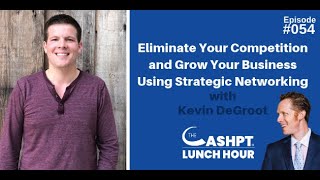
Kevin DeGroot built a cash-based physical therapy practice in Denver focused on women triathletes aged 45-55. He grew through strategic networking in triathlon clubs, a Kajabi membership platform, and partnerships with gyms. He emphasizes tracking finances closely and learning from failures when starting a cash practice.
Chapters
Foreign.
Welcome back to the Cash PG Lunch Hour. This is Aaron LeBauer your host and today I have my special guest is Kevin Groat. Kevin is a, is a physical therapist, Cash practice owner in Denver, Colorado and he's the owner of Tzero Physical Therapy. And it's. Are you in Denver, like one of the little small subdivisions or suburbs?
I am renting space from a gym that has locations in North Glen, which is about five miles north of the town or north of the city, and then also in Arvada, which is kind of northwest of Denver.
Awesome. Well, why don't you just go ahead and finish introducing yourself because, you know, like I've known, I've known you for a while, but you know, it's like one of those things where it's like, I know Denver, but I don't, I know Tzero and I know that you do triathlon stuff, but give us that, like, what's the specific thing that you do, who you help and why are you doing this whole thing?
Yeah. So I am originally from Southern California, which probably isn't the best place to start, but I moved out to Denver for physical therapy school, went to Regis and kind of fell in love with Denver. Always thought that I was gonna move back to California at some point, but I've since gotten married and this seems to be the place that my wife and I want to kind of put down roots. And through my process of kind of figuring out who I wanted to work with, I ended up at a clinic in San Diego called Rehab United, which is an awesome multi facility clinic and they work a ton with triathletes. I started realizing that my love of running, I'm a coach, college soccer player, former college soccer player, turned into a runner. My love of running was awesome, but I loved the fact that triathletes had, you know, more than just hips and knees that you could treat. And so it was, it was really fun for me to look at kind of the collective, like, how can I establish myself as an expert in an area, particularly in a sport? How can I establish myself as an expert in a sport without just focusing on one area of the body? And so I started looking at triathlon. I was like, man, people are highly motivated. There's a lot of, a lot of camaraderie, which there's not as much in the running, running world. You have running groups, but there's not as many running teams. There are not as many running like groups where everybody does, kind of builds their life around that network. So I started looking at that and I said, man, triathlon is something that I'm interested in, something that I enjoy doing. The group of people is really fun to work with. Most triathletes are really supportive of one another and it's a growing sport. So I looked at that and I also living in Denver, the Denver Boulder area, surprisingly to most people is one of the meccas for triathlon. And so when you look at the United States, it's really split between San Diego and Boulder as the two hotbeds of triathlon. And so I looked at this, I'm like, man, I love where I live, I love triathlon. Why not get to start a practice that's focused on treating triathletes specifically. So I've since kind of honed in on the 45 to 55 year old female triathlete, somebody who is not really focused their whole life on athletics, but it kind of getting into sport later in life. I have a lot of, a lot of kind of moms who, their kids are off to college and they're like, okay, I need to take care of myself. And so they're looking at starting running for the first time, starting swimming for the first time and starting cycling for the first time. And like I have no idea how to do any of those, let alone put all three together. And from there, yeah, I started my practice about two years ago, January of 2017. Started by going through the Cash PT blueprint, which is how we got connected. And I've also since started an online training program and training platform where I have athletes from across the country where I do coaching. It's really small right now, but I'm starting to build a network of coaches that hopefully By January of 2019 we'll have the full platform ready to go and really start pushing online coaching services.
That's great. So when you graduated PT school and then did you go to San Diego for like a clinical rotation or did you go there to kind of move back and go, no, this isn't it. Like what happened like between graduating and doing that and you know, developing this whole thing.
So I've always, I've lived in, I'm 30 and I've lived in probably I think this is my 19th address that I've lived at in my life.
I lost count.
Yeah, it's crazy how many places that I've moved. And so when I, when I was in PT school I was like, I think I want to move back to California, but I'm going to try different places. So I did a rotation in San Diego A rotation in Washington, a rotation in Casper, Wyoming and a rotation in St. Louis, Missouri. And I got offered a job at the place in San Diego and I looked at the benefits package and I was like, I can't live in San Diego for what they're offering me. With a couple hundred thousand dollars in student loan debt, I can't do this. And at that point, the cost of living in Denver versus the cost of living in San Diego was extremely different. And got offered a job that I was making more money and in Denver, was really excited about where I was going to work. And really I've had two pretty crappy jobs since, since graduation. And that basically forced me the direction of, alright, if it's not available for me to just walk into a clinic and get to treat clients how I want, how am I going to establish something that gives me the lifestyle that I want, gives me the ability to treat clients the way that I want, gives me really the ability to go back to the way that I learned it in school and actually apply the things that I learned as opposed to just cranking out numbers. So that could be a whole podcast in and of itself is my journey from graduation to where I'm at now.
Right, right. That's awesome. So tell us, like, what was the pivotal turning point that you, where you were like, I gotta do something different. Was there something that happened or, you know, like a day where you were finished and you were like, oh, this isn't happening anymore.
What was that? It was kind of a combination of, I remember three particular moments and I had an okay job where I was making good money, was decently well respected, was directing the clinic. I saw that I was making less than 10% of what I was billing. So that was number one. I was like, oh, wow, less than
10% of what you're billing, like, this is great.
I'm at the point where I'm seeing somewhere between 80 and 100 clients a week. It was billed through a physician's group, so higher reimbursement rates because of physician codes, just cranking out numbers. And I realized that my plateau, I was basically at a plateau. I wasn't going to make much more money. And I was just constantly trying to catch up. I was seeing too many clients. I would go home and I would do paperwork until 9 or 10 at night, wake up and do it all over again. And just the lifestyle that I wanted. I wasn't being healthy, I wasn't healthy at all. It wasn't sustainable. So that was number one. Number two is I Had moments where I. Working with. Working very closely with physicians was really good most of the time. But I remember a time when I had a client who was diagnosed with plantar fasciitis. And I tried to explain how we were going to do, you know, I was going to look up the chain, make sure that they actually had plantar fasciitis. And we did some lumbar stuff and some hip stuff, and their plantar fasciitis got so much better in the first visit, and they had had it for a year and a half. And so this woman goes back to her physician who wasn't very happy with the fact that I told her she didn't have plantar fasciitis. And he came and you just reamed me for the fact that I contradicted his diagnosis. I'm like, well, I didn't really. I told her she had pain in the bottom of her foot, but that probably wasn't what was the actual issue. So I just. I realized, okay, I'm working more towards appeasing him than actually for my client. And then the last thing is another experience where, long story short, I was basically told, because we were working for the physician group, working with the physician group is how it should be. But I had a disagreement about something on my. On my schedule and the way that something was handled by the front desk and asked them to do something a little bit differently. Just keep me in the loop. And my boss at the time looked at me and he's like, you got to remember that you work for them. I was like, I don't work for the front desk person at a physician's office. This isn't what I'm talking about. I realized that the. The respect level there was. It just wasn't there. And so, like, all of these moments where I'm like, okay, I'm working for somebody else, not my client. I want to work for my client. I want them to get the best care and also, like, have some level of respect and not just, you know, when I come out and I have my doctorate and they. They tell me that I'm less important than the person who is scheduling, like, that's fine. That they. I understand that they're very valuable, they're very important, and I'm not discrediting that. But when you're like, you. You. You work for them. Like, no, I work for my clients. I'm trying to help my clients the best way that I can. So I looked at it. I was like, there's. This has to Change. There's no way that I can continue this long term and, and actually enjoy what I do.
Right. So you get to that point and what was your thought process at the time? Like, well, I can quit, go to home skilled nursing and just rest this out, be a banker. Or like, what was happening? Like, did you, like, how did you. Because we all know, like you're here because you have a cash practice. But how did you go from employee who's being told what to do and not given this kind of freedom that you want to deciding, okay, this is what I need to do, I need to go in this direction, start my own business, etc.
So I knew at some point that I was going to own my own business. Even back through undergrad, I've always had that I want to do something different. I want to make my own schedule. I want to be able to do things the way that I want to do them because I think that there are too many people who are just greedy about how things are done. So I want to be able to give people, give my clients the best of me. So really from the time that I was a sophomore in college and started working in PT practices, I was looking and saying, okay, what are they doing well? What are they not doing well? Picking the good things and throwing away the bad things. So then I started following a number of different people on Facebook and kind of looking for that alternative. I always thought that I would go more the insurance based model. And so then I started following you. I started following Greg Todd, I started following Paul Goff, I started following Jared Carter. Like all these, all these people who like, hey, there's this, this whole new side of things. Had a number of friends in PT school that were like, is insurance actually the way to go? And so we all started talking and when I, when I started realizing the insurance model and how everything was set up, I was like, this just isn't going to be sustainable. So it was really a. I would have probably done it a lot earlier, but I was, I was engaged at the time and was trying to figure out how to, you know, provide for my wife and myself. And my wife was in grad school. So I would have loved to just jump ship and go full bore cash PT and be done. But I actually, I started as started in home health at the same time. So my wife told me, or at that time it was my fiance. She was like, if you can find a home health job in the next 48 hours, because I had an opportunity at a gym that I was really Excited about, like, if you can find a job in 48 hours, I'll let you. You can quit your job and we can go this direction. And I had two job offers in 48 hours with home health. I did home health for a little while, but I actually only did it for seven months before I was able to be 100% independent at t0. So, yeah, I think that answers the question.
That's awesome. Was there something, like you said you had always thought you were going to own a business. Was there something that you saw or learned when you were younger, maybe back in high school or younger than that? Just that you were like, oh, owning a business is what I want. Like, what makes you. Like, what gives you the. Not the. Like, what gave you the confidence to be able to say, hey, this is something that I want to be able to do. This is something that is going to happen for me in the future.
I don't know if confidence is the right word. I was actually talking with another person in the cash pt, I think, in your mastermind about this idea. What else are you going to do? You know, my big things in life is I love physical therapy. And I feel like I am one of the few people, I love treating clients, but I don't want to do it, you know, 40, 50 hours a week. I love coaching triathletes. I don't want to do it 40 or 50 hours a week. I love doing pro bono stuff. I've been several different places in the world and done and worked in clinics in developing countries and taught in developing countries, and I love doing that. And I started to look at these things and started talking to different employers, and I. I realized that that wasn't going to be possible. And so it wasn't necessarily a confidence thing. It was more a necessity in my mind. So I've had months since starting T0 that I looked at. I'm like, crap, if this isn't going to work, like, what am I going to do? And it's still kind of scary to say, like, I don't know. I don't really know what else I would do if I didn't own a business, because I get to do the things that I love to do in a way that I love to do them. And it gives me the variety in my life. It gives me the. I remember asking for a week off to go to Kenya to work in a clinic, and my boss is like, yeah, that's fine, but you have to take PTO. Well, great. I only have 10 days of PTO. And I'm taking seven of them to go to Kenya, which is totally fine. But at the end of the day, I want to be able to do that and also, like, see my family, who I don't live close to. And so it was less of a confidence thing and more of a necessity in my mind. And I've seen a lot. I've had a lot of people in my life who have demonstrated what it looks like to be a business owner. My first mentor when I was working in PT clinics, has a really well established, very successful PT practice in. So I saw him and I was like, oh, you can do this well. And I don't have my PT clinic set up the way that his is, but that's okay. But I saw the entrepreneurial spirit. I saw the way that he did it. And it is possible to do things the way that you want and still get to go on vacation, still get to spend time with your family, still get to do all these things that you're passionate about.
Yeah, that's awesome. And so telling. Like, you had mentioned this a couple times, like, lifestyle you wanted, like, what was it like? And I know when we got on the call today, like you said, I just got back from being out of town. What is it that you like? What do you like to do? And outside of treating patients, running your business, and why is it so important? What are the things that you want to be able to do and have time for?
Yeah, the most important thing is family. To me, when I. I mentioned this briefly, my family is in Washington, and my wife's family is in Alabama, and we're in Colorado, so we don't have any family close to us. And so looking at that and saying, like, okay, if I want to be able to see my family more often than just for Christmas and Thanksgiving, I have to be able to do. I have to be able to kind of tweak my schedule certain ways. This sounds weird. I don't have kids right now, but I'm trying to build something that when my kids have. My future children have soccer games, like, I can go to their soccer games whenever they're at. If they have stuff at school, like, I can be there for them and when I. So number one is family, keeping that as the priority from there. I love traveling for races, I love riding my bike, I love swimming, I love running, all that kind of stuff. I'm really active in the church that my wife and I go to. So getting to do more with church, getting to do more with my family, getting to do More with kind of the sports that I love. We love to travel. I've been all over the place this year, which has been really, really fun. So that's probably the primary thing.
Yeah, that's awesome. What are you doing to set up your business? Well, what have you done so far that's allowed you to travel so much this year? And what are you doing to make sure that your business is set up so that you have the time when you want it, for family and kids and shuttling around town when they have all of them have different things?
Yeah. I think one of the biggest things that allowed me to get into the point where I was only working at Tzero was letting people feel like they're a part of something. I've said this, I've been on a couple different podcasts and I've said this every single time. Let people feel like they're a part of your growth. So many people that I, that I meet, they're like, that's so cool that you're, that you own your own business, because I think more people would love to do this, but they're just terrified. And so I look at it and I say, hey, clients, like, here's what I'm trying to do. Here's why I'm trying to do it. It's for your betterment. It's so that I have the life that I like. I can spend time with my family. Yeah, I wish that I could spend time with my family. So letting people be a part of something that is growing is kind of challenging the status quo because a lot of us will look at it and say, the way that it is right now is not good. What are our other options? And I'm saying, this is another option. Like, I want you to be a part of this. I want you to be. I want you to benefit from the quality of care that I can provide if given the opportunity. Along with that is when I say, like, hey, I'm going on a trip with my family. They look at me and my clients will be like, yes, absolutely. We want you to go on that trip because we see the importance of that quality of life, of if you're not taking care of yourself, how are you gonna come back and take care of us? And so letting them see, I'm doing this because it's good for you, it's good for my well being and because it's good for both of us. Now everybody wins in this situation. So that's kind of the overarching thing then. I have not messed around with mentorship is probably the biggest success that I've had. Like I said, I've worked with Paul, I've worked with you, I've worked with Greg. I am on the phone almost every week with a couple different people just talking about business and making sure that we're discussing what's going well, what's not going well. And there's. I think isolationism is something that kills businesses. Like, I just have to focus on myself. And when I. This is challenging for me, but when I have something that's tough, I make sure that I reach out to people, make sure that I talk to my mentors, make sure that I find somebody who's done it before so that they can at least guide me close to the right direction. Otherwise, I would waste so much time and money just floundering. So I spent a good chunk of change in the last two years on mentorship, and I would say that that's the best money that I've spent. Yeah.
Yeah. That's awesome. That's great. Yeah. The. What would you. Let me. Let me just go into this, because I think this is about the mentorship thing that people miss sometimes. What would you say is your return on your investment for the amount that you've invested in yourself? How do you measure that? How do you measure your return? How do you measure. What is it? What is it you've experienced in growth and success because of the mentorship, directly or indirectly?
Oh, man. It's hard to put a dollar amount on it. You know, like, we talk about 10x in your business. And it's hard for me to put a number on it because I'm a new business, relatively new business owner that has worked with mentors from this start. When I first started, though, I was like, I want to just be the general orthopedic person and really niche down to. I want to work with triathletes and even more specific than that. Um, so that's been absolutely invaluable. Um, I mean, I went from struggling to find clients in the Denver area to I've had clients who have traveled seven and a half, driven seven and a half hours to see me because I made myself the triathlon expert in Colorado. Um, or am trying to make myself the triathlon expert in Colorado.
You are already the triathlon expert.
Yeah, I'm. I'm. That's. That's. My goal is I want people to think t0 when they. When they think triathlons. Like, oh, you have to talk to Kevin. You have to talk to T.0. So niche down way more than I ever thought that I would. That's number one. I am in the process of building an online business which again, I never really thought was, was possible, but I realized that that's, that was a, a necessary next step to be able to not just see the same clients over and over again as patients, but be able to offer them continuity of care, be able to work with them for the next 20 years, hopefully. So that business has been directly because of mentorship. Yeah, I would say I wouldn't have grown much at all this year, I don't think, had I had I not worked with mentors. And I've almost doubled my business in the last year, which is, yeah, that's huge. And hopefully again we'll be starting the next section of the business and the online coaching and that has the potential to do, to do really, really well. So I would say at least, at least doubled my profitability and if not significantly more than that.
That's awesome. So tell me about like where's the, where are you going? Let me ask you this first. So where are you going? Where do you see yourself in five, ten years? Is it, is it just you and online business? Are you thinking, okay, hire some other pts, other staff, you know, grow and scale clinic and online. What, what's your focus and where you headed?
So again, probably the two sides of it. So the online business, I have 16 different coaches from around the US that are all specialists in certain areas. So I looked at it and I said triathletes want specialized coaching. But to find somebody who's a specialist at swimming, biking, running, nutrition, psychology, especially, pretty difficult. So if do you hire one person for each discipline or do you hire a team of coaches that can, that can train you collectively? So I started bringing in cycling experts, running experts, nutrition experts, swimming experts, et cetera. And we've been building a platform. So that's, that's the number one thing for that is I'm not necessarily hiring somebody, but I'm collaborating with a number of different people and then we'll hopefully be able to grow that. Not entirely certain where that'll go, but my hope is that that will look like a been told a lot. It looks like the ice model where there's different specialists in each area and you kind of collaborate to make one. From the brick and mortar side of things, I would love to have a multi sport training center, wellness center that's focused on physical therapy, nutrition, psychology, everything. So not in just the, like they're there, but actually have it built into the model. So one of the cool things about cash pt is if I charge $200 a session and build it in that I like every sixth visit, you get a visit for free with the psychologist. That's great. I can do that. And so that's kind of what I want to do is have more of a team approach because I've seen so many people who would benefit from like, all right, you've been out of your sport for three months, we're on the right track. But how are you dealing with this emotionally? Like, go talk to the psychologist, go talk to the counselor. We can collaborate. More of a team approach. How is, how is what you're eating affecting how you're recovering and really gearing everything towards collaboration?
Yeah, that'd be awesome. I was just thinking back, I was like, damn. When I used to race, you know I used to race bicycles, right? So there was a time at which like one, I tried everything. Like, nutrition wise, nutrition was crap compared to what it is today. So I'm like, well, if I actually ate real good food, how would I have, how would my engine have run? But there was one summer where I was like depressed. I was like, I wouldn't call it clinical depression. Every time I got on the bike for like a month, I was like, what is wrong with me? Why am I doing this? Blah, blah, etc. And I got into. I even like was at a race across the country and I sat down, I pulled off the side of the road, out of the race. I was like, I can't do this anymore. Well, it turns out my bike was broken. I had a crack in the, in the. But I had no support. Like my team, we had no support. I had no access to mechanics. I was my own mechanic. I didn't have access to like you said, like a psychologist or, you know, PTs, like, you know, all this stuff would be awesome to have that. So I was thinking like, wow, I wish I had that stuff. Yeah, I wanted to share that story because it was like, it was one little thing that was out of my physical control was affecting me physically and emotionally in a lot of different ways that I think our patients are experiencing that we can help them with. And that kind of environment would be amazing.
Yeah, yeah. I'm really excited about that online platform. I think just the people that I've talked to, who it's like, yeah, you're a good runner, you're trying to build endurance, but you don't have any sort of coping skills with in regards to like, when Things get tough, which they're going to. What do you do? And so you build and build and build and build and build. And then one thing just completely derails you for the whole. The whole race or the whole season because you haven't been given the opportunity to. To develop those skills. So, yeah, and it fits. It just fills this. This kind of middle ground between the professional athlete who has all the sponsorships, somebody who's just buying a training program for a hundred bucks, and like, all right, well, I'm going to train for an Ironman, and I'm just going to do all these different things because that's what the paper tells me to do. How can we actually walk alongside of you to maximize the effect that that training program has on you and then teach you to. Teach you to actually do this well so that you enjoy the sport. And it's not just like seasonal thing where it's like, okay, I'm going to train for three months and then I'm going to not do anything for nine months. And we just, yo, yo, back and forth between happy and healthy and sad and depressed. Right. So.
Right. And are you. Is it planned to integrate this with your current clinical offerings or, like, are people, like, I don't want to say graduating from PT and air quotes because people don't graduate from us. They get to a point where they want, but they always stare.
They.
We try to keep them in our family as patients, but are you transitioning people saying, okay, let's get you into the online program. Is there like a. Is that a thing that you're doing, getting people go back and forth between the two? Are they just separate entities?
No, they are very much in line with each other. What I would like it to end up being is when somebody comes in that's a triathlete especially, I want their clinical, the clinical offering to be associated 100% with. While you are an active client, you get access to coaching. So that way you can go through videos, you can learn, you can see what it's about so that when you graduate, you can transition directly into the monthly fee. That way I can continue to stay in touch with them. They have access to exercises, they have access to the continuing videos, all that kind of stuff. So I have probably. I think there are 20 people on the team right now. And of Those people, probably 10 of them have been. Have been clients in the past in the clinic. And they just kind of bounce back and forth, which is so helpful too, because then they're not spending six weeks waiting for Something to heal that like I could take care of in one visit and it would be much easier that way. Like don't, don't waste time. Like come in right away, have me take a look at it. And then you're back to full training much, much, much quicker. So I love that side of things where they, they're starting to realize that I am their go to person for every question that they have. And they'll ask questions on question and answer live. Hey, my foot's been bothering me. I'll try to answer it. And if that doesn't work, it's like, hey, come in tomorrow. So it's been really good to have that continuity of care.
That's awesome. How do you have that? I guess you're just a few technical questions like how do you have the membership program set up? Are you using, you got like Facebook groups, Are you doing monthly recurring payments? You know, what are some of the details about how that's set up and maybe, you know, integrates with the business?
Yeah, so I have the whole platform is built on Kajabi and so that's recurring monthly fees. If you do it a one time fee every year or a yearly fee, then it ends up getting you a triathlon kit, which is awesome too.
Oh, dope. Yeah, that's a great incentive.
Yeah. So it's like you pay, um, it ends up being $780 for the year. If you pay the $780, you get a $200 triathlon kit, which is free marketing for me. Well, it's relatively inexpensive marketing for me at the end of the day. Um, so from there I have monthly fees and you can buy the triathlon kit separate. Um, so that's all through Kajabi. That also I have that getting you a small discount for clinical stuff with me as well. And then I'm doing because I want more touch points, more of a hands on, walking you through the program, walking you through training. I also have a private Facebook group that I do every week. I do a question and answer with all my athletes. So you come on. I ask them to post questions beforehand so I have something that I can go off of right away and then they comment questions back and forth. So it's not just a podcast where they can't ask questions as we go. It's more interactive, which has worked out really, really well so far. And then my kind of feeder is the triathlon injury support group. So I have a closed group that is more kind of small videos, kind of helping people understand what Their injury is. Understand if they need an mri, understand all. You know, what physical therapists have to offer. I try to do something in that group at least a few times a week and then use that as a way to build in telehealth calls and then use the telehealth calls to try to get people to join the team and use the team as a way to continue the relationship with people.
Yeah. Wow.
It ends up being kind of four or five different funnels that kind of play into each other.
Mm. And you have people. So you're. You're this. This, like, membership, like, program. Online business is a team. I mean, so it's a team. Like you. You're marketing it as like you're joining my team.
Mm.
You know, Is it Team T0? Has it got a nice fancy name?
So it's the T0 training or T0 physio training team. So it's still under the umbrella of Tzero. And like I was saying, I don't like the word franchise, but what I would love to have is with the 16 coaches that are from around. From around the country, I would love for those people to have a local chapter team so that they can build local following so that it improves their business as well. So we have the national or international Tzero, which helps them have the kind of. The infrastructure, the larger infrastructure, grow and develop as a name. And then from there, now, all of a sudden, their PT practices in Milwaukee and Chattanooga and Gainesville, et cetera, can start to improve because they're associated with this larger, larger thing. Oh, nice.
That's awesome.
So that's great. It's not just an online team. Obviously, there are some people. I have somebody who lives in West Texas who. I don't have a coach anywhere close to West Texas, but she still is a part of an online program. She's more of an anomaly at this point. But I want there to be, you know, 30 or 40 people in each location that I have a coach so that they still have the, like, in person nature of a team, of being on a team, but then also have the infrastructure of a larger group.
Yeah, that's cool. And when I was racing, I had my local team that I raced with, but my coach, we just did phony phone coaching.
Yeah.
It was almost like email was around. I mean, I'm not that old, but it wasn't like email was what everyone did. We just had a call every Monday night.
Yeah.
You know, and it was. And it was great and it worked, but. And we lived 3,000 miles apart.
And I think it's. It.
You know, it sounds to me like this is something that can be really huge for a lot of people and very helpful and I'm excited. Yeah, that's great.
Yeah. I like to say that I'm cautiously optimistic. It's like, okay, don't get too crazy. But it's. It's been really fun to build. It's been a lot of work, but it's been really fun.
Yeah. What if, like. So for someone who's thinking about starting an online business like that, what's the one thing that you think that they need to make sure that they. They do when they. Before they get started with, like an online coaching or membership program type of program that you.
Oh, man. My big mistake was that I tried to do everything on my own right away. So I bought Kajabi and I made a website and I uploaded all the videos. And then I. I tried to. I tried to scale more. I was like, crap. I just screwed this up and I. I just messed everything up. So then I ended up using Luis for. As a virtual assistant and having her redo my whole program, which I'm sure was frustrating for her because she's like, yeah, you didn't do this right at all. So I ended up wasting a ton of time, a ton of money, because I tried to do it by myself instead of finding somebody who actually knew how to do the online, like building a website. That's number one. And also for me, it's. I love the fact that I. I've coached for a number of years. So I've coached really since I graduated PT school. And when I. When I got those training clients, I told them, hey, here's what I'm trying to do. Would you like to beta test everything? And so that was my original group of people. So I had. I was doing videos and I was uploading them to my Kajabi page and they could go on them and see, like, does this make sense? Is. Is there something that is missing? Can you ask questions so that I can make videos specifically for you? Because especially for the type of program that I'm making, where I'll have probably 200 videos on this program when it really launches. And that's a lot of videos to come up with content just by myself. But having those people who are asking questions, that was doing private coaching and then saving those videos and then uploading them as. As though I was coaching somebody else was really, really helpful.
That's awesome. That's awesome. I want to shift Back to your, your, your kind of brick and mortar clinic a little bit and ask kind of basically the same thing, like, what was the, like what was the biggest struggle you had getting started and is there something that you would do over again if you're starting from scratch today?
Yeah, the biggest struggle. I signed a contract with a gym and my overhead is ridiculously high. I didn't know what I should expect. So I was excited about the prospect of having my own practice. Real estate prices and rent in Denver is pretty high in general. So I was looking and saying like, oh well, I'm happy with spending $1,500 a month on a room in a gym. And then I started to talk to more people and I was like, man, this is not really financially responsible to spend fifteen hundred dollars a month on rent. And then along with that, if I would have known right away who my target population would have been, I wouldn't have signed up to or I wouldn't have signed a lease to work in the gym that I'm at because that's not their target population. So there wasn't as much collaboration as I would have liked there to be, either direction. Like, I didn't feel comfortable sending my clients to them. They didn't have the clients that I really wanted to work with and their price point was very different than mine. And so I kind of beat my head against the wall working with the gym because they're working primarily with people who are coming in for, you know, six week challenges, spending $50 a session on personal training. And I'm coming in trying to work with Ironman athletes and charging $200 a session. Those price points are very different. So it causes those people to look and say, why? Why would I pay that much? So it's just harder to educate around that versus finding a gym that was really high quality, really focused on the same type of person that I'm focused on. I think I could have collaborated a lot more right away.
Yeah. What's been the number one thing that you've done to get new patients in? Like how are you going out marketing your business? Is it just by, you know, focusing on triathlons or is there triathlete and the triathletes? Is it, is there a specific strategy you've used to get in front of them that's been. This worked better than others?
Yeah. When I graduated from PT School, I joined a triathlon club. There were probably 95 people on the triathlon club that I joined right away. And I was just there. I tried to Answer some questions, tried to go on bike rides with people, tried to go race with people, tried to do all those different things, gave free PT because I didn't have an actual. I didn't have a place to go and I didn't know what I was doing. So I gave free PT away to certain people. I just was with that group and tried to be an active part of that group. And then from there, when I started my practice, I put it close to that triathlon club. And then it was like, hey, I'm the guy that's been in this group for the last three years. You guys should come see me for anything PT related. I did a couple different kind of. I taught a couple different things at the tri club, did some running analysis, did like shoulder preservation courses, did all sorts of different stuff with them. So I really focused on those 90 people. And then that has since expanded to a lot more. But that was my original group. I am in the process of really honing in on what my marketing plan is as far as like Google AdWords and Facebook marketing and that kind of stuff. But really building relationships with an already established community was the number one thing that I did right away.
That's awesome because I know, and I'm bringing this up, you know, Denver's popular place.
Right.
People want to live in Denver. And I know a lot of, I mean, I've worked with a lot of people in Denver and when we're out there, a few months ago we saw you and a whole bunch of people and it's like, oh, there's a lot of pts in Denver. Like cash based physical therapists in Denver and Boulder. You know, how have you gotten, you know, a lot of people say, oh, well, there's already someone in my, in my neighborhood, you know, in my town. I can't start a practice here. I mean, obviously that wasn't your mindset, but.
But
I was thinking about like, all right, so I wonder, like, Kevin, like, what is. Like, what are your thoughts on that? Like, how are you successful? Even though there's easily a dozen other cash based pts in Denver that you and I know, and then there are people that we don't.
Yeah, I think the, I mean, you talk about every one of the mentors that I've worked with talks about the abundance mindset. Mindset. I would have to look at my numbers, but it's actually crazy how few people it takes to have a successful practice. And I didn't realize that right away. And then I started running the numbers and I was like, I only saw, like, 100 different people in. In the first year that I was open, and I did fine. Um, and so I used to think that, like, I had to have 300 new clients every. Every year in order to be successful, and that's just not the case. So realizing that, also realizing, like, most people don't even know what physical therapy is, and there are plenty of people in Denver for all of us to be successful, because there are plenty of people who need us that have absolutely no idea what we do. And so I was talking to Zach Harmon, who I know has worked with you. He's in Denver, and we're talking. We work with very different clients. Right. He works with crossfit. I work with triathletes. And it's like, I want him to be so successful, because if he's really successful and he ends up having. Having an effect on the greater Denver area that they start to know what cash physical therapy is. And out of network physical therapy, now, all of a sudden, people are gonna look and say, like, oh, well, there's also this guy who is doing the same thing, and he works with triathletes. And that's. That's what I am. So, like, I want him to be successful. I want all of the other cash pts to be successful, because there are enough people to go around, and most people don't really even know what we do anyway, so that's probably a longer way of saying it.
Yeah. I mean, absolutely. I. You know, I mean, even when I was in San Francisco, it was like everyone and their mother was a massage therapist. Like, you know. Well, yeah, there's a million people in, like, 18, you know, 18 square miles.
Yeah. And I think looking outside the box on what you offer is really, really important too. So I had a client who she. She moved into the Denver area. Kind of like. I won't call it a midlife crisis, but kind of that, like, type of thing. Like, moved from the midwest to Denver. Just wanted to experience the Denver life. Wanted to go hiking, wanted to go rock climbing, and wanted training. And she didn't want to work with a personal trainer because she had had a bad experience. And the past. And historically, I'd have been like, that's not my thing. Like, I can't do training. I'm not a trainer. And she's like, this is what I want, though, is like, I want you to help me understand how to move well. And so I started training her three times a week because that's what she wanted. And we were progressing. Everything was going Well, I wasn't doing physical therapy in the rehab sense. And so I shifted my focus from, like, I'm offering a very, very, very narrow kind of service to I can offer so much as a physical therapist, and there are people who are willing to pay for those services. So now it's, I can do physical. I can do, like, the actual rehab physical therapy. I can do personal training, more, you know, strength and conditioning. I can do coaching. I can do online stuff. I can do telehealth. And that way I look at it, and I'm not just like, oh, man, I need somebody to tear the rotator cuff so that I can help them recover from that. Like, no, I can help. I can help somebody become a faster runner. I can help somebody become a faster cyclist or a swimmer. And so I'm not. I don't like to say that I'm just offer physical therapy, because that's not true. Right.
Well, you know, that's hot packs, leg lifts, and ultrasound where I come from.
Yeah.
So that's awesome, Kevin. That's really great. So is there anything else that you think is important to share from your experiences, especially for someone who's just getting started or maybe started and struggling to find their footing and. And get their business off the ground?
Yeah, I think understanding. Understanding why you want to do something is really, really important. Not just, like, I want to make money, but having some sort of impact, having some sort of meaning in what you do helps you understand that when there's, you know, tougher times, it's easier to just sit through those and not really get bent out of shape. That's number one. Number two, be objective. I'm notorious for this, where I'll be freaking out. I'm like, oh, my gosh, this month has sucked. And then I'll actually look at my. My numbers and I'll be more objective about them. Like, oh, actually, this month was decent. Like, this month was actually pretty good. So don't let your emotions get the best of you. Like, really focus on objective growth. Make sure you're tracking things, which most people don't do when they first start. They're like, oh, well, just. It'll work out. No, you got to track stuff. And then what was I going to say as the last thing? Oh, let your tougher times push you towards something. The harder months that I've had have been the months of the largest amount of growth. Ultimately, where I look at some of the systems that I now have in place. Oh, that came out of January of 2018, where it was really crappy because I, I realized that those downtimes were giving me the freedom to actually do something in my business so that I can. So that when I'm actually working with clients, I have something that's continuing to work for me as opposed to just getting emotional or freaking out about it. Let those things, let those tougher moments push you towards growth as opposed to towards stagnation. Because you're going to have tough months, you're going to have tough weeks, and ultimately it's like rehab. It's like you're going to have a roller coaster. As long as you're progressing towards the right end, like, that's great. And bonus one, I have another PT who I mentor. And she was like, is it okay for me to get a job at a juice bar? If it pays your bills, do what you got to do. That's totally fine. I'm not going to be mad at you for going and working at a restaurant or bartending or doing something. Like, just go and do something. As long as you're working towards your goal, as long as that's not getting in the way of you putting in time towards what your mission and vision is, great. You have bills to pay. I respect that. Do it.
That's really awesome. Thank you very much. Those are some powerful suggestions and thoughts.
Appreciate that.
So, Kevin, where. If someone wants to get in touch with you or find out more about your business and what you're doing, where do they find you?
So the biggest areas, Instagram, Facebook, Zerophysio are the two. And then the triathlon injury support group is a great place to get connected. And I'm sure there are a lot of people who are listening to this and thinking like, man, I would love to be a part of something as far as the online coaching goes. And ultimately my goal is to expand this so that everybody has access to this resource and we can all collaborate and have more of a mutually beneficial resource. So if somebody wants to reach out to me in that, like, reach out to me on Facebook, direct message me or my email address is Kevin Zerophysio.com so by all means, would love to continue connecting with people, making sure that again, I think that we can all win in this. And it's not just me saying, like, I got to do this by myself, for myself. Like, no, I think if we can go together, we're going to go a lot further, right?
I think it's absolutely right. I think we can only get. We can get there by ourselves sort of, but we can get there faster. Impact more people and in a better way together and helping each other. So, yeah.
Yeah.
Well, thank you very much for being on the show, Kevin. I really appreciate the time you take away from your businesses and family and everything else to be here. So really appreciate that. For the Cash PT lunch hour, this is Aaron and Kevin DeGroat, and we'll see you guys next time.
More from Aaron


My clinic has NEVER been in-network with insurance companies—and it NEVER will be! #cashpt








