Homeless to 7-Figure Business Owner with Tom Miller of Lifelight Fitness | CashPT Lunch Hour #97
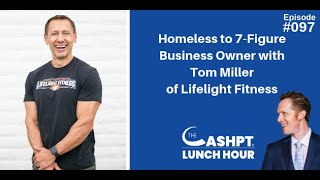
In this Cash PT Lunch Hour interview, host Aaron LeBauer talks with Tom Miller, founder of Lifelight Fitness, about his journey from homelessness to building a seven‑figure fitness business. Miller explains how he designs trainer compensation—starting salaries above market rates, commissions on sales, and a model that lets trainers earn online income from home. He emphasizes radical transparency, sharing all financial metrics in monthly all‑hands meetings, and granting ownership stakes to high‑performing staff. The conversation details a rigorously scripted sales process, including intonation coaching and slide decks, that equips even introverted trainers to close high‑value sales. Miller describes the “Hot Guaranteed Results” hybrid online program that combines daily check‑ins, gym workouts, and remote coaching, extending his services beyond the local area. He credits several business coaches—Bedros, Alex Hormozi, and others—for teaching systems that scaled revenue from $10k to over $100k per month. Miller shares actionable advice for wellness providers: always view interactions as selling, maintain consistent pricing, build value stacks instead of discounting, foster community connections among clients, and create multi‑tiered ascension models (e.g., $200, $600, $1,000 programs) for vertical growth. Throughout, he frames Lifelight Fitness not as a traditional gym but as an empowerment and lifestyle‑identity change business. The episode concludes with Miller’s contact information (website, Facebook, Instagram) and a call to listeners to share the show.
Chapters
Hello.
Welcome back to the Cash PT Lunch Hour podcast. This is Aaron Labourer, your host and today my special guest is Tom Miller. Tom is also another fitness professional and successful fitness entrepreneur. If you listen to my one of my previous episodes with Rob Groupe. Rob, we got off the episode and he's like, you've got to get in touch with Tom. Tom's got an amazing story. I'll let Tom introduce it himself. But Tom also has a history with addiction, being homeless and being incarcerated, and now has an amazing sales team, a seven figure fitness business. He's helping tens of thousands of people and he's got an amazing story and he's used it, he's used his. And we were talking about this. He's used his experiences to create an amazing business. And I want you to be able to tap into that without having to go where he's gone so you can learn how to sell and create and build and grow and put your passion into your business and create something amazing. So Tom, thank you for being here today. I really appreciate your time.
Thanks for having me. I love your message and your show and I hope I can provide some value.
Awesome. Well, I'm certain you can. So Tom, you're the founder and owner of Life Fit Fitness. And you guys, Lifelite Fitness. Okay, that's a mouthful for me. Lifelite Fitness, that's amazing. And you're in California. I can't remember where is it?
Pleasant, California.
Really pleasant.
The Oakland and the East Bay.
Yes, yes, I knew it was familiar. I lived in the East Bay for a few years. I don't know if we talked about that, but Pleasanton is like on the BART at the end of the BART stop, right?
Yeah, it definitely is. Yeah.
So that's awesome. So tell us, tell me about your journey into fitness. Like you've been doing this for 20 years or so. Let's start off like back, like how did you get into fitness? Is this something you knew in high school, college? And then like what happened? Like give me your, give me your short story and then we can get into the details based on what we
need to talk about today. Fitness for me is been source of self esteem, self improvement, self worth that I didn't really have as a kid. I mean, like a lot of people, I had a pretty unsupportive childhood. My mom was shot holding me when she was 2. So it was off to a rocky start and she after that relocated to California, got another bad relationship. So growing up, I was the oldest of four boys in a really poor family. And you know, when you're poor, really poor, you get really bullied. And when your self esteem is low, it's almost like you attract more of that and you just go through a tough time. And then I grew up just feeling really bad about myself, like I'm not as good as the people around me. Why do these people have all this food in the refrigerator and our refrigerator is bare? Why is my mom spending all of her money on food? I mean, it was like this ongoing cycle of just not feeling good enough. It was exercise that started giving me my first glimpses of self esteem and feeling like I could control something because I couldn't control my mom. I couldn't control our situation. I couldn't control the abuse and stuff that was going on at home. All the drug abuse, alcohol abuse, and just dysfunctional family. But I could control what I ate, how I exercised, and how my body started looking. And so about middle school, I started running every day. I started working, running with a guy down the street from me that was trying to lose some weight. And it became a daily pattern, daily habit. Then I started doing crunches and then I started reading everything I could about bodies and improving. And then I had this vision that I had my own six pack. And I knew if I had a six pack, oh, everything would change. And essentially in every phase of my life where I really had a huge struggle, starting with my childhood, it was fitness, it was exercise that gave me that feeling of, you know what, I can do this, I can get out of this hole and I can feel good and I can do better than I'm doing now. So it was early on where I realized that exercise gave me a release and a feeling of confidence that I wasn't getting anywhere else.
Were you doing, were you participating in team sports or is this just mostly like fitness, bodybuilding type of stuff?
I remember the little league parade was going on around my town and I wasn't in that parade because my family, again, super poor, super disorganized families, really didn't get involved. Like they didn't sign us up for sports. However, when I got to high school, I made the football team and the track team and I actually played basketball as well. So in high school I was able to make the teams and play sports finally. Yeah.
Awesome. Did you, like, was there a difference for you, like, doing the individual sports versus the team sports? Because I know for me like team sports were good, but I didn't always fit in the team sport. You know, there was because there's still that whole Dynamic of what all these other, you got all these other kids and personalities. And it was like individual sports were like, yes, I could do it and I could control my outcome. Team sport, I'm like, coach put me in. Like, I know the play better than these guys. Was there anything for you difference between those or they all give you the same outlet?
You know, it's interesting. The track, the sport I excelled at was track, which is very individual. A lot of the training is on your own. The races are a lot on your own. And so I would say I really enjoyed being able to control the outcome more. So I did. Like, I was also gravitating towards the individual sports and also when I was doing the team sports, I was worrying so much about what others were thinking of me that it was not so enjoyable. I'm so worried about failing and letting everyone down. I mean, I look back now and the self esteem level I had at that point. Everything I did was to get recognition. Everything I did was to get a pat on the back. And if there's a risk of not getting that pat on the back, I was very reluctant, scared.
Yeah, yeah, I get that. So after high school, like what was, what was the next step? Did you go to college? Did you start working out more with people?
Did you.
How'd you get into training? Or was like, what was the next few years?
Well, if you have asked me what I wanted to be when I grew up, when I was young, the answer was rich, which to me meant not poor. So I just, I wanted to escape the pattern that I saw around me. I wanted to get out of that. So I did. I was the first person in my family ever to go to college. I mean, we were a typical white trash family with, you know, the government cheese and putting extra water in the milk to make it last longer. We did all those things and I wanted to escape that. I wanted to become something more. So through high school, through college, all that, no alcohol, no drugs, nothing bad in my body. I only eat pizza once a month. And I really focused on trying to make a better life for myself than I saw growing up. And I did it. I graduated from UC Davis. I ran track there also. I started off as computer science, but I switched to physiology because I wanted to be a physical therapist. I started really wanting to help people with their bodies and with their fitness because I understood it, I loved it. And whenever I was talking about it, it was just, I love computer science, I love technology, but when I was talking about how you can make little tweaks to your workouts, your nutrition. I was like, wow, this is, I love this. You will get paid for this. What's the highest paying job? Physical therapy. I'll do it. So I needed to make money, but I wanted to do something that involved developing the body. So through college, I just, man, it was a whole new world. Like I had financial aid, I had some scholarships, I had money. I was rich in a way for me. So I had all this freedom to eat what I wanted, to work out as much as I wanted. And most people, their grades suffer because they party too much. My grades suffered because I was literally going to track practice, going to the rec hall to work out and play basketball. I mean, I was working out like six, seven hours a day and just enjoying life. So my GPA wasn't super high when I graduated from Davis. Yeah.
And then after graduation, did you go get a job? What happened next?
Throughout the summers, I worked at the YMCA as a sports camp director. So I had a connection with ymca. So afterwards I started working there as a youth sports coordinator and physical therapy School said, whoa, your GPA is way too low. So I got a teaching credential also.
Okay.
I like working with kids a lot, so I kind of fell into teaching. I got an emergency credential, a job opened up. Next thing you know, I have my own classroom and I'm going to school at night to get my credential. And I became a 10 year teacher. And I loved it. I loved the impact I was making. We started every day running a lap. Fitness was filled in. When I saw the kids when they were bored, I said, hey, you guys look bored. We would do some exercises and get right back into the lesson. And I was just trying to make it more engaging and more stimulating for them. And when the kids got bored, I want to improve it. So it's interesting though because as a teacher, I knew I could do more. I just kind of fallen into that. Even though I loved it and I was good at it, but the whole time I'm thinking, man, this is not what I'm supposed to do. And the money actually was fine for me. For me, my standards of income were really rich to me, means you pay all your bills and you still have money in the bank. I was feeling more and more rich every year. And then, you know, I love fitness so much, I started my own independent personal training business. So I'm teaching during the days, I have a couple clients after school on weekends. Boom. Life is going great. One thing unexpectedly, but gratefully, when I was in college, my sophomore year, I became a dad. Was not ready for that. However, I got to move to the same city as her when I graduated in Santa Rosa. And that's where I became a teacher. And I had an awesome relationship with my daughter. I was a soccer coach. In fact, my friends would call me soccer mom Tom. I was going to competitive soccer matches and doing the dad thing and just really trying to be different than my parents were for me and provide more and just be an overall, just good person I could be proud of. But when everything got really, really good, I mean, I had a mortgage, had a car, had a fiance, had a really awesome relationship with my daughter, had a great job. That's when I had my second big challenge. That's when things started getting bad again, and that's where I made some bad decisions that created my next set of struggles.
Yeah. What was the challenge that you encountered?
What was the. You know, I'm going to be really just to the point, not even sugarcoat it. For my whole entire life, until I hit 30 years old, I had said no to all alcohol and drugs because I'd seen what it did to my family, and I never wanted to go down that path. So when I got into my 30s, maybe it was ego, but I started feeling like I had it all under control. Everything. I was living the life, Aaron. So I gave myself permission to do ecstasy at a party with my fiance. Then I gave myself permission to do it again another weekend. And then it started growing. I kept giving myself more and more little permissions. I can't wait. I started just, I can't wait to do it at the next party. And it became an obsession for me. And it wasn't just ecstasy. I learned about this other supplement called Renutrient, and it was basically GHB legally, that you could get from GNC and releases more growth hormone in your body. Feels great. Aaron. I fell in love with this stuff. I fell in love with it because it was good for me. And that was one thing. Everything.
And you get it at gnc.
Schedule one drug. Yeah. So just to make a long story short, I liked doing GHB so much, it became a daily thing. I learned to make it myself. I started making myself. And when it became illegal, you couldn't buy anymore. Then I just, I'll learn to make it so that over the next five years, I'm just going to accelerate this. Basically, my life started falling apart. I was making this stuff. I was getting money really quick, really easy, because I was selling it to people I was really consumed with it. My teaching job became kind of an afterthought that I just needed to do. And I let meth come into the system. And I'll be honest, for the years, I just did GHB and ecstasy on some of the weekends, things were hectic and chaotic, but they weren't unmanageable. But as soon as I introduced method, it was not even intentionally. That was always on my don't ever do drug list.
Yeah.
Because it's just horrible for you. Don't do it. And I was at a party and I thought I was at a houseboat party, and I thought I was doing a line. God, I hate talking about drugs as much, so it doesn't bother anyone, but I thought I was doing a line of cocaine. There was a line of meth. My God. Two things. One, I've never felt anything like that before. Three, I couldn't wait to fill it again. Yeah. So I was instantly hooked. So now I am on this meth and GHB up or downer thing, and I'm losing all grip on reality just to accelerate the story again. Next thing I know, I'm arrested. I'm arrested again. I have so much money from selling this stuff that I'm able to bail out every time until finally I get in trouble with the federal government. Yeah. Getting the ingredients imported from China. Oh, wow. Yeah. I mean, I'm an entrepreneur, right. So I'm thinking all these ways I can get it and not get in trouble. But meth. Meth kind of clogs your vision. It makes it so you think you have it all under control, but you really don't. Most other drugs, when you're loaded, you know you're loaded. I'm loaded right now. I better not do anything. Meth, I got it. I can handle anything. So when those two things combined in 2005, I was arrested by the federal government, and there was no bailing out this time. This time, I was in trouble. And I was sentenced to three years in federal prison. I turned that into five years, by the way. When I finally was released for supervised release, AKA probation, I kept drinking. I swore off drugs. No more drugs. But then I started drinking all the time.
And
my probation officer just kept saying, hey, if you keep drinking, I gotta send you back. So first she was cool and sent me to another rehab. And by the way, I think I flunked out of six or seven rehabs in my career already. So I drank so much and I kept going. She kept coming to my house and I was always drunk. That she eventually said, you know what? I gotta send you back.
Yeah.
So I went back for six more months because of drinking, because I swore off drugs when I went to prison for it. That's it. No more. I can't do that anymore. But then I was that guy that had the vodka in the water bottle. I was that guy that was just trying to sneak it so no one would know. And I was let go from three different personal training jobs after graduating. I just didn't show up because I was drunk. So when you're chasing the same feeling from alcohol that you got from meth and ghb, you're not gonna find it, and it's ugly and it's sloppy. So it's safe to say that alcohol had a worse effect on me than all of the other drugs combined.
Wow.
Was it.
Did you just choose that because it was just easy to get legal?
I didn't want to go to prison ever again.
Man.
Prison was. It's as bad as people say. Yeah. And you almost have to assume this identity that's not really you just to survive.
Yeah.
I will say that I used it to my advantage in a lot of ways. I read so many books on science, fitness, mindset, leadership. I started writing my own book. I worked out every day. Burpees, burpees, burpees. Basically got out, ready to take on the world. And I had my first big epiphany there. Yeah. What was it? I realized I wasn't a good person. I realized that everything I had done, everything I was doing was selfishly motivated. I wanted more money. I wanted more status. I wanted more control. I wanted more credibility. I wanted to be loved. I wanted people to need me. And I wasn't thinking at all about what I was doing and how it was affecting others. Then I delved deeper, and I realized, you know what? As a kid, I didn't learn about integrity. I didn't learn about honor and doing it because it's the right thing. I learned a system where if you can get away with it, get away with it. If you don't have to pay for it, don't pay for it. If you can fool the person, then you won. It wasn't a matter. It was just a whole value system that I didn't learn growing up in the setting. I grew. And I won't say I learned it in prison, but I definitely became aware they didn't have it yet.
Where'd you go to find those things?
Basically, when you spend all those years with all the money you want and intoxicated most of the time, and then you don't have any of it. You have all this time to self reflect. You know what? Self reflection has never been a big thing for me. I never look back the previous day or the previous month or year and say, oh, I didn't handle that well. I'm not. I was always, how can I handle now? Well, and how can I make the most of this? So it was a matter of realizing that I can't blame other people anymore. Like, one of the big reasons I gave myself permission to use drugs because I had such a crappy childhood and I put it off. Poor me, poor me, poor me. Another, because it was just, I gave myself permission to take that easy shortcut, that easy, feel good because I had had such a tough childhood. I'd overcome so much already. It was a matter of realizing, you know what, Tom? You were born into the situation you were born into, and you are selfishly trying to feel good all the time and take advantage of things. And if you get out and continue to do that, it's going to be the same pattern again and you're not going to have anything to really be proud of, no legacy to leave behind. And I realized that I had lived up to this point and really all those dreams I had as a high school kid were falling apart. Like I accepted I'm not going to be this amazing person, be rich and be super successful. Like I thought I'd blown it. But I can stop being so selfish and I can use this experience to help some other people. So if I can at least do that, then I'm going to actually have a positive impact still. So I kind of had this epiphany of all is not lost. Yes, I blew everything. Everyone's turned back on me because by this time everyone had. My daughter wasn't talking to me anymore because I lied to everybody and just let everybody down. Obviously, my fiance and I parted ways and lost. The house, had major debt. Everything was gone. So now there was nothing left to lose. However, if I could use the struggles I created for myself, because I created all those struggles for myself, can't do anything about. But the ones that were tougher, that led me to prison, that was all on me. And if I can use those struggles and me overcoming them as a way to empower and help others, then all is not lost there. And then this could have a higher, better purpose.
What was the turning point like? So you've been to prison, you're drinking now you're drinking and you go back and you get out. Like, was there a point in there where something else happened that you were like, okay, like, clean break. I'm done. This is the new trajectory. Or was it a series of bouncing around and finally finding yourself?
Here's the addictive dilemma. The addictive dilemma for me, and I see it in others, is we think that we can have this really good life, be functional, productive, and efficient, but at the same time, get loaded just enough to feel good, but it won't affect us. And I kept going down that route, especially with alcohol. You know what? I'm doing all this well, but I give myself this little treat at night, and I'll drink a little bit. And it was this ongoing dilemma where you tried to have both.
Mm.
And I, whenever I had a big struggle, you know, my childhood or prison, I always said, that's it. I'm done. I'm getting out. I'm gonna just stick to helping people. I'm not gonna get alert anymore. But then I kept giving myself permission to get loaded again. And so definitely for me was for a lot of people to get out of prison. And everything else is uphill from there. I mean, everything else is good. That was not me. I got out, and things actually got worse. Yeah. What.
What happened?
Like, what was the bottom. I got out and went back in because I had to do six more months because I couldn't stop drinking. When I talk about it, it just seems, like, ludicrous. But I remember at the time, I was trying to do both to drink just enough to feel good, but not to get in trouble more. But I overdid it again. So when I got out again, a friend of mine that I used to coach allowed me to come live with her. Then I drank so much there that she asked me to move out. So I moved in with my brother, who didn't really want me to move in, but I had nowhere else to go. I drank so much there, he asked me to move out. Then I luckily got a girlfriend who drank a lot too. Finally, I drank so much there, she asked me to move out. In fact, she had my brothers come. This is a different type of intervention.
Yeah.
Had my brothers come pick me up from her apartment and drive me away. There's no more rehabs. I have no money for rehab. There's nothing. So they dropped me off at my mom's house in Marysville. Now, my mom, at this point, was the only one that would take me, and that was not a good place to be. In fact, the last Person I used meth with in my life was my mom. And she said, you know, you gotta stop the drinking. But she's still, to this day, very much in her drug addiction of meth. Yeah. So I know you can't keep drinking, but this is probably gonna help you feel better. And it did. And I cashed out my. So I'm living in this little town called Marysville, where meth's pretty. Pretty prevalent. Drugs are pretty prevalent. I cashed out my teaching retirement fund, by the way, if you cash that out early, get, like, one third of it. So I cashed it out and I went on a binge. I got my own apartment, got another job, which, by the way, I got fired from, and another personal training job and went on a spree of meth and vodka.
Yeah.
So meth is back in the picture. Ghp still is not. Because I have this feeling if I ever even look up GHB on the Internet, the federal government will know it and bust me. So I mess with that. But here I am, using all my money with meth and vodka until I get evicted from that place, move back with my mom. She gets evicted from her trailer park, she moves in with a friend, and now I have nowhere to go. So I'm looking around Marysville. Someone tells me about an abandoned house. I start living on this porch of an abandoned house, and I'm selling stuff from my mom's evicted place to get money. And I'm literally selling toasters and blenders or whatever I can sell. I'm using that money to buy vodka, and then if I have extra, I'm trading it out for meth. So my whole existence was selling stuff and getting money to do meth and to do vodka as much as I. Just. To numb my brain. Yeah.
How long was that? And how long did that last? I mean, that was a few years, right?
I did not. I was not homeless for very long. Okay. I had a couple friends that. From college, and they said, if you are serious about getting sober, you can stay with us.
So what was. Was that it?
Like, what was the.
What was the event that got you on the upward trajectory to where you are now?
What was the. I was sitting on that porch, and it was a very familiar feeling of, I've blown everything now. I really have blown everything. And even though I was on this good streak and I was turning everything around, everything is now once again ruined. Wait a second. If I can get off this porch and share this story with someone else and actually turn this around, it could still Be. My life can be worth. It can be worthwhile, and it can help people. Because I think deep down, all of us are born with this feeling that we have something inside of us that we're meant to share with others to help them. And unless we do that, we feel this incompleteness and this need to numb or this need to seek other things. And I just kept feeling that feeling that I'm not doing what I'm supposed to do right now. And it didn't matter how much vodka or how much drugs I did, I kept feeling like I am not doing what I'm supposed to do. I'm supposed to do. Like I have more to offer. It started with a push up. Aaron.
Yeah.
Right then and there. I said, okay, I'm gonna start with a push up. Start with fitness again. Yeah. And I called them and I said, I'm willing to do it. I'm willing to, absolutely to stop. Yeah. And then every time they were gonna come pick me up because they lived in Pleasanton, every time they're gonna pick me up, I found a reason not to let him pick me up, a reason to postpone it. And I was just scared to death to finally stop all the way and to see what would happen. But eventually they did pick me up. And I had six months of straight sobriety, going to like three 12 step meetings a day. And then I drank again, and then I drank again, and I drank again. And one of the rules is no drinking in the house. And so I was drinking outside the house. And yeah, one public intoxication after another. Finally I had to move out of that house. So it's like, wow.
Yeah.
Is this ever going to end? By this time, everyone's given up on me. And whenever you're drinking around people, you're burning bridges because you're lying to them. You're sneaking things. You're not. I just burned bridges. And by this time, I literally burned pretty much every bridge. So there's this place called Victory Outreach, I don't know if you've heard of it. It's a religious based place where you basically live there. You go to church every day, you work and you get up and do the same thing. But they help you get your life back on track. And there's nowhere else for me to go. And I didn't want to go back to being homeless. And I knew that if I could turn this around, if I could go through the pain and suffering that it was going to take, because that was the deal, I wasn't willing to suffer through the uncomfortable feeling of getting sober. Whenever it got really hard, I would give in and I would use again. I was willing to go through that pain, and I had to be willing to. Then I could finally turn this around. And I didn't want to let down the people that had helped me, Adam and Nicole, because they still. They put themselves out there. And I wanted to change, show them, and show myself that I could turn it all around. And again, my daughter's still not talking to me. She has given up on me because I keep coming into her life, out of her life, into her life, out of her life. And what happened next was pretty, I think, a lot of momentum. Because I am not a religious person. I firmly believe that religion is for people who don't want to go to hell, but spirituality is for people who've already been there. But I learned a lot about Jesus at this Christian recovery place. I'm a big fan of this guy. He's like a superhero. And to be honest, in jail, I studied a lot of religions, and I feel like they all have this common theme of light or dark. And are you following your light, your good wolf, or you're following the dark? And for me, I really started finding a higher power and purpose to connect to beyond myself. Yeah. And I call it Lifelight. It's that light we have inside of us. And when you and I are sharing energy, we have a common intention. We're light sharing. It's quantum physics. It's our intentions and thoughts and feelings create what we experience together. And I delved into quantum physics and putting science to spirituality so I could really get it. And I came back to Pleasanton after six months there and drank one more time. I drank one more time. Nicole and I joined forces, and she was said. She asked me very carefully, she goes, the best question anyone's ever asked, do you really want to stop, or are you just bullshitting me? And I said, I do really want to stop so hard. And I have to get those parts where I don't give in. And I don't give myself permission to take the easy way out, the easy feel good. And just to wrap it up, what happened when you're a drinker like me and you know the inevitable stops coming because you have to stop because of people around you always have a little standby because it's really hard to stop. And I had this little water bottle full of vodka. And so when Nicole came back and I was done binging, I said I wouldn't, you know, I'm done. And the next day, to get through the day, I was ready to take my sips of that vodka I had on standby, but I dumped it out. And that's when everything changed. And that was. I've not drank. Picked up again.
Yeah. Was that, I mean, that was from how you developed your business, your Lifelite Fitness. And it's like from there. Was it like, did you go back into training and build this thing and what were the next steps to getting this off the ground? So you stopped, which is amazing to be able to get there. And then was this an easy road or. I mean, this is the struggle as
well to figure this piece out. Now that I had this lifeline awareness, this light share awareness, now that I realized that I could still have this big impact, I went into full, full over deliver mode. So I got a job at a gym as a trainer. And then I was promoted to manager and I was promoted to regional manager. And Nicole and I are living together at this point. And she's believing me. I believe in myself. She has three kids, which by the way, are now my step kids. And we just. She allowed me to just work, lived there, and I got to save all the money. And I worked there for two years. I saved every penny. And I told her, I can do this. I can start my own personal training business. And I knew I could because I had already gotten through so much. And I was like, selling, because if you can sell, you can have a business now and I could sell. And I was selling so much for this business. And like the revenue went up from very, very like 10, 10k a month, like 50k a month. And I'm like, I can do this for myself. Yeah. So after two years of doing it for someone else, I started training people in boot camps in the park. I started training apartment complexes. I started generating some revenue. And when I had enough saved up, I. I met with a great friend of mine named Laura and said, hey, I want to start my own business. And we made out a business plan. And I did. And the first year it was just me and some other trainers training people, personal training business. And then I realized that this personal training business was not going to work. We started a group training business. And all the stuff I learned, the values and the big ones are grit, gratitude, goodness, growth, always. For me, if I'm not doing something to improve myself, I'm going backwards. And that's. I know myself now. And as long as I'm doing something that helps others and then improves myself, I will not go back to the Old patterns that were so dominant for so long.
Is that what keeps you motivated every day? Is there something that you're like, you go back to your everyday that, okay, this is why I'm doing. This is what I have to keep doing to serve people.
Absolutely. So, like Zig Ziglar said it, so did Brian Tracy. Basically, you will get what you want out of life to the extent that you provide others what they want out of life. And I've always been so scared of being poor again. I've always been scared, scared of failing and not living up to my potential. But now that I failed so hard so many times and then I feel like I have this connection with this light, this lifelike, this universal source of positive energy that I feel like I can do anything.
Awesome.
Yeah. But it has to, it has to be along the lines of helping others. So my business has evolved and it's different than most businesses because of that. And one is, and I have to tell you, just from starting where we started to where we are now, so fast, I. Someone pointed out to me the other day, I was like, oh, wow, you're right. Because, you know, we hit the million dollar run rate last year. We're looking at 1.5 this year, and next year, with the new online program we're releasing, we're going to impact even more lives. Yeah. Wow. So it was a matter of applying what I learned to the business right from the beginning.
What did you learn? Like, I want to know, like, what did you learn through all these struggles through, you know, through getting through the addiction, through selling drugs, through prison? Like, what are the things that you learned in that time in your life that you're using now in your business
to serve other people? If I could go back to my young self and give them one piece of advice, it would be don't lie. Don't take the shortcuts. Just own it, deal with it and move past it. Because that is the biggest, biggest part. I take full responsibility for whatever happens in my own life and in my business. And I also say, how is what I'm doing gonna benefit others and not just me? And here's the big one. Gosh, this is gonna put it all together. Because when you're overcoming addiction, you have to make the daily decisions. Like, it's really fun when you make that first decision. I'm gonna stop. I'm 30 days sober. Oh, everyone's oh, hooray. But it's day 31, day 33, when no one's cheering for you and it sucks. And you want to just go back to feeling good. It's those daily boring, non instant gratifying decisions you have to make one after another to get to sobriety. Same thing with running a business. You have to every day do those boring things, make the calls, make the follow ups, put up new ad copy newly copy, optimize your ads. You have to do all those boring things again and again and again and again for you to get successful. So for me, it was a matter of applying the idea of life doesn't always feel great. Sometimes life sucks, sometimes life's boring, sometimes I'm not going to feel good. But you've got to get in there and make those little boring decisions again and again and again. And eventually they're going to add up to something awesome. But you have to have the grit to stay in there when you feel like there's an easier, easier path to take, which is watching Netflix instead of putting up new ads or calling your best friend instead of calling your follow ups. All those little decisions for an addict is maybe I can have just one drink tonight after dinner when no one's looking or it won't affect. There's little thoughts and you have to make the boring decisions and do the boring things again and again and again that are congruent with your values as a person for you to have any sort of long term success.
Wow, that's awesome. So what are you guys doing in your business? So you've grown, you started your business, Lifelite Fitness, how long ago?
Let's see. I want to get exact dates because I don't want to. I've done a few podcasts, I don't want to mess up. Let's see. Lifelite Fitness started, we opened our doors in2015. Wow.
So we're recording this is 2019. So in four years you've grown it to over seven figures, almost nine and a half. What do you like? Clearly you're doing something well with. Because you can't train all these people yourself. So you've hired other coaches. And what I want to know is like, and you said like you're selling fitness. So I want to talk about a little bit about fitness. How are you teaching them to sell fitness? And is there something that you're doing differently than what most other people in the industry are doing that we can get some value out of today and figure out? How are you using all this to give people what they need?
Love it. There's two parts to it. One is the overall service we're providing. And I'LL get to that in a sec. The first one though is empowering my coaches to become financially free. So what I do different than a lot of gyms do is one of the big things for gym owners. Don't teach your coaches to sell because then what's to stop them from starting their own business, right? Getting their own clients and taking clients away. Well, that's really, for me, a scarcity mindset and completely opposite of my values. Me, now that I have some financial freedom in my life, I'm more creative, I'm more productive, I'm more relaxed. I'm just better able to serve others. So I created, you know, one of our mission statements is that every full time coach makes at least 100k a year. So that means they have to become more than coaches, they have to become fitness professionals. And I developed, I call it the light share sales system.
Yeah, awesome.
You can teach a coach to sell. That coach is the most powerful motivator of clients because now it's not coming from a salesperson, it's coming from a fitness professional that's actually going to be in the trenches with you. But it's getting the coaches to believe that selling is a noble and necessary act and not this dirty connotation. Because wellness providers, I think, typically believe I'm in this to help people, not to sell people. And so they say, I don't want to sell, I just want to help people. And also there's a substantial failure rate with sales. Like coaches don't want to fail, most people don't want to fail. So they say, oh, I don't want to get in there because if someone says no, that's going to suck and I fail. So a few things that I teach all my coaches. First of all, I do lightshare sales training where I meet with them all personally and teach them to sell once a week. And I make it very clear that I want to empower them to control their own income and let them know that is my whole rationale. I would make more money if I brought in professional salesmen and did every single sale. But instead I just keep investing in my coaches and the ones that have the most promise I'll invest more in. And that way the business still is profitable. However, everyone has the opportunity to make as much money as they want to make based on coaching sessions. But then selling, and we sell supplements, we sell and they're reoccurring supplements. So they sell it once and they keep getting paid for it every month. We have many layers of ascension because to speak on the business. What I realized that it's kind of like when you're getting sober, it's kind of like when you're recovering. If all you do is check in with somebody once every two weeks, you're probably going to get yourself in some trouble during those other two weeks, during those other days at 13. Same with someone on a fitness journey. If all we do is see them every other day for their session and then we don't have time to check in on their nutrition and so forth, we cannot help them change their lifestyle. So our business is different in that every coach is a fitness professional or one in process that has the ability to sell everything we offer. But we offer many things because we want to make sure that instead of just offering one boot camp model, there's an ascension level above that where they can have a one on one coach which guides them through every step of the way. So my vision for Lifelite Fitness is that every person has a one on one lifestyle coach. So not only do they get workouts and a customized nutrition plan, but a lifestyle coach, Erin, that literally checks in with them every single day, especially early in their journey to keep them accountable, motivated. And it's like the Hawthorne effect, where you know someone's watching, you know someone's caring, so you keep your ducks in order. Right. And that's our online program.
Wow, that's awesome.
I'm so excited about it because I think my biggest bottleneck has been putting so much energy and passion into growing the system that's only impacting, you know, 500 people at a time, where this system, as long as you have that attention to connection that our business really thrives on, this system can impact people around the world that need. Because you know what, here's. Here's a damaging admission for fitness professionals. The workouts, they're not even 20 or 30%. They're only about 10% of the fitness success. They feel great, they're fun. But the other 90%, that's what you're putting in your body. That's the thoughts you're thinking, that's the habits and the different lifestyle systems you follow.
Tom, I want to go back. I want you to, because you said something really important and I want to make sure we hit on this and then move forward. You said selling is noble and necessary. Why is it noble and necessary? Why is sales noble and necessary?
I have a quote that I say to my coaches all the time. And it's every time you close a deal, you strengthen a relationship. So it's not about selling the service. It's about forming a strong enough bond between the two of us that you trust me enough to give me your stored energy. And that's what money is. It's stored energy. So you are strengthening a relationship the moment that person says yes and gives you money. Until that happens, that relationship hasn't formed. I also let them know that the more people pay, because we are the highest price program by far in our area, the more people pay, the more they pay attention. So it's your job to first of all let them know that we find out what the solution they need, because here's our sales process. First, always connect and care. Always connect and care. And then you paint the picture of where they're at and where they want to be. And then you figure out what the pain is that they're in. Okay? We do the same thing all the time. And by the time you're here, you know this person and you know if we have a solution that will help them. If we don't, we're going to recommend something else. But if we do have that solution, it is now, like a mandated reporter in school, they have to. It's their responsibility to report those things. Now that we know we have their solution, it's our responsibility to give it to them. To guide them to the right decision, to help them overcome their fears of failing, their fear of making a bad decision, and instead feel from our own conviction and our own energy that we're sharing with them that, wow, this is the solution that can work. I'm going to take the next step. So we owe it to them to guide them to the next step. And if we don't guide them to the next step, three things could happen. One, they do nothing. Second, they wait a little longer and they choose another program that won't deliver the same thing. Or third, they just say, I need to think about it, and they do nothing again. So I always say our competition is not the gym down the street. Our competition is not the gym across, you know, that has the same demographic and the same offer we do. Our competition is the client's couch and their fear and their worry of not succeeding. So there's enough people that need fitness programs that every gym can succeed. And for us, it's a matter of identifying exactly what they need and taking advantage of the fact that they walked into our building for that solution. They're there for a solution, and it's our job to let them know that we do have their solution or we don't. But if we do have it, it's an ethical obligation for us to provide that for them and to help them overcome their fears to say yes. So we can provide that solution. Wow.
Wow. That's powerful. Yeah. And if someone doesn't exchange with you some kind of money or energy for your service, you really, truly can't help them, can you?
Not at all. Here's a good example. I've created an irresistible offer for our business that I love. I can stab by and it's been amazingly effective. Ours is a guaranteed results offer. So most people come in for a six week challenge. We hit an aggressive but realistic goal. And Aaron, if they don't hit that goal in six weeks, we keep training them until they do. Yeah. So that's boom. That allows them to have that irresistible offer. It allows the person selling it to know that we stand behind our product that much. Here's the deal. If someone still says no to that, we still provide them with an absolutely free at home program with no coaching, but with everything you need, all the information, the workouts, the nutrition, there's a 1% compliance with that one. So you can give people all the information that you have. There's so much information delivered to them in a nice website even. But unless there's someone holding them accountable and keeping them on it, that information goes to waste. Right, Right.
Yeah.
That's a trouble.
A lot of times I have and people I coach are, I can see that this person has a problem. But if they don't want me to help and they don't actually, you know, contract with me by paying me some money to help them, they're not going to take action on any of it.
Right. And what I would say to you is their fear of making a bad decision and working with you is more powerful right now than their belief in your solution. So somewhere in that next five or ten minutes you have to change that. Right.
What's the way to change that? Or is there a question you ask people to get them to understand and believe that we can help them?
Absolutely. The first thing is they have to come to terms. Why now is the time for them to take massive action. Why are they now willing to sacrifice their old lifestyle for their new identity? And you have to make sure that you dig into that. Why there's the seven layers of why, there's the heart of the matter. Those seem like sales techniques, but really they're not. You have to dig in, you have to care. And here's the deal. People buy from you, not if they like you. They buy from you. If they believe that you like them and they believe that you care about them, there's that level of expertise. There's a scarcity and urgency. But at the end of the day, if you get to their true why, why they're sick and tired of being sick and tired, and you can tap into that and put that as a central driver of the whole interaction, then that person's gonna know that this isn't something they want to wait on. And it's just a matter of you showing them that your solution will work for them and giving them a guarantee of some type that if it doesn't, they can get out of it. But it all starts with the conviction and the belief of the person doing the presentation and the sale.
Wow, that's amazing.
They all have to believe in the product. Like, I'm always doing what I can to make our product the best possible product out there, the best possible service. That way, when the coaches do sell it, they can feel 100% committed.
Right? It's like, how can I sell something I don't even use or believe in myself?
Right? And you shouldn't. In fact, if you put me on a car lot and said, sell these cars, I'd be like, you know what? I don't want to. Yeah, I don't know anything about them. I don't know if they're going to work after they drive them off. So if. Here's the deal. We're always selling. We're always selling. Like just now, my wife sold the kids on eating breakfast during summer before they watch a video. I sold my staff on stopping this old business model that was working great and adopting a brand new business model that we just did last month. That's going to be even better. But it's going to be some growing pains as we do it. So we're always selling, but we want to sell people on the right thing and not give up on it so quickly when they put up their first smokescreen. Because all they're saying is, I'm scared. But someone says, you know, it's a lot of money, or I have to think about it. All they're saying is, I'm scared. I say, hear what you're saying. Let me ask. And I get past that fear, break down that fear, and it's light sharing. Aaron. It's like when I'm sharing my positive intentions and energy with them, why this is happening, they feel that energy transfer and it lets their emotional certainty and it allows them to overcome their fear much more quickly.
When someone says, tom, this is a lot of money, like I can go
to
the $10 a month fitness thing down the street, you know, it's too much. You know, what's the first thing that you think of or say? How do you guys train your staff
to respond to that? You're absolutely right, Aaron. That is a lot of money. Let me ask you this though. Do you like the program? Does it make sense to you? Yeah, exactly. You remind me so much of John, who when he first started the program, he was looking into it. He saw the benefits. He saw how it helped him get the six pack and make the most of his workout time and customize the workouts around him. But he was reluctant because it was a lot of money. I'm going to tell you what I told him. You're right, it's a lot. But when was the last time you paid a little and got a value stack that's going to give you everything you need? And then I'll reiterate what he needs, the workouts, the accountability. And I'll build value with an epiphany story about someone else and agree with them 100% and then build value about myself as the business owner and value about the business. They'll lower the action threshold and I'll ask them again. Yeah. So it's always the same response whenever anyone any smokescreen. Always the same. I hear what you're saying. Let me ask you, like the program, does it make sense to you? Yeah, always the same. And then.
So you handle the objection and then you ask for the sale again.
Well, I don't even have the objection. I build value. I connect more. So I go through a whole loop. I learned this from Jordan Belfort. I study Brian Tracy, Jordan Belfort, Zig Ziglar, Grant Cardone. I mean, I pretty much a student of this stuff. And I will use that wherever they left off on. If they say, yeah, it makes sense, I'll use that and I'll use that same tone to build more value and raise their emotional certainty, raise their trust. So it's not really. I'm giving them more content, Aaron. I'm letting them hear my voice intonation and the way I talk and how it relates to them. And then they start feeling more trusty. Right. Their fear goes a little lower because they want to. They're just so scared it's gonna be a bad decision.
How, how much do you push? Like when patients start putting up screens, like it's too much. Oh, now I need to think about it. I need to go ask my spouse.
I'm not really.
You know, how much, like, when you know you can help someone, how much do you. Do you push or press or do you back up and say, well, okay, if. If you're misunderstanding me now, like you told me a minute ago, you agreed. So where's the disconnect? Like, where you know, when your sales process. How do you guys do that?
So let's say I'm pushing you. You have. I've built more value. You still say it's a lot of money, and I'm. Is it really a money issue? And I want you to tell me, Aaron, say, you know what? I feel like you're being pushy. I want you to tell me that now. I don't think you really have a money issue, Aaron. I think you have a priorities issue in that even though this is a priority for you, you told me you want to do this, this, and this. You're now telling me, hey, I don't want to get rid of this stored energy money to make these priorities and to get the solution. So it sounds not like a money problem. It sounds more like the priorities problem. Would you agree? Yeah. Really pushy, man. Yeah, go ahead, give me that response. Say it sounds like you're being really.
Oh, man, stop pushing. It sounds like you're being, like, pushy and like, I don't really like that.
No, it's not. That's not me. You know, I apologize if I'm coming across pushy. It's that I'm so passionate that this will work for you. And I feel that if I don't help guide you to the right decision, that I haven't done a good job. Because what you're saying exactly matches the solution we're providing. And so, yeah, whatever they say, own it. But explain to them why. But do not give up on the sale. Our businesses are going to enhance their quality of living. And if we give up on the sale easily just because our own ego gets bruised a bit, then we're not helping the people.
That's awesome.
Yeah.
There's so many physical therapists I talk to who are afraid of sales, are afraid like it's going to hurt people or hurt their relationship with their patients. But when they can't actually do it or have a comfortable conversation, they're not able to actually help these people who are going to, you know, go somewhere else. You know, even not PT and not get the help they need. So I want to say thank you for sharing that because it's important and, like, I want, like, I need people to understand that this isn't just isolated to me or to us as a profession. This happens everywhere if we want to help people.
Right? And here's the other thing that gets lost, but so important that people have to really come to terms with their own relationship with money, their own thoughts with money. Because if I'm asking a coach who has never made more than $5,000 a month, hey, would you pay $1,000 for this program? The coach says, no way. I would never pay $1,000 for this program. So that's hard to ask that coach to sell the $1,000 program. So that coach is not going to be capable of selling that until they become convinced with the value of it and they understand that. Here's the best way to wrap it up. I cannot allow my issues with money from growing up poor to influence the impact I have on others. I can't cheat you out of your great fitness transformation because I have issues with money. So I need to find a way to get over my issues and money. First, by accepting that they're there, and second, realizing that they're impacting my interactions with others. And then third, by not allowing it to anymore because I owe it to you to give you the best solution. So I find a lot of people have their own money issues going into it, and it's sometimes as simple as them never having enough money to afford the product. So hard to ask someone else to pay for it. Mm, that's powerful. The more they pay for it and the more value you give, the more they're gonna pay attention, the better results are gonna get. One of the things that I really, really feel valuable about is we will always give you twice as much in value as you ever give us a payment. That's one of our core tenants, and they can stand behind that. We can over deliver because we can over promise because we will always over deliver, and we'll give them whatever they need to get there. So I know we can do that. So for me, it's letting them down if I don't get them in that right solution.
Wow, that's awesome. So you mentioned this again, like, you can't let your coaches also have to be able to not have a. They have to have a good money mindset, but you also want them to all earn $100,000. So in just a few, just briefly, can you share? Like, how are you compensating or incentivizing them and empowering them so they can generate six figures besides, just like you said, Training. And you said there's selling some supplements, but is that what's creating their compensation package or are they all on commission? How does that work and how do you get that so that they can do that?
You know, great question. So I first of all research what the baseline salary is for personal trainers in my area and I start their full time salary above that. So I let them know that if you're working here, you need to be the best and I'm going to pay you as the best. So they start off making more than the industry average. After that I allow them to sell and for each sell they get a 50 or $75 commission. And now with the new business model, everybody has their own one on one clients. Clients can still do groove, but my job is to check in with you every day to give you your new fitness protocol, your new nutrition protocol to make sure you're making progress. And so when your challenge is over, I meet with you and I convert you into a long term lifeliner. Right, the trainer does this. Now the trainer gets another commission. So they get the commission when they buy supplements. At first they get the commission when they become a long term lifeliner. And then I created a model and I've had some help from my coaches which I really want to talk about coaching. I created a model that my business coach helped me with that allows my trainers now to make as much money as they want online coaching. So they can pay $50 a month just for each online client they have. And they can do that in their pajamas sitting at home. And then I've already built the protocol in the system. So they basically implement our, I call it the feel good nutrition system. Yeah, and they implement the pre existing system, but it's the daily accountability, the daily check ins that really gets our clients the best results. And just empowering them to be able to run their own business within the business. Plus a really fair baseline salary has made all the difference.
Wow, that's awesome. That's incredible. Yeah, I know. Because a lot of people are like, well if I give them too much, they know too much. They're gonna go do their own thing and start their own thing and then. But I can't possibly pay you enough to stay or you know, like, and I'm paying you enough and now you're just like sitting back, you know, eating from the, eating from the whatever we call it like the dole or the fridge or the handout and you're not doing your work. It's like. But we have people incentivized to sell a product they believe in and would use themselves as well as they're empowered to build their own business within your business because your business and vision is big enough for them to fit inside it.
Right, right.
You give them the training that they need to be successful.
Absolutely. And the other part is the level of transparency. Like my whole life I've been the sneaky guy. Don't want everyone to know what I have and try to always win by not now. Like every month we have an all hands on deck meeting and all the numbers, profit, expenses, revenue, my salary, everything's out in the open. So they know the success and the health of the business.
Wow, that's awesome.
It's very, very transparent. We keep stats on everybody's sales. So I had this trainer who's now my sales manager who was my head coach and he was a complete introvert. Still is. Sees the world from a different angle as me. He's been with me since day one and he's now like my 1% owner of the business. But he went from being that person who probably couldn't sell motherhood to his own mom. Just basically froze up. And now he sells 10k a month. And he helps other coaches get out of their mindset so they can do it too. But it's giving them the tools. Don't say just sell. Teach them Intonation. Give everyone a script. If you're not selling with scripts, then you must get a script or you don't have a sales process. And having a very clearly defined sales process, they know every step of the way where really they're just following the directions. And then we just coach them. I coach them on the fine tune Intonations, the obstacle overcomes the wait times, stuff like that. But everyone has a script they can follow and everyone has slideshows to present with. So they're empowered to do this.
Wow, that's awesome. That's amazing. You also mentioned you've got this online program that you're launching and this is to serve your current customers as well as other people outside of Pleasanton and California and everywhere else.
Yeah, it's the hot guaranteed results program, hybrid online training. And essentially at first I launched it so I could help people beyond Pleasanton and then I realized, wow, our actual members will benefit from this as well. Because now they're getting day to day check ins and plus the workouts they do at the gym, people that are doing it like a hybrid style where they do part at the gym and part online. Those are great. So it's Offered both to my current members and now members everywhere else.
Sounds awesome. What was the need that you like that you saw that you were trying
to fill with this?
Like where were people, you know, not getting enough or not getting what they needed? And you're like, oh, we've got to put time and energy into this thing
because we are not in the fitness business. Lifelife Fitness is not a fitness business. We are in the people business, we're in the empowerment business and we're the lifestyle identity change business. And in order to change your lifestyle and identity, you need day to day check ins. You need someone coaching you that's been there and done that to steer you in the right direction and keep you accountable. Especially during those first 42 days. Because the only people that get long term results are the ones that shift their identity. It was kind of like me with the drugs and the booze and the bad values. It's like I had to completely shift my identity, really regiment my day and follow certain systems. So same for people to get long term results, they have to shift their identity and that only happens with a coach. One on one with you. So can I talk about coaching real quick? Yeah, I've actually, I hope this helps. I have some tips for any wellness provider that's going to help you grow your business right away.
Awesome, awesome. Looking forward to it.
First one is get a coach. And my first coach is your coach Bedros. Yeah, he helped me get from 10k to 30k a month and learned a lot from him. Still look up to him to this day. Then I had another coach that did not go well at all. However, the coach I'm with now, not only has my business gone from 30k to over 100, it is, it's like I've learned to implement systems, I've learned to make it so the business is self supporting. So having and that's Alex Hermosi with Gym Launch. Having a coach that knows more than you, that's done it already will save you so much time and attention points and it's almost like anything else, the more you pay for your coach, odds are the more you're gonna get from experience and people have actually done it. So get a coach. Next is realize you're always selling. Even if someone's selling you, you're selling, you're always selling. Your ideas, your beliefs, your. If you want to go out to a restaurant, you're selling that restaurant. So don't feel bad about selling. Get over it because you're always selling anyway and you might as well, become good at it and use it as a superpower to help people. Third, consistent pricing. Oh my gosh. For anybody out there that has that hard sale and you know if you just drop the price, 100 bucks that they would buy right, then don't do it. Don't change your pricing to make a sale. All money is not good money. I've learned that the hard way. Next is instead of lowering your prices, build more value and raise your prices. Distinguish yourself in the market by building more value, making a better value stack and actually raise your prices. Lowering your prices is not the way to compete. And then for me, attention to connection. How can I bring our clients together to connect with each other more? How can I make sure they're forming bonds with other like minded people along their journey? That way they feel this sense of connection and community that will last way beyond lifelike fitness. So looking for every opportunity to build attention to connection, not just between the coaches and the clients, but between the clients too. For us you have to have like a higher purpose, a higher reason for what you're doing than just making money. And for me, it's empowering people to turn their own struggles into strengths that drives me. I want to, like I'm talking to you now and I'm hoping maybe that your sales will improve. I want, whenever I interact with someone to empower them to turn their struggles into strengths more. And just using every interaction to try to make the world a better place than it was or to make that person, I'm interacting with their life a little better than it was. And then here's the big one. Have multiple layers of ascension. Don't just have one program, have three layers and one at about $200 price point, one at about a 601 at a thousand dollar price point. People will buy them because they want that higher level of service. The last thing you want is someone to shop around other businesses because you don't offer that higher level of service they're looking for. So offer it. Like fill the drinks, build it. They will come. Right? But offer high levels of ascension, grow vertically. Think vertical growth instead of horizontal growth.
That's incredible. Those are some incredible tips, Tom. And so thank you for sharing that. Like I could. I'm sure we have like another, you know, couple hours worth of content to get out of you. But we've come into the end of the show so this is, I mean this has been really incredible and an episode I'm going to go back and
listen to again because these are some
great some great lessons. So can you tell us, like, if someone wants to find out more about you online, what you're doing, where do they find you and how can they connect?
We have a www.lifelifefitness.com, which is our basic website. You can also find me Tom Miller, Light Share Coach on Facebook or just Tom Miller and Lifelite Fitness on Facebook and Instagram.
Very cool, Wayne. We'll put all those links in the show notes as well. So, Tom, thank you so much for joining us today. I really appreciate you sharing your story and being willing to get vulnerable and help other people and all your knowledge and wisdom.
I appreciate you giving me a platform to share this story and hopefully we can help some people turn their own struggles into strengths. Yeah.
That's amazing. Thank you so much, Tom, for Aaron Labourer and Tom Miller. And this is the Cash PT Lunch Hour. If you got anything out of this show, please share it with us on Instagram somewhere. Tag me. Tag tomifefit. Even take, what is it called, a screenshot of your phone, of the thing and share it on Instagram. Something like that. Let us know and let others know so we can reach one more person and help them change their life.
Thank you guys for that. Positive light. Share that light.
That's right. So thank you guys so much and we'll see you on the next show.
Have a great day.
More from Aaron


My clinic has NEVER been in-network with insurance companies—and it NEVER will be! #cashpt








