How to Get More Leads and Sales with YouTube Videos with Liz Germain | CashPT Lunch Hour #65
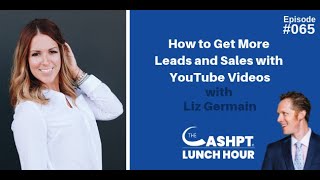
In this Cash PT Lunch Hour podcast, host Aaron LeBauer interviews fitness entrepreneur Liz Germain, co‑founder of Super Sister Fitness, about her personal journey, the evolution of her online business, and how she leverages YouTube and Pinterest to generate leads and sales. Liz shares the pivotal life events that drove her to health and entrepreneurship, the early group‑fitness challenge that grew into a $30,000 launch, and the strategic pivot from a sister‑run fitness brand to a media‑focused company that teaches creators how to rank on YouTube and Google. The conversation covers practical tactics such as audience definition, long‑tail keyword research, SEO and Suggested Video Optimization (SVO), tool recommendations (VidIQ, TubeBuddy, Keywords Everywhere, SEMrush, Ahrefs, Google Keyword Planner), avoiding keyword stuffing, handling trolls with delete‑and‑block policies, and using a “love file” of positive feedback for motivation. Liz also explains channel branding strategies (hiding subscriber count, three‑pillar content models), repurposing existing videos, paid‑traffic landing‑page hacks, the importance of watch time, viral growth examples, and the value of mentorship and mastermind groups. Listeners are directed to her free YouTube growth guide (YouTubeGrowthHacks.com) and her service site (LizDoesVideo.com).
Chapters
Foreign.
Hey, guys, welcome back to the Cash PT Lunch Hour podcast. This is your host, Aaron LeBauer and my special guest today is Liz Germain. Liz is a online entrepreneur, fitness professional who I've been following for a few years. And I know she didn't know that, but she started a successful online business with her sister, Super Sister Fitness now is doing helping people grow their online business using YouTube and websites. And I brought her on the show today because she's had a big impact on how I use YouTube on business, and I want to share her story with you guys. So, Liz, thank you so much for being on the show. Appreciate you spending the time with us today.
Yeah, thanks for having me. I'm excited to chat today.
Awesome. So can you give us a little background about, like, how'd you get into, you know, how did you get into fitness and business? Like, how did you get, like, develop this first business that you had or, you know, what was your journey from? Whenever it was high school or college that kind of got you into, you know, working with people, owning your own business? Because I want to kind of feel like, where. What was that pivotal moment you was like, I got to do this thing on my own. I got to go out and find my own path.
Yeah, that's always a great question. I always love coming back to my humble beginnings. I was born and raised in Michigan, and I didn't grow up healthy at all. Like, I didn't learn how to exercise. We didn't eat very well, and it's no fault of my parents. They did their best. They just didn't ever learn that stuff either. And so growing up, I really didn't learn, you know, health and fitness or how to take care of myself. And in 2006, an ex boyfriend shot himself, and that radically changed my entire life. And I realized at his funeral, I know I like to go straight into
the deep stuff because heavy stuff on me right now.
You know, what you like to get real. So that's what happened in 2006, and it changed my entire life. Being at his funeral and hearing how his family was speaking about him and how that radically transformed everyone's life around him. And it was a permanent decision to a temporary challenge he was facing. And so in that experience, I was 18 at the time. And, you know, it just completely changed everything that I thought about the world, the way that I live my life. And it also gave me a really strong why for moving to California, getting healthy, figuring out how I can be healthy mentally, physically, and emotionally myself. And then through that ripple Effect. I started sharing some of those things online and through social media. And my business started by accident. For the most part, I just wanted to help people. So I became a personal trainer. I worked at UCLA for a couple years and did a. It's called the Fitness Leadership program there. And then I worked there for a few years after at the John Wooden center and was part of the exercise and metabolic disease research lab there and was just doing a lot of personal training and group fitness instruction. And because of social media, Instagram at the time, my sister and I, she followed in my footsteps, also moved out to California, also got healthy, and we would share on Instagram and our blog the recipes that we wanted to help people with because there's only so much you can do with physical fitness. Obviously, nutrition also plays a huge role in health. And so we were sharing our content via social media and on our blog, and all of a sudden there was women from Brazil, from Australia, from places in Europe, even from the Middle east that were asking for more content from us. And so we decided to do our first group fitness challenge together because we were already serving people one on one. But we wanted to expand that and give these people that were asking for more content, more recipes, more workouts, an actual written workout program. We wanted to give them something to do and also build a community around what it means to be an empowered woman, what it means to be strong from the inside out. And so we started with a really, really strong why. And thank goodness, because if I didn't have that strong why of like, okay, I'm going to use this experience and transmute it into something positive for women worldwide. If I didn't have that strong why, man, the ups and downs in the beginning phases of starting a business, I'm
sure, you know, we're like, whoa, right?
I'm on the path. And so we ran that first group challenge, and we were hoping to get started. 10 people signed up. Back then, we were thinking very small. We didn't know the possibility of the Internet. And we had over 350 people enroll in that challenge. And within a few months, we were able to. Within three, four months after that, we were able to quit all of our other side jobs and just do our blog full time. Yeah. So our very first launch made a couple hundred bucks, and we were like, whoa, you can make money online. And so we just went all in from there and then started. Six months later, we had our first $30,000 launch, and the rest is history. I never looked back. And it's been such a Blessing ever since. But then a couple years ago my sister got married, left the fitness business and so we had to transform it a little bit. It's now an affiliate network and a media company. But in that transition, I've now moved over into teaching people how do you use video, how do you maximize social media platforms and specifically how do you use YouTube search and Google search to rank on the first page of, of the types of questions that your customers are looking for online. So that's where we're at now.
That's. Wow, that's great. That's amazing. But that didn't happen like in like, I mean, you just gave me a three minute version and that took more than a couple years.
I mean, yeah, this is the seventh year.
Right. So how long is it you had going back to you're in Michigan, you have this incident with your boyfriend which isn't, I mean like my wife had a very similar instant thing happen to her, her boyfriend, while he had an aneurysm. I mean it's just like huge impact on her life. Very different circumstances. But I can't imagine what that's like and how much time, like, can you, like, what's the process between this, this life event happening and you, One, deciding to move to California and then two, figuring out what your why was. Like, where did that come from? Like, what were, what were the other pieces that fell into place along there before you knew, okay, I've got to go there, I've got to clean up my eating, I've got to do these next things. What was that part of that transformation for you?
Yeah, so like I said, growing up, I was not, I didn't learn how to take care of myself really at all. And so I think when I was like seven or eight, I was first diagnosed with clinical depression, which is a very young age to diagnosed with depression. And so needless to say, my teenage years were very rocky. And so while I was experiencing that really, really dark part of my life, not that all of it was dark, like, thank goodness I had a loving, supportive family. But there were some, there were some rough moments and I got into some rough crowds and just my life was not going down a good path. And so that instance of seeing somebody else in a similar situation make that permanent decision and transform their family's lives, not in a good way. It literally at his funeral I made a firm. It became a must for me. Like, I need to figure this out. And so then in moving to California, it was a lot easier to stick it out. Like I When I did make a decision like that, I'm a very relentless person. And you know, sometimes it's a great thing, especially in business, but sometimes not so great, you know, working on that. But overall, moving to California played a huge role in that because people out in California are. There's so many options. There's so many. The weather is amazing. You can go outside, you can go hiking, you can go do all these active things and there's food availability. And so coming from the Midwest and seeing the contrast between what it's like to grow up in places where the closest option you have for healthy food is like a Walmart or a Myers. It's not like you're in California where every other store is an organic cafe. I had to get really smart about teaching people. How do you do that? Even if you're still in the Midwest? How can you get, you know, how can you get smarter about your routine? Whether that means you join a gym and you're obviously working out, not outdoors, but indoors, and you have a program to follow and you have the motivation, community support and all that, or whatever it means for each individual person based on their specific circumstances. And I really do believe with the right tools and resources, that's possible for people. But without that must, without that strong, why I wouldn't have been able to help figure that out for so many different people, if that makes sense.
Yeah, no, that's, that's important. I learned that a few years ago. You know, for me it was, it was, it was hearing people speaking on a, like a much larger stage, you know, because I got. Put myself in the room with people that are doing better things, are more successful, you know, all the time. It's like, I got to do that.
Me too. Me too.
Right? I'm hearing these people talking. They're like, my mission is to do this huge thing and I'm like, so big. But it's, there's the. You have your. Why. Because that's like what drives us. But then there's the thing that's beyond us or bigger than us, that allows us to, you know, strive for something bigger, further and beyond. Just our own personal, whatever needs, I guess. Is it. I mean, is there something. Is there that. Do you have that piece or have you identified what that is? You know?
Yes. So I'm glad you asked this follow up question because I, over the years, my sister, it was very scary to put out like the truth on the Internet. It was a very, like. I remember, I still remember it like it was yesterday. My sister And I were sitting in my bedroom and we had a good friend of ours who already was doing Internet marketing, and he really helped guide us in creating a brand story and creating a message that people could get behind. And so I remember sitting there before we hit publish on telling the world the truth of what was actually going on behind the scenes, behind like the shiny photos, etc. And I looked at my sister and I said, all right, I guess we're doing this. Like, this is really uncomfortable. It's very awkward to put this out there. But because I had the support and encouragement of other people and we teamed up together, it's bigger than me. This is about the collective of what women are experiencing as a whole. And if I get to be a vessel for truth of that. And because I had the support of people who love me and support me whether it worked or not, it became an easy decision to put it out there. And what ended up happening was the thing that we said that would be the difference between keeping it to ourselves forever and putting it out there was, if this helps even just one other person. So no matter where you are on your journey, if you can get yourself into the mindset of if this is going to help just one other person, then it will be worth the uncomfortable feelings and things that I will need to go through to get that message out there, because that one other person's life will be changed to with me being brave, having courage in this decision and really going for it. And so since then, this is a little secret tip that I don't really share with a whole lot of people, but since then, I actually have what's called a love file. And I highly encourage all entrepreneurs to do this in the love file. It's all of the messages on social media, on email, etc. That we get from followers, from customers, from clients, from partners, etc. All of the thank you notes. Because here's the thing about the Internet too, is with putting yourself out there, you're exposing yourself to the trolls, if you will, people that are maybe not going to get it and not resonate and all of that. But the thing is, if you have again, this information helps just one other person, you can overcome that. And I highly encourage people to set up their own little love files of every time you've impacted someone's life positively stored in the love file. Take a screenshot, put it in the love file. They're also great for testimonials later with permission. But there's one message that we got that always stood out to me. And it was a message from a woman in Switzerland. And she said she did our 12 week strength training program. And through doing that, it gave her the mental and emotional strength, not just the physical strength, but the mental and emotional strength to leave an abusive relationship and take her children with her. And so like to know that the decisions of facing the fear and doing it anyway and making the hard decision to just go for it and focus on helping just one person at a time and affected somebody across the world. And now those kids are going to grow up in a healthier environment because of it. Like, that is the secret of entrepreneurship. I'm very much convinced.
Wow, that's powerful. That's amazing. That's really, that's, that's awesome. Yeah. You know, I want to, I want to ask you like, this is, and I love this love file. This is great. I started my, I created one like that about this summer, I think this past summer, about six months ago, I was like, I gotta put together this kind of like just box or, you know, file on my phone where I can just go, when I'm feeling down, go and look. Because of all the, you know, all the, all the trolls and the messages and stuff that I get people like, oh, why are you doing this? Whatever? Or you know, you feel down. And I know because the women I work with get more trolls than I do. Like, and they get more like inappropriate comments. While we're, while we're on that subject, I'd love to know what, what your recommendation is for other women who are doing what you're doing or trying to put themselves out there and they're starting to get, you know, trolls show up and people like, with hateful, mean comments like, how do you handle that and what's your recommendation for that?
Yeah, delete and block. You know, I think as, as online entrepreneurs and online marketers, you own the platforms that you're putting out content on. You get to direct and guide and be the moderator of what is allowed on your platform. And you can speak into that. Like, we don't allow negativity, we don't allow hate speech. We don't allow, like, I just won't tolerate it in my space. And if I'm going to be taking the time to produce valuable content for you, then my one request is that you keep this a clean space and a supportive environment. And we do talk about that in almost everything that we do. So if there's somebody that's violating that, it's really easy to just delete and block. Don't give it any energy.
It's not worth it. Don't even dwell on it. Just delete and block. Yeah, right, yeah. Because, I mean, I know, like,
I
have the privilege of not having that happen as much. I mean, it's just a thing, but I just don't have that experience. Like, I have it, I know it. But to hear you say it, I think is more powerful than me because, like, I'm white guy, you know, it's like, I don't get the. I don't even know. Like, I'm Jewish, but you can't tell. But no one knows that because, you know, I don't post pictures of Israel, but when I know people who do, they all of a sudden they get all this hate speech. And it's like, I can't imagine that, you know, I know this. Like, I don't want to dwell too much on it, but I appreciate you sharing that because it's a real thing on the Internet. People hide behind their usernames to, you know, like, just like, hate on people. And it gets really tough, you know, some days, unless you just develop a. You develop a thicker skin or just know, like, it's the Internet, I don't need to go, you know, take it personally. But for people who are starting, it's probably more personal. Right. Do you find that with people you work with or in your experience?
I've actually found that the most challenging comments are the ones where it's someone I do really respect and really admire what it is that they're doing professionally, and they don't 100% agree with what I've posted. And so I find those to be more challenging than somebody who's just like, oh, I don't like what you're doing. And it's just like, out of line and rude. Those are easy to delete and block and not pay any attention to. But it's when you get somebody who you do you. I have a people pleaser. We all do. And I really like when people enjoy the content I put out. I care a lot about, you know, what I'm putting out there because I want to provide value for people. And so if somebody that I really respect has an issue with something I've said, that that to me is more of a challenge because then I have. I get to really go look at, okay, what did I say? Do I still stand by it, even with this dissenting opinion? Or is there a way I can use that as information to modify either, modify what I said so that it's in Even better alignment with what's actually true for me or to expand my awareness and learn something new.
Right.
So that takes a lot of, like, self development to not just be like, I'm always right, you know, because the ego wants to. Wants to always be right. Right.
So you mean like, like maybe another fitness professional or someone teaching YouTube type of things or something specific.
Yeah, or even just other entrepreneurs in the space who don't always, you know, like, they have. Everybody has a different method and everybody has their own way of doing things. There's no. There's not always a right answer to things. And I found that when I'm able to set the ego aside and just like, really see, like, oh, this is how this person sees it, you know, can I get on board with that? If it's a yes, awesome. I just learned something new, expanded my awareness of something. But if it's a no, awesome. I get to be even more firmly rooted in what's true for me.
Yeah, yeah. And I get it. I just try not to say anything if I disagree with people. I'm just like, I just don't want to enter that.
Yeah, usually me too. But I'm saying, like, if you post something and somebody like, dissenting on your post.
Yeah, I get it. Yeah. No, I've done that. I've had people post contradictory statements and, you know, just like you're always posting the contradictory opinion. Every time I post something and I'm just after delete.
Well, yeah, that's the world we live in now. You know, this is why I don't engage in politics or religious talks online. Because it's an endless rabbit hole that doesn't, like, it just keeps going and everybody just wants to be right. So it's like, you can't please people.
And it's like, what's my platform?
Exactly.
Really? So.
But.
But then, you know, that's the funny thing for me is it's turned. My Facebook profile is no longer a personal profile. You know, and that happened a long time ago. It's like, it's no longer my personal opinion, it's my business opinion. Even though it's my personal profile and I have business profiles, it's just like, it's all related. You know, people see the same thing. Right.
Yeah.
So how do you take that information? And like, when you're doing. So I want to pivot this over to marketing using YouTube and videos. Like, how do you take what you. We've just discussed. So your why, your mission, the important things. How do you put that into Words or video so that it shares what you know that you want to share with the world to the right person for the right reason. Like, how do you, like how do you start? Like, how do you just do that, know that, you know, okay, video is the thing that I'm going to use. But some people are just so afraid of taking a video or getting started. Like, how do you translate what we just talked about in words into video that's going to help someone else in Switzerland?
Yeah, totally. So I want to speak into the. When people are afraid to be in front of the camera themselves, you don't actually need to be in front of the camera. There are many, many YouTube channels out there that are either Illustrator videos or you can do PowerPoint presentations. There's tons of different ways that you can still create valuable content for your target customer without actually having to ever step foot in front of a camera. So I want to be crystal clear around that for those people out there that are like, oh, I, you know, I know I should be doing video, but I just don't want to be in front of the camera. You don't have to be. There's so many different ways you can get creative with it. So still explore video because it's 2019 as of recording this right now and this year, over 80% of all consumer Internet traffic is video traffic. So it's no longer a I should, it's a you must be doing video. You really must be doing video to keep up with the pace of what's happening and the landscape of online marketing. So, so yeah, just wanted to just side note there, but how do we take all of the why all of the messaging, all the brand and get message out in a way that is actually resonant to the customer, number one, first and foremost. And this is a mistake a lot of people make. They're thinking about what they want to put out instead of identifying who is my target audience and who is the one person that I want to speak to on the other side of the screen and what do they want? What are their biggest challenges? What are their biggest problems that they're facing in their life right now and what are the questions that they're actually asking? What are they literally going to when no one's watching into Google and typing out how do I xyz? Because without knowing who you're speaking to, it's really easy to get lost in content overwhelm. But if you know exactly who you're talking to, it becomes very easy to identify what are they actually Searching for and how can I make content and write my titles, my tags and my descriptions? On YouTube, if you're on social media, it's hashtags and there's other ways to do it in that way. But on YouTube specifically, it's titles, tags and descriptions, having including those keywords in those, then ranking your videos over time to be able to show up on the first page of those search results that your target customer is looking for. So number one first and foremost thing is identify who are you talking to? How old are they? What's their income level? Are they male or female? Are they married or single? Do they work a 9 to 5 or are they another entrepreneur? Are they a business owner or are they, you know, an employee or whatever? It is like you get to figure out all of the details and you know about this. This is like basic stuff for identifying your demographic. But once you know who that person is and you know their biggest challenge, it becomes really easy to weave your messaging and your story and your solutions into the conversation the customer is already having in their own head.
Yes.
Does that make sense?
Yes, 100%. I love the way you make it sound very clear and concise and simple, which is great.
Well, that's what I'm here for. I help people take the guesswork out of how to get started with this stuff.
That's awesome. So how has YouTube helped your business? Like how did you guys use YouTube for super sister Fitness and to make that such a success?
Yeah. So we rank for several terms. You can look up tricep exercises for women, you can look up how to do the splits, and you'll find all of our videos which for search and discovery, it's been absolutely a game changer. So basically, when my sister left two years ago, I told you, she got married and started a new business with her husband. And what happened when she left was I obviously we lost a huge company resource. She was like 50% of the leadership team. And like with her leaving, we lost half the brain power. So I had to get way smarter. So what we did was a company audit, looked at where all of our traffic was coming from to our websites and to our programs and where we were getting the highest return on our investment through program sales, membership, site signups, etc. And digital, digital product sales. And what we found actually blew my mind wide open because I had been spending all this time on Instagram and Facebook competing with, you know, the social content that we're seeing everybody do. What I found when I actually looked at the numbers behind the scenes, the top two traffic sources, not just for that year that I was doing the audit on, but for the entire five years that the business had been running, had always been Pinterest and YouTube. And I was like, why am I doing anything else? This is where most of our sales are coming from. This is where almost all of our traffic is coming from, especially organic traffic. And so I decided to stop doing everything else and just focus on Pinterest and YouTube. And the reason that those two platforms outperformed every other platform we were posting content to is because, and this is, this is beyond. Like, we had run paid Facebook ad campaigns as well. They were very successful. But the thing about paid traffic is once you stop paying, the traffic stops. So the reason that Pinterest and YouTube are so valuable for people is because they're search engines, they're not social media platforms. So if you understand, again, how to rank your content to the first page of your customer search inquiries within your niche, you can outperform tons of people that are only using social media, if that makes sense.
Was it also your demographic? Is it because more women are using those platforms or Pinterest?
Yes. Yeah, for Pinterest for sure, it's mostly women. However, Pinterest is a place where people go to make lifestyle decisions and purchasing decisions. So think about anytime you, let's say you want to redecorate your living room or whatever, or you need to, like build, you know, plant stand or something. Like, there's so many different things. You're already in a buying mood, you're ready to make a change. So that's what separates Pinterest from the other platforms. But it is most primarily women on those platforms. However, you support a lot of PTs and medical professionals, is that correct?
Yeah.
So when it comes to that, there is a huge opportunity on Pinterest because most people aren't using it. But you can create infographics that really help to explain a topic. You can, you can keyword it all and then drive free traffic to your site. Just let it sit there and build over time. If you use these hashtags correctly and you're using keywords correctly, you will get free traffic from it. So let's say you have a knee injury or something. It could be like the top three exercises for preventing knee pain, whatever it is, and you create an infographic like that, put it over on Pinterest and write your titles correctly, make sure that it's showing up based on the search queries. So, yes, Pinterest is more women, but I Wouldn't discount it because there are. You can. Also, the benefit of Pinterest is that it helps you to rank in Google Image search.
Oh yeah.
So Google obviously has men and women and people from all over the world. So yes. Though the Pinterest platform is specific to more women, the thing is Google indexes Pinterest content. So if you are doing the keywords correctly, Google Image search will be more likely to pull your image because it's gotten the traction that you need via the Pinterest platform. I like people that don't get stuck in, like, the small things. Google owns the Internet.
Basically, you're search to Google and your video and your Pinterest posts are going to show up and then someone else's link and then maybe your link. And it's like people are going to go to the visual things first.
Exactly, exactly. And so Google also Google literally does own YouTube, so it works the same way. So a lot of times too, people are on their phones, they're looking for a quick answer. They don't have time to read a text article anymore. And this is. You're seeing this. More and more people are going to video, Google video search and Google Image search. And so if you can use YouTube and Pinterest to dominate those search rankings, you can bring a flood of free traffic to your website over time. That's evergreen. And the thing about organic traffic, it doesn't stop, it just keeps building. So paid traffic does stop when you stop paying, organic traffic doesn't. And you do need both. But I would say over the long term, what we've seen for sure is that organic traffic is by far more valuable than paid traffic.
Right. Wow. What are some of the. What are like, what are a couple of the top. So getting posts on Pinterest and a video on YouTube. So how do we get a video? You know, like, they're important. So how do we get a video on YouTube to rank? Like, what are the top like, like tricks or hacks that, you know, that work really well. Like if I want to put up a new video today, you know, like what I got to know my. My person, my perfect person, my. My avatar. I got to know who that is, what are the more technical hacks or how do I title it, or how do I figure out what the title is, et cetera. To get something on YouTube that's going to rank quickly rather than sit there with two likes over 10 years.
Yeah. So this really comes down to two things, SEO and SVO, which is a term coined by Brian Dean SEO is search engine optimization, obviously and SVO suggested video optimization. So for new channels or for people who are brand new to YouTube, that's one of the best ways to to grow faster is to piggyback off of the success of videos that are already getting traction, that are already getting views, likes, subscribes and comments. Most importantly. So if you can do a little bit of competitor analysis, go find videos that are first, you got to first. Step one, figure out who you're talking to. Step two, do some keyword research. There's a few tools for whoever's listening. Jot these down. We personally use SEM Rush for most of this keyword research, but it is a paid platform. So if you're looking for free free tools that will help support you in this, there's a couple plugins I always Recommend, Vidiq for YouTube, TubeBuddy, Tube Buddy and Keywords Everywhere. Those three plugins are free and they install into the Google Chrome web browser and will help to start teach you, teaching you how to see what keywords are actually popping up. And then also a similar platform to SEMrush is called hrefs h r e S I believe and that's a free version of what is available to you in Keyword Research. And then last but not least, I know this is a lot, but jot these down, I know this is a lot, but last but not least, the Google Keyword Planner can sometimes be a really big support. So step one, identify your target customer. Step two, figure out what is it that they're actually searching for and you can use all those tools to start learning how to use keywords to your advantage. Step three, don't film anything until you know what those keywords are. And then step three is to go identify where are my competitors landing on this scale and which videos are already getting traction. Because what you're going to do is then use those plugins to look at what are they keyword targeting on their videos. And you're going to basically piggyback off of that so that you increase your odds of showing up in suggested video with YouTube. So every time you're on YouTube you watch a video and then YouTube's platform is gonna they just constantly have autoplay going and they'll pull up the next suggested video, they'll pull up the next suggested video. So by targeting your videos to one specific video and using the same similar keywords and then adding maybe one or two more that they don't have in there, you're going to increase the chances that you'll show up in suggested video on YouTube specifically. So that's SVO. I know that's a lot. But then search engine optimization for YouTube search, it's all the same things. You got to make sure you have those long tail keywords specific to your niche in your titles, tags and descriptions and be following YouTube's best practices. And over time, watch your organic traffic grow from video.
So even in like the tag, if the keyword, are the keywords like how to get fit or get strong or lose weight or how to not have pain anymore or are they shorter? Two to three sentence like.
Yeah, I love this question because people go drastically wrong with keywords most of the time unless they know how this stuff already. So here's the thing. Technically, fitness is a keyword. Just fitness, right? That is a keyword technically. But the thing is, there is going to be no chance of you as a small creator ranking for that on the first page because it's extremely competitive. So the Internet has been around for decades now. There's no way that you're gonna rank on a term like fitness. So what you do is you use long tail keywords that are relevant to your, to your niche audience. You go to the blue ocean as you. As you will. So long tail keyword would be the difference between. That would be, let's take the video that we rank for or one of the videos, let's say tricep exercises instead of that because it's also gonna be really competitive. We'll go tricep exercises for women with dumbbells. Very different. It's very long tail. So we have a way better chance of actually ranking for that than we ever would with just tricep exercises or even with just tricep exercises for women.
Right. And you'll use that as, you'll use that whole keyword as the tag as well in YouTube and in the description and in the title.
Yeah, typically the thing you want to avoid though, and this is where it gets tricky also, I know this is a lot, especially for new people. So if people are out there, like, I already feel overwhelmed again, remember, I'm here to help simplify this stuff for you guys and take the guesswork out. So we do have programs and services available to support you in your education around how the Internet works with these keywords. But what you don't want to do is what's called keyword stuffing. So that would be like taking all of the keywords that you find in your research and just putting them into those places. Because Google is very smart. YouTube's algorithm is very smart. It doesn't want robotic text and it actually down scores keyword stuffing. So you have to pick one or two, one target keyword and then one or two complementary keywords around it and write it into copy in your description. That actually sounds like a human, not a robot.
Got it.
So that's important too.
Right? Right. Oh, that's great. I got a. This might be as a kind of a person, not personal question, but it's like question for me, which is a little bit, maybe more advanced for than just beginners. But I had a YouTube channel and I had both of my clinic and my coaching business videos going the same place. Just because a few years ago it was harder to have multiple channels per user on YouTube but now you can have multiple ones. So I've started a new YouTube channel for my coaching business and I've left all the other ones there. But so I've got it, I've got lots of followers, I've got an email list, I've got, you know, etc. And I've got this new YouTube channel that's like, you know, three or four months old. What's the best way besides me doing what you've done? Because I have these videos and I've taken some of the tips and some of the things you said, I'm like, well, I'll do that. But what would be the best way to take someone who's creating a new. Because you've done this too, you've rebranded or you've gone from super sister Fitness to Liz Germane and your vid fluence post like you've created this new channel with current other followers. What's the best thing to do in that case? If you've already got some traction, but you're creating a new YouTube channel with a new brand.
Let me see if I make sure I understand you. So you're asking about, for a brand new channel, how can you repurpose some of the old content that you already have?
Yeah. So it's whether it's repurposing, creating something new. Like, you know, how do I go from having, you know, 5,000 people on a YouTube channel that's combined between my two brands to now I've got a new brand channel.
Well, what's going to happen with the old.
The old channel, it's gonna stay there, but it becomes more about my clinic. But the old videos just become unlisted so people will still find them. Or the popular ones, the biggest ones were still clinic ones because they're 12 years old and they're the ones with tens of thousands of views and they stay there. It's the newer stuff which gets less views on YouTube but more views on my blog and other places and things like that. That's repurposed, you know. So yeah, so like what would I do? And, and then maybe as like. Or maybe the question is, is what did you do as you built this new. You know, you've got a new brand. You're not starting from scratch, you're starting from new I brand identity.
Right, right. Okay, cool. So what's the brand of the second channel?
So one is my clinic, Le Bower Physical Therapy. And the second channel is Aaron LeBauer You know.
Okay, so personal brand.
Yeah, personal brand.
Similar. Okay, cool. So on that note, I haven't yet done anything with my personal brand channel, which I'm really excited because quarter two we're going to be starting to actually put out video based content over there. So I'm in the same boat. What I can say is that, number one, I would hide your subscribers on your channel. There's a way you can actually keep people from seeing how many subscribers you have. And I typically recommend this for anybody who's under 10,000 subscribers because it's just again, it's social proof. That'd be the first thing I would do for brand new channels. Make sure that you have that there's a setting that you can choose that hides your subscribers from the public. Second, I would make sure that everything is branded and you know all of that and then identify like, what are the three types of content that you're gonna be putting out on this new channel? So I always help people. Again, I'm all about simplification. So I like to see people do things in three pillars of their channel. For my fitness channel, for example, it was fitness, which was workouts, recipes and motivation. So fitness, nutrition, motivation, those were the three pillars of the channel. And that's what you can expect when you go to that channel for your personal brand. Identify what are three topics that I can consistently create valuable content for and also keyword search them and go from there. And here's the cool. This is like I never talk about this on podcast interviews. So this is like, this is gonna be a good one. This is a ninja hack that no one ever talks about. But you mentioned that you're getting more views from your blog etc on those new newer videos right now what you can do, this is like super, super ninja. YouTube doesn't care whether the views are coming from the YouTube platform or from being embedded on another website. So what you can do, and I'm not saying go out there and embed your video in other people's sites, but I'm saying is take your YouTube videos, make one or two really good ones, put them on a landing page and run paid traffic to the landing page because you'll still get the views on YouTube, you'll be targeting the right type of person and you're gonna send a flood of traffic to your channel in the beginning. But you've got to make sure first you have Those like First Core 5 videos that are extremely valuable to your target person because that's what's going to make them make the decision to actually subscribe and come back for more. So that's what we do for our clients. And it's very ninja. I never shared that. Right.
So that might be, I take my like special video, we run traffic and it's like the video plays, it's maybe even an opt in for a free something. Or is it just run traffic to it? More of like it would be just a content piece. Like hey, check out this free content. Yeah.
So it really depends on what your end. We always begin with the end goal in mind. So if your intention is to get leads to your mailing list, you would do all the same things you'd be doing normally on, you know, by building a landing page, creating Google Ads or Facebook ads that run to that page. But you're embedding a YouTube video.
Right.
So yeah, you would still be collecting your opt in, still be collecting your leads, but you're getting the side benefit of getting more views on your YouTube channel. You're sending paid traffic to your landing page or if you prefer, if you don't actually care about opt ins, which I don't know why you would would not. I mean, I don't know why you wouldn't want opt ins. You for sure do. But if for some reason you only cared about getting views and subscribers, you can actually run YouTube video ads to help boost yourself in the beginning as well.
Okay.
It really depends on what person's does
this video need to auto be played but for a certain amount of time for it to count as a view or auto played, you know.
Yeah, so that's, that's a tricky question because if we're talking about paid ads. Yeah, they don't. There's no requirement that people need to watch a certain amount. In fact, YouTube will show you the data and Google Ads or Facebook ads, whatever will show you the data around our people, how long are people watching, are they actually putting, clicking through, etc. There's ways to measure all of that stuff. But when it comes to ad revenue, this is what I think you're referencing. That's a totally different thing. So we're talking about two different things here. One is running your own paid ads. One is getting earning income through YouTube AdSense or Google AdSense. Excuse me. So what that is is when your content is up, YouTube is overlaying other people's ads on your stuff so that there is a time requirement. You have to watch over 30 seconds, I believe, of the ad for you to actually get revenue from it. But that's a different thing. That's collecting money instead of spending money.
Got it. And then so for YouTube to collect a like from a view or not a like from the page, but like a video view, it has to be, you know, you come on, you hit the video, you watch it for, you know, some amount of time. Right? Like. Because I know, because. And I guess when I say that is on Facebook, if we run a video we know we getting, we're getting three second. We can build an audience from three second views and ten second views. And you know, is there like a minimum that someone has to watch a YouTube video for it to become a video view or is it just pressing the play button?
I believe, I think I know what you're talking about. And I believe it's just pressing. It's just getting. Yeah.
Which is getting a view. A view is a view as a view.
Yeah. And YouTube Analytics. In the back end of your YouTube dashboard, there's analytics where you can see the. That's called watch time. So what you're referencing is, it's the view is like as soon as somebody is playing your video, it's not tracking time. What watch time analytics is tracking how long did they watch the video? Got it. And that's what YouTube care. The algorithm actually cares the most about watch time. They want to increase watch time. So that would be what to focus on for sure.
Do you have like light years worth of watch time on your channel or something? Like crazy. Like, do you guys have like, have you, have you had any videos go like viral or like all of a sudden?
Yeah. So last I checked, this was like a month ago. We were at 1.3 million hours of watch time in 30 days alone. So 1.3 million hours, not minutes, hours. It's crazy on videos. So yeah, there's obviously. But the thing is we also have over 300 videos on that channel and people are constantly watching a lot of them.
I put out a video. Sorry, I'm sorry, I interrupted you. I put out a video on like a foot massage technique and a foot fetish. Community got a hold of it and it's like overnight it had 20,000 video views or something.
I was like, oh, wow. Yeah, that's called a tape. That's called a tastemaker, where somebody finds your content and they put it out to an existing audience. That happens a lot too. If somebody, like, if somebody gets picked up by buzzfeed or Goldcast, they can get us an in stream of new people by that. So that's always, that's always exciting when that happens. But it's hard to like plan for that, you know, more of an accidental thing. But yeah, our. The video that went the most viral is how to do the splits. It has over 4 million views as of this month.
Wow.
Wow.
That's a ton. That's way more than I have.
Yeah, and it grows every day. I mean, the comments too are out of control. It's like, yeah, we can't keep up with them. I literally had to hire someone just to manage YouTube comments.
Is that like. So how do you get. So tell me. So that's interesting. You know, so I've got someone that helps me moderate one of my Facebook groups. And you know, the Facebook group is like a lead magnet for me. Are the, is moderating the comments on these videos? Is it, is it that good? I mean, are the comments bringing in, you know, and replies, the comments bringing in customers?
Oh, yeah, all the time. All the time. Sometimes we don't even have to reply to comments because what we do is in our default upload description on all those videos, it links to all of our programs. And a lot of the videos have info cards that are also linking to the program. We always put in a call to action, like, if you like this, you're really gonna like our paid program, blah, blah, blah. So there's many different ways for somebody to convert from a viewer into a buyer. But yeah, I find that typically when you're having a one on one dialogue with somebody via the comments, it builds that trust. It builds the goodwill. On the other side of it, someone's like, oh, thank you for actually answering my question. It's so funny how many times I get. I didn't think you were actually gonna respond. Yeah, and I would say I personally respond about 25% of the time. But I also, like I said, I hired a virtual assistant to respond to the rest of them.
So that's powerful. That's amazing. That's really cool. There are not many people right now who are utilizing YouTube as much as you are or as powerfully as. Because it's out there. And people, you know, I teach people, like put your stuff on YouTube because it's important search engine. But to have people directly, you know, coming into your, into your business and buying from you through that platform is pretty awesome.
Yeah, well, and that's the thing is like, a lot of people think that YouTube is just for like young teens or like beauty makeup artists or whatever. But the truth is the smart marketers out there are all taking advantage of YouTube on many different levels, especially for the organic search power that this platform has. Like, for example, one of my friend in a network that I. Or a mastermind that I'm a part of, he. He told me that he started a YouTube channel called I think it's list 25 is what it's called. It's basically top 25 lists of a bunch of random topics. They're PowerPoint presentations. He had his assistant put together these PowerPoint presentations of like, for example, top 25 places to visit in Italy, top 25 foods from exotic foods from around the world. Like just random things. Right. And he built that channel up organically just because of the virality of the content and being able to give it over to tastemakers and stuff. We built it up to over a million subscribers within a year, Got the gold, the gold play button award that YouTube sends, and then sold that channel for $7 million.
Holy cow.
Like what? Wow. People are thinking really, really small when it comes to YouTube. The power of this platform is insane. And you don't, like I said, you don't even need to be in front of the camera. It doesn't have to be about you. As long as you're value for the person on the other side who's watching it, there's. There's unlimited possibility over there.
So how do you, how do you think big? Or how do you learn to think big or how did you learn to think big? When was that? What was that? When was that? What was that pivotal moment?
I don't know if there's really a pivotal moment for that, but I think in general, surrounding myself always with people that are smarter than me. Like you said, smarter than me or better at things than I am in a bunch of different ways. The secret that's like, if you want to constantly be expanding, growing, thinking bigger, surround yourself with the right people, get the Right. Mentors, hire a coach, hire a consultant. Have somebody who already has the results that you're looking to attain or acquire and learn from them. Save yourself time because it's an investment in your long term future. So in doing that, like I've joined a ton of masterminds. I usually do one or two masterminds a year so that I can surround myself. I want to be with the smartest people in the room.
That's awesome. So Liz, tell me you've shared with me you've got a YouTube growth hacks guide. Is this a. Can you tell me about that and tell people where they can find it?
Yeah. So if you go to, if you go to. I'm trying to remember the specific domain for that one.
Is it YouTubeGrowth hacks.com or is there a different.
Yeah, yeah, yeah, that's it. Thank you.
You're welcome.
It's so simple. How did I not remember? YouTubeGrowth hacks.com will take you to the page where you can get our five step foundation laying system. But this is. Anytime we start a new channel or are working with a smaller channel that is ready to grow and really invest their time into YouTube, these are the five things that we help them lay out. So the first step is it lists out those three plugins that I just mentioned. So install those three plugins, make sure that you're paying attention to the keywords, etc. And then there's four other steps in there where it will help you make sure that your channel is being set up correctly and give you basically our five step strategy for growing faster over time.
Wow, that's awesome. So it's YouTubeGrowthhacks.com and we'll put the links and links to some of these other resources you mentioned in our our show notes. So Liz, before we finish up, where can people find you online if they want to connect with you on, you know, YouTube, Pinterest, other social media website, etc.
Yeah. So you can find me@liz does video.com we have courses over there to help support people. We also do done for you services and YouTube channel audits to help get you set up if you're just totally overwhelmed and don't even know where to start. We are here to help take the guesswork out of YouTube for you. So it's Liz does video dot com.
That's awesome. Liz, do you have anything else, any questions I didn't ask you or any other tips or advice for people who are growing as an entrepreneur or Starting to use YouTube and digital media?
For their business again. I would always bring it back to if this helps just one other person out there, all of your time, energy and money, resources that you pour into doing this stuff will be worth your while.
Yeah. Awesome. Well, thank you so much for spending time with us today. I've learned a ton. I've got a bunch of notes of things that I want to do now on our channel, and I'll be looking into your guide and your website a little bit more myself, too. So thank you. I really appreciate you being here today.
Awesome. Thank you so much for having me. I had a blast.
Yeah. Great. Well, this is Aaron Labourer and Liz Germain. And we'll see you guys next time. I'll see you next time. Maybe I'll see you later. We'll see you later.
More from Aaron


My clinic has NEVER been in-network with insurance companies—and it NEVER will be! #cashpt








