Interview with Cash-Based Physical Therapist and Author Jarod Carter | CashPT Lunch Hour #18
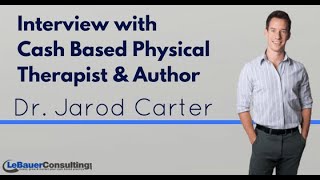
In this YouTube interview, host Aaron LeBauer talks with Dr. Jared (Jarod) Carter, a cash‑based physical therapist from Austin, Texas, who also writes a blog, an ebook, and hosts a podcast about out‑of‑network PT practice. Carter recounts his path to PT—early interest in diving, manual‑therapy‑focused DPT at the University of St. Augustine, mentorship, a year of traveling as a private PT for an entrepreneurial couple, and subsequent work in both insurance‑based and cash‑based clinics. He explains why he chose a 100 % cash model, describing his low‑overhead, hour‑long one‑on‑one sessions at $150, a virtual assistant, and an online booking system (Full Slate) that automates reminders, birthday emails, and self‑service rescheduling. Carter emphasizes providing superior value through attentive listening, giving patients tools (inflatable balls, home‑exercise kits), and follow‑up emails months after treatment. He discusses referral challenges in Texas, his script for obtaining non‑physician referrals, and his involvement in a state government‑affairs committee. Networking tactics are highlighted: focusing on helping others, asking specific “Do you have a need?” questions, and maintaining a connector mindset. Carter shares his ebook’s purpose—an A‑to‑Z blueprint of starting and scaling a cash practice, covering marketing, networking, Medicare considerations, and lessons learned. He also runs a podcast (started 2014) to showcase successful cash‑based PTs and to spread the mindset that cash practices are viable despite the Affordable Care Act. Looking ahead, he predicts more practices will adopt cash or hybrid models as copays and deductibles rise, making out‑of‑network care more attractive. He concludes with practical advice for clinicians considering the model and provides his online presence (drjaredcarter.com, iTunes, Twitter, Facebook).
Chapters
Okay, how's it going? This is Aaron LeBauer from labauerconsulting.com and today I've got a special guest. It's taken me a long time to secure the rights for his audio visual. Today I've got Dr. Jared Carter, who's a physical therapist in Austin, Texas. And he's a cash based physical therapist, therapy blog author, ebook author and podcast guru. Now welcome to welcome to the Hangout, Jared. Thanks for coming.
Thanks for having me. I appreciate it. I just tweeted out that I was having this interview with you. I'm excited about it. And you and I just finished our interview on the podcast which we'll publish soon. And that went great for all the viewers out there. If you're seeing this before that comes out or after, make sure you check that out because Aaron gives us some great stuff on ranking our websites highly and a number of other topics.
Awesome. Well, to kind of further my intro to Jared. Gosh, it's been about four years and I created some YouTube videos and one of them was a foot massage sequence. And I was checking out my analytics and looking at my video. There's a related video popped up by another physical therapist on bunions or fixing bunions. And I clicked on it and it was Jared's video. And immediately I was like, oh my goodness, this guy's doing a lot of the same things I'm doing. From that point on, we've kind of been good colleagues, great colleagues. Jared's been really supportive and like to think that he's kind of like my PT brother from another mother. I'm really excited to have him here. Jared, I want you to introduce yourself a little bit. Tell us your experience and a little bit about your practice. What makes your practice stand out and how did you get into physical therapy? That's a lot. But let's start.
So maybe we'll go chronologically with the first part. I actually wanted to be a PT ever since I think it was 9th grade when I had started diving, springboard and platform diving. And my platform diving career didn't last long because I hurt my shoulder and stuck with springboard after that. But I had some PT at that point in time. At the same time I brought my brother who lived in Australia, was starting PT school there. I kind of got an exposure to the PT I was getting here, mostly exercise based. And I was talking to him about it and he was like, well, aren't they using the hands? And that kind of introduced me the idea that there was this manual side of physical therapy. And I'd always been really, since I was little, kind of the kid who gave the good massages. And so I always like to use my hands to, to help people. When I realized that you could go into that and have both the exercise based component of rehabilitation as well as the manual therapy component, I thought, all right, this is for me. I never changed my mind. Once I got my mind set on that around ninth grade, all the way through college, that was my path. I chose University of St. Augustine for two reasons. It was known to be one of the best, if not the best kind of entry level DPT program in terms of manual therapy. And you get all built into the curriculum. You get all the certification courses that they, you know, for their certification, for their manual therapy certification. And they're right by the beach, at least that campus is so. And I love surfing. So I was like, this is perfect. So went to University of St. Augustine, came out, always was really big. And all the, the jobs I had on finding good mentors, especially in the manual therapy realm. Started worked in Austin for a year. Then I had a very. And that was an insurance based clinic and it was a good clinic. And then I had an interesting opportunity to travel with this couple as their private PT for a year. That was really interesting. And I learned from the guy and that couple who was this amazing entrepreneur, I learned a ton about just entrepreneurship and business. And half the time I was working on him, at least in terms of him on the treatment table, he was on the phone doing business. That was business 101 for me as I'm working on him. So that was really neat. Then I came out of that, worked for a couple of the practices, both insurance based and then a cash based one. At that point, I guess I was probably four years or so, five years, maybe five years out of PT school and I knew it was time for me to do my own thing. And so to your question of what makes my practice stand out. And one thing for sure is that it's 100% cash based. I made the decision to go in that direction after seeing the differences and similarities of both types of practices and having some exposure of how to make both work. And just also the trials and tribulations of practice owners who have to deal with insurance companies. Went cash based from the start, worked my butt off and filled my schedule pretty quickly. And it's been going great ever since. I spend a full hour with each patient one on one. It's just me. I've actively not gone the direction of hiring staff. So I could focus on some other businesses and building them along the way, but that's been really nice just to, you know, I go in, I see five or six patients a day, an hour each. It's very relaxed. It's $150 a session. I take payment from them up front. I have a part time assistant that's kind of virtual. She comes and picks up sheets and does the cleaning and filing and stuff, but pretty much everything else is done by email and phone. She helps me with scheduling. I have online scheduling set up. So it's a really low overhead model like yours is. And it's very relaxed, very nice. I don't have to really deal much at all with insurance companies. Occasionally I have to send them some stu on behalf of a patient, but it's pretty rare. It's just a really nice setup and I'm excited that it's gone the way it has.
That's great. Congratulations. That's super awesome. I wish that for everybody.
Absolutely.
I want to go back to two different things that you had mentioned in your history. First one is that the couple you traveled with, you learned a lot business. Like, what are the one or two things, can you pick out something that you learned from him about running a
business or being an entrepreneur? So I'd answer the second one first of being an entrepreneur. So in terms of. I'm always very careful about not revealing identities or anything. And it's not someone that necessarily people would know anyhow. But what I can say about him is that he's not been in one set business in his life. He's actually done a huge variety. I mean, stuff that seem completely unrelated in terms of a product or a service. And he's gone big with so many of them. I mean, really big. And so what I saw in him was that what set him apart was that he had the ability to foresee an opportunity before everyone else saw the opportunity and get set up in a way that he was able to capitalize on the opportunity in a big way before others could, could even, you know, get onto the playing field. And so, and so I try to keep that in terms of when I'm. When I'm talking to anyone about business, instilling that mindset of look for those opportunities that maybe others have not capitalized on. And I think in the physical therapy realm, those are, those are huge. And as we move into wellness and even things like telehealth, there's just all this undiscovered terrain that we have opportunities in that we could be taking advantage of. And hopefully those watching this might start thinking that direction. So I would say that having that mindset of looking for opportunities that others trying to be first to bat and best at what you do was huge. And I saw that from him also. Just a wealth generating mindset I had come from. My mom raised us single for part of our, when I say us, my brother and I, for part of our young life. And we just never really had much more than what was going to get us to the next paycheck, so to speak. It's not like we were super poor, but we're certainly not anywhere close to wealthy or had much of a surplus. So when you come up in that situation, it really, I mean, I'm glad that I had to work for what I've earned. But also it instills, I think in a lot of cases, a mindset of just having enough is probably all you'll ever have. And so when you have that mindset, it's very difficult. I think it's really quite a block to generating wealth in your life. And not to say that financial wealth is the ultimate most important thing, but it does make things easier if you can remove the blocks to getting there. I do think that life can be a lot better just being exposed to that couple and their lifestyle and their friends. It's not like they were super arrogant. They were actually incredibly humble. They are amazing people. What I saw was that they just didn't have this mindset, this kind of lacking mindset. They had a surplus mindset. They had the confidence that there'd always be plenty and more to go around. And they were extremely generous and gave a ton of their time and resources to those who didn't have as much as they did. So I think that just those two, the opportunity mindset and the kind of wealth attraction mindset, those were huge things to have been exposed to early in my career.
Oh, that's. That's great. I think one of the things that reminds me of is if you're the smartest person in the room, you're not going to learn anything. Or if you're trying to be an entrepreneur, you need to surround yourself with people that are more successful than you or in business for a lot of things. And it helps you learn a lot more than just the tangible how to run a business type of things. Are you currently doing any masterminding or group setting or working with any mentors on business or therapy or anything else in your life?
I do meet monthly with a group in the marketing space in Terms of marketing, any type of business, Starting a mastermind, kind of a physical therapy mastermind. And I've done after going to certain continuing ed courses, manual therapy courses, people that live in your area, you get together and practice for the next few months, once every few weeks or something. I've done that, but an ongoing one. Not at the moment. I guess as you might have experienced, especially when you get into private practice. It's like those that you would collaborate around, you are also competitors. Even though I've found that I've become good friends with some of my competitors, I think it's a lot easier. It's a lot nicer that way actually. On the marketing side of things. Yes, I do meet monthly with a group on the PT side. No. But I would like to add that getting together in a small group is huge and very important. But you can constantly surround yourself with the most amazing mentors in the world basically by just having nice bookshelf full of books and you know, good biographies and things written by people that have done things like that you would like to do. So I would encourage everyone to become an avid reader of business related books, lifestyle books, philosophy, whatever kind of gets you going and just make that a priority in your life.
Yeah. What are your top three books that have helped you with your practice
or top three books?
Oh man, even one is good.
I mean one that I also mention in my ebook is the Go Giver by Bob Berg and I really like that one. There's a number, it's kind of an anecdotal, it's a story that ties in a number of, of key principles to creating a good business. And one of them that I've always remembered, and I repeat it a lot is always strive to give more in value than you ask in compensation. And I think that that is especially important in the cash based business model in practices like ours because you're asking for a lot compared to your insurance based competition in terms of an out of pocket fee. And so if you're not striving to provide more than what you're asking for in value, it's going to be hard to keep your schedule full.
Right, right. So there's like all these topics in
my head I want to ask and
great questions but sure, yeah, keep tell me. Okay, so just tell me, what do you do to provide superior awesome value to your patients?
So there's a number of things I guess first thing that comes to mind is take the time to listen and really show the person you care and how you treat them. And how you interact with them, how you speak with them. I think that especially like when I worked in insurance based practices and it really was kind of rushing from one to the next, it's so easy to just be like, okay, yeah, but what about this? And you know, just trying to get those data points that help guide your treatment and instead of just like taking a breath and letting them tell their story, you know, you want to get into treatment. But I think a part of the healing process and a part of like just people feeling emotionally taken care of, which is a huge part of what they take in terms of value from your, from your services is just being a good listener and asking those little questions that get them to dive into something you can tell that they care about. That also goes for once you're done kind of talking about their pain or issue, but you got them on the table or they're doing their exercises and you're striking up conversations, making them feel good about the conversations they had when they were there, picking out the things that they find joy in their life and getting them talking about that. And these aren't like mental tricks. I just think that if you get people thinking in that mindset or put in that mindset and thinking about certain things, they're going to open up to you. And then the things that you suggest to them in terms of the stretches and exercises, the things that they should change in their lifestyle, that is going to have so much more impact. You're going to have a higher level of compliance and ultimately you're going to get better results that way. That all just goes back to stopping for a second and not trying to rush to some physical result, but really listening to your patients, interacting with them in a certain way, that would be a huge thing I think that I could pass on today in terms of providing value aside from just what you hear all the time, of continue education and improving your skills so that you can get better, you know, outcomes. Right. I mean.
Right.
Everyone knows that.
Right.
And everyone should do that. I'm not saying it's not important. I just didn't want to repeat, you know, the same thing we always hear. But you know, that's, that's kind of the big and first thing that come to mind. A lot of other little ancillary things like, you know, that, that you can throw in there as well.
Yeah, that's awesome to hear. I mean, there's some days where I'll spend, you know, well, I won't say I'll sit and listen to the patient just talk for 20 minutes. Because not a single other provider has allowed them the time and space to go through their whole story of everything that's going on with them. They're so happy to do. They're happy to have the opportunity for a professional to listen to their details.
Right. A lot of times you'll hear something that cues you into something that was a huge component, that is a huge component of their total maybe call syndrome or issue that no one else has heard. And that is another reason why you might get a better outcome. Maybe there's actually a huge emotional component to what they're dealing with. I don't take that on myself as being part of my scope of practice, but I have people I really trust that I can refer out to and then I can skillfully try to figure out if they're going to be of the mindset to be open to maybe seeing someone to deal with the emotional side of this pain they've been having for so long. Yeah, just listening, it opens a lot of doors.
Probably just the fact that you acknowledge it is worth their visit. That's what gets them to trust you.
Exactly.
That's awesome. Do you do anything else after the first visit or outside of visits that you do to add value to what your patients are doing? You know, like, you know, with your, you know, with any, you know, do you, do you send your patients emails? Do you follow up with them? Do you, you know, provide what other kinds of things you provide them to take home with them that might be like you.
I send a lot of people home with the small inflatable ball for, for self treatment. I also don't chart, I don't nickel and dime people. They're already paying a pretty high rate. So like, you know, a lot of places you go and they want to charge for theraband and things like that and most of the equipment, unless it's like something that cost me 20 bucks or whatever, I just say here you go, Merry Christmas, you know, and I think they appreciate that. So I like, I know you do, am really, really big on, on making the patient independent with their own self care. And I mean there is kind of a time crunch pressure in terms of getting them done in as few sessions as possible when you're charging $150. So I let them know up front I'm like, look, the more you can do on your own, the less you need to come see me. And I'm going to give you everything you need that you can possibly reproduce on your own. We're not Going to spend time here, you repeat, you know me counting reps. That's not, that's not what we do here. So a lot of, you know, I also, I also, you got to keep in mind, you know what their schedule's like and if they're ultra busy, you can't give them 20 things to do. But I send them home with a lot to do on their own. I definitely do follow up emails, you know, three to six months after they're done, make sure I email, see how they're doing. Sometimes they'll end up rescheduling if any things come back. I have a really great online booking system, full slate. You might link to that. It's been great. I tried one other, it was a disaster. And this one just all my patients just array, they're like, oh, it works so well. It sends them those reminder emails which decrease issues with no shows or cancellations. But it also sends out a great little birthday email. It wasn't something I thought was going to make a big difference, like, okay, cool. But I get so many people reply, they're like, thank you so much, that's awesome that you sent that. And so, I mean, I don't usually mention that it's automated, but I think things like that make people feel good and just following up with them three, six months after just to check in and make sure they're still doing well is important as well.
Yeah, great, great. That's really great. I was going to ask, I saw that on your website. Is that where I mean the patients go and they click on it and they just kind of schedule and reschedule
themselves and yes, I end up getting a lot of my new patients will just that find me online. They never even call, which for me being busy, I mean a lot of people want patients to call or have to call in case they need to do a little bit of selling to get them on this, on the books, Especially if they're cash based practice. Since I'm staying busy and booked out, you know, I hardly ever have an unfilled space unless it's like a late cancellation. I'm happy to kind of not have to get those calls or pay my assistant, who I pay hourly to take them and interact in that way. If people are sold by what they see online or what they heard from a friend, I love it. If they can just go to my website, click book now. It's very clear in the process that they will need a referral here in Texas. It's also clear that only in certain circumstances Can I see a Medicare beneficiary? So I've built all that into their system, but yeah, they can just book their. It sends an email and whenever I see them after that point, I'll just book right after we finish the session. We'll set up future sessions. For each one of those it emails them just a confirmation email. In that email, there's a link that they can always go back and click if they need to change the appointment. The reminder email that comes out the day before also has that link. If it's. You can set the time, but if it's like less than 24 hours before the appointment, you can make it pop up and say you need to call to cancel. This is too soon or too close to the appointment. There's a lot of things you can do with the program that are really nice. Automate things take a lot off of your plate.
That's awesome. How much is that per month or per year?
It's $30 a month. Worth every penny,
I guess. It's web based where you just go in and you log in and set it up yourself.
All web based. And then, you know, I can, I can get on my phone. It's not an app. It's still a mobile version of theirs, but it works fine. You just log in on your phone and so you can check and book appointments so you can be out at a networking event. I've done that before. You know, someone's got some pain, we talk about them like, well, look, you know, do you think you can get a referral pretty quickly? Let's, let's go ahead and put you on the books. Let's, let's make this happen and I'll just get my phone out and book them right there.
Cool. Cool. That's awesome. It's interesting that you said it takes away some of the phone conversations that maybe are not. Time wasters isn't the right word. But where you pick up the phone and you almost immediately know. I'll immediately know. I can tell the first question this person's asked that they're never coming in and yet they'll still spend 10 minutes on the phone with me. I can see where that was a benefit. Do you know as soon as someone calls that they're not the right person? Do you have that experience?
Certainly. Like you just mentioned, sometimes you do get that feeling pretty quickly. And I try to get to the yes or the no pretty quickly. Not, not like, you know, you want to be tactful and courteous. Of course.
Right.
But you know, if the first question they have is do you take my insurance? Actually I recently changed the response to this slightly. I used to just say something like I don't directly bill any insurances, but I can provide you with the receipts that have the necessary codes for you to send in self claims. Most of which most of my patients do. I did a podcast interview with Jerry Durham, you probably heard we did a two part interview and I asked him that question of because they've moved to completely out of network, they'll still bill for the patient but they're not in a network with anyone and they've done a ton of. He's all about the first phone conversation, he does want to call and he has someone who answers the phone and they've done a lot of testing of what works and what doesn't. I love it, I love talking to him about it. I said, well, when someone's first question is do you take my insurance? I'm sorry, do you take Blue Cross Blue Shield for instance? Their response is we have a lot of patients who have Blue Cross Blue Shield. And then they kind of go on from that point. I've added that in. Now if they say do you take Blue Cross? I'll say I have a lot of patients who have Blue Cross Blue Shield but I don't directly bill insurance, any insurance on behalf of my patients. However, I can give you the receipts that you can send in self claims and what that allows me to do, sir, is spend an entire hour one on one with you as opposed to seeing multiple patients an hour. Right away they're either going to seem very hesitant or just say well I have to use my insurance. In which case I say okay, where do you live? So I can give you some suggestions of great therapists in your area that take insurance. I've got some insurance based practices around me that just love me because I'll probably send them, I'll send them a patient every month or two but they're either going to say okay, if they're of that mindset that I'll pay more for a higher level service. If you just word it that way quite simply and say this allows me to spend a full hour one on one with each patient. If they've come from word of mouth recommendation, they're already going to have a little more push to get in. If they've read your stuff online extensively and it's rung a bell with them, then they're going to have a little more push. If they've come from maybe a doctor or Someone who just said go see them or they didn't come in with this really strong desire to see you in the first place. And they're really all about using insurance. You can get to, you can get to the know pretty quickly and minimize, you know, the time that that's going to take and then just, you know, refer, refer them out and wish them the best. And, and, and I also, I definitely do add with those. I say, listen, if you don't get the results that you're looking for and you'd like to come in for some one on one time, please reach out to me and, and I'll be glad to get started with you.
Oh, that's awesome. That's great. I like that. Yeah, it's really hard sometimes in trying to be a caring therapist. I don't want to turn people away right away. One of the things that I'll try to find out early on is I'll ask their name, I'll kind of ignore the insurance question, I'll ask their name and how did they hear about us. So even if they're asking about insurance, if their friend who's my patient sent them or they, oh, I read your testimonials. That gives me a clue as to what information they might have or where they're coming from as well.
That's good. I like that. That's great. Yeah, I'm going to use that. I'm going to take that and use it.
Please do. It's my treat. Thank you. Yeah.
Okay.
The other thing I wanted to talk about is I know one of the biggest fears that a lot of people have is what if I live in a state without direct access. I don't think there are really many states that have real, actual direct access in a way that we can treat patients without a referral. I think I'm lucky and I live in one. But most states have a lot of limited direct access. I know your state, it doesn't have direct access.
Yeah.
How do you get around that? How do you combat that and what's your strategy?
So just for those out there that heard Aaron's statement and said, oh, but Texas is on the direct access list. And I think recently, I can't remember which state it was, but I think recently this announcement came out from the APTA and I'm an APT member, a proud member, but this announcement came out that all states now have direct access. And I mean if you consider direct, if you consider, okay, you can come and see me for evaluation, but I can't even tell you to ice your knee, you know, because that's a suggestion of treatment, then no, that's not direct access. I'm sorry, Texas is on the list, but we do not have direct access. In my opinion. We do not have direct access to physical therapy treatment. Right. So we have to have a referral to begin treatment, which, and I mean, I say this a lot, I lose thousands of dollars a year because of that. I mean, there are definitely times when, you know, when I really needed to fill a spot, I could have filled a spot. Like something opened up and someone calls that day and they're like, hey, little Johnny has an ankle sprain and a game in two days. Can he see you this evening? And I'm like, I've got this cancellation. Like, yes, if you can get a referral before this evening, we can. And they're like, oh, their orthopedist can't see them for two days. And I'm like. And for whatever reason, they don't want to go to an urgent care center or whatever the case may be. They, they couldn't get the referral. That happens here and there enough where it definitely pulls out of my bottom line. In general, it's not as big a deal as most people would think it would be. But it is a bigger deal for cash based practices. Because not always, but quite often if you're in a cash based practice, a higher percentage of your referrals are coming from non physician sources. They're coming from the word of mouth, from another patient, online sources, other health and wellness practitioners that might not be referring physicians, personal trainers, massage therapists, that kind of thing. So in my case, with probably 95, 98% of my patients coming from non physician referral sources, probably 50% or more call without already having a referral. If they call or they get to my booking page and like, oh, what is that? Why do I have to do that? So I give some guidance online about getting a referral. I give, I have kind of a script I go through in terms of ways they can get referrals. You know, do you have anyone in your friend or family network who is an MD, a D.O. a physician's assistant, an advanced nurse practitioner, a podiatrist, dentist or a chiropractor. I go through this, think about it. Anyone in your friend or family network. And I say, even outside of the state of Texas, it can be any of those practitioners anywhere in the US can tell me I have a doctorate and I don't get into this. But now I'm on my Soapbox can tell me that I'm okay to treat you, that it's okay. So a lot of times people do have that friend from college that lives in Oklahoma. They're like, yeah, let me give them a call. I actually have a patient right now whose friend from Oklahoma wrote their referral. So that's a start. Obviously, it's like the first question is, have you seen anyone for this condition? If they've already seen a physician, that's the starting point. If been two or three years since they've seen them for this pain, they're probably going to make them go back in. And I say, listen, if you can't go back in, do you have any friends or family? And blah, blah, blah, blah. Then if we strike out on both of those fronts, I say, a lot of my patients who are in your situation will just go through the urgent care, like a walk in urgent care. Make sure you call ahead, because some of them are totally willing to write a PT referral and some of them are not. So call ahead and say, do you guys ever write physical therapy referrals? I need to get one in order to start treatment with the physical therapist that I found. Then if they insist on seeing the orthopedist, they can't see him for two weeks. I say, there's really nothing that I can do other than give you these suggestions. Let's get you on the books for three weeks out and we'll get started. Then I try to not let the conversation end without getting them on the books, because then they have that impetus, even if it comes down to like two days before, they're like, oh, I never got that referral. I'll make a reminder in my calendar or with my assistant. I'll have her. I'll say, I want you to follow up four or five days ahead of time with this patient to make sure they got that referral. So those are the kind of tactics and things that I've, over time learn will work. And in most cases, I could probably get 85, 90% of people will have no problem getting a referral, or it might be a little bit of a problem. But then they become advocates when it's time to go to the Capitol to fight. Every other year in Texas, legislature meets every other year, and I'm part of the Government Affairs Committee. So those are the ones that I get to call on to sign the petitions and all that kind of stuff. So, yeah, anyways, it's a headache and it costs me money, but it is not an insurmountable hurdle. It is not even for cash practices. So there's this, and I wrote, and I'll give you the link to it, I wrote a blog post on that specific topic and it talks about those talking points. So we'll make sure, if you want to link that out, we can give that to everybody watching.
Okay, yeah, that's great. Awesome information, Jared. Thank you. I'm sure that's going to help a bunch of people because even in places where I know it's limited to 12 days or five visits, people are still operating under the mindset that I still have to have a physician's referral. I can totally see that in a model where you end up seeing people for six weeks. If that's your. If that's your paradigm, you go, well, how could I do anything in five visits or 10 visits? I think Florida is one of those states that has somewhat limited but yet open ended. And there are other states that do. I think the number one thing is to never turn away a patient who wants to come and see you. That's my thing. Let me talk about a little bit about asking about. You've written an ebook on cash based practice and you have a podcast, so I want to check in with you about those. So when did you decide, all right, I got to write an ebook and what's in there? And tell me a little bit about that, what you want to accomplish with that.
It was about a year into my practice and I had a patient on the table and she said, so once Obamacare goes through, you're probably gonna have to start taking insurance, right? And I was like, what? What do you mean? And she was like, well, if everyone's forced to buy insurance, aren't all practitioners gonna be forced to accept it? And I was like, that's a very good question. It scared me enough to really start to research that topic. I did a recent podcast on that and I've written a few blog posts about that specific topic. But that was really what got me searching for answers. And in searching for those answers, as I was reaching out to different conglomerate websites of a lot of pts and just different pts in different parts of the country. And my question was basically framed as I have 100% cash based practice I started a year ago, it's going awesome. I can't ever imagine taking insurance again. Then my patient asked me this question. I'm trying to figure out if there's any validity to it or reason for me to worry. The overwhelming response was, know that flies in the face of free market Capitalism and as of now, and with this law they can't do that. Now as an aside, I, you know, I wouldn't put it past the government to do anything, you know, but I think, I do truly think that there'd be such a backlash from both healthcare practitioners and their patients that I don't think that that could ever be, I mean I don't think it could ever be changed. Anyhow, I came out of that very confident that my business model was safe. But almost every one of them was like, how'd you do that, you know, in one year and what do you do? And they had all these questions and I was like, you know, I looked online and you didn't have your website yet. There were maybe like a few things that had happened years before with a few interviews but, but there was really no one online providing any information about it. And the people that had done some stuff in the past, they weren't continuing to, they didn't have an it like stopped years before. So I said well, I'm going to write a book about this and become a blogger on this topic because this is big, this is important. As reimbursement rates continue to go down and Medicare is like the 300 pound lady trying to balance on high heels, that's not going to last. Things are going to change. And those who are completely reliant, my colleagues and I am very passionate. If people can't tell about physical therapy and my profession, a lot of our colleagues are going to really be in trouble when the, you know, what really starts hit the fan. So I said I'm gonna write a book about this. And I just, as far as what's in the book, it's kind of like A to Z. Everything I learned, I've learned along the way. The mistakes that I've made, the things that worked, the things that, excuse me, the things that didn't. I really got deeply into the Internet based marketing side of the practice. Networking was an enormous part of getting my schedule full early on reaching out to related to personal trainers, acupuncturists, others complementary fields, setting up those non physician referral sources and kind of the specific tactics that I'd use in those networking situations online, on social media, you know, just kind of everything, anything and everything that I learned and I mean that's, and the book, I mean I've been adding to it over time and it's, it's grown, I'll be, I just kind of made the decision that I wasn't going to go hardcore on working on a second edition until after my wedding next April. But I'm definitely going to set aside some time to continue to add to it. But in its current form already, it's. It's just packed with information. Pretty much everything I learned from start to finish, from going from deciding to start my practice to having a full schedule and keeping it full.
Yeah. Awesome. Awesome. Well, let me ask you this. Is there one secret that's in your ebook that you haven't blogged about or put up on your website? Is there something in there that. That you're holding off on that you
can share with us? I purposely don't give up everything because the book is obviously for sale. And I do want those who buy the book to feel like they got something they couldn't have done just by scouring the website. The thing is that. That's another thing, is that a lot of times if you just have, like, a conglomerated piece of content that has it all right there from A to Z, it's worth it to people as opposed to like, okay, now I'm gonna go and read 100 blog posts. And, you know, not that they shouldn't, but, you know, like, I think a lot of times people will buy it just for that reason. It's just like, here's the kind of blueprint A to Z in one place in chronological order. Not just like, what did Jared feel like writing about that week?
Well, I mean, I can see from the list of things on there, I'm like, he has written about that.
Yet there are specific tactics that I use in networking situations. I kind of keep my tactics somewhat global on the networking side of things in the blog. There are some stuff in terms of blogging and social media marketing in there. I have. I have shared everything on the blog about Medicare because that's the most commonly asked thing that I get. In fact, in the book, I wasn't completely done writing with the Medicare section when I was waiting on all these answers from different professional organizations and lawyers and stuff, and I was like, okay, I will make sure I get the set answers. There's a lot of gray areas, no matter what, but. But I'll get that up on the blog and then I link to it in the book. So anyhow, in terms of. Off the top of my head, I'm trying to remember the things. I've been doing it for four years now, so it's hard to kind of remember specific things that aren't on the blog but are in the book or vice versa.
Right, right. Sorry to put you on the spot. No, I'm just telling you, give this up. Give this up. What is your number one net? I mean, how do you. What is your number one secret for networking? Because you're really strong at networking with other fitness professionals and.
Right.
How do you, how do you get someone to send you patients? You know, I mean, so
I really, and this is something I've mentioned before, but I really try to make it about the person or the people I'm meeting with. You know, I think the worst thing you can do, worst thing you can do is just talk about yourself and during an entire conversation. And that's not anything, that's not like super new or groundbreaking information. But what I, what I like to do in those situations, first of all, go into it with a certain mindset of truly, obviously you wouldn't be there if you didn't need something. But as much as possible, I really try to go in there thinking not about myself, but thinking I am going to be a connector for somebody tonight that is going to change their business in their life. I am going to provide some sort of information for someone that is going to be huge for them. And I make that my goal. My goal is not to score patients in the moment or gain referral sources. My goal, literally, I just hammered in my mind going in here to help people. It sounds funny, but the more you repeat it and the more you try to keep that at the forefront of your mind, you force that on yourself, basically, the more natural it becomes. And that's the, that's the way you're thinking. When you're talking to people, when they're telling you about their business, you're not thinking, okay, how can I maybe, you know, mention that I'm really good with my hands, you know, can knees really good. You know, you're not thinking that way. You're thinking, okay, this guy who's in construction is like, oh, my buddy, you know, my buddy runs one of the big gutter companies here in town. And then so like in the next break, it's like, hey, do you ever have a need, you know, for someone who can do a great job on gutters at a good price? And they're like, yeah, you know, or you know, or no, okay, well, what about, you know, how do you sell your houses? I've got the best real estate agent, so I find just finding ways to help them out.
Yeah, that was a great question. Do you ever have a need? Because that puts it all on them. That's really awesome, right?
Yeah. What do you yeah. Some people say, you know, well, what are you. I think that one is. That one's kind of overused, to be honest. And I think that like, it's like a lot of times when people learn something in a book or online and it kind of gets widespread. And then like everywhere, every networking you go to, you know, someone's like, I get five people ask me like, so you know, what are you struggling with? Or what do you need? Or, you know, like, that's why I like to frame it like a specific question about a specific thing based about their business and what they just talked about as opposed to like this global, well, what are you looking for right now? How can I help you? It's a lot more genuine and it truly is. It shows them that you were actually listening to what they were just talking about. So if you're constantly keeping that in mind and thinking about how you can connect people and help people out, man, it just comes back. You don't even have to worry about it. And they ask you about your thing. Of course, you do need a canned 30 second or less kind of speech. Not speech, but a few lines of information about what you do. For me, it's something along the lines of, I have a physical therapy practice here in town where I spend a full hour, one on one with each patient. I specialize in manual therapy or hands on therapy. So between that full hour and what I can do with my hands, I tend to get people better a whole lot faster than if they're going to a traditional practice where pts are seeing multiple patients an hour. I kind of leave it at that and let there be a pause. If they follow up with questions. I'll answer their questions, but pretty quickly I'm going to turn it back to them. I'm going to find a way to get them talking about themselves again. Those are. That's kind of how I go about networking and just kind of natural with people and talking anyhow. So it's not super hard. But I think going in with that mindset is huge. Even if it's not, your first thing you like to do is going into those situations. If you go in with that mindset and that approach, you're going to see success.
Right? That's awesome. Yeah, that's really great. It's always intimidating to head into this kind of networking event where you don't know anyone, you don't know what people are doing, and then the first thing someone does is come over and tries to sell you their product. Then it's just like I'm like, I'm not here to buy your product. I'm here to like, learn about you. Give me the opportunity to learn about you or help or just be here rather than purchase what you have. That's always turned me off.
I think just to add to that, something you just said was those things are often really intimidating because most people go into them thinking, ooh, am I going to be successful with this? Is this two hours of my time going to pay off? That is just anxiety producing in and of itself. You go in with this idea of, I need to get something out of this, or it's a waste of time and you have this anxious vibe about you as opposed to if you're just going like, hey, I'm going to go help some people today and you got that idea and that vibe about you, then it's easy to be successful at that. You can always connect people or do something positive for somebody. That's easy. So you go into it knowing you're going to be successful, you're relaxed and you just, I think naturally attract people with that vibe.
Right. Awesome. Awesome. So, Jared, tell me about your podcast. When did you start and what was the impetus to starting that?
So started it earlier this year. Earlier in 2014. Just published, I think so got a few like in the pipeline years included. I think I'm up to 13 published now. And so I started it because going back to something that you and I talk about a lot with each other and online with our readers and followers is mindset. And I started it because I realized that one of the biggest hurdles for so many people in looking at and considering the cash based model as a possibility is just realizing that it's actually being done by a lot of practices out there successfully. And so I just decided that, well, first of all, the idea was, okay, how can I make it known how big this is becoming? How many people are having successes with it? Well, the easiest way to do that is to interview people who are doing it.
It.
I did plenty of interviews on the blog up to that point. Not a ton, but some. And there's just something that isn't there in terms of a text interview, as, you know, just writing an email and they answer questions and those have a place, but being able to hear an answer and then immediately say, wait, what do you mean by that? Or give me two tactics on how you execute that, you know, what you just said. So I just knew that audio or audio visual was going to be the way to go on that podcast. More and more people are opening up to them as kind of a form of information with the audio visual component if you want to watch it as well. You can't be running or driving. And I'm huge on podcasts for when I'm driving. I almost never even listen to the radio or the news or anything. I'm just listening to business podcasts. And so I decided, okay, I'm going to do a podcast and I'll do some shows where it's just me talking about stuff that I've done. But the main focus is going to be bringing other people who've had success in the model to the show because every practice is different. You've got solo practices, you've got practices that have started cash based and added pts, you've got those that were big insurance practices that transitioned. There's so many different ways to slice this total out of network model practice that I just felt like if I could bring a lot of these types of people to the show and give great content, it would not only help people execute, but just help people realize that this is possible. And also, in many cases, unless you are running a huge hospital chain with enormous bargaining power, you're going to have a really hard time 20 years from now making the profit margins work as reimbursements get worse and worse. There's no denying that trend and there's no denying the math in terms of what's happening with money coming in and going out of Medicare and Social Security. And so I just feel like we're kind of. We're entering a storm and it's important that people like you and I and Wendell and hopefully others join us in getting the content and the word out on how this works in many different scenarios.
Yeah.
So that as many of our colleagues as possible don't have to go bankrupt or change, go to work for someone else or whatever so that people can really continue to do what they love and not dread the day because it's going to be a bunch of stupid paperwork and fights with insurance companies really give what they want to patients.
What's your the number one benefit to Jared Carter for operating a cash based practice? What are the things you get out of it?
Oh, the benefit to me.
Yeah. Benefit to you as a therapist.
Oh, just being able to help people on my terms, choosing to do whatever I feel is going to get them better fastest. And unfortunately, when you're wondering, well, is this code going to pay as much as that code or whatever the case may be, it does affect decision making. We are all to some degree Financially motivated, you got to pay the bills. And I don't have to worry about. My decisions are not affected by that. My decisions are all about the patient. Man, that's like just taking the chains off. It's so nice. So that would be the benefit to me. I probably have much clearer arteries. A happier person, spending that longer period of time with patients, you get to know them. I think on a deeper level. Not that you don't in insurance based practice. That's not what I'm saying. But you can spend a whole hour and really get into deep conversations.
It's nice.
It's very rewarding.
Yeah. Awesome. We have a few more minutes, but I got a couple of things I want you to address. Where do you see the future of cash based physical therapy going? Or what do you see five years down the road? I know you sort of touch on the whole Affordable Care Health act and how that's going to affect us. What do you see for private practice, out of network practices, cash based practices, practices four or five years down the road?
I think we're going to see more and more practices coming online starting as cash practices and more and more currently insurance based practices transitioning to some degree out of and at least adding cash based services because they see the writing on the wall and know that something has to be done to maintain profits. As far as the Affordable Care act, there are again, I've written and even done a podcast on that topic of people saying, well, once everyone has insurance there won't be any cash practices because everyone's going to have insurance. So there's no more, you're not going to have to cash pay patients. That makes sense for an insurance based practice who only sees cash pay patients because those particular patients don't have insurance. Yes, those people who would like to use insurance and are forced to get insurance will then use insurance. But you and I both know, and most of the cash practices that we know of is that 90 plus percent of our patients, almost 100% of my patients have health insurance and they choose to forego using it up front in order to receive my services or the services of other cash practitioners out there. So it's, you know, it's not going to change anything in terms of their mindset because the last 10% of the population now has insurance. They are making that choice up front that they're not going to use it or that they're going to send in their own self claims or they're just going to go out and network and that practice will build out A network for them, whatever the case may be. But I think that that's one component where those who are worried about switching to cash shouldn't worry. Oh I'll. It's not going to work because of Affordable Care Act. That's not the case. In fact what we're seeing, I think it's going to help cash practices. Here's why. Because as we see already has been happening and will continue to happen that copays are rising and deductibles are rising and that's actually going to work in the favor of the cash based practice, the out of network practice. Because when they have the choice of $50 copay at the insurance based practice where they're going to get 15, 20 minutes at most, maybe with maybe 30 minutes with a PT, which is kind of rare I think, but a small amount of time with a pt, a bunch of modalities hanging out with the tech, counting their repetitions. $50 for that 45 to 60 minutes with one on one with a doctor of physical therapy who specializes in XYZ that they need and that costs them 100 or 150, you know, somewhere in that range using the insurance base.
Oh, your volume just popped out. Oh mo. I didn't touch anything.
All right, let's see. Okay, I think we're back on. Sorry about that guys. What happened was I have in my ever my nonstop chase for efficiency, I have a voice recognition system, drag and dictate on my phone and sometimes it comes on and starts to do stuff and so it just muted, it just muted me. So I'll just go back. But basically as co pays go higher, the jump from choosing between what would be considered probably a lower value service, not as much one on one time and attention to that higher value cash based service for maybe $50 more. But you're going to end up probably seeing them a lot less sessions, less time away from work, the jump becomes smaller and smaller.
People have to meet their in network deductible too.
Exactly. That was the next point. As the deductibles go up, you're paying that first thousand or five thousand out of pocket anyway. So really the trends I'm seeing are going to be very positive towards this out of network cash based model. And so I'm actually quite optimistic about those who are making the decision to go in that direction.
Awesome. Well, we're about out of time. Jared, is there anything else that you have to add or suggestion for anyone who's considering joining us in this model of practice?
I probably alluded to it just now. But just know that this is a viable model. A lot of people are doing it, a lot of practices are transitioning into it. I'm. I'm not saying that everyone needs to do that and I think there will always be a much higher percentage of insurance based practices. But I do think that more and more we're going to see that if you don't add revenue to your practice that is not based, if you don't add revenue sources that are not tied to a third party payer, it's going to get pretty hairy in the future. It's going to get tight if it's not already. And so I would just encourage you to start looking into options of adding these cash based services, whether it's PT services or wellness or fitness or whatever, but adding some other revenue services and knowing that a lot of practices are doing it, a lot of having success with it. You can check out my podcast. Most of those are interviews of people having success in this model. So that's what I would, would leave you with.
Awesome. Can you remind us where can we find you online? How do people connect with you?
Yeah, so if you go to my website, drjaredcarter.com D R J A R O D C A R t e r doctor.com all the podcasts are there so you can click there to listen to it. You can go to itunes and then just search for my name and the cash based practice podcast. So those are two ways to find the content that I produce. I'm obviously on social media, Twitter Dr. Jared Carter and find me on Facebook easily. I interact with people on all the different platforms.
Awesome, Jared. Thank you so much. On behalf of everyone listening, thank you. You've shared some incredibly valuable information and hopefully validated to other people what's already kind of in their heart and where they're thinking they need to go. Because I know it's been incredibly helpful to me to have met someone like you five years ago, four years ago and connected with that. So thank you very much.
Hey, thanks for having me. I hope this isn't the last time and I look forward to having you on my podcast again as well. So thanks so much for having me.
You're welcome. Yeah, it was a lot of fun. Thank you everyone. Tune in next time. Have a great day.
More from Aaron


My clinic has NEVER been in-network with insurance companies—and it NEVER will be! #cashpt








