Partners for Success: An Interview with Greg Todd
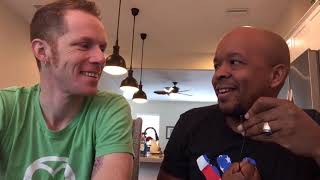
Physical therapists Greg Todd and Aaron LeBauer built cash-based practices by shifting from low-priced to value-driven care. They credit annual implementation weeks and having a success partner for strategic growth, and stress that new graduates need mentors and belief in their own value.
Chapters
Foreign.
For those of you that don't know who this guy is, this is Aaron LeBauer Aaron is. Well, I'll let him introduce himself, but he is one of my success partners. You know, I want to say one quick thing. In the field of physical therapy. So I've been a PT now 16 years. You've been a PT for eight.
Yeah, eight years. Since 2000. 2008.
Two. Okay. Since 2008.
All right. How long is that? Yeah,
Yeah. Doing this for 18, almost 18 years. So I did not have a success partner like in PT until this year.
Yeah.
So tell everybody your story and tell them.
Okay. My name is Aaron Labourer. I was born in 1973.
Stop it.
Sagittarius.
Sagittarius. He did that at the clinic today. My favorite color is purple.
It is. And the funny thing is how used to work doing massage and you go in the break room, people like, I don't know why I'm feeling so bad. Maybe Mercury's in retrograde. I'm just like, I'm like, okay. I started massage therapy in 99 as a way to do what I want to do in life, and that's race bicycles and enjoy my time and treat four or five people a day and then do my massage and hang out with my friends and just do life. And I needed to learn more about the human body. And I went to PT school, I graduated PT school and started a cash based practice. And while I was in PT school, a big thing was like I was looking at these clinics and going, you know, I can't do that or I don't want to do that. How am I going to do what I want to do for my patients in a physical therapy model? And the only answer that came to me was catch based practice. And everyone told me that I couldn't start a catch based practice.
You can't do it.
You can't do it. You're a student. You don't know enough.
You don't know enough skills.
No one's going to pay more than $15 for physical therapy. But that was eight years ago. And now I'm looking for a new PT to join me in my practice. So if anyone out there wants to work one on one with patients, Katie, give me a holler.
You want that?
And I'm here this weekend. So I met Greg in person last spring. But we'd been in contact on social media for what, a few more than a few months, probably five or six months about some things here and there. Greg helped me with some stuff I Helped Greg with some stuff. We met in person. We were, you know, bros at first sight.
Yeah. We had a bromance. The Seattle bromance.
Yeah. And now I'm here in Tampa for a few days so that we can work on, like, some big ideas for 2017. Because next week, between Christmas and New Year's, is my annual implementation week where I don't see patients. I. I just implement stuff that I haven't had time to do.
That that's key because a lot of times people, like, in order, you know, one of the big things is people will say, okay, I'm gonna have this amazing 2017.
Right?
And then they started, like, January 2nd. Well, it's already kind of too late. Like, you have to have your stuff in place from now. And that is amazing that you do that. I've seen so many people do that. And I told you what I did, like, last week, I was telling many of you that follow me on Snapchat, that I literally only got, like, 20 hours of sleep for the entire week. And it's because that was my implementation week. Right. And then I'm going to do another five days, like next week after Christmas, you know, and just go after it. And. And so anyways, that's why we're together, because he's getting ready for his implementation week. I just finished the first portion of my implementation plan. And, like, those are some of the things that you need to be able to do. Like, in order to level up and to move yourself forward, like, you have to have these things in play. You have to be able to have people that you bounce your ideas off of. You have to have all of these things so that you can truly level up. And if you're not not around people that are doing those things well, then that doesn't really bode well for you, Right? It doesn't. Right. Like, we're pushing each other to do well. I mean, it's like, super important. I need him to do well. I need to do well. And there's a lot of things that we both offer that kind of complement, you know, one another and the people that we're serving. So I just think it's really important, especially, look, it doesn't matter. You know, we're physical therapists, but. But it really doesn't matter if it's, you know, if you're in another field, you need to have people that are pushing you. Unless you just have, like, you just have constant motivation, constant ideas, this amazing ability to execute at all times. Like, you gotta have people around you that are helping to take you to the next level. Like, that's really, really, really important. So, anyways, if any of you have any questions.
Here.
Let me see here. Just looking to see what Derek. Okay. If any of you have any questions, we will be willing to answer. Hey, Erica. Hey, Luis. What's up? But basically, yeah, I mean, this is what we do. We have physical therapy clinics. We also have our consulting business as well. Awesome. What's up, baby?
And.
And we basically have to build out all of our plans, all of our goals of what we want to see our business do, what we want to see our consulting business do as well. And then, like, that's basically how we do it. Right?
Right.
So you got to go to the clinic today. You got to meet some of my crew.
Julie.
What?
Not. Yeah, yeah, it was awesome.
Yeah. What's up, Will? What's going on?
What's up, Will? Yeah, I think a big part of a. Part of this is for a long time in practice, you know, part of, you know, I own a practice by myself. I work with my wife, but we're not always there at the same time, and she's my wife. So, you know, we have our own things to talk about, but I don't. I'm not around other physical therapists. I'm not around other people doing what I'm doing. I'm not around other people treating patients. I'm not around other people helping other physical therapists. And when I meet someone like Greg, it's like, oh, Greg's doing what I'm doing. He speaks my language, and I can bounce ideas off him, you know, even if I already know the answer, like what we talked about this morning. You know, it's like my intuition is telling me the answer. But what I need sometimes is someone like Greg to bounce the idea off, just to confirm. To confirm what I'm thinking, you know, to pull it out. Because sometimes, like, my nature is to give everyone the benefit of the doubt, right? And I'm going, well, baby, something doesn't feel right about this, but I think there might be an opportunity there. But I need someone else like Greg to bounce that idea off of, who's like, no, man, your intuition's right. Don't do it or even do it. What you're thinking is, it's going to work, because being isolated is really hard. And so in practice, people need that as well. It might not be the PT next to you. It might be a PT next door, the Other state. I think that's why a lot of People really like some of the national conferences like PPS and CSM because they
get to just the interaction. Yeah.
Connecting with people. Yeah. I mean, it's really huge. So it's one of those things that I think is like, invaluable. I took all my patients and scheduled them around these two days being here. I've got a few things happening tomorrow, Greg's got a few things happening today. But in between those times, we're doing, you know, we're talking and we're just going over stuff, we're checking on each other's programs. Oh, I need to do that. Oh, you need to do that. Have you read this book yet?
Yes.
You know, and it's like, oh, no, I haven't, you know, haven't heard of that. And it's just making each other better. And that's, I think really our mission is to help other physical therapists get better.
So doing this, Will's asking what drew us to working with one another. You want to tell them a story? You want me to tell them a story?
You can tell them. So,
so, so basically we were, we met in the doctor of physical therapy group. I think that's where we initially met. And then he said something on one of the posts in the group that he opened up his own cash based clinic right out of school. And I'm like, this dude has some nuts, man. That's what I'm talking about. This is what I like to hear, you know? Yeah, some bumper nuts. So basically that was the thing. Like, just remember, it's always like this, like, whatever you are searching for, you will find. If he didn't put it out there that, look, this is what I'm doing, right? This is what I'm doing. I would have never had the opportunity to at least appreciate what he's doing. Right? So then from there I'm like, all right, I think I reached out to him on Facebook, messenger or something like that. Or you might have reached out to me, I might have put some post up. And you're like, oh, that was some good stuff, dude. Or whatever. And then what ended up happening was that I had just spoken at PPS and I just thought so highly of him that I'm like, yo, man, you need to be speaking at pps. And I was like, I just finished PPS and had a really high rated talk. And I was like, hopefully they'll bring you in. So I didn't know you from Adam. Like, I didn't know you from anybody. I'm like, yo, but I know this, this kid, like, he's got it. This dude's got it.
Yeah.
So anyways, long story short is that, you know, whatever, the whole PPS thing, blah, blah, blah, but I told him that I was going to be creating this course called Smart Success pt. And right away, and, and remember I was on my way to San Francisco. Yeah, I was, I was, I was on, like I was on a layover in Dallas and I was like, I gotta show this guy Smart Success pt. And initially he said, I want to contribute to your course.
Yeah.
You guys understand that reciprocation. All we did is we. Before we even became like a full bromance, all we did was just like, help each other out.
Yeah.
Like that's what you do. Like you just help each other out. So what ended up happening is he ended up putting in two modules in Smart Success PT because I've never opened up a full cash based clinic. So he did that for me for nothing. And then he told me he was going to be going to San Francisco, to Seattle. And I was trying to decide if I wanted to speak and I was like, oh, he's going, okay, I'm going to speak. And then from there we met and like, it was just awesome. It was just fantastic.
And we got to commiserate or we got to sit back and watch the dinosaurs, talk about marketing. Greg and I are sitting there and like, I can't, I don't even know the names to name names, but it's like we're sitting there and, you know, neither of us had gone and we're, what's up, James? And this guy's talking about, you know, marketing to physicians and this is how you got to do it. And we're just both just like, oh my God, like this is 20 years ago or more. And it's like, how are this practice still, you know, surviving? It's like you just got to throw a ton of money at the system to hope that one day they might grace you with a patient or two. Yeah. And it's just like. And then we both got up there and just like he did his talk, he killed it.
I did my talk, I killed it. And people were like, oh man. So then, so, so kind of from that I got to tell you guys this. So, you know, you know, kind of from that we ended up like, we're there at that. And it was a cool like, thing. Like they did a good event and all the other stuff and hey, they brought us on. So at least they knew that that was smart. So, so so, so they brought us on. But from that I think deep down we're like, like I knew from there I'm like, damn, couldn't we do our own event? And by the way, that's part of the reason what we're doing today. After I finish my two consulting meetings, we're going to our live event that we're going to be having in Clearwater. We'll probably do another Facebook live and show you guys that as well. So we actually have a. Aaron and Paul Goff are doing a live event at the Windham grand, the new Windham grand that will be opening up next month in Clearwater Memorial Day weekend, May 26th to 29th. So that's going to be just dopeness on so many dope, ish levels. So we're pretty excited about that. But, but anyways, you know, in every single thing we were together at pps, we're together in Seattle, we're going to be together at csm. Like that's where you make the connections. That's where those people that you see on social media, that's where you find out if like, wow, do I connect with that person or not? And that's basically it. It's like, you know, that's what happened. Erica has a question for you. What obstacles did you encounter when deciding to open a cash based business?
What's obstacles? I think the biggest obstacle was that people in the profession didn't believe it was possible. I think that was number one. I mean it was. And that was back when there wasn't someone else like me or Jared Carter writing about cash based pt. It was just like people were like, you can't do that. Like I said before, number two obstacle I think is overcoming the fear that people won't actually pay you in cash or pay you what you're worth. And how do you get around the question, do you take my insurance? And there's a couple different issues and that's a whole, whole like hour discussion. But the main thing is you got to have belief in yourself that what you're offering has value. And when, like I said, no one's going to pay $15 for PT. But if you sell something other than physical therapy, people will pay unlimited amount of money for it because no one knows what physical therapy is. But they know what dancing at their grandson's wedding is. They know what it means to them. They know what picking up their children means to them. They know what playing with their kids in the pool means to them. Them. If you can help people achieve that they'll pay you anything you want to get that result. And so when you start selling that, then people will pay whatever you ask, whether it's in network, out of network, or cash. The other big obstacle, something I just already mentioned, was just being isolated in practice. And I had one of my clinical instructors on speed dial who was just like, when you get started, you have any questions, just call me, email me, or text me and let me know. And basically that was taken care of too. Right?
So, like, me knowing, like, my course and the stuff that I'm promoting, I have a massive following with the younger PT generation. Right. And the reason why, like, like, I needed him because the truth is, is that I did not open a practice day one. Like, looking back at it now, I'm like, yeah, I could have done it, but I didn't do it.
You could have done it if you.
I could have done it if I was you now. Yeah, exactly. So. But I didn't do it. So I. There's no proof that I could have done it, but he's proof. So I needed that. I needed to have someone that I was like, hey, you did it. So there's so many things like, damn, look at this here, look at this. Like, we're, we've got books, we've got, like, I mean, if you guys see our funnels, like, so many things we're just learning. And there's so many things that he has from his 19 years of experience in the medical profession and my 16 years of experience as a PT,
him
having a cash based clinic, me having two outpatient, you know, insurance based clinics. There's so many things that each of us can bring to the table that together, if we're willing to share, creates a freaking juggernaut. Yeah, right. You just have to be, like, cool with understanding that. Like, it just creates a juggernaut. When we were in. When, when, when we were in Seattle, we were just talking about this over breakfast. So we're in Seattle. I was using a certain email platform and because we had already developed a relationship and I knew that this guy was not going to misdirect me, he was using some email stuff. So what are you doing there? What are you using there? I'm using that. What did I do? I went up my room, I was like, okay, I'm ordering that. Boom, bought it. And one of the things I told him today is like, I didn't buy that. I bought you. I trust you. And if I trust you, I know you won't misdirect Me, you won't be make me do something that's stupid. You will make me do what's in the best interest for me. And I, and I guess my message to maybe you all that are listening, like, how do I get my brand out there? Lead with yourself. I buy Aaron LeBauer I'm not buying the cash PT blueprint, I'm buying you. I'm buying you and your experiences and what you have to. Hopefully it's. Yeah, it's fine. Okay. So anyways, there you go. Yeah, let me see what this is.
Question. Okay. Yeah, I think Will's got a question
for both of you. Do you feel that people pay out of pocket for PT services first or your personal. I think I just answered that.
Yeah, you kind of did just answer that.
Okay. In other words, have you found it's been you or your services that bring people through the door? And I think it's you.
I think it's, it's both. Like, I would say it's both. I mean, people buy me, but only once they've been in my like, system. Right. You know, or they buy trust from their friends or the testimonials. So they're still not buying Aaron Labourer at that stage. But in my emails that I send out to people who download my back pain ebook, I'm talking about me, I'm helping them. So they are, in that essence, they are buying Aaron LeBauer But a lot of what people are buying in my personal practice, they're not buying Aaron. They're not buying physical therapy. They're buying, like my promise, right? My promise is to help active people get fit, healthy and mobile without pain medications, injections and surgery. Perfect. So when they go to their orthopedic surgeon, orthopedic surgeon says, oh, you've got slipped discs, we need to operate right away. You know, I mean, it's like people are like, what are you talking about? You know, like, I don't want that. And then so they're looking for something beyond that and then that's what they're buying. They're buying my promise, my brand, not Aaron. Right, but people are still. But that promise is part of me.
Right, right, right.
So, yeah, it's a little bit more
detailed, I think, long term. I mean, for me. I know long term, it's all about them trusting me. And I think, you know, for physical therapists, I think this is one of the biggest things. If you want to be considered the primary care provider for musculoskeletal problems, you gotta get people to buy into You. To buy into your decision making, to buy into how you're directing me. That's it. Yeah, you know, that's really it.
Hey.
Hey, Lyndon. What's up?
They start buying into you at the evaluation, right. When you give them, you know, so they don't. They come in the door based on some of these other things. They buy into it. Like they buy into Greg at the evaluation. Greg says, this is what my plan is. My team's gonna implement it. So now they've bought into Greg. You know that. Yeah. And so for me, I don't have a team implementing. So they're. They're. They're kind of buying into me, but they're also buying into my, like I said, my promise, which is I'm going to take care of you and I'm going to help you get back to doing what you want to do. Right, right, right. Right.
Makes sense. Makes sense.
Yeah.
All right, well, there you go. There you have it.
Thanks, Lyndon. What's up? I got a few hairs cut.
Yeah.
Man, I got a bad haircut the first time.
Oh, really? Yeah.
So two weeks ago, I just spent two so hours in there.
So that's my story. So what happened is that I got like 18 bad haircuts, so I just did this. Yeah, we're gonna just. Yeah, let's just say that. So anyways. Yeah, so what we'll do is. We will. What time is it? 110. Okay. So we will basically, we'll just keep on working, keep on putting stuff together and. Yeah, you're welcome. And basically, I'll do my little consulting gigs and stuff like that, you know, throughout the day. But this has been. I mean, we've. You came in last night, we had dinner this morning, we had breakfast, drove over to here to. And, and like, just. Just a car ride alone. Yeah, that's worth it. That was worth it. Just, you know, so then we come over here and we just basically just wrap through everything that we gotta do. And that's really it. And it's just. It's. It's perfect. And so, you know, there's. There's one other thing I wanna. I wanna ask you. One of the big things that students will say is they're like, okay, okay, Greg, you've gave me. You give me the confidence to open up something right out of school. Okay, but what if I have questions? Like, what if I have, you know, clinical questions? Because obviously I'm not, like, totally comfortable yet. And, like, so what do I do in that case? I don't have Someone that's working alongside me if I was going to open up my own place. What do you say to them?
Oh, well, two things. Number one, as a DPT graduate, you know, 98%, well, you know more than 98% of the population about health, wellness, fitness, pain and injuries. I mean, you just do. You may not have the experience, but you know more. You know enough to help people get better, you know enough to help people make a better decision. And then you just kind of have to trust yourself. And if there's something that you're uncomfortable with, you just, you know, refer out, right? I mean, it's no big deal and you're doing right for the person. But before I would refer out, I would contact one of my mentors or coaches or someone who's a PT who's got experience. And so you can use your clinical instructors, someone like Greg or I can help. But that's not really what we do, is help people with clinical decision making. But there are people out there that have clinical decision making websites and blogs and do coaching like that that would be perfect for this type of thing. And there are just too many of those people to mention. But there's a lot of clinical decision making information out there. You just have to basically tell your patients, look, I think I can help you with this and I'm going to do the best I can. And if I can't do the best, then we've got other options besides surgery. There's another PT in town who may be a specialist in this, or there's an osteopathic physician that I know who's not a surgeon who can do that. And we'll figure out the best thing. And sometimes it's as much as just getting confirmation that what you're doing is the right thing. Thing, right.
More from Aaron


My clinic has NEVER been in-network with insurance companies—and it NEVER will be! #cashpt








