The #1 Job in the World as a Physical Therapist with Molly King | CashPT Lunch Hour #116
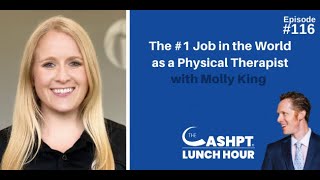
Molly King, a physical therapist at Inspired Athletics, left insurance-based work for a cash practice offering longer sessions and an integrative team with coaches and psychologists. She handles patient care, scheduling, social media, and marketing the Free Movement brand directly to consumers, positioning PT as primary care rather than a technician service.
Chapters
Welcome back to the Cash PT Lunch Hour podcast. This is your host, Aaron LeBauer and today my special guest is Molly King. Molly is a physical therapist and athletic trainer at Inspired Athletics. So one of the unique things about Molly is that she is a physical therapist working in a cash practice and she's also one of the people or she said the brains and brawn behind Free Movement. So it's free mvmt. You might have seen her on Facebook or the Instagram and thought she was doing some great things and wanted to chat her up today and find out how is she doing, what she's doing and what's she doing. So, Molly, thank you so much for being here.
I really appreciate it. Thanks for having me. I'm super excited to be here.
So this is kind of unique in that you're not the owner of Inspired Athletics, right?
No, I'm not.
No, you're not.
I'm an employee.
You're an employee in a cash practice. So I'd love to know how'd that come to be? Like, what was going on in your life? And like, was this like right out of PT school? Have you been doing the regular thing for a while? Like, how did that come to pass?
Sure. Well, I graduated PT School in December of 2016. So just over three years ago, after I graduated, got licensed, all that, I started working in a traditional insurance based outpatient practice. One of my professors actually from school owned it and mentored me and it was a great place to launch my career. But it was in the middle of Iowa and I'm from Minnesota. And I quickly realized I was holding back in other areas of my life because I knew I wasn't going to be at this practice for forever. And so I started looking for jobs in the Twin cities area, Minneapolis, St. Paul, it's about an hour from where I grew up and I knew it would afford more job opportunities that I was looking for, so, so started the regular job search, looking on job boards, apta, indeed, all that good stuff, and I wasn't really finding anything I was remotely interested in. It was a lot of acute care, skilled nursing home health, and I just didn't feel like that was a good fit for me. So I kind of reverse engineered the process and I said, okay, let's look at this from a different angle. So I started looking for practices that I felt would fit me better and none of them had any job postings at all. But I reached out to them anyway. I sent out a bunch of emails, phone calls, sent my resume, all of that, and Most of them reached back out to me with positive information. They said, well, we might not be hiring somebody right now, or oh, we are looking to hire somebody. We just haven't posted anything. And Inspired Athletics was one of those companies. When I reached out, I did not realize it was a cash based practice that wasn't super prevalent on the website. So yeah, I had reached out and Grant, our owner, reached back out to me and he said, you know, I'm not hiring anybody right now, but I find your resume very interesting and I would love to chat. And we started talking and found out that he also went to the University of Iowa. He had been mentored by the same professor, my former boss. So we had a lot of connections. And his wife, who is also a pt, the second PT in the practice, was expecting their second child. And they decided, you know, she'll stay home and I would come in and take her spot. So that's kind of the long story of how I ended up here.
Right on. So it, so it was kind of like, so what were you looking for in a PT practice? What was so uninspiring about the other options?
I really wanted it to be private, PT owned. That was really important to me. I wanted it to be one on one with me all the time. No requirements to use, you know, any assistance or aids or anything like that. And I wanted to have what I believed was a decent amount of time with my patients. So minimum of 45 minutes. And so those things were all really important to me. I was also really interested in working with athletes or active adults. I wanted to work in some sort of integrative practice where there was, you know, maybe some sort of personal training, a gym space, nutrition, something like that, because those were parts of my old job that I really enjoyed. And so those were all things I was kind of looking for. And that actually narrowed down the field pretty quickly as I was searching for jobs. You know what didn't appeal to me from other settings? Up in the Minneapolis area, there's, it's very corporate pt. There's a couple of, especially in the orthopedic side of things, there's a couple of big orthopedic surgery groups who monopolize the vast majority of the PT industry up here. And I'd had some interactions with them in the past through some of my athletic training and that kind of stuff. And it's not that they're, they're not bad, but it was just, I knew I would just be a very small cog in a massive machine. And I Just didn't know that that was the right fit for me. I wanted to be able to greater impact than that.
Yeah. Had that been your experience at your previous job or was that one pretty good? You were just looking for a different location?
That one was, was pretty good. I was just looking for a different location. That one, the city I was in, I wasn't getting as many athletes and active adults as I was wanting to. Our location was in a quite industrial area, so we got a lot of work compared to lot of Medicare, not a lot of Medicaid. We had contracts with a few schools for athletic training and sport performance services. And so I did get a few athletes that way, but it was not the majority of my practice by a long shot.
Right on. So you're talking to Grant and at what point was he like, by the way, we're not a traditional clinic where it's 50 bucks a cocay, it's 100 something dollars or whatever you got, they charge. How did that go?
And like, let's see if I remember correctly, we had a phone conversation and then I was like, hey, you know, I'd love to come up and meet you, see your place in person. And so we did that in the middle of the worst snowstorm in April because that's Minnesota for you. And I came up and I saw the place and we're sitting there and chatting and he's like, oh, by the way, we don't take insurance. And I was like, oh, you know, it took this long. We've had a conversation, we're like this close to saying, yeah, we want to hire you. And that's when it finally came up. And I was like, oh, well, that was a little later than I had anticipated, but I was very intrigued by it and you know, brought up some questions obviously. But yeah, it was a little bit late in the game, but I liked the idea. I'd been reading a lot about cash based practice and you know, watching some people on social media and it was, it was very intriguing at the time. I just hadn't expected myself to kind of fall into it, I suppose. Yeah.
Was there like, was there a moment where you were like, no, there's no way I can do that?
No, no, there was, there wasn't at all. Really. I was like, okay, like this will be great. I think this is an awesome thing. So I never really had any hesitation about it. So.
Awesome. How much is too much to pay for physical therapy?
I think it depends on your priorities. I don't think there is too much to Pay for physical therapy. You know, I have some clients who said they, who have said they would pay more to come see us. So I think it depends. I mean, obviously income and some of those things do factor into it a little bit, but I think it really depends on your priorities and the way you can look at finances and that kind of thing. Because, I mean, a lot of the time cash based is less expensive for the client. I found that with a lot of my patients with. I was just talking to one of the patients about it this morning. She's like, my deductible is $12,000 just for me. She's like, it makes way more sense for me to come see you than to go anywhere else. So she's otherwise healthy. It makes total sense. So yeah.
Yeah. That's awesome. Not a lot of people real. I mean, the trouble is, I think a lot of people, it's so logical, they don't really understand their benefits. They're not thinking that way, that they're just like making different kinds of decisions. When you.
Yes, yes, absolutely.
So how does it work for you guys in your, in your business when you're seeing a new patient? What are you doing to like. Well, let me go, let me go back. So your role, you're a physical therapist, athletic trainer. Are you doing anything else for the, for the practice besides just treating patients?
I'm doing a lot of other things for the practice besides treating patients, as I feel that most employees in cash based practices do. So I do a lot of just our scheduling, coordinating of the team. Everybody schedules their own patients for the most part, but as a whole, you know, coordinating team meetings, setting hours, some of that stuff, I do a lot of that. I also do quite a bit of our social media. I do all of free movement by myself. Occasionally Grant will throw in some ideas, but I create all the graphics, photos, all that stuff. I do help quite a bit with some of our social media, which is completely separate and takes more of a sport performance vibe to it. And then I do all of our event planning, quite a bit of our networking, a lot of our other design aspects for social media, print marketing, that kind of stuff as well. So many hats, but it's fun. I like it. It's allowed me to flex some muscles I never really knew that I had and develop some new skills. And the beauty of it is I get to do the business side of things that I enjoy and I don't have to deal with the things that I don't enjoy or don't have the aptitude. For, I suppose, yeah.
How many, how many hours a week are you seeing patients right now?
I'm probably right around 20 hours a week. So it's about, it's about half time and honestly I've started to find that that's kind of the threshold where I can't get all the other things done. So we're kind of. We're in that growing pains phase of our practice where, you know, we're very close to needing a full time admin person, which will take some of the load off of me. But we're just at that tipping point, I suppose, where it's tough to get everything done, but we're just about there. Right.
And so you've got Grant. Is his wife still practicing?
She's not. She's home with the kids right now. They're 4 and 2. So it'll be a little bit, I think, before she comes back. I don't know their plans, but yeah.
And then you guys have some other, like performance coaches or dietitians.
Yep, we have two full time performance coaches, we have part time dietitian, we have a couple of part time football skills coaches. So QB coach, receiver coach, lineman coach, and then we have a partnership with a local sports psychology group and we work quite closely with them on some of our athletes. So.
That's awesome.
Yeah, it's really cool.
That's really cool. So let me go back to my other question. So now I wanted to make sure I had like a little background about like where you are. So now someone comes in.
Yep.
For PT or they just call you guys, they don't know anything about insurance, etc. What's the process like for you guys? You know, from when the person you know calls or maybe emails or contacts you through your website or social media to getting them on board with a plan of care. Like, what is the, like what's the conversation like? Is there a sales process that you guys have? You know, how are you overcoming the objection for, you know, do you take my insurance, et cetera?
Sure, sure. That's something that we always bring up at some point in the process. But most of the time we've got them pretty well hooked before they come in the door. So a lot of our clients right now are coming from word of mouth referrals. I am a part of a networking group and that has brought in the vast majority of my practice so far because I started with zero patients like 16 months ago. So it's, it's made a big difference. But most of the time they've Already heard from somebody, hey, you need to go see these people. They can help you. And that is huge for our sales process to, to have had somebody who they know and trust say, these are the people you need to see. So a lot of the time, by the time they call, it's basically a done deal. And it's just, you know, I kind of walk them through. This is how we are different from other practices. You will always be one on one with me. You're not going to bounce from therapist to therapist. You're not going to be with an assistant, you're not going to be seen with three other patients at the same time. You know, this is really focused work. I also typically bring up the fact that they will see me less frequently than they will see other pts because I feel that I can get more done in an hour of one on one time a week than you can get in, you know, three sessions elsewhere. So that's usually a huge draw for people. I bring in the integrative approach and how they get to help dictate their plan of care. And that's usually when I bring in the insurance conversation. I'm like, just so you know, we, we don't accept insurance and here is why. We want you and your provider to dictate your plan of care, not your insurance company. You know, if people are a little apprehensive about pricing and that kind of stuff, because that's usually where that question will come up. You know, I always lay out this is usually less expensive than insurance based care. When you start to look at your deductible and where you're at in the year and that kind of thing. There are also no surprises. People like to know that there's no surprises. This is how much I'm going to pay every time. You know, there's not going to be a mystery bill in six weeks for $1,000 or something like that. And then we do have some packages and stuff that I will mention that brings the price down a bit. And if people are still kind of questioning it, I'll say, you know, we can always provide you with information that you can submit on your own to your insurance if you so choose. And honestly, it's usually not that big of an issue. By the time I feel that by the time most people are coming to me, they've already had a good word of mouth referral. They've probably tried a bunch of other things that haven't worked. A lot of times we get people who have been to PT before and it hasn't worked and I say, well, this is a little different. Let's maybe give this a try. So usually most of the time, by the time people are making their way to us, they're very receptive to the cash based world, I would say.
Yeah. Awesome. Do you guys get like, I mean, are you getting objections after one or two visits or, you know, from people not wanting to start?
Nope, nope. I've never had an objection. By the time they get in the door after the first visit or two, they're, they're on board. I've never had somebody say, nope, not doing this anymore.
So.
Nice.
Awesome. That's great. What kinds of things are you guys? Are you, how are you getting the word of mouth referrals and how are people hearing about you? Is it something just, it's been organic or you guys do that as part of your marketing strategy?
We do it as part of our marketing strategy. So my. I'm in a networking group. I'm in bni, which is Business Networkers International. It's a weekly group. And the reason why I like it so much and it's been so successful is it is very structured, there's expectations, you have to pay to be there. It's not ridiculous. It's like $600 a year or something like that. And it exposes me to a very wide variety of people. You know, in this group, it's not just healthcare providers. It's. There's everything from a business coach to a gym, there's an accountant, all these different professionals and groups and all of these people know people who maybe would have never otherwise found me. But the goal of the group is to build relationships with people so that they know like and trust you. And they can, you know, with confidence refer their friends, family, co workers, clients to me. And that has been instrumental in building the PT side of the business for sure. And it's helped, you know, being an employee coming in. When I got here. Everybody who's been coming to Inspired Athletics previously knows Grant and they wanted to see Grant. They didn't know who I was, you know, what was my credibility to them. But now I have this whole network of people, they're kind of my sales force who are referring people directly to me. They'll say, go to Inspired Athletics, ask for Molly. And that's really cool. To answer the phone and have somebody say, hey, I want to see Molly is pretty sweet.
That's awesome.
So, yeah, the real relationship based referrals has been huge and we do some with schools, gyms, coaches, that kind of stuff as well. But that group has made the biggest impact on my pt.
When you came into the practice, were you responsible for building your own caseload or did Grant and his wife have overflow patients they sent you? How'd that work out?
To an extent, they did help me. There were some patients who transferred over to me almost immediately. A lot of them did come from Renee, but over time, some of them have come from Grant too. He always jokes and says that I stole his first ever PT patient that he had five years ago when he started his first practice. So. So that's pretty cool. There were a few who did transfer to me, and over time, more have transferred to me because part of it is I'm female. There are certain people who want to see a female, and that's okay. And then I also do the dry needling. So a lot of times they'll come come to me for needling and then just stick with me. But a lot of my practice I've had to build on my own, which is definitely new for me because I was in an insurance based clinic before, you know, anybody knew who came in the door. They said, here, this is who you're seeing. You're seeing Molly. And I was up to a full caseload pretty quickly here. It's been a little different. It's had to, you know, been a lot more work, but it's really helped me grow my skill set, I would say.
That's awesome.
Yeah.
So is like the BNI membership, is that come out of your pocket or is that an expense through the business?
Nope, that comes out of grants, which is really nice. So that's one way that he's supported me in that. But, you know, and I can do my meetings and that kind of stuff on my, on the time clock. So that, that helps as well. But yeah, as far as putting in the effort, making the time for extra meetings and that kind of stuff, that's. That's me.
So, yeah, that's awesome. So is it like, if someone calls the clinic and they don't have a preference, does it, you know, do you guys, like, figure out who's available, when they're available? Is it like, is there a priority or is it, you know, just like, how does that, you know, because some businesses will be like, okay, whoever answers the phone gets first dips, you know, whoever, you know, like, it has availability. How does that work?
Yep, at this point in time, I get first dibs most of the time just because Grant wears even more hats than I do. He, you know, does pt, he does one on one training, he does some quarterback skills training and he runs the business. And so right now we are trying to transition more of the patient care over to me. So right now he's not really accepting new patients unless they call and ask specifically for him. And even then we try and get him to switch over to me a little bit. And so I always get first dibs. But if there is a scheduling issue, they'll see Grant. I don't work on Friday afternoons, for example. So if they're like I can only come at 2:30 on Friday afternoons, that's all I ever have, then they'll see Grant and it's not a big deal. But most of most of the new patients I get first whack at. Right.
That's awesome. So you get Fridays off?
I do. It's really nice. It started when I started with BNI. My meeting was at 7am on Wednesday mornings and that was one of my late nights where I worked till 7pm and so I just did a 12 hour day on Wednesdays and my group changed and I no longer have to be at a meeting at 7am it's during the middle of the day. But I, I really like having my Friday afternoons off. You can get your own appointments done, run errands, all those things that you have to do during business hours. I can get done on Friday. So it's really nice.
It sounds like it's pretty sweet gig having a job at a cash practice,
but it is a pretty sweet gig.
I mean, do you think that this job exists out there in an in network clinic?
You know, I don't know that the same exact job does. I don't know that you could find the flexibility, the ability to do other things within the practice quite as much in network practice because most of the time you are, you are there to do pt. That's what's bringing the money in the door. And I think it would be much harder to find in an in network practice. I suppose it does exist somewhere but I haven't found it. So.
Yeah, I haven't heard of it either. But I don't want, I want to be fair to everyone because there's probably out there. But like is there? I mean. Right. But there's a reason that I think you've got a great job. I know Caitlin, if you, I don't think you've met her, but she's got a, she's got a pretty sweet job too.
Yeah.
Because I don't have the pressure, I don't have to. I'm not pressured to bill, you know, I'm not pressured to bill units. I don't have to have her bill units. We can, like, we've got some freedom. I don't know. I guess my frustration is why can't. Why can't it just be like that for everybody? Right? Do you know the answer?
No, I don't know that I know the answer. I just think that especially in more the corporate PT type places and the physician owner places, I think they see PTs as you are a technician and you are here to perform the, you know, the service that is pt, and that's all you are. And I don't. I just don't think people have as much room to explore other skill sets. Whether it's, you know, more creative, whether it's networking, those kinds of things. I just don't think that people have the flexibility to explore those things in a more. In network, corporate type setting.
There are a lot of people listening who own a cash practice and are like, I could never hire someone. I would never do that. It's way too much risk. I was there at one point, I was like, oh, my gosh, I don't want to be responsible. I was a new dad. I was like, I've got three miles to feed. I don't want to be responsible for someone else's job demise if this doesn't work out. Well, clearly it has worked out. My question that I want to know from you and from your perspective is what, like, what does. What could you share with someone who owns a cash practice who's in basically in Grant's position or my position, but before they've hired someone? What could you share from an employee's perspective as to why it's. I don't know, like, why it's not so scary or what. What do you, like? What do you like?
What.
You know, what? I think what they're thinking is it's gonna cost me way too much and I'm not gonna get anything out of it. And, you know, is there something you can share from your perspective of working there for, you know, for like, year and a half or more and how that, you know, might affect them and their patients?
Sure.
Do you know what I'm asking? I don't know if that have the
exact words, but I think I've got it. Well, I mean, we're discussing expansion in the next few years, and so Grant and I have talked about it a little bit, and, you know, I'm a little bit on the other side of it. Like, I'm not directly hiring somebody, obviously, but you know, I'll get a voice in it, which is kind of cool. But I think a big part of it is getting to know the potential employee beforehand, making sure that they are understand the implications of cash PT and making sure that you trust them and that they understand that it's a process. And your job is going to be different than if you worked in a more traditional setting and you are going to have other duties and expectations and you are going to be asked to step outside of your comfort zone again and again. And that goes on both sides of the table. I mean, I'm sure it was a challenge for Grant with some of his, you know, long term patients to ask them to see me. That's stepping outside of your comfort zone, you know, and just how do I want to say this? I think being able to read your potential employee and see where their other skills are is really important too. Shortly after I started working there, Grant asked me to read a book called Traction. I think anybody in business should read it. And it really helped me realize how much being able to identify and utilize other people's skills is so important to growing your business. You know, reading through that book, it just brought a whole new light to the way my working relationship is with Grant, with my co workers. Grant's kind of the idea guy and I'm kind of the bring the, the ideas in and make them a reality. And understanding that and some of the other things that are in the book really helped me to be able to find my place in the business and to feel like I was a part of making the business grow. I just wasn't here to do pt. I was here to help grow this business and make greater change in healthcare.
Yeah, that's awesome. Really cool.
I don't know if that answers your
question, but I mean, it was good. I mean, you know, and I think it's like, you know, let me ask you the follow up question would be, is there an amount more that I could pay you to go work in like the PT mill across the street right now? I mean, would it be like, let's say I gave you an extra $20,000 a year, would you go work at the PT mill or another 30? I mean, what, what number is it that you would say, okay, I'm gonna quit this job and go work somewhere where I don't like anything.
If somebody said, I, you only have to be here for a year and I'll pay off all of your student loans, I would probably suffer Through a year. But you better believe the second that year was up on day 366, I. I would be back here pounding on the door, begging Grant to take me back. So it would have to be a very high number for me to ever consider making the switch. And, you know, the more I get into this, the more I realize that cash based isn't just about me making more money or me enjoying my job more. It's about being able to connect with patients on a deeper level, being able to actually help them and being able to over time make a difference in the healthcare industry at large. Because I do believe that at some point in time, health insurance and all of that is, it's a bubble and it's gonna explode at some point. And so I think that being able to provide higher quality services and actually help people now is gonna pay dividends. The future for, you know, for me, monetarily, for me, job satisfaction wise and, you know, for all of the patients who are eventually going to need somebody like us.
That's awesome. Yeah, that's awesome. Yeah. I feel like right now it's one of my job. Like, I wish I had it. I could, I could hire 10 of you, you know, here in Greensboro. Like, I don't just don't have the job. But yeah, what I'm hoping is that people are listening so far understand that it's, it's not as scary to hire someone. You can actually help more people locally and not only helping patients. Like, we can give amazing physical therapists who are getting burnt out, you know, an opportunity to like, shine and grow and like, thrive versus being suffocated.
Absolutely. I have people reach out to me a lot online and they're like, how did you find your job? You know, what do you like about it? I'm like, honestly, like, I have the best PT job out there. I feel. I'm like, I have, you know, really nothing that I don't like that I'm unhappy about. I'm like, I am incredibly lucky. But the thing is, is I didn't make this job, but I found it. And being able to step outside of your comfort zone is key to finding another job like this. They're out there, but you're not going to find them on the APTA's website. You're not going to find them on. Indeed, you're gonna have to go hunting and you might have to create it a little bit, but they're there.
Yeah. Yeah. That's awesome. That's awesome. Like, I mean, I've got one Ready for someone to come build. It's just, you know, I wish I had the ability to hire like 10 more people and maybe we will one day. But you know, I think. Yeah, I mean, I think it'd be. It's great. Like someone recently was like asking for a job. I was like, I just don't, I don't have the patience right now, you know, to add like another, you know, 25 full time person a week. It's just. And someone could come in and be like, hey, I'm gonna build this here and do it all my own. And you don't have to take any rent. I'm like, oh, sweet. Okay. It takes time on my end to build. Like you just said, you basically spend what, about half of your time on networking and marketing and other stuff. So what, Tell me about the free movement. Like, how did that, Where'd that idea come up? Is that part of Yalls marketing or is just something else you're doing on the side? Like what?
It's not really a part of our marketing right now. So. Last year, Grant and I had talked for probably six months about how we needed to split our PT social media from our sport performance social media, the general inspired athletics, just because we were shooting for a different audience. For the most part, the look and the feel was very different. You know, on the sport performance side, we're trying to get in a lot of high school, college professional athletes. The messaging and the vibe of it is very different. And it's like you can't put this badass picture of somebody doing a crazy high box jump or something right next to, you know, come hear about how we can fix your back pain kind of thing. You know, it's totally different messages. So we talked and talked and talked about splitting it. And then as we were getting closer to making that change, we kind of got a little more into it. And we're like, you know, I think that our PT page should be something different. I don't think we should be marketing PT saying, hey, come see us, we'll fix you. We're like, we want to just market PT in general directly to the people. Because not a lot of people are doing that. They're aiming their marketing at, you know, physicians and more of that type of referral. And a lot of people don't know that much about pt. It's like everybody knows that if you have a heart issue, you go see a cardiologist. If you, you know, have a lung issue, you go see a pulmonologist, something like that. But you know, nobody really knows. Like, the general person doesn't know, what do I go see a PT for? My doctor might send me there after I have surgery or something like that. But people don't really know that we're the musculoskeletal primary care provider and they should be coming to see us first. And so that's kind of where the idea started from. We're like, let's A, market directly to the general population, B, help other healthcare providers know what we are and what we can do. Because again, like I said before, a lot of physicians and other providers just see us as a technician that provides physical therapy, not as a doctor, not as an independent professional who is capable of. Of screening for medical issues, making a functional diagnosis, and treating all in the same visit. And then thirdly, being able to provide other PTs with resources so that they can market directly to the client in their own practices. Those were the three kind of goals when we started it. And yeah, finally one day, you know, it was a Thursday, I think, and we're like, we've been talking about when are we gonna start this for the longest time. And finally I'm like, we're doing it tomorrow. And we just, you know, made a little logo really quick on Canva and just went with it. So that's. That's kind of how it started. And that was about eight months ago.
That's really cool.
Really fun so far. Yeah.
If you guys are listening and you haven't checked them out, what is it at Freemovement? F R E E M V M T. Right.
Yep.
On Instagram. And you guys are on Facebook and we'll put that.
Twitter.
Yeah, Twitter.
Hopefully June. Yeah, we're getting there.
Yeah. Twitter. I mean, I haven't been much on Twitter. Twitter lately because it kind of took a dive a few years ago. And I get so much engagement on Instagram. But yeah, we'll put the links and stuff in the show notes. But I think it's really awesome because I was looking at some of your stuff and I was like, they must have some of the same frustrations I do. I think the one. You're the first person that's ever touched me where I hurt. I'm like, yeah, for 20 years. It's crazy, isn't it?
Yeah.
Why do you think that is?
You know, I think. I think a big part of it is the evaluations people are getting, whether it's from a primary care provider. Honestly, not all that skilled in orthopedic assessment or diagnosis, quite frankly, when you if you get sent to an orthopedic surgeon, which is usually the next step, they don't really have the time. You know, their visit might be just a few minutes long. They'll poke and prod maybe, but they're not going to watch you move. They're not going to get a whole lot into functional assessment. And then I think it kind of trickles down. I think a lot of people are anxious about actually touching their patients. Part of it might be a lack of skill, lack of confidence, but I think a big part of it is people afraid of lawsuits. Possibly they're like, how could this be misconstrued? You know, we live in a world where touching other people is not appropriate. I suppose when it's an absolutely necessary part of evaluation and treatment from a PT or any, you know, neuromuscular musculoskeletal assessment. But yeah, it's kind of shocking how many providers that a patient can be through before they get there. Confidence.
That's a great point. You know, I've always thought, like, people didn't have time. They were just, they didn't know. But I don't know. That's interesting point. Like, how much do you think the lawsuit slash sexual harassment issue might be affecting this? I mean, it's been going on for 20 years. So it's not just the me too thing. In the last three years, it's been going on for a long time. There's a reason I got into PT is because people told me, as a massage therapist, you're the first person to touch me where I hurt. Really?
Yeah.
Can you. What, do you have any, like, if patients said anything or have you had other, you know, colleagues say something or where do you.
I mean, in. In both of the settings I've worked in, I. I mean, I have the extra protection of being a female. And so I have had most of my male colleagues have at some point in time said, can you see this patient? Because I don't want to touch them in that area. And I don't want things to be misconstrued and I think they'd be more comfortable with you. Every single one of my male colleagues has said that to me at some point. And so I think that might be a part of it. Yeah, I don't know. I've never had a patient be, you know, say they had an experience that was borderline or uncomfortable or anything like that with a male professional. But I think we've gotten so much into a cover year behind culture, you know, leave the door open. You know, make sure you document everything. Explain, explain, explain what's going on. But people are still a little bit nervous. I think that, that. And especially as some of the me too stuff has come out, people are even more apprehensive. But I think that touching your patient, of course, explaining to them what's going on, finding that place where it hurts can be so confidence building, and it really builds that patient therapist, you know, alliance, and they go, oh, my gosh, you are the first person touch me where it hurts. And that's just mind blowing to the patient. And I think that builds some trust there. Yeah, there's still apprehension.
It definitely does. And, you know, I've always, you know, what was the. Oh, I can't remember. I can't remember all the quotes. But it's basically, if you. You know, that one of the problems that people have with their medical providers and the reasons they assume is because they. Basically, no one sat there and explained to them what they're going to do, how this procedure is gonna go. And it's just things are being done to them rather than being asked permission and explained. And I think that must have a big part. And people don't have time or they're not making time.
Right. Yeah. To explain it, I'm like, it takes two seconds to say, hey, I'm gonna touch you here on your glute, because I want to feel for this or I want to do this or whatever. But, you know, we get to be in such a hurry that I think that sometimes it's just easier to skip it.
Right. We're treating problems and not people.
You got it?
Yep. I love that we're treating problems. We're treating, like, shoulders and knees. And, you know what? Used to. It used to amaze me that someone come to me and they'd say, yeah, I've been to see orthopedic surgeon X, Y, and Z. And like, I was like. And they never did this, like, you know, like. Like, ligament, you know, test or anything. Like, you know, and they never.
Like, your knee.
No, I'm just like. It just makes me want to bang my head against the wall.
Yeah. It's like, oh, they just sent me for an mri and they said it was, you know, inflammation or something ridiculous like that. I'm like, you can't see everything on an mri. You actually gotta see how people move and feel their bodies and all that stuff to get a true, you know, functional diagnosis. And, you know, we just. We can't just rely on a single tool to be our diagnosis.
Right. So short of like you and I going out and putting on a white coat and putting a stethoscope around her neck to do videos.
Yep.
Right. Because I've joked around with some of my employees, like, I'm just going to bring in my lab coat and do videos this week. What can we do as physical therapists to get patients and potential patients, even people who aren't going to be our patients, to understand that, you know, we're not just technicians, we're also decision makers and we can help them faster and more effective than a lot of the alternatives that they think they need.
Yeah, I think that we just really need to change our marketing strategies. So much of marketing is directed towards physicians and it's not directed towards the patient. And a lot of times it's, it's marketing. Like, people know we're trying to sell them, you know, a back pain treatment. We're not trying to teach them about who we are, what we do, how we can help. And so, you know, getting out with people and saying, hey, I, I am a, I have a doctoral level education. I am capable of providing a clinical assessment on par with a, an orthopedic surgeon. I can provide you with treatment today, which no other treatment or no other provider is probably going to be able to do. They'll give you a boot and tell you to use ice and ibuprofen. And I think just getting out there and branding ourselves as the musculoskeletal primary care provider, you see me before you go see an orthopedic surgeon is really going to be key. But the problem is one PT doing that isn't going to make a difference. Well, it will, but it's very small difference collectively as a profession. I feel like that is the direction we need to go in. Stop trying to get referrals from physicians. Let's get right out in the public and let them know who we are and what we do. It's kind of, I mean, honestly, chiropractors did a great job with it. Everybody thinks that if you have back pain, you go see a chiropractor right away. You know, they are the back expert, the spine expert in the eyes of the general public. And we need to do the same thing. We are the musculoskeletal primary care provider and we need to shift, shout it from the rooftops until everyone believes it, you know, and sees it that way.
Yeah, no, I'm right there with you. People here know they wake up with a crick in their neck. They know they gotta Go to the chiropractor, right?
Yep, exactly.
You know, but they think we do like, hot packs, leg lifts, and ultrasound and you only need PT after surgery. Yeah, it's just like, it's crazy. So I think one day, one day people will come around.
Yeah.
Eventually. We just got to keep plugging away and we got it. We got to all do it. We just can't let someone else. We can't wait for someone else to do it for us.
Exactly. Yep. We're stronger together.
Yeah.
One can make a difference, but a thousand can make a much bigger difference.
Yeah, absolutely. So, Molly, what's. What's next for you guys? Like, you're like, what. What's next with the free movement? Or, you know, for you? Are you working on, you know, doing something? Do you have like a What's next in 2020, next year, 2025?
Yeah, yeah, we're actually, we're definitely working on that. From the free movement side of things, we are definitely trying to increase our following because, you know, more followers, we can have a greater impact. And at some point in time, we need to find a way to structure how we get our resources and stuff to pts a little bit better than just, hey, screenshot our social media. Make sure you. Make sure you credit us and get it out there kind of thing. So those are a couple of goals on the 2020 list. On the free movement side of things, we. From the inspired athletic side of things, our three to five year plan is to expand to at least two more clinics, possibly upgrade our current location to be kind of our headquarters, add some new employees as well, and kind of see where that goes. We want to become the premier physical therapy, sport performance enhancement facility in the Twin Cities area and then eventually the Midwest. So that's the goal right now.
That's awesome. That's so great.
Yeah.
If someone wants to get in touch with you or find out more about what you're doing, can you just share your social links or websites or how.
Sure, absolutely. So right now our main website is inspiredathletics.com it is spelled with an X at the end, A T H L E T E X at the end. That's the one thing that can be a bit of a bugaboo. So you can look at our website for more of what we're doing here in the clinic. Our social media for inspired athletics is the same, the same handle. And we are on LinkedIn, Facebook, Instagram, Twitter, and YouTube. I think that's all of them. And Snapchat, but we don't really use it. Free movement. We are on Facebook and Instagram and it's r e e m v m t. And then my personal Instagram which is some pt stuff and some other stuff is mollyking dpt and then you can always email me mollynspiredathletics.com I'm happy to chat with anybody at any time to answer questions and just help spread our message.
That's really awesome. Well, Molly, you guys are crushing it. I love what you guys are doing.
Thank you.
Thank you for being here on the show today. I really appreciate it.
I appreciate it.
Yeah. All right. This is the Cash PG lunch hour for Aaron LeBauer and Molly King. Go out, let people know we're more than just technicians. And I'm just gonna say this like happy new year, but let them know like more. Teach people about their. About their. About their problem and what they can do about it. Empower them. And we'll see you on the next.
More from Aaron


My clinic has NEVER been in-network with insurance companies—and it NEVER will be! #cashpt








