The Cash PT Lunch Hour Podcast Scaling a 7 Figure Physical Therapy Cash Practice with Ben Bagge
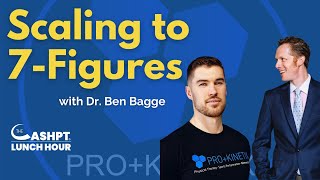
In this episode Aaron LeBauer interviews PT owner Ben Bagge about how he built Prokinetics Physical Therapy from a solo cash‑based practice into a multi‑location, seven‑figure business. Ben explains that his early exposure to cash‑practice podcasts gave him the confidence to charge premium rates right out of PT school. He describes the first year’s rapid revenue growth, the mindset shift that let him value his services, and the burnout he felt when handling all clinical, administrative, and marketing tasks himself. The breakthrough came when he documented his daily systems and began delegating—first hiring a PT, then a front‑desk staff—allowing him to focus on business development. Ben details the organic expansion to San Diego (via a therapist’s relocation) and the strategic launch of a Des Moines clinic, emphasizing the need for self‑sustaining systems and reliable staff before he could step away. Patient acquisition relies heavily on word‑of‑mouth referrals and a strong online presence with detailed, story‑driven reviews; Facebook ads supplement but never replace these channels. He shares his interview technique of asking patients “what does a successful outcome look like?” to uncover deeper motivations and improve conversion. Ben also highlights his preferred contact methods—Instagram and his website (www.prokineticsrehab.com)—for referrals and patient inquiries, and mentions his speaking engagements at PD Bizcon, positioning himself as a thought leader in PT business growth. Finally, Ben advocates for investing in a business coach, framing it as an essential investment rather than an expense, and mentions his work helping other PTs with marketing and value communication.
Chapters
I had two years of listening to your podcast and listen to other people in the space that I felt I knew what I was worth and so I was already charging premium prices right from the get go.
Hey, welcome back to the Cash Between Lunch Hour podcast. This is your host, Aaron LeBauer And today my guest is Ben Baggy. Ben is a physical therapist and owner of Prokinetics Physical Therapy. And Ben was a guest back on about two years ago. Pre Pandemic. I think it's episode I have it loaded up here, episode 124. But what we're going to do so you don't have to necessarily go back and listen to that, we're going to catch you up from where Ben is, where he was. Ben's got a very unique story and he's crushing it in his business. So Ben, thanks for being here on the show. I appreciate you taking your time out of your day to day spend with us. So.
Yeah, absolutely. No, I appreciate having me. Last one was super fun. So ready to dive in today too?
Awesome. Well, let's just briefly, let me recap for everyone and we can fill in the little gaps. But Ben is one of those people who as a PT student was told you shouldn't open a practice, especially a cash practice, for like some arbitrary number of probably five years, which is the same arbitrary number, I was told. But now Ben has a clinic that has three locations. Oakland, San Diego and Des Moines, Iowa. I don't know Ben's books, but you're doing really well. What, like a million dollars a year or something like that?
Yeah, we just wrapped up our last, wrapped up our last third year in business in November and yeah, just across that. So pretty exciting.
Yeah, that's awesome because I remember we last talked, you were on pace to do a million, but you weren't quite there and you were doing like 70, $80,000 a month, which is just an. It's an incredible journey in that, you know, the obstacles you probably faced, but also the fact that you kind of put your head down and did the work and made it work out. So I guess the. Let's lead. The first question is, when you were in PT school, did you know you wanted to start a practice or did you have a different like goal or intention for your career?
Yeah, it was really after my first clinic rotation and just seeing high volumes of patients and general outpatient orthopedics, I was like, I don't, I don't, I can't do this. So I was like, there has to be another avenue. Otherwise I Don't think this is going. I don't know if I'll finish PT school because that's not what I want to do. And I was like, I was really desperate. So I was like, you know, I spent so much time trying to get in PT school and going through the I prerequisites and all that and had gone through, you know, first semester PT school, which is always the hardest. And as I got through so much hard stuff, like I really don't want to have to throw that all away. So I started kind of diving deeper into different other avenues for pts. And I think it was actually your podcast, which was awesome, I'm on on it now, that really opened the door for me and I think it's my. Yeah, towards end my first year in PT school, I started attending some of your free webinars and. And really just started soaking up all the information I possibly could. And so I think through definitely the entire last year of PT school and the second year of PT school, that's where I really just absorbed and just dug deep into listing as many of your podcasts that I could other people in the spaces, podcasts, free webinars, just really. I still have a notebook, but I had a notebook full of notes of things and that's really what got me, you know, started really quickly right out of PT school. And yeah, let me hit the ground running. So yeah, to answer your question, long story short, I knew right after, towards the end of first year PT school that this route cash based PT is the way I wanted to go.
Right, awesome. And then you, you went and you moved to Oakland. Did you go to school in California or.
Yeah, so I went to PT school in Dubuque, Iowa and so always didn't want to do cash based and I. But at the same time I also wanted to travel and I was like, I don't know if how you can really mesh those two. And so I was like, well, you know, pay off some student loans, let's do some travel to pt. I originally wanted to, I applied for a couple PT schools out in California and I didn't get in. And I was like, I always wanted to kind of see if that'd be an area I'd enjoy living. And so took a traveling contract trying to get into San Diego like every other PT does that does traveling. And of course because I'm a new grad, they can be selective and they wanted to. Every clinic wanted two years of experience. So I had my California license. Like, well, you got your California license. We've got this opening in the bay area. It's 13 weeks. We'll get some experience and see if we can reapply. So went out to Oakland right out of PT school. And yeah, got into outpatient orthopedics. And yeah, like I said, I always knew I wanted to do cash based pt and I, I was like, I saw it's like 20 patients a day, 100 patients over a week that first week. And so I took my first paycheck and I literally applied it to opening a business license and liability and all that too. And I was like, well, we'll see what works and what doesn't work and I'll take whatever I learn and apply it back to Iowa because I always knew I'd eventually return back to Iowa. So that was kind of my story right out of PT school.
That's awesome. And so over the course of that year, you, you built a practice, you built like a six figure practice just like right out of school, like within that first year, I think, right?
Yeah, we did. I think it did about 130,000 or 35,000 in that first year.
That's awesome. If you were thinking, if you were looking back at that, just that beginning stage, was there one thing that you did or. I mean, I don't know if there's one or two. I mean, I know there's a lot of things you did, but is there one thing, looking back that you would say, hey, I did this. And this was like the big catalyst to me finding success versus, you know, if, if I had to do it again, I would do something different. Like, is there like one thing you can look back is like, that you can pinpoint?
Yeah, I mean, a lot of. A couple different things. First is just like being obsessed about it. Like I had, you know, absorbed so much information over the second and third year of PT school and really just was immersed in it. And second would be like, mindset. Mindset is huge. And a lot of people are undervaluing themselves and what they charge and whatnot and is starting to impact. And when you do that, long story short, it also impacts the quality of patient care too. So that was a big thing, was the mindset. I had two years of listening to your podcast and listening to other people in the space that I felt I knew what I was worth. And so I was already charging premium prices right from the get go when I started. And that's really looking back at it. That was huge for me. And just being able to hit the milestones I did in my first year was actually truly charging what I was worth and the changes that I was creating for people and the lives of my patients.
So that's awesome, dude. Crushing it. So. But I'll play devil's advocate, but you're only a new grad. How. How are you worth anything more than like, let's say a copay. Like, where. Where does that come from? How do you, how do you figure out what you're worth?
Yeah, I mean, it's, it's a lot of times people. A lot of people struggle with this and I had so many. Thank. Thankfully I had, you know, even though you didn't know me, Aaron. Yeah. I had you in my corner because I had. I was able to listen to your podcast. I was listening to other people that were telling me that, hey, you're worth this, and this is what you can. What you can charge. And a lot of people don't have that because on the other end of the spectrum, most people. Yeah. Don't have somebody else in the corner. They have their professors, their classmates, their family, their friends. I'm telling you, that cash, Cash base doesn't work. It won't work. You can't. You're a new grad. You can't be charging premium price. You need. Yeah. Five years experience and whatnot. So I was able to ignore that. But I think a lot of people get caught up in that and that's what holds people back from. From opening their practice. So I, Because I was able to listen to podcasts and Listen. Go to attend your webinars and. And all the other content as well, that allowed me to kind of silence the other noise that was getting in the other direction and whatnot. And there was a. I think there was a post in one of the Facebook groups for a physical therapist and somebody had posted that. Essentially the same thing like, hey, you can't be charging premium prices as a new grad. And I played devil's advocate for that is like, hey, go look at our Google reviews, the reviews that I got in the first year and two, being as a new grad. And you'll see a common thread. Most of the patients that we worked with have failed other physical therapy before where they. I guarantee they had been treated by senior physical therapist that had much years, much more years of experience than I did. Right. So I was like, that's where I was like, really able to just hone in on what I was worth. Like, hey, I solved this problem for somebody when they had been dealing with it for years, months, years, decades. And has Seen so many other practitioners, MRIs, injections, surgery, multiple field health practitioners, if they could have just seen me first and I would have been able to save them a lot, hell of a lot more money and got them results that they were looking forward to. So that's a big thing.
Yeah. I mean you didn't help them because you have a orthopedic certification specialty like your OCS or any of that stuff.
Right.
What do you think it is that like how are you able to help some of these people when they weren't able to be helped elsewhere?
Yeah, I mean it's a couple of different things. You know, people like with regards to how the healthcare system is where it's based on volume, physical therapists, just how it's structured with insurance and stuff and mills and whatnot. You just don't have time with patients. You can't actually listen to patients. So I like to say I'm maybe slightly above average when it comes to physical therapy skills, but I will kind of take my own horn that I do a really good job of listening to patients and listening to their stories and helping people that haven't felt like they've been hurt by X amount of number of health practitioners before me. They actually feel like they're heard. And so we get more buy in from people and they're much more like they're much more committed and they're much more likely to do their home exercise program. And then also on top of it, I get an hour, I get an hour with a patient. I can really break down their movement inefficiencies and, and what gets the root issue of things because I simply have time with, with the patients. Also the background of my cscs. So that helps and kind of a sports background which helps me help other people that don't know how to coach deadlift or coach a squad or looking at running mechanics and all that too. So that's kind of also another thing that allows me to tell other people that they, when, when they may have other filled other PT in the past. Right.
I mean I, I agree with you. I think it's the time it, but it's the listening and helping people feel heard. Right. Because you can go to the physician's office and say hey, I heard here. And they're like okay, great, here's the thing. And five minutes later you're like, they're gone. And I have five other questions. You know, is there like a something you do in one of your initial evaluations or assessments or question you ask that you Think is kind of one of the keys to getting in alignment with our patients and getting them to understand that we hear them and we know where the problem is.
Yeah. One of my favorite questions is I tell them like, hey, because a lot of people when you ask this question, they will, the patients will try and tell you something they want you to hear. And so I asked them is like, what would a successful outcome look like for you and what would you like my help ultimately accomplishing? And I pre framed like, hey, as physical therapist, I have my goals for you, but honestly, what's most important is what do you as a patient want to accomplish? Because if you don't add that in there, they'll be like, well, I want to restore range of motion. I want to improve my strength. Because they think that's what you want here as a physical therapist. Right. But it's so much deeper than that. They want to get back to being able to play with their kids. They want to be able to run again because it's impacting their stress levels and they're stressed out because they can't run and they're taking that stress back home to their family and their family and impacting their relationships. Like, it's so much deeper than that. So really just digging deeper into like how it's impacted them outside of just pain, I'm just really not. I tell people I don't solve, I don't solve pain. Yes, I will hope that's one of the first phases. Obviously want to decrease your pain, but I really want to fix this root issue and then also make sure that you're able to get not just back to the activities that you want to be getting back to, but like increase your performance to get you back to doing things that you've kind of or other practitioners may have told you, like, haven't been possible. So that's kind of one of my favorite questions, like asking truly what are their goals? Not to surface level, but diving deeper into what's really truly motivating. Motivating them as well to get them, get to know them better too.
Yeah, that's super important. So you've got, you've got a practice, you're a new grad, you're doing really well for yourself. What? You know, like, fast forward a year, like, you're a year into business. What kind of like roadblocks or limiters? What kind of things were you coming up? Like, challenges? Were you hitting that? You're like, okay, Aaron, I need to do something different with my practice. Like, what was happening in your practice. You know, what was it, let's say September, October? Kind of like right before you joined the Platinum Mastermind. I know that you were doing really well. A lot of people were like, hey, I want that. But you weren't satisfied. There was something else that you wanted. What was happening then?
Yeah. So I think right before I reached out to you, I had. I had a full caseload. I've seen like 25 to 30 patients. Patients a week. And. But I was working like 60, 70, even sometimes 80 hours a week because I was also responsible for answering the phone calls, returning phone calls, scheduling, marketing, sales, you know, treating on top of that, and then also on top of it, trying to move the needle in my business with regards to learning new strategies, tactics and stuff, and then also implementing it. So it stacks up really fast. Even if you're only seeing 25 or 30 patients a week, there's so much more outside of that. And I really kind of felt like I just had created a job for myself essentially, because that's having to do everything. So I knew I wasn't able to sustain this, you know, for a long period of time if this was going to continue to go on. And I felt stuck because I knew I was going back and forth from, like, hiring what decisions, what, how do I cross. I need to dump, you know, across my T's, dot my I's, to make sure I'm doing everything correctly. And I just didn't really know, you know, how to go about doing that. And so. And there's a lot of other things I wanted to establish systems, and I just kind of met my limit with regards to, like, all the free content that I was able to absorb. And I just was stuck because there wasn't anything else that I felt like I could implement it that I hadn't already absorbed. And it's like, hey, get me this far. And in a year with the free stuff and never talking to him in person, I can only imagine how much he'd be able to help me in person and going through his mastermind. So I hopped on a phone call with you, and then you solved those problems and more for me, too, dude.
Awesome. So it was that you were. So you got to the point where basically you were so busy that you really had no time for anything else other than trying to figure out. Figure out all the systems and treat the patients and answer the phone calls and all that stuff.
Yep. Yeah. Yeah. And I didn't want to risk burnout either. I wasn't getting that point Cause, like, I enjoyed it so much. Like, I honestly love the business side of things just as much as I was treat as treating patients and whatnot. So I was able to get through it and deal with it longer than most people can. But yeah, I was just kind of reached that point of being scared. Like, hey, well, burnout kind of start kicking in.
What were you. And this was pre pandemic. So, like, you know, what were you missing out on? Like, I could say like now, if it was last month, I'd say you might be missing out on a lot of obvious things.
Things.
But like, what were you missing out on? Like, what weren't you able to do with your business or in your life that made you want to solve this problem?
Yeah, I mean, it was just like, I didn't know anybody in the, in the Bay Area when I moved out there. It's positive and negative with it because, like, like, I didn't have a whole bunch of friends or family out there. And so I wasn't distracted. But at the same time, it was really hard for me to make friends because I was so. I was so busy and consumed and I couldn't because the business relied on me 100% to do everything. Is really hard to go back and see my family, see my friends back in Iowa. And then also just like the aspects of, you know, I was. I was 20, 25, 26, you know, and seeing all your other friends, you know, going out and. And you know, having a good time, going out on the weekends, you know, spending time with their significant others and stuff like that. So I was able to kind of have, you know, not a life, but I wasn't able to enjoy a lot of things that I could. I saw my friends being able to enjoy because I was so bogged down with my practice.
Yeah. So what were the first, like one or two changes that you made that freed up your time and allowed you to really start growing your business to where it is today?
Yeah, I think it was two things. One was documenting the systems, like documenting everything that I was doing on a daily basis and looking at what can I offload, what are things I don't enjoy doing, and also what are things that I can offload. And those are the first two things that you should. That you should try and offload to somebody's things that maybe you're not good at and you don't enjoy it. And you can offload, get rid of those as soon as possible and offload those to somebody that can do. Just give a job, maybe Even better job than you. So, yeah, so it was mainly establishing the systems and writing those down and documenting them, and then also was hiring and starting delegating things. So hiring a physical therapist and then hiring front desk and. And all that too, to help with patient care and also help with the scheduling and rescheduling and. And answering phone calls and stuff like that. So that was the biggest, Biggest change was. Was hiring and establishing. What was the.
What was the first hire that you made? Was it admin or pt?
Yeah, so it's actually pt. A lot of people go back and forth on which one you should hire, and I think you can make an argument for. For both. Um, I do. Looking back, I'm glad I went throughout that I did personally. But yeah, I hired on a physical therapist first and they started part time and then ramped them up to full
time and bringing on another physical therapist. What did that allow, like, what did that allow you to do more of? Was it see more patients or was it what. What things did you offload to them?
Yeah, I really started just seeing my passion for how much I truly love the business side of things. Um, I was like, holy crap, this is awesome. I can help so many more people now too, because I was capped at like 25 or 30 patients. I really could not see that more than that a week. And I had a wait list. And it's like, there's so many more people that need my help that I can't help because I'm not doing my job of scaling this business and getting it. So we move this cap of 25 or 30 patients a week, so bring on a PT, allowed us to be able to see more patients and help more patients and, yeah, help people, get people the help that they need wanting. So, yeah, it allowed me to decrease the amount of patient care hours I was going, I was doing so I could focus on the business side of things. To make sure that I was taking care of the physical therapists, I brought on making sure that they're happy, establishing systems and making sure that the patients were also happy with the new PTS care as well. Make sure that the standard that I had set carried on to the next physical therapist, the first physical therapist I brought on.
When you were hiring, did you look for someone that, like, was a new grad, was experienced, was trained in certain things, or did you look for something else and, you know, train them up in different, you know, strategies that you're using it? How did. How does that work and what were you looking for?
Yeah, so I brought Another new grad on. Yeah. And honestly, to this. To this day, most of the best physical therapists I brought on are green as can be. They're. They're eager. They are really to dive in. They're ready to dive in. They haven't been. A lot of the times, if you spend crap, I look back and like, if I spent two or three years in outpatient orthopedics, well, first, I don't know if I would have been able to do it. You know, I've seen that volume of patients, a lot of pts. When they've been in that environment for so long, they're burnout, you know, and so it's hard to actually find a physical therapist that's been in the general orthopedic outpatient setting that isn't burnt out. And so the. Yeah, physical therapists that are new grads are eager. They're eager to really just kind of dive in and start making impacts. And so, yeah, I went with a new grad, and. And it was. It's. To this day, he's. He's been awesome. And honestly, I want to be where I'm at if I wouldn't have brought him on too, so it really worked out. He was a new grab. Right.
Yeah. That's amazing. That's amazing. And then I think you went on and hired a couple more therapists before you hired an admin, I think.
Right.
Didn't. I mean.
Yeah.
If I remember correctly.
Yep. Yep, I hired. And that's one thing that I would probably do differently is bring on a front desk after that first. That first PT hire.
Yeah.
And whatnot. But the bottleneck is when communicating value over the phone call. A lot of people are losing a lot of patients because they can't effectively communicate why it's actually more beneficial for them to forego their insurance and work with us. And so that was one thing I was really, really good at, was communicating our value and why it's actually more beneficial for the patient. And so I held onto that too long. That is probably my biggest mistake throughout the last three years of being business is holding onto that front desk and onboarding phone calls and answering phone calls too long. So if I would go back, I'd probably. Yeah, bring on the PT it. But then bring on a front desk because, yeah, it got to be. Got to be a lot. So.
Oh, that's interesting. How does that conversation go? Like what. Like, what's the magic that you're able to. To deliver in that conversation when patients call? Like, is there a specific question they're asking or something you're saying, or how does, how does that work? Just briefly, like, where's. What's the, what's the magic that Ben didn't want to let go of?
Yeah. So it was really, again, just like listening and asking like the right questions and figuring out, like, how is this impacting. Impact them and not just in their everyday life, but, you know, in their, their ability to exercise and get the stress relief and how it's impacting their relationship with their family and, and how long it's been going on for and you know, what, who else have they seen and just their journey of census injury happened? What have they tried, what's worked, what hasn't worked, what they're looking for and what they want to get back to. And just really diving deep. And again, not taking surface value answers to your questions, like, yeah, I want to get pain free. Like, well, Ms. Smith, if you get you pain free, what are the first things that you get back to be doing? What are you unable to do with your everyday life? And then also it sounds like you're pretty active. How's this impacting your ability to exercise and work out and move? And then you get into people telling about their family history. Yeah, I'm starting to have knee pain and my mom had knee replacement and she's been really immobile since. And I really don't want to end up like that because I want to be active for life. Right. That's much more powerful if you can solve that. Tell people you can solve that problem for them than just solving pain. Right. So they, they see how much that's impacting a family member and they don't want, they want to be there for their kids. They want to stay active as their kids get older too. So it's really not taking surface level answers for face value and digging deeper into what's really, truly motivating.
Yeah, that's awesome. And because there's a lot of things that can solve our problem. Pain and air quotes. Right. You know, we can get it solved at rei cvs, the chiropractor down the street, massage therapist. A lot of, you know that of course the surgery can fix it. Right. There's a lot of solutions for that, but there's not a lot of solutions for what really matters to people because no one asks, am I getting that right? Yeah.
Yeah, exactly. It's just really asking questions that other people haven't and truly just showing people that you care, that you generally care. And that's the thing too. Is when I hop on a phone call my, like whenever, like I've hopped on a phone call or my front desk does. Our job isn't to just schedule anybody and everybody. We tell people right at the beginning of the phone call, like, hey, before we get you scheduled, we want to make sure that we absolutely 100% can help you. If we can't, we'll send you. We've got a lot of other resources in there that can help you. Right. So it's also not. You shouldn't be just scheduling anybody and everybody. You should generally believe that you can help them before getting scheduled. If we don't feel like we can help them, we point them in a different direction. It's not like, oh, yeah, we can't help you. Good luck. We make sure we continue to follow up with people, we give them resources and we check in with them a week. Like, hey, were you able to get scheduled? Did you feel like it was the right fit? If not, we'll continue to help you find a place that is the right fit. So it's truly just being invested and truly caring about people is a big thing. Versus typical clinics. When you call them, hey, what's your name? Date of birth and insurance, that doesn't matter. Treat people as humans, care about people. It's so backwards in traditional health care now.
So something makes me want to throw up. You know, they're like, my, my birth date and insurance information is more important than like, actually what's going on, you
know, to make sure that we can. Yeah, it's.
It's crazy, you know. Okay, so you've got a, you've got a clinic, you've got multiple, A couple therapists working for you. Okay, fast forward. You opened a clinic in San Diego. Like, what was in San Diego? Like, what did you have to do to like open another location? And Ben, don't, you know, like, scaling a cash practice is impossible.
Right?
Like, no one does that.
Yeah, well, part of it. I mean, I'd be lying if part of it wasn't the reason I opened the San Diego in Des Moines wasn't just to prove people wrong that you can't scale. Cash based practice definitely played a factor into things. But anyways, it was. More of. It wasn't really planned, honestly. One of my physical therapists that was working for me in Oakland, his. They had to move. Uh, I believe his fiance, now wife, got a position in San Diego, so he had to move. And I told him when he, When I first started, and I tell every single physical therapist that starts. I'm like, disclaimer. When you work for broken addicts and go out, out of network, you will not be able to work at a network clinic again. Are you okay with that? And he thought I was joking. And he. And he got. He was. He's getting ready to move and he's like, call me. He's like, ben, I don't. I. You're right, I can't. I love Proko. I love what we're doing here. And I'd love to be able to do the same thing in San Diego. Would you be open to me hoping a location there? And I was like, yeah, why not? So he moved down there and then I flew and met up with them, stayed there for about, I believe it was seven to 10 days. And me and him, we hopped in the car and we started going around to different gyms. And beforehand we, before I flew out, we made an Excel spreadsheet of all these different gyms in there that we thought would be good fits and just went around and by the end of the third day, we had three or four gyms that were pretty much like, that wanted us in there. And so we got to pick which one we wanted to be in. And we found a really, really good fit and so flew down there for seven days, open location. And. And we're doing. We're doing well. I think he's got. He's getting close to. He's getting close to full time. He's around between 15 and 20 patients a week right now. So that's kind of got a story on San Diego. Wasn't exactly planned, but yeah, that's awesome.
Did you go because you had taken. Didn't you go down. Did you go to LA and spend some time there and consider opening up? I think we had had a conversation. You were considering opening up there. But I've always been confused. Like lately I've been like, wait a minute, I thought it was la, but it says San Diego. Like, I've been confused. But it was because Nima moved to San Diego. But you had been in la.
I had been LA before that because I moved down to LA because I was essentially, I was hands off with regards to business. I didn't physically have to be there and I knew I wanted to eventually go back to Iowa. But again, I remember when I was a new grad, I always wanted to go to Southern California, Louisiana or San Diego, and I just still had not. Something got in the way again. You know, I started practice and I was like, I still want to Go down there and kind of experience it. And so I went down there and stayed there for about two or three months and just to see if I like it. And it was just like it was middle pandemic so everything was closed and as like. And there was no one in sight. And so I was like, I don't really want to just stay here and wait for this to. For things to start opening up. It was really just like seeing patients coming home and that was it. Like I really didn't really get to see if I liked it or not. So I ended up just kind of scratching like it's time to go. Go back home to Iowan and closer friends and family. So.
Yeah. So but you spent. Do you spend two months in la?
Yep. Two months.
Okay. So you spent two months in LA away from your practice in Oakland? Yep, yep. So what did you.
It was nice. It was a good tester too before I went to. It's kind of also a test to see hey, how are things going to go if I move back to Iowa without already you know, committing fully committing to going back. So. And it worked really well.
So that's great because you just told me before we started recording that like it was seven months. You were spent seven months when you hadn't been back to Oakland until recently?
Yep. Yeah. Yeah, I think it went back. Yeah. I just got back about a week ago. I'm in Des Moines now, but I wasn't in the Bay Area about a week ago and I hadn't been there for about seven, seven or eight months.
Yeah. That's incredible. So what has to. If you want to be able to do that? Because I know there are people listening who have had a practice for years but they're busy working in it and it's like they can't get away from it. Like, like say you want to go to the beach for a month. Like what has to be in place? Like what had to happen for you to be able to do that and come back and it not crumble and fall without you there.
Yeah, I mean it's a couple of different things. I mean definitely shout out to like everybody like the staff that I have in back in Oakland. They're awesome. And a lot of it's due to the hiring process that they go through to make sure that they're the right fits. And every physical therapist is very self manageable. They're awesome. I can't say enough about staff I have there and front desk is awesome too. And, and yeah, so it's really the Staff having the right pieces in there, in the play, and then also the systems. Right. You can have the right people, but if you don't have give them the system or things to follow, it's going to fall apart. So you can't have one without the other and have it and be successful with that. You have to have the systems. You have to also have the right people. And so starts kind of blind with having the right people in the right systems. And it went back to documenting the systems like you told me to when I first started working with you. Um, and that allowed me to. Love me to do that.
Yeah. That's incredible. And then, so now you're back in Iowa and did you, like, when you moved back to start your practice, like, did you start treating patients or did you just kind of build it from scratch and, you know, find someone else to treat patients for you? How did. How did that work out? And what.
Yeah, good question there. Yeah. So I knew from experience from Oakland and from primarily Oakland that, like, if I want to grow the business, I can't be treating patients. And it's not like, oh, I'm completely hands off in Oakland, like, I don't have to do anything. No, it's still. There's still a lot of high touch points with the staff every day in Oakland multiple times. So it's not like hands off and completely hands off or anything like that. I don't want to give the solution to that. But with Des Moines, like, hey, if I want to grow this as quickly as possible, I can't be treating patients. So what I did is I actually put indeed in Des Moines before I even moved back that was looking for a physical therapist, so I'd have a pool of applicants to pull from. And so I got back, moved to Des Moines and started just going to local gyms and networking and whatnot, just so that'd be in place, so we'd start doing workshops and stuff. Once I found the right fit and found one of the best employees so far. And for the Des Moines location, he's been a godsend for me and brought him on and he's done awesome. Not just. He's also helping with managing the Oakland and San Diego locations. We ramp up Des Moines here as well. So actually I brought another new grad, completely fresh green, new grand, never had another job and just graduated a few months ago before coming on.
So, yeah, that's going to have to be a requirement. If you've worked more than a year, you're probably not a good fit. I'M laughing at the people who told me it wasn't possible.
That's so great.
I hope they listen to this. I mean, I could just end the podcast right there, but there's more. There's more I want to talk about. Dude, that's so awesome. I'm super stoked and proud of you. And I think that. I don't know, I just think that that's. That's awesome. And like, I would. I'd be lying to you if I told you that it wasn't because people told me I couldn't do it, that that's why we're here, but.
Right.
Right. So, okay, let's see. I think if we. Looking back, like, you didn't do something that was impossible. You just did something that you wanted to do. Like, where did the idea come from? Like, was it that you wanted to build a business or was it, hey, I want to be in Iowa and I need to have something sustainable? And I mean, was there was. How did it enter your head that, like, you know what, I can actually do this?
Yeah. So the big thing was, like, I really didn't have a choice if I wanted to go. I knew I wanted to go back to Iowa eventually and be closer to friends, family, especially, like down the road, starting family and stuff like that. I want to be, you know, in Iowa and closer to friends and family. So I knew I couldn't. I had to do something where it was self sustainable. The practice in Oakland, it had to be self sustainable. I had to bring in the right staff, right systems and whatnot. Otherwise that wasn't going to last. If I went back to Iowa at the same time, if I wanted my. If I wanted to have a successful practice in Oakland, I couldn't leave until I had the systems and whatnot. So that's kind of held hostage to a certain extent. But that was really the thing is I did not want to scrap everything. All the success I had with. With the practice in Oakland and really got to be a big part of the community and whatnot. And I had a lot of relationships with coaches, trainers, and gym owners there, and I really didn't want to let them down either, or the people or my current and past patients as well that need my help and future patients I knew need my help in that area too. So as like, I kind of don't do so much myself, but also people in that community, in that area to, you know, make. Make this work. And so that's where I was kind of at when I reached out to, you too was. It's like, hey, I need to be able to make this work so I can go back to. Back to Iowa and be closer friends and family.
Yeah. What do you, what do you like more about Iowa than California?
We. We actually get quite a few patients that on our website we have three locations like San Diego, Oakland and Des Moines. But it's like, why, why Des Moines? And so it's, it's always fun talking to. Talk to patients about that. So. But yeah, I mean there's obviously like right now we had a heat wave. We're at 35 degrees today. It was like zero degrees days ago. So positives there. But. But yeah, I mean it's really just friends and family. Obviously the beach is nice and the 70 degree weather is. Is nice too back in, in San Diego and California and whatnot. But you know, I can't put a price and value on being closer to friends and family too.
Yeah.
So.
Yeah. Well, I lived in the Bay Area. It's hardly ever warm there. Even in Oakland it's like, it can be hot some days, but it's like 50 degrees and wet a majority of the year. Not like it's.
Yeah, yeah. It's not like it's San Diego. Yeah. That's where people get the false illusion that it's like super sunny and whatnot.
I also moved back to North Carolina. I lived in Bay Area. If someone's listening, you don't know. I lived there for almost 10 years and you know, it's great. But where I'm at, family, friends, like, quality of life, different things. I mean, there's a lot more that I can do where I'm at right now. Like bigger impact in my community even. Are you. Are you guys. Let's see, how long has the Oakland, I mean, the Iowa business been open at this point?
We've been open. I think we saw our first patient somewhere in May, April or May of 2021. Yeah, 2021. Yeah. Yeah. So what are we looking at, like eight months? Yeah, a little about seven or eight months.
Dude, don't you know there's like a pandemic going on and people don't want to leave the house and go to physical therapy.
Yeah. I mean we've grown like, honestly the most growth that we've had is actually during. During the pandemic.
Yeah.
With things too. So it's got. People still need. Need our help and, and even more so now. So.
Yeah. What was it that, what if anything changed from before the pandemic to now? Like that you're doing either in your business, in your marketing, in, you know, you know, I don't know, the sales system. Like, what's changed in the last, you know, 20 months to two years and. And how's that helped you guys continue to move forward and grow?
Yeah, it goes back again to kind of mindset. It was a huge gut check. Huge gut check. I remember when it was. It was pulling, especially the barrier, the highest. I think we were the first area to lock down and lock down the hardest throughout the pandemic. And there were so many hoops to jump through. And then we got through it, and I'm like, if we can get through that, you know, as a new business and a new practice, we can truly get through through anything. So it's really just mindset throughout that initial gut check, like, holy crap, we can do this. We're fine. And we can continue to serve and help people and whatnot. So after that was kind of a switch in mindset, just knowing, like, hey, we can do this. So really just go. The nice thing is we. During those first two weeks of lockdown, we had quite a few patients. We didn't lose too many patients. Last switched to telehealth and eventually came in person, back in person down the road. But the big thing was what we found to be working was people finding us online. So many people were finding us online, and it was because we're abused and the stories that patients have told about how we changed their lives, that that really made a big difference. We doubled down on that because we couldn't do workshops. That was the thing. When lockdown happened, we couldn't do workshops. We switched virtual. I was doing like three or four workshops virtually a week. It was so much. But we're still able to do workshops, but it's harder to connect with people virtually. But long story short, we doubled down on making sure that patients are. That we're getting great result, that the patients that are coming in, we need to make sure that they're telling their story so other people can find us and get the help they need as well. So that was a big thing. We doubled down on the online people finding us online and making sure that patients were telling their stories about their results and whatnot. Then we also did switch to Facebook ads. Facebook ads also kept us float for a good two or three months at the beginning of the pandemic, where a lot of people didn't know that physical therapy clinics are still open. And so the Facebook ads kind of help reach those people that needed our Help. But one, didn't know we could help them, and two, didn't know we were still open. So that was also another. Another avenue that. That we found that we still have to lend to this data that helps us too. So.
Yeah. Wow, that's interesting. So it was workshops and then when you couldn't do them in person, you did some online. But it was more of. It was the. Really. The testimonials and some Facebook ads that really kind of. Kind of push. I would say push the needle or kind of kept you moving without like. And kept you guys growing without taking a hit during COVID Right?
Yep. Yeah. And think about. We had like the word of mouth referrals too, you know, and people sending their friends and family as well. So that was big for us as well. It was just the word of mouth referrals.
If there was one of those strategies that you were like, I gotta pick one of the three, like Facebook ads. Was it like the word of mouth or, you know, workshops and people finding us online. People find you online. So there's four. Is there one of them that's. That brings in the most people or one of them that if you only had to do one, you would do one?
It's tough. It's definitely between word of mouth referrals and also people finding us online. People finding us online is more consistent with word of mouth referrals to kind of go through ebbs and flows a little bit. And so that can kind of. I mean, same thing with online, but it's not as drastic. You can go through droughts with referrals and really big spikes too. The people finding us online is more consistent. So I would probably say people finding us online. But the two biggest ways that people find us and get help that they need is word of mouth referrals and finding us online.
And when you say people find you online, is that they see your Google review or Yelp review or are they landing on your website?
Yeah, Google, they're searching like physical therapy near me or physical therapy in Oakland or. Yeah, they're going searching for physical therapy on Yelp and stuff like that. So.
So let's say specifically, I don't know how big. How big is Des Moines? Like a couple hundred thousand people.
It's about. It's about 200,000. About half the size of Oakland.
Right. Oakland is like half a million people. And six miles away is another half a million people in San Francisco. And eight miles away is San Diego is a bit. I tried to open. I opened a business and tried to market one there is not that easy when you have that many people. Right. San Diego as well. Like especially if you look and say physical therapist and you click on Oakland, there's going to be a lot of names pop up. How, especially in like a large area, are you guys able to kind of get your business to stand out through either your Google reviews, Yelp reviews or you know, your website and web presence?
Yeah, a couple different things on that. Well, if you search physical therapy in Oakland, we're usually top three because of our rating and the number of shared volume that we have of reviews. Second is our reviews are different. Not all five star reviews are the same. If you look at our 5 star reviews compared to the clinic down the street, you will see a vast difference. You will see reviews of other clinics where it says great service, excellent, knowledgeable, pts, highly recommend, maybe like quick blur, very generic. The reviews that you see on our website or on our reviews are people telling stories like how this first happened, what they're having difficulty doing, what their, what the reservations were of starting physical therapy, what they would say to somebody that like what they would say to somebody that is concerned about should I be doing pt, how their life has changed after working with us. You'll usually see like paragraphs, our reviews. And that speaks to people more than just, you know, a generic reviews that you see elsewhere. So that's one way we do definitely stand out. And then also our website too, it really is very specific. It's not like oh, heal your back pain or heal your pain. Like it's not. We really actually don't use the word physical therapy a whole lot when we're doing our marketing and, and, and, and sales because that's not what people are buying. They're not purchasing physical therapy, they're buying solutions. But if you just focus your marketing on pain, you know, everything else that the next clinic is down the street, you're going to, you're going to blend in, you're just going to be commodity. So our website definitely speaks to our ideal. We know our niche very well. We know the pain points that our patients are having and, and why they're struggling to get the help that they need elsewhere and how we're the solution for them. So our website does a good job communicating and knowing our niche.
Yeah. Awesome. And I know like I've, I've checked it out recently, like you've made a lot of changes and done a lot of work on your website since, you know, a couple of years ago. So yeah, it's definitely Like, I'm like, hell, yeah, dude. Like, Like, I can see that. You know, that's a. That's a big one for you. And it. And it looks the part. You are not looked the part. Like, I can tell, like, the way it speaks to me. I'm like, yeah, this is awesome. But let's say, I mean, websites are one thing or the other, but I think, like, the testimonials and reviews are really important. And you mentioned that, you know, people, like, share their story and, you know, what their problems were and why they were maybe even skeptical to come to see you. How do you get them to do that? Is that something you're, like, specifically asking them for? Are they doing this on their own? Is there something that you say to them to, like, cultivate more reviews and testimonials?
Yeah. So during the eval, I learned this from you, is we. We pre frames in the beginning, like, hey, the only thing we ask in return if we get you back to X, Y and Z, is that you, that you tell your story so other people see your story, resonate with your story and get the help that they need as well. And this is really powerful too, is because a lot of the patients, as I kind of mentioned earlier in the podcast, have been dealing with this pain chronically or they've seen multiple practitioners. And I'm like, we want you telling your story. It helps other people just like you, who may be in their first few months in pain and going down this rabbit hole of trying to find the right practitioner. I'm sure you wish you probably would have found us before and found somebody else that had been successful with your same injury by you telling your story. It helps those people avoid the years of pain that you had and the frustration of not finding the right practitioner. So we state like, hey, only thing we ask is when you get back to X, Y and Z, that you leave a review for us. And that's really, really powerful. It's just setting the tone at the beginning and setting expectations like, hey, this is how you can help not just us, but help other people get the help they need as well. And then towards that, and then we just kind of keep mentioning that through. And a lot of times patients bring that up, hey, I'd love to bring that. Leave that review for you. So we like, we tell. We're like, hey, I know it's kind of hard sometimes. I know what to like, what to put review. So we just, we send them an email with like, hey, here's some questions that may help you Figure out what, what you want to say by asking questions like, hey, how is this impacting you before you can saw us? What are you, what are you able to do now that you weren't able to? What would you tell somebody that was hesitant to. What were your reservations to start at the beginning? And what would you tell somebody that was that. That's in your, that was in your shoes as well? And what would you like to hear there? So we kind of give them some prompts. I'm like, hey, you can use just if you want to. But a lot of people that helps kind of formulate their thoughts and, and kind of tell their story.
Yeah, dude, that's super powerful. That's so amazing. Yeah, that's like. I think it's that people, people would, they would do it. They've just never been asked.
Right.
They've just never been asked and they just need to know that that's what you want. Not just because you want it, but because it can help someone else who is in their shoes and stuck like where they were. Right.
Yep. We always ask on phone calls like, hey, how'd you hear about us and why do you feel like we're the right fit for you? And so many people are like, hey, your reviews. And we always bring that up to you like, hey, Ms. Smith, I know you found us through reviews and somebody telling their story. We want you to be able to help the next person and down, down the road too, that needs your help.
So awesome. What, Ben, what's next for you? What are the next three to five years look like?
Yeah, it's a good question. Really. I'm happy with the three locations right now. We want to continue to grow and scale the newer locations that we have and make sure that we're, we're capitalizing on that before potentially expanding. Big thing for me is making sure that as we scale, the quality of care does not decrease and we continue to uphold the prokinate standards. Just like when I first brought on my first physical therapist. I mentioned earlier, one of the biggest things was making sure that patients were being taken care of and getting the results that they're looking for and had a positive experience. And we don't want that watered down, watered down process. And so that's going to be one thing that we want to make sure that we continue to uphold as we grow and scale is making sure that patients are getting the same quality of care as when I very first started. And the energy that I put into my very first handful of patients that those same Patients are getting the same care as well. So that's the big thing is optimizing the current locations we have and, and, and reaching people in these communities and before we kind of expand potentially into other markets and, and whatnot too.
So that's awesome. And you're also spending some of your time helping other physical therapists with their marketing and ads and, and that kind of stuff. Can you just share a little bit about what you're doing and who you're helping in that regard?
Yeah. Yeah. So over at Clinical Marketer with Jordan and Max, they've done, like I said, they kept us kind of afloat at the beginning of the pandemic with regards to Facebook ads. And I've seen what they can do, what they did for me and I want other people to be able to get the help that they need as well. And so Jordan actually brought me on with regards to, they're getting a lot of people that were opting into the ads and people were having success with that. But the follow up process and the way that they communicate with patients and building value was decreasing results that people were getting. They knew their program can be that much more successful if they had somebody that was in the trenches and had a proven system on how to effectively communicate with patients and build value and make sure that they're the right fit. So they brought me on to help out with that. And so I do help other practices and clinical owners with regards to Facebook ads and making sure that that first phone call and the patient experience is what it should be and just kind of helping the other people grow their practice. Because I truly believe that caspase PT is the way of the future. And it's what not only do us as clinicians deserve, but our patients deserve the standard of care that we're doing as well. So the more people I can help through helping other clinicians build their practice, that means more people that I can reach and that I can help not directly, but secondarily because the success that the clinic owner is having from my help as well.
Yeah, that's awesome. If there was one nugget, like if someone's like, I'm thinking of using Facebook ads. I've tried Facebook ads and that didn't work. Like, is there from your perspective, is there one thing people need to make sure that they have before they run ads or the one thing people don't have that causes their ads to not work the way they expect?
Yeah, the main thing is you can't just solely rely on Facebook ads. It's like you want to have multiple streams, you should be doing workshops, you should be getting on the community, you should be doing all these other things, not just relying on Facebook ads. Yes, they will help you grow and scale, but you need to make sure that you're doing these other things too. Because just like referrals and people find us online, there's dips, there's no highs and lows with that too. And the more that you can more streams of new patients that are finding you, the more consistent everything is going to be. So make sure don't just rely on Facebook ads. They're great, but you don't want that to be the sole thing. Second B is not knowing how to speak to your ideal patient. A lot of people hire an agency to do these ads for them. The agency doesn't know who your ideal patient is and how to speak to them. So that the not only is it more expensive to get every single lead, but also you're not getting the people that are the best fit for your practice. And on the flip side of that, you can't help those people as much too. So you're getting less leads and you're also getting lower quality leads of the people that you help too. So you need to make. That's the great thing about how Jordan Max structure the ads is helping you kind of walk you through the process on how to structure, word these Facebook ads and give you templates to do that. And then also secondarily is making sure that you're able to communicate the value and why it's actually more beneficial for somebody to forego their insurance and work with you too. So that's really the low hanging fruit I see most people get hung up on is not being able to communicate the value and not giving all the information that the patient needs to make the best decision for them. Right.
Right now that's absolutely important. Before we finish up, is there anything that I didn't ask you about that you think would be important to share discuss?
Yeah, I mean thing that since I've been kind of getting more into the coaching space is I'm finding that and this and I can't, I can't bash people because I had the same, I had somewhat of the same mindset before. It's like before I hired you, it's like, it's like another no nother expense. But I had somebody recently reach out to me, a classmate of mine that asked like hey, should I hire a business coach? And I said yeah, like well how much is it usually? Like oh my gosh. That's like my rent. And I was like, well, you know, it's a really backwards way of thinking because it's an investment. They're like, well, are you happy? You know, you invested in business culture? I'm like, yeah, absolutely. Like, I can only imagine where I'd be at if I didn't like Aaron, you've helped me so much with regards to avoiding pitfalls. I would not have practice I do if it wasn't for you, honestly. And so it's looking back and looking at business, hiring business coach and investing in yourself. It's an investment, it's not an expense. And so that's what I tell people. If you really want to really go all in on cash based and grow your practice, you need to make sure that you're having somebody in your corner to help you avoid the pitfalls that you're otherwise going to fall into. And it's actually going to allow you to grow your practice and less headaches. And overall it's just a much better, more positive experience. Not just from the business side of things, but also in your personal life as well. It's going to kind of lead into that and help you there as well. So big thing is, if you're debating on hiring a coach, make sure that you kind of take it as an approach. If it's an investment and it's actually going, you're going to lose more money than what the investment is if you don't hire a business coach. It's kind of the best way, best way to put it. So that's kind of my only other tidbit as well. So.
No, that's important. I think that's great and thank you. But I think that it's, it is, it's. There's this shift that happens and like, I can tell you, like, I don't know when it happened for me, but it was, you know, like I look at things and go, that's going to take too much time. Like, that's not even worth my time anymore. Because I know that, you know, my time and my money's not as important as my time. And the investment in my coaching saves me a ton of time. Saves me decision fatigue. Like, I could just ask my coach, like, here's my, here's my choice. What do you think? He's like, choose that one. Or this is what I think. He's like, yeah, that's right. And I just don't have to like worry about making the decision. I can just like get through those Things faster.
Exactly.
Awesome. Ben, if, if someone wants to connect with you or learn more about what you're doing or even just Internet stalk you a little bit, like what's the best place for them to find you online or connect?
Yeah, I mean the best way is probably through Instagram. So doctor Period, Ben Boggy. B, as a boy. A, as an apple. G. As a girl. G As a girl. E. You can message me through there. You can also, you can also check out our website as well. If you've got any patients that, that need our help in Oakland, San Diego or Des Moines, feel free to message me directly through Instagram and happy to see if we can help. And then also, yeah, you can check out our website and, and send our website as well for people that need your help. So I think that'll be probably in the call notes but www.prokineticsrehab.com so feel free to check us out there. And yeah, that's, that's probably the two best ways to get a hold of me there too.
Dude, that's awesome. Well, thank you for, thank you for being here today. For anyone listening, if you want to learn more about Ben, check out his website. We'll put it in the show notes. Ben's also was a speaker at PD Bizcon last year and he'll be speaking there again this year. So Ben's going to have a chance to go dive deeper into some of the growth business growth strategies that he's been using. So look out for announcements about that coming up in the next few weeks. And Ben, thank you so much for being here. Appreciate you and you're doing some amazing work and I do the future is like big for you and so keep going big. And thanks for being here.
Yeah, absolutely. Thanks for having me here and thanks for all that you do for the professional as well. So super great to be on here.
So absolutely appreciate that. And for Dr. Ben Boggy and Dr. Aaron Labourer, this is the Cash PT lunch hour and we'll see you on the next show. Go big or go home because this is the year it's going to happen for you. See you guys later.
More from Aaron


My clinic has NEVER been in-network with insurance companies—and it NEVER will be! #cashpt








