The CashPT Lunch Hour Podcast | Little Failures the Gateway to Growth with Alisha Weilfaert
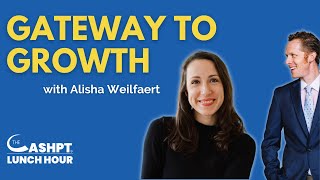
In this episode of the CashPT Lunch Hour Podcast, host Aaron LeBauer interviews creativity and business coach Alicia Wilfert. Alicia explains her mission to help people navigating major life or business transitions by using creativity and positive psychology. She describes common client challenges such as fear of failure and perfectionism, and shares her mantra that "80% is good enough." Alicia outlines her four primary income streams—one‑on‑one coaching, group coaching, a daily morning writing group, and workshops/online retreats—highlighting the writing group as her biggest revenue source. She recounts the rise and fall of her yoga studio, the lessons learned about community building, the importance of teacher‑training revenue, and how that experience led to filing for bankruptcy. From the bankruptcy she reflects on the dangers of focusing on fear, the need for a financial cushion, and the value of disciplined debt‑to‑income ratios. Alicia emphasizes the email list as her most valuable asset, describing how she grows it through summits, master‑classes, and a presale campaign for her upcoming book, "Little Failures." The book, still in beta, will teach readers how to grieve failure, conduct a "failure SWOT" analysis, and take recovery action; its presale has already sold over 300 copies. Throughout the conversation Alicia shares practical advice—invest in mastermind groups, believe bigger, develop a resilient mindset, and treat failure as a learning catalyst. The episode ends with resources for listeners to follow Alicia’s work and attend PT BizCon where she will speak.
Chapters
Failure is purely the beginning of your learning process. And if you view it as something to learn from, it can be a very, very positive thing.
Hey, what's up? And welcome back to the Catch PG Lunch Hour podcast. I'm your host, and today my special guest is Alicia Wilfert. And Alicia is a good friend of mine, but she's also a. Like a business creativity life coach. I think she goes usually by a creativity coach. She has a. She's owned a couple businesses here in Greensboro, and she just wrote a book called Little Failures. And I was just like, I need to get Alicia on my podcast to talk about this stuff because it's amazing. And if you know Alicia, which you probably don't, she's an amazing public speaker, and she gets people together. And the first time my wife and I met Alicia was at an event she put together. I can't remember the name. It was something for Greensboro. I can't remember. She'll know. But anyways, we've known Alicia a long time, and I'm super stoked to have her on the show. So, Alicia, thanks for being here today.
Oh, Erin, thank you so much for having me. It is really a pleasure.
Yeah. So just for context, let's see, what was the name of that event that we brought our daughter in in our sling, and it was something downtown. What was the name of that?
Yeah, Sophie was, what, like a week old?
I feel like she was like a couple months old. Yeah.
And she was so tiny and cute. It was. We were doing. It was a nonprofit I helped start called Face to Face that was about helping people in Greensboro get to know each other for opinions and ideas instead of just like, bland business networking. Right.
But it was great because you had all these cool prompts. Like, hey, in your group, you discussed this, and you made us mix groups, which was cool. And, you know, all the things that people don't want to do when. When they go into a social event. Right.
Yeah. Friend raising at its finest.
Yeah, that was perfect. So you are. So can you tell us a little bit about what you're doing right now? Would you call it like, I used to think you call it like you're a creativity coach. But I was checking out your website again today, and it's a little bit different. Like, who are you helping? What are you doing with people right now?
Erin? I work with typically women, sometimes men, but anyone who is going through a big life or business transition, and I. I work with them to move them through that transition with more grace and ease than if you were Doing it by yourself. And I use creativity and positive psychology to move folks through those transitions.
That's awesome. So, like, who's that? Is that someone changing job or is that someone, like, starting a business? Like, what kind of transitions are we talking about?
All of those. So, like, you know, it started with women who were just feeling like stuff, like, there's gotta be more to life than this. And then I realized that the women that we magnetize one another, that we end up finding one another, were the ones that are spiritually seeking. They are typically really creative souls. Maybe they're makers. They've maybe started a business or are on the verge of starting a business or are looking to make a pivot within their business. So I do attract a lot of entrepreneurs is awesome.
What are the. Some of the. What are some of the challenges that they're having? Like, you know, that. That are getting them stuck, and they're like. And. And they need to. And they end up reaching out to you. Like, what are the problems that they're experiencing?
Yeah, if it. Let's say it's like a career thing. Oftentimes there's this knowing that they're not reaching. It's like this inner knowing that they don't know how to articulate where it's. I'm not reaching my full potential. Potential where I am. And it's probably time for me to make a change. But change is scary because what if I fail? Or I've got this business idea? I think I want to run with it, but I'm terrified of failing. So they're, like, gripped in that place where fear of failure is keeping them out of action, or they think that something. That they don't want to do it because they're waiting until it's perfect. Which I know you have a saying around this that, like, is my favorite. Do you want to share that?
Yeah, it's 80% is good enough.
Oh, my God. Yeah. But most people don't think like that. Right. They think it has to be, like, 150% perfect before they launch it. And then you lose the magic of getting it wrong and what you learn from that and iterating. So just for instance, you said you didn't know what my. My title was because it was different when I started. Well, it didn't work that way any. It doesn't work that way anymore. And I had to learn that that's not quite the right title to attract my target market. And so it's new iterations, but it wasn't perfect when I started it's, and it will probably change again in a couple years, who knows.
But you got started.
But I got started, yeah.
So let's say like just, I mean just for like, I don't really know like where you've been in the, in the last year. Like what kinds of things are you doing? Group coaching, one on one coaching courses. What are some of the things that you're doing right now that are working well for you? And, and you know, like the people are like, like, you know, I think, I know you used to do like some different retreats and, and like the tarot card readings and writing postcards. Like, what is it that's working for you right now?
Yeah, I've got about four main, you know, income channels and it's the one on one coaching, the, the group coaching. And within that group coaching, I'd say my biggest, what's super surprising to me is that my biggest revenue stream right now is a morning writing group where we sit down and we do our morning writing together. Everybody's on zoom all across the United States, actually, from California to the east Coast. I've got folks joining in and we, I pull, you know, like an Oracle card to get, to get the creative juices flowing. You write about whatever you want, whatever's coming up for you, and then we have 30 minutes to talk about what's come up for us. So it's basically like a daily group coaching program and I've been kind of bowled over at how popular that offering is and what it's like. I don't know if I can say this, but it's kind of like daily church in some ways.
That's awesome.
Those are the. So group coaching, individual coaching, and I do a lot of like workshops and online retreats and things like that right now.
Yeah, that's cool. That's really awesome. But okay, so if it's, what is it called? If it's whipped cream and roses right now, I don't know if that's a saying, but you know, if it feels like it's going pretty good right now, I mean, I know there's a time like you've been doing this for a long time, right? I think nine years ago you started a yoga studio. Five, you sold it. At some point my wife like became a partner with you. Yeah, it has. Cool. That's awesome. You tell us like, like what got like, what was so like in the job you were working before you started on your entrepreneur journey. What was, what was it about that that wasn't fulfilling for you? Or that you knew you needed to be doing something else.
Yeah, you know, so I've always been in creative and I think I spent a lot of my life thinking that there was this path that I should be on and it was the responsible path. It was the one that was going to bring in income and have health insurance and 401k and benefits. And I couldn't imagine anything looking different than that. But I got to this place where I was doing that and I was doing it very successfully. So I was in sales for a Fortune 500 company and I could work like I could bang out everything I needed to do and still have a ton of time on my hands. And I was number one in sales, often within my group. So I'm like, if I'm doing this, what is it? What are everybody else? What are they all doing with their time? And there was this growing sense that my talents were not like the things that actually I was good at were not being used. And it just became this place where I'm like, I'm dying inside because I'm not using my God given talents. Right. And so I started, you know, I opened the yoga studio. I thought maybe that would be the route, but it wasn't. And I had a lot of coaches during that time and I thought, gosh, I like what they've done with me and I think, I think I can do this better. And I don't mean that in an ugly way, but there was like, there's some things that they're not talking to me about that I think coaches should be talking about with their clients. And so I went on to get a positive psychology certification and I just started coaching. I took Marie Forleo's B school and she taught me everything I needed to know about email building and list building and starting the right business. And I interviewed like 25 people in my target market and started building out products from those interviews.
Yeah, that's awesome. But, uh, so your book is called Little Failures. Right? So I'm sure there's some little failures and some big ones and maybe some ones that like I don't even know about. But tell me you started a yoga studio and I know running a yoga studio in a gym isn't easy. What was that a failure or do you see it differently now or at the time where you did you see it as a failure? Can you tell share a little bit about that?
Yeah, I kind of want to define failure a little bit. So people get so scared, so weird about the word. Right? Failure. It's like one of the least exciting things that people ever want to talk about. You start talking about people or about failure and people, like, start squirming. Every time I would do these interviews with folks, they'd be like, ooh, I don't like that word. And I'd be like, okay, hold on a second. The word is neutral, right? You're just assigning some energy to it here. And that's not really. It's neither positive nor negative. And you know, failure is purely the beginning of your learning process. And if you view it as something to learn from, it can be a very, very positive thing.
Right.
So with that framing.
Yeah. We say in a platinum mastermind, I tell them, like, hey, we can either win or we learn.
Right, Right.
Because failure is not fatal. And unless you stop at that opportunity.
Yeah, exactly. Marie Forleo, who I just absolutely adore, she tells the story about being on a scooter where she was in Salina, Italy, on like the first day of her vacation, and she gets this quick tutorial on how to ride a scooter and she ends up like gassing it and hitting the brakes at the same time and ends up with this 250 pound scooter on her. So, Right. Shame. Like, they end up getting off of her. She's fine and she's filled with shame. And she talks about how she made them go through it very slowly again and she ends up figuring it out and she ends up being able to ride the scooter through the whole thing. And her thing is, is that if she hadn't got back up and asked them to go through it more slowly, she would have been the failure. She would have been the person still on the ground. But when you try again after failure, you become the person who gets to ride the scooter around the island. And don't we all want to be that person? But you don't get to be there. You haven't fallen first. Right. And so, you know, to answer your original question, I would say that the yoga studio was a really big failure. But it was one of the most important failures I've ever had in my life because it showed me when things don't work out the way you want them to work out and you learn something from them, it provides the foundation for your next thing and your next success. So we need those failures to happen. They become the crucible of exploration.
Yeah. So tell us what happened with the yoga studio. You ran it for a few years by yourself, right. And it got time consuming and you brought In a partner.
Yeah, yeah. And I should say I was doing it full. I was basically running a full time business while working a full time job, bootstrapping it all the way. You know, it's kind of cash poor at the time. And you know, yoga studios, they have to have a certain esthetic, they have to have a certain number of classes to keep people coming into them on a regular basis. And those things just weren't happening. And probably the level of consistency that needed to happen for classes, it just wasn't possible to do that. And bringing in Andra brought in this infusion of energy and excitement and that really carried us through. Then we were able to offer a teacher training program, but between the two of us, we still kind of were strapped for time in the same way. And the financial piece of it, so we couldn't ever quite get it over that hump. And for anybody who's ever done a gym or a yoga studio, the thing that actually makes those lucrative is not the actual classes, it's really the teacher training programs and the workshops. So if you're not, you know, you're. That the classes are just the beginning of the funnel and the rest of it is the moneymaker.
Yeah. So what was the, so looking back like at the time, what did you, what did you define was the failure about that and what's the lesson now? Looking back, what's the lesson you learned from it?
Well, it really depends. So for me, my goal with that studio was to quit the full time job and be able to support myself. So I didn't hit that. That is definitely the failure piece for me of pouring tons of money and time and energy in something and not having it pay off. But on the flip side, I learned what it takes to open a business. I learned commitment and follow through. And I learned that even if the worst case scenario happens, I was fine. Like, I worked it out, I got there. I now knew how to build community. I knew how to grow an email list, how to run a newsletter. I knew how to network in ways that I didn't before.
Yeah, that's awesome. What, so you guys sold the yoga studio? Like, I mean, I think selling is right. I don't know how much selling is the word. You passed it on to someone else and there was an exchange of money.
Yeah, right. Yeah.
What was the next thing? What was the next thing that you moved on to do?
Well, almost immediately I started coaching. So I started building yoke and abundance. This iteration now. And it has just been layer upon layer of learning experience. But I did quit my full time job in order to do that because that was a learning experience from the last one. Like it's almost impossible to do two really big things at once. Right. And now in that, my biggest fear came true. So I was terrified of bankruptcy and I did. So a caution to your audience is be careful what you focus on. Don't focus on the fear. Focus on what you're building, because what you focus on grows. And I think that, I don't know that it was inevitable that I end up having to file for bankruptcy, but I think if I had focused more on what I was growing instead of the fear, that that would have really helped out. So I learned something there too.
What was it? The focus was you just, like, I owe so much money, I don't know what I'm going to do.
Yeah, yeah. And you know, in the beginning, when you're building a business and you haven't quite figured out, you haven't dialed in your ICA and you haven't, you know, dialed in, you know, what's going to bring in those folks, you know, you got to be careful with your debt to income ratio, which, you know, got out of hand for me.
Yeah. So what happened next? So, like, you do go into bankruptcy at the same time you're starting your coaching business or was one about two years later?
Two years later. But, you know, at that point, two years in, I knew, like I was seeing enough success within the business. It just wasn't enough to fix the hole that I was in.
Right.
And so, you know, that was a big turning point with me of am I going to, am I going to stay the course? And I knew in my bones that I was doing the right thing sometimes. So we get those taps, intuitively speaking, and we know we've got that wisdom inside that we're supposed to keep going. And I knew I needed to keep going and I'm really glad I did because I love my job and I love the work that I get to do and I've worked with over hundreds of women at this point and it's, it's fun.
That's awesome. What was the turning point, you know, what was the thing that, you know, so you file for bankruptcy and then you keep going. I mean, something, something changed because you weren't, aren't doing the same thing, you know, and you've, I don't know if you've, like, how the bankruptcy ended. Like, what is it? It wiped away your debt and you have terrible credit and then you just
keep, yeah, pretty much. It wipes away your debt. You have terrible credit. You have to disclose that you've been through bankruptcy basically for the rest of your life. A little bit scary, but you can still get credit. It took me two and a half years before I let myself apply for another credit card. So I definitely took some time and changed some, some habits around the business specifically. And I would say that what changed is I, I just think I didn't have a big enough nest egg in the beginning to do, you know, there were things that I couldn't get rid of within my life that were income sucking. But when you start a business, you can expect for the first couple years probably to lose some money. And so just anticipate that and anticipate that it's going to take a little longer than you think it will in most cases, but that's normal for a business. And what I saw is even though I was filing for bankruptcy, I was still seeing pretty good year over year growth. It just wasn't fast enough yet. So what I've seen is pretty tremendous year over year growth. And in fact, so last year was, I just hit the fifth anniversary. So last year was the fourth year and I had the best year that I've had yet. And that doesn't mean that there aren't scary ups and downs. There's always scary ups and downs and I don't think it ever gets less scary. You just get better ceiling.
Yeah, that's awesome. So what was like, what were the one or two, what were the one or two things like keeping you from being able to pay off the bills? Was it just the compounding interest or is it like, I don't know, like a bad investment you made or something?
I mean, is that, yeah, compounding interest and the new clients not coming in fast enough yet? In the beginning. So it was that piece of not quite knowing what to do to build the email list to attract the right ica. So it was just much, I think this is normal, especially for new entrepreneurs, is that you have this expectation, like you do the math and you're like, okay, I only need to bring in this per month. But if your email list isn't yet growing and you're not yet doing the master classes that attract the right people. You know, if you're not yet offering the lead magnets that will bring the right people in, it's gonna take longer than you think it's gonna take.
Yeah, yeah. Real quick, can you define what ICA is? You've mentioned it a couple times.
Yes. Ideal client Avatar. Do you talk about this a lot in your.
I do. I don't use the term, the acronym ica, but I talk about having your avatar, and we teach that through our Cash PD blueprint course and make sure everyone knows that in the usp their unique selling or serving proposition.
Yeah. So mine, I call her Stephanie, and there's a couple different iterations of Stephanie in my world, but it's, you know, it's essentially, I think about it like the Russell Brunson bridge. Right. The client bridge of, like, who is that person if that's Stephanie over there on the other side of the bridge? What. What do I have that Stephanie needs? And how am I going to walk her across that epiphany bridge to get her to where I am?
Right. Yeah. That's awesome. I want to know, like, if you were going to look back, well, were there any other failures along the way besides closing that business bankruptcy? What else is there?
Oh, there's much littler ones. Right. Like, there's the. Countless times. And this, I think, would be really interesting to the folks that you speak to is that, you know, so often you think, oh, I'm going to offer this sale or I'm going to offer this launch, and it's gonna. It's gonna be magic and it's gonna fix everything. And so often when you put that much hope into something, it's typically. That's the thing that's gonna just bomb. It's not gonna do well, at least in my experience. And sometimes I'm really surprised at what I'm offering that my clients want. So this is gonna sound really weird, probably to your audience, but I'm gonna share it anyway. I started teaching a course called embracing your inner witch. And what. That's what that all is. What it. What it entirely means is people were put to death for witches for being pretty, being ugly. It's like taking back your own power is really what the course is about. Right. So. But it attracts a certain type of person. It has been one of my highest grossing courses, really. And that blew me away, Aaron. Like, I was stunned. I mean, I was terrified to offer it because it sounds kind of weird, like embracing your inner witch, you know? And it's been one of the most popular things I offer, and that's just astounding to me.
That's awesome. Yeah. I think one of the old tricks was, let's tie your hands together and throw you in the river. And if you. If you float, you're a witch, and if you sink, you're not die either way.
Yeah, exactly.
It's ridiculous. So, you know, that's awesome. You know, I've. I've had similar things where I was like, I'm going to put a lot of effort into this. I'll launch it, and no one wants it, you know, or a couple people want it, and then they ask for refunds because it was too hard for them. And then other things where I'm just like. I just, like, you know, like, throw out this idea and everyone wants it, and it's like nothing new. It's just. I recycled the idea.
Yeah.
You know, I think if you. If you just stop at that first sign of discomfort, like, you're never going to find success. Right. Alicia, looking back over, like, the beginnings of your career as an entrepreneur, like, through some of these failures, like, I know that those have made you who you are today, you know, and got you to the point where you've got a book about your failures. But is there something. If you had a chance to do it over again, would you. That you would change or do differently?
Man. Like, let's put the caveat that I can take all the knowledge that I have now, I think, out of college, I would just have started my business, the coaching business. I would have been blogging. I would have been following the creative inklings that I had instead of thinking that, you know, I can just move forward, but with a real job. Yeah, the real job. But I'd have to be able to keep all of the knowledge because everything has taught me something that's made me useful now to my clients in a way that I wouldn't have been had I not traveled that road?
Yeah, yeah, I get it. I agree. What's something that you've done that you would do again or something that you've done that was pivotal to the progress that you've made so far?
Well, I just did something this year that's terrifying. And I think it's important for your listeners to know, too. I invested in my first mastermind, and I think that the power of being in a room with other, for me, other women who all go around and share what their goals are and their list sizes are, I have not been dreaming big enough. And I think that alone is worth thousands and thousands of dollars to hear, like, what's possible. And so when you find the person that you know has the knowled that you need and they're attracting the types of people that you want to be around, you have to make that investment.
Yeah. What would you say that, I mean, like, what were the hesitations you had in joining?
Oh, the money piece. I was terrified. You know, it's terrifying given, you know, my background. It's terrifying.
But like, you're going to make a mistake again.
Yeah, like I'm going to screw it up again. You know, that's that. And I know that if I keep doing things the way I've been doing, I'm going to see meager growth. And with this book that's launching in May, I know that there are new opportunities that are already presenting themselves. And if I didn't get in a room with people who were smarter than me, then I would miss out. I'd be missing an opportunity to leverage that launch, to leverage what's coming. And I didn't want to miss that, that opportunity to get better.
What are some of the, like, tangible things that you've learned in, in your group, like that you can take away or share, Say, hey, like we did this strategy or here's this. Just having this conversation made a difference.
Well, I mean, just hearing everybody's numbers, that alone kind of blew my mind. And so it's new. I'm only, I'm less than a full month in, but I get a vault of past trainings as well in this. And looking at the types of lead generating ideas that they have is getting like, I would pay hundreds of dollars just for that piece alone. Because we're all looking for ways to grow our email list to connect with clients in a more personal way and to show them that we, that we care and that we have what can help them get to where they want to go. And so lead generating ideas has been fabulous.
That's awesome. You've mentioned that a couple times. Like your email list, it sounds like it's one of the best things that you've got. So can you tell us a little bit more about why is the email list important to you and how do you use it?
Yeah, somebody said this the other day and I feel like this is true. And Aaron, I'd be curious to hear if this is true for you. My email list is my direct communication with the people that I hope to be able to work with and maybe someday that will be a financial work with. But I hope that I'm providing enough value that they're in the email list itself that when they read something, they always feel like they're getting something from it, even if it's a tiny mindset shift. But from a deeper business perspective, we're all in this because we're trying to grow income we're trying to connect with people, do something meaningful, and we want to provide a living for ourselves. So when I have a course, it does not. I am not going to sell anything by saying, by putting it up on Facebook or Instagram or LinkedIn and saying, guess what? This course is open. The only way I'm going to get people into that course is if I let my email list. No, that's a direct relationship. And in some cases, it doesn't even mean sending it out directly. On. Let's say you have something really big. Like I offered my own mini mastermind this year. And so the people that I have the direct relationships to, they got private email invitations from me this year because that's the level of relationship I'm hoping to have with the clients that end up on my email list. It's like when you need money as well, it's like turning on a faucet. So it's your. Like it's the water in your kitchen for your business, right?
No, that's awesome. Yeah, we. I mean, my email list has been the most powerful thing, marketing tool I have, and it's just crazy convincing other people to actually buy into the idea that the email list is their most, like, powerful asset.
And Aaron, I've got to pause with you on that and just give you props because, you know, Marie Forleo, when I started my business, Marie Forleo preaches that and I took her course. But you echoed you and I sat down one time and had lunch and you were helping me and talking to me about what I needed to do, and you just echoed that and you drove that point home for me even harder. And if you and I hadn't had that conversation, I don't know that I would have taken it as seriously as I did and I would not be here where I am today. So I just want to thank you for that. And whenever people hear you say that they need to listen to you, that email list needs to be treated like a sacred communication tool.
Yeah, it's like the gold, but you don't shove it under the mattress. You, like, look at it and you nurture it and you polish it and you provide value to it. It's amazing. I think, you know, I think people say to me, well, I don't want to. I don't want to be emotionally coercive to people, and I don't want to, you know, like, be a spammer. How do you use your email list in a way that provides value and it's not, like, all about being what's it called? Unethical. Just say unethical. How do you do it so people don't view you as a spammer and unethical? Like, what are you doing or what are you writing? What are you saying?
Oh, golly, that's such a great question. You know, I mean, I first of all view it as sacred communication. And I have something that's really valuable. And if someone wants to work with me, I truly believe that what I have can change their life. And I believe that it is selfish if I don't share that. And so they can unsubscribe if they don't want to be there. But I'm always there to give value. And I'm not holding people's, I'm not holding people hostage on my email list. They can unsubscribe if they want to, but I'm going to be, you know. You know, one time I was, I worked for a nonprofit in town. It was part time and I was helping them build their women's own business, their women owned business network. And I was kind of seeing the writing on the wall and that they weren't. The nonprofit wasn't bringing in enough income to sustain, keeping me. So I saw the writing on the wall and when they let me go, as I was kind of even telling them, hey, we need to do something about this if you want to. When they let me go, they said, it's not personal, it's just business. Well, if it's business, it's always personal. And so that's how I feel about the email list. Like, I'm going to be emotional on this email list and I'm going to share what's true in my heart because this is personal to me. It's not just business. My business is personal and I'm going to keep it that way because that's what's important.
Yeah, that's awesome. That's awesome. What are some of the things that you've done that have built your email list or things that you've done or created that have generated the most new leads for your email list?
Wow, Erin. So I've taken part in summits and that is fun and super labor intensive. And they tend to build my email list very well. And there end up being a lot of unsubscribes as well too. So it's like kind of a little bit of a roller coaster when I've taken part in a summit. And I think that master classes have been a huge asset to my business. Doing a complimentary Masterclass where I'm giving away knowledge in exchange for folks, you know, either getting on the email list or getting a workbook or a PDF, because they get it in coaching. And it's probably this way in PT to like, they need to know you a little bit, right? Like, they need to know, they need to see your face, they need to figure out what your personality and your energy is like. And so it's this win, win situation where I'm sharing what I have that's of value to them and those. It doesn't for me. It doesn't build it like huge numbers, but it's the right numbers.
It's the high quality people.
Yeah. And then the other thing is this book, just the presale campaign for my book added 60 new people alone. And I was like, that was just the presale campaign. And I'm like, goodness, what's next? You know, what if I. I've got some ideas for how to utilize that book going forward. But I was really bowled over by what writing a book so far that hasn't even come out has done so far for the business.
Can you tell us a little bit about it? Like, what's the, what's the book about? And can you share a little bit about, like, why you decided to write a book?
Yeah. So I initially wanted to write a book about my kind of my coaching process with folks. And I had been working on it all alone for a couple years. And then your wife Andra called me and said, hey, Alicia, are you still working on that book? Because I'm joining this book creators program. And I thought, okay, okay, I'm going to try this. And right around that time, my morning writing group that I talked about in the beginning of this podcast, we had this conversation about failure. And somebody said something like, it's not failure if you learn something. And I was like, I just really disagree with you. And everybody got superheated. And it was one of those things where I think we talked about failure every day for a week. And I was like, okay, I have too much to say about this topic and too many other people have something to say about this topic where I think it's a interest and I think it leads to everything else, that coaching of why we need coaching. You know, what I've seen is often fear of failure keeps people so stuck and so out of action that it's like you fester on the inside and it's like you've voluntarily taken. Like you've taken drank poison that has an antidote and all like, it's so simple. All you have to do is take action. You have to take that 80% is good enough action and it fixes the fear of failure piece of things. And I'm not saying that if you try, you're gonna get it right. And quite the opposite. I'm saying that you're gonna try and a lot of times you're gonna get it wrong and you are gonna fail and you're gonna make mistakes and you're not gonna get it right. And. But if you stay the course on something that's important to you, those failures are what will make you successful in the long run. If you show me anyone who is super successful, I will show you a ton of failures that they've hit on their journey that have gotten them to where they are. So to me, it just fits right in with my coaching, which is I feel passionate about it. I know that we have a hard time actually internalizing that, especially as women. A lot of women, when they encounter failure, they internalize it as I'm a failure, instead of feeling like, oh, I did something and it didn't work out. Let me glean the lesson. So what I'm talking about in this book is how do you grieve after failure happens to process it? How do you then do what I call the failure SWOT analysis in order to take the lessons and focus on what needs to be fixed and what doesn't as you move forward? And then how do you take recovering action after failure happens? So that's why I'm writing this book. And I think the main thing is that I just, I know it's going to help move people forward into action and through things that are really painful, which is why I wanted to write it.
That's awesome. That's really cool. Have you, how many books have you sold so far?
Over 300, which I'm kind of blown away by because I'm doing like a hybrid model between self publishing and working with a publishing company. And most people who self publish in their first year on average only sell like 250 to 300 books. And I just sold over 300 books in my presale and now I'm terrible. It's terrifying because I'm like, oh crap.
Like, have you finished the book yet?
No, no, no. So I'm on the folks who purchased the book actually right now we're doing a round of edits and they get to be my beta readers. So that's part of the pre sale, is that everybody who pre purchased gets an opportunity to see how the sausage is made in the book writing process, and their feedback will help me polish the book. So.
That's so awesome. That's really cool. I love that model. And, you know, I think the. I think the other thing is, is that it's probably like if you had gone and done a pre sale and you got crickets, you probably would have gone and tweaked. Okay, do I need to tweak the title? Do I need to, you know, tweak the message or something? Right.
Yeah, absolutely.
And then you don't have a thousand books sitting in your living room going, no one wants these things.
Yeah. And, you know, another cool thing about this model, that they're having us do it in the presale campaign. I was. I started thinking about, okay, this is why I want people to read this book, and this is what I think it will do for them. And then I'm like, oh, crap, that's not in the book yet. And so I'm like, wait a second, I got some holes here. So even the selling it before it's done helped me really get clear on what was important, what messages were most important for the book.
Yeah, that's super awesome. That's really great. So I think there was. I might have had another couple questions, but I know. Did you have something you wanted to ask me?
Yeah, I do. So given that we're talking a lot about failure in this conversation, I was really curious. What business failures have you had that you felt like you learned the most from so far in your career?
Yeah, I think there's a couple different ones. There's two that stand out. One for each. One for each business. So the first thing was when I started my physical therapy clinic. You know, it's a healthcare business. My dad, who's, you know, like, been a cardiologist here in Greensboro forever, when I started, everyone still knew him. I think he was just a year or two out of retiring, and he's like, you know, Aaron, you need to go market to physicians, and basically, like, they'll refer patients to you, you know, and so I just. I put a lot of faith in the way it had already been done. And no one referred patients to me. They even someone who said, you know what? When I moved to town, your grandfather helped me fill my orthopedic practice with patients. You know, I'll definitely send you patients. Like, I never heard from the guy again. And I just put a lot of faith in the way it had already been, always been done, rather than the way That I wanted to do it. And so I just spent a lot of time. I didn't lose, like, I lost time and money, but I didn't, I wasn't negative, but it, it was just super frustrating for me. And so I had to go outside of our profession to figure out how do I market directly to people. So that would be, that was one thing. I mean, I would spend 30 minutes writing letters to each of every one of my new patients providers. I would drive to the office to try to hand them the notes in person. I would try to set up these meetings. And it just wasn't, it wasn't a good fit for many reasons. I'm a doctor, like, why do I need to buy the whole office lunch to get referrals? That didn't fit. So it just wasn't right for me. My coaching business. I started my business. The best selling product I had was the Cash PD blueprint as a course on how to launch and scale a six figure cash practice. Everyone for years was asking me to, hey, Aaron, we want to learn more about marketing. I want to. And so I said, okay, I'll put together a marketing course. And I think it was 2018 in January. Instead of launching my course, the Cash PD Blueprint, I launched this course, the Cash PD Marketing System. And I think I did all my webinars and the whole thing and I think I sold like 15 or 16 of them. And I had four or five people ask for refunds. I was like, what's the deal? Like, I put every. I mean, there's so much gold in there, but people didn't see it and it wasn't really what they wanted and it definitely wasn't what they needed. And so, you know, it's like I launched the thing that I thought people really wanted without testing it, you know, and so now I know, like, okay, that's not what they want. So the next thing brand new that I launched was in 2020, was a five day mentorship with me two hours a day to teach you how to start a podcast, do webinars, do. What else do I write a book and you know, like two or three other things. Like five things, five days in a row. It's gonna teach you all this stuff. $197. No one wanted it. And I was like, okay, like I didn't put. But I, but I learned my lesson. I didn't put. I put 10, 15 hours into building the sales page. Not recording. Yeah, not 200 hours and building it out before I sold it. But I put together A sales page and I wrote out a couple emails. I did some. I did some social media posts and respond a lot of messages and no one wanted it. And I was like, two months later, I changed the title and I took 80% of the stuff out and we sold 65 of them at $197.
Wow. Okay. What do you feel like those failures taught you about resiliency?
I think the. I heard this. I think that what synthesized this the most was I was listening to a episode of Ira Glass at How I built this with the guy who built Calendarly. And he started as like a door to door salesman. And he was talking about this early days. Like he said, I knew if I just knocked on enough doors, I could make a thousand dollars a day as a college student. But he just had to knock on enough doors. So I know that there's things that I have that are going to hit. I just have to knock on enough doors. And so really what that taught me was two things. Don't build it before you sell it. So sell it first. And you have to be willing to knock on more doors, you know?
Yeah. Oh, my God, I love that so much. In our. So I didn't do a traditional coaching program. I did a positive psychology certification. And in that certification in our resiliency chapter, which is a lot about failure, they just call it resiliency, right? Resiliency only. You only get resiliency if you have failed. So it's the Daruma doll, right? It's this Japanese doll and it's like a Weeble wobble and you knock him over and he gets back up. So the thing is, is that you just have to get back up one more time, then you fall down, right? And it's that same. That same thing. I love that so much.
Yeah. Yeah. And I mean, I've definitely lost money, but I would call it. I mean, I. Was it. Was it a failure? Not try. I think I put $45,000 in credit card debt trying to be a professional cyclist. I mean, was that failure? I never thought I would be that good anyways, so I figured go all in. I've made some, you know, I've certainly made some bad judgment calls and things like that, but I've just been to this point in the last few years where, like, I just know the next thing is around the corner. Especially with COVID I'm like, there's sometimes there's like this week, I'm like, sweet, we got patients on the schedule. And then it snows here and it's like, no patients on the schedule Monday and Tuesday. I'm like, well, you know, just gonna wait for the next opportunity. So, you know, it is. It's like, you. You're right. You have to go through the struggles and the. And the failures to become resilient and especially to. If you want to grow a business, you just got to get up one more time. I love that. Yeah.
Yeah. And, you know, so many people think that they're not entrepreneurs, and it's this idea like, oh, I don't have the stomach for that. But nobody has the stomach for it. You develop the stomach for it. Like, if you want the end goal, you have to develop the stomach for it.
Yeah, yeah. You have to. You have to train yourself. Right? Just like. Just like yoga or working out, riding bikes. You got to. You got to practice every day. Right. I think my favorite quote about. I think this is. I think I can't remember who it is, but I want to say I think it's Baron Baptiste, but it could be someone else. It said yoga only starts when you want to get out of the pose. So as soon as it gets hard, that's when. That's when the pose starts. And, you know, because a lot of people are like, sweet, I can do this warrior two thing for two breaths, and I'm good. But that's not yoga. Yoga starts right at the edge of the discomfort because that's. We don't grow in the comfort zone. We grow outside the comfort zone.
That's the best quote. Yeah.
Yeah. So that's awesome. Was there anything else, or is that.
That's all I have for you?
Sometimes people go like, I got 20 things. But, you know, I mean, I think that's the. Alicia. I think the main. The main thing that I want people to understand who are listening is that no matter how hard it feels and how much you feel like you haven't succeeded and success is just right around the corner. You just have to find the right corner to turn around.
Yeah. And there's alchemy in those failures. Like, that is gold. You know, it never feels like it at the time, but it is really the failure that the learning comes from. And you have. When you cross that next corner, you are going to be like, look at all this stuff in my backpack that I didn't even know I had that you now just took with you from the failure.
Yeah. If there was one other piece of advice, whether it's, you know, like, mindset related, business sales, something you know about growing your business that you could share with our listeners. What would that be?
I think the biggest thing that I'm feeling these days, that I want for everyone else, especially those who want to start a business or who have already started a business, is the reminder to believe bigger. Just believe bigger and know that if you fall down, if you encounter failure, just like you said, the next thing is around the corner. And when you believe bigger, you get bigger.
Yeah, yeah. I think it's. I think for me, too, it was one of those instances where I'm around people who are so much more successful than me. It raised my level of thought and thinking about what was possible in my world, because what was making a million dollars a year? I was like, that's impossible. But I just had to be around people who are making a million dollars a month. Oh, they're just like me. Oh, that. I can see that possibility now. And I do think we all undervalue our own value and potential.
Absolutely.
Alicia, if someone wants to find out more about you, where should they go? And maybe even if they want to check out your book, how do they get information about that?
Yeah, they can Visit my website, www.yope.com.y o k e and abundance.com or on Instagram, oakandabundance.
That's awesome. I've also got you on the ticket for PT Bizcon this year to speak there, so I'm super stoked to have you. So if you guys are interested in PT bizcon, if the ticket should be available, you just go to ptbizcon.com you get a chance to hear Alicia speak and some of our other amazing guests. Alicia, it's awesome catching up with you and learning more about you. I've learned things today that I didn't know and, you know, as a friend was afraid to ask, but now they had you on the podcast and you wrote a book about it. I'm like, sweet. I can ask Alicia these questions. So thank you for being here and sharing openly about your business and your struggles, your failures and your success. I appreciate it.
Thanks for having me.
Yeah. All right, this is Aaron Labourer and Alicia Wilfert for the Cash PG Lunch Hour podcast. Just keep going, don't stop, never quit, and we'll see you on the next episode and see you at PT bizcon in a few weeks. See y' all later.
More from Aaron


My clinic has NEVER been in-network with insurance companies—and it NEVER will be! #cashpt








