The Mindset & Habits of Young Successful PT School Grad's with Tyler Shelton | CashPT Lunch Hour #51
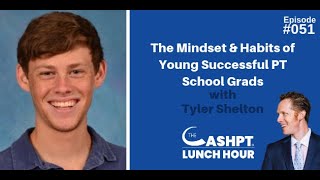
In this Cash PT Lunch Hour episode, host Aaron LeBauer interviews PT resident Tyler Shelton about his journey from undecided pre‑health student to cash‑based physical therapist, the mentors and experiences that shaped his clinical and business philosophy, and the habits that have helped him thrive early in his career. Tyler recounts how a casual suggestion from his future wife led him to PT school, his early volunteer work, and his decision to pursue a cash‑PT residency after a brief stint at a traditional physician‑owned orthopedic clinic where productivity‑driven metrics clashed with his patient‑centered values. He describes mentorship from Brian Campbell and Aaron, the importance of communication, empathy, and “soft” patient interactions, and how he learned to raise rates, handle objections, and view sales as a service‑oriented skill rather than pushy selling. Tyler outlines his entrepreneurial mindset, continuous investment in continuing education, and his ten‑year plan to open and scale his own clinic in Winston‑Salem, NC, while emphasizing that providing hope and thorough diagnosis is the core value he offers patients. The conversation also touches on the challenges of no‑shows, insurance billing nuances, and the cultural shift needed for new PT grads to confidently charge premium cash rates.
Chapters
Foreign.
Welcome to the Cash PT Lunch hour. This is Aaron Labourer, your host and today I have a very special guest. His name is Tyler Shelton and Tyler is here working for us at Labour Physical Therapy as a Cash PT resident. He is my second resident and we're about almost six months in and so what we're going to do today is talk to Tyler about his experience, why he decided to come join us, what he's learned so far and where he's headed. So thank you Tyler for being here.
Yeah, thanks for having me. Excited to be here.
That's awesome. So what I want you to do, let's start with why did you become a physical therapist and what. And as you were in school, like what led you down the path of ending up here?
Yeah, so I know I went into school wanting to do something in the medical field and I don't think I was really sure what I wanted to do. So I bounced around to a bunch of different stuff, got weeded out by several of the entry level courses and just kind of beat me down and told me maybe something outside of the medical field is better for me.
Did you get to organic chemistry?
I never got to organic chemistry because chem 101 beat me so hard that I just like I thought I was done with the medical field completely but I ended up taking it again eventually. But so I just kind of beatbopped around for a little bit and actually it was then my then girlfriend, now my wife mentioned that she was gonna look into physical therapy and I was like, oh that sounds kind of neat, I'll check that out. And it was just this automatic yes moment where I was like, oh that's awesome. I get to do basically anything that I would want to do in the medical field. I don't have to be on call all the time. It's a decent living if you get to the right place. So it just connected all the dots for me and that was the story. From there on I was pretty much full time heading towards PT starting at the beginning of my junior year. So I had to cram a lot of courses in but got it done.
So you made that decision like sophomore year or junior year in college?
Well, I made it sophomore year but it was so far towards the end of it that there was no way I could take any courses or do anything the right steps towards it. So I think the first thing I actually did was that summer I started volunteering places. But other than that I basically had nothing physical therapy wise going into my junior year.
And you went to the other school in North Carolina.
Yeah, I went to UNC Chapel Hill. 2017 National Champs.
Nice. Nice.
Duke.
We did, like, 92 and 94 and a couple errors.
One less than UNC, but who's counting?
Yeah. Were you in school when you guys won a national championship?
Yes. So I actually thought that the Villanova loss in that final shot was going to be my last chance, and that was really upsetting. But then the next year, we came back and got out of my last year of school, so that was really great. That's awesome.
I missed it by one year. I got there the year after we won, and there was all these expectations, and we sucked for a while.
Yeah.
Like, we had the year in 93. I think there were. We got to the finals, and there was three professionals on the court. And the guy who was not a professional, Chris Collins, took the shot from, like, 45ft away.
Yeah.
Just like, dude. And then we sucked. And the year we sucked, we beat Carolina at home. It was amazing. Like, tripled over time. I don't think you were alive back then.
I was a baby. That's. But that was. You know, that was always. Some of the best memories from school was going to Duke. Carolina. Even if we beat Duke and then sucked in the tournament. Well, at least we beat Duke. Yeah. Yeah.
Well, we have to go to a. Make sure we go to a Duke. Carolina game sometime.
Yeah. Get the blood drawn.
So you were at Carolina and you decided, okay, I want to be a physical therapist. Had you had physical therapy or had a need for, like, doing it, or were you just, like, seems like it's a good idea.
I had. Had it once. I can't say that that's what drove me to become one, because I don't remember a ton from it. I think I was in middle school and just had some issues when I was running track, but that definitely wasn't what drove me towards it. I just. The more I looked into it, the more I was like, oh, my gosh, that's exactly what I want. And, you know, I think, like, a lot of guys my age, I'm super into sports, so I was like, oh, that's an awesome way to get involved in sports. And now I'm here with you, and I could not care less if I was treating athletes or not. But, you know, it's fun when I do, but it's not exactly what it all comes out. It comes down to when you finally get into it.
So you went straight from undergrad into PT school.
Okay.
And then where along the Lines in PT school, Were you thinking then about owning your own business or were you just like, okay, I'm gonna go out and I'm gonna work with, you know, athletes and get a job?
In the back of my mind, I had always had the idea of opening up a practice and I would say that got snuffed out for the most part, you know, by no fault of Carolina. It just seemed like with the business course that we took, it just seemed like a lot more trouble than it was worth. And just, you know, you basically have to go in and lose money constantly to be able to bend the rules a little bit in your favor. It just didn't really seem like it was worth it. I didn't think about owning a business again until I was, until I was about to graduate.
And when you graduated, you went into, what kind of job did you get? Where did you go? What was that experience like?
So actually my, technically my first job was with somebody that was in the cash PT world and that was somebody that I had met right before graduating and was planning on working for. Yeah, Brian Campbell. Brian.
I did a, just if you're listening, I did a Cash PT Cribs episode with Brian.
Oh, nice.
Yeah, a while back, probably before you met him.
Brian's a great guy. You know, he didn't necessarily have the patience to take me on full time, but he, you know, he still did a really great job of mentoring me and he really put himself out there for me and really, really cared and helped me grow into, into the PT that I am today. He gave me a lot of ideas for how I wanted to treat. And you know, I worked a couple of. I worked one or two weekends for him, saw a couple of patients, but it wasn't turning into a full time thing right away and I needed to go get a job. So I went and got a job with kind of a run of the mill outpatient, orthopedic, physician owned clinic. And I don't think I ever intended to stay there long. And I think that kind of shaped how my experience there was just because I knew that there was something like Brian's practice or something like your practice, where I could be out there in the cash based world treating the way I wanted to treat, bouncing ideas off the people that treated similarly to me and not being just completely focused on productivity and all the other things that the physician owned clinic wanted me to be focused on. So, you know, I didn't really enjoy myself while I was there.
Yeah, so what was that like? I mean, so most people Listening probably have a similar experience. But like, for me, like I only I didn't work somewhere like that. I did as a student, but I think it's a great opportunity on your part to have learned that. So, you know, like you can tell patients like, this is what you're gonna get. But what was that experience like and what specific about it drove you to feel like you couldn't stay there long, you know, even like longer than a year. You needed to look for something else.
Yeah, well, so it's, I think it's just where our medical system is nowadays and people may have different experiences with this, but it was a lot of productivity driven goals. So even the other physical therapists in my clinic who are perfectly good physical therapists were telling me I need to keep patients longer and have the techs take them through stuff. That's just never been my style. I was in a clinic while I was in school where I saw one PT treating five to seven people at once. And obviously he's not the one taking them through everything, but he'd have high schoolers come in and shout out for a week and they'd be taking people through drills. And I was like, this is, this is terrible. These people are paying money to get skilled physical therapy and I don't feel right billing for skilled physical therapy unless that's what they're getting. So, you know, the techs in our clinic were great, but I didn't want to put any more on them than they already had from three other pts. And I tried to see people in the small 30 minute window that I had. It was just, it was, it was a lot of hard work for not a ton of payoff it seemed. It was a ton of, a ton of note taking even for those 30 minute sessions. So you're asking me to not only see a ton of people at once, but you're asking me to do notes on them at some point during my day. It just seemed like a really inefficient way to be in a PT office. That was the biggest reason that I needed out of there. It wasn't because I couldn't do it. I'd seen multiple people at once before. Just didn't seem right. Yeah.
What was the. Was there one instance that was like the thing that like, like flipped, like where you're like, like I gotta go look for something else or was there something. Was there one thing or two things like instance or stories that you could share that really like pushed you along the path?
Well, I think another thing that I didn't mention was that it's. It's really taboo to disagree with the orthopedic surgeons that own the. Own. The clinic.
And.
And so one example is I had a kid who was about 15 or 16 years old come in, and he had tweaked his knee playing basketball or something, and he had to come in and get it drained, essentially. And a week or so later, the orthopedic surgeon released him to go back to weightlifting. He was about to play football, released him to go back to weightlifting and all his activities. And I was like, I just happened to be seeing him next, and I said, okay, well, let's see. You do just bodyweight squat, nothing else. Just a bodyweight squat. And his knee came in on it, gave him a lot of valgus, essentially just on body weight and shaking. He was clearly all the way on the other knee, trying to keep as much weight off as possible. And I was like, look, you know, I'm not supposed to tell you to do something other than what the orthopedic surgeon tells you, but I can promise you if you go put weight on your back and try to squat down, you're gonna have something a lot worse happen to your knee.
Yeah.
And, you know, I think our abilities as pts to spend more time with the patients shouldn't be taken lightly. And the fact that we get to spend more time with them and have. And build more of a relationship than typically an orthopedic surgeon or a physician would allows us to build a lot more trust from them, and we need to. We should advocate for them as much as possible.
So did you treat him ongoing for the next few months until he got back to activity?
I tried to. This was one of those cases where the kid really just didn't take it. Didn't take it seriously. Would. Would constantly come in and, like, have re. Injured his knee and got it. Got it drained out again. But the surgeon kept telling him it's fine to keep doing activities. And I was like, you know, and I even talked to the surgeon. I was like, I don't think you should be doing that. And he was like, all right, well, then that's on you. You know, you tell him what to do. And I was like, great. That was. That was more of his way of telling me he doesn't want to deal with it anymore.
Right.
Um, but the kid. No showed a lot. Just didn't. Just didn't. Didn't make his way out there. So I tried, but I can't say that I really succeeded with it. Yeah.
Was that common? Like, did this happen often or was
it like, yeah, yeah, people. I mean, unlike here, where I think in the six months that I've been here, we've had maybe one no show, but I really don't even remember one specific instance. People no showed constantly. And with that many patients, you know, back then I was basically just like, well, I'm not your babysitter. I can't, I can't call everybody that decides to miss. And if, you know, if a $30 copay doesn't mean it mean I need to get in there and get treated, then I guess that's on you.
Yeah. Why do you feel like people know.
Showed there? You know, I'm not really sure. I don't think I can just 100% blame it on how low the cost was, but that was certainly a big part of it. And I, I rarely enforce the penalty that, that we're going to charge you even if you don't show up after so many times, because we were allowed to do that after I think three treatments. But I was just like, well, you know, this person's gonna either stop coming or whatever anyway. So, you know, yeah, whatever, whatever. I was just so, I was so anti productivity driven that I just almost didn't care.
Did you have like a productivity standard where you wouldn't get like a bonus or you were just like, you would get reprimanded if you didn't see it
was a bonus incentive? But I would, every so often I would have these productivity sheets show up on my desk with my clinic manager that say, let's talk about this. And my numbers would be way less than everybody else's, basically because units built or patient seen. So there were four things. It was patient seen, which I was always over the mark on. Units build, which I was always under the mark on. Average time spent in clinic, which I was always well under the mark on. And I think, I think another one had to do with evals, like average, average number of evals or something like that.
Now, did you count your units based on time or how did you. Like.
It was basically a 15 minute. One unit equals 15 minutes. Not always, but yes.
So how do you go under units? If you are. And this is just maybe even an ant question for me because I've never had that. Like if you have 30 minutes and you've got oh, two, can you build two units for everybody who you see for 30 minutes?
Yeah, but so it also depends on the insurance they're on. So like if they're Medicare There are certain things that you can't, you can't bill for because it's not one on one PT interaction. So if I think, and I might not be right on this, so people listening on the podcast, don't, don't kill me on this if I'm wrong, but I think if, if I were to put like a hot pack on somebody for, yeah, 10, 10 minutes, that's, that's not billable to Medicare. But, but where would you, like, where
would you lose units? Like, how. Where were other people billing more units?
Oh, so people were keeping their patients for 45 minutes to an hour, and there's actually a couple PTs in particular that would keep them for like an hour, letting them do their exercises and then say, okay, see, like, not really even put hands on them ever.
Yeah. And they bill like four units for that.
Yeah, yeah. So the incentive was there to keep patients for longer. We had two techs near the end, but we had basically one tech the whole time we were there for 4pts, which all the other clinics thought was absurd. That wasn't enough techs to be in there to run the clinic. And we were lucky that the tech that we had was as awesome as she was. But it just, again, I don't want to feel like I'm being a martyr here for the cause, but it just didn't feel right billing people just because I was sending them off of the tech, who was having them do like three sets of ten, you know, butt bumps against the wall.
So you've got this like, situation where
you don't fit, basically.
And I'm gonna be nice and say like, this, this therapy works for some people. I'm not gonna say it doesn't, but Tyler doesn't fit in there. Aaron obviously doesn't fit in there. You know, there are people listening who are like, I don't fit. Was there anything else?
Like, did you.
When did you get to the point? Or what was it you realized about yourself? Like, okay, this doesn't fit. I need to find something else. And like, how did you know what to look for? And how did you know, like, okay, this, like, what was that thing that you, like, okay, this self awareness moment where you're like, okay, I need to find something else. Was it. I had already seen what Brian was doing. I had heard, like, you had heard about me or something? Or like, when did you find about how about me or find out about our.
The next thing.
What was that like?
So again, I think there. I think all the credit goes to Brian there because I cannot be more gracious for how he started me out and what he showed me because he. Actually, the first time I heard you was because of a recommendation that he gave me just on how to speak to patients. And that was something just mind blowing to me that I'd never heard before. I was like, oh, my gosh, there's this whole new way to talk to people. And not that I was. Not that I wasn't being personal with patients, but just like trying to figure out their why and why they were in there. And so I just knew. I mean, from the start of it, I was like, this is. I won't be here long. I know I'm not going to be here long. The original plan was that I wasn't going to be there, but for three or four months I was really going to be out of there. But it ended up being a little bit longer. And then, honestly, I think I just had a bad day. I don't remember specifically what happened. I just had a bad day. And I was like, I'm done. I'm either gonna work for somebody in Cash PT or I'm quitting this and finding something else that works for me. I've got to be out of here. And that's, you know, the first thing that I did was I made a 10 year plan for myself because I've been all over the place. I was like, maybe I want to do a sports residency. Maybe I want to do cash pt. I don't know. Let's see what this 10 year plan looks like. And I made a 10 year plan. And one of the first things that I realized I needed to do was up my social media game because, as you know, I just don't do anything on Facebook or Instagram. I didn't even have an Instagram then. So I went online. Very first person I searched for was Aaron LeBauer and saw that you were advertising your residency. And I was like, hell yes. Get me on this as fast as I can. And filled it all out.
Oh, awesome.
Awesome.
Yeah, you did it within about 24 hours or something like that.
Yeah, it was like 1:30 in the morning on a Saturday night where I was just like staying up, looking for. Looking for PT stuff. I decided not to do the video then, but other than that, everything else happened that night.
Don't give too much away. Awesome. And then we started. So you did that. We talked and interviewed you and you started here in May.
Okay.
Tell us about your process of transitioning and what, what, what you expected. Like, what did you expect and what was maybe a little different.
So I expected, I expected to get to treat the way that I wanted to. Honestly, that's, you know, and I'm not saying that the way we treat is, is the only way that works, but that was just something that I've been interested in since I started school. Everybody in the clinic that I was, that I was in was telling me, don't waste my time, go, go treat this other way. Use McKenzie. All that fun stuff that a lot of general PT clinics use, which is fine. That stuff works perfectly well for some people. But I really wanted to treat a specific way. So I came in expecting to be in a place of people that were like minded, which was going to be a first for me. The place that I was in before gave me a mentorship with somebody that they advertised when they were hiring me. And the mentorship was one morning every other week for a couple of hours. And it just wasn't enough. I spent several weekends and continuing education courses trying to get it myself. And I was finally going to be somewhere where I got to treat the way I wanted to. And a lot of my expectations that were different, that ended up being different, were just of a clinical nature where certain things, we treated certain things a little bit differently than I had been used to. But for the most part, I said this the other day. I literally, for the first month, smiled before I walked in the door every day. I'm so happy. But I actually had a smile on my face when I walked in the door because I was just so ecstatic to finally be in the world that I wanted to be in.
Yeah. Yeah. That's awesome.
That's so awesome.
That's great. Was there anything that we were doing in the first month or that you were learning that you were. That has stuck with you or that you were maybe surprised about or were pleasantly surprised? What did you learn right away that you were like, oh, wow, I didn't realize that or I didn't know this.
I think watching you and Derek work was really interesting, just so I could get, not necessarily from a clinical standpoint, but just from communicating with patients, because I always thought I was pretty good at. Good at communicating with people and basically not necessarily becoming friends with them, but becoming close with them and having them trust me. But you guys kind of picked that up to another level. And you both have told me on a couple occasions try to be softer with your patients. And I didn't necessarily understand what you guys meant by that until I watched you more and more and I was like, these guys are pulling out these just big emotional stories from people that walk in, cracking jokes and seem like they're on top of the world. And then you guys talk to them and just not breaking down because they're upset, but just almost getting emotional because they feel like they finally found the place that works for them. You guys are bringing that out of them. And I thought that was just amazing to sit there and watch. It happened every time. The first time I saw it, I was like, oh, well, that's just. That must be an overly emotional person. But then every single person that you guys saw was just. You guys were bringing that out of them. And it was awesome to see. Awesome.
Are you getting people to cry now?
It happens every now and then.
Yeah. Yeah, yeah. Well, that's great. So in the last, like, must have been five months or so, what's the number one thing that you've learned over the course of the last five months? Because we've been mostly focusing on clinical stuff, but it may or may not be clinical. That's your answer?
Yeah. So I think you and I get to have a lot of conversations, which is awesome. About just different things that come up for you and how to approach helping people understand what you're trying to tell them, like what you think is important and trying to get other people to think that. And every time we talk, you and I are both just like, yeah, no, that's the obvious answer. Right. But how do we get somebody else to figure that out? And it's not that somebody else can't figure that out, but we just seem to have that mindset. And that's something that I've built while I'm here. I have that mindset that you need to be in this setting, and you gotta be open. You gotta think about cost versus benefits in different scenarios. And I just think that having gotten to speak with you and Derek a lot, I've really developed. Whereas back when I started, I might be a little bit more nervous to say, charge what we're charging now. But now I'm like, no, yeah, that's exactly what we should be charging. Or spending money on a continuing education course that I. That I'm not really sure that I may want to be in. But you're like, this is awesome. You should. You should go to it. It'll help you out a lot. I'm like, yeah, obviously I'm gonna go to that.
Yeah.
Yeah.
Awesome. So when you. Let's see, you started. I'll go back to couple things you said when you started we basically started you. And I was like, hey, we're raising our rates. This is what we're gonna be doing.
Yeah, within about a month.
Yeah, within about a month. And we were. We raised our rates about a hundred dollars a visit.
And.
And what'd you say to me? You were like.
So we. You were. You were just kind of, like, a little hesitant to. You weren't sure. You weren't sure when you wanted to start it. You knew. You knew what it was going to be and when we were going to start. You're just like, I don't know, maybe, like, maybe this week or next week if you start, like, sprinkling in some new rates between these people. I was like, dude, I got an email right now. Let's. Let's make it happen. And I, you know, that person didn't bat an eye.
Yeah.
Or you're just like, these are rates. And he was like, okay, yeah, that's awesome.
Yeah. I wasn't sure that, like, it was like, week two, you know, and I wasn't sure if this was gonna work. And you had bought in yet. And you were just like, oh, we'll just do it right away. Amber, same thing. She's like, yeah, sure, yeah. You know?
Well, and it's. It's valuable for me because I was. I was hoping that you were gonna do that while I was here. Obviously, I wasn't gonna tell you, hey, let's raise our rates to help me, but I wanted to know what it felt like to raise rates so that when I go out and do it, I can be confident doing it. And it's. It seems like such a big hurdle to overcome, but it's so much easier than it actually is. I think Derek can attest to that. Who you just convinced to raise his rates a little bit.
Derek, you gotta get your rates up.
Yeah, just raise your rates. And he was talking to me. He was like, I don't know. And I was like. I was like, listen, you just say it and people accept it. And then you're like, oh, that's not. That's not that bad. Yeah, I can do this.
And you're both like. Like, Derek's a little over a year out of school and you graduate. I mean, you're about the similar distance out of school you started here.
I think he has a couple months on me.
A couple months on you. But you guys are both within 18 months of being out of school, and you're charging high prices for physical therapy. And I think a lot of people think, oh, new grads. Can't do this. New grads can't. I mean, I was a new grad when I started. I believe in you guys, and I've seen you guys do this. I think it's amazing. What is it about? Like, what is the belief that you have or the mind? I don't know if it's the mindset or belief that you have. It's one of those, or maybe a combination that you have that allows you to go in and confidently ask for thousands of dollars for physical therapy from people. And even without knowing whether their insurance is going to cover it or not,
I think part of it is definitely clinical. It's definitely clinical just because. Because I feel like I've grown so much. And for people listening, they go, well, yeah, he got to treat with Aaron LeBauer Who wouldn't feel like that? That's not necessarily it at all. You know, I grinded out of school to get to be. Get the treatment skills that I wanted to learn so that I could confidently start using them. And, yeah, I got to bounce ideas off of you. But I think if you're confident enough to open your own clinic, you should be confident enough to raise your prices to whatever. To whatever you think that they should be. Because on the flip side of the clinical coin is the fact that we're providing a service that nobody else is getting. And not saying physical therapy, because you can get physical therapy down the street. But, you know, it's almost like the Paul Goff thing. Where do you want the best option or do you want the cheapest option? And if you're confident enough to go out and open something up that you think other people can benefit from, as opposed to just going and tagging along with a physician on clinic, then you clearly believe in yourself enough to. Enough to charge a reasonable amount to keep yourself afloat. And it's not. It's not gouging people to get as much money out of it as you can. It's saying, hey, these are my prices, so I can keep this clinic open and help as many people as we can. Because one of your goals is to help 100 million people stay away from injections, medication, and surgery. And you actually mean that. A lot of people, a lot of the big clinics don't necessarily mean whatever their mission statement is, but you genuinely want to do that with the consulting and with the residency and your own clinic. And we wouldn't be able to do that if our prices weren't what they were. You got to keep the clinic going, so your prices should Be enough to keep your clinic above water and keep yourself going and staying in the game.
Yeah. And that was also one of the mistakes. Whether it was a mistake or. Yeah, it was a mistake. But at the same time, where our prices were before we raised them this last time was just enough for me to afford to have you and Amber. And that's about it. Like, on paper, like through our bookkeeper. Like, our clinic wasn't profitable the way it should be, or some months it wasn't profitable, depending on what content we spent money on. Now it's in a profit. It's got a profit margin that a business is supposed to have.
Yeah.
And yeah, I mean, it's. It's like I couldn't do what I needed to do if we weren't going to be. If we were going to charge what we're charging now.
Yeah.
So I think that's a great point. What, while we're on that, what is the mindset that you have or like, Because I know that you've. You went to what, like five or six Con Ed courses before you even arrived here in your first year.
Yes. Right. Yeah.
You know, and then when you asked me just like, Derek, like, what should I go to? You went on your own dime and did those courses. You're confident to ask high prices for physical therapy. I don't even say they're high. They're higher than what most people think.
Yeah, they're higher. Higher than your co pay. Right.
Higher than your co pay, but not higher than what people are paying 6 months after.
Especially if you're not. If you're framing it the way that they should look at it. Whereas, okay, well, but I'm not as expensive as the surgery, injections or medication that you're probably going to get otherwise. Right, Right.
So you've got this mindset and a lot of times we'll talk about business stuff and you're just like, yeah, absolutely, I'm going to go invest money. I'm going to go invest time and learning. Like, where did that come from?
Wow. I'm really not 100% sure. I just, like I said, I think mindset isn't necessarily something that you can. I don't know if learns the right word, but it's not something that. It's just something that I had when I got here and you guys kind of stoked the flame. I was like, oh, so I'm not wrong about this. I'm kind of on pace here. And I think a lot of other people who, who don't necessarily have that mindset might think that I'm saying that you can't get that you absolutely can. But it's something that you just have to start thinking about things differently. And you know, cost doesn't exactly mean that you're losing money. It means that you're gaining something that's going to help you in the future. And you know, I hope that answers the question. But I just, I think a lot of things are a lot more obvious than they seem. And I tell people about, even clinically tell people about the medical world all the time is it just gets over complicated when you're out there bumping around from different clinics and same thing with your own clinic. It just gets over complicated when you're listening to how other people do business and you just have to think about what's best for you and what's going to help grow your own clinic to help as many people as you can. Yeah.
And how did you like, was there other time in your life when you had an experience of buying something or investing in something, spending money on something and it paid off long term?
You know, I mean I'm sure there is other than the continuing education courses
which I mean that or you know. Cause I'm trying to figure out like from people I talk to, like where do people get that there's like an entrepreneur mindset or investment mindset of you know what, I just, I paid $100,000 or more to go to school. That's good debt. You know, I'm gonna go invest in owning a home because I know where I want to live for the next 10 years. It's good debt. And pay off my credit cards first. And you're even leverage my credit cards to go get the information I need so that I can earn 10 times as much in the course the next six months. Like where, like if I look back, I don't know if I can find that for myself, like where that started. But it's grown over the years. But I could identify it like where, where did that come in for you? Because I think that's one of the most important things that I want people to understand.
Yeah. So. So I'll keep it with the comments just because it's really relevant is I took my first Con Ed. I took was about five weeks out of school. Not. Sorry, not five weeks. Five days out of school. Yeah. And I saw that directly translate into my treatment. Now granted, while I was in a physician owned clinic, my treatment skills didn't necessarily directly relate to me getting more money or having more patients or anything like that. But I had the realization that I'm gonna be in a world one day where that is gonna directly relate to it. So I need to do everything that I can to make sure that I am just awesome by the time it gets to that. So pretty much from then on, I don't bat an eye at Con Eds. And it's not cheap. Most of them about $2,000 or more, when it's all said and done with, have to do. I don't wait for it to come to me. I go, you know, I've been all over the place, been to Dallas, been to Atlanta a couple times. So I don't wait on it to come to me. I buy textbooks, which if you meet any of my PT buddies, you know that I didn't read very many of my books that they told me to read. But I've bought textbooks and read cover to cover. I've bought business books, read cover to cover. And, you know, that's not making me any money right now, but it will. All that stuff is going to make me money. And I mean, I'm even doing the residency right now, which, you know, not necessarily getting paid as much or have the benefits that I would have if I was working for another company. But again, I am expecting that to pay off when I finally start my own thing. And, you know, that's just something that you have to realize early on if this is something that you're going to do. Every expense you take has to have an end game, but it's not necessarily going to pay off tomorrow.
Yeah, yeah, that's a great point. So far. What have you learned about business or about owning your own practice? What's your number one takeaway from the. Like the first five months or in six months isn't really business. It's mostly clinical and having a conversation with people and different things like that. And you've been answering the phones and administrative, but it's not. Tyler's setting up his own business and we've done a lot of business stuff or you've learned a lot. So what's the number one thing you've learned basically by osmosis in the first half of this residency program?
I think sales, probably. Sales is the biggest thing and it's not like the cheesy used car salesmanship thing that everybody thinks about when they hear that. But sales is huge. And it's even been nice to see Amber, who was a trained salesman, come in here and do her thing after I had already been here for a Month. Because I even remember telling her on the first day, like, hey, don't worry about it. If you don't get the first couple of people that call in, it just happens. And she. I think the second day that she was here, reined in a patient for an email, and I was like, well, okay, then I guess. I guess I'm not as good as I thought I was. That's been a pretty huge thing, is learning how to speak to people who have objections. That's huge because used to be. And I mentioned this earlier when I had somebody, they were just not showing up, and they're like, not really worth it. Okay, see you. And, you know, learning how to deal with that, not necessarily being pushy, but trying to help people understand what you're thinking. And I think that comes back to. To just getting them in the right mindset and having them share the mindset that you have on things. And I think that's something that you and I talk about a lot, which is, you know, yeah, it's obvious to you and me, but how do we get other people to figure that out? I think we've got a lot of effective ways of helping people come to those realizations on their own without not necessarily, like, pushing them over the edge.
What's the. Excuse me, what's the number one question you ask people? They get them to buy in. What's that part of the conversation?
So it's kind of tough to answer because some people are just like, yeah, they're on board from the start. So I'll give an example of somebody that might not be on board from the start is what questions can I answer for you right now that will help you make a decision that's been huge. We implemented that a couple of months ago, and I think that's saved three or four clients, which is. Which is really good, because some people will be, yeah, heck, yeah, this is exactly what I want here. The prices and go, ooh, maybe, but maybe I can get this somewhere else. And I'm like, okay, well, you know what? Can I answer for you now that will help you come to that decision? Because I want to be your solution in the best way that I possibly can, even if that's not with us. Right? And a lot of people are like, okay, and they'll start to.
Is it the answer they give you that swings them? Or is it the fact you've asked this question and said, like, we want to be your solution?
That is, I think, a little bit of both. Because the answer, if anything, is usually like, oh, my husband, or oh, my this or that. We have plenty of ways to come back at that with, okay, well, you know, how about this? And just keeping the conversation open again, not necessarily pushing them into a decision on you, but helping them realize that they need to get this fixed for themselves. You know, something brought you in here. You ought to walk away with something with something else. You wouldn't go into a cell phone shop without. Without a phone of your own, come out without a phone, or at least not without the intention of going back to get a phone. It just wouldn't happen. So helping, again, frame people's mindsets to understand what you're talking about.
Wow, that's awesome. So what does. Yeah, let's see. Well, I want to. I want to. I've got another topic, but I wanted to make sure that I covered this one. So I think we're good. So what does the next, like, five to ten years look like for Tyler Schulen?
So next year, right around June, I'll be opening up my own clinic in Winston Salem, North Carolina. I just got married about a month and a half ago, so I'll be taking my wife out there with our dog. You know, in 10 years, I'd like to hopefully own a couple clinics. I don't know if they all necessarily have to be in Winston Salem, but hopefully be able to grow and scale the business sustainably so that I can. So that I can get that to as many clinics as I can. I'm not necessarily going for an infinite growth, but being able to help as many people as I possibly can in the area. You know, other than that, I really like training with kettlebells. I think we use those a ton here. I'd love to get a strong first certification. I'm working with somebody right now to get into that and, you know, basically be able to train people after. After their rehab. Not necessarily get into the whole gym setting, but be able to help people live fit and healthy and active lifestyles through that. Through that modality. Couple kids. Yeah.
Picket fence.
Yeah. Picket fence. Wraparound porch.
Yeah. So why? Well, so like, a few weeks ago, I remember I asked you, I said, tyler, do you want a job? You know, I was like, you want a job here before we do the next path? You know, can I get you to stay? And you were pretty much within about 10 seconds for, like, no.
Yeah.
You know, I mean, I'm not offended. And, you know, I mean, I'm glad. And part of it's like, it's like, I want to know I mean, one, I think you're great, and I'd love to have you, but you're like, no, that's not. For me, the same thing. You know, at my last clinical rotation in PT school, I was offered, like, $95,000 a year assistance buying a house in the Bay Area, a clinic to, you know, run on my, like, a dream job. And I was like, no. I mean, I thought about it for a little longer.
Yeah.
Like, what was it? What is it about you? What do you want? What is it about you that you were just like, no, that's not what I want.
Honest to God, I thought you were testing me at first. I thought you were like, all right, let's see if you're cut out for the. For going out on your own. But really, I mean, that's. That's the answer I would have stuck with anyways. Because I hate the idea of. Of being capped in any scenario. I just hate the idea of thinking that there's some sort of ceiling over my head that says, you cannot have any more money than this. You cannot be any more successful than this. Your life cannot be any more or different than what it's going to be if you're in one setting with. With something that, you know, expected salary, expected benefits, all that. All that stuff. And I don't get me wrong, I would love to stay here. That would be just like the ultimate safety net. And I don't even necessarily think that I can do better than you, but I think that both you and Derek have shown me and other people have shown me that this is something that is doable if you're not allergic to hard work and you're following the rules. And I think that that's. Both of those things are. I'm very capable of. And I think I can bring that into Winston and be successful with it. So, you know, that's why it would be. It would be awesome to stay here, but I just have to do it. That's what I came here for, and that's what I'm going to go do.
Absolutely. That's awesome. Is there anything else you have to add, based on our conversation or anything else we've talked about, you think would be valuable for people to know or understand about?
Yeah, I do. I think that when it comes down to it, the thing that we offer people most is hope. And that's not. Not making some broad existential quote here, but it's. You know, people come in, and I've had people tell me that I would feel 50% better if I just knew what was going on. And, you know, if you're a physical therapist, you're a movement expert, don't let anybody tell you otherwise. You're able to figure out what's going on with somebody, regardless of what scans or imaging or anything else the physician says, and tell somebody what's going on. And even something that is going to take a long time to recover from sounds a lot less scary when there's a plan for it. And I think that's one of the most helpful things that helps me convert patients is giving people hope and telling and maybe even just touching them where they're hurting and telling them, is this it? Yeah. Okay, I know what that is. And telling people that there is a solution, because a lot of people walk in our doors having been batted around the medical system and have just no answers or even more complicated. And there are some people that have been told so many different things about their pain that it is really hard to rein them back in. But, you know, what we offer people, first and foremost is hope, and that there's something that can actually make you better. And, you know, not necessarily even saying that I'm gonna get you all the way better, but I know what's going on, and I have helped it before. And this is how it's gonna happen is exactly what people are coming in and want to hear. And I think Derek made a good comment two weeks ago, or whenever you guys were talking to each other, which is people spend a lot of time trying to get people in your doors and not enough time trying to keep them once they're in there. And that just that little bit has been huge for me, is realizing that I'm providing something for these people that they're not getting elsewhere. And it's not even the way I treat. It's my diagnosis and what I think is going on with them. And again, it comes back to being able to spend the time with them that we can in the cash PT world, as opposed to back when I was in the other setting where they were like 30 or 45 minutes and you're done. Get them out the door.
Yeah.
So, you know, that's. That's been huge for me, and I hope that other people can realize that and take that into their practices and be able to help themselves out in that way.
Awesome. Awesome. Thank you very much. Well, I'm gonna wrap it up, and I. We're gonna have you back on the podcast closer to the end of your residency. There may be one or two other opportunities where we'll just get on and chat about something we're doing. But I'm looking forward to that and I mean, it's exciting. I think that you're doing all the right things and you're going to be incredibly successful. So thank you for being here and spend time between patients this morning to chat with us.
Awesome. Appreciate you having me.
Yeah. For the Cash P do lunch hour, this is Aaron LeBauer and Tyler Shelton and we'll see you guys next time.
Thanks so much.
More from Aaron


My clinic has NEVER been in-network with insurance companies—and it NEVER will be! #cashpt








