The Secret to Scaling a Pilates and CashPT Practice with Christa Gurkha | CashPT Lunch Hour #41
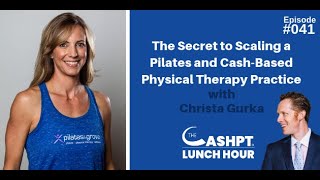
In this episode of the Cash PT Lunch Hour, host Aaron LeBauer interviews Krista (Christa) Gurka, a physical therapist and owner of Pilates in the Grove, a cash‑based PT and Pilates studio in Miami. Krista shares her journey from a high‑school volleyball injury that sparked her interest in PT, through PT school, hospital work, and outpatient orthopedics, to opening her first Pilates space adjacent to a private practice. She describes how the side‑hustle evolved into a full‑time cash‑based PT and Pilates business with two locations, 18 employees, and a teacher‑training program. The conversation covers the transition from independent contractors to employees, the creation of performance‑based bonuses, the importance of clear operating agreements in partnerships, challenges of past partnerships, and the role of systems, SOPs, and managers in scaling. Krista discusses her approach to incentives beyond money, the need for an exit strategy, ongoing personal and professional development (business coaching, reading "Traction"), and advice for aspiring cash‑PT owners: know your numbers, be objective, recognize that not everyone is cut out to be an owner, and focus on customer service. She also shares how she leverages her support system at home, uses social media (Instagram, website) for marketing, and emphasizes the integration of PT and Pilates for patient care.
Chapters
Hey, all, what's up? This is Aaron LeBauer with the Cash PT Lunch Hour. Welcome back to another episode. I have an awesome, awesome guest for you guys today. Krista Gurka. Did I get that right?
Yes, you got it right.
I got it all right. I didn't even practice. I don't even practice this stuff. So Krista and I have been connected through the Internet, basically Facebook, over the course of the last year or so. She's a physical therapist, Pilates instructor. Owns a Pilates studio down in Miami. In the Grove.
Yes, Pilates in the grove.
Yep, that's right. And I wanted to have her on the show today to talk to you guys about building an amazing business, a business that's not like a typical physical therapy business and being. And just being an entrepreneur. So, Krista, thank you so much for being here today.
Well, thank you. Thanks, Erin, for the opportunity. I look forward to kind of sharing some information and knowledge with your viewers.
Awesome. So one of the first things I want to know, and a lot of people want to know, I want to get kind of get to know you a little bit. So how did you get into being a physical therapist and when was that?
So let's see. My first feeling of when I want to become a physical therapist in high school. I had. I was a volleyball player in high school and I had career ending knee injury that had required several surgeries. I thought my physical therapist was the coolest person in the world. So he was awesome. And then from there, I just decided that's what I wanted to do. So going into college, I knew I wanted to be a physical therapist. And, you know, my desire of what I wanted to be as a physical therapist certainly changed over my training and education. I wanted to go into sports initially. I think, like a lot of people initially do, I thought I was going to work with, like, yeah, like, big sports team. And very soon, not that I didn't feel like that was a reality, I just kind of started to change. That's not really what I felt like I wanted my career to be like. So it changed. And I first came out of PT school, I went and worked in a rehab hospital actually in Las Vegas. Worked in Las Vegas for two years and then I moved back home to Miami and I started in outpatient orthopedics. And it just kind of, you know, spiraled from there.
Yeah. So did you. Did you know you were going to open a business when you were in PT school?
No, negative. Not only did I not know I was going to open a business and I know you guys talk about this a lot. They don't teach you at all about business in PT school. So I think I got one elective that talked about putting together a business plan and what fixed cost meant and what variable costs meant. It was kind of a rudimentary understanding of business that I think we just took because you had to take it. I certainly did not think I was going to be a business owner. Even in maybe even up to a year before I opened my own practice. It kind of organically just grew into this thing and little by little got bigger and bigger, bigger.
So yeah, right on.
Never did I want to be a business owner.
How long did you.
I thought I'd be a clinic director maybe, but never like branch out and opening my own thing.
Right, right. So what happened like did. Was, was it unsatisfying being an employee or was it something else? Like people started?
It actually started. So I worked in a private practice and it was a Pilates based private practice. So I'd gotten my Pilates certification and I was really loving the Pilates. I mean, it not only did I think Pilates made me, you know, a better, you know, fitness wise, but it made me a better physical therapist. It really did. Going through my Pilates training helped me have a better understanding of biomechanics and movement and it made me a better physical therapist. And so I was using it wonderfully. And then all of a sudden I started realizing when people were done with pt, we were sending them to all these local studios, you know, and I kind of thought that's where the first idea said, this is kind of silly. We have this built in clientele. I don't understand why we're sending them places that we don't have any control over. So I went to my boss, the owner, and I said, I really want to do this. I think it would be great for you. And he said, I 100% support you. I want to go in on it with you. And I had a patient of mine that actually wanted to go in with us at the time. So we opened literally like a 500 square foot space across the street from our clinic. They just had a couple reformers and the idea was just so people would go there when they were done with therapy and they could do group classes. And that's really how it's. That's how it started. And even at that point, I never thought that I would eventually take my physical therapy practice over there. I thought it would be kind of a side hustle. Like we talk, you know, you Guys talk about it all the time.
Yeah. So is that business that you just talked about starting, is that the same business that you have right now, are you doing?
No. So that business that I had, I. Eventually we. It grew. It grew tremendously. I started seeing cash paced physical therapy patients out of there because I was still working at the clinic. And eventually I got to the point that I was like, I think I can maybe do this on my. On my own. And I know this is a very common feeling. Right. You hear it in the Facebook feeds all the time of how. When do I know I can leave my job? When do I know I can move into this 100%? And the time finally came that I said, I think I can do this. And I mean, I'm very fortunate. I have a wonderfully supportive spouse at home that was, you know, he was on board with it and encouraged me to do it. And, you know, I was financially able. We planned and I was ready to go. And then I. After a couple years, partnership was more challenging than I expected, and we eventually parted ways and I now have. So then I opened my Pilates in the Grove. So the first one was called Pilates on the Beach. This one was called Pilates in the Grove. And then I eventually opened a second location. So which I am sole. I mean, I'm the sole owner, but we are a team of people that do this every day.
Yeah. That's awesome. So how. How many people do you have on staff? How many people, like, tell us a little about where your plies in the Grove. Like two locations. How many people you guys?
So we have 18 employees now. Last year, I just made the transition. Well, actually this year, beginning of 2018, I made the transition from independent contractors to employees for everyone. So it's been an interesting kind of transition. For the last six months. We have four administrators, 5 pts. 6 pts, including myself, and then the rest are Pilates instructors. And we have two locations. So we have there maybe about six or seven miles apart from each other, and we have a full service Pilates studio as well as a cache based physical therapy that run cohesively together.
That's great. Are you doing Pilates, like instructor training as well, or.
Yes. Yeah, we have a teacher training program too. So that kind of spiraled. It was really hard for me to find good instructors that felt that I felt were right for my brand and my company and my niche and my clientele. So I just decided I was gonna start one. So I actually went into partnership with someone who I knew owned a studio and we did it together because partnering is in that. Because it's a lot of work. A teacher training program. It's a lot of work. And so we did it together event. She sold her studio and came on board with us. So she's on board with us now. Pilates and Grove. She's one of my managers. And so we have the teacher training program we won, we run once a year. That's kind of like a tongue twister. One a year. And I've hired someone, one or two people from each program we've completed. So it's been great.
Are you from like New York or something like that? Where are you from?
I'm from upstate New York. Do I have a New York accent?
Well, you did the tongue twister thing and I was like, New York, upstate New York.
I'm from like Syracuse area. So up there. Yeah, I don't have a Latin accent. Some people would say I have the Miami accent. So hopefully I sound. I'm speaking proper English.
All English is proper. What's the Miami?
We have a little Miami slang down here that has a Latin accent sometimes even for people that speak perfect English.
That's awesome. That's awesome. So let's see. So how are you guys are seeing. So you got what percentage of your business is physical therapy versus Pilates? Like is it half and half or is it one more of the other?
So we actually have, I would say of the cash based physical therapy. So those are people that are in skilled PT is about 25% of the business. Those are evaluations, manual therapy, skilled PT. Then we have a segment where, you know, we have this post rehab, you know, working Pilates with a physical therapist. But we don't code that as physical therapy anymore. It's wellness, but it's still, you know, we call it neuromuscular retraining basically is what we do. So that portion of the business is another 25% and then our group class portion is about 50% of our business. So the group classes do a lot of. We had a lot of revenue from the group classes.
Yeah. So is your. I mean, is your incentive to grow the group class kind of thing and get people in from. Does PT bring people into the group classes or classes like themselves?
No, it's both. We have actually, it's a great little referral circle. So we get some people that come to us from physical therapy. Most of it is word of mouth referrals. So we do have some doctors that refer to us, but it's usually word of mouth. People say, you have to go see Krista and her team. They're gonna get you better. Then from there, once we introduce them to Pilates and positive movement, we'll refer them May. This is something you should continue to do once you're done, either in the private session or in a group class. And then sometimes we get people that come in for fitness, right? Maybe somebody told them, oh, Pilates or Pilates. Somebody told me Pilates is going to be good for my back. So they come in for Pilates and we recommend. We notice you haven't been able to kneel on that knee. Is it bothering you? Would you like to have a physical therapy session? And then they come in for physical therapy. So we are actually right now in the process of really trying to remarket our physical therapy program and really push. We're kind of updating our website now to have. Because when I look at my website it looks very Pilates based and so I'm trying to kind of incorporate now a little bit more. They're going to be the same entity. We're going to work cohesively, but a little bit more. It kind of seems to me that when I go to my website, it's almost like physical therapy is like an afterthought. So I want to make sure people know that that's one of the main things we do here as well in conjunction with the Pilates with a wellness portion. So.
Yeah. Are you guys. How many physical therapists again?
You guys have six, including myself.
Dang, that's awesome. I mean, y' all are busy. Sounds like.
And we're. Yeah, we're all busy. So we have. Not everyone works full time. So I would say if you combined everyone's schedule, we probably have three and a half like full time physical therapists. Well, it's great. And all my pts are Pilates instructors. So some of them teach classes. That's our niche, kind of that you can come to our classes and you will have a physical therapist that's going to teach this group class. So, you know, they're going to watch out for your form. They're going to. They'll know your injury and they'll understand what spinal stenosis means. And we also train all of our instructors in that capacity as well. We have team trainings where we talk about this is what spinal stenosis is, this is what you should avoid. This is what you want to look for. This is the movement you want to kind of modify. So everyone is kind of on the same page.
That's great. I think, I think that's a. I mean, it's a huge value add. And the. Where I read you CrossFit here in Greensboro is owned by a guy, John Davidson. He's a pt, OT and athletic trainer. Yeah, he does for his other coaches. And it's just an environment where people go and they know they're going to be looked after, you know, especially they've had before. And I think that, I don't know, this was an original thought. I'm pretty sure I read this somewhere that as physical therapists, we need to be closer to fitness and even fitness, because that's where people get in, not where people getting injured, but people who are injured are going through massage therapists and personal trainers and Pilates instructors first because it's easier to get in to see it.
Sure, yeah. Maybe they went to a physical therapist that maybe it made them worse. Not that the physical therapist per se made them worse, but maybe that's their perception of what the reality is. And if you really understand customer or any interpersonal relationship, it's whatever that person believes is their reality is their reality. It happened or not that way. So, you know, we get a lot of people, we specialize in back and neck, right. So we get a lot. I get a lot of spinal injuries that are so afraid. They've been to so many people. They've tried trainers, they've tried this, and everything seems to make them worse. Right. So I want my patients to. I'm going to listen to them. I am going to do what I can to make them better actively. I'm not putting, you know, half pack and e stim and leaving them for 45 minutes. And the truth is, if I can't, if this is outside of my skill set, I will refer them to somebody who I feel is going to be better suited to do that. And I just did that this morning. I had a very complicated case. She had seen five other physical therapists. She's been to five different doctors. I saw her for six sessions and she wasn't getting better. And I have consulted with a couple colleagues and I just called them and I said, I would really like this person to come see you. I think that you may have a better understanding of what's going on. And I think as professionals, it's okay to do that. You know, it's not a territory, you know, excuse my language, but we're not a pissing contest here. We're here to help the client. Right. So we're here to help the patients get better. And I think it actually makes you Know, they say as business owners too, like the ability to say that you made a mistake or you don't know the answer is actually a very redeeming trait. And quality.
Right, right. And I mean, it takes. You had to drop your ego off at the door and to be able to say, look, I can't help you.
You gotta drop your ego. Yeah, you gotta drop your ego. And you know what, you're actually helping them by doing that, you know, so. And they'll appreciate that in the future. And then they'll refer somebody else, oh, you should go see this person. She's really great, or he's really great. And they're not gonna treat you if they don't think they're the right person for you. And that's a value too.
Yeah, that's awesome. So let me ask you, when you went from. When did you go from just yourself to hiring other people to work for you?
So I always started with other people. So one of my reasons for that was, you know, when I opened my business, I had children already. You know, I knew that I did not want to be a slave to my business. And I also knew that I would not be okay being open for five hours a day.
Right.
It's not in my nature. So I was like, I'm going to have people on staff because I just can't do it that way. But I did do a lot of things by myself. I was my front desk coordinator initially. I cleaned the bathrooms, I was my bookkeeper, I did my own payroll, I taught the majority of classes, but I always had two or three people that, you know, worked a little bit at a time. For me, my first hiring of an additional full time support staff was my front desk person. And, you know, I hear a lot from people. I don't know if I can afford that fee or, you know, that that cost right now. It was the best investment I ever made was to hire a qualified person. That because my feeling was, you know, if they could sell one package or get one evaluation in a couple evaluations in a week, they paid for themselves.
Right.
I can't be at the desk all the time to answer the phone, so. But eventually it grew. It was always my plan to have a team because I don't think. And it was once we started getting the ball rolling, I wanted the business to scale and you can't scale with one person. So that was always part of my plan. Once it started rolling, it wasn't necessarily my plan. When I first opened that 500 square space, I didn't think that I would have 2, 1600 square spaces eventually. So that's kind of my plan. And you know, I think we reevaluate yearly what my, you know, my goals are.
Yeah, what's your, what's your five and ten year plan from today?
So I'm in the process of trying to figure that out right now. So where I'm in right now, I could tell you what my one to three year plan is. So, you know, people I think sometimes say, you know, you got it must be great. But you know, they say like, you know, bigger the staff, more problems kind of thing, it's just more people to manage and things start to filter through the cracks. So I'm in a transition period right now where I'm trying to set as many systems in place as possible, getting them out of my head into handbook. So every time I see do something twice, I'm writing it down. Every time my office manager does something twice, we're writing it down. What I say to my instructors more than once about teaching classes or how to do an eval, I'm writing it down so that I can decide what I really want my five year plan to be. Do I want to open another location? Maybe I couldn't do it right now, I could tell you that. But it's a possibility and that's what I'm working towards so that I can decide. Is this something that maybe we want to franchise or license? I have to have the systems for that. Is it something I want to sell? Eventually I have to have the systems for that. Is it something we want to grow? So that's where we're at right now.
That's awesome. So where'd you come up with that initially? Like, where does this call come from? Did it just percolate up, you know, into your head? Or did you like see someone who had done this work with a coach, mentor, somebody that said, you know, like, where am I?
Where I'm going in the future?
Yeah, like, where are these? Like, like I know you kind of fell into the business but like where did, like you've, you just dropped a bunch of knowledge that's taken people dozens of years to learn. And some people are never going to understand, like, where did you, where'd you learn all this?
Where that happened. So, you know, as I one of the things, and you know, I do a couple, I've just started doing some speaking because I love teaching people and one of the things I talk about when I was first in business and I don't know if you felt like this. I'm not a business major. I didn't go to business school. I didn't take a single business course. When I first started in business, I thought if everyone put the same amount of money in, you were equal partners. That's what I thought. I had no idea what an operating agreement was. So I learned little by little. I started reading books, how you become a good boss. I started reading, you know, what does how to properly goal set and all that kind of stuff. And so I started. Eventually started working with a business coach. And initially I thought, well, does a business coach make you mean that you don't know what you're doing? And are people gonna think I don't know what I'm doing? You know, this whole, like, imposter syndrome thing that you go in your head over and over. And he said to me, what's your exit strategy? I said, exit strategy? What do you mean? I don't. I need an exit strategy. I'm not, like, looking again. He's like, you should have an exit strategy. And so we started thinking about what my exit strategy was going to be, and I couldn't verbalize to him what that was. I didn't know. And so we started, little by little, putting that into place. And when I realized, you know, I thought my first one and, like, the first one on my own was great. I was there all the time. And I kind of ingrained the culture as it started to grow. When I opened my second one, my mistake was kind of. I thought it would just be the same, but it wasn't. So I would say that that is when people ask me, like, what's, you know, your best advice to give to people, like, system. Systemize your stuff. Systemize your stuff in order to grow. It's really hard to work backwards, which is what kind of had a kind of backtrack. You know, the train was leaving the station and I was grabbing. I was holding on at the back, like, please. So. And, you know, in that it wasn't fair to the staff. I didn't think I had great. I mean, I had great structure. Everyone was happy. Everyone was making money. We were all good. We were team. Everything was great. But I didn't have anything really solid for them to hold to. And that, you know, that was my. That was on me. So I'm deciding what my exit strategy is going to be.
Cool. But you don't know yet.
I don't know yet. You know, I think about it, and I think, would I want to sell? Is this business Sellable? Do I want a franchise? Do I want a license? Do I just want to open up another one or two? Or maybe one in another state? I'm not sure yet.
Yeah, that's awesome. Let me ask you this. So you've talked about how you're moving everyone from being an independent contractor to employee.
Like, yeah.
Why? Why are you doing that?
Why did I do that?
Well, like, just tell. I want to know. Like, I know my reasons why, but, like, I want to know your reasons why. Why has that been more beneficial to you as a business owner or in business than independent contractors? What are the pitfalls of both?
So, you know, it took me a while to get to this point, and in working with my business coach and even, you know, my accountant, every year would be like, you're kind of skirting the line a little bit now. Like, you're getting bigger. There are people that are working for you full time, you know, and so it just as it was growing, I never really thought about it. I was like, you know, they can come and go as they please. And so what was happening, though, was so the true meaning of an independent contractor, Right. Which I think is important for people. Understand you have no control over that. Okay. That's a true independent contract. Technically, a true independent contractor is even someone that's paying you, like, renting space from you. They're going in, doing their job, leaving, paying you rent. Right. There's no kind of negotiation. Or in our world of like, Pilates, per se, you know, maybe you contract them to teach a class. They come in, they teach the class, they leave, they want to take a month off. They're supposed to be able to do it right. That stopped working for me as a brand. I couldn't. I wasn't supposed to be telling them even what to do. I wasn't supposed to be kind of guiding them as to what worked in a class, what they could improve on, how to improve themselves. I wasn't supposed to be sending them to continuing education, and it just stopped working for my company. I mean, ultimately, I will say that I did. Unfortunately, what really made me come to a screeching halt was I unfortunately had a staff member that was trying to rile up the other team members to come together and possibly bring a lawsuit. And I'll be very honest about it. And it made me kind of wake up to the fact that, like, you know, everything's great until it's not right, you know, and so it's important that you follow the letter of the law. And if you're doing stuff that is, you know, that you're just upfront and transparent. You get the right documents and contracts in place and, you know, and I really want to grow a brand. I do. I want to grow a brand and I want to have consistency. And while I want everyone to be able to take vacation, I just can't have four people at the same time be like, yeah, I'm off for a month. See you later. I just can't do it. It's not what I want for my business. So it's worked out. I mean, we're still navigating kind of the transition for people. Most of these people were not used to being employees. So it's been a little, a bit of a transition. But everyone, I thought somebody might leave and nobody did. Everyone stayed. Oh, that's good. So it's good. We started filtering performance bonuses, like, so that's been great. We do company wide bonuses every month. So basically I set a goal for the month and if everybody, if we meet that goal, everybody in the company, from the administrators to the instructors makes, you know, they get a stipend like one or two dollars per hour that they worked for the month. So, you know, it's nice. We come together as a, as a team that way.
Oh, that's awesome. Is it like, do you have like a formula for that or is it like administrative gets this and.
No, they just. Basically, when we do our monthly goals, everyone has their own individual metrics that they're trying to achieve their own individual kind of goals. Then we have a company goal. And so one month it might be revenue, maybe. I say we're going to, as a company, I want to hit this much in revenue for the month of June. It happens to be between private Pilates sessions and physical therapy sessions. So each location has its number. If both locations meet that number, that means every single person in the company will make a dollar more an hour for every hour they work for the entire month. So that means my admin team that worked, you know, 160 hours will get 160 extra dollars, you know, for the month. And that's how we do it. So we change it. I basically set the metric for whatever I feel the company needs that month. Like, do we need to build our class? Do we need to build our PTE evals this month? And it's a teamwork because the front desk is in charge of scheduling, right? So they, they're responsible for making sure that people cancel, that we get them back in. And then the staff members are also Responsible. So if someone's like, I'm gonna be out next week, they would say, how about we see three times this week then since you're gonna miss your sessions next week. So it just makes everyone accountable to try to stay as consistent as possible.
So are your. Is pretty much everyone hourly or you got anyone on salary?
So the only person I have on salary is my office manager, so everyone else is hourly.
And yeah, you incentivize the office manager and yourself differently because you're salary, you know,
I mean, so my, my incentive, to be perfectly honest, is just for everyone to do. I like when, when I can bonus everybody.
Yeah, right. Even like, I mean, you, it's like, you know, you're getting incentive as a business owner, but it's like as the salaried employee of your employer or if you're not, but you know, like, how are you? Like, how are. Like, you know, because yes, you got employees, but I don't have, I don't have. I've got salaried physical therapists. So I'm looking to see like, well, how do you, how do you. Are you incentivizing your salaried people in a way that is consistent with the way you're doing it with the hourly people?
So the way. So for our salaried people. So for example, my salaried office manager, technically she works 40 hours a week, right? So she'd be 160 hours for the month. So she would also get $160.
Right.
Bonus. She will also sometimes get. So I will say if your whole team does X, then your bonus on top of this will be a flat amount. So now she's responsible for making sure that her team underneath her, which are mostly the administrators, they follow through on, you know, what they're supposed to do. And then she could then earn an additional, you know, incentive. Okay, cool. But you know, the other, the thing, one thing I want to say that's important about incentives is like, not everyone is motivated by money, right? So I think that that's an important thing for people to understand. And I used to think that that's everyone was motivated. Well, every year at the end of the year, I hear everyone ask me for a raise. So I just assumed everyone was motivated by money, but not everyone is. We would do these incentives all the time about, oh, and you'll get $100 if you do this, you'll get $50. And it didn't really speak to my team. They didn't really seem to like, care that much about it. So not everyone really is incentivized by money. And I think if you have a large team, it's important to see what incentivizes that person. Maybe it's just. Well, I think sometimes maybe it's just recognition, like saying, you did a great job today, like that. You know, I'm really impressed with. You got this many evals in this week. Your plan of cares or, you know, this. You have this many reviews, your clients and patients are really liking you. I'm really impressed with how you've grown. Your. You know, some people. That's what some people are motivated by. Some people might be motivated by. You know, I have one of my office, you know, administrator. She's an artist. And so one day I just came in with like an art set, and I gave her a doodle kit and pens and pencils, and she thought that that was the nicest thing in the world. I think that was worth more to her than, like, you know, a hundred dollars. So I think sometimes personal things are motivated, motivating. You know, if somebody has a family. Right. Maybe a day off. I did. I did one time. I. We were trying to get more reviews, and I said I didn't tell them what the thing was initially, what the incentive was, but the person that got the most reviews got an extra paid day off, and they were all stoked about that. So that was kind of, you know, I think it's important that as a boss, it's not you. Right. So it's not what would motivate you and whatever is going to motivate that staff member. Right?
No, that's a great. That's a great point. Let me ask you, I want to go back as well, because you said you were in a partnership before and that didn't work out. I've been in a partnership that didn't work out, and I'm also in one that does. But that partner happens to also be my wife. We're in business together, which brings a lot of its own issues, I'm sure.
I asked my husband to come on board with me every day, and he's like, not in a hundred thousand years when I do that.
Yeah. You know, and I'm at this point in my career where I'm like, okay, I'm not going to partner with anyone because, you know, I've had one, you know, that didn't work out the way I expected. And I'm just like, I'm more of a do it myself person work for me. Can you just, like, share, like, what were Some of the things that you know, and you don't have to go into detail, but what were some of the things that came up that broke down the relationship that made it not viable anymore? And what would be some of your recommendations? You know, it's like how to, you know, how do you solve that, how
to do it in the, in the future, you know, and I think I, you know, I think you're right. I think there's many partnerships that do work and they work great, you know, and I think there's other partnerships that fall through the cracks. So the one important thing I think that's super important to know. Anytime you go into partnership with anybody for I don't care if the business is a $5,000, business is a 2,000, you should have some legal documents, some operating agreement that stipulates what happens if there is a breakup. You know, everyone's like, oh, we're all friends, we're going to do it together. Well, you're friends until you're not friends, right? So the last partnership I would say is, I mean I can speak from my perspective, right? So from my perspective I was the clinician, right? So I was the, you know, I was a physical therapist. I was applies instructor. My other partner was not a pillais instructor. And my former boss, he from the get go said he wanted to be hands off, he wanted to put some money in, he was happy. He gave, you know, his buy in was basically some equipment but he was always going to be hands off and he would share in the profits. So that wasn't really an issue. You know, I think what, in most partnerships people break down because they think they're doing all the work and then they're sharing dividends equally. And that probably should have been ironed out a little bit better at the beginning. I started to feel like I was putting a lot more in than, you know, other people and we were sharing everything equally. The truth is, I think even though it's funny, like I never thought I'd be a business owner, I think my entrepreneurial spirit, I'm just wired to not settle and stop. I'm just wired that way. So the truth is some of the breakup might have just been on me. I don't think I play well with others. I think that was one of the kindergarten checkoffs when I was like younger. Does not play well with others. I'm like you. I agree. I like things the way that I like them and I want things the way that I want them done. I have a shirt that actually says as long as everything goes exactly the way I want it, I'm totally flexible. It has to be, like, my way. So, you know, eventually it became. What was really sad was eventually it just became very toxic. When we were together in the office, I wouldn't speak. We wouldn't speak to each other, and the staff started feeling. Started affecting my personal life. And I was like, you know what? I did it. I don't work this hard to be this miserable. And I thought that it was, you know, I thought that it was bad for the company. And I finally said, you know, I want out. It cost me a lot to get out because our operating agreement, we didn't. It didn't allow me to be out at that point. But, you know, my. And we had to get attorneys involved. And it was, you know, it was. But my attorney kept telling me, listen, this is like a divorce. But here's what I'm going to tell you. Do you want to be right or do you want to be free? Because three years from now, and he was so right. I mean, three years after, I was like, I, you know, gained. I had grown like 70% over three years. And I don't think twice about it now, but he was like, if you keep pounding your head against the wall saying this isn't right, it's going to cost you a lot of money and a lot of headache. So I think with partnerships, if you want it, like, advice there has. You both have to be equally understanding of what your expectations are, and you have to need what the other person has. I guess so, you know, if someone's going to be an investor and they're truly going to be a silent partner, and you're good with that, maybe that'll work. If you're both going to be putting work in. I think sometimes people start to feel like, well, I'm not putting in. They're not putting in as much work as I am. And again, it's all perception, right. Whatever your. You feel your reality is. So. Yeah, but it's tough. And people have asked me before, do you want to be partner? And I'm like, it's not you, it's me. Like, I just know myself, and I know that I don't really work well with others. Yeah, I'm trying to. I'm trying to work on that. I'm trying to improve that.
I know. I. It's like, like, yeah, but my way is right. We're gonna do it this way, even
though we're gonna do it this. And I try. That's A good. Okay, that's good thought. But this is how we're gonna do it anyways, so. It's tough. Partnerships are hard, I think, you know.
Yeah. Mine broke down more because we had an idea and we were on board, but we never ironed out the details of how we were gonna pay each other.
Yeah.
Like, early on, even though we had, like, an operating agreement, it didn't have the details of how we were gonna be compensated.
Yeah.
And once, like, I was like, let's have this conversation. And it's like over three or four months or five months. I was like, we gotta have this conversation. Here's my idea. And it finally came down to that. And we didn't see eye to eye. Yeah. And I was like, okay, I know we've put a ton of time in, but this other thing is. Needs more of my attention. And we don't see eye to eye on this. And I, you know, and there was just, like. We didn't. Like, we had a similar plan, but how it was going to run, we weren't eye to eye on it. And it just was like, I gotta get out.
I mean, it's probably better that you got out before, you know, like, sooner than later, because I think that's important. I think people sometimes are not comfortable bringing things to the table. Even if, say, you're going in for an interview for a job. Right. You know, some teams, people. I. People all the time, they're like, we get through the whole interview. It's great. And they're like, any questions you have. Well, what about. I'm like, do you want to ask about salary? Well, I mean, I don't. I'm like, you should ask about salary. I mean, you should ask about salary. It's. It's a very valid question. I may say to you, the next interview is where we're going to talk about salary. But never be afraid to ask. Like, you need to put these things on the table. Important. So. And it's important to get things, you know, out so they don't. When they start to fester is when problems.
Right.
You know, get worse. So.
Yeah, yeah. No, I get it. Why do you think that is with people?
You know, I really think. I mean, I truly think it's because you, you know, you start playing these things over and over and over in your head, you know, And, I mean, it's a whole other subject talking about, like, mental health and situation. But it's very helpful to just. Just get it out. Whether it's putting it on a piece of Paper or speaking with your staff. You know, I encourage them, even to me, because I know my head. I'm like a chicken with my head cut off sometimes. And even if they have to say to me, krista, you think you told me that, but you didn't tell me that, or you're being unclear when you explain this to me, you need to tell me that, okay? So that I can make it clear or I can learn myself how to make it more clear when I train the next person, you know?
Yes.
It makes perfect sense in my head.
Yeah. I think people should read my mind, you know?
Well, I say the same thing. I say the same thing. I, when I try to train, I'm like, you mean you can't just tell that that's exactly what I want you to do? Right? So. Yeah. And my, my, my admin people are great. And they're so, they are so phenomenal. They put up with a lot, you know, from me. And I'm like, didn't I tell you that? They're like, no, you didn't. But I figured out that's what you meant when you said half a sentence. So we got it done.
Right.
And that's where systems come into place. This is why systems come into place. Like me as a business owner with 17 employees, I have to put some people between me and those employees. I have 17 people. If 17 people come to me with like one little issue every day, I'm never gonna get anything done. Yeah, right. And I don't want to be half ass in front of my employees. You know, I don't want to seem like I'm ignoring them. So I have set inside. So manager. So now there's managers that they can go to and then they, then those managers can come to me if, you know, if necessary.
Yeah.
So it's systems.
That's awesome. So you've got 17 employees and you're cash practice owner. No insurance involved.
No insurance.
That's awesome. I think just right there, that's pretty dope, you know?
Yeah. You know, I'm kind of impressed. I didn't think that this would be where we, where we would end up. And I'm, you know, I'm proud of my team. They work really hard and, you know, and again, I say this, you're in business with your wife. But I do say this. I have a support system at home that is 100% on board with what I'm doing and what I'm growing. And I think it would be very challenging to do this without that support from Home. My husband is my number one fan and I really appreciate, with the kids at home and we're a team. So it's important, I think, that you have that support system.
When you have a big business decision to make, do you run it by your husband? I mean, is that like it is.
It is. I run it by my husband more to make sure that I'm not making a decision out of emotion. Because I think sometimes as a business owner, especially when you start that business, right, you started it. It's your baby. You can become very emotionally tied to the business. So sometimes you may be making decisions that are very emotionally based. And I think as physical therapists and Pilates instructors, we are certainly very feeling based people. Right. You know, so it's in our nature. It's probably what makes us successful as therapists. So I will run it by him sometimes to just say, what do you think about this? He doesn't necessarily make my ultimate decision, but he will also be, you know, he's like, you're being. I don't think you're being, you know, I don't think you're thinking of this objectively. And if that's the case, then I will run it. Then I'll start ironing it out more and trying to take the emotion out of it.
Yeah. Is it. Is it. Do you make the decision in your mind and then you run it by him to make sure it's like, not super crazy sometimes.
I mean, there are some decisions that I'm like, I know what I'm gonna do. Yeah. You know, there are other decisions. You know, sometimes if it's letting somebody go. Yeah, that's not the right, you know, not, is it the right person, but the wrong seat. Is it the right seat but the wrong person? Those are hard decisions to do, you know, and it's tough. So sometimes in those situations, I will say, what do you think? Or how do you think I should approach this? Does this sound. How does this sound? If you heard this, you know, how would this sound? So he's kind of my sounding board with all of that, which is very helpful.
Yeah. That's awesome. Yeah, that's amazing. What are you doing right now to, like, reinvest, invest in yourself and in your business? Like, how. I know you said you've got a business coach and that's probably why, you know, like, what are you doing? Like, besides that? Like, what is that and what's involved with that? What else are you doing to reinvest in your business and yourself?
So I'm Always trying to make myself better. I'm like an eternal student. I'm like an education junkie. And I go back and forth because I love being a business owner, but I also love being a practitioner. I love being a physical therapist. So I go back and forth with trying to be a better therapist and hone my skill set better. So I'm always taking continuing education courses. And then I read a lot of business books and I try to go to some business seminars to. I personally, to be perfectly honest, the business seminars, to me, I prefer the whole one on one thing because I again, I'm busy and I want what I want when I want it. I don't listen. I don't need to listen to your spiel about like, this is what I want to know. I want to know. So I would rather say to someone, hey, can I take a coaching session with you? Or can I come meet with you for a weekend, one on one, and talk to you specifically about my situation in my business? So I do a lot. I do, you know, a lot of that. I read a lot. Like right now I'm reading Traction. I don't know if you've read the book Traction. So it talks about how to, like, putting managers in place, how to create a hierarchy in your, in your system so that it can, it can grow and it can run and I can stop doing things like opening the mail. So I don't need to be opening the mail and ordering inventory and you know, doing some of that stuff. But it's so hard. It's so hard to step back. You know, it's hard, but it has to be done if you want to scale.
Right, right.
Absolutely.
That's awesome. What are some of the other things that you think are the key? And what I'm trying to uncover is what are the key characteristics to people being successful? And so what do you think are some of the characteristics or maybe it's characteristics that you have or things that you've learned how to do that have significantly impacted your success.
So I think I can speak for myself. Right. And again, this may not be what makes everyone successful. I think it what makes me successful. I will outwork anybody. So I just have, you know, my mom gave me a really great work ethic. She was single mom, raised three kids by her, you know, on her own and didn't go to college. So, you know, and I, when I watched her kind of when we were growing up, I mean, we were friends fine. It wasn't like, you know, we weren't living in Poverty. But she had to work really hard. And I remember when we were sick and she couldn't take time off work, it was very stressful to her. And I said, I will never, that will never be me. I'm going to do better by this. And so I just work really hard and I, the other, you know, I want to make it right for the customer. So I always try to put myself in a customer's space. So I think our customer service here is top notch. And so that has been from the beginning. Treat your customer the way that you would treat your family or the way that you would want someone to treat your grandmother. So our customer service is top notch. And I think that that's what keeps people coming back in. And it's not always so much what you do, it's sometimes how you're doing it. And so that's been really good for that. And I just think being open to learning new things and also being open, say, I tried that, that didn't work. But that doesn't mean I'm a failure. I'm just gonna now I learned from that. I'm gonna try something else. You know, being open to, you know, maybe going in a different direction. If that's what you need to do to grow your business.
Yeah, that's awesome. What would you say to someone who's just getting started, like, what do they need to look out for? What's the number one piece of advice you would have?
Well, here's, you know, here's one thing that I would, that I would definitely say. Not everyone is meant to be an owner.
Yes.
Okay. So not everyone is meant to be an owner. And don't think that because you're not cut out to be an owner does not mean you cannot live in this wonderful world of cash based physical therapy. Right. You can be a physical therapist in a cash based practice. And you can say, you know, when people ask me, like, what do you do? I'm like, I'm living the dream. I see people how I want to see people. I treat them how I want to see treat them. And I have staff members that they don't want to be owners, but they are so happy working in this environment. Right. So one thing I would say is not everyone is cut from the cloth of being an owner. So. But you can still have this wonderful world of freedom and doing what we went to school to do, which is to help people without, you know, not under the guise of insurance plans. If that's what you want. If that's what you want. The other thing I would say is know your numbers, right? You got to know your numbers and you just have, you know, you want to be objective about decisions that you make rather than emotional. And it's hard to do that because there are babies. Right? But you just have to be objective as you know what decisions you have to make. And whatever it is, if somebody, someone, you know, one of the things, when I was first starting out and I was reading books, they're all about these like $30 million businesses. I was like, how does that pertain to me? Right? Whatever you want your business to be, that's what it should be. If you want to be a sole practitioner and work six hours a day and that's what you want, then you can be successful at doing that. And you should not think any less of yourself than someone who has two locations, 20, 17 employees, right? If you want to have 10 locations and 100 employees, then that is achievable too, right? Whatever you want to set out for yourself, you can do. Put some numbers on paper, figure out how much you need to live off of. Right. And then decide step by step. And it doesn't have to happen tomorrow or next month. This could be a two year plan that you're working towards. So that would be my advice.
That's awesome. That's really great. And with that, you know, how do we find out about you? Like, how do we find you online? Like, are you on Instagram, Facebook?
So I'm on Instagram. So the company's handle is elatesinthegrove. My personal handle is Hrista Gurka and that's C H R I S T A G U R K A. So everyone pronounces it right. But then when I asked them to spell it, that can be a whole different situation. So. And then we have our website, pilates in the grove.com for those people that are interested in learning a little bit more about Pilates. There's a lot of videos on there and tutorials and, you know, it's been a really phenomenal adjunct to my physical therapy practice. And it's a great, like, you guys talk about additional cash flow, you know, other sorts of revenue and I don't have to, I don't have to answer to anyone when it comes to that. Right. So there's no licensing going on. There's none of that going on. What else? I think those are the. Pretty much the two places I am on Twitter. I'm not so great on Twitter, but. And LinkedIn. Twitter's dying. It's too hard. I talk too much. I can't keep it in those, like, little characters. I can't be limited in my characters.
Yeah, well, at least here you're not. We only stayed about an hour, so. Krista, thank you so much for.
Thank you. Thank you. I really hope that it's been, you know, I hope somebody comes away with some nugget of information about this, and, you know, I just. I want people to kind of know that whatever you want to do in your life, if, you know, you set some goals for yourself and you can achieve them, whatever that may be, you know? And I think being a, you know, hone your skills is. If I could, you know, if I had somebody come of school to me and say, I want to start a cash PT practice, I'd be like, I'm super stoked for you. I think that's awesome. Make sure you have good skills, right? Like, hone those skills. And I'm a manual therapist because I can take these babies anywhere with me and they don't cost me any money. Right? So. But find a niche, like, do something and decide what you want to do and just do that really, really well, and people will find you. They will find you, and you can live a lifelong happiness of living the dream like the rest of us.
Yeah, that's right. All right. Thank you so much.
Thanks, Aaron. I really appreciate it.
More from Aaron


My clinic has NEVER been in-network with insurance companies—and it NEVER will be! #cashpt








