What's Working in my Clinic with my Customer Care Specialist, Amber Harris | CashPT Lunch Hour #52
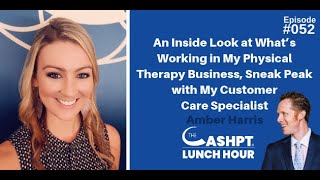
Amber Harris, Customer Care Specialist at LeBauer Physical Therapy, explains how she converts prospects into paying patients by asking targeted questions, tying treatment to personal goals, and handling cost objections. She emphasizes active listening, transparency, and small touches that build trust in a cash-based clinic.
Chapters
Foreign. Welcome to the cash P2 lunch hour. This is Aaron LeBauer your host and today I have Amber Harris, who's my amazing customer, customer care specialist here at Labourer Physical Therapy. And I wanted to have her in on the podcast to talk about some of the things that we're doing in our business, some of the things that are working, some things that maybe aren't, and her experience working with us and what she's learned and some insights that she has on running, running the show next door. So Amber, thanks for being here.
Yeah, my pleasure.
Is this your first podcast?
It is.
Awesome.
This is the very first.
Okay, great. So just let's start with a little bit about who you are and like what do you like to do and why. Why are you sitting here today?
Why are you sitting here today?
Wow, you know, how did you get here? So just give a little bit of background, you know, like, you know, like I know you've been working here for a few months, but you know, what is it like, what do you like to do? How'd you get to where you are, you know? Can you give us a short five minute version?
Sure. Short five minute version. We'll try our best, but I'm a North Carolina native and I went to UNC Greensboro and kind of traveled a little bit post college and traveled around the Midwest and wound up back here in Greensboro. And I've done many different positions but ultimately wanted to find my way back to working with people, serving people, helping others, and then found Aaron's job posting for the company, Customer care specialist, administrative assistant, and applied for it. And that is how I kind of wound up here. And I'm loving it so far and it's just kind of implemented everything that I love, which is organization and project management and helping people and serving others.
Awesome. What was your work trajectory? What were some of the things that you were doing or looking for in a job that maybe you hadn't found yet or maybe like led you into finding us?
Great question. I hadn't found the right balance to. I didn't feel like I was making a difference or really interacting with the right clientele for me, a job. I need to feel like I'm making a difference, that I'm reaching out to people, talking to people. I mean that's just truly what I enjoy and I like hearing about others lives and what they're doing. And so that is really what drew me to this, was the description of the job because I felt like I would be able to still interact with people but have the ability to organize and project, manage and just kind of manage the clinic and just kind of, you know, be independent yet still have like human interaction on a day to day basis?
Yeah. Awesome. And then was there anything particular, like when you read the job description or saw our ad that you were like, that's it? That's for me?
Yes. I remember seeing the job description and then you added a video that included yourself and it was a tour of the clinic. And I just thought that that was extremely different. It was like I got to see a face, not just a name. And so that really drew me in. I mean, the job description immediately drew me in, but then when you click the link, it was to the video. And that immediately I was just like, okay, I like this. This has a good feel.
Cool. Awesome. Is there something about what you've, what you've learned in our business, like working for us or working with us that you didn't think you were gonna learn or didn't you realize, like, was important? Is there something in this first few months you're like, I didn't, like, I didn't realize that this is important or that this, that this was possible or. I don't know. Is there something that surprised you about?
Sure. I mean, there's a lot of things. I mean, initially, I've never had physical therapy myself until now. I've gotten some now and it's great. But I didn't know a lot about it, so I had to research that side of it to even know if I would be comfortable in this kind of setting because I knew that it's something that I would have to talk about. So I've learned a lot about physical therapy, but also my position in talking with clients and raising the rates and stuff. I was just surprised that people are so willing to invest in their health, but they are. And once you can just start talking to them about that and talk about how it's tied to their day to day lives, their activities, their families, what they love, I was just surprised. It just makes my job easier because I enjoy talking to the people. And so when I just start getting them on, talking about their lives, you know, when I kind of close it or at the end when I just start talking about, you know, if they start questioning insurance or if they start questioning cost, they don't really see dollar signs because they see the value in it. And that just makes my job easy. So that is something that I didn't know in terms of sales, I guess, in this aspect of it.
Yeah, yeah. Did you realize the job was going to be as much about sales as it is.
No, but it's almost like a team effort, because I know that yourself and Dr. Shelton, you guys kind of touch on it in the room during, like, the discoveries or the evaluation. But sometimes, you know, depending on the patient, it's lightly touched on and then they come out to me. Or if it's more on the phone side of it, then it is kind of all me. So it kind of. It's different because it depends on who's starting it and who's closing it. But I don't think I knew how involved the sales part would be. But it's something that I'm definitely growing in, learning in, and I like it.
That's awesome. So before you worked for us, what did you think if someone said, amber, what's physical therapy? What would you have told them?
I think just the run of the mill idea of physical therapy being something that athletes go to when they get injured.
And now that you've worked for us for. How has it been? Five months?
Yeah, it's been a couple months. It's been since. Yeah.
Wow.
Since July.
Since July. Okay, so now, like, now that you've worked with us for, it seems like it's been a lot longer. I know, which is great. That's a good sign. What would you tell someone if they said, well, what do you guys do? Or, what's physical therapy? How would you explain it now?
Sure, let's see. The way I would explain it to them. If people ask me what physical therapy is, is. Well, mainly for us, the way I explain it for patients from our clinic is that we take a holistic approach on how to use, like, our bodies and exercises and techniques to, you know, to heal ourselves without pain medications, injections, or surgery. And that the body is so resilient that once you can figure out, you know, the source or the root of the symptom of the pain, you know, and tie it into strengthening and getting balance and stability, you know, that the body can really heal itself. So for me, physical therapy is investing in yourself and taking care of yourself so you can live the best life.
Why is that important?
Why is that important?
I mean, I want to know from your. Like, I know from my perspective why it's important, but I want to know, like, from your perspective as someone who's, like, only a few months into really this industry, why is it important for people or for you?
Well, for me, just so I'm not living. I mean, physical therapy is just important in general. So you can go about your day, day to day stuff. I mean, I've had Both you and Dr. Shelton work on me just this week. I definitely did something to my back and the way that Dr. Shelton expl. Explained it and he made a difference within like one session because it wasn't that extreme. But I definitely did something when I was working out and I didn't activate it and I overdid it. But for me, especially for this week, it's just so I'm not living in pain and so it's not a distraction when I'm at work. So I'm not constantly thinking like, that's an annoying nagging pain. And my back right now, you know, it's just so I can enjoy day to day life, I can enjoy my activities and I can do work successfully without thinking about, oh, am I going to be in pain tomorrow?
Yeah. Yeah. What is. So tell me a little bit about. One of the things I want to share on the show is kind of the process of how we are. We're getting new patients because a lot of people like, well, I need new patients. And so what I want to talk about, like our process of getting new patients. But really you're not really involved in our process of getting new patients. You're involved in a process of taking the people who call us and converting them into patients. Yeah, prospects. We're taking prospects, we're taking suspects. I turn them into prospects and you turn them into customers or you and Dr. Shelton and a little bit of me terminating customers.
Right.
So can you just walk us through kind of what's that typical process for someone or for you on your end? Like, what is your role? What are the conversations you have or the things that you're doing to make this happen?
Sure. You know, it really depends on what system they find us through. But most of the time the majority is they have found us either through word of mouth or through Google search. And, you know, they'll call in and, you know, some patients will immediately be like, do you take my insurance? And of course, you know, I steer them away from that and tie it back to, well, you know, let me introduce myself and you know, what's your name again? And what brings you into calling today? Like, what are you feeling? Like, what's going on? And you know, they'll start talking on it and we start, you know, my job is I like to tie the value of it to their lives. And a lot of times it's like in the back of their mind and they don't, they don't see it as an issue. But for me, I just, you know, I listen. It's like an active listening part. I mean, some conversations are, like seven minutes. Some conversations are 20 minutes. It really just depends on where they are in the process of seeking out physical therapy and if they've had it before. But my role is just to tie them into it and see the value in it. And it makes it pretty easy when you can just talk about the value and then not talk about the price and not talk about insurance.
What's the number one question that you have for people that really gets them to understand the value of what we can do for them?
Well, I ask them, you know, like, where are they hurting? Where else are you hurting, or is there anywhere else? And I ask them, what have you tried that's worked for you or what hasn't worked for you? And I get them kind of rolling on that. Naturally. They just talk about it. And then I say, you know, what is the number one thing that you want to achieve through physical therapy with our clinic? And a lot of patients will sit and pause and kind of think about it, or you'll have the immediate response, which is, well, I just want to get rid of my pain. I just want to get rid of that pain. I'm like, right. I was like, I completely understand that. But, you know, you had mentioned before that you're having difficulty sleeping or you can't enjoy exercising anymore because, you know, so how much value would that bring to your life if we could get you back to deadlifting or sitting on the floor with your grandchildren? That's the best way to tie it back to value. And they get it.
Yeah. So if someone says, oh, it's all about the pain, how do you redirect them? Is it just going back to earlier conversation, or is it something else?
No, I mean, I just kind of try to touch on. I'm like, yeah, it is about the pain. But, you know, we just try to talk about. I try to talk about their goals and express that what sets our clinic aside from other physical therapy clinics is every single plan of care is going to be tailored to your goal. So what do you want to get out of physical therapy with us?
Great. That's awesome. If someone keeps pushing on, like, the insurance or cost, you know, how do you. How do you handle that? And what are you saying to people?
Mm. I explained that 99% of our patients have great insurance and that. That they have great insurance and that we give you everything that you need to file the claim with your insurance provider. But that it's a, it's a tricky conversation and it really depends on like if the person's open to it, but. Cause you don't want to really get stuck on like the price, like the price tag. So I try to tie it back to the value in it. And you know, a lot of times it depends on if the patient has had physical therapy before or not. And I haven't really decided what's easier if they have or if they haven't, because if they haven't, they don't really know what to expect. Which is great because you're working off a clean slate. But then patients who have had physical therapy, I say, well, tell me a little bit about your experience. What was physical therapy like for you? And they'll say, you know, they just told me to go sit on a bike or go walk on the treadmill for like three, three times a week for like 10 minutes.
Yeah.
And I'm like, and did that help? Did that resolve your issue? And they're like, no. Or they'll say, maybe at first, but then the pain came back. Or like, that's why I'm calling you today.
Right, right.
And then that's easy for me to kind of segue in and say, well, what sets our clinic aside from run of the mill PT clinics is that we are dedicated to individual plan of care treatments and we tailor a plan for your goals and we give you, not only do you come in and get manual therapy and, and exercises, but we'll give you take home exercises that you can do at home to, you know, expedite the process of healing. So just kind of tying it back to the value of getting your life back on track and not being in pain versus the conversation about like, well, that's really expensive. Well, yes, it is really. It is a health investment, but your life is important and your well being is important.
Yeah, absolutely. Absolutely. What, what other patterns have you noticed in your conversations with people? Whether it's who's referred them or problems they're having or something that like, that help you steer the conversation one way or another?
Patterns that I've noticed, you know, is
there like, is there something where, like there's a consistency of, oh, when someone says this, okay, we gotta talk about this thing, or like, oh, these people are not really ending up becoming patients? Or are there any patterns like that that you're noticing?
I'm sure there are. I mean, you definitely get the pattern of patients that will call in and say, my MD gave me a referral. For PT or the physical therapy? The physical therapy. And I'll say ok, and I'll let them talk on that for a little bit. But then I say, well, the good news is you actually don't need a referral to come and see us and we can get started right away. I like to reassure the patient, or the prospect as they call in, that they've called the right place and that we can help you and that I'll tie it back to a patient that we've helped with the same problem or tell them about an experience of a patient that we've had that is now doing really well or running that race or, you know, doing whatever goal they set out to do. So pattern wise, we definitely get a lot of referrals for the physical therapy, but we also have a lot of word of mouth is starting to now pick up or starting to see that pattern, which is super easy to kind of go off of because I just talk about the patient that we've had or even the medical professional that's, you know, known you or in the community and refers them to come and see us. And that's really easy to kind of like play off of. So those are kind of some of the patterns that I've noticed.
That's awesome. And what are. So when you started, we, I mean, I pretty much was like, okay, we're raising our rates right away. And you're like, oh, yeah, we got this. What, like, what was it about that that didn't like put you off or scare you or make you feel like, oh, I can't do this right away? Because you were like, okay, yeah, we got it. You know, I mean, you just had to learn a few of our systems easy. Like our, like our, I'm calling rudimentary, but our basic things of. And it was like, you're like, yeah, got this. Like, what was it that you were like, oh, yeah, we got this. Like, was there something.
I guess just. I mean, the honest answer would be based on like my past experience in work in the project management industry. I mean, we were talking big dollars, you know, but also in that industry, you're working with corporations that have big dollars to spend. I mean, big investment, big outcome. But here I was just like, you know, it's worth it. Like, I see the value in it. And I honestly think once you believe in something, it's easy to talk about. And I mean, I also, like in a different direction, whenever I go to a medical facility or even like the vet, I don't go. I don't know exactly how much it's gonna be because they don't really, you know, there's not a menu that says, says this is how much it's going to be today. You kind of just, you know, get discharged or check out and they're like, oh, it's going to be this much. And you're like, all right, you know, but you kind of just bite the bullet and go with it. But, you know, physical therapy is different in the sense that you're getting your life back, you're getting your health, you're being. What physical therapy gives you is the ability to live your best life. And so I mean, the price to me was just, it was just a number. It wasn't really like a factor. Didn't scare me away because I knew that the conversations with the prospects were going to be tailored around what they wanted to get out of physical therapy, not the cost.
And, but, but, and you had never had physical therapy at that point. You, you know, was it, was it like, where did you, like, what was it that I said or you saw or that the Dr. Shelton said that was that you're like, oh, I see the value in this, like, absolutely, like $2,000 for X, Y and Z. Like that's well worth it, you know, because that's basically what you're telling me, is it, you know, for a couple thousand dollars versus what, $50,000 for a sign or something that you're working on before. Yeah, yeah, minimum. Yeah, minimum. So, so, so before it was like, so you were reselling or doing project management over like what, fifty thousand, a hundred thousand dollars signage?
Well, it depends on if it was a package or if they, you know, had a partnership with us, if it was a, a small like one time job versus something that was going to be like throughout the year, like a whole rebrand. You know, we would do rebrands for companies that, I mean, that took anywhere from, you know, eight months to two years to complete.
Yeah. And how much does that cost?
Oh, I mean it was a multi million dollar business. So you can only imagine, like the big customers were spending lots of money on these signs.
And, but was, and, and like where was there meaning in that? I mean, was there like, was it helping people? Like I guess I'm trying to figure out is like, where is that bridge that you were like, oh, well, you know, you're helping people. And this was just like for the front of a building. That's what I imagine. What is, what was the, what's the connect or disconnect or what was the bridge that got you from there to here? And you were like, oh, this is. This is different. Do you understand what I'm trying to ask?
Yes, I think so. Like, well, in the sign industry, I was just selling a product, and I knew that once that product, you know, came out of production and was installed, the client was happy. Right. But with physical therapy, I'm not just. It's not really a product. It's more of a lifestyle. And so for me, like, talking to people just kind of comes naturally. So it's. And this. I find value in this. I can see. Like, this is truly, like, helping people and making a difference, which is what I wanted in a career. So that is kind of the bridge that, you know, kind of like, leads you to come over here. And it's easy for me to talk about that, and it's easy for me to, you know, talk to patients on why, like, it's worth it. It's worth $2,000.
Yeah, yeah.
Or more.
Right, right. Or more.
I mean, if anything, you kind of say, like, it's cliche, but you're like, it's priceless.
Yeah.
Like, what is the value of getting your life back? Priceless?
Yeah. You know, I talk about. And I don't know, I haven't talked too much about it with you on this aspect, but the alternatives that people get, you know, for, like, back pain is back surgery.
Right?
Back surgery has a 50% success rate. If, you know, and that's being generous, you know, and the consequences of that are it's doesn't work. You get an infection, you can have some paralysis and you can die. You know, it's like, for something that works 50% of the time, like, no better than placebo for a lot of cases, for, you know, generalized back pain and, you know, so I see it as like, something where I'm saving. I'm potentially saving someone's life. When they're rarely offered physical therapy or conservative treatments beforehand. The conservative treatments, they're offered as injections or medications, which doesn't fix the problem. We don't fix the problem. And it's not really conservative anyways, because they have a lot of crazy side effects as well. So that's kind of how, you know what I see. But that's my perspective, you know. But I mean, it's great to see your perspective. So was there something. I don't know. I guess, like, what I want to know and understand is where did you. Where did you really understand the value in what we do? Is it just seeing the people we've helped. I mean, was it the couple times that we've, you know, done some physical therapy with you because you haven't had a thing where, like, you're. You weren't able to do yoga.
Right, Right.
You know, where did that. Where did that come from? Like, where did that understanding? Was it the job description? Was it just seeing patients? Was it something else?
I think it's a combination of all of it. Definitely having. Having gone through, being worked on and being like, seeing it through the lens of a patient definitely helps, and that helps me be able to talk to patients about it, because I've had patients that have asked me, have you gotten PT? And I'm like, yeah. Dr. Labouwer and Dr. Shelton have both helped me out. So being able to talk about it from a first person perspective, but also just our mission and the holistic approach and being able to help active people remain active without pain medications, injections, or surgery, that has helped me, like, tie in the value. But also seeing if you will, like, the finished product, like, seeing a patient come in, go through the whole process, the eval, going through the motion, and then graduating, that has given me the drive to, like, let's do this. Let's get as many people in here and graduated as possible.
Yeah, that's awesome. That's great. So what are some of the things that we're doing in our business that help you do your job? Like, you know, because in part, I've tried to set up, like, systems and things to make your job not easy, but, you know, to make it smooth so that you can be, you know, spend more of your time, excuse me, interacting with patients and rather than doing it. So what are some of the processes and systems that we have set up that, you know, make your job easier, that maybe some other people don't have, that might help them?
I mean, the systems for sure help make my job smooth. Just the way that we draw in patients. I mean, the systems that you have in play, people that call in and say, you know, I saw the. You know, I had a patient recently that said, I saw the ad on Facebook. Great. And did you check out our website? Yeah, I did. And I really like what you guys are about. And, you know, I read some of the testimonials and, you know, I want to give this a shot. So, I mean, I would say absolutely. The systems that you have in play have made it easier. I also think in order to have a successful, you know, cash PT clinic, you have to have approachability. And I think that you allow that. Like, so if I have a question or if I don't understand something, I know that I can come to you or I can go to Dr. Shelton or Andra or whomever, and you guys are gonna, you know, sit down with me and hear me out and, you know, let me ask questions and. Yeah.
Yeah. Awesome. And even since you've been here, you've come up with some great ideas. So what are. What are there always writing lists, right? Always writing lists. No, but what is the thing that, like, I'm going to kind of put you on the spot and put myself on the spot? Like, what's the thing that we don't have right now that you're like, we need to put this. We need to start doing X, Y and Z. That would make, you know, your job better, our business runs smoother or the patient experience. Experience better.
Those are great questions. And I know there are so many things because, you know, I'm a list maker.
Yeah.
So I've definitely, since, like, day one,
I'm making, like, what's on the top of your list?
I mean, we've already. We've kind of touched on it, you know, just about training modules. We've kind of talked about that. And of course, now that, like, you're putting me on the spot, my mind is like, million thoughts. So you can't. You can't collect one thought. I don't know what, like, the number one thing is, like, right off the bat, because I'm still, like, learning the systems and I'm still learning the process.
What are you working on right now?
What am I working on right now? I mean, in order to help is the, like, we're compiling, you know, know, like, our brand board and, like, reaching out to, you know, local graphic designers and just, like, taking off with that. But the clinic side of it, what I'm working on right now is like, my daily system on, like, what's the most efficient? So when you come in, like, most people when they come into work, the first thing they do is they check their email.
Yeah.
That's actually been proven that that makes you more unsuccessful and almost gives you anxiety because you see all the things that you need to answer to, and there's definitely a system that we're gonna figure out on how to be the most successful. But sometimes, like, I'll come in in the morning and I won't immediately check. Or like, in the design industry, project management world, we look for fires, put the fires out, but then go about your day and tackle what's most important, you know, and, you know, you've kind of. You've kind of tailored me, like, what's going to bring in business? Let's take care of that first. Let's cater to them first and then do, like, the daily mundane things. So right now I'm kind of trying. I'm trying to formulate the system weekly and then daily almost. What's the best way to go about the day? How do we start this today? So, yeah, that's what I'm working on.
That's awesome. So what's one of the most important things to do first for your job? I mean, in the morning or. Right.
I mean, in the morning, you definitely want to make sure that if there are any new prospects that are calling in, like, I make my list and I'm like, reach out to this person. Reach out to this person. Follow up with this person or someone, like a prospect that was on the fence, and they're just not sure. You know, I'm like, can I reach out to them? Or how long has it been since I've reached out to them? And I'll just shoot them a quick little email, just checking in, seeing how you're doing, seeing how you're feeling. How can we help you?
That's awesome. Are there people that you've been following up with for a while that are like, oh, all right, I'm going to come back in, and then finally schedule.
I think there are definitely prospects that are more on the side of the fence that they're like, okay, we should. I should give this a try. Because if you reach out to them and they're, you know, they were that prospect that's on the fence, and you say, you know, well, you know, it's been a couple months. Are you still suffering from, you know, lower back pain? And they're like, yeah, you know. Well, have you tried anything else? You know, I've tried heat, ice, that thing. Okay, well, you know, we've helped lots of patients with lower back pain, and I would love to invite you in for a discovery visit. You can come in and kind of discuss what's been going on with the doctor, physical therapy, and go from there.
Yeah. Yeah. Cool. People taking you up on that?
Yes and no. The people who are on the fence, it's definitely a. It's a delicate, like, conversation on how, you know, you don't want to push them because if you push too hard, they'll go away because they just feel like you're nagging them. But if you kind of figure out the right questions and figure out the personality of the patient or what their goal is, and then just kind of be an active listener and hear what they have to say.
Okay.
Well, is it okay? You still kind of sound like you're on the fence, but is it okay if I check in with you in a week and see how you're doing?
Sure.
Most people will be like, sure, that's fine.
Yeah. It's interesting. We've been doing that since you started. That's been more consistent. We didn't really have a very consistent process to do that. We did, but it didn't really. It wasn't in play for very long and didn't get done as well. And so I think my role and my understanding, my analysis is that this is gonna. What you're doing is gonna pay off. Because I have plenty of patients who've come and said, oh, I. You know, I talked to you three years ago. I'm still having problems. I've had all these other things happen. I should have come see you in the first place. Or, you know, I was here in the spring, and I put it off for a few months. You know, I thought I could get better on my own, and now I'm back, and so I should have just stuck around with it. And I'm like, yeah, I know.
Yeah. What do you say to patients that say, I should have come and seen you three years ago?
You know, I say, like, yeah, you probably, you know, you know, I'm sorry you had to wait. You know, I'm sorry that you had such a bad experience somewhere else. But you know what? Today is the first day. Today's a new day, and we're gonna do the best we can from here forward. And they usually, at that point, we can make a significant change in the first few visits. That they're like, you know, I should have been here three years. I should have just bit the bullet. You know.
Right.
Like. And someone's like, oh, and you even charge more now than you did three years ago.
Right.
And it's a thousand times worth it, you know, I mean, it's. It part of it's acknowledging them and then not dwelling on the fact that, you know, they already had a few surgeries that didn't work and that time. And let's just move forward with it.
Right?
Yeah. What. What do you see is, you know, is your main role? I mean, I've got you titled as customer care specialist, which is a great. I think it's a great title. Patient care. Patient care specialist. Patient care. Specialist. But aside from the title, like, what do you see as your main role in, like, our whole system? Like, what. What is your. What is your. What is your big job?
What's my big job? Really? I think it's just operational. You know, it's almost like clinic management and just making sure that the systems that you have in place are running smoothly and that, you know, we keep the door to the clinic a revolving door, meaning we have patients that are graduating from their, you know, plan of care, and they're leaving and they're happy and they're going out, living. I mean, that's our goal, right? So we're going out, we're sitting, sending people back out there to live their best lives, who in turn send people back to us. So that revolving door is coming back, but we also have the people who come in from the systems that call in. So I think my main role is making sure that everything in this clinic runs smoothly and that, I mean, we are a business. But. And I. That is important because obviously, if we weren't successful, I wouldn't have this job. But for me, you know, seeing people have the success and coming in and being happy and just making sure that everything is running smoothly, I feel like is my main role.
Awesome. Awesome. Well, you do a great job at it.
Thank you.
You do a great job and the clinic runs great. You notes on the board. I really appreciate that kind of stuff.
And it's the little thing.
Yeah, the little things. The little things are important. So what. What are some of the little things that you've added? Little touches you've added that. I mean, I know they've made a big difference, and I think that they. And I know they make a big difference for patients, even though people won't always see it. So what are some of the little things that you do day to day or every couple weeks that you know, that make this. Make a big difference or put us. It's like, it's putting that silver lining around, like an already really great product. You're like, hey, we're coating it in chocolate. You're putting it in really nice chocolate.
I guess, like small touches. So, you know, I'll have conversations with the patients that come in. Some people get here early, especially new patients, and I'll just talk to them while they're sitting so they're not nervous. Because I think a lot of times when people come into medical facilities, their anxiety is already up and they're kind of on edge, especially if they don't know what to expect from Us. So I can kind of ease that by just talking to them and you know, how was your day? You know, how'd you fare in that crazy storm we just had or whatever. But even just like reaching out and simply, you know, like we recently had a patient who is a very loyal patient but recently, you know, he got hurt and I reached out to both him and his wife, they're both patients, and said, you know, you're in our thoughts, we're thinking of you. Like please call upon us if there's anything that we can do for you. And I think that people appreciate being thought of and being cared for and that shows them that we're not just in it for the business side of it, but we also, we truly do care about your well being. So just small little touches like that, like our thank you notes, we sign it for the doctor of pt but then I also put like anda labour team smiley face. Just small things like you said that maybe they don't notice right away but you know, in the clinic T shirt, that's something that's new that's been implemented since my time here and people love it. Like people love it. Even non PT patients have inquired about it and they're like, oh, I love that. How much is that?
That's awesome. I want one. Yeah, very cool. We may have to order a whole lot more. We should. Yeah, that's awesome. What else do you have in your thoughts about, you know, what, what makes our business successful? What is, what are the things that you're like, oh, these are the top two or three things or the top one thing that's like, you know, that's, that's helping us not only reach the right people, but serve people but stay successful so that, you know, like we're, you know, and it's successful. I mean like we're continuing to grow and operate and you know, like, and get more people in. Like what are the things that you see from your perspective that we're doing really well on? Like that's making this whole thing work. Sure.
I think the way that we approach patients plan of care, I think that patients who get to come in and have dedicated time like one on one with you all, you know, with the doctors of physical therapy. I think that that is a huge aspect of the success in this. They feel heard and they feel like, okay, I get a full, you know, 45 minutes to an hour dedicated to my treatment. And I think that's huge because not only does that make them feel, you know, prioritized but like, they'll come out, and it allows them to create a relationship with, you know, their doctor. And you don't get that in other, you know, facilities, because most other medical facilities, they only want to talk to you for, like, 10 minutes, and they're like, oh, this patient has a lot of questions. That's annoying.
Right.
So I think, you know, just the system and how you've created kind of filters out the people who don't like that. You know, we have a great team here, and I think the patients recognize that, and I think that's a huge part of the success in this business.
Awesome. Awesome. Is there anything else you want to add about what you've learned or what's working that other people might not have in their business that would be helpful for. For them to know about.
What other people might not know? I honestly can't think of anything right now.
What's the. What's the one thing you were. What were you supposed. Like, was there anything you were surprised about? Like, that you learned getting, you know, in the last few months working with us that you learned? You're like, wow, I didn't realize this. I didn't know this. Or, oh, that that worked. I didn't. I didn't think that was going to work. Or, you know, is there something like that?
I'm sure there is, but now that you're putting. Now that we're on the spot, I'm like. My mind is, like, blank. No, there's. I've learned a lot of things. I mean, I've been here, you know, for a couple months now, and
if you're going to teach. So if I'm going to. If we're going to sit across the table from one of my clients and their patient care specialists, what's the number one thing you would. You would tell them that was most important that they need to do or learn?
For the patient?
Yeah, for that. For the business. So the. So we're sitting across from, I don't know, Tyler and his Amber doppelganger, and they don't know anything about running a business the way we do.
Even Tyler.
Like, what would be the number one piece of advice that you would give to someone else who's doing your job?
The number one piece of advice. There's so many things.
What are the top three things that come to mind?
The first three, Active listening, transparency throughout. Like, the. Just the clinic with, you know, like, the doctor of physical therapy with the patients. So many things. It's hard. I don't know. It's Hard for me to like put it into words, but I mean, I know it's there, but I don't know.
So why is, why is transparency important?
Transparency is important for the, I mean, just for trust. I mean, I fully trust everyone that I work with here and I think that, you know, trust plays a huge part in, you know, I believe what he's saying, I believe what he's doing. I believe in what we do and the value behind it. So I just think transparency plays a huge role in the success of this.
That's awesome. What do you think that, what's next for a clinic? Like, what do you see, like that we should be focusing on in the next few months?
I think in the next few months we should focus on kind of nailing down the systems even more. And I think that that allows me like on my side of it because I think that it's kind of, it's kind of new and I'm having fun with it because you've given me like room to like be creative and like come up with a system within a system. And I think within the next few months, you know, learning and growing in this and becoming more comfortable with talking to prospects and also like now that I understand the value in it myself and I'm still learning, you know, how this is all coming together, it's going to be very, I think it becomes very transparent on how to get patients coming in, keep them in, keep them happy, keep it running. But I think it can be a well oiled system. And so that's what I'm working in on my side. And I think that that can all come to life within the next couple months. Because I mean, compared to day one to now, I'm so much more comfortable because like, you know, like those phone calls, at first it's like, okay, I gotta follow, I gotta follow the script, I've gotta, gotta do this. But now that I'm more comfortable with it and I also understand it because like I said before, I've been, you know, I've been a patient and so now it's, it's much more natural the conversation, which that helps a lot. So I think that that's something that can only get better. Yeah, right. And then, you know, whenever the modules and like training kind of all comes, you know, together, it will just make it so much simpler moving forward, just more success.
Awesome. Well, I'm looking forward to get you back on the show once you're like even like six months into the, into the working here.
That'd be great.
You've done. I mean, you've done such an amazing job and changed our business in a very positive way. So thank you. Thank you for sharing, sharing today on the show and on the podcast. I'll definitely have you back on in a few months or so, and we'll maybe narrow it down to one or two topics on what we'll talk about. But this has been great. I really appreciate you doing this. Yeah.
Thank you.
Yep. This is great. So for the Kashpeeti Lunch Hour, this is Aaron LeBauer And we'll see you guys next time. Have a good day.
More from Aaron


My clinic has NEVER been in-network with insurance companies—and it NEVER will be! #cashpt








