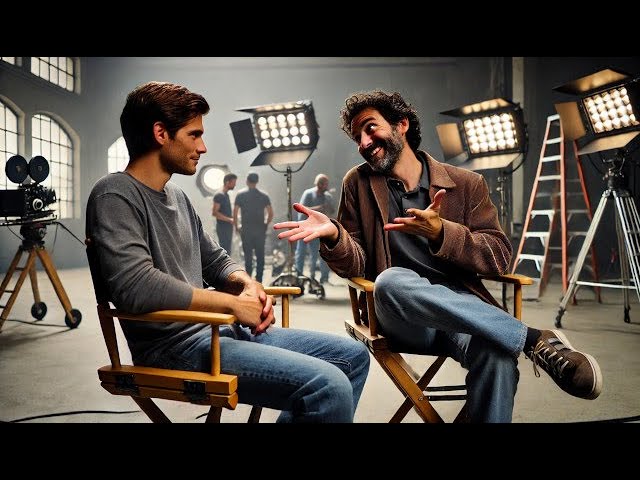
Aaron Marcus shares two lessons from his work as a stand-in. First: most retakes happen for technical reasons, not bad acting, so stay calm on set. Second: filter feedback carefully, since directors sometimes give false compliments to keep morale up.
Chapters
Hey, in this video I'm going to be sharing with you how these 2 stand-in secrets changed my acting career. And when you stick around to the end, I've got a great bonus video for you. Are you absolutely desperate for a reader for a home audition? Here are 4 amazing tips. Okay, let's get started. Hey, I'm Aaron Marcus and welcome to the Acting and Modeling Quick Tips channel on the Actor Career Center. Before I share how these 2 stand-in secrets really changed my acting career, let me just quickly tell you a little bit about what stand-in work is all about, just in case you're not 100% sure. So on films and television shows, when they are setting up the lighting, getting the camera angles ready to shoot the scene, they're not going to have the principal actor, you know, walk up and down the street Or walk across the room or sit in a chair for, you know, an hour or so. So what they do is they hire a stand-in. The stand-in doesn't necessarily have to look like the principal. Sometimes they do, sometimes they don't. I've done a number of stand-in gigs, and sometimes they've been close, sometimes not. But you do have to have a very similar build. You have to have similar facial features, same body type. So that way when you wear the wardrobe of the principal actor and they get the lighting focused and the, the camera set up, they'll be ready to shoot and everything will look great. And just so you know, at least for union stand-ins— and you should check out the sagaftra.org website just to see if things change because they do change periodically— it was around They were getting paid around $243, if I'm not mistaken, for an 8-hour day. And then, like with all union jobs, you go into a 9th and 10th hour, you get time and a half. 11th and 12th hour, you get double time. So you can actually make a pretty good amount of money doing stand-in work. And there only— there's only one project that was long-term. I worked on it for a year and a half on a TV show as a stand-in. Great. Great experience. But anyhow, it's a really interesting kind of job. Before I forget, I just want to make sure that you all know I've got a new website, howtoactandmodel.com. I'll leave the link in the description, and when you go there, you can get onto my special mailing list. And when you do that, you're going to get a really, really helpful video. It's 6 tips for creating a great home audition that you really want to watch, and you get that free when you sign up. So the very first secret that really changed my acting career was whenever I, I've done stand-in work, if I can, I like to sit behind the directors and watch the monitor with the director. And I always— I'm really good at making it look like I'm not really eavesdropping, but I'm trying to listen to everything that is said. Some of the information is just really invaluable. And I can tell you, at least my experience has been this, and I'd love to hear from, from you what your thoughts are. You can leave a comment in the description section. Sometimes if I'm shooting a scene As a principal. And cut. And they want to do it again, and they want to do it a number of times, which is pretty typical depending on the director. But most directors, you're going to do multiple takes. Early on in my career, I start getting a little paranoid, and I start thinking, uh-oh, I guess they're not liking what I'm doing. I hope they didn't make a mistake. They're going to fire me because they thought I was able to deliver what they wanted from the audition, but apparently they're not getting it, and that's why we're doing take after take after take. So while working as a stand-in, and I'm able to overhear things, now I'm hearing, uh, another take. Yeah, you know, the boom mic was in— I was in the scene, it was showing. Maybe extras didn't cross at the right time. Maybe there was some, I don't know, airplane that flew by and it messed up the sound. Sometimes they just want different options, and they might even talk with the actor about trying something differently. And so what I, what I really learned is— and look, I'm not saying there might have been a take and the director just didn't like it and wants you to do it again, or maybe you stumbled with things. But quite often they're doing retakes for all kinds of different reasons, and most of the time it has nothing to do with your performance, or at least nothing bad in your performance. And I'll tell you, that has allowed me to feel so much calmer on the set, especially when I'm hearing, uh, take 2, let's try that again. The second thing that I want to share with you, and once again, just really eye-opening for me, and I'm not going to mention any names. I just don't feel comfortable doing that. I know one of the people involved here is no longer alive, so I certainly don't want to say anything or say the person's name. I'm not even going to talk about the project, but I was doing stand-in work Standing by the director, and there was a wall between us and where the actors were in the scene, so the actors couldn't see us at all. And I knew just from hearing comments from the director, the director did not like this actor for a variety of reasons. Didn't like his acting, didn't like his attitude. And, and I'll tell you, I felt the same way. He was nasty. He would be unprepared, seemed very angry. Just not fun to be around. And they did a take, and the director— and by the way, this is a very famous director who's done blockbuster movies— takes his headphones off, throws them on the ground, and he's looking at one of the writers and walks around this wall And I'm able to see and hear things. And he walks over to the actor and he says, really liked it, thank you very much. Just because I want a couple of options here, would you do it again? And I'd like to just see maybe if you bring it down just a little bit, but don't change it too much because I really liked what— just maybe bring it down a little bit. That would be great. Just want another option. He walks behind the wall where we're all seated, turns, and he does— even at that level, famous actor, famous director, and people are just not being honest with each other. And I'll tell you what I learned from that. That was also so valuable for me. Look, if somebody makes a comment while I'm working, I listen to what they have to say. Or maybe not when I'm working, it could even be after the performance, somebody sees the project. I'll listen to what everybody has to say, good or bad. I filter everything that is said to me, and if there's anything that seems to ring true, that seems to make sense, I'll take it in. Doesn't let it go. And once again, that holds true for good things, bad things. And, you know, here this famous actor was just outright lying to this actor, couldn't stand his performance, and he was telling him how great it was. And I'll tell you, that was, that was a life-altering Conversation that I overheard. So for you, just want to let you know once again, filter everything that you hear. And if you hear something really horrible, yeah, might not be true at all. You know, people say all kinds of crazy things to us in the industry. So I wanted to ask you guys, just so we can learn from you, if you've ever experienced You know, something really interesting, whether it's doing stand-in work or just, you know, hearing things, you know, on a set, please share it with us. You don't have to mention names, but this way we can learn from you as well. I wanted to mention, if you haven't done this yet, don't forget, subscribe, click the notification bell so you always know when I upload a new video. If you like it, give it a thumbs up. That's actually very helpful. And share the link with your fellow actors. So I did promise a bonus video. You can see it right up here. So if you have to do, you know, a self-tape, home audition, and you're just stuck, you don't have a reader, watch this video and you're going to learn 4 great tips, 4 ways to make that happen. Okay, I'm Aaron Marcus and can't wait to talk with you again soon. See ya. See ya.










