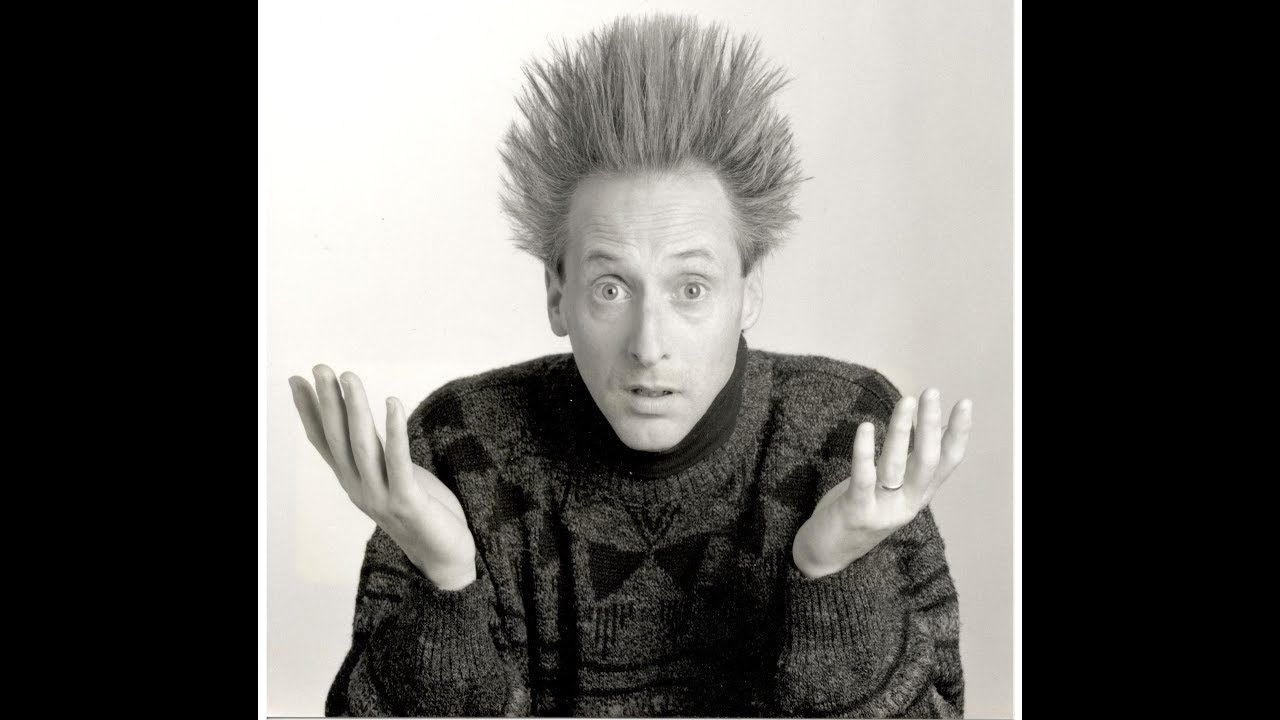
This content was created by Aaron Marcus. This content was uploaded by Aaron Marcus. This is a YouTube video titled "To Dye or Not to Dye (your hair) That is the Question" (published 2019-09-26). It is a first-person monologue by Aaron Marcus in which he discusses his decision to stop dyeing his gray hair, how that choice affected his casting and career, and broader advice for actors and models about knowing and using their strengths (appearance, voice/dialect, suitability for certain roles). He offers practical tips (voice lessons, speech work), reflections on fame vs. anonymity, and audience calls-to-action to subscribe, comment, share experiences, donate, and visit howtoactamodel.com/home and related social links. Metadata includes the YouTube content type and a provided thumbnail URL.
Chapters
Hi, I'm Aaron Marcus, and I've really been enjoying sharing, actually, a lot more personal information with you recently, and I plan on continuing to do that. In this video, I'm going to be talking about to dye or not to dye. And if you're thinking, hey, look, I don't want to deal with gray hair, I'm just going to turn this off, stick around because I'm going to be talking about something else But it's kind of connected to this in just a minute or two, and you're definitely going to want to stick around. So, many years ago— well, maybe I shouldn't say many years— a number of years ago, my hair started turning gray. And I was kind of deciding, I was trying, I was debating, well, do I just let it go gray? Do I get it colored? And what I decided to do was My face at that time didn't really match the gray hair. My face looked younger, the gray hair looked older, and what I was concerned about was I was kind of neither here nor there. So if they were looking for the older guy with the gray hair, my face didn't match it. If they wanted the guy with the younger face, well, my gray hair— didn't match it, and I thought it would really hurt me work-wise. So for a number of years, I was getting the gray taken out. I would leave a little bit in there, but pretty much that's what I decided to do. And I remember one time an agent said to me, oh, your gray hair, it makes you look too old, because it was growing out a little bit. And, you know, I listened to the agent like I do with all agents and other industry professionals, and then think about it and then make my own decision. So I got to a point where I felt that my face would match my gray hair, and so I decided just to stop, stop dyeing it at all. And so I just let it go gray. And the funny thing was, because I felt my face really matched it, and the funny thing is I started booking more interesting jobs. I actually had better kind of jobs, higher exposure kind of jobs, more films, more television shows. And so it was really clear to me I made the right decision. It really made sense. And so for those of you who might not be dealing with gray hair, if you don't have any hair, you're too young to be dealing with it, whatever the reason is, here's what I want to share with you that— and this really still connects things. No matter what, you always want and you need to figure out who you are. And what I mean by that is, um, what kind of roles are going to be right for you? And you've got to make sure Don't let your ego get in the way. Look, when I first started, I wanted to be the good-looking guy, the lead, and think— the fact of the matter is, I get it. I'm not a good-looking guy. I'm just a regular-looking person. And instead of fighting that and trying to produce headshots that showed that or dressed a certain way to try to get myself into an area that's really not right for me? I decided to do the opposite. I used what I felt was my strength. My strength is the fact I look like everybody's next-door neighbor. I'm the nice guy. I'm the guy you trust. I'm the one you believe. I'm the one you'll talk to. You'll share personal information with me. Just 'cause I have that kind of look about me. And so what I found was instead of trying to fit into a category that wasn't right for me, I decided to use my strength no matter what it is. So for you, no matter what your strength is, whether you're the girl next door because you're not, you know, the beautiful one who is going to have the lead and have all the guys You know, fawning over her. Use that. There are a lot of people who have made tremendous careers out of just being themselves, even if it's not the star. So I just think that's really helpful. Once again, just be honest with yourself. Don't try to be like a famous actor. And, and sometimes Once again, be really honest with you. Sometimes when I get these breakdowns about roles, they'll say, yeah, we're looking for this type, and they'll mention some famous actor. And what I always feel is, hey, well then go get them. There's only one famous actor in that category. And if that's your description and that's what you're looking for, Go get them. Don't ask me to try to be this other person. I know what my strengths are. I know what I can bring to the table. And if you're interested in that, then great. Then maybe we'll work together. So whatever it is, don't try to fit, you know, fit yourself into the wrong kind of category. Use your strength. And look, it might take It might take some time. You know, I've heard, you know, sometimes people will say, well, she has kind of an unusual sounding voice and, you know, she's got to really change her voice. Look, if that's your voice, then that's what you're going to use. And I'm not saying, of course, don't take voice lessons. If there are some things that you can do, of course you want to do that. But if you have a unique kind of voice, yeah, it will— it might limit you. Just like, look, sometimes— because as you know, I do a lot of online mentoring with people, and sometimes, you know, I might be working with somebody who has a very specific dialect, and they'll say, well, look, is this going to hurt my chances of getting work? And absolutely it is. You know, if you have a really heavy New York accent, you have a really heavy Boston accent, or maybe one from Mississippi, wherever you're from, of course that is going to limit you because if that's the only thing that you can do, then if that particular character is supposed to sound like a very sophisticated person living in the, I don't know, the Washington, D.C. area, Yeah, you're not going to get that role. So what you can do is, you know, once again, take voice lessons, speak to a speech therapist, be able to— don't get rid of your dialect, but be able to change it if you need to. However, when they need that kind of dialect in a role, there you are. You are convincing, you are believable. So I guess just in general, The important thing is use your strength. And I can tell you there are plenty of very successful actors who played to their strength. They're not the glamorous ones. Who cares? I mean, honestly, being— and I know I'm kind of going a little bit off track here, but being a star, look, I'd love to have that kind of money. And take that stress out of my life and have scripts written for me and not have to audition and go to callbacks. And of course, that would be great. But I tell you, not being able to remain anonymous, not to be a regular person, not to be able to just walk into a restaurant without everybody taking pictures and wanting autographs and doing selfies with you. I don't know. That doesn't interest me at all. So whatever your strength is, that's what you want to use. And I hope this was helpful to you. And, you know, something that would be great too, if you are watching this on YouTube, you know, make sure that you subscribe and then click the little bell, the notification button, so that way every time I upload a new video, you will be notified. And please share below Any experiences that you've had with this. You know, the whole point of having this channel is to share information with other people and have you share information as well. So if there is something that you can add to this conversation, please do it. You can do it here, you can do it on Facebook. It's facebook.com/howtomodel. But yeah, I'd love to hear your ideas and have other people learn from your experiences as well. Very last thing, along with subscribing to the channel, please share this with other people. I really want to build a large community of actors, models, industry professionals helping each other out, sharing information. To me, that's what it's all about. And, and the, the very last thing, there is a link at the very bottom on my YouTube channel. If you can make a donation and help support the channel, I greatly appreciate it. Not forcing you or anything like that. If you can, that would be great. The amount doesn't matter, whatever is affordable to you. If you find these videos helpful, that would be great. I'd greatly appreciate it. And if there is a topic that you would like me to discuss, let me know. Just send it to me. You can go to howtoactamodel.com/home and tell me the kind of question or topic you want me to discuss. Anyhow, I'm Aaron Marcus. This was fun sharing this with you. Love to do it. I'd love to hear your comments and your experiences and read them, and I look forward to talking with you again soon. See ya. Bye.