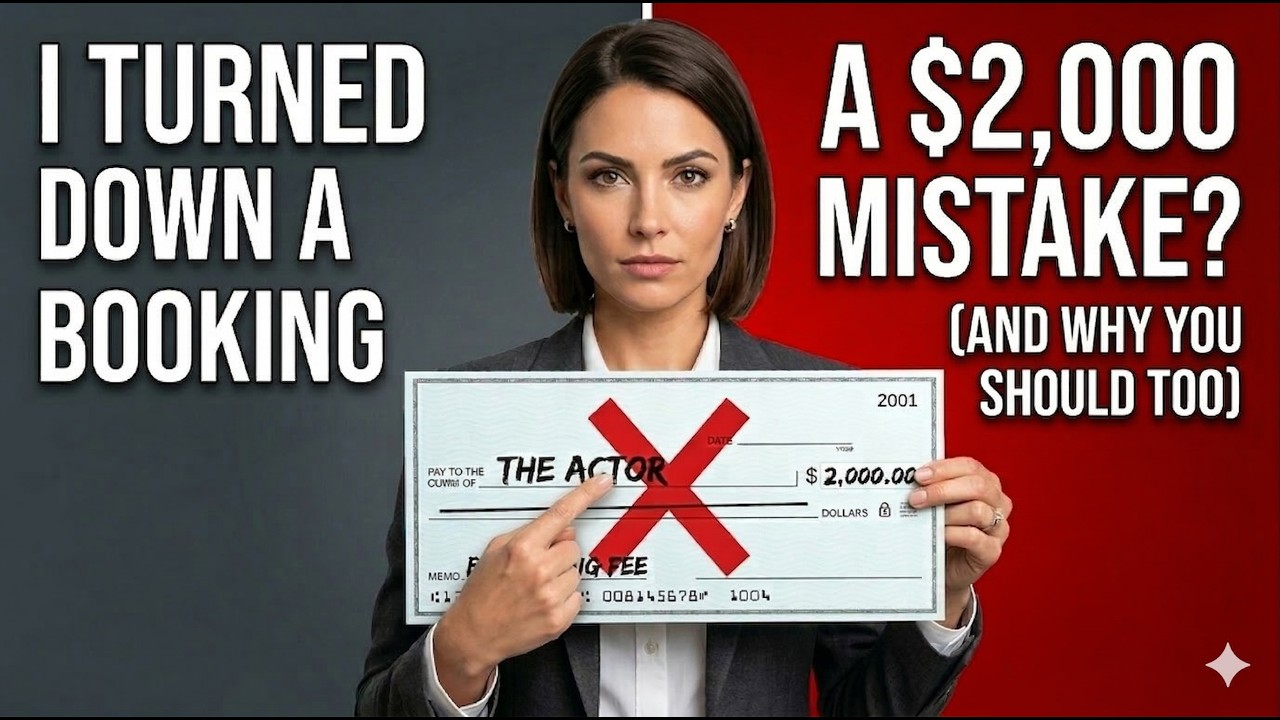
In this solo video, veteran actor Aaron Marcus explains why he turned down a $2,000 commercial booking for a major insurance company and why other performers should scrutinize contract details before accepting work. He highlights the danger of “perpetuity” usage rights, which can lock an actor into a conflict with future brand campaigns, potentially costing them far more in later opportunities. Marcus shares a personal anecdote about accepting a $5,000 perpetuity deal for a local pest‑control print ad, explaining why he deemed it acceptable. He then outlines three essential checks actors should perform before agreeing to any audition or job: (1) personal comfort and alignment with the product/company, (2) the exposure level of the usage (print, billboard, bus side, etc.) and appropriate compensation for high‑visibility formats, and (3) the duration of the usage rights (one year, multiple years, or forever). He also reflects on early‑career strategies of taking low‑pay gigs for exposure and tear‑sheets. The video ends with a call for viewers to share red‑flag contract clauses, subscribe, and consider his private mentoring program.
Chapters
I turned down a $2,000 project for a major— it was an ad for a major insurance company, and some people thought I was crazy. I don't know, maybe they're right, but I knew that if I accepted it, I could potentially be losing out on $20,000, $50,000, or more projects later in my career. You see, there is one specific detail that you absolutely need to know about before you accept or turn down an audition or booking. Because if you, if you miss it, you could potentially be losing a lot of money for decades. So let me explain what that is. Let's get going. Hey, I'm Aaron Marcus. I've been a full-time actor for over 40 years, and the reason why I am so passionate about this tip is because I've seen some really talented actors and commercial models get locked out of national or regional ads because of this one mistake they made years ago. So after looking at this email with all the information about the ad, there was this one thing that made me very nervous. And I can tell you that normally for commercial modeling ads, which this was, they want to use the ad for a year, couple of years. Sometimes if it's a little bit longer, they'll give you additional fees for that. But one of the things that stood out to me was they wanted to use it in perpetuity. Perpetuity meaning they can use it forever. And the reason why that can be a problem is because that can create conflicts for you. So let's just say this was for, I don't know, State Farm. And you've done this job, you made a couple thousand dollars, and now State Farm has it forever. So let's say in 6 months, a year, 5 years, there's a project for GEICO that you're perfect for. And one of the— and let's say it's a national ad campaign, maybe you're going to be the spokesperson. Well, one of the things they're going to ask is, do you currently have any conflicts? Conflicts meaning, do you have any ads running for competitors. And if you have something and you agreed to this ad being in perpetuity, then yeah, that's a conflict because they can pull it out and use it at any time they want. So you've got to be really careful with that. Now, having said that, I did sign away an ad that I did in perpetuity. But let me explain why. It was something I thought about very carefully, and if I remember correctly, I think they were paying around $2,000 for the job itself, and they were paying an additional $3,000 for it being used in perpetuity. And it was for a pest control company, and it wasn't a national spot. And when I say spot, it was an ad, a print ad. And so I figured First of all, I had never gotten an opportunity to work for a pest control company before, and I figured there probably aren't that many of them around. And maybe even if it's a national company that is interested in me in the future, maybe with this one just being a local one, it's really not a problem for them. So I just thought, yeah, $5,000 upfront, Who knows if I'm ever going to get asked to do a pest control company? So I decided to do that one. So I want to tell you about 3 things you absolutely need to check out first before you make a decision about attending, you know, a go-see, an audition, or accepting a job. The most important thing is number one, hey, do you feel comfortable being associated with this product or this company? And if not, Don't get pressured into it. This is your life, and if it's something that goes against your beliefs, your morals, you don't want to support it, you can thank the agent and just say no. Number 2, you need to find out about the usage. If it's a print job, where is it being used? And what I mean by that is, is this running in a newspaper, a magazine, or is it going to be in a high-exposure format— billboards, posters, sides of buses, For those, typically you should get a bonus on top of whatever you're getting paid for the day because of the high exposure format. And the third thing is, you know, how long is the ad going to run? You know, once again, 1 year, 2 years, or do they want to be able to use it forever? And then you have to make a decision as to whether you feel like you are being compensated properly and taking a good stance for yourself and making a smart business decision. Let me also just tell you, there have been times, especially at the beginning of my career, I took on jobs that paid small amounts because I wanted to get the experience. I wanted to get the tear sheets, the copies of the ad, and I wanted to get a chance to work With a photographer and potentially if the art and creative directors from the ad agencies are on the set, I want them to see me in action because I knew and I felt confident that if they saw me, they would like my work, they would enjoy being around me, and why wouldn't they want to hire me again? Before you go, if you ever caught a red flag in a contract, please share it below so we can learn from you. And if you found this helpful, uh, subscribe, click the notification bell so you always know when next week's video is going live. And if you would like to work with me privately, check out the links in the description for my private mentoring and the Actor Career Program. I'm Aaron Marcus, and I can't wait to talk with you again soon. See ya.