Wonder What an Actor’s Day is Really Like On a Feature - Part 2
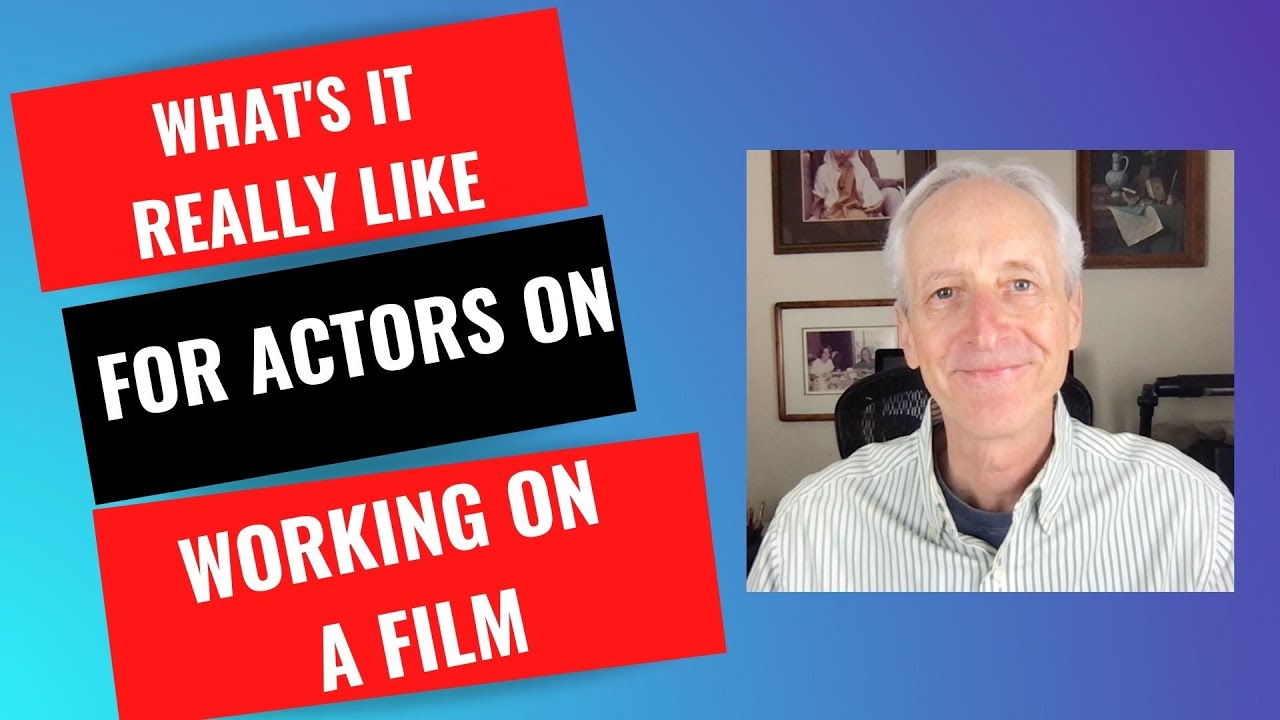
Aaron Marcus walks through a day on the set of A Man Called Otto with Tom Hanks, covering COVID tests, wardrobe, stunt coordination, multiple takes, and ADR. He explains how actors communicate with the first AD and director, why there are long waits between setups, and how to stay professional on set.
Chapters
Have you ever wondered what really takes place for an actor on a feature film? Well, when you watch this video, the curtains are going to be pulled up and you're going to learn very specifically what really happens for actors on a set. Okay, let's get going. Hi, I'm Aaron Marcus, and welcome to the Acting and Modeling Quick Tips channel where I I teach people who are just getting started in the industry, uh, and for people who have been working for a while and want to take their career to the next level. If you haven't done this yet, don't forget, click the subscribe button, the notification bell, so you always know whenever I upload a new video. And if you like the video, please give it a thumbs up. So this is part 2, uh, and I'll leave the link, uh, for the the part 1 video where I talked about auditioning, getting cast, and working on a feature film. So one thing that I didn't discuss in the first video that I want to start off with before I tell you about what takes place on a set is the wardrobe fitting. So typically what will happen is in today's world you will get Tested for COVID, wait about 30 minutes. Once that clears, hopefully it does, then you go over to wardrobe. And what they need to do is make sure that the wardrobe that they've pulled for you fits you perfectly, and if not, then they will make adjustments. So I just worked on a feature film in Pittsburgh. It's called A Man Called Otto, and it stars Tom Hanks. And I'll tell you about that, that a little bit later. It was just a great, just a great experience. And so the suit that they had me wear was a little bit tight, so they had to let out the waist a little bit. They had to lengthen the pants a little. We went over some other things. Once I was done with that, Then they had 2 days to get everything ready for me. So, so now it's the day of the shoot and I drive to the location where my trailer is set up. And once again, I get tested just to make sure that I'm still testing negative for that. And then once that clears, Then I can go into my trailer, and typically what you're going to find is the— it's called base camp. That's where this is all set up. And they'll have my wardrobe ready for me hanging up in my trailer. They will also have a contract for me to sign. It's pretty long, but they're really good at making sure that they notate exactly where I have to sign. I mean, I still like to read everything, And so anyhow, you take care of all of that stuff. One of the production assistants typically will come over. I mean, depending on what time you're there, it was a morning call for me, and they'll stop by. They'll ask if you want something to eat, and they'll go and pick up something from catering and bring it back to you. On a little bit of a side note, if I'm going to be working pretty soon, And you never know exactly what time you'll be pulled onto the set. I don't like to really overeat very much because then I just get a little bit tired. I want to make sure I eat something so I'm not, you know, passing out. So I'll bring some snacks for myself, or sometimes I'll just ask them for some snacks and I'll tell them what I want and some water. And I'll get dressed. Then you go to hair and makeup. And I like to get dressed first so that way once they do my makeup, I don't have to pull anything over my head and mess up any of the makeup that's done or mess up my hair in any way. And then they'll put a drape around you just to make sure that they don't mess up your wardrobe in any way. So then you go back to your trailer and you wait. Now personally, I don't like sitting in a trailer. It kind of feels like sitting in jail to me. I much prefer, if the weather is okay, I'd rather stand outside or sit outside. And just kind of get prepared for the scene. So once they were ready to start bringing me onto the set, and there were a few other actors that were in the scene, they pull up a van, we all hop in there, drive over to the actual set. Now, for what I was doing, and there's only a limited amount of what I can say Because we just finished shooting and they still have about another 10 days of shooting, I believe. And the movie's not going to be coming out for probably, I think, 7 months, 8 months, something like that. So anyhow, there's, there's only so much that I feel comfortable talking about. But there is something that takes place that I wanted to discuss with somebody. It wasn't made really clear in the script. And I had a couple of ideas I wanted to run it by someone. So I was talking to the first AD, the first assistant director, and he said, I'll tell you what, I don't have that information. As soon as I get it, I'll make sure I talk with you about it. And then a few minutes later, one of the production assistants walked over to me and said, the director would like to see you. So, okay, great. So walked, walked over, went into— he had like a little office set up, and we sat down and I talked to him about my idea with my character and just wanted to see if it's something that he agreed with or if he had some different ideas. And he said, nope, that makes complete sense to me. Yeah, let's go with that. Okay, so that was great. And then there was something physical that I had to do in the scene, and I wanted to talk to The stunt coordinator. And so spoke to the stunt coordinator and he said, we're still working on things, not 100% sure how the stunt is going to take place. I mean, I wasn't hired to do a stunt. I had a stunt double for what I was doing, but I had to do things leading up to the stunt. And once again, I had some questions about that. And so at one point he got some more information, and then we sat down, we talked about it. My stunt double was there. This is somebody who— like, the guy didn't look exactly like me. They made sure he had the same hair color, pretty close to my height, a little bit shorter but close enough, and they had him wearing the same wardrobe. So that way when you edit things out, it looks like I'm doing the stunt. It was, it was pretty cool. The first time I've ever had a stunt double, and it was a very, very nice guy. We were— we spent a lot of time just talking about doing stunt work. This guy has been doing this forever. He's been in tons of movies that I've seen, and it's really— it's incredible. Incredible what these people do on a set. So at this point, I'm all ready to go, and there were, there were probably about 6 of us who were principals in this particular scene. And so they had us outside. We were sitting— they had chairs set up for us. And we're just hanging out. We're talking. The crew is still setting up the lighting, getting the cameras set up, doing some tests. They have stand-ins. Those are typically— they're actors. They don't have— you don't have to be an actor to be a stand-in, but basically they will have you do the same movements as the principal actor in the scene, and that way the cinematographer can practice, can look at things to make sure the lighting looks right, to make sure that the movement is right with the cameras. And sometimes, like with Tom Hanks, he has his own personal stand-in. And I had a chance to talk with him, a really, really nice guy. He has worked With Tom Hanks, he said, for 19 years. This guy travels the world on every project that he works on. It's really pretty amazing. And once again, quite often they are actors, but you don't have to be. You don't necessarily have to look identical to the principal actor. You do have to have the same build, the same height, so when they are getting all the lighting and camera angles set, Once they call in the first team, who are the principal actors, and the second team walks out, the stand-ins, then they're ready to shoot. So we were just waiting, and you sit for a long time. It's kind of like being in the military. You can sit and sit and sit and sit, and then you hurry up. That's just the way it is on movie sets. TV, I find can work a little bit quicker, but for movies, it's a— I find it's a slower process. But anyhow, we finally got ready and we did some rehearsals of the scene, and, you know, people were watching it and made— you know, they made sure that everything looked right for them. And then once they were ready, they said, okay, Let's shoot something. So we did a number of takes and things seemed to be going well. You know, once again, as an actor, I don't have a clue. I'm not watching the monitor. I don't ask to look at the monitor. I think there's only been a couple of times where I would— it would be helpful for me to see what took place as far as my movements go, but My rule of thumb is if they don't ask you to do it again, then they liked what you did. And they might have liked what you did and still ask you to do it again just so they have a couple of options. And you might get some notes from the director just to try things out. And it's also— it's really, it's really important that you don't take things personally. Like if they ask you to do it again, You know, it's easy to, to get paranoid and think, oh, they, they didn't like what I did, they hated what I did. Look, you might have done exactly what they wanted, but maybe there was a boom mic, you know, a mic that's being held by a sound, sound person, that accidentally got it, you know, into the top of the frame, so they have to do it again. Maybe there was an extra who crossed at the wrong time or in the wrong spot and they have to do it again. There, there are a lot of reasons besides not them not liking your performance for them to do it again. On another side note, I remember once, and this is going back a million years ago, I worked on an NBC show called Law and Order: Criminal Intent and shot everything Things seemed to go well, and I got a phone call from production saying they need me to come back to New York and do— it's called an ADR— to do a voiceover of the scene. So, you know, initial reaction, you know, could be, oh, they hated what I did. You know, physically I looked okay, but I sounded terrible. They wanted me to do it again. What happened was there was an extra who was talking in the background. And it was kind of covering up some of my lines. So what I had to do is go back to New York. You're in the production studio, there's a huge, huge monitor in front of you. You hear beeps and you'll hear beep, beep, and then on the 3rd beep, that's when you're going to get started and you start doing your lines. So you can see yourself and you have to match things perfectly. It sounds really hard. Honestly, it really wasn't hard for me because I remember the, the feeling of, of doing the scene. I remember the tempo. It came back to me very, very quickly. So it wasn't like I had to really watch. I just had to know when I got started, and then I was doing my lines and it just seemed to flow very easily. But anyhow, so the point is there are a lot of reasons why they do Multiple takes. So we did that a bunch of times, and then we, we stopped because they wanted to do another setup. There was another scene that took place. And so since the cameras were already kind of in the area, we all left and were sitting, and then the weather changed, started raining. Well, They couldn't do the scene in the rain because the initial shot didn't take place in the rain. So we sat for a long, long time period, and once again, we're just hanging out. Some people would go over to craft services where they have snacks and food and drinks and things like that. Once again, on a little bit of a side note, if you ever need to leave the set Whether it's going to the restroom or you want to go to craft services or wherever, always let one of the PAs, one of the production assistants, know so that if for some reason after you left they need you, they're not searching for you. It's a horrible situation for them. So I always do that. I always just say, hey, look, do I have time? to run to craft services before we start shooting? And they'll let me know yes or no. Or do I have time to run to the restroom? They'll say yes or no. Sometimes they will personally escort you there. Matter of fact, that's what they did on this set. I said, look, I know where it is. You really don't have to. They said, nah, that's in our job description. We have to personally walk everybody over there because they have walkie-talkies. So that way, if something comes up and they need you right away, then, you know, we could head back. But anyhow, it's just a courtesy to them. So anyhow, so we're waiting and waiting and waiting, and then we shot, shot the second scene multiple, multiple times. We broke for a meal. According to union rules, they have to feed the actors every 6 hours. It's kind of like being at the zoo. You You got to feed the animals every 6 hours. Otherwise, there are meal penalties. I don't want to go into all the specific details, but yeah, there are times where they simply can't break everything down. They're right in the middle of shooting. They'll pay some meal penalties for that. Come back after lunch, and now the weather changed again. And although it wasn't raining, it just didn't look anything like what it did earlier in the day. And so, you know, we were waiting again. And, um, once again, that happens all the time. You know, some people— well, well, our trailers were not there because we were out on location, so it's not like you could go back to your trailer if you wanted to. Some people sat in their chair and just tried to take a quick nap. Some people were just, you know, talking to other people. Some people, you know, were checking their phones. Personally, I don't like to bring my phone onto the set for a couple of reasons. One, in this particular case, just because of something that I had to do in my scene, And I thought I might be falling down or something. I just didn't want to take a chance on breaking it. The other thing is I just didn't want to be distracted. And everybody does things differently, but it's like, I don't want to potentially check a text or check an email and start thinking, oh, this is something I've got to take care of. I just didn't want to think about it. I wanted to completely isolate myself to the world. You know, for a number of hours and not just not pay any attention to anything else but being present and being on the set. So that's just how I typically like to work. And so then we finally went back, and here's something that was really interesting. My stunt double did his thing. They shot it a couple of times. It was pretty cool. I walked over onto the other side just so I could watch, and this guy was real— he was really, really good. And at one point they asked me, hey, are you comfortable doing this stunt? And I've never done a stunt before, and I'm going to do another video just on stunts because it was pretty fascinating. I said, sure, I'd be more than happy to. And so I had a— I had— and I really thought I could be safe with this. I had a meeting with the stunt coordinator. I spoke with my stunt double. There were a couple of other stunt people there. We all talked about how to do this safely, and I was given some equipment. I had shin guards, I had knee pads. They were telling me it was a fall, and they were telling me how to fall properly. And so I thought, you know, I think I can do this. It was kind of— it was kind of like jumping out of an airplane, which I've never done, but I can imagine that it's scary. And you have to get to a point where you just say, I've got to let go. And you jump. And that's essentially what I did, and I guess it worked. And look, the reason— and I'm just assuming the reason why they asked me to do it, it might make it easier for them in editing, because like I said, the stunt double, he was really good. I figured it would be a lot easier for them if I just went in and Did, did the stunt. So we did that a couple of times. I guess things went well. The, the stunt coordinator said it looked great, so, so I'm guessing, guessing it worked well. And then we continued with, with some scene— another scene that I did. This is after my fall. And It was really— it was a great day. And then they asked, because they had different camera angles, if I would fall again, and I said sure. And so everything went really well. The key thing that I did want to share with you, it's just really— I think it can be really helpful if You, if you are a principal, if you are a star of— and once again, I had a very small role in this— but if you are, you know, a lead person on, on a project, please be nice to other people on the set. It changes the atmosphere. And I find this always starts from the top up. When you have producers, you have a director, you have Stars who are just nice people, it filters down to everybody else— the first assistant director, the second director, the second AD— I'm sorry, second assistant director, not second director— second assistant director, the production assistants. It just creates an atmosphere on a set that makes it really nice to work on. The hours can be long, the weather can be uncomfortable, some of the scenes can be tough to But when you have an atmosphere where it's joyful and you want to do things, you want to be nice to other people, it's just a wonderful way to work. So anyhow, if you ever get that opportunity, just wanted to ask that you work that way. And look, I'm not saying that you've got to be the star of the party. You know, if you've got a tough scene coming up and you need to isolate yourself. I mean, that's fine, but that's different than just being nasty to people. So anyhow, it was an amazing day. Everything from arriving at base camp, doing the, the testing, again going into my trailer, getting dressed, hair and makeup, sitting on the set waiting for things to happen, working, waiting, having a meal, going back and working, waiting again. It's a lot. It is a lot of sitting around, but just take in the atmosphere, learn as much as you can, talk to other people. Once again, if, if that's something you're comfortable in doing, depending on what you're working on that day. I mean, there have been shoots that I've done where I've had really tough scenes where I did not want to talk with other people, and I wasn't, you know, nasty or cranky. I just isolated myself because that was the best way for me to prepare for the scene. But anyhow, it was just a phenomenal day. And yeah, and then when you're done, you check out, you fill out a little form at the end of the day acknowledging that the time that you started, the time that you clocked out, the times that you went for your meal or meals. And then, you know, you drive— well, for me, I drove back to the hotel, or maybe you drive back home. And it was great. And that's what helped— when you have great days like that, that's what helps make all of the auditions that you don't book okay. And anyhow, that's what I wanted to share with you. If you ever experienced being on a, on a set, please share it in the comment below. Let other people know what your experience was like, what you did during the day, anything special stand out for you? That, that would be great, so that way we can all learn from each other and share information with each other. And, and also, if you haven't done this yet, don't forget, don't forget to subscribe, click the notification bell, and if you like the video, please give it a thumbs up. I'm Aaron Marcus, and I can't wait to talk with you again soon. See ya.










