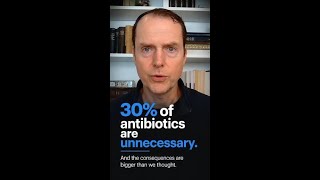
In this short video, Dr. Aaron Hartman highlights that roughly 30% of outpatient antibiotic prescriptions in the United States are unnecessary, amounting to about 47 million excess prescriptions each year. He explains that early exposure to antibiotics—particularly before age 2—has been linked to a 26% higher risk of obesity by age 4, a 50% higher risk of asthma, and associations with ADHD and autism spectrum disorders. Hartman also points out that about 80% of the nation’s antibiotic use occurs in animal feed, leading to low‑level residues in dairy products (e.g., ~50 µg tetracycline equivalents per glass of milk). He urges viewers to mitigate these risks by choosing organic foods, avoiding unnecessary antibiotics, and educating themselves about these hidden healthcare blind spots, inviting the audience to share personal experiences.
Chapters
30% of antibiotics prescribed in our outpatient setting are unnecessary. Over a third used outpatient, outside the hospital, aren't necessary. This results in 47 million excessive prescriptions for antibiotics every year in our country. Just think about that for a second. So what's the result of this? Is it bad? Is it good? Is it neutral? I was told it didn't make a difference for years, but now we know that kids who get their first antibiotic before the age of 2 have a 26% increased risk for obesity by age 4. 26% increased risk for obesity by age 4 if you get antibiotics before year 2. Think about that. So all of a sudden now these, these unnecessary antibiotics that are safe aren't so safe anymore. Also, studies have linked early antibiotic use to increased risk for asthma, 50% higher, as well as ADHD and autism spectrum disorders. So we now know that antibiotic liberal usage is not a good thing. Yet 80% of all antibiotics used in our country are used in feed, chicken feed. I remember reading a couple of years ago that a standard glass of milk you get from your store has about 50 microgram equivalents. Of a tetracycline-type antibiotic in it. So just drinking milk from the store, because the way we do our foods, you're getting small amounts of antibiotics in your system. So what can you do about it? Eating organic, cleaning up your diet, not getting unnecessary antibiotics. This is a major blind spot in our healthcare system that we've gotten just plain wrong. The reality is this happens all the time. So educating yourself about these blind spots, avoiding them, is one of the many ways you can do to actually improve your health, longevity, and minimize the blind spots in our healthcare system. If you've had something like this happen to you, or you've had a blind spot you've uncovered, share below. I'd love to hear about it. We can educate each other. Take care, and I'd love to hear from you about a blind spot you may have uncovered.