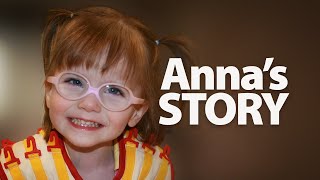
Aaron Hartman, MD, tells how his daughter Anna — born after prenatal meth exposure, prenatal stroke, and with agenesis of the corpus callosum and later diagnosed with cerebral palsy — defied a poor prognosis. Faced with repeated standard-care recommendations (feeding tube, multiple surgeries, dorsal rhizotomy) the family resisted interventions they believed would reduce function and were investigated by CPS. Using diagnosis-specific growth charts and learning across specialties (neuromuscular stimulation, nutrigenetics, nutrition, LED therapy, etc.), Hartman developed an integrative approach to care for patients who fall between medical silos. He applies these methods to treat complex conditions (fibromyalgia, chronic fatigue, Lyme, mold illness, POTS, long COVID). He wrote a book, Incurable: From Hopeless Diagnosis to Defying All Odds, and states Anna is expected to move out in April 2026.
Questions this video answers
Incurable: From Hopeless Diagnosis to Defying All Odds
April 2026
Chapters
Have you ever had an event in your life that changed everything? A chance encounter, a new friend, marriage. Something that changed absolutely everything about the way you thought about life, your job, your work, everything. That encounter, for me, that life event, was meeting Anna, who later became my daughter. When I first met Anna, she was about 12 months old. Her prognosis was pretty poor. She was never supposed to walk. She was never supposed to talk or crawl. What happened to Anna is she'd been exposed to crystal meth throughout her entire pregnancy. She had a stroke before she was born. And when she was born, she actually had this thing called agenesis of the corpus callosum, which means the left and right part of her brains, they did not connect. So as you can see, this is a pretty poor prognosis. When I first met her, we were bringing into her home to think, to bring her in as a foster child. My wife, Becky, was actually her occupational therapist who worked with her, worked with Anna since she was six weeks old. Becky saw a spark. Becky saw something that no one else saw, and she knew that was going to be okay, and that's what she told me. Now, I had no idea what it being okay meant, but we brought Ann into her house knowing that it was going to be a lot of work, but it was what we were supposed to do. Well, normal life people adopt kids all the time. That wasn't what changed. Everything was changed. Everything was how the system responded to it. We brought her in her house during this period of time. She was a foster child. It was about a year later before we actually adopted her. But one of the things, first things we had to do with her is feed her. Because she was small, for gestational age, she was failing to thrive. She was puny, basically. And so we did our best to feed her, but that just wasn't good enough. Her GI doctor said she needed to weigh more, we needed to do more. The recommendation was to cut a hole in her stomach, put a plastic tube in, and pour sugar water, called formula, into her belly. So that sounds kind of extreme just to put a few pounds on a little girl. But that was the standard of care. That was what they did for all the kids with special needs, all the kids who had feeding issues. It was easy, it was quick, it was convenient. But we wanted better for our daughter. I started talking with my wife, Becky, about what this would mean. What would a tube mean for this little girl? It would affect her speech. Part of learning how to talk and learning how to interact with people actually is chewing and swallowing. If we took that away from her. The ability to chew and swallow. They would 100% negatively impact her future speech. Even though she was never supposed to talk, we had better hopes for her. The other thing is putting a tube in your belly. It's just hard to. How do you learn to crawl? Army crawl. How do you learn to get up when you have this plastic thing hanging out of you? It just makes all that much more difficult. So we opted not to do that. We didn't know that the system was not going to like it. We didn't know that was going to result in us being reported Child protective Services. We didn't know we were going to get investigated by the county to make sure we weren't harming this little girl. But that's exactly what happened. And it opened my eyes to what? The system, our medical system, establishment, whatever you want to call it, didn't like it when we questioned their authority. And I was at that point in time, captain in the Air Force. I knew authority, I knew rank, I knew how orders worked. But part of what I did as a captain in the Air Force was protect the people beneath me. A lot of what you would do in the medical corps, which was where I was at MacDill Air Force Base at that point in time, a lot of what I did was just basically take care of my patients, protect those under my command, and make sure the clinic runs smoothly. And sometimes that would be against orders from people above you, but that was just part of what I learned how to do. And so I didn't realize, however, in the healthcare system that the result would be getting reported to child protective services. And the reality is this happens a lot to families with kids with special needs, particularly rare illnesses. It's not an uncommon thing. My wife had told me lots of stories of kids being taken away from the parents because of mystery illnesses. They thought their kids were being abused. The reality is these parents love their kids. They had really complicated issues. So I. I experienced that personally. The next big inflection point for me was six months later, my wife, being the researcher she is, found a growth chart for kids with cerebral palsy, which is the diagnosis my daughter has. And Anna was right in the middle 50th percentile. She was 100% normal weight for her diagnosis. And that made me start to ask questions. Did the specialist know this, this chart existed? If they didn't, in my mind, that's kind of incompetence. And all of a sudden now I realized it was on me. The weight was on me to Find the answers to figure out what's going on within them. I wish I could say this happened once and that was it, but this happened multiple times. The next thing was a surgery that was recommended to us for her eyes. She has this thing called strabismus, where her eyes kind of wobble around. They don't. They don't match up. And what can happen in early visual development is kids are actually born not with really great eyesight. And you actually develop acuity during your first years of life. If you don't track, you can actually develop blindness, permanent blindness in the eyes, because you don't develop the visual tracks. And so we knew we had to help her eyes, so we'd start patching them, and she'd use a strong eye, weak eye, and there's really a lot of work doing that. Her eye doctor said, we have the answer surgery. We'll cut these muscles, and the eyes will come in, and she'll look, quote, unquote, normal. The thing was, they're erratic. Sometimes she would look straight on, Sometimes the left eye would wobble, sometimes the right eye, right eye, sometimes both. How could this surgery fix that? So we got a consult with another older ophthalmologist, and they told us, well, you can just patch, hold off, don't worry about it. Later, I saw a physiatrist, which is a physical, med, and rehab doctor. They specialize with musculoskeletal kind of issues. This one worked with kids with special needs, and they had a recommendation for us. Hey, for your daughter's tone for her legs. Let's put. Let's do some injections of Botox in this little girl's legs. Let's cast her for six months to stretch out her hamstrings. Okay? That's like an interesting kind of thing to do to stretch out a girl's legs. End up seeing an orthopedic surgeon in town. They recommended surgery to cut some muscles in her legs. Saw another orthopedic surgeon who said, you know what? I got the answer for you. You should do a thing called a dorsal rhizotomy, which is cutting nerves in her spine that make her muscles and her legs relax. It makes her look more normal in a wheelchair. But our goal wasn't for her to look normal in a wheelchair. It was for her to learn to crawl, to stand up, and eventually to walk. If we cut those nerves, she would never learn to do that. This happened time and time and time again. A typical kid. Anna's now 19. A typical kid. Her age has had about 14 surgical procedures. By the time they're 19, she's had none. Why am I telling you this story, all these inflection points? I learned something new. And what I learned is our healthcare system treats people in silos. You can have the rheumatology silo, the cardiology silo, the gut, you know, the GI gut silo, the pediatric silo. But what happens is these specialists don't communicate between each other. I have to become the specialist of that gap, the specialist between the silos to learn how to integrate neuromuscular stimulation or using electricity to activate her muscles. Nutritional medicine, nutrigenetics, using gene testing to figure out what nutrients she's more susceptible to lacking and replacing those. I have to learn all these fields of specialty. And over years, I became an expert in this. And then I started to experiment with patients as well. Because why not? Every good practitioner, every good doctor experiments on themselves, their family, and then shares it with their patients. And that's exactly what I did. And over time, what I learned with my daughter Anna, translated things to do with my wife. She has her own story. With my other children, you know, I can tell I could talk about my. My son Khalil, who is the boy who lived. He was crushed in the elevator when he was about 8 years old. It's pretty, pretty crazy story, but he actually got crushed in the elevator, got his head crushed. It's a miracle he's alive. But one of the things that happened was he had 90% damage on his facial nerve. After we got the hospital, I was able to use LED light therapy with some nutrients to get that nerve to grow back. And within three months, his face looked 100% normal. I've been able to take the things I've learned from my daughter, from my family, and I started applying to patients and trying with patients in my office, treating fibromyalgia, chronic fatigue, fibro. I learned about Lyme disease, crack Lyme. I learned about mold reactivation, mold illness. I learned about breast implant illness. I learned about pots, dysautonomia, all these mystery, weird illnesses that fit between the specialties but fit between the silos. So what's the point of all this? The point is, is that one little girl with her devastating diagnosis, who's thrived against all odds, taught me as her father, physician, husband to my wife, Becky, father to my other kids, taught me how to care for her and my family, and ultimately changed my entire practice of medicine. And now I specialize in these complex, complicated patients that have no home. Who have multiple symptoms, multiple complaints, multiple body systems are affected, and they go from specialist to specialist to specialist and no one can help them. They come to see me, and I didn't connect the dots to what's going on. To figure out you have hypermobility, you have pots, you have sirs, you have long Covid, you have mold, you have Lyme, whatever it is. And then get an individualized, personalized plan for these individuals. This all starts from one little girl with a horrible diagnosis, no hope. And through her transformation to thriving. Now, at 19 years old, she's actually going to be my first child who moves out of the home. Imagine that. The kid who's never supposed to walk, talk, or crawl is going to be a vegetable. She's moving out of the house next year at 19, next April, actually, I'm not sure when you'll be watching this, but 2026. April 2026, she's moving out of house. You know, everybody thought that was impossible. And it's reality. It's happening. And that's what happens in my clinic daily. If this resonates with you, if this excites you, I want you to know there's hope. I've written a book about it called Incurable From Hopeless Diagnosis to Defying All Odds. I talk about other patients, other people in my practice. I talk about family members, I talk about Anna. I give people ideas of other things to do, how to talk with your doctor, information, nutrition peptides, stem cells, regenerative medicine, transformative medicine, all these things. How can you maximize your health? How can you be the best version of you that you can be? I'll talk about all of these in my book, Uncurable From Hopeless Diagnosis to the Final Odds. I want to end with this with the same. It goes like this. A person who has their health has a thousand dreams. But the one who does not have their health has but one dream. That's to get their health back. And so that's become. My mission is to transform people's lives to get their health back so they can go back to having whatever dreams they want to have and live whatever life they want to live. But in order to do that, you have to have your health. So take care. I hope this is helpful. That's my vision, that's my goal. That's my mission, is to get this word out there. It starts with uncurable and hopeless diagnosis to the final odds. Get the book. Read it. Follow us on Instagram, Follow our blog post. Follow our podcast. I put so much information out there because I'm passionate about seeing similar responses and people out there that have seen my daughter take care of.