Cancer is a Metabolic Disease: A New Paradigm with Dr. Seyfried (Episode 2)
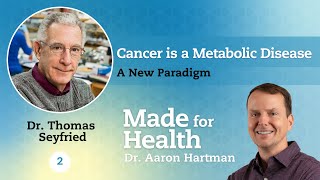
A recorded interview (YouTube) in which Aaron Hartman, MD interviews Dr. Thomas Seyfried about the metabolic theory of cancer. Seyfried argues cancer is primarily a disease of energy metabolism driven by mitochondrial dysfunction, chronic inflammation, and excess fermentable fuels (glucose, glutamine), and describes metabolic therapies (ketogenic diets, fasting, glucose–ketone management) as personalized clinical strategies that can slow or regress tumors. He also discusses practical barriers to clinical adoption, case reports and outcomes from compassionate-use examples, and calls for physician retraining and published treatment protocols.
Chapters
So let me take a step back with the foundational thing of the concept of mitochondrial dysfunction. You know, uncoupling of the electron transport chain, I think, is the terminology used in your book as a cause. Like one of the things I try to wrap my brain around. In 1900, the average 1 in 100Americans got cancer. In 1990, it was 1 in 3. Now it's 1 in 2. If you had the BRCA gene in 1950, your risk for breast cancer was about 20%. Now it's 80%. So even with our limited knowledge, we see with the genes massive increases in cancer rates. So my question to you is, with mitochondrial inefficiency dysfunction being part of this cancer thing, does it make sense that things that disrupt the mitochondria, environmental toxins, chemicals, foods, blah, blah, blah, might be part of the reason why we're seeing an increased incidence of cancers in modern times that are unparalleled in history? And if so, what are your thoughts about that?
Yeah, well, that's, you know, it's called the great Western diet and lifestyle. Our aboriginal ancestors did not have Dunkin Donuts on every corner. They did not have the kinds of foods that we're eating. They didn't. They had a lot more exercise. Now, Albert Schweitzer, the great humanitarian physician, studied these tribes of people on our planet and looked at cancer was extremely rare in people who lived according to their traditional ways. You know, we call it the Paleolithic kind of a. Don't forget, as a human, we've been a species for about 1 1/2 million years. Most of that time was in a Paleolithic state of fasting and tremendous exercise. Okay. What killed those folks was. Was infections and injuries. Okay? They weren't dying from cancer. And these kinds of things. People say, well, they didn't live long. Well, if they. Even if they live long, they weren't dying from. From cancer. Cancer. Cancer emerges with our technology and our food. Science and technology has advanced so much faster than has our biology. We're still basically physiologically a Paleolithic organism driven on eating anything that walks, crawls, swims, or flies on the planet and a lot of exercise. Today we're sitting in traffic jams, we're sitting in front of computers getting all freaked out, by which creating a lot of anxiety, emotional stress, bad food, food that's highly processed. In other words, we evolved to store energy. That was our goal. Because if we didn't store energy in the form of fat, we would not survive as a species. So energy storage became part of our evolutionary biology. We have energy. That kind of energy is every, every night on tv, every corner of the grocery, Dunkin Donuts, you can name it. It's all over the place. We're getting fat. And that's exactly evolution in action. People say, I, well, I don't understand biological evolution. Well, you understand the obesity epidemic, right? Oh yeah, I can just see all that all over the place. That's evolution in action. That's our evolutionary past telling us that we're in a new environment now. And that environment is putting us at risk for cancer, cardiovascular disease, dementia, all of the different chronic diseases as the result of our energy balance changing. Yes. Mitochondria becoming damaged. Why? Because they're being overwhelmed by a large amount of, of, of fuel that's creating reactive oxygen species and causing a level of dysfunction. And you're right, intermittent fasting, these kinds of things brings the body back into a more energy homeostatic state. But it's very hard for people to do water only fasting. But you know, now we're realizing it's not if you. And that's why we developed at Boston College the glucose ketone index calculator, which lets people know quantitatively whether they're in nutritional ketosis, similar to way our ancestrals in the ancestors were in the paleolithic period where injury and infections were. Now we listen, we have very great hospitals and we can fix a lot of broken hips and knees and all this kind of stuff. And we have a lot of antibiotics and we have a lot of ways to manage infections and injury. But our diet and lifestyle is putting us at risk for chronic diseases like cancer and cardiovascular disease and these kinds of things. So to manage that, you have to keep your mitochondria healthy and you cannot get, it's very hard to get cancer if your mitochondrial mitochondria remain healthy. How do you allow mitochondria to remain healthy? You have to have them burn ketones. Ketone bodies are breakdown products of fat. When you burn immobilized fat goes to the liver. Liver makes water soluble ketone bodies. Our brains burn ketone bodies. Our muscle heart can burn ketone bodies. Our cells get super healthy when you're burning ketone bodies. Cancer cells can't burn ketone bodies. So yeah, so the whole concept of managing cancer as a metabolic disease is bringing the body back into a paleolithic state and then starving tumor cells of their fermentable fuels. And you're absolutely right. You can manage many different diseases using the same strategy. The problem is not Easy. Okay, let's be honest. Every night on tv, we're blistered by, by commercials telling us how good the pizza tastes, how good the donut tastes. You know, all the sweet drinks, Coca Cola, you know, Pepsi Cola, I don't know. You can name, go up and down, name them all. Not that these are bad and in small amounts they're probably good and very tasty and all this kind of stuff. But if you do it all the time, you get obese, you don't have exercise, you have a lot of stress. No fr. All this kind of stuff, bad sleep apnea, all kinds of stuff. You put yourself at risk for all these chronic diseases, but that's prevention. Okay? Most people, let's be honest, we have an obesity epidemic. People really were concerned about what I'm talking about, what you're talking about. We didn't have these. This kind of, that's the, that's the. So people say, okay, now I have cancer. What are you going to do for me now? We're going to poison and irradiate you or we're going to bring you back into a new state of health and slowly degrade your tumor. That's the question you have before us now.
So, so a couple of things you said, I want to just clarify just for the audience, because you said a whole lot. So you mentioned reactive oxygen species being made, which basically is a way of saying inflammation. So if I was to understand you correctly, inflammation by itself, however it occurs, whether it's high sugar consumption or processed foods or toxic fats. But that inflammation can lead to this mitochondrial dysfunction which can lead to cancer. Correct. So inflammation, things that lead to inflammation, whether it's stress, not sleeping, sleep apnea.
So let's look at that. It's chronic, called chronic inflammation. And you can measure that by C reactive protein. Just do blood work. So people can. When I go to the physician, I don't know, once a year, twice a year, whatever it is, I tell them exactly what they should be looking at. I don't allow them to tell me. I tell them, here are all my ferritins. I have my vitamin Ds. I have all PSA test, H1C, all the different things. So I know how my body is doing on that day that they took that blood work. And I monitor those things over time. Triglycerides, you know, hdl, all, all the different things that one could, one could look at. You put it together and you look at. And that those blood, the blood work tells you whether or not you're in metabolic homeostasis. So. So. So it's not hard to do. So everybody can do this. But you're right. Chronic inflammation creates damage. Reactive oxygens, ros. This is the reactive anion and the oxygen and this kind of thing, they are carcinogenic and mutagenic, so they damage mitochondrial function and they also cause the mutations in the nucleus. So a lot of the cancer cells have bad mitochondria throwing out reactive oxygen species, which are carcinogenic and mutagenic, causing the chromosomal and genetic abnormalities that you see in the nucleus. So that's why we know all the genetic stuff is downstream extreme. It's the energy metabolism that's the ultimate cause of dysregulated cell growth. So, yes, chronic inflammation is one viral infections. They have oncogenic viruses like hepatitis, papilloma. They damage mitochondria. Carcinogen. When it calls something a carcinogen, it's a chemical that causes cancer. How does it cause cancer? It actually damages oxidative phosphorylation, creating oxygen radicals, leading to a fermentation metabolism.
Right.
Sleep apnea, you know, intermittent hypoxia. I noticed that. You know, when I was going to one of these dental meetings, I was watching these films of people sleeping who had sleep apnea. I was like, oh, my God, this guy hasn't. He hasn't taken a breath in 35 seconds. And then all of a sudden, the body, you know, he has. Warburg clearly said intermittent hypoxia damages oxidative phosphorylation leading to cancer. So, I mean, we see it every day. What's causing it? And we just go through the list. Radiation, people. You know, when the Fukushima plant over in. In Japan went out, people in Seattle were digging foxholes or bomb shelters to protect them from the radiation coming from the plant across the ocean. Why? Oh, because radiation causes cancer. Why? Because it damages oxidative phosphorylation, leading to dysregulated cell growth. Oh, okay. So you can put all this together and you're 100% right. You know, every one of these things that we've looked at that damages oxidative phosphorylation chronically can put someone at risk for mitochondrial damage, which may present itself in the form of cancer or some other chronic disorder. Not complicated.
I remember reading an article about this, the concept of the genes, you know, a couple years ago, and I was talking about, you know, a typical breast cancer. There's up to 80 different genetic mutations. There's probably 80 different kinds of breast cancer. And we focus on, you know, BRCA1, BRCA2, her two positive, you know, her two negative, PR positive, all these, these small things, but literally just breast cancer by itself. There's probably 80 different genetic plus perturbations of that. And reading that, I was like, wait a second. So it's. That makes me think it's really not ultimately a primarily genetic thing for this one disease. If 80 different plus mutations are associated, what could be under the hood and sounds like what you're saying is what's under the hood is mitochondrial, you know, electron transport, chain uncoupling, resulting, which. You haven't used this phrase yet, but I think it was in your book genetic instability. Genetic instability gives you mutations and over time you eventually get one of these things that makes the cells go grow without control.
No, you're, you're absolutely right. But it's, it's the, it's the Ross reactive oxygen species that are ultimately causing the genetic instability and all the things. But Warburg said it, and we all know there's two things to get cancer. Number one, you have to damage oxidative phosphorylation chronically, not acutely, because the cell will die. Number two, that cell. Listen to this very important. That cell must have the capacity intrinsically to upregulate the fermentation metabolism. Because if the cell cannot replace energy from oxidative phosphorylation with energy from fermentation, it won't become a cancer cell. So there are a couple of cells in our body where cancer is extremely rare, mainly because they can't upregulate fermentation chronically, and that's cardiac myocytes. So you rarely see cancers in cardiac myocytes and neurons of the brain. The neurons can't switch chronically to fermentation. They can do it acutely if you have an epileptic seizure or you have cardiac if you have a heart attack where everything turns, it becomes ferment. The whole body ferments for a short period of time and. But it cannot readily adapt to a fermentation. So you have to have but cells that can gradually upregulate fermentation chronically. Like liver, kidney, bladder, breast, like you said. Yes. There's hundreds of millions of mutations in breast. Every breast cancer cell is fermenting, regardless of what its genetic composition is. That's the underlying common pathophysiological problem of all cancers. Brain, colon, breast. That's why I'm saying cancer is one singular type of disease of energy metabolism. The mutations are all different, but the underlying Problem is the same. They are fermenters depending on a fermentation metabolism, regardless of what their genetic composition is. So we know that now when you switch from efficient oxidative phosphorylation to inefficient oxidative phosphorylation, you have to change the, the parameters of the cell. So this is oncogenes. People love to talk about oncogenes like HIF1, Alpha, Myc and these different kinds of terminologies they use for these. These are facilitators of opening the floodgates on the cell to get in the fermentable fuels. Because if you're switching from one, from an, from an efficient system to an inefficient system, you have to have a large, a large stockpile of fuel to make up for the, for the efficiency. Now you're inefficient. So floodgates for glucose and glutamine open up on the surface of the cell to bring in these two fuels. Glutamine is already the most abundant fuel in our body and the glucose is, is already in our diet. So the glucose from the diet and the glutamine from the blood pouring in, driven oncogenes opening up the, the transporters on the surface of the cell and the exhaust system so they blow out lactic acid and succinic acid as waste products. And we see that, and that's why we know all the cancer cells are fermenting on glucose and glutamine because they're all blowing out lactic acid and succinic acid. Clear. Clear. Clear as the day. You know, it's just so clear what these cancer cells are doing and, and how they're living.
So two quick questions in regards to that. First question is I'm really big into fatty acids. Part of what I do with people with mitochondrial issues and neurolog on reregulating their fatty acid synthesis. But our dietary, our food system is filled mainly with processed rancid fatty acids, long chain fatty acids, trans fats. In your understanding? Because it makes sense to me, but I'm just kind of curious, in your understanding, does it make sense if we're consuming these dysfunctional lipids that make up the cell membranes of the mitochondria and affect mitochondrial function, that these, that the infiltration of our dietary system with these dysfunctional fats could be a precursor for reactive oxygen species increasing and ultimately lead to an increased risk for cancer? Does that make metabolic sense?
It could do that. Again, you know, most cancer cells synthesize their own fatty acids. And most of them are saturated fatty acids. They use glucose. We've tested all. We published a couple of big papers on this. I mean, the glucose carbons make. The cancer cells make a lot, a lot of fat. They synthesize their own fat. So they make that. Yeah, you can take it up from the environment. But the bottom line is, in order to grow. In order to grow, you have to synthesize fatty acids, proteins, and nucleic acids. This is. These are the building blocks of cells. You have fatty acids in the membranes. You have proteins which are amino acids. So you need carbon and nitrogen to build all these things. Right. For a cancer cell to grow, you have to. It synthesizes. Now, what it can't synthesize, it also sucks up stuff from the microenvironment so bad. Fatty acids from the diet could in fact contribute. They're not contributing to energy, but they could damage further the mitochondria for sure. So. But the cancer cell is also synthesizing A tremendous amount of these things from its own ability to synthesize as long as it has the energy. Energy number one and metabolites number two. So glucose and glutamine provide both the energy and the metabolites for these cancer cells to continue to grow out of control. So, and that's why I said you. If you take away the two fuels giving them both energy and metabolites, they ain't going to grow very well. So. So that's the strategy. And yeah, I. I think that, you know, the consumption of. Of provocative fatty acids and other. Other things as well that could damage oxidative phosphorylation May contribute to the gradual degradation of the ability of the cell to generate efficient energy through oxidative phosphorylation. It's a little bit more complicated and there's a lot of factors that I'm not going to address. But, but our goal is to. We got a person with a cancer, let's get rid of it. And how do we do that? And we can do that. Then after we do that, I think we can start focusing on all other issues that may not be as acutely important as keeping somebody alive. Yeah.
And just a quick other side of question, real quick, from what you said, can you use ldh lactate dehydrogenase As a surrogate marker for lactic acid? Increased production of lactic acid depends if it.
Whether it's. Whether it's LDHA or ldh. B. LDHA brings. Brings in ketone bodies and lactate into cells. I'M sorry, ldh, B. LDHA is the exhaust. So when you create a tremendous amount of lactic acid in the cell, ldha, there's actually five different forms of lactic acid dehydrogenase, but it's. LDHA is the. Is the one that's upregulated massively. So it's part of the. It's. It's in. Run by HIF1 Alpha, the oncogene. So. So what happens when oxygen is deprived? Glycolysis is upregulated tremendously and lactic acid is dumped out and. And you have to upregulate the activity of ldha, Lactic acid dehydrogenase A. So most aggressive cancers have very high LDHA, and that's controlled by HIF1alpha, a transcription factor, which is one of the oncogenes that we talked about. So, yeah, most cancers. But, you know, people, there's a lot of work going on. Oh, let's target ldha. Why target ldha? Just have to pull the plug on the glucose. If the glucose goes down, it damps the glycolic. The glycolytic pathway is downregulated, and the amount of lactic acid coming out is downrated, and the cell can't get energy and dies. So this. This is why it's so. So incredibly simple to do this. People are always wondering something. They always want to go to some level of complexity you don't have to go to just to make it look like they know what they're talking about. You know, the idea here is, are we going to kill cancer cells? And we want to do it easy, and we want to do it quickly. You got to pull the plug on their fuels and transition to something they can't use. All other issues become secondary.
Gotcha. Let's make a slight transition from the science, because I feel like we could talk about the science for like, you know, hours, the practicality. Because ultimately, people, you know, either want to prevent cancer. I mean, you know, one in two people in our country getting cancer is a crazy number. Or they know someone who's had cancer. So I guess my first question with this little transition is, you know, how are. You know, first of all, with your research, what kind of outcomes have you seen? You know, because, you know, you hear about people going to clinics in Mexico or over. I had a patient go to Germany. It sounds like you're doing research up in Boston or what kind of. Could you give us some examples of patients in your research and what kind of research is going on using this Modality as a way to come alongside and help people with a diagnosis of cancer.
Yeah, well, we publish papers on it and we describe what we've done. And of course they're singular cases. We're not running clinical trials only because people don't know how to do this and nobody wants to support it anyway. But so you take individuals and we have a lung cancer patient from Greece who went on a keto Mediterranean diet, got into a lower GKI with a lung cancer that metastasized to his brain. We published the paper in the journal Curious and people can read the details of what was done by my good physician colleague Athanasis, even Julio and his staff in Greece. And then we had one out of Turkey, advanced breast cancer that metastasized to the brain. The person was lit up like a Christmas tree on PET scan. And we used a combination of keto metabolic therapy with reduced chemotherapy. So we were able to get very good outcome from that person. She's still alive. These were stage four cancer patients that weren't expected to live. And of course there's Pablo Kelly with the glioblastoma who's out now 10 years and he's alive. We published the paper, exactly what we did. We have five years of his dietary glucose ketone metabolites in the blood and we published that the journal Frontiers in Nutrition. We did one on a dog, actually. That's our only thing we ever cured was the dog had a mast cell on his face and we cured him. The other guys are still alive. So I don't know if they're going to be cured or not. All I know is they're living a hell of a lot longer than they were now. Brad and Maggie Jones are doing a big documentary and they are forming a registry and interviewing all the, the folks that were stage four terminal cancer patients that are still alive and everyone telling their story of what they did. So. So they're not published case, because the field doesn't believe in all this stuff, right? Oh, they don't want, they don't want to listen. If you had a drug, any drug that would do with metabolic therapy, there'd be a stampede for it. Like, like there would be no tomorrow. Oh, no. It comes from a diet kind of a manipulation using off. Off patented drugs, you know, el cheapo drugs that are used, you know, oh, no, we can't have that. That doesn't work. But a. Any kind of a new patented drug which would do it. Metabolic therapy would. Oh, they'd say this is the greatest thing this would be unbelievable. But it's not happening. So, so what you have to do is you have to see the people and I published case reports and then they say oh N of 1. Oh, we can't believe it's just an N of 1. If I had a drug that did what that N of 1 did, oh they would be all over it because it wasn't a patentable drug or a patentable strategy. I don't want to know about it. But yet look at the data. Look at the individual who's alive. How does he feel? You know, what's his quality of life? That's the key thing. And like you said at the beginning, they did a big study on the 92 drugs developed from the somatic mutation theory and they only improved overall survival by two and a half months spending billions and billions of dollars. And the off target effects of these drugs were horrific. And some of the drugs cause hyper progressive disease where the drug will kill you faster than the cancer. Metabolic. We have not ever seen a situation where metabolic therapy accelerated the growth of a tumor and killed a patient faster than the tumor would never happens. Okay. But it happens significantly in these new cancer drugs.
How many people have come through that? You and just with you alone that you worked with, how many patients have you have come through and worked with the physicians you've trained or whatnot, or your experience with that?
Well, it's a, it's a work in progress. A lot of it is doing things on the, on the go. And don't forget when, when we treat. I don't, I'm not a physician, I can't treat anybody. But, but, but I write the protocols by my colleagues and I write the treatment protocols by which phys. By which which patients should be treated by licensed practitioners. And we're seeing, we, we, we, we. When a patient. Oh, we think we're doing too much of this pull it off. Everybody is a different metabolic entity. You can't have one shoe fit all every. You got a gender differences, you got age differences, you got body weight differences, you got all kinds of differences. You have to work with each patient as a separate entity, know what they can and cannot deal with and you bring them and use the blood work as your, as your non invasive imaging and blood work tell you whether you're moving in the right direction. And most importantly, how do you feel? It's a very simple question. Ask the cancer patient. How do you feel? Oh, I spent all day on the toilet. I'm vomiting. No, you don't feel good. Okay, right away. I'm telling you, this is this way. You shouldn't, you shouldn't have to be doing any of that, you know, but if the guy says, oh, geez, I feel like a million bucks, I never felt better, and my cancer's got, okay, that tells you're on the right path.
So what I'm hearing you say is that, that you're individualizing the metabolic strategy per the person, not giving them a protocol for their diagnosis that you just replicate for 100 or 200 people, but you're actually individualizing based on the patient's how they feel response, metabolic markers. And they're getting actually a personalized intervention plan.
Yes, personalized nutrition, drug diet. It absolutely is.
That's, that's a novel concept.
Yeah, right. But it's, you know, that's what every, every member of every physician should want to do. That. That's what we call practicing the art. As they say up here in Boston, practicing the art. It makes the guy feel good because then he becomes, he's not following some scripted standard of care, he's following his own intuition with markers that are telling him and the patient's telling him. So it's a very feedforward feedback between the physician and the patient. And together they work as a team. And metabolic therapy puts a lot of burden on the shoulders of the patient. The patient's going to have to be an active participant in their healing process. They're not going to just sit there like some bystander and be nuked and poisoned. They actually have to play a major role. So this idea of battling your cancer when you do metabolic therapy, you are absolutely battling your cancer because you are understanding what you're doing and why you're doing what you're doing.
Yeah. Now, I think one thing as well, to just go back what you said before. I have a clinical research company. I've been a principal investigator for over 70 clinical trials. And I just think people don't really realize how clinical research works where you have to have one outcome, you limit the change. You can't change things based on patient symptoms. If people aren't compliant, they get kicked out of the studies. So why don't you touch up, briefly touch about the actual process of doing clinical research. I think a lot of people just don't realize when they say something has to be double blind, placebo controlled, you know, standard of care. It really eliminates the majority of patients. When I, when we were intake patients through our clinical trials, most people would even get in because they were too overweight. Or the sugar number, their A1C was too high or they couldn't be compliant or nothing. So we almost create this false population of patients in clinical trials to get outcomes on a singular intervention. And that's not really quite how the real world works. So I'd be curious if you could just like, dive into that concept.
Yeah, well, I think that that was put in there as a strategy to eliminate any other opportunities that might be effective. Double blind crossover. A singular approach eliminates metabolic therapy as being a strategy for doing the traditional standard trials. Clinical trial, always a clinical trial. Well, our kind of clinical trial is based on how long we can keep people alive.
Right?
You have, you have. We have in glioblastoma many other cancers. We have what we call historic controls. All right? We know that person with a glioblastoma, the probability of surviving to five years is about 1 or 2%. You know, it's very, very low. And we can see how beautifully the survival curves are overlapped all over the world. I went through and looked at all the survival curves and they're all almost, they almost copied. And that's because they all irradiate and poison the patients the same way. It's almost like, wow, you're taking away any minimal, any possible advantage that poor patient would have. You took it away because when you irradiate the brain, you free up massive amounts of glutamine and then you give high dose steroids, sugar and glutamine, and then you wonder why your patients are dying. It's just like nuts. So you do, you do historic controls and you look at each person. If I, what's the probability of me keeping that guy alive five years? Well, really low. If you do standard of care. What If I have 50% of the people that I did metabolic therapy on who made five years? Oh, my God, that's unbelievable. What are you doing? Well, let me tell you what we're doing. Here's the way we do it, okay? Then things begin to change, because bottom line, people want to live.
Yeah.
They want to be lived. And if, and I'm telling you another thing, they're dragging these poor cancer patients into these clinical trials day and day. Oh, we got a new clinical trial. Those number one patients should ask, how is that clinical trial going to target simultaneously my glucose and glutamine, and how is it going to make the rest of the cells in my body healthy? If they don't have an answer for that, I wouldn't do that trial.
Well, I think it's interesting because Glioblastoma multiforme, which is like almost one of the most horrendous tumors to get diagnosed with brain cancer. It's almost uniformly lethal. Yet as far as, like this whole metabolic thing, the literature on that goes back 50, 60 years. I think it's one of the first cancers, if I'm correct. They actually used ketogenic metabolic diets to actually treat with patients having these. If you make it five years without cancer, that's unheard of.
The first one was Linda nebling's, actually was 1995. Before it went. There might have been unpublished case reports, But Linda published 1995.
Yeah. I felt like I read something from before that, which it probably was unpublished, but it was a book of talking about glio. I was also using ketogenic diets for kids with seizure disorders. I think I was back in the 20s and 30s. So this concept of using your metabolism to treat untreatable things is actually not old. So it's not new. It's quite an old.
Yeah. Wilder at the Mayo Clinic in 1921, used ketogenic diet first to manage epilepsy. That's how I worked in the field of epilepsy at Yale University. And all these. That's how I got into it, working on managing epileptic seizures using metabolic therapy. And then we jumped into the cancer thing based on what Linda Nebling and out of Warburg were showing. But. But the bottom line is that. Yeah, but while he knew that he would water only fast the cancer the epilepsy patients and get tremendous success. But you can only do that for so long before the patient dies from starvation. So he developed the ketogenic diet which blocked epileptic seizures. And then they threw epilepsy. They threw ketogenic diet for epilepsy under the bus in the mid-1930s when they developed these chemicals that could stop epileptic seizures. Then it was Jim Abrams, the movie producer, produced the movies Airplane and those kinds. When his son Charlie developed intractable seizures and he found John Freeman at Johns Hopkins University and Millie, and they developed the keto and kept Charlie alive. And Jim. Jim said, what the hell is going on? He got Meryl Streep to do the first do no harm movie. And then all of a sudden, ketogenic diets for epilepsy started to explode all over again. And then I came in with. With the cancer part of this whole thing. And because nobody had been talking about managing cancer using metabolic therapy, Warburg had it designed. Nobody was switching to metabolic therapies for managing cancer. That's what we started. We started all that. So which is actually going to be the future clinical. That's actually going to be the future standard of care. It's just a matter of time. So we're seeing how science and clinical practice and outcomes have all overlapped at one point or another during. During the past. And we're starting to now develop therapies based on these understandings.
So one thing you mentioned before is like a retraining for physicians. And you mentioned putting protocols together. So if someone, you know, I see a lot of patients that come, I come alongside in their cancer journey, they want different options. They want integrative choices, whatever that term means. Like if a practitioner wanted to try or try to refer a patient, or how's that work? If someone's actually, like, they want to try something different than chemotherapy, radiation, and they want to try integrative, how does that work for an actual patient or a provider, a doctor, if they want to provide this option for their patients?
Well, this is a real tricky, slippery, slippery slope, as they say, because if you start practicing treatments that are not dictated by the standard of care, you could be reprimanded or lose your license. And a lot of physicians fear that they do what they do because they're required to do that. And when they say, geez, you know, I know metabolic therapy will help my patients so much, can I do that? No. And they'll say, why? Because there's no clinical trial. Well, the clinical trials are designed not to ever have you do that. So it's a very paralytic kind of a thing. But occasionally we find physicians. Now, I just understand that Arizona had passed a right to try type two, where we're beginning to see some states are starting to open up a little bit more where physicians will not, will have, will have, will be able to practice some of these approaches without being reprimanded in such a way. And I think that once we can get these kinds of things off the ground and show published clinical evidence, which I do, that this stuff works. We have a paper in review right now, a very comprehensive treatment protocol for glioblastoma. In other words, an actual how to do this. And when this happens, you do this, and when that happens, you switch to this and always be aware of everything that could possibly go wrong and what. How to address it. So it's a very comprehensive treatment manual protocol for the physician. And, you know, once. Once that would get out published, there, there's your tool. Then you go and treat the patients, you collect the Data and you publish the case report, you publish the outcome for glioblastoma, you can tweak it for any cancer. Be honest with you, because they're all the same. They all need fermentation. You target fermentation. So this is going to happen. The problem is we have so many obstacles in the way to prevent us from doing this. These rigid standards of care, superficial statements. Well, I don't believe that. What the hell, man? What part of the science, what number do you not believe? Which pathway are you not familiar with? So you don't. You have all these superficial reasons why you can't do what you're supposed to do, but it all break down because you know why people want to live.
They do.
That's your motivation. People want to live.
Yeah, I remind people when they ask about, you know, you know, it's not standard of care.
There's.
What's the evidence? I just remind people that, you know, vitamin D per Medicare, vitamin D testing for screwing is still considered experimental or controversial. And screening for an A1C for patients for pre diabetes by Medicare is still considered experimental. And so if something that as, as basic as vitamin D and A1C is still considered experimental by one of the biggest covers in the, in the country, obviously anything more complex than that is going to be even more controversial.
Yeah, well, you know, the bottom line here is if you don't take vitamin D, you're not going to be dead in six months. You know, you can live. You can just walk out in the sunshine. You know, diabetes is going to kill you. You got diabetes today and, oh, you're terminal now. No, no. When you have cancer, man, it's altogether different. You're dealing with a different beast here. It puts the fear of God into the soul. When you're told that you have cancer, you want to live and you want to go. You want to do what's going to keep you alive. And if there's something out there that's, that's legitimate and based on hard science and it becomes scientific. One of the things I do here at Boston College, teaching biology, it's called scientific literacy. We have to become scientifically literate. We are responsible for the existence of our soul on this planet. And when it comes to these kinds of things, you can learn. I wish my students, when I teach the kids in the class, oh, you know this, they're going to get a grade on this stuff. But I'll tell you, when you have a cancer patient that needs to know this, you become, you'd be surprised how smart they become in a very short period of time. I wish my students could become this smart. It's the motivation. You know why? Because his life is on the line. He wants to leave better. He better understand scientific literacy real quick. And the other thing, too is we don't. We don't deny anyone who would like to take a toxic poison or be surgically mutilated or irradiated. We're not stopping any of these folks from wanting to do that. You know, that's their choice. And some people say, listen, I'm sorry, I love Hershey bars. I love. I love chalupas and pig Macs and soft drinks, and I'm sorry, I prefer radiation and chemo. I say, fine. I mean, that's not my. It's not my problem. That's your problem.
So, Dr. Seyfried, this is a great conversation. I've loved it. We could go on for quite some time. I probably would recommend as a practice, I have a lot of practitioners that follow me as well. I'd recommend for practitioners, if they want to learn more, to read your book, a Malbach Approach to Cancer, which I feel like is the tome that actually dives into this. But for everybody else out there, if they want to learn more about what you're doing or this, these concepts, if they're still not, you know, they're curious about, what recommendation would you have or even follow what you're doing, you have any recommendations for those individuals?
Well, yeah, because we published. Most of the stuff I have mentioned with you today in this conversation is on open access publications. So everybody can read it. And don't forget, our case reports are all open access. Even the dog report is open access.
Yeah.
So just put my name Thomas Seyfried. What did he publish? Okay. And you'll see publications. And then you can read Open Access. If you have Google, you're on the Internet, you can get it. And don't forget, all of our research currently is supported by philanthropy and private foundations. So if people, if people want to. You know, it's unbelievable. There are folks on this planet who just want to be part of the paradigm change. They want to feel good that they're going to do something for mankind. And they throw us some money into Travis Kristofferson's foundation and to Boston College Cancer Fund, so people can donate directly to our research through the university, Boston College, or through Travis Christofferson's foundation and some other small foundations that support our work. So the longer we don't forget, we do everything preclinically we have model systems that tell us what works and what doesn't work. And I immediately share that information with my clinical colleagues who then start to test it on the patients and their feed forward feedback. We develop doses, timing and scheduling. And then our goal is to keep animals, mice alive for as long as possible, just like we do in the clinic. The bottom line is how long you can keep a terminal subject alive. Far longer than would be predicted. And boy, humans do so much better than these poor mice, you know, oh my God, humans are the ultimate example of success, if you really want to know it. So that's what keeps us going. And yeah, we're publishing, I got a couple of big ones right on that. We have a couple of coming down the pike here that are going to shake the foundations of the entire establishment where they're in the works right now. Treatment protocols, new information on the science behind what I'm saying. You know, tough papers written, so observation, diet, drug combinations that are really spectacular. So, so all this stuff is going to come down and it eventually it will filter into clinical practice and ultimately it's, you're going to see people walking the planet for a lot far longer than they ever imagined. So this is going to, it's just a matter of time. That's all I can.
Dr. Seifert, I really, really appreciate your time, taking your time away from your, your job just to come talk to us and share this information and, and it's been great time. Hopefully this information is helpful to people that are listening to give them hope, but also realize there's other things out there and there's brilliant people working at well established organizations. Boston College are doing great things. Most, I feel like most cool things are happening now, happening outside of the standard care, not within the standard of care in our country.
Yeah. Well, thank you very much. It was a real pleasure and have a nice day.
Take care of.
More from Aaron

Too Many Gut Fixes Can Undo Your Healing. What Helps It Last | Dr. Sabine Hazan


Women’s Heart Attack Symptoms Differ From Men’s 95% of the Time — Only 30% Have Chest Pain #shorts

Heart Disease Kills More Women Than All Cancers Combined — 80% of Cardiac Research Is on Men #shorts

Women’s Physiology Was Systematically Ignored in Drug Research — The Consequences Are Still #shorts



It Took the FDA 20 Years to Realize Women Need Half the Dose of Ambien #shorts

Until 1993, Women Were Banned From Clinical Drug Trials — Then Those Drugs Were Prescribed t #shorts