Cancer is a Metabolic Disease: A New Paradigm with Dr. Thomas Seyfried (Episode 1)
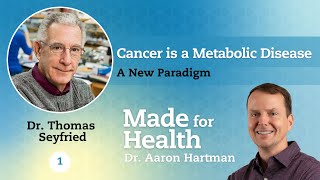
This is a recorded interview (YouTube) between Aaron Hartman, MD (host) and Dr. Thomas Seyfried (Boston College biology professor) presenting and defending a metabolic paradigm of cancer. Seyfried recounts historical roots (Warburg in the 1920s), critiques the rise of the genetic/somatic mutation paradigm (post-1953 DNA focus, cancer genome projects), and argues cancer is primarily a mitochondrial/energetic disorder driven by fermentation. He identifies glucose and glutamine as the two primary fermentable fuels for tumors and describes a non-toxic therapeutic approach called the "press–pulse" strategy: press = reduce glucose and shift the body to fatty acids/ketones; pulse = transiently target glutamine-dependent metabolism to kill tumor cells while allowing normal tissue recovery and immune cleanup. Seyfried positions gene mutations as downstream effects, not root causes, and emphasizes timing (metabolic therapy works best before extensive chemo/radiation damage).
Chapters
Well, I'm so excited today to have a world class metabolic cancer researcher expert with me today, Dr. Thomas Seyfried. We're going to be spending the next hour or so talking about cancer as a metabolic disease in comparison to as a genetic disease and other things. That thinking about cancer has changed radically in the last 20 years. Dr. Seyfried has been the cutting edge of this change. So after a brief introduction, we're going to hop into it and learn how the thinking about cancer is changing and, and how this applies to you and can affect you. Again, I'm excited to thrill to welcome Dr. Seyfried, a pioneer figure in the field of cancer research whose work has profoundly changed our understanding of the disease. Dr. Seyfried is a professor of biology at Boston College where he has spent decades studying the intricate mechanisms underlying cancer and other metabolic diseases. His academic journey began with a PhD in genetics and biochemistry from the University of Illinois Urbana, followed by postdoctoral research at Yale University's Department of Neurology. Dr. Seyfried's lamer book Cancer is a Metabolic Disease, which I read probably five years ago and really profoundly affected how I deal with some of my patients as I come alongside them with helping them with their cancers, was a cornerstone ongoing re evaluation of cancer's causes and treatment. His research challenges the traditional view of cancer as a genetic disorder, proposing instead that it's fundamentally a disease of metabolic dysfunction, specifically the mitochondria. There we go. Related to mitochondrial damage. This revolutionary perspective has opened the door to novel non toxic therapeutic approaches such as ketogenic diets and other metabolic therapies. And so I'm really excited to have you today and kind of dive into this whole topic.
Well, thank you very much, Dr. Hartman. It's a real pleasure to be here today and address some of the issues and questions you might have. Thank you.
Yeah. So I want to start with a brief history because I feel like if you don't know the past, it's kind of hard to know where you're at and where you're going. And so could you briefly, you know, as an expert in the field of this kind of research, give us a historical overview of the development and understanding of cancer, maybe going back to the 1940s and 50s today where we're seeing this massive paradigm shift?
Yeah, well, it goes back even further. It goes back to the 1920s. The first actually I have papers in 19th from 1935 by Dr. Lewis who actually identified some of the key issues at that time on cancer. He wrote out you know, different. It was. The paper was on differences between normal cells and cancer cells, and those differences persist today. The issues of what. What has transpired from those earlier times was the what. What. What explained differences. Okay, And. And that's where the theories come in to explain facts. You. You observe fact things. You observe a phenomenon, and then you try to explain it based on the way you. Where you observe and do experiments. And actually, Otto warburg in the 1920s said that from his quantitative biochemical experiments of oxygen consumption and lactic acid production, he felt that all cancers, regardless of where they came from, had a problem in the way they generated energy, which is ATP, adenosine triphosphate, which is the chemical metabolite of energy in our body. Without energy, we die. So how we get energy is very important. And most of our cells in our body, with the exception of red blood cells, get energy through oxidative phosphorylation. And people say, well, what is that? Well, everybody. Imam's breathing, you're breathing. We take in oxygen with our breath, and oxygen accepts electrons in the mitochondria, which is the organelle that generates the majority of our energy in our cells. And the waste. Every. Every breath that I take, I'm bringing in oxygen. And every exhale, I blow out CO2 and water vapor. CO2 and water vapor are the end products of the digestion of the foods that we eat. So let's look at it this way. Everything on the planet is derived from some activity of the sun through photosynthesis. And the sun creates carbon hydrogen bonds. When we burn wood, it's an entropic release of energy. And all we're doing is breaking the bonds that was created by the energy of the sun, and we're releasing back the heat. Well, we eat food, and that food consists of carbon hydrogen bonds. If it's a sugar, a protein, a fat, or whatever, they have carbon hydrogen bonds. And our bodies break those carbon hydrogen bonds down, recapturing the energy of the sun in our body so that we can be alive. And most of the energy in every cell has ionic gradients across the membrane. And that ionic gradient allows that cell to be alive and perform its daily functions, whether it's a liver cell, a colon cell, a breast cell, a lung cell, a brain cell, whatever skin cell, they're all living on oxidative energy. And that's the way most of the cells in our body live. What Otto Werburg said he discovered that cancer cells, very different from normal cells, they depend a lot more on energy without oxygen. And Energy without oxygen is what we call fermentation, fermentation energy. And you can identify that by the waste product. And they call it lactic acid fermentation. And lactic acid is an end product of the fermentation. Now what's interesting, lactic acid contains carbon hydrogen bonds. So it's a wasteful form of energy. Like, let me give you an example. If you run a sprint real, real fast, the muscles generate so much energy so quickly, it overwhelms the, the ability to, to produce energy through oxygen because the muscle is working so hard, and you end up building up some lactic acid. Interestingly enough, the muscle, the muscle contains a lot of sugar in the form of glycogen. And it's there evolutionarily because we needed to run away from the bear or the lion that was chasing us. So that energy had to be there in quick form, otherwise we would be killed. But we build up lactic acid. But then as soon as you start breathing, the lactic acid disappears. Warburg noticed that even in the presence of 100% oxygen, pure oxygen, cancer cells still produce lactic acid. How is that possible? What's going on? It's very, very different from normal cells. So he looked and he said it had to come from some damage to the organelle that generates energy, which is the mitochondrion, predominantly. And then he did some tests by looking at the consumption of oxygen in slices of cancer cells and cancer tissues, and noticed in every case, the oxygen consumption in cancer was lower than the oxygen consumption in normal tissues, and that cancer continued to produce lactic acid even in the presence of oxygen. So he said this is a foundational principle of all cancer cells and claimed that all cancer was some sort of a metabolic problem driven by a fermentation metabolism. Then he went on to say, how did this happen? And he did some beautiful experiments, because if you take a toxic drug and stop oxygen production, stop energy through respiration, quickly, the cell would die. And he would say, well, obviously we can't. Cancer cells cannot arise from a quick suspension of oxidative phosphorylation. So then he said that it must take some time. Cancer can't happen overnight. So he said cells that eventually become dysregulated in their growth, which is cancer, it has to be a chronic replacement of oxidative phosphorylation with this lactic acid fermentation. So it takes a long time, maybe years, for some cells in a human body to, to become cancerous, because if you acutely disrupt oxidative phosphorylation the cell will die and never become a cancer cell. But if there's some process by which a cell can upregulate fermentation over time, then it loses its growth, quiescence and its differentiation and then becomes a cancer, a dysregulated, A dysregulated growth depending dependent on a fermentation. And he said that the fuel for the fermentation is glucose. So glucose would normally be fully oxidized in a normal cell with CO2 and water being produced. But in a cancer cell, there's something wrong with that organelle and it doesn't get fully oxidized. But in order for the cancer to grow, you have to have a lot of supply of glucose in the environment to drive life and growth without oxygen. And, and he even demonstrated this by showing that can, you know, if you, if you consume cyanide, which is a toxic poison, everybody knows and I, I use the, the example that, you know, the Kool Aid, that Jonestown, that all those poor folks drank Kool Aid with cyanide, they're all dead like quick because they shut down oxidative phosphorylation. Cancer cells can live in cyanide. They can live without oxygen. So clearly Warburg knew there was some fundamental problem in their ability to generate energy. So that's where the field stood for many, many years. Warburg did more and more experiments. Of course he was attacked and in some of his. And I know what the problem was. Now we can resolve all of the problems that Warburg had in his hypothesis. It was called the Warburg hypothesis on the origin of cancer. And what happened was the field realized that there were broken chromosomes and there were mutations. At 1953, when Watson and Crick came out with their structure of DNA and then they knew that some cancer cells had broken chromosomes and DNA abnormalities. The entire cancer field, like lemmings over the cliff all ran off chasing genes and then threw Warburg under the bus, basically saying that, you know, that was passe. This metabolism stuff was passe. You guys were never able to really figure out all the details of the metabolism. We think the genetic problems are the real important issues. And the multibillion dollar cancer genome atlas was initiated in the, in the 1980s. People winning Nobel prizes for their work on cancer genes. The National Cancer Institute says cancer is a genetic disease consisting of 100 different diseases, all with different mutations. And we're collect now we find millions and millions of mutations. No two cancer cells have the same mutation. But we think that eventually we'll solve this cancer Problem by analyzing more and more gene mutations and then. And then developing therapies like precision medicines, personalized therapy, targeting mutations, and we're going to solve the cancer problem with immunotherapies. All of this is the result of the shift away from cancer recognizing it as a metabolic problem to recognizing it as a genetic problem. So when the national cancer institute spends six or seven billion dollars of our taxpayers a year funding grants, largely tracking down genes or trying to figure out targeted therapies based on the somatic mutation theory, and that pharmaceutical industries are constantly building drugs, and we're treating patients with therapies based on the somatic mutation theory, that is that cancer is a genetic disease and we're not. And right now, we have over 1700 people a day dying from cancer. That's about 70 an hour. And they keep throwing more and more of this. Of this stuff out. The reason why we're not dropping the death rate, the reason why we have all of these dead people, is basically cancer is not a genetic disease. And much of what we have done over the last 75 years has been in the wrong direction. And when you take away the fermentable fuels that are driving the dysregulated growth, which is glucose, of course, and now we found the second major fuel, fermentable fuel, everybody knew glutamine was driving this beast as well, but we've shown that it's a fermentable fuel. So fermentation energy is driving the dysregulated growth. The gene mutations are all secondary downstream effects. They're not the cause of this problem. So as long as you keep targeting effects, you're not going to drop the death rate in any significant way. You got to get to the origin of what's going on, and that is that metabolic disturbance. Just as Warburg said, we've cleaned up a lot of mess. We've identified where he made his mistakes, where he was right, where he was incorrect, and the situation. Now we're at a tipping point in realizing that in order to manage cancer, we have to re evaluate it and consider it as a metabolic disorder driven by fermentation. And it can't burn fatty acids or ketones. So the solution to the cancer problem is simultaneously target the only two major fuels that can drive the dysregulated growth while transitioning the whole body off to fatty acids and ketones, which the tumor cells can't use for energy because the organelle needed to do that is dysfunctional. So we now know how to solve, or at least Manage the disease. Recognizing cancer as a metabolic disease is a form of non toxic management. If it leads to cure, that's. We don't know that. All we know is that we know how to now manage it without toxicity. And that's what will be the future.
Now you mentioned two fermentable foods, glucose. Now I think you briefly mentioned glutamine. So those are the two major molecules that are fermented metabolically in this process, as you understand, is that those are two fuels you're referring to.
They're two metabolite. Right. And people know glucose, it's sugar, it's basically table sugar is fructose and glucose. And when you take table sugar in, you break it down to these two molecules, 1/2 of which is glucose and the other half of which is fructose. It's sweet. Okay. So the glucose is fully oxidized in the mitochondria to produce CO2 and water in our normal cells. But in the cancer cell, it's taken in and produces large amounts of lactic acid. So but it gets the energy. ATP is generated in the cytoplasm of the cell using, using glucose. It's called lactic acid fermentation with glucose as the, as the predominant fuel. And the other fuel, of course is glutamine. Now glutamine is very interesting. It's the highest. It's all of us, if we do a blood work, we find in our blood, glutamine is the most abundant amino acid in our bloodstream. And, and it's used for the health of our gut. It's used predominantly from, for our immune system uses glutamine and the urea cycle. And it's a very, very valuable and important amino acid. What we have discovered that in cancer cells, it's fermented in the mitochondria. This is what has confused the field for so long because they say they always thought there were only two forms of energy, which was cytoplasmic fermentation in the glycolysis pathway, in the cytoplasm and the mitochondria. Oxidative phosphorylation in the mitochondria. We working with my colleague and friend Christos Chenopoulos, the world expert on mitochondria fermentation. He and I have shown that glutamine is fermented in the very organelle that should be doing oxidative phosphorylation. This is the new thing. So a fuel that was formerly thought to be oxidized is actually fermented in the very organelle that should be doing oxidative phosphorylation. So. And this has been a conundrum in the field for more a century now, 100 years. So we have cleared this up and now we know that this big second fuel, together with glucose are powerfully synergistic. They drive all of the metabolic necessities for the cancer cell. And once you know that, now you know what the beast eats and now you know how to kill it. And the problem is nobody's using this. Nobody even understands basically what I just said.
Yeah. So I'm gonna dive into the, the fasting and the glucose stuff here a little bit because that's been really popular in the media between interval fasting and water fasting and elite athletes and biohacking and stuff. But the glutamine thing is relatively new concept. How do you actually address that? Since you need glutamine to make glutathione, you need it for your gut lining. You need it for so many important things like how do you actually focus on either decreasing the body's. How do you, how do you address that since that's something you. You absolutely need versus glucose you don't absolutely need.
That's why we developed the press pulse therapeutic strategy for cancer management, which, which addresses exactly what you just asked, because we know how important glutamine is. You can't go after glutamine like a bull in a china shop. You're going to hurt the patient. So you, you have to understand biology and, and you really understand, have to understand evolutionary biology and you have to understand biochemistry and you have to understand physiology and you got to put all those disciplines together to really understand how we strategically manage cancer, knowing what it needs to survive. And you're 100% right. We can't just go in there and pour glutamine targeting drugs on a cancer patient because first of all, the cancer will now switch to glucose and bypass that. And now you're harming the gut, you're harming the immune system, and you're damaging the body by being overly aggressive on targeting glutamine. So that's why we developed the pulse strategy. Press pulse, you can press glucose down to almost non existence in the body. I tell you, man, you can. I've seen papers. It's unbelievable by the work of Drenick and others. So listen, when you push glucose down to really low levels. Yes, you have gluconeogenesis, your liver can make some small amount of glucose when you need it. Who's the hog taking the glucose from the rest of the cells. It's the brain. The brain will take whatever little glucose you might have. And the muscle, the muscle. When the muscle, if you exercise, you deplete glycogen in the muscle. The muscle will then take glucose out of the bloodstream and re make glycogen. And muscle does not share its glucose with other organs because it's evolution. We need it to run away from the beast that's chasing us, the lion, the tiger or some other member of our species. So muscle's not going to say oh that know we have to share. No. No muscle keeps glucose. Brain burns glucose, but it will also burn ketones. So if you can elevate ketones, the brain's need for glucose go goes down. But what little it takes, the cancer cell absolutely must have this glucose to survive. So it's in direct competition now with organs in the body that absolutely evolutionarily take. Take it away. So the cancer cell now becomes marginalized. However, even taking away the glucose, that glutamine fermentation will keep those cancer cells semi viable. So you have to now target the glutamine, but you have to do it in a way that kills the cancer cells without harming your gut and your immune system. So that's why we develop the pulse. So you restrict glucose as well as you can transition the body over to fatty acids and ketones. So the normal cells now switch their energy from glucose and normal cells don't accept the immune system, don't need too much glutamine. So now we come in with the drugs like 6 deoxy nor leucine. Don a beautiful drug. And it will you put it on for a short period of time and you take it off and then you slaughter a large number of these tumor cells because they can't switch the glucose because the glucose is now restricted and you pull it back and let the immune system come in. And now using the glutamine that we take away the glutamine targeting drug, immune system comes in, picks up dead corpse cancer from the cancer. Cells are being slaughtered. So you can't let the dead bodies hang around in the organ that's being targeted or the tumor that's being targeted. Let the immune system do its job and clean up the mess. And then they clean it up and you come back and you hit them again. And you keep that, you keep the chokehold on the glucose and, and you pulse the glutamine and let the body recover, kill. Let the body recover, kill Let the body recover and the next. And the rest of your cells are getting healthier and healthier because they're burning the ketone bodies. So as you slowly degrade the tumor, the rest of your body is getting more and more healthy because you're switching the fuels. And this is what you gotta know. You gotta. Normal cells are extremely flexible in the fuels they can use. The cancer cells are massively inflexible because their oxidative phosphorylation system is corrupted. So they have to depend on fermentation. And the two predominant fuels are glucose and glutamine. There are other fuels in there, but they're in tiny amounts. And the cancer cell will go through that real quick. So then it becomes a battle for how, how, how you can continue to restrict glucose and glutamine simultaneously with holding one constant restriction and the other one a pulsed restriction, and then you can keep the body healthy while slowly degrading the tumor. It's unbelievable. I mean, when you finally understand what I'm talking about, the elegance and the beauty of how we're going to kill cancer cells without harming the rest of the body, it's just really, it's really unbelievable. But it takes a long time for people to understand this.
Well, I think what's interesting about this concept is that it's actually seen in different spectrums. For example, like in the biohacking world, people are doing fasting to actually, to actually turn over senescent cells, cells that have become dysfunctional in a proliferative stage. Like doing fasting actually helps your body turn those over. In the Alzheimer's world, with some of the training I've done with Dr. Dale Bredenson at the Buck Institute, UCLA, doing the same concept for Alzheimer's patients to improve brain function. It's kind of interesting because also in the chronic inflammatory response world, we've seen that people with mold or biotoxin illness, their cells, because of mitochondrial dysfunction, get stuck in this proliferative phase as well, where the cells are being inefficient, energy utilization, and even like Dr. Navio's work with the cell danger response. So it really sounds like we're hearing the same story by different experts, that ultimately the mitochondria potentially are at the root cause of all chronic diseases, and especially for cancer, we now have a therapeutic where we can actually manipulate, knowing that science starve the cells and then pulse the glutamine and actually have a profound impact on people's outcomes. Would that be a. Yeah, I, I.
Think, you know, it's a, it's. It's a stage strategy. People need to know, you know, what's going on. We, we have found that we can't find any tumor under for years of examining that that can survive without glucose and glutamine or can survive on fatty acids or ketone bodies. So that clearly tells us what the bottom. What, what the problem is. The, the. The. Then you, once you understand the problem, then you develop strategies to deal with the, with the problem. How, how to manage the. Manage it. That's the key. So you can understand what the needs are of the tumor cell. Okay, let's develop a therapy based on that understanding. And, and the evidence that you might know what you're talking about is when you have these many stage four guys that are terminally ill. I have terminal cancer, you know, I'm stage four, blah, blah, blah, all this kind of stuff. And then you see these folks alive, doing well, well, you should have been dead. Why, why are you still alive and here? And many that didn't do this strategy are dead. And the answer is, that's the evidence that will eventually be. What will shift the field is when you demonstrate outcome based on your knowledge of what the problem is. What we see, unfortunately, is so many people try to do metabolic therapy after they've been horrifically poisoned and irradiated, surgically mutilated, and already the cells in their body are already brutalized. A lot of these chemotherapies and radiation will damage mitochondria horrifically. So the very cells you're asking, the normal, healthy cells in your body, they don't have the power in many cases because they have been poisoned. So when you are identified with cancer, first of all, and you're generally fairly healthy, other than you have some problem, that's the time when metabolic therapy will have its greatest advantage. And I'm not saying that you can't use immunotherapies and radiation and chemo. They are tools that could be effective at the very end, at the cleanup stage, when your body is super healthy and there might be a few holdout cells, and you could come in with a dab of radiation, even a minor surgical procedure or even a toxic chemical, but it would be used in very low doses. And the surviving tumor cells are now on themselves on death. They have a terminal illness. They're not surviving. You come in and you finish them off. What we have is all, as I keep telling everybody, we have all the tools in the tool chest to manage cancer effectively without toxicity. The problem is people just Just don't know that. And I'm talking about, the establishment is yet to fully understand this. And if you think cancer is a genetic disease targeting genes and hunting for genes, you're not in the right. You're not in the right zone here, folks. You're not on the right team. You want to manage cancer, you got to understand its metabolism and then go after it that way. And until that happens, we're not going to get a major drop in death rate as long as we keep doing things that are hurting people and chasing downstream effects. And we see it every day, 1700 people a day. It comes from the American Cancer Society catalogs the dead. They catalog how many people are dying from all these different cancers. And they're the ones telling us that it's 1700 people a day dying from cancer at 70 an hour, which is like, horrific.
Well, I think if you also look at the new treatments as they come out, the different chemotherapeutics, whether they're, you know, the metals or nitrogen based or some of the biologics, and you look at how much time they add to people's lives, you look at, you know, successful medication, three months, six months. They're not making a person with a, you know, one month sentence survive five and 10 years. And so when you look at the studies, so it's. Even the outcomes of those are not impressive. If this was the, you think if this was the end all, be all, then we have a therapy that multiple therapies that literally are revolutionary, revolutionizing how we're treating cancer. And that's not the case. And I think we're still stuck in the genetic paradigm. You know, I was in medical school, I was told 90% of all diseases were genetic. And now we're thinking it's 5%. It's the environment, it's mitochondrial inefficiency. It's all this stuff. How do you see that?
Yeah, well, here's the situation. The, the United States federal government and, and their scientific advisors made a decision in the 1970s and 80s that we were going to go full throttle into the genetic underpinning of cancer. So you were awarding research grants to folks in all the different medical schools doing cancer research and whatever. And once you understood all of the different kinds of mutations that you would find in cancer, we should then be able to develop targeted therapies, precision medicine, so we would not have to poison and irradiate patients, because the novelty of the outcome of the gene theory would provide us with precision drugs that would kill only the cancer cell and not harm the rest of the body. So the reason why we're still poisoning and irradiating people is because the promise of the gene revolution has not come to pass. And nor will it ever come to pass because it's the wrong theory. And when you understand theories in science, you understand when you have the correct theory, outcomes are dramatically different, just like the heliocentric geocentric theory. As soon as astronomers realized that the earth was simply another planet like the others, revolving around the sun, the sun was the center of the solar system. 1800 years of thinking the earth was the center of the solar system immediately changed, and now we were able to move forward with, with our knowledge of celestial body movements. Once we realize that cancer is a, is a mitochondrial metabolic disease, not a genetic disease, we will be able to move forward with therapies that are based on a rational understanding of what the disease actually is. And that, and the outcome will be dramatic once people know what to do and how to do it. Be trained. Now we have to have a retraining program. Physicians, oncologists, they need to know how to do this. What's the nuts and bolts in the clinic? How do we. Where patient comes in, okay, what is the plan? And we already have a big program underway here that we're writing a detailed treatment protocol for achieving this. So this is going to happen. It's just going to take a little bit of time. But you're, but you're absolutely right. I mean, the therapies that we're giving to cancer patients today are horrific. You know, it almost goes back to the time of the Spanish inquisition on how. On how they were torturing heretics. I mean, it's just. It's just what we do to these poor human beings in these clinics is just. Nobody would want to go down to take any kind of a cancer therapy just to say, oh, I'm going to a cancer clinic to get healthy. Are you kidding me? I mean, if you don't have cancer and you were to take all these terrible things, you might die from the treatments rather than you didn't have cancer. And a lot of cancer patients, unfortunately, are dying from the treatments as much as they're dying from the disease itself. This is nuts. How are you, as members of our species, treating another member with any, any therapy that has a remote possibility of killing them. And every night on the tv, you hear all these keytruda opdivo. They spend more time telling you how the drug will kill you than how it's going to help you. This is nuts. This is absolutely nuts.
More from Aaron

Too Many Gut Fixes Can Undo Your Healing. What Helps It Last | Dr. Sabine Hazan


Women’s Heart Attack Symptoms Differ From Men’s 95% of the Time — Only 30% Have Chest Pain #shorts

Heart Disease Kills More Women Than All Cancers Combined — 80% of Cardiac Research Is on Men #shorts

Women’s Physiology Was Systematically Ignored in Drug Research — The Consequences Are Still #shorts



It Took the FDA 20 Years to Realize Women Need Half the Dose of Ambien #shorts

Until 1993, Women Were Banned From Clinical Drug Trials — Then Those Drugs Were Prescribed t #shorts