CV Q&A Part 2 05.20.2020
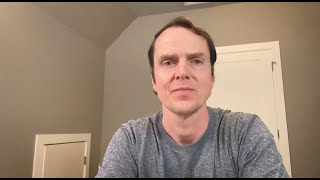
Aaron Hartman, MD answers viewer questions about COVID-19. People with pre-existing conditions should keep distancing and masking until a vaccine or herd immunity arrives. N95 and P95 masks offer better inhalation protection than other face coverings, and ozone sterilization can safely reuse them.
Chapters
It's great to be with everybody. Once again, this is the second part of the question and answer session we were talking about. And so to date, once we go through this, we'll have answered most of the questions that have been posted so far. If you continue to have questions, please feel free to post them on YouTube, Instagram, social media, etc. So the first question I want to talk about actually was a recent question in regards to a new video that was posted by another group. And so I think the basic gist behind a lot of the videos, there's always gonna be a lot of controversial things that are posted out there. And the point of what I'm doing is not to necessarily provide a rebuttal to all the information out there. The main purpose of the videos that I'm doing, of these Q and A's, of the lives, of the website, of the educational materials, of the recommended book readings on our website, etc. Are for patients just to be able to educate themselves, for people to get information and knowledge with that information, to be able to make your own educated decisions. It's not to. Basically there's always going to be controversial stuff and it's just not the. I'm just trying not to get into these back and forth kind of thing because there's always going to be questionable stuff. My goal is to educate you so that you can make wise, intelligent decisions. My recommendations are always the same. Find a few stable, solid sources for information. Stick with those. If you just read whatever you find out there, you'll be blown around by the waves of the sea, tossed to and fro, and you really won't quite know what to believe and you'll be confused. And I think that's the state that a lot of people have right now. So we're getting questions about lots of different people's posts and videos, etc. And we just can't answer all those. Our goal is to educate people, not to refute everything. We're not a political vehicle or we don't represent any kind of organization. It's basically trying to help patients get through this, trying to educate people. And so I'm just going to avoid. We've done one video refuting another group's stuff and that. That's not our goal. Our goal is to educate people, to empower people, to encourage people with information to make their own wise decisions and to be engaged with the whole political process, to be engaged with your representatives so that we can all move forward in a wise and stable fashion. That's my Goal. So I'm trying to stay out of a lot of the controversial stuff that is just gonna, it's all, it's, it's always gonna be out there in social media. It's always gonna be out there and these news things, everything's very sensationalistic and so I just, as a medical doctor, as a clinical researcher, as a healthcare professional, I'm just trying to stay out of that, that realm. So that's the answer that if you have questions, please post them. But just, I'm gonna try to avoid any of the, the, the stuff that's not really based. But anyway, I'm just going to try to avoid the, the controversial stuff that I don't feel like is going to be helpful, educational or otherwise that I have. Really. It's not my field of expertise. How about that? It's not my field of expertise. I'm going to try to stick with my field of expertise. Maybe that's a better way to put it. I'll stick with my field of expertise. I think we can. Hopefully, hopefully I'll live with that one. So let's go through some more questions. So, great question. How long will those with pre existing health conditions need to keep shelter in place or avoid being in public? In response to this, this person has, their mother has had lung surgery, et cetera, et cetera. So anyway, some other details that are personal. So the basic gist is how long are you going to need a shelter in place if you have pre existing health conditions? I think ultimately that depends on the condition. If, for example, you're an 80 year old overweight person with high blood pressure and diabetes, you're super high risk. So you're going to need to do social distancing, wear a face mask, do all those things until there's a vaccine, until there's some way around this. Because you're the person we're all trying to protect, you're the person. It's kind of like the reason why healthcare professionals get the flu vaccine during flu season. It's not to protect them, it's to protect all the patients around. The reason why we're doing this is to protect the vulnerable. So those that are vulnerable by definition need to stay out of the fray while we, the healthy, actually tend to get the herd immunity. If we reach herd immunity by the fall, by early next year, if a vaccine comes out. The vaccines basically are more ways to promote herd immunity. So you replicate infection with the vaccine and the people that get it don't spread the vaccine. The infection typically about 40 between 42 and 50% of the American population gets the flu vaccine any given year. So that creates a relative, not absolute, but a relative herd immunity. People still get it. The vaccine doesn't always work for those who are the high risk people. Those people who have pre existing conditions, they're going to be need to have some kind of social distancing sheltering place, social avoidance, face mask wearing, etc. Until this passes. Because that's that you're the people we're doing that we're doing all this for. So it just makes sense that the people that we're doing this for should help us help them. So you wonder. Next question. Are there any local studies, I'm in the Richmond area being conducted locally revolving around antibody testing? There actually are. My wife was a part of one of them because antibody testing, she had an illness. One test was negative, two tests were negative. So she was able to get into a study. There are tests going on. We just don't know any results right now. I think the bigger question is is the state of Virginia going to do any kind of surveillance testing so that we here in Virginia know or have a reasonable idea how many people in the state actually have this? And the answer to that, I don't know. I have not heard that information. I am on an email listing through the Virginia Department of Health of physicians in the state that we get regular updates and I've not got any updates as far as those numbers. So I really, really wish I could answer that question for you, but right now I can't. So. Could Dr. Hartman, that's me. Please discuss use of face masks. Masks in a future life. Are they effective? Are they safe? This person actually sounds like they're a teacher and they're trying to make it through, etc. Etc. So, okay, and our face masks. Sancter. So we actually did a whole video about coughing, about projections of cough and sneezing. So please look back at that video. It talks about how when you talk like I'm talking now, you spread water droplets about six feet. When you. I'm sorry, talk when you cough, you spread them about 16ft. When you sneeze, you actually aerosolize them up to 29ft. So the face mask, if you're wearing them, and it's not a surgical mask, just like the little. Actually, it's not. Okay. This is N95. I just happen to have one here, actually. Strangely enough. Right. If it's not a mask like this, it's just the ones most people are wearing. That's Basically helping protect you from spreading your stuff. It's not protecting you. These masks that seal off, that are fitted, that have a special respirator on them. This is actually a P95 mask. I won't go into those details, but that's actually protecting the breather and the people around. So we talk about that. Are they effective? They are absolutely effective. There's so much misinformation about a lot of the stuff that's being spread around. Right. That has been spread around is basically the idea that since it's the idea that you shouldn't wear, you should not have N95 mask because you're taking away from healthcare providers how bad you are. So therefore they are useless. You know, that's. That's not the case. They are helpful. Any face covering is helpful. Anything that prevents me from spreading water droplets, just me talking right now, I'm spreading. If you could see, you'd see micro particles being spread out of my mouth by about six feet. They are all helpful. Anything that covers your face is helpful. It's just a question of degree. How helpful is it? So if you're wearing a face mask. I'm wearing a face mask. You're being protected from my spit. I'm being protected from your spit. If I'm wearing an N95 type mask, then I'm being protected when I breathe in, not just when I breathe out. It's about a degree of protection. All face coverings are effective. They're not absolutely effective. They're relatively effective. The big controversy is because there's a shortage and healthcare professionals didn't have access to it. So it's being recommended for regular people not to use them. Not because they're not effective for regular people, but because we're trying to save them for healthcare providers, which. I take care of people, I take care of individuals. I'm not a policymaker. I worry about the people I see in my office, I worry about the people I talk with. And I want them to be maximally protected, which would be an N95 mask. In the fall, when school comes back. How do you social distance. All these kids have not been around each other for four to five, six months. They're not going to social distance. Once school starts back again, teachers wearing masks will be helpful for them. Absolutely. But you'll be in an environment where you have 30, 40, 50 students aerosolizing their respiratory droplets in the air. You will eventually get exposed. You know, there's really not a way around that. You'll go to the bathroom, take your mask off, etc. The masks are reusable. What we're doing in my office, we actually have an ozone generator that we put masks in and actually for about an hour and sterilizes the masks. Some of the nurses will use isopropyl alcohol and spray their masks down to clean them. But the best way is ozone. The isopropyl alcohol or liquid cleaning sprays, they only are superficial cleaners. They don't get deep down to the material. So you need some kind of gas cleaning. And that's where ozone is very helpful. Ozone is a great antiseptic, very toxic, very bad for your lungs. So it's not something you want to breathe in. But in a closed environment it works really, really good. And sanitary. I mean, it's better than nothing. I wear mine all day long. The hospital ER physicians are wearing their face mask with their N95 mask with surgical masks on top of them. Healthcare professionals are doing this all day long. So I think it's reasonable that regular people can do it as well. It's just to be a question of how available these things are. I think that's actually it for a lot of the questions that were posed to us. I'm sorry, here's another one, antibody testing. Actually we already talked about that in the first part, so we've done a lot of videos actually educating about the the antibodies. I think the big thing with life's questions is we've tried to anticipate a lot of people's questions as well as putting out cutting edge information, new stuff that's coming out, whether it's data, numbers, tracking susceptibility, talking about how the disease is spread, talking about coughing, face masks, talking about immune modulation, boosting immune system. These are all things we've discussed in past videos. I don't want to get into the the rut of re going over these things. I know these are legitimate questions. We've done almost 40 videos since January 30th which are all available either on Facebook. We started pushing them on YouTube as well. Unfortunately, Instagram things disappear after about 24 hours or they just disappear. So again, we're trying to get some really good information to you all. Keep the questions coming, be safe, be well. If you think this has been helpful, please share with your families and friends. The only way for this information to get out there is you share it, you like it, send it to your friends. Otherwise we're kind of up to the computer programs and there's things with social media to determine if you hear about this stuff or not. So take care, be safe and you all have a great actually, it's night here, so have a great night. But when you listen to this, it might not be night. So have a great week weekend. Take care.
More from Aaron

Too Many Gut Fixes Can Undo Your Healing. What Helps It Last | Dr. Sabine Hazan


Women’s Heart Attack Symptoms Differ From Men’s 95% of the Time — Only 30% Have Chest Pain #shorts

Heart Disease Kills More Women Than All Cancers Combined — 80% of Cardiac Research Is on Men #shorts

Women’s Physiology Was Systematically Ignored in Drug Research — The Consequences Are Still #shorts



It Took the FDA 20 Years to Realize Women Need Half the Dose of Ambien #shorts

Until 1993, Women Were Banned From Clinical Drug Trials — Then Those Drugs Were Prescribed t #shorts